
Our readers keep the lights on and my garage snacks stocked. As an Amazon Associate, I earn from qualifying purchases.
Specs are compiled from manufacturer listings and verified buyer reviews and can change over time — please confirm the key details on the product page before buying.
Riding an e-bike on loose beach sand is a completely different challenge from pavement or packed dirt. Standard tires sink, motors bog down, and you end up pushing a heavy machine instead of cruising the shoreline. The fix is a fat-tire e-bike with tires at least 4 inches wide, enough torque to keep the wheels turning in soft terrain, and a battery that won’t quit halfway through a long coastal ride. This guide cuts through the noise to the seven models actually built for sand duty — each proven by its specs and the real owners who have taken them there.
I’m Min Islam — the founder and writer behind Trending Car. This guide is built by comparing the manufacturers’ published specifications and the patterns across verified customer reviews, so you get each pick’s real strengths and trade-offs instead of marketing spin.
Whether you are planning weekend beach runs or a daily commute along a sandy path, finding the right e bike for beach sand depends on three things: tire width for flotation, motor torque for push, and battery range for keeping the fun going.
Our Picks at a Glance
How To Choose The Best E Bike for Beach Sand
Sand is one of the toughest surfaces for any bike because the wheels sink instead of roll. You need an e-bike engineered specifically to float on top. Here is what actually matters when you are shopping for a beach-ready ride.
Fat Tires — The Foundation for Sand Floatation
The single most important spec for sand is tire width. A standard 2-inch tire cuts into soft sand and stops you cold. You need a tire that is at least 4 inches wide, which spreads your weight across a much larger surface area so the bike stays on top of the sand instead of plowing through it. Every bike on this list uses 4-inch fat tires for exactly this reason.
Motor Power and Torque — The Muscle to Keep Moving
Sand creates constant drag, so your motor needs to work harder than it would on pavement. Peak wattage tells you the maximum power the motor can deliver in short bursts when you need to get going from a stop or climb a dune. Torque, measured in Newton-meters (Nm), is the twisting force that actually turns the wheel. A motor with higher torque will feel stronger when the tires are biting into soft sand, especially at lower speeds.
Battery Range — Real-World Expectation on Sand
Manufacturer range estimates are almost always measured on flat pavement at low pedal assist. On sand, expect your real-world range to be roughly half to two-thirds of the advertised number, because the motor draws more current to overcome the drag. If you need a 20-mile beach ride, look for a bike that claims at least 50 miles of range on pavement to have a comfortable buffer.
Brakes and Control in Sandy Conditions
Sand and moisture can accelerate wear on brake components. Hydraulic disc brakes are the strongest choice because they deliver consistent stopping power with less hand effort than mechanical disc brakes, and they are sealed against grit better than rim brakes. A good set of brakes matters more on sand, where stopping distances can be longer than on asphalt.
Quick Comparison
| Model | Best For | Tire Size | Motor (Peak) | Battery Range | Amazon |
|---|---|---|---|---|---|
| Aipas M1 Pro★ Best Overall | Do-it-all beach cruiser | 26″ x 4.0″ | 1800W | 25–85 miles | Amazon |
| ESKUTE V300Value Pick | Long-range sand runner | 20″ x 4.0″ | 1500W | Up to 85 miles | Amazon |
| TS TST GRP LLC | Budget all-terrain cruiser | 20″ x 4.0″ | 1500W | 60–80 miles | Amazon |
| Kebiko 1500W | Simple beach commuter | 20″ x 4.0″ | 1500W | 40–80 miles | Amazon |
| Jasion Thunder | Heavy-load beach hauler | 26″ x 4.0″ | 1800W | Up to 80 miles | Amazon |
| Jasion EB5 Ultra | Power-hungry dune climber | 26″ x 4.0″ | 2500W | Up to 70 miles | Amazon |
| HiKeep K6-S | Ultra-long extreme sand runs | 20″ x 4.0″ | 3000W | Up to 45 miles | Amazon |
In‑Depth Reviews
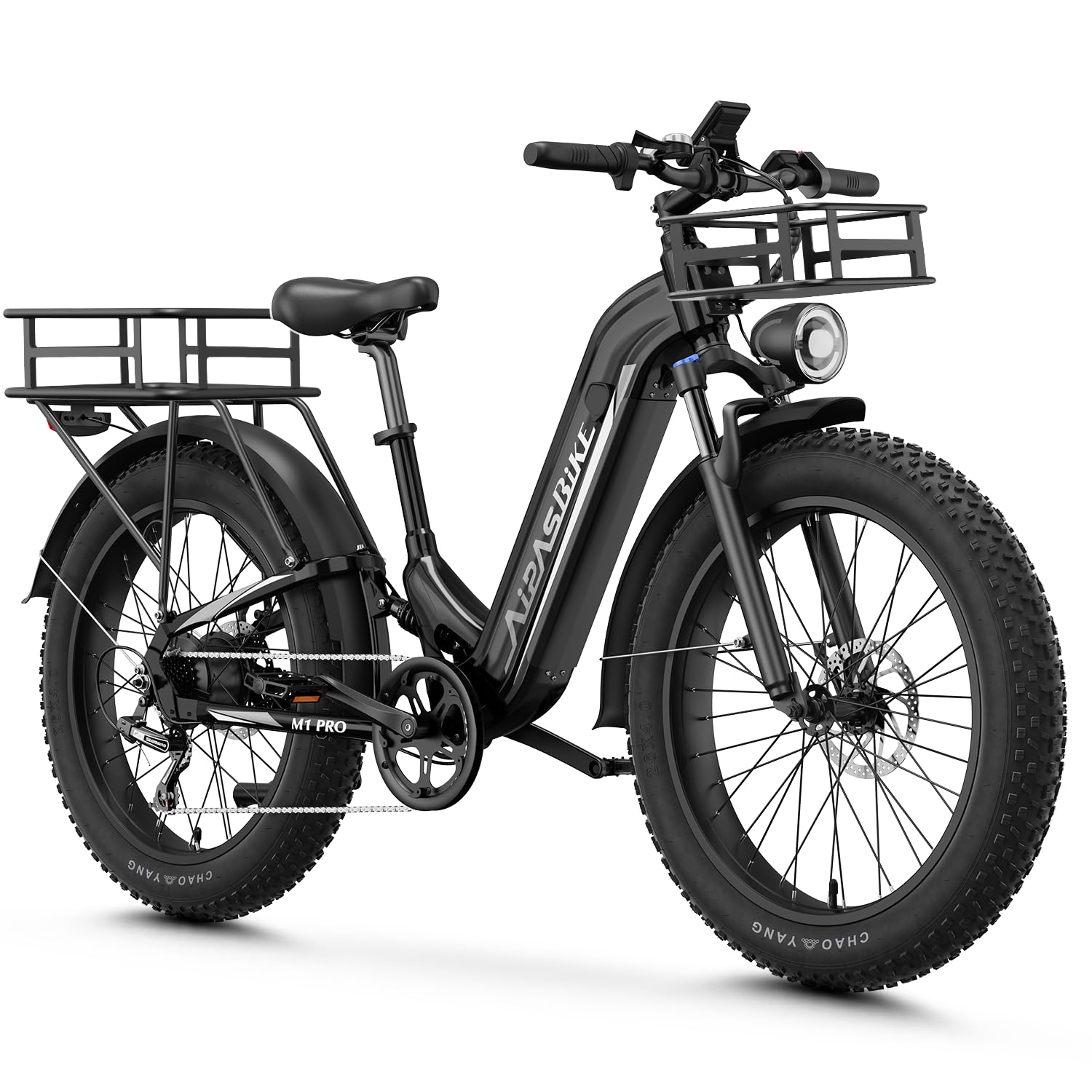
1. Aipas M1 Pro Electric Bike
Our pick — over 4★ from 200+ verified ratings; the strongest balance of quality and price.
The do-it-all beach e-bike that floats on sand and flies on pavement.
This bike earns the top spot because it combines every feature a sand rider actually needs into one polished package. The 26-inch by 4-inch fat tires provide the footprint to stay on top of loose sand, while the 1800W peak motor delivers 110 Newton-meters of torque — enough thrust to climb a 23-degree incline without bogging down. That motor power is a 20% peak increase over some of the 1500W competitors in this list, and the crowd of owners backs it up: quality is the thing praised most, with over 50 owners highlighting it.
The 48-volt, 17.5 amp-hour battery is rated for 25 to 85 miles per charge. Buyers report getting roughly 50 miles using throttle only on pavement, which means a full day of beach riding is realistic before you need to recharge. The step-through frame makes mounting and dismounting simple — especially useful when you are on uneven sand — and the dual suspension (lockable front fork plus rear shock) keeps the ride smooth over the washboard bumps you find on shoreline paths. It does come with a notable weight penalty, which is the most-discussed negative: the bike is heavy, so lifting it onto a car rack without help is a genuine chore.
The 180mm mechanical disc brakes stop well, though several owners note they require a bit more hand squeeze than hydraulic brakes would. For the balance of power, sand-ready tires, and everyday livability, this is the bike that works for the widest range of riders. The crowd-favorite rating of 4.4 across a few hundred owners confirms it.
Why It Works for Sand
- 26″ x 4.0″ fat tires provide the footprint needed for soft sand floatation
- 110 Nm of torque gives you climbing power on dunes and steep beach access paths
- Step-through frame makes getting on and off easy on uneven ground
The Real Trade-Offs
- Substantial heft makes it difficult to load onto a rack without help
- Mechanical disc brakes work but take more effort than hydraulic alternatives
- Battery life gets mixed feedback — heavy throttle use on sand will drain it faster
Reach for this if: you want a single e-bike that handles weekend beach trips, paved commutes, and light trail riding without compromise.
Think twice if: you need to lift the bike onto a roof rack solo or you require the easiest possible one-finger braking.
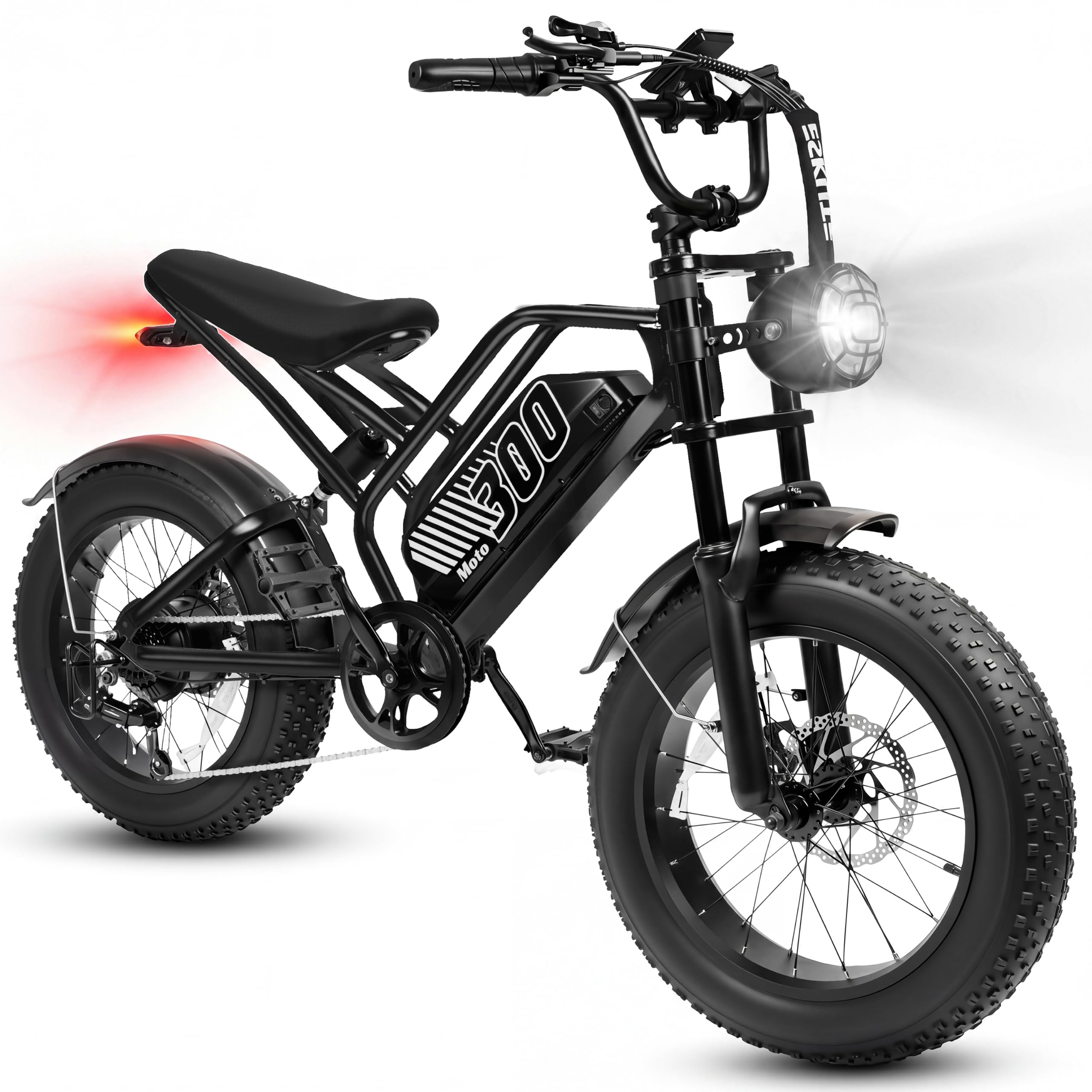
2. ESKUTE V300 Electric Dirt Bike
A budget-friendly sand runner that keeps going when the beach gets long.
What the V300 lacks in brand polish it makes up for in raw, long-distance capability. The 48-volt 20.8 amp-hour battery is rated for up to 85 miles of range — the same top-line claim as the more expensive M1 Pro, giving you a massive range advantage over many competitors at this price tier. The 1500W peak motor puts out 90 Nm of torque, enough to push the 20-inch by 4-inch fat tires through soft sand, and owners confirm hitting 30+ mph on flat ground. The range gap between this and the Aipas is practically a tie on paper, but the V300 does it at a noticeably lower entry point.
The 20-inch wheels are smaller than the 26-inch tires on some other picks here, which changes how the bike handles on sand: a smaller diameter wheel with a 4-inch width creates a shorter, more maneuverable contact patch that some riders prefer for tight beach paths. The full suspension system (front fork plus rear shock) is listed as dual suspension, though several owners note the rear is more of a fat-tire cushion than a dedicated shock, so do not expect plush rear travel. The convenience features are genuinely useful — the NFC open up system lets you start the bike with a tap instead of a key, and the color LCD screen keeps your speed and battery data readable in sunlight.
The real-world catch is assembly and tuning. Owners consistently report that the bike needs post-delivery adjustments: tightening bolts, centering brakes, and aligning the derailleur. One buyer called it “a great platform to build off of,” which captures the character of this bike perfectly — it is a capable, fast machine that rewards a few hours of mechanical attention. The rider community around the V300 is enthusiastic about customizing it with aftermarket seats, handlebars, and even battery upgrades, so if you enjoy tinkering to get the perfect setup, this is your bike. The 4.8-star rating from early adopters suggests the foundation is solid.
Straight talk: For the range and speed per dollar, nothing else here touches it. Just be ready to spend an afternoon dialing in the brakes and gears — the reward is a sand bike that will run 85 miles on a charge and hit over 30 mph when you open the throttle.
Grab this when: your priority is maximum range and speed at the lowest cost, and you are comfortable with basic bike maintenance.
Pass if: you want a fully tuned, no-adjustment-needed experience right from the start, or you need a dedicated rear suspension.
3. TS TST GRP LLC Electric Bike
Connected, comfortable, and certified — the tech-savvy rider’s sand companion.
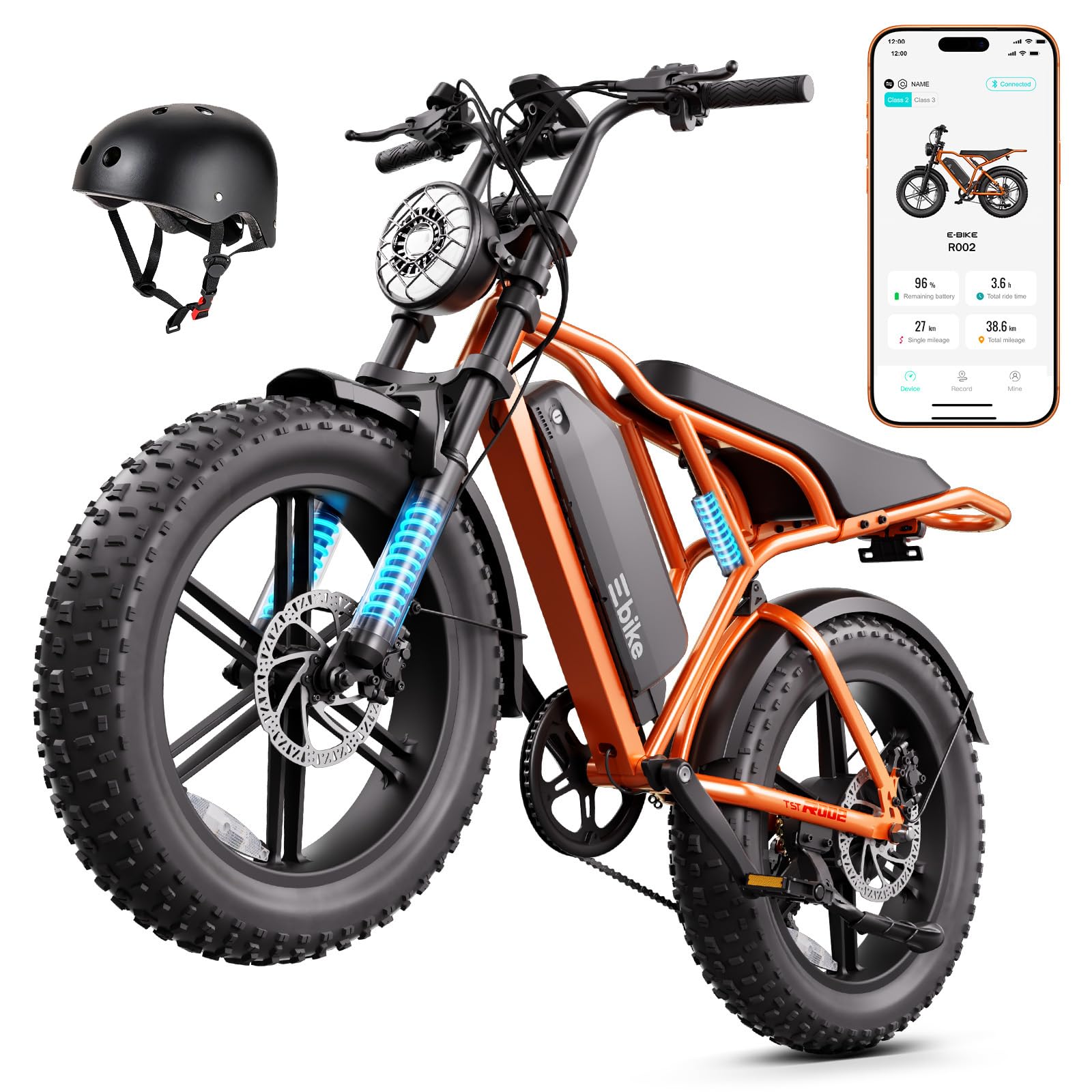
The TST e-bike stands out for its smart features that actually matter on the beach. The smartphone app lets you track ride stats, customize your pedal-assist levels, set a speed limit for when your kids borrow the bike, and even remotely lock the e-bike so you can leave it at the shoreline while you swim. The 48-volt, 15 amp-hour removable battery is rated for 60 to 80 miles per charge, giving you solid sand-range capability. The 1500W peak motor with dual suspension (front fork plus rear shock) handles the chop of beach terrain well, and the 20-inch by 4-inch fat tires give you the float you need on soft sand.
One of the strongest arguments for this bike is the SGS safety certification — a third-party verification that the electrical system, battery, and charger meet fire-resistance and overcharge-protection standards. That matters more on sand than you might think, because beach riding subjects the battery compartment to vibration, heat, and moisture that can stress uncertified electronics. The included headlight and turn signals are a thoughtful addition if your beach rides extend into dusk. The 4.2-star average from over 100 owners puts it in solid territory, with the highest praise centered on assembly (which owners describe as easy for an e-bike) and value for money.
The drawback is the left-side thumb throttle, which a notable number of riders found awkward compared to a wrist-style throttle they are used to. It is a training curve rather than a flaw, but one note if you are particular about your hand controls. The 180-day warranty and 24/7 customer support are better than what many budget options offer, providing a safety net for first-time e-bike owners who might need help troubleshooting.
Bottom line: If you want the security of SGS certification and the convenience of controlling your bike from your phone, this is the most thoughtfully equipped e-bike in its price tier. The app-lock feature alone makes beach parking less stressful.
Best for: tech comfortable riders who value certification, app control, and turn signals over pure top speed.
Not for: anyone dead set on a wrist-style throttle or who finds app-based adjustments unnecessary.
4. Kebiko 1500W Electric Bike
A straightforward, value-focused e-bike built for shorter beach hops.
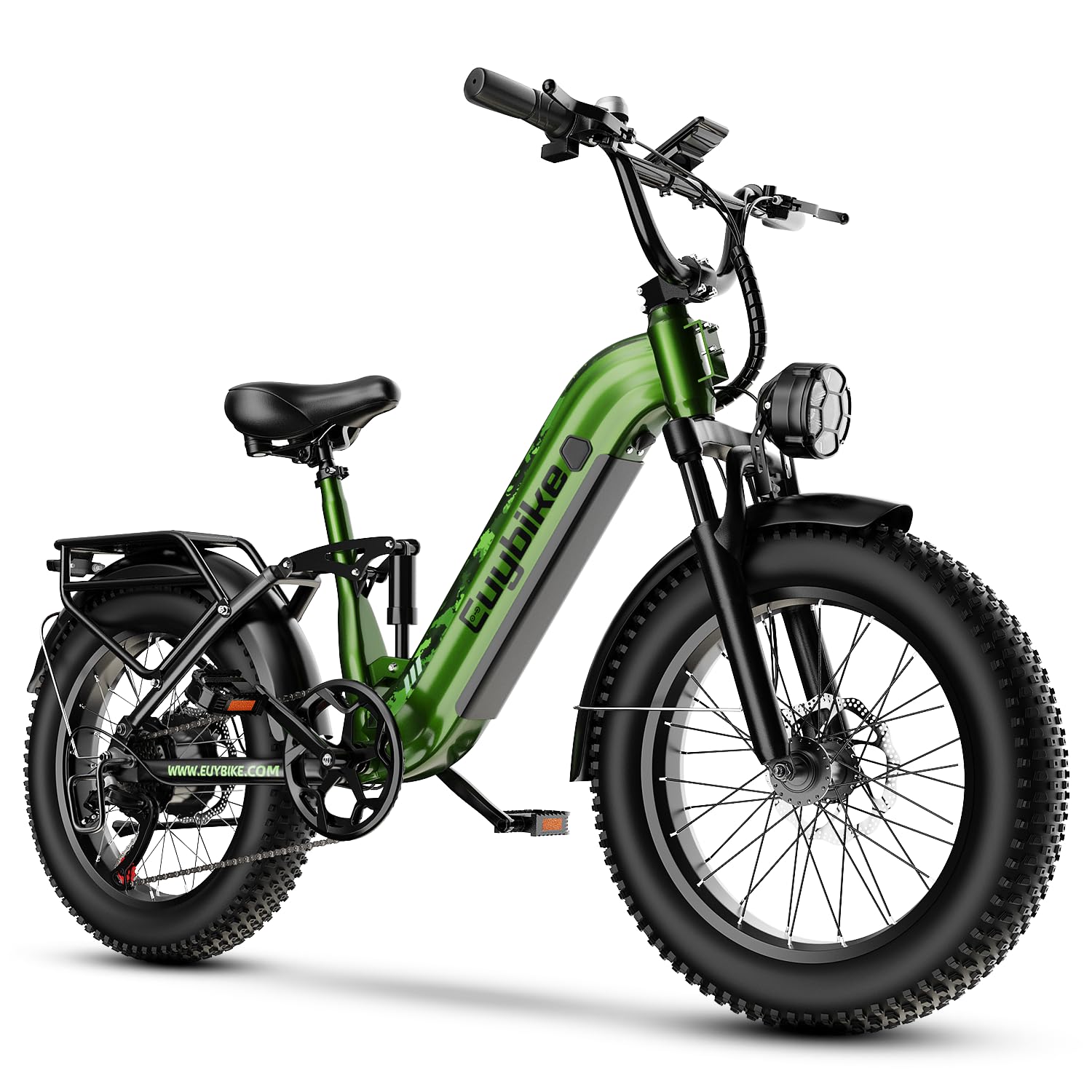
The Kebiko is the simplest option here, and that is its strength. The 1000W-rated motor (1500W peak) provides enough power to get you moving on sand, while the 48-volt 20 amp-hour battery claims a 40-to-80-mile range — though owners mention the real-world upper end is closer to 20 miles on throttle-heavy use, so set your expectations accordingly for sand riding. The 20-inch by 4-inch fat tires and front fork suspension handle beach terrain well enough, and the dual disc brakes offer reliable stopping power in sandy or wet conditions.
Assembly is the standout positive here, with owners completing the build in under 60 minutes thanks to the 90% pre-assembled delivery and a clear video guide. That is a meaningful perk if you are not mechanically inclined. The three riding modes (pure electric, pedal assist, classic bike) keep things simple compared to the multi-screen setups on pricier models. The LCD display includes a USB charging port so you can keep your phone alive while navigating to the next beach spot.
The honest trade-off is that the claimed 80-mile range feels aspirational rather than realistic based on owner experiences. Several riders report getting roughly a quarter of that with constant throttle use. Treat the range claim as a best-case pedaling scenario, and you will be happy with the bike. The carbon steel frame makes it heavy — the weight is a recurring point in reviews — so lifting it onto a tailgate pad requires some muscle.
Honest summary: For a budget-friendly, easy-to-assemble bike for short beach runs (think 5 to 10 miles), the Kebiko works. For long all-day sand expeditions, the battery will leave you wanting more.
Choose this for: quick sunset beach cruises and paved commuting where assembly ease matters more than maximum range.
Skip if: you need a guaranteed full-day range on sand without pedaling hard.
5. Jasion Thunder Electric Bike
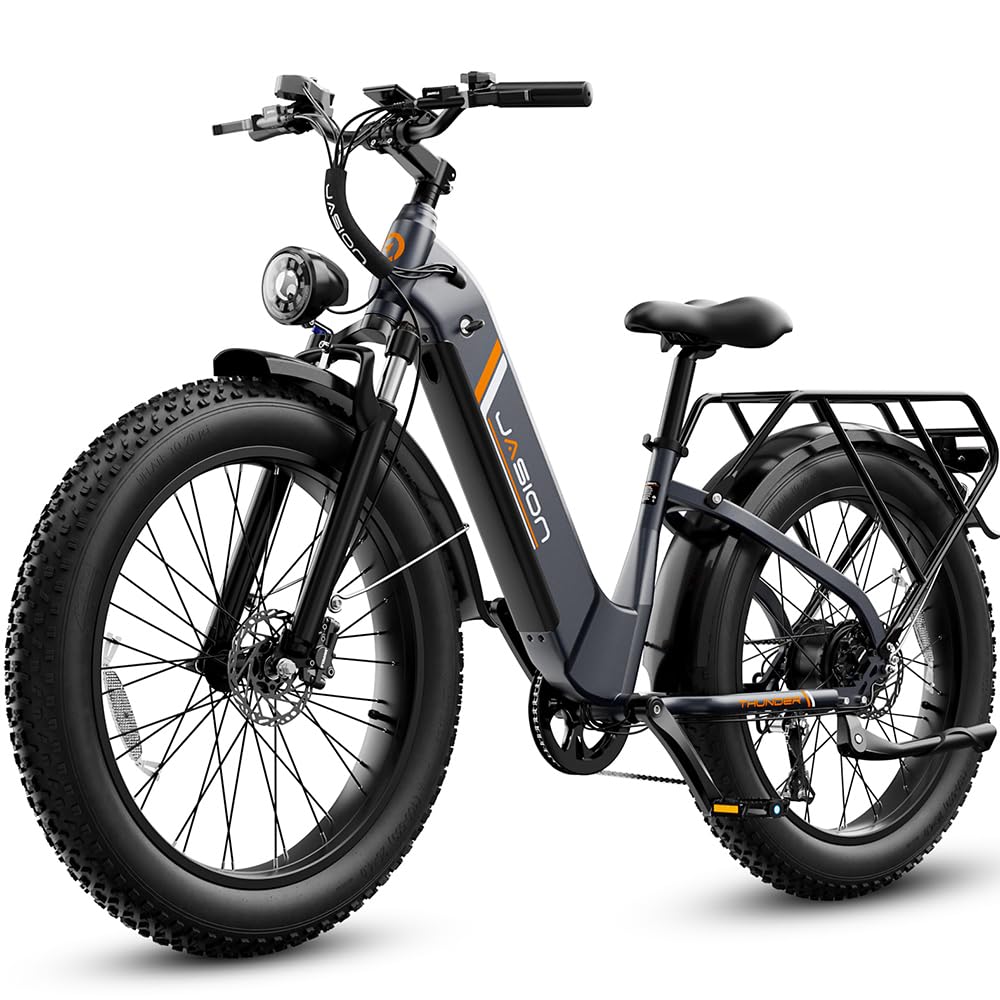
The sand hauler that carries a full load without losing its cool.
The Jasion Thunder is built for riders who carry gear — or passengers — to the beach. The aluminum frame supports up to 400 pounds of total load, which is the highest capacity on this list and a meaningful advantage if you plan to strap on a cooler, camping chairs, or a second rider. The 26-inch by 4-inch fat tires are the same diameter as the top pick, providing a large contact patch for sand floatation, and the 1800W peak motor delivers 85 Nm of torque to keep the bike moving even when loaded. The high-capacity 48-volt 18 amp-hour battery (1040 watt-hours) is rated for up to 80 miles of range.
Hydraulic disc brakes are a standout feature at this price point — they stop the bike in a claimed 2 seconds and require noticeably less hand effort than the mechanical discs on many competitors. Owners consistently praise the build quality (the top-mentioned aspect) and the ease of assembly. The remote security lock adds a layer of theft protection when you leave the bike at the beach access point. The 7-speed Shimano drivetrain gives you gear range for mixing pedal power with the motor.
The limitations are niche but worth noting. One owner who rode rough dirt trails reported seven flat tubes, suggesting the stock tires work great on sand and pavement but may lack flat protection for sharp off-road debris. The bike is also quite large, so shorter riders — around 4’10” as one review noted — may find they have to slide off the seat to touch the ground. The speed calibration can be slightly inaccurate from the start, with one owner noting the bike hits 25 mph despite being set for a 20 mph limit.
What Stands Out
- 400-pound load capacity lets you carry beach gear or a passenger without strain
- Hydraulic disc brakes provide strong, low-effort stopping in sand and wet conditions
- Large 26″ x 4.0″ tires give you excellent floatation on soft surfaces
What to Watch For
- Stock tires may lack flat protection for sharp off-road debris — consider aftermarket liners
- Large frame geometry is less comfortable for shorter riders under about 5 feet tall
- Speed calibration may read higher or lower than actual speed
Buy it for: hauling beach gear, carrying a passenger, or long rides on sand and pavement where brake performance matters.
Avoid if: you are under 5’2″ or you plan to ride on trails with sharp rocks and sticks regularly.
6. Jasion EB5 Ultra Electric Bike
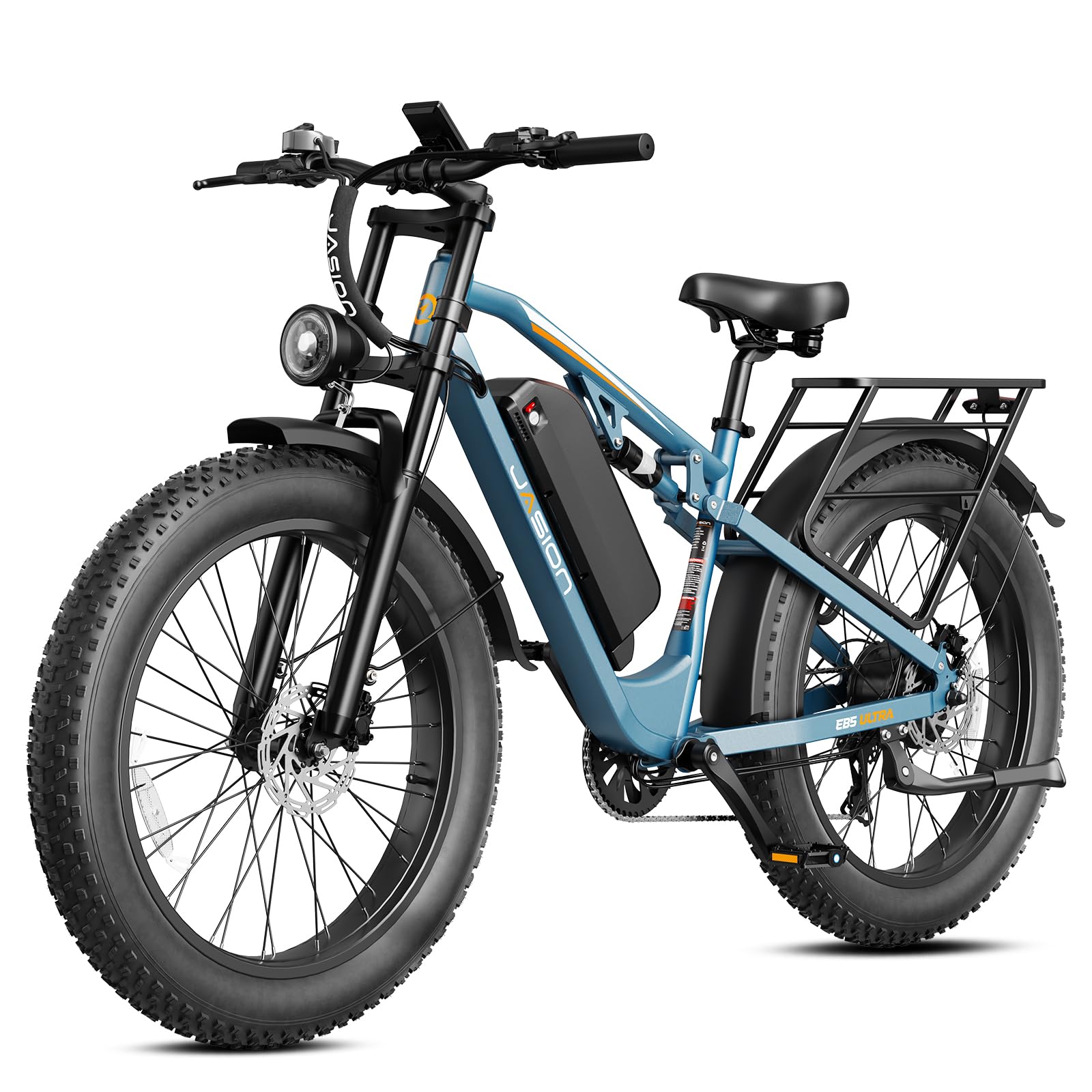
The torque monster that climbs dunes like they are flat pavement.
With a 2500W peak motor and a 52-volt 20 amp-hour battery, the EB5 Ultra is the most powerful e-bike on this list by a wide margin. That higher voltage system (52V vs the 48V standard on almost every other bike here) means the motor runs more efficiently under load — delivering at least 75 Nm of torque with less battery sag when you are crawling up a steep dune. Customers note real-world top speeds of 34 to 38 mph, making this the fastest option here. The 26-inch by 4-inch fat tires and dual suspension (front fork plus a 160mm mid-mounted rear shock) make it exceptionally stable on uneven sand.
The battery capacity of 1040 watt-hours matches the Jasion Thunder, but the 52-volt architecture gives it a range edge. The bike is rated for up to 70 miles per charge, and one owner reported covering 200 miles in five days of mixed riding. The hydraulic disc brakes provide the stopping power you want at these higher speeds. Quality leads the positive owner feedback with over 30 mentions, and assembly is widely rated as straightforward.
The biggest caveat is that this bike is physically large and heavy. Multiple owners note it is too big for riders under 5’7″, and the seat-to-handlebar distance feels cramped for taller riders around 6’3″. The dedicated 52V platform means parts and batteries are less interchangeable with standard 48V gear. There are no threaded holes for a water bottle cage or phone mount, which is an odd omission for a bike this capable. Durability receives mixed feedback — while most owners find it holds up well, a minority report issues.
Why It Dominates Sand
- 2500W peak motor is the most powerful here, giving you easy dune climbing
- 52V battery system runs more efficiently under load than standard 48V bikes
- Hydraulic disc brakes provide safe stopping at the higher speeds this bike can reach
Who Should Pass
- Large frame is unwieldy for riders under 5’7″ or over 6’2″
- No water bottle or phone mount threaded holes — an odd oversight
- Heavy weight makes it a struggle to lift onto a rack
Pick this if: you crave maximum power, speed, and dune-climbing capability and you are comfortable on a large, heavy bike.
Look elsewhere if: you are under 5’7″, need a bike for tight storage, or want a standard 48V platform for easy parts swapping.
7. HiKeep K6-S Electric Dirt Bike
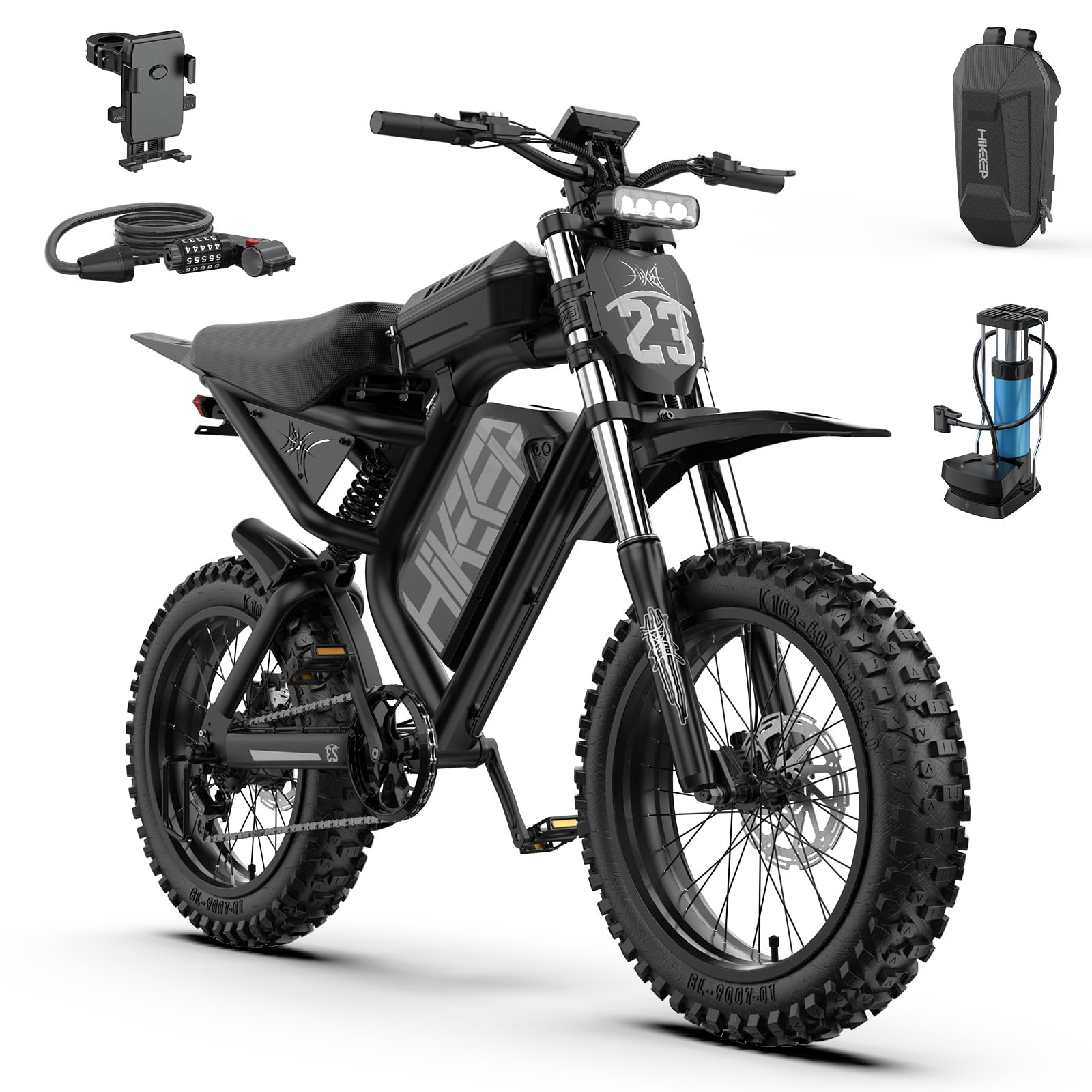
The 52-volt, 40 amp-hour monster built for full-day sand expeditions.
The HiKeep K6-S exists for a very specific rider: someone who wants to ride all day without worrying about range. The 52-volt, 40 amp-hour battery is the largest capacity on this list by a massive margin — four times the amp-hour rating of most 48V competitors — giving it the energy to sustain high power output for extended periods on sand. The 1500W rated motor peaks at 3000W, which is the highest peak rating here, delivering the instant torque needed to get a loaded bike moving on deep sand. Reviewers point out a real-world range of about 45 miles with mixed throttle use and a top speed of 34 mph on flat pavement.
The 20-inch by 4-inch fat tires, combined with a full suspension system (front fork plus rear spring shock) and hydraulic disc brakes, make the bike feel planted and controllable at speed on loose terrain. The NFC open up system and smart LCD display are well-integrated for a bike at this level. The 90% pre-assembled delivery means you can be riding within 45 minutes of opening the box. The 365-day warranty covers manufacturer defects, though shoppers say the customer service team is responsive when issues arise.
The honest truth is that the K6-S has the most mixed owner feedback on this list. While some owners are thrilled with the speed and battery life, a smaller number report problems: a wiring short that causes intermittent communication errors, a loose controller that rattles during rides, and a kickstand bracket that snapped. One owner with a warranty issue was told to weld the bracket rather than receive a replacement. The bike requires a buyer willing to handle post-delivery tweaks and potential warranty friction. The very high battery capacity also creates a significant weight penalty that makes this bike hard to transport without a ramp.
The Undisputed Strength
- 52V 40Ah battery is the largest capacity here — real-world range of 45 miles even with throttle-heavy sand riding
- 3000W peak motor provides the highest peak power for instant torque on loose surfaces
- Hydraulic disc brakes and full suspension offer controlled, comfortable high-speed riding
The Honest Risk
- Wiring and component defects reported by a minority of owners — buyer beware on quality control
- Customer service responses to warranty claims have been inconsistent based on owner reports
- Extremely heavy due to the massive battery — difficult to transport without a ramp
Only buy this if: you need the absolute longest possible range for full-day, throttle-heavy sand riding and you are comfortable with potential post-purchase troubleshooting.
Stay away if: you want a turnkey, zero-hassle experience or you plan to transport the bike regularly without a vehicle ramp.
Understanding the Specs
Peak Motor Power and Torque
The peak wattage rating tells you the maximum power a motor can produce for short bursts — typically when you are accelerating from a stop or climbing a steep slope. For sand riding, a higher peak wattage (1500W and above) is important because the constant drag of soft sand demands more from the motor than pavement does. Torque, measured in Newton-meters (Nm), is the rotational force that actually moves the wheel. Higher torque means faster acceleration from a standstill, which is the critical moment when your tires are sinking into loose sand. Look for at least 80 Nm for confident beach riding.
Battery Voltage and Amp-Hour Capacity
The voltage (48V or 52V) determines how efficiently the motor can draw power. A 52-volt system delivers more power with less current draw than a 48-volt system at the same wattage, which translates to less voltage sag under load and slightly better range. The amp-hour (Ah) rating tells you the total energy stored. A higher Ah number means more total range. On sand, expect your real-world range to be roughly 50 to 70 percent of the manufacturer’s pavement-based estimate, because the motor draws more current to overcome the drag. If a bike claims 80 miles of range, plan for about 40 to 55 miles on soft sand.
FAQ
Can I ride a regular e-bike on beach sand?
How much range do I lose riding on sand vs pavement?
What is the ideal tire size for a beach e-bike?
Do I need hydraulic brakes for beach riding?
How much does an e-bike for beach sand weigh?
Is a 1500W motor enough for sand riding?
Can I ride an e-bike on the beach in any weather?
How do I maintain an e-bike after riding on sand?
Is a step-through frame better for beach riding?
What is a pedal-assist level, and how does it affect range on sand?
Final Thoughts: The Verdict
For most buyers, the e bike for beach sand winner is the Aipas M1 Pro because it combines the right tire size, enough torque, dual suspension, and a step-through frame into one reliable package that thousands of owners have validated. If you want maximum range and speed for the lowest price, grab the ESKUTE V300. And for the raw power to climb steep dunes and carry a full load of gear, the Jasion Thunder is the one to reach for.
How We Picked
We do not accept paid placement. Every pick is matched to a real buyer and a real use-case; we do not hands-on test units.
Sources & Methodology
Specifications: manufacturer listings and product documentation. Review insights: verified customer reviews, as of July 2026. Pricing: not shown on this page (it changes often); check the current price via the retailer link.
As an Amazon Associate, Trending Car earns from qualifying purchases. This does not affect which products we feature.