
Our readers keep the lights on and my garage snacks stocked. As an Amazon Associate, I earn from qualifying purchases.
Specs are compiled from manufacturer listings and verified buyer reviews and can change over time — please confirm the key details on the product page before buying.
A dual dash cam is your second set of eyes on the road, recording everything in front of you and behind you at the same time. The real trick is picking one that actually captures readable license plates at night, survives a hot car, and stores the footage without corrupting files — the cheap ones often fail at exactly the moment you need them most. This guide walks through the top dual-channel dash cams right now, matching each to a specific driving situation so you get the right trade-offs for your car and your budget.
I’m Min Islam — the founder and writer behind Trending Car. This guide is built by comparing the manufacturers’ published specifications and the patterns across verified customer reviews, so you get each pick’s real strengths and trade-offs instead of marketing spin.
Whether you commute daily in city traffic or take long highway road trips, a quality dual dash cam gives you undeniable evidence if something goes wrong and a clear record of every mile you drive.
Our Picks at a Glance
How To Choose The Best Dual Dash Cam
Every dual dash cam records front and rear simultaneously, but the differences in resolution, sensor quality, and parking features separate a reliable witness from a frustrating gadget. Here are the three factors that matter most when you are shopping.
Resolution: Front vs Rear Clarity
The front camera is your main view — look for at least 2.5K (2560x1440P) or true 4K (3840x2160P) to capture street signs and plates. The rear camera often drops to 1080P, but a higher rear resolution like 2K or 4K means you get the same detail from behind. The trade-off is storage space: higher resolution fills a memory card faster, so loop recording and a large card are essential.
Sensor and Night Vision
Night performance depends on the image sensor and aperture. Sony STARVIS 2 sensors (like the IMX678 or IMX675) handle low light much better than older sensors, reducing motion blur and noise. A wide aperture (F1.5 to F1.8) lets in more light. Look for HDR or WDR (Wide Dynamic Range) to balance bright headlights against dark road edges — otherwise overexposed plates become unreadable.
Parking Mode and Power
If you want the camera to record while your car is parked, you need a hardwire kit (sold separately) that connects to your car’s fuse box. Parking modes vary: time-lapse records one frame per second, motion detection wakes the camera on movement, and collision detection locks footage on impact. A capacitor-powered dash cam is safer in hot climates than a battery-powered one, since capacitors handle extreme heat without swelling or leaking.
Quick Comparison
| Model | Best For | Front Resolution | Rear Resolution | Sensor Type | Amazon |
|---|---|---|---|---|---|
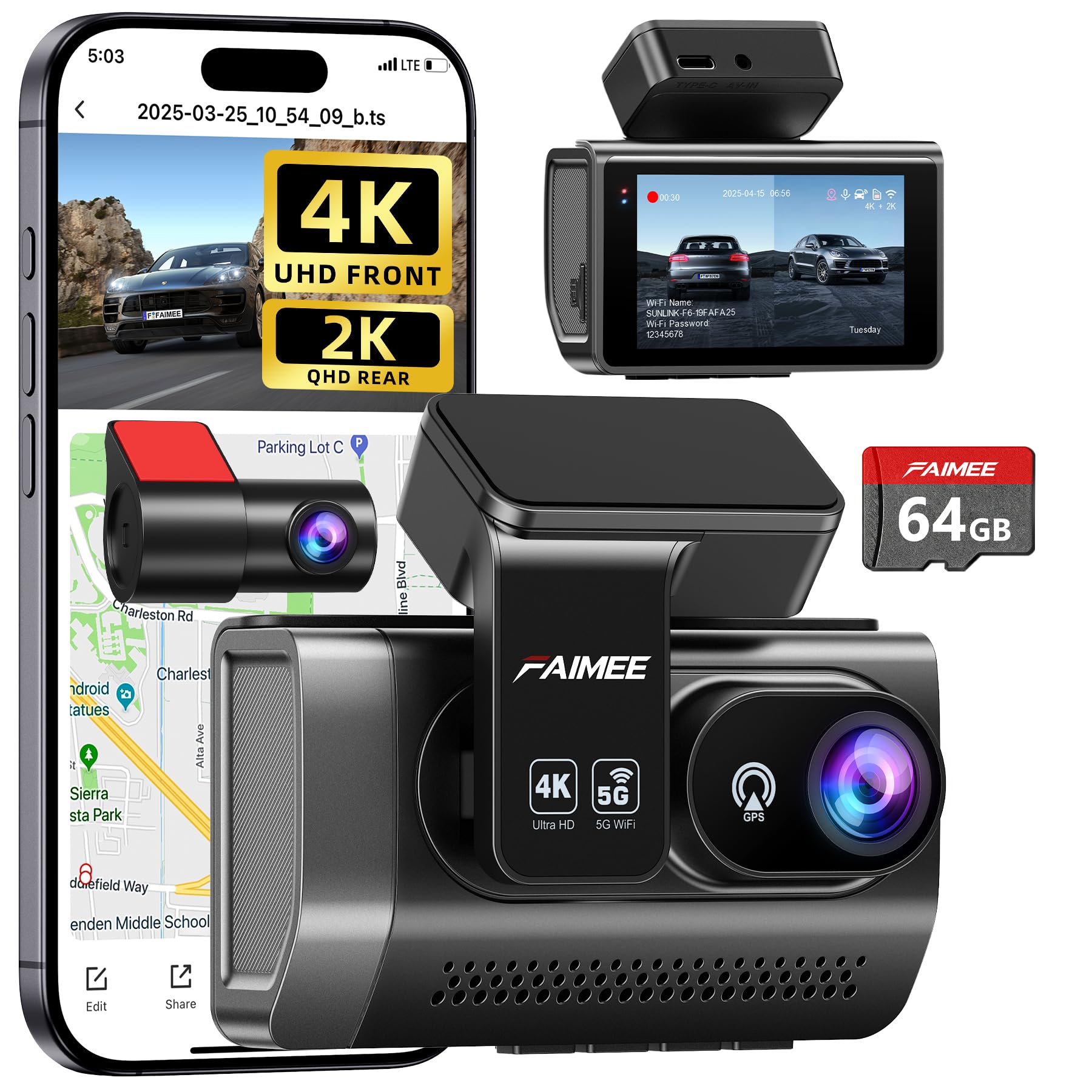
| FAIMEE 4K+2K★ Best Overall | Best Overall Value | 4K (3840×2160P) | 2K (2304x1296P) | F1.8 Aperture | Amazon |
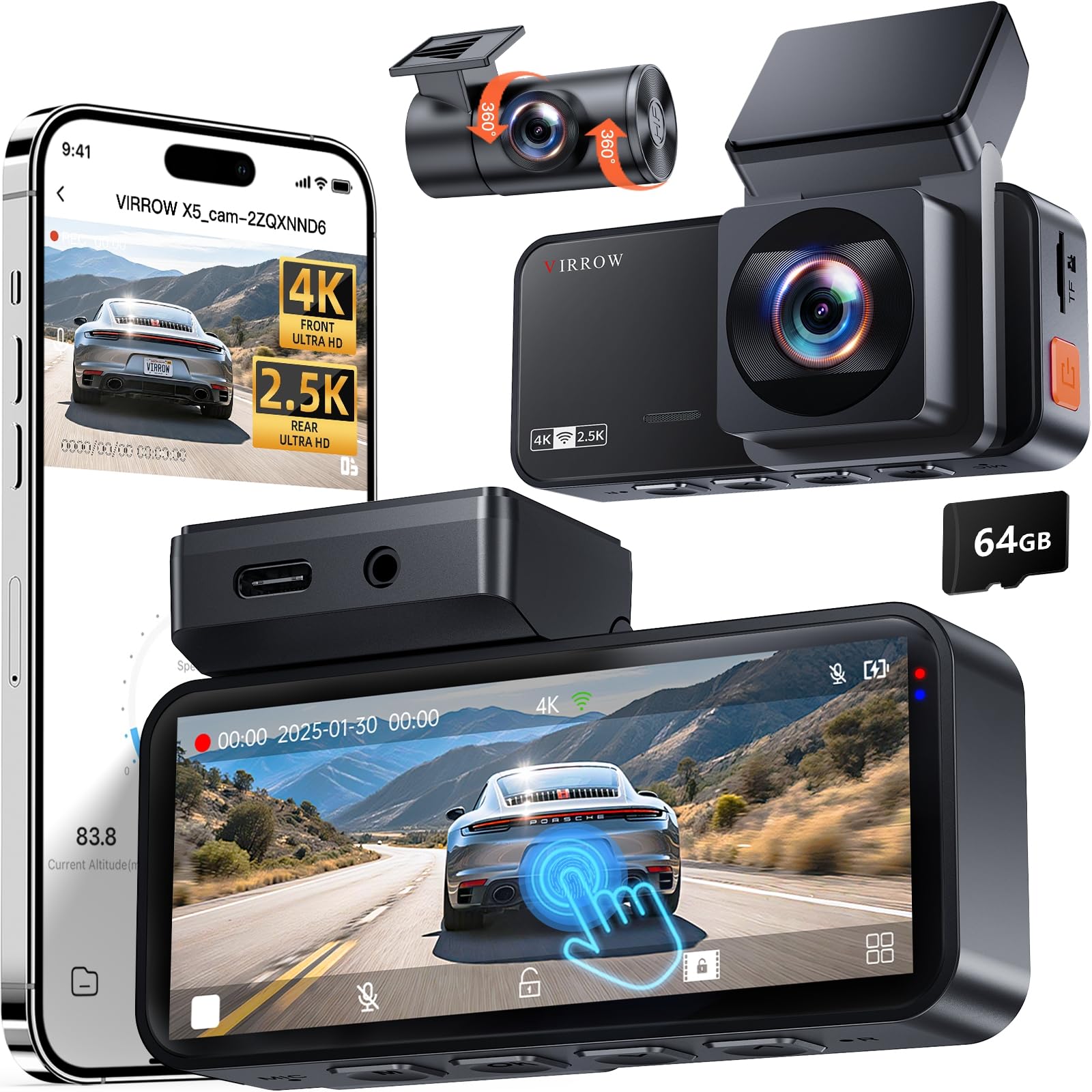
| VIRROW X5Budget Champion | Budget Champion | 4K | 2.5K | F1.8 + SC2336 Sensor | Amazon |
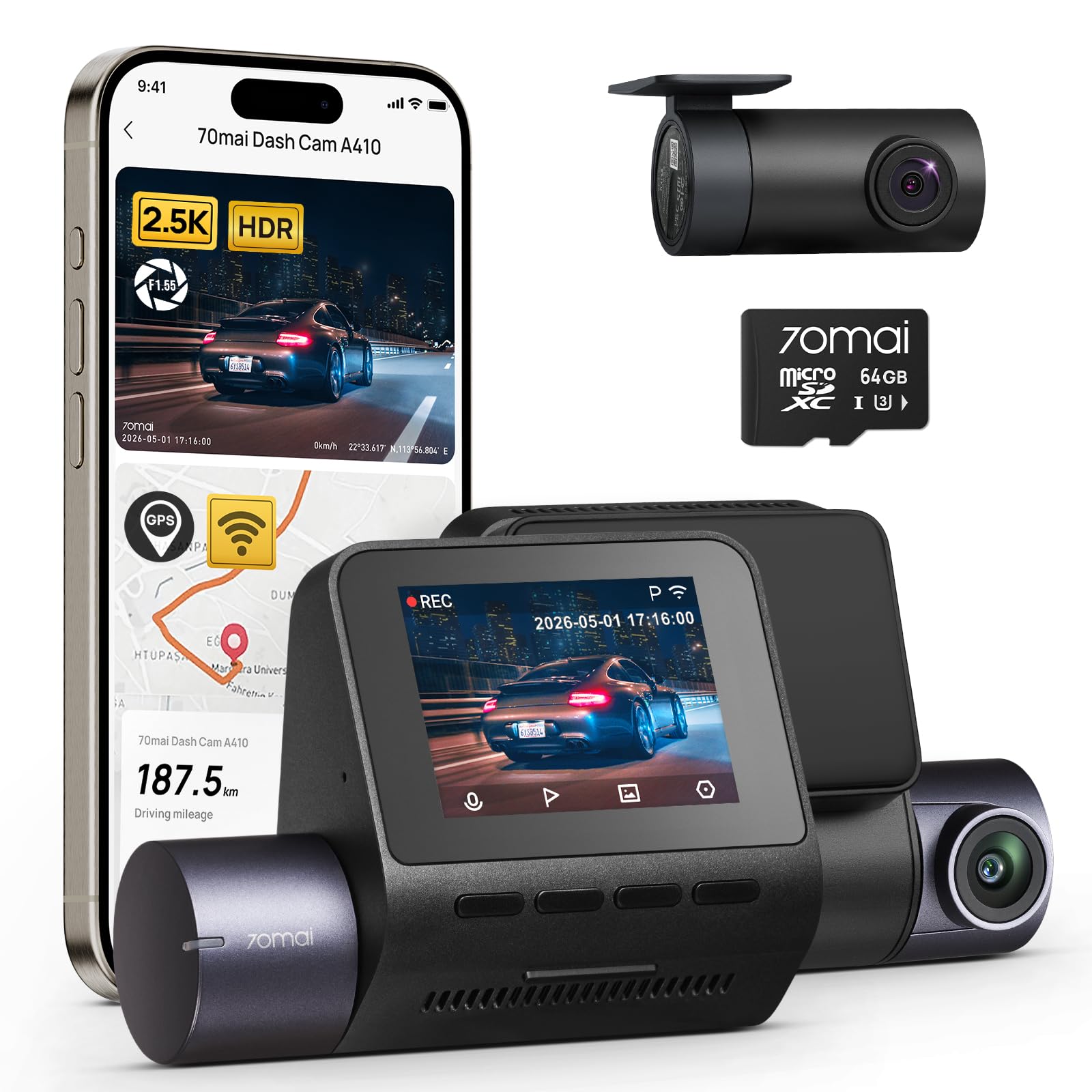
| 70mai A410 | Reliable Mid-Range | 2.5K (2560x1440P) | 1080P | F1.55 Aperture | Amazon |
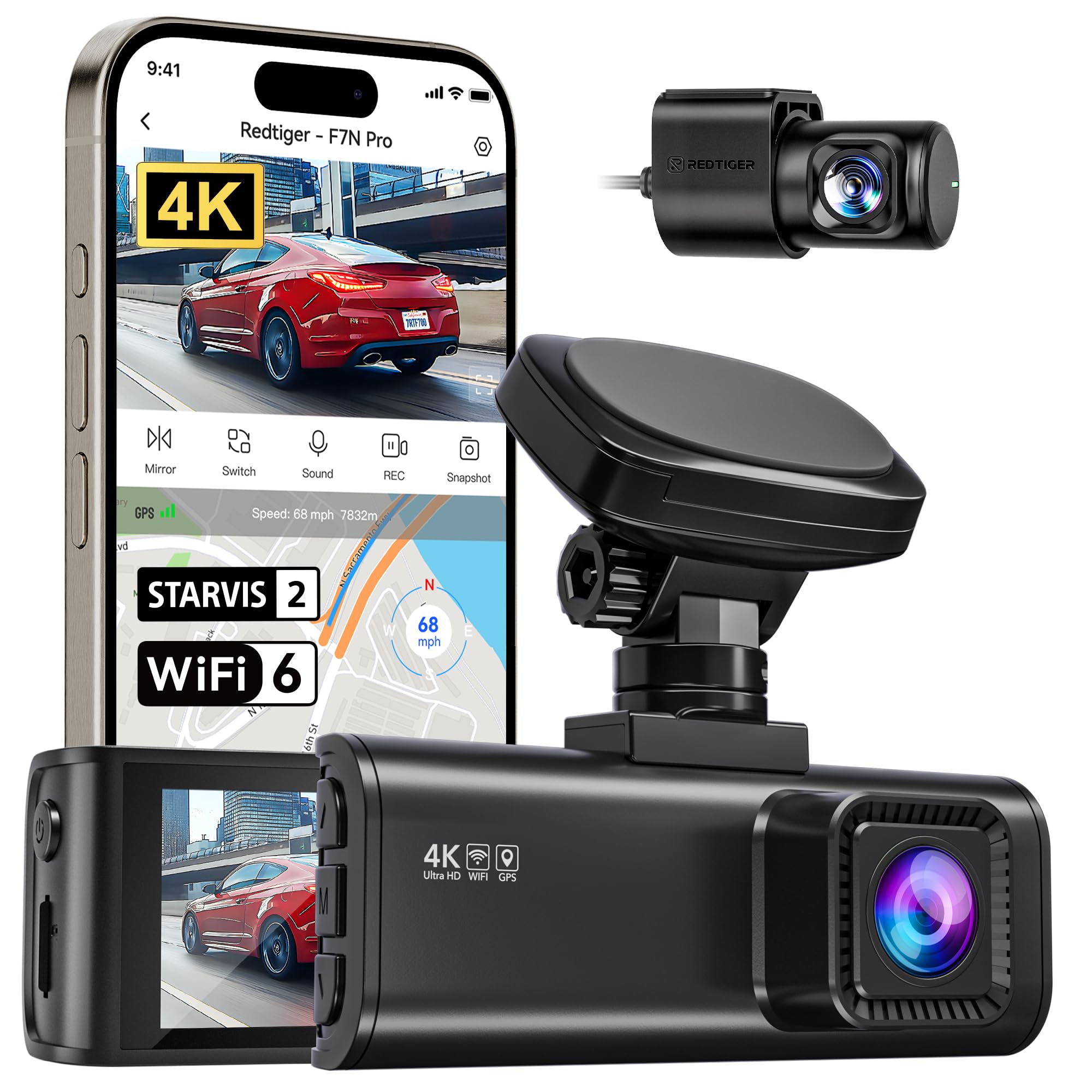
| REDTIGER F7N Pro | Tech Features | 4K (3840*2160P) | 1080P | STARVIS 2 + F1.5 | Amazon |
| ROVE R2-4K DUAL PRO | Premium Clarity | 4K (3840x2160P) | 2K (2560x1440P) | Dual STARVIS 2 (IMX678+IMX675) | Amazon |
| Vantrue S1 Pro Max | Flagship Dual 4K | 4K @30fps | 4K @30fps | Dual STARVIS 2 | Amazon |
| VIOFO A229 Ultra | Ultimate Performance | 4K | 4K | Dual STARVIS 2 (IMX678) | Amazon |
In‑Depth Reviews
1. FAIMEE 4K+2K Dual Dash Cam
Our pick — 4.5★ from 800+ verified ratings; the strongest balance of quality and price.
A balanced package that gives you crisp 4K front footage and a solid 2K rear camera without emptying your wallet.
The FAIMEE nails the balance for most drivers. You get true 4K UHD (3840×2160P) recording up front and a 2K (2304x1296P) rear camera — that is a sharper rear view than the typical 1080P you see at this tier. The 170-degree wide-angle lenses cover up to six lanes, making it easier to catch a car cutting in from the side. Buyers report good video quality for the price and mention that setup is straightforward, which matches the easy stick-on mount and clear instructions.
It comes with a 64GB high-endurance card, so you can start recording the moment you open the box. The built-in dual-band Wi-Fi (5.8GHz and 2.4GHz) connects to the FAIMEE app for live viewing and downloads, and the integrated GPS logs your route and speed directly onto the footage. When a bump is detected, the G-sensor (a small motion sensor that detects a collision) locks the current file so it does not get overwritten.
Unlike many cams in this price range that use a battery, the FAIMEE relies on a capacitor, which is safer in high heat. The 24-hour time-lapse parking mode requires a hardwire kit (not included), but you get continuous low-power recording with it.
Why It Stands Out
- 4K front + 2K rear gives a noticeably sharper rear image than the 1080P on the REDTIGER F7N Pro
- Includes a 64GB memory card — ready to record from the start
- 18-month warranty with 24/7 technical support
The Trade-Offs
- Larger body than some competitors, so it may not hide fully behind the rearview mirror
- Settings menu takes a bit of learning; one reviewer noted the instruction booklet is challenging
Who should grab this: Daily commuters and families who want a well-rounded dual cam with a 2K rear view and GPS without stepping into the premium price tier.
One honest limit: If you need the absolute best night-time plate reading in total darkness, the STARVIS 2 sensors on the ROVE or VIOFO options outperform this standard sensor.
2. VIRROW X5 4K+2.5K Dash Cam
A touchscreen budget cam that punches above its price with a 4K front and 2.5K rear recording.
The VIRROW X5 is rare at its price level — the rear camera records at 2.5K HD, which is noticeably sharper than the 1080P rear you get on many budget options like the REDTIGER F7N Pro or the 70mai A410. The front lens covers 170 degrees and the rear covers 165 degrees, giving you a wide view that reduces blind spots. One buyer mentioned their camera survived a totaled car, which speaks to the build quality. The 3.39-inch touchscreen makes menu navigation easier than the button-only systems on cheaper cams.
A built-in G-sensor (collision sensor) automatically locks footage when it detects an impact, and the free 64GB memory card means you can start recording right away. The camera supports loop recording, so old footage gets overwritten automatically, and the 24-hour parking mode with time-lapse recording helps keep an eye on your car while parked (hardwire kit sold separately).
Some users have noted that the Wi-Fi does not auto-reconnect — you have to manually reconnect each time. The adhesive tape on the mount may also lose grip in very hot weather if moved between vehicles.
Bottom-line take: You get a 2.5K rear camera and a large touchscreen at a price that usually only gives you 1080P rear and small buttons. The Wi-Fi quirk and tape grip are the main compromises.
Best for: Budget-focused drivers who still want a crisp rear view and a touchscreen interface over a button-only menu.
Look elsewhere if: You park in extreme heat daily and need a mount that stays put without re-sticking — the tape may not hold up as well as a suction mount after long hot exposure.
3. 70mai A410 Dual Dash Cam
A compact, well-engineered dual cam from a known brand that prioritizes night vision and reliability.
70mai is a well-established name in dash cams, and the A410 carries that reputation forward. The front records at 2.5K (2560x1440P) with an F1.55 ultra-large aperture — that wide opening lets in more light than the F1.8 on the FAIMEE or the VIRROW, which translates to better night footage. The rear camera records at 1080P, which is standard for this segment. The 125-degree front lens covers four lanes of traffic, which is narrower than the 170-degree cams above but still sufficient for most driving.
The electrostatic sticker mount leaves no sticky residue when removed, a nice touch for lease vehicles or frequent repositioning. One reviewer, who did the research across options, called this the “best value in price range,” noting the GPS, HDR, and night vision as standouts. The built-in GPS embeds coordinates, speed, and timestamps onto your footage, making it useful for insurance disputes. The 64GB card is included, and the camera supports up to 256GB.
The main trade-off against the 70mai is the lower rear resolution (1080P vs 2K on the VIRROW X5). Also, the hardwire kit for parking mode is sold separately, and the camera uses a capacitor rather than a battery, which is preferable for hot climates.
What Shines
- F1.55 aperture and HDR deliver cleaner low-light footage than most at this price
- Electrostatic sticker mount leaves no residue on the windshield
- Small, unobtrusive design hides behind the rearview mirror
What Doesn’t
- Rear camera is 1080P, not as sharp as the VIRROW X5’s 2.5K rear
- Battery lasts 1.5-2 years and is serviceable but not user-swappable in all climates
Ideal for: Drivers who prioritize a strong night-vision front camera from a brand with a proven track record, even if the rear camera is standard 1080P.
skip it if: You need the highest possible rear resolution — the 1080P rear falls short of the 2K rear on the VIRROW X5 or the 2K rear on the ROVE.
4. REDTIGER F7N Pro 4K Dash Cam
A mid-range cam with a STARVIS 2 sensor that punches above its class for low-light front video.
The REDTIGER F7N Pro uses a STARVIS 2 image sensor on the front camera, which is a real upgrade for night driving — it captures clearer detail in low light compared to standard sensors. The front records at true 4K (3840*2160P) and the rear at 1080P. It combines an F1.5 front aperture and F1.8 rear aperture with a 6-layer optical lens that reduces glare from oncoming headlights. The 170-degree front and 140-degree rear coverage gives you a broad view of traffic around you.
You get built-in 5.8GHz WiFi 6 and GPS tracking, and the app supports OTA firmware updates. The 24-hour parking mode offers both time-lapse and G-sensor collision detection (hardwire kit required). One long-term reviewer noted the camera was still reliable after over a year of use and praised the responsive customer service from REDTIGER. Another called it “better than systems twice the price” in terms of video clarity.
A common frustration is the relatively slow menu system and the small 3.18-inch screen, which feels dated compared to the touchscreen on the VIRROW X5. The rear camera is only 1080P, so you lose some detail behind the car compared to the ROVE or Vantrue.
Where It Excels
- STARVIS 2 sensor on the front gives meaningful night-vision improvement over the FAIMEE’s standard sensor
- WiFi 6 with faster app transfer speeds than older 2.4GHz Wi-Fi cams
- Excellent build quality and customer service — one reviewer had a post-warranty unit replaced
Where It Falls Short
- Rear camera is 1080P, not 2K like the VIRROW X5 or ROVE
- Menu navigation is slow and the small screen feels outdated
Reach for this if: Night driving is a big part of your commute and you want STARVIS 2 technology at a mid-range price — its low-light front video quality justifies the cost.
Consider something else if: You also want a sharp rear view at night for reading plates behind you — the 1080P rear on the VIOFO A229 Ultra or ROVE gives better detail behind.
5. ROVE R2-4K Dual PRO Dash Cam
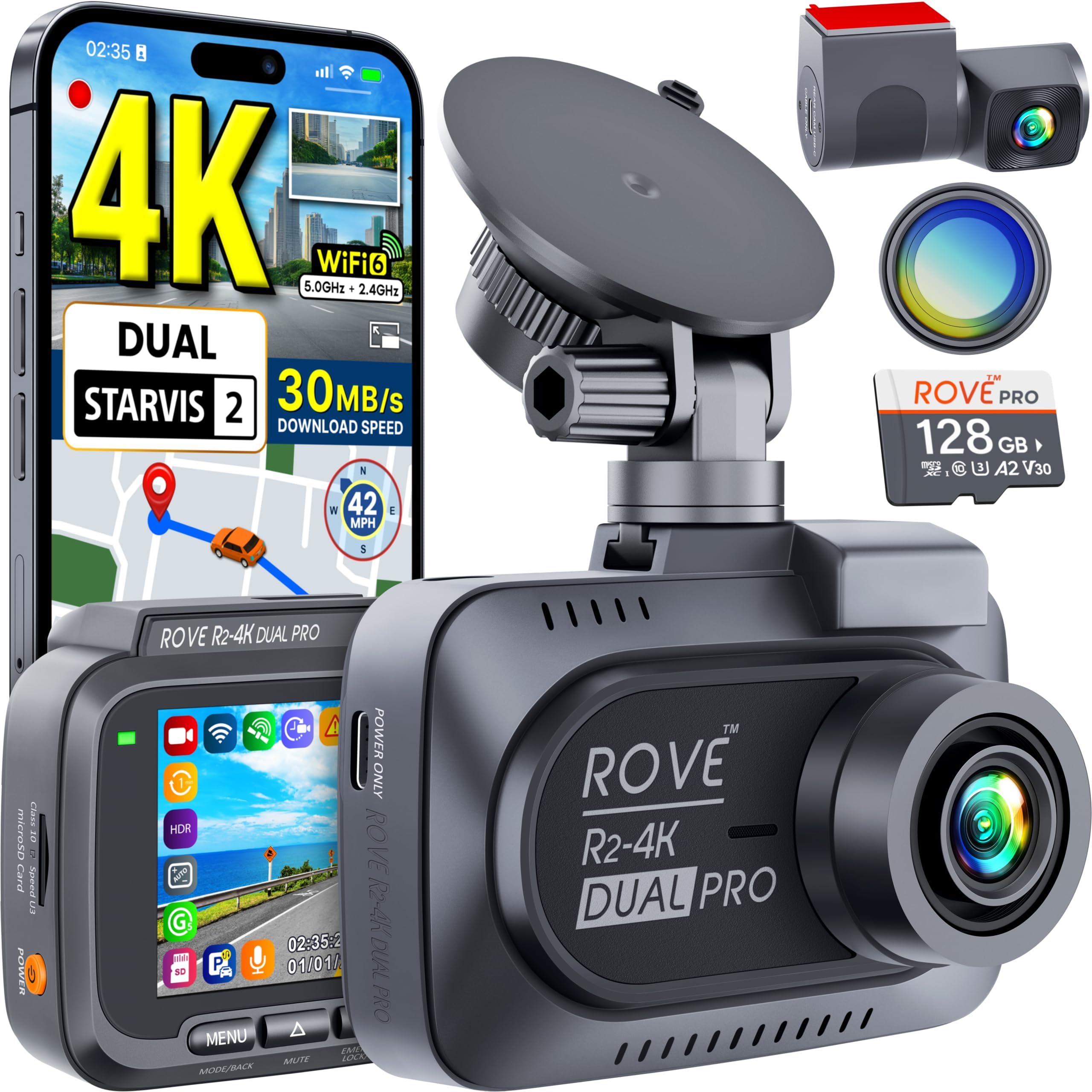
Professional-grade clarity with dual STARVIS 2 sensors on both front and rear cameras for all-conditions recording.
The ROVE R2-4K DUAL PRO sets a high bar by equipping both the front and rear cameras with Sony STARVIS 2 sensors — the front uses an IMX678 (8MP) and the rear uses an IMX675 (5MP). That means the rear records at 2K (2560x1440P) rather than the 1080P you get on the FAIMEE, VIRROW, or REDTIGER. The front captures 4K (3840x2160P) at 30fps. Wide apertures of F1.7 front and F1.55 rear, combined with HDR, give you cleaner, sharper video in both daylight and low light compared to the standard-sensor cams above.
It comes with a 128GB ROVE PRO microSD card (tested for 4K recording) and a CPL filter (a polarized lens that cuts windshield glare) — items you usually have to buy separately for other cams. The WiFi 6 supports transfer speeds up to 30MB/s, which is noticeably faster than the 5GHz on the Vantrue S1 Pro Max. The quad-mode GPS uses GPS, BEIDOU, GALILEO, and GLONASS for accurate route tracking.
The parking mode offers three options: time-lapse at 1FPS, motion detection, and collision detection. Reviewers consistently praise the video clarity, calling it “better than BlackVue” and noting the clear reading of license plates both day and night. The only trade-off is that the app takes some time to learn, and the unit is larger than some competitors like the 70mai A410.
Game-Changing Specs
- Dual STARVIS 2 sensors give you 2K rear, not 1080P — sharper details behind you than the VIOFO A229 Ultra’s 4K rear at a lower cost
- Includes a 128GB card and CPL filter, saving you around in accessories
- Supports up to 1TB microSD for marathon recording
Not Perfect For
- App takes time to learn and connect smoothly
- Bulky design doesn’t hide as cleanly behind the mirror as the 70mai
Perfect for: Drivers who want near-flagship dual 4K/2K quality from a trusted brand without paying for the absolute top tier — you get STARVIS 2 on both cameras with everything needed in the box.
Warning: If you need a truly compact cam that disappears behind the mirror, the larger body of the ROVE may block more windshield than you prefer.
6. Vantrue S1 Pro Max Dash Cam

Dual 4K recording from both cameras — the rear matches the front in resolution for complete high-detail coverage.
The Vantrue S1 Pro Max is built for drivers who want identical 4K quality from both front and rear at 30fps. Most dual cams put a lower-resolution camera in the rear, but this one gives you 4K (3840×2160) on both ends. The front lens is 155 degrees and the rear is 160 degrees, covering a wide field of view. It uses dual STARVIS 2 sensors and includes Vantrue’s exclusive PlatePix Tech to sharpen license plate details, which is a genuine help for reading plates in dark parking lots. The IP67 waterproof rating on the rear camera means it survives rain, car washes, and snow without issue.
The 5G WiFi gives fast transfers to your phone, and the built-in GPS logs route and speed. Voice control lets you say commands like “Take a photo” hands-free. The supercapacitor design eliminates battery explosion risks in hot cars. It supports up to 1TB of storage, which gives you up to 86 hours of continuous 4K footage.
Reviews are mixed: the video quality receives high praise for sharpness and detail, but some units experienced reliability issues with restarting and failure within days. The AI features — meant to detect oncoming vehicles or rear cross-traffic — are reported to be inconsistent and not trustworthy. Installation takes under two hours, but the premium adhesive mount is permanent once stuck.
Unique Strengths
- Rear camera records at true 4K — exactly the same resolution as the front, unlike the ROVE’s 2K rear
- IP67 waterproof rear cam handles rain and snow without damage
- PlatePix Tech improves plate readability in dark conditions
Real Risks
- Reliability concerns: one reviewer’s unit failed after 4 days with restart loops
- AI lane departure and collision warnings are inconsistent — don’t buy this for autonomous safety features
Who should consider it: Drivers who absolutely need 4K resolution in the rear camera (for RVs, trucks, or frequent highway towing where behind-the-vehicle detail is critical).
Who should avoid it: Anyone who needs a set-and-forget dash cam with consistent reliability — read the mixed reviews on long-term durability before committing.
7. VIOFO A229 Ultra 2CH Dash Cam
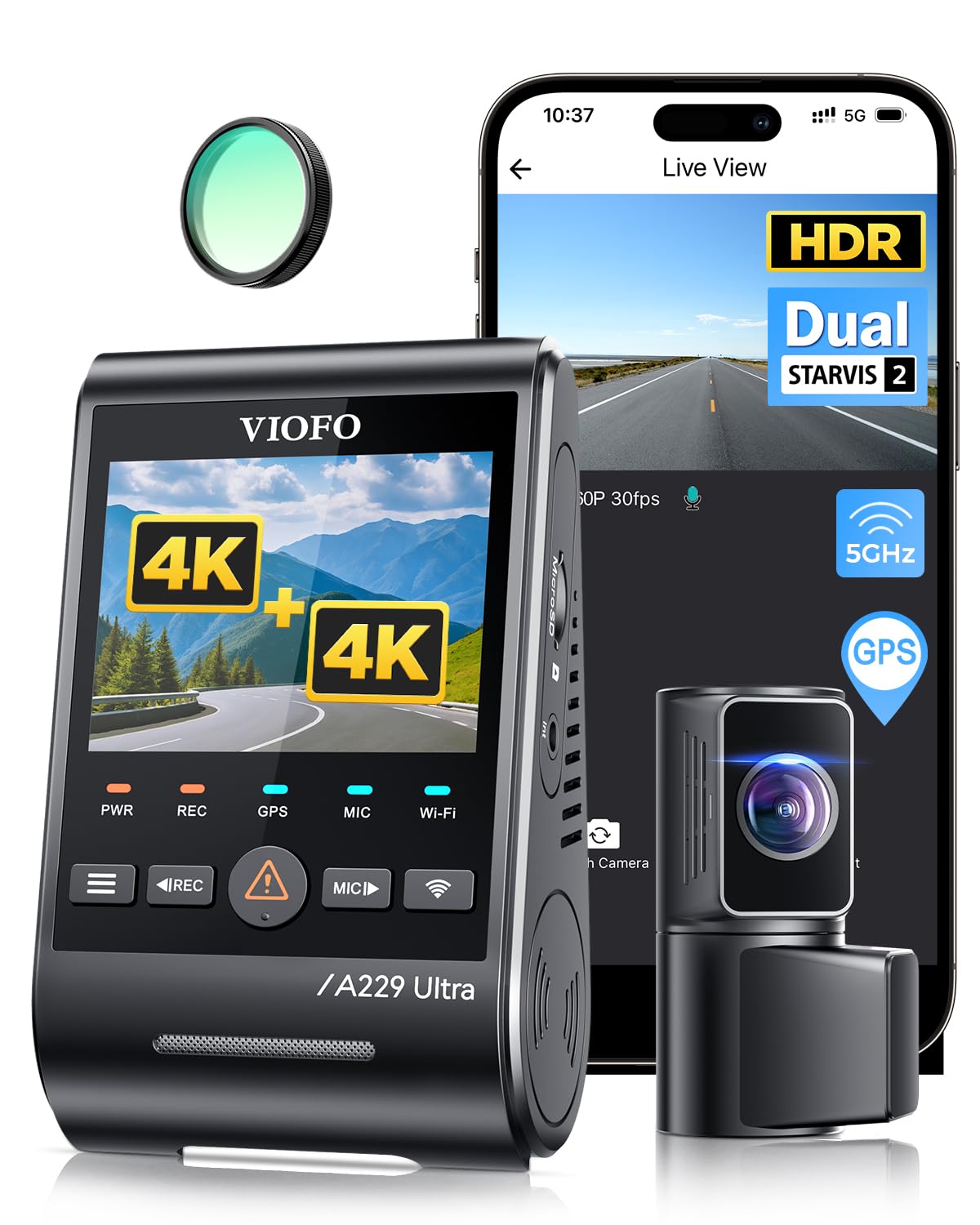
The gold standard in dual-channel dash cams — dual STARVIS 2 sensors with true 4K on both cameras.
The VIOFO A229 Ultra is what you get when you prioritize image quality above all else. Both the front and rear cameras use Sony STARVIS 2 IMX678 sensors, the same high-end sensor that delivers exceptional low-light performance with wide dynamic range and low noise. The front records at 4K and the rear also records at 4K, making it the only true dual-4K competitor to the Vantrue S1 Pro Max in this lineup — but with a stronger reputation for reliability. Reviewers consistently describe the video as “outstanding” and note that the clarity beats systems at half the price.
It features faster 5GHz Wi-Fi for smooth app previews and downloads, voice control in multiple languages, and multi-GPS support (GPS, BEIDOU, GALILEO, GLONASS) for precise route tracking. The parking mode offers three options: time-lapse, low bitrate, and auto event detection with a 15-second buffer before the incident and 30 seconds after. The build quality is excellent, with a compact design that fits many windshields without blocking the view.
The biggest drawback is the price — it is the most expensive cam here, and it does not include a memory card (SD card sold separately). The USB power cable is on the short side, and you have to manually enable WiFi through the menu rather than it being always on. Some users find the screen small for real-time viewing, but that is typical for a discreet dash cam.
Why It’s The Best
- Dual STARVIS 2 IMX678 sensors on both cameras — the same sensor used in the ROVE front, but here for both
- True 4K+4K recording with HDR, beating the ROVE’s 4K+2K and the REDTIGER’s 4K+1080P
- Smart voice control and buffered parking mode are genuinely useful, not gimmicks
The Price To Pay
- Most expensive option — you pay for the dual STARVIS 2 IMX678 sensors
- No SD card included, so factor in the cost of a quality high-endurance card
- WiFi must be manually turned on, which is less convenient than always-on systems
Best for: Drivers who demand the absolute best video quality day and night and are willing to pay for it — the VIOFO A229 Ultra is the reference standard for dual-channel dash cams with a proven reliability record.
Consider something else if: Budget is a primary concern — the ROVE R2-4K DUAL PRO gives you excellent STARVIS 2 quality for significantly less money, though with a 2K rear instead of 4K.
Understanding the Specs
STARVIS 2 Sensor
A Sony image sensor (like the IMX678 or IMX675) that captures much more light in dark conditions than standard sensors. This means your dash cam can read license plates at night without them being washed out by headlights. A cam with a STARVIS 2 sensor (like the ROVE or VIOFO) gives you noticeably better low-light video than a cam with a generic sensor (like the FAIMEE or VIRROW). If you drive at night often, look for this spec.
Parking Mode and Hardwire Kit
Parking mode lets the dash cam record while your car is off. To power it, you need a hardwire kit that connects the cam to your car’s fuse box — it is not included with most cams. Three common parking modes: time-lapse (records one frame per second to save space), motion detection (starts recording when something moves near the car), and collision detection (saves footage when a bump is detected). A buffered parking mode (like on the VIOFO A229 Ultra) saves footage from 15 seconds before the event, which can be crucial for proving who hit your car.
G-Sensor (Collision Sensor)
A small motion sensor inside the dash cam that detects sudden impacts. When it feels a collision, it automatically locks the current video file so it does not get overwritten by loop recording. This is a critical feature for insurance claims — without it, the footage of the accident could be erased by newer recordings before you get a chance to save it.
Loop Recording
The dash cam continuously records in short clips (usually 1, 2, or 3 minutes long). When the memory card fills up, it automatically deletes the oldest clips and writes new ones over them. This means you never have to manually clear the card. The catch is that the G-sensor lock has to work correctly — otherwise, accident footage can be overwritten before you retrieve it.
FAQ
Do I need a hardwire kit for parking mode?
Is 4K+4K necessary or is 4K+1080P enough?
Can I use my own memory card?
Will a dual dash cam drain my car battery?
Which dual dash cam has the best night vision?
How do I install the rear camera?
Is a touchscreen better than buttons?
What happens if the dash cam overheats?
Do I need app connectivity?
Which dual dash cam is the best value for money?
Final Thoughts: The Verdict
For the majority of shoppers, the dual dash cam winner is the FAIMEE 4K+2K because it gives you a 4K front, 2K rear, built-in GPS, and a 64GB card at a balanced price — the best all-around package for a typical daily driver. If you want superior night vision with STARVIS 2 sensors on both cameras, grab the ROVE R2-4K DUAL PRO or step up to the VIOFO A229 Ultra for true 4K+4K flagship performance. And for a tight budget that still gets you a touchscreen and 2.5K rear footage, the VIRROW X5 delivers impressive value.
How We Picked
We do not accept paid placement. Every pick is matched to a real buyer and a real use-case; we do not hands-on test units.
Sources & Methodology
Specifications: manufacturer listings and product documentation. Review insights: verified customer reviews, as of July 2026. Pricing: not shown on this page (it changes often); check the current price via the retailer link.
As an Amazon Associate, Trending Car earns from qualifying purchases. This does not affect which products we feature.