
Our readers keep the lights on and my garage snacks stocked. As an Amazon Associate, I earn from qualifying purchases.
Specs are compiled from manufacturer listings and verified buyer reviews and can change over time — please confirm the key details on the product page before buying.
Walking a sander in circles over a tabletop only to watch the finish reveal a ghost of swirl marks is the quiet heartbreak of every DIY project. A dual-action sander’s offset pad motion prevents swirl marks by ensuring no grain of sandpaper repeats its path.
I’m Min Islam — the founder and writer behind Trending Car. This guide is built by comparing the manufacturers’ published specifications and the patterns across verified customer reviews, so you get each pick’s real strengths and trade-offs instead of marketing spin.
This breakdown of the Best Dual Action Sander helps you match power, dust control, and grip to your specific sanding jobs.
Our Picks at a Glance


How To Choose The Best Dual Action Sander
Choose a sander that finishes fast, controls dust, and matches your power source preference. Match motor power, dust collection, and power source to your projects before buying.
Match the Motor to the Material
The motor’s amperage (A) and its top orbits per minute (OPM) decide how aggressively it strips material. A 2.0-amp motor at 12,000 OPM removes paint and rough wood quickly, while variable-speed models let you dial down below 9,000 OPM for a slow, careful pass near edges where burning is easy. More power at a lower RPM helps you avoid gouging delicate veneer.
Decide Your Dust Strategy Early
A sander’s dust system is either a bag, a vacuum port, or both. Through-the-pad holes feed debris into a bag attached right to the tool, which is convenient but can clog. A vacuum hookup keeps the backing pad almost spotless, pulling every bit of sawdust away as you work — but you end up tethered to a hose. Weigh the dust collection trade-offs before choosing.
Quick Comparison
| Model | Best For | Max Speed | Motor Power | Weight | Amazon |
|---|---|---|---|---|---|
| DEWALT 20V MAX (DCW210B)★ Best Overall | Cordless freedom with pro-grade build | 12,000 OPM | 1 A (brushless) | 2.5 lbs | Amazon |
| SKIL SR211601Best Value | Best value with cyclonic dust box | 13,000 OPM | 2.8 A | 3.4 lbs | Amazon |
| Metabo HPT SV13YSTTop Performer | Pro finish with vacuum hookup | 13,000 RPM | 2.8 A (230W) | 3.1 lbs | Amazon |
| NARBELL NT50001 | Budget 6-speed for beginners | 14,000 RPM | 3 A (360W) | — | Amazon |
| BLACK+DECKER BDERO100 | Entry-level light sanding | 12,000 OPM | 2 A | 3.2 lbs | Amazon |
| Bosch GEX12V-5N | Tiny palm grip for overhead work | 10,000 RPM | 5 A (brushless, 12V) | 1.8 lbs | Amazon |
| Ingersoll Rand 311A | Air-powered auto-body work | 12,000 RPM | 0.25 hp (air) | 4.2 lbs | Amazon |
| Bosch ROS20VSK | Swirl-free fine finishing | 12,000 OPM | 2.5 A | 3.5 lbs | Amazon |
| DEWALT 20V MAX Kit (DCW210P1) | Full kit with battery and charger | 12,000 OPM | 5 A (brushless) | — | Amazon |
In‑Depth Reviews
1. DEWALT 20V MAX Orbital Sander (DCW210B)
Our pick — over 4.5★ from 13,500+ verified ratings; the strongest balance of quality and price.
Cordless freedom with pro-grade build quality.
This DEWALT is the crowd favorite because its brushless motor (a motor without brushes that creates less friction and runs longer per charge) lets you move freely around a room without a cord, something corded tools can’t do. The variable-speed dial spans 8,000 to 12,000 OPM (orbits per minute), so you can slow down for a delicate finish pass or speed up for stock removal.
At 2.5 pounds, it sits light in your hand, and the low-profile height lets you get close to the work surface for precise edge sanding. The dust bag locks on one-handed, and the port fits DEWALT’s DWV010 or DWV012 dust collectors directly — though for other vacuums with 1-1/4 inch hoses, you’ll need the DWV9000 Universal Quick Connector. The replaceable 8-hole hook-and-loop pad (DWE64233) makes swapping paper almost instant, and buyers report the quality and functionality are what win people over here.
One honest note: this is a tool-only purchase, so it won’t run until you pair it with a 20V battery you already own. On larger jobs, battery life varies — owners mention you’ll want three batteries ready for big projects, and the pads can wear quickly. The dust collection gets mixed verdicts; with the bag alone it’s decent, but hooking up a vacuum makes it shine.
What Owners Applaud
- Brushless motor gives long runtime per charge — a 4/5Ah battery feels solid for finishing work
- Minimal vibration and quick stop make precise, comfortable sanding easy
- Variable-speed control between 8,000 and 12,000 OPM handles both heavy and fine jobs
The Trade-Offs
- Tool only — needs a 20V MAX battery and charger you already own
- Pads wear quickly under heavy use; replacements cost extra
- Dust bag is mediocre; a vacuum hookup gives far better collection
Reach for this if: you’re already in the DEWALT 20V ecosystem and want a cordless sander that handles trim, small decks, and furniture without dragging a cord.
Look elsewhere if: you plan to sand large surfaces all day — the battery drain and pad wear make it a poor fit for marathon sessions.
2. SKIL 5″ Random Orbital Sander with Cyclonic Dust Box (SR211601)
Featherweight with 13,000 OPM and cyclonic dust collection.
SKIL’s secret weapon is its X-flow dust collector, which uses cyclone force — a spinning vortex of air that hurls dust into a transparent container you can empty in seconds. While most sanders in this range rely on a simple bag, this one keeps your work area visibly cleaner, and customers note the dust collection is excellent with low vibration and noise.
The 2.8-amp motor at 13,000 orbits per minute powers through coarse paper, while the soft rubber grip and counterweight balance keep your hand comfortable for longer sessions—a 72-year-old owner with arthritis called the weight comfortable, and it survived 3-foot drops. The variable speed control lets you dial power up or down across different materials, and at 3.4 pounds it’s heavier than the cordless DEWALT above (2.5 lbs), but the corded 120V power means no battery anxiety.
A 50-year woodworker summed it up as great value versus expensive alternatives, and another buyer replaced a 20-year-old Makita with this. The catch: dust collection is mixed for some — the container collects most but not all, and removal can be tight. The discs hold well and change easily, though you do need to align the holes for dust flow.
True workhorse: Owners consistently praise the quality and value-for-money, calling it a perfect little tool that makes sanding feel easy across furniture refurbishment and remodel projects.
Fit note: The dust container is great at catching dust but not perfect — a few owners find it catches most, not all, and the tight removal takes getting used to.
Best for: DIYers who want a corded, low-vibration sander with excellent dust control for cabinets, remodels, and furniture without spending a fortune.
skip it if: you need 100% dust-free operation — a vacuum hookup model will serve you better.
3. Metabo HPT 5-Inch Random Orbit Finishing Sander (SV13YST)
A pro-grade finishing sander that punches above its price with a 5-year warranty.
Metabo HPT (formerly Hitachi) brings Japanese-engineering credibility to a palm-style sander with a 230W 2.8-amp motor spinning 9,000 to 13,000 RPM. The variable speed dial is the star here — buyers describe finishes comparable to much pricier tools up to 320 grit on hardwood, making it a favorite for furniture and woodworking. The soft comfort grip reduces vibration, and the compact size keeps long sessions manageable.
What sets this apart from the SKIL above is the included vacuum adapter. While the included dust bag is poor, hooking up a shop vac hose transforms it — one reviewer noted with mesh discs it leaves almost zero dust on mahogany and birch ply. The hook-and-loop pad system makes paper changes fast, and the dust-sealed rocker switch extends the tool’s life. It comes with 5 pieces of A-P120 sanding paper, a dust bag, and two vacuum adapters.
Reviewers point out it handles heavy, high-speed use well and out-performs pricier models for daily furniture work, even polishing aluminum and cleaning treated wood decking. The honest trade-offs: it’s louder and heavier than premium rivals, the rubber switch cover is annoying to toggle, and the dust collector occasionally falls off — but none of these are dealbreakers for a tool at this level.
A genuine workhorse: Reviewers consistently describe it as a solid, durable finishing sander that out-performs models costing more, with the vacuum adapter being the key to its excellent dust management.
Consider this: The dust bag alone is weak — this tool is best used with a shop vac hose attached for truly clean results.
Pick this for: serious hobbyists and pros who want a compact corded sander that delivers professional finishes on hardwood and metal, backed by a 5-year warranty for confidence.
Think twice if: you’d rather have a single integrated dust bag than manage a vacuum hose setup.
4. Bosch GEX12V-5N 12V Max Brushless Orbital Sander (Bare Tool)

The 1.8-pound palm grip that makes overhead sanding feel like holding a large flashlight.
Bosch engineered this 12V brushless sander for one specific superpower: fatigue-free work in awkward positions. At just 1.8 pounds, it’s dramatically lighter than the SKIL (3.4 lbs) or Metabo (3.1 lbs), and its compact 7.6-inch length makes it ideal for 9-foot overhead drywall or tight cabinet interiors. The soft-start technology reduces startup torque — meaning no sudden jerk when you pull the trigger — so you ease gently into the workpiece.
The 5-inch 8-hole pad handles flat and slightly curved surfaces, and the mobile dust collection lets you choose between the included dust bag or a vacuum hose attachment. One buyer who sanded 2,000 square feet of drywall praised it for overhead work specifically. The on/off switch is easy to reach, and it stops immediately when you click it off — a feature owners prefer over corded tools that keep spinning.
Here’s the honest catch: this 12V tool is strictly for small jobs. Shoppers say Bosch basic 12V batteries last only 5-10 minutes of full-blast sanding, so it’s useless for large surfaces. It’s also picky about batteries — some third-party 3Ah packs won’t start it, though official Bosch batteries work fine. The 4.6-star crowd loves its quality and size, but the reliability feedback is mixed, with a few units reportedly stopping early.
Precision tool: Buyers love the smooth, compact, balanced design with excellent one-hand ergonomics for fine finishing and touch-ups with minimal vibration.
Heads-up: Battery life is the recurring gripe — this demands fresh official Bosch 12V batteries and is not for marathon sanding sessions.
Best for: cabinet makers and drywall finishers who need a featherlight sander for overhead and precision work where weight matters more than raw power.
Not for: whole-tabletop or deck sanding — the small batteries will leave you charging more than sanding.
5. Bosch ROS20VSK 5 In. Palm Random Orbit Sander/Polisher
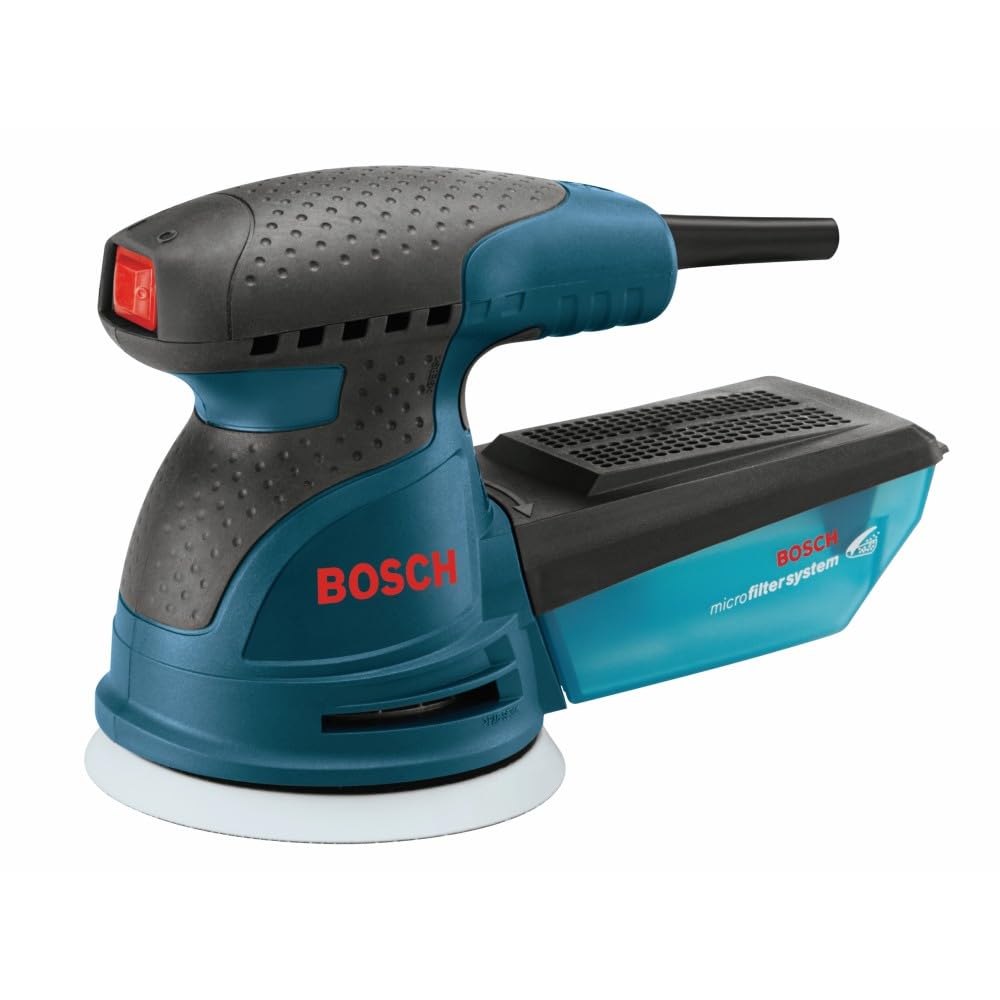
The finish-quality king whose integral pad braking system leaves zero swirl marks behind.
Bosch’s ROS20VSK is the tool professionals reach for when the final pass has to be flawless. Its integral pad dampening braking system — a mechanism that gently stops the pad’s rotation to prevent those telltale swirl marks — is the defining feature here. Combined with a microcellular backing pad and variable speed adjustable from 7,500 to 12,000 OPM (orbits per minute), it delivers fine finishes that other sanders in this list can’t match.
The 2.5-amp motor provides plenty of power for stock removal, yet buyers describe it as faster than older Makita models while producing a smooth finish even with 60-grit paper. Its on-board dust filtering system is top-tier — owners say it works excellently with very fine grit for furniture projects. The soft-grip top and body plus low-vibration operation make long sessions comfortable. Uses industry-standard 8-hole 5-inch hook-and-loop discs, so paper is cheap and easy to find.
The recurring gripe is the dust canister’s lid, which can be hard to pry off and sometimes falls off after extended use. The included carrying case adds value, and buyers report the variable speed reduces noise noticeably. At 3.5 pounds, it’s on the heavier side of the palm sanders here — heavier than the Metabo (3.1 lbs) and the Bosch 12V (1.8 lbs).
A real workhorse: Owners describe it as effective, quiet, and well worth the price, with the dust collection and variable speed being the standout features.
One caution: The dust canister lid can be stubborn to remove and may not stay seated after heavy use — a minor annoyance on an otherwise excellent tool.
Choose this for: fine furniture work and finishing projects where swirl-free results matter more than speed or portability.
Pass if: you want cordless convenience — this is a corded tool through and through.
6. Ingersoll Rand 311A Dual-Action Angle Air Sander
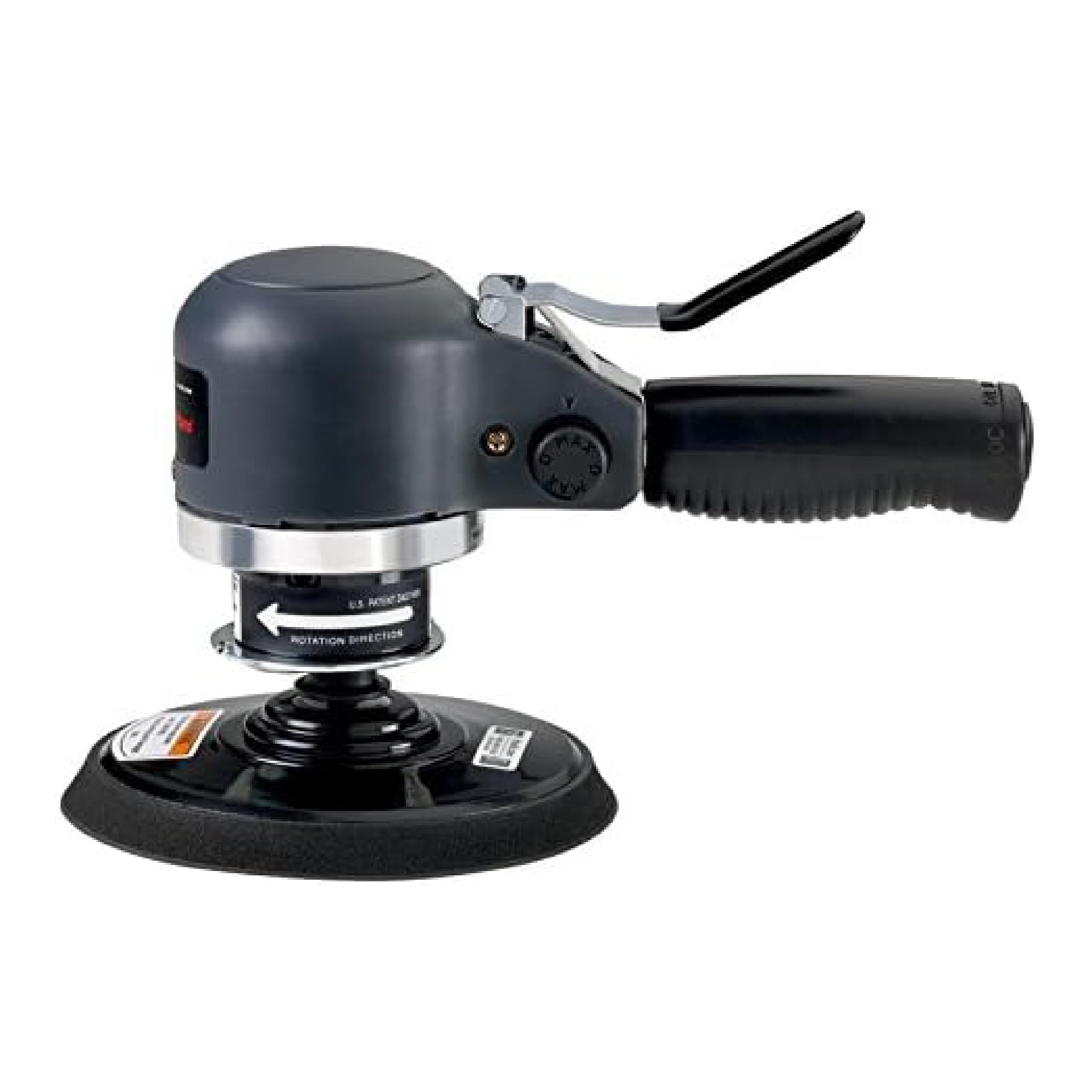
The body-shop classic with a 6-inch pad that drinks air but delivers silky-smooth metal prep.
If you’re prepping car panels or working with body filler, this Ingersoll Rand is in a different league from the woodworking sanders above. It’s a pneumatic (air-powered) dual-action sander with a 6-inch pad—a full inch wider than the 5-inch pads on every other pick here—so it covers more surface area in each pass for fast, smooth metal preparation. The built-in silencer keeps it quiet, and its balanced ball-bearing construction reduces vibration for feather edging and finish work.
This tool has an adjustable regulator for positive speed control, and its compact size lets you reach tight spots. It runs at 12,000 rpm (rotations per minute) with 0.25 horsepower. The trade-off for that power is appetite: it uses 17 cfm (cubic feet per minute) of air at free speed, so you need a serious air compressor. The 4.2-pound weight is notably heavier than the cordless DEWALT (2.5 lbs), but owners find it well-balanced in use.
Buyers praise it as good quality, fairly quiet, and a pleasure to use for full days of work — with the caveat that it stresses even an 80-gallon compressor. One owner found it too powerful for an 8-pound unit. The recurring warning is air consumption: “uses a lot of air” appears consistently, so don’t pair this with a small hobby compressor.
Pro-grade feel: For auto-body work and metal preparation, owners describe it as a pleasure to use that does a great job — when you have enough air to feed it.
The real catch: This tool demands a beefy air compressor; small units will struggle to keep up with its 17 cfm appetite.
Built for: automotive pros and metalworkers with a high-capacity air compressor who need a wide, fast, quiet DA sander for body filler and feather edging.
Wrong tool for: woodworking DIYers or anyone without a large shop compressor — the air demand is steep.
7. NARBELL Orbital Sander 3.0AMP (360W) with 6 Speeds
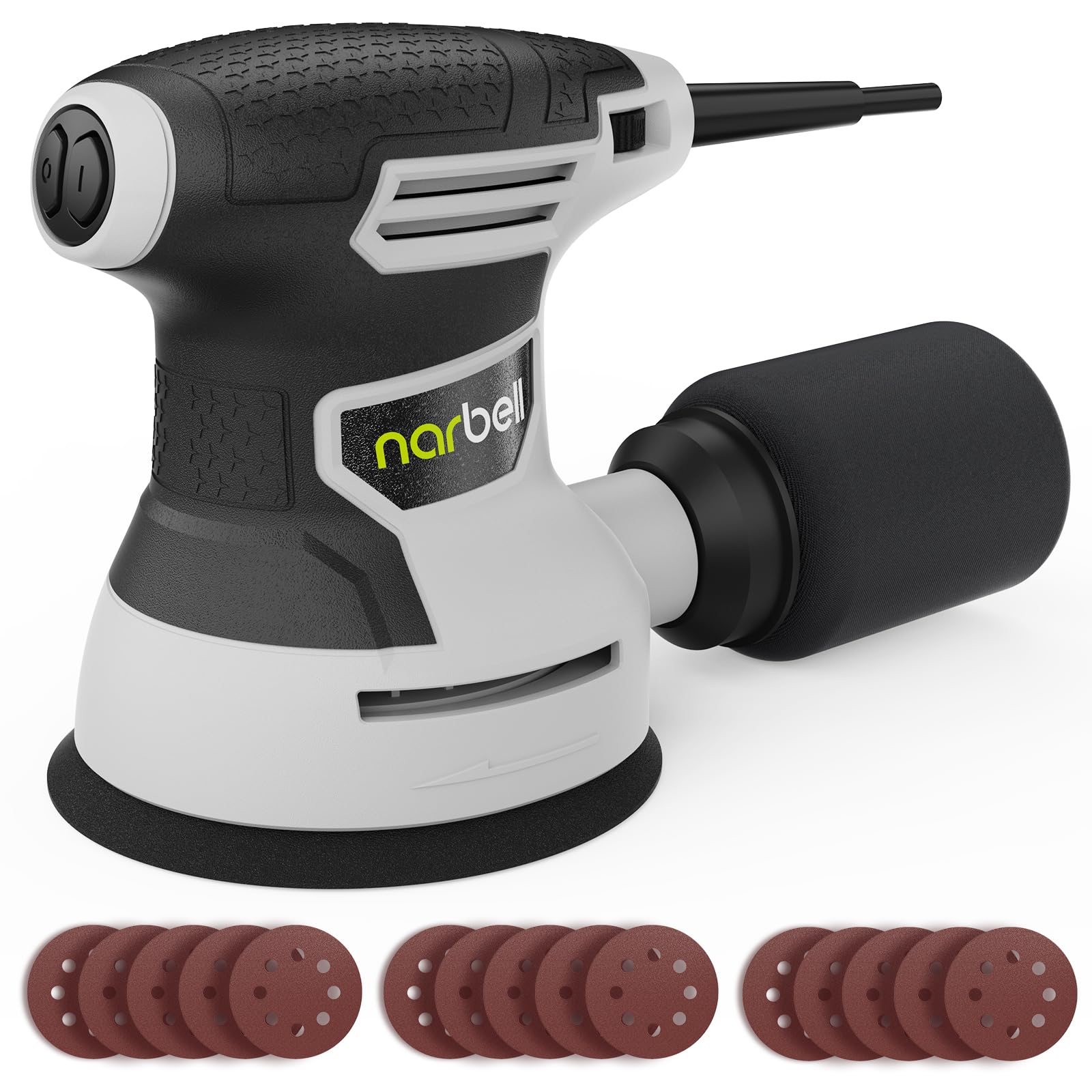
The budget 6-speed with a 3.0-amp motor that spins faster than any corded pickup here.
NARBELL packs serious specs into an entry-level price. Its 3.0-amp motor delivers 360 watts—the most amperage on a corded sander in this list, beating the SKIL (2.8 A) and Metabo (2.8 A)—with a top speed of 14,000 RPM, the fastest rotation of any pick here. That’s a 17% higher top speed than the 12,000-rpm DEWALT cordless, though this stays plugged into 120V power. The upgraded solid copper motor reduces friction loss for more consistent power.
The six adjustable speeds (6,000 to 14,000 RPM) let you match the tool to the task — slow for polishing, fast for stripping paint. The through-the-pad dust collection system works with either the included dust bag or a vacuum adapter (hose sold separately), and you get 15 sanding discs in 60, 80, and 120 grit. The ergonomic handle absorbs shocks and reduces vibration for comfort during longer sessions.
Owners mention it’s lightweight, powerful, and works well on hardwood, softwood, and painted surfaces with minimal swirl marks—one user sanded oak mantles including a live edge with great results. The catches: no carrying case is included, the rubber switch cover needs a firm press, and durability is the main mixed aspect—a few units reportedly broke after first use, while others use it weekly with zero issues. It also recommends replacing sandpaper every 5-30 minutes for best results.
Surprising power: Owners praise the performance — lightweight, smooth, low-vibration with excellent dust collection for the price, handling everything from oak mantles to guitar builds.
Know the risk: Durability reports are a coin flip — many customers note flawless weekly use, but the occasional unit arrives with issues, so check the return policy.
Grab this if: you’re a budget-conscious beginner who wants six speeds, the fastest spin in the roundup, and 15 sanding discs included to tackle wood, paint, and varnish.
Invest elsewhere if: you need a tool for daily heavy commercial use — the long-term durability here is unproven.
8. BLACK+DECKER Orbital Sander, 5 Inch, 2.0 Amp (BDERO100)
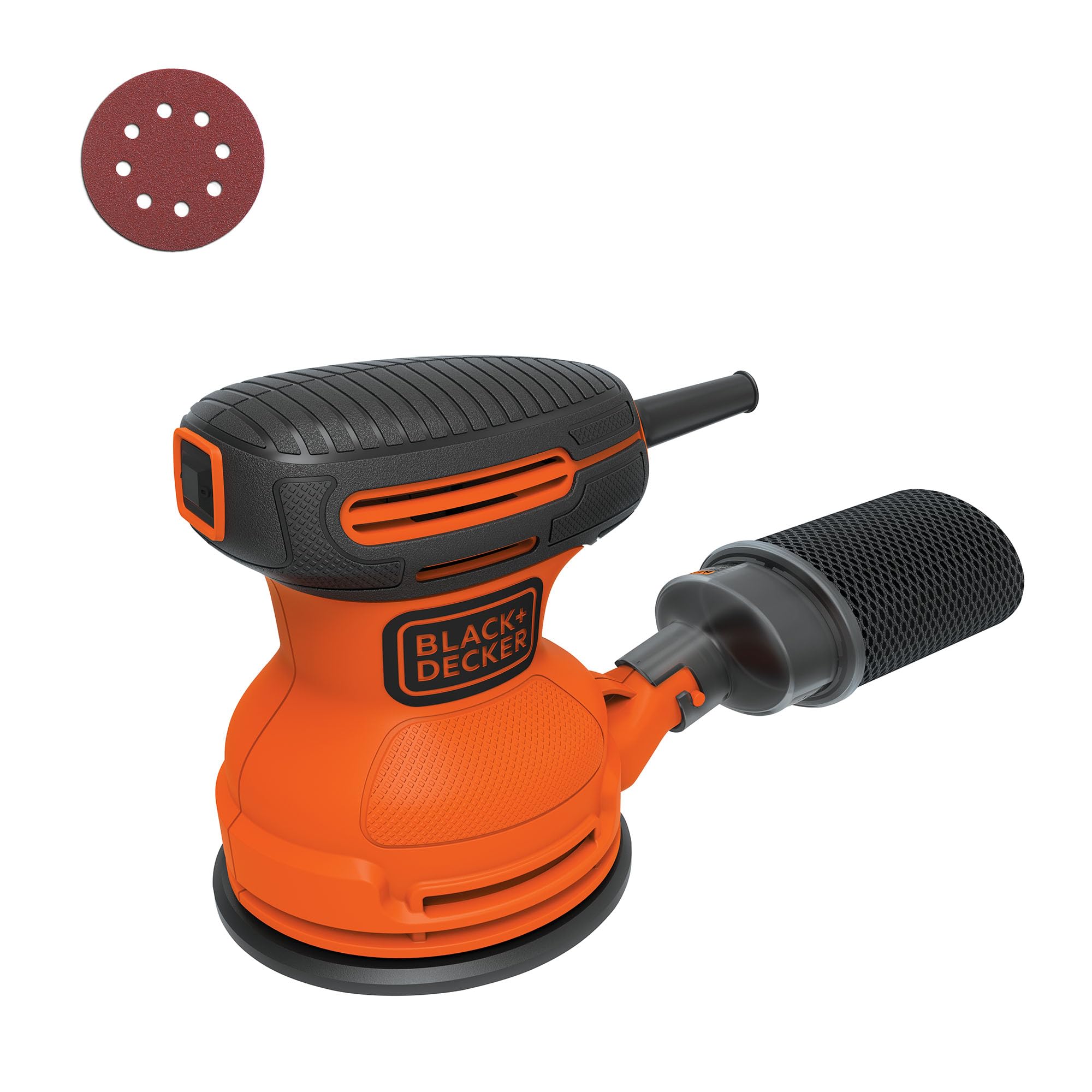
The no-frills workhorse that proves a 2-amp sander is plenty for weekend furniture flips.
BLACK+DECKER’s BDERO100 is the definition of a dependable starter sander. Its 2.0-amp corded motor delivers 12,000 OPM (orbits per minute) for a swirl-free finish on small to medium projects — enough power for the trim, furniture, and light sanding tasks that occupy most DIYers. At 3.2 pounds, it sits between the featherweight Bosch 12V (1.8 lbs) and the SKIL (3.4 lbs), and its compact 7-inch length fits into tight spaces.
The hook-and-loop system makes paper changes genuinely fast — one buyer runs everything from 40-grit to 340-grit discs, noting the 340 leaves a glossy finish. The dust-sealed switch keeps debris out, and the comfort grip handle reduces fatigue. Buyers describe it as easy to use and lighter than larger models, with one owner using it frequently to refinish furniture and another praising it as impressive for its cost after owning five other sanders.
The honest limitations: it’s a single-speed tool with no variable-speed dial, so you can’t slow it down for delicate work. The dust bag is ineffective for some — dust escapes — so you may want a workshop vac nearby. The short cord requires an extension cord, and you’ll need to apply downward pressure, which gets tiring after about 8 minutes of continuous use.
Why Owners Stick With It
- Reliable and effective for furniture refinishing, car roofs, fences, and drywall — even after a year of use
- Rugged hook-and-loop pad handles cheap off-brand discs without issue
- Runs 1.5-2 hours without overheating for a corded tool
Where It Cuts Corners
- One fixed speed only — no adjusting for different materials
- Dust bag lets some debris escape, making a shop vac a wise partner
- Short stock cord means most users need an extension lead
Ideal for: first-time buyers and light DIYers who want a cheap, reliable sander with cheap, widely-available replacement pads for weekend projects.
Step up if: you need variable speed for fine finishing or plan to sand all day — this one-trick pony will leave you wanting more.
9. DEWALT 20V MAX Random Orbital Sander Kit (DCW210P1)
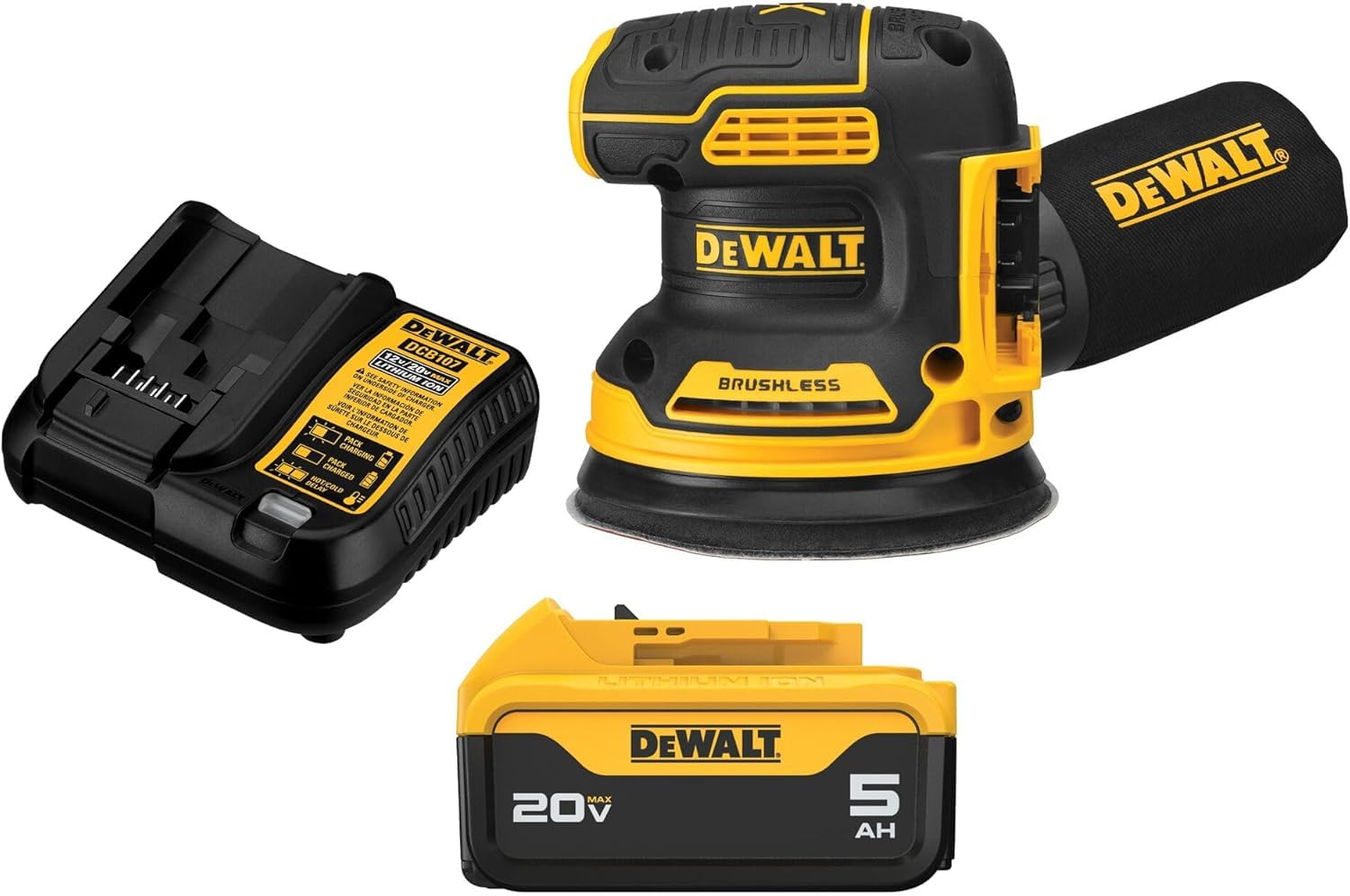
The complete cordless kit that pairs a brushless motor with a 5.0Ah battery for all-day runtime.
This is the full-package version of our Best Overall pick. The DCW210P1 kit includes the same brushless 20V MAX sander as the tool-only DCW210B above, but adds a 5.0Ah battery, charger, and carrying bag—so you can start sanding the moment the box arrives, no separate purchases needed. The brushless motor provides runtime and efficiency, and the variable-speed control spans 8,000 to 12,000 OPM (orbits per minute) to match speed to the job.
Owners describe it as a joy to use, with a good weight and balance that makes the battery’s weight actually reduce vibration fatigue. It stops instantly when you release the trigger — a previous sander kept spinning for 10-15 seconds — and one buyer praised it as one of the best tools in their carpentry workshop. The spring-loaded dust canister collects effectively, and the kit handles epoxy, resin, tabletops, and chess boards with fine and coarse grits.
Reviewers point out it’s saved hours of hand sanding and is considered better than some corded models. The trade-offs echo the tool-only version: battery life is mixed, with some reporting around two hours per charge, and the battery and canister protrude, which limits access to tight inside corners. It also carries a heavier initial feel vs. the tool-only version due to the added battery weight.
The Complete Package
- Everything included — unit, 5.0Ah battery, charger, and bag — so it’s ready from the start
- Brushless motor plus 5.0Ah battery delivers solid runtime for extended sessions
- Instant stop on release and balanced weight reduce fatigue and improve control
What To Know
- Battery and canister protrude, limiting access to tight corner spots
- Battery runtime varies — heavy users report around 2 hours per charge
- Premium price reflects the complete kit, not just the tool
Worth it for: DEWALT loyalists or first-time buyers who want a complete, ready-to-run cordless kit with pro-grade feel and no hidden costs for batteries.
pass on it if: you already own 20V MAX batteries — the tool-only DCW210B gives you the same sander for less.
Understanding the Specs
Orbits Per Minute (OPM) vs. RPM
This is the speed number that matters most. Orbital sanders list their pad speed in OPM — the number of circular orbits per minute — while some manufacturers list RPM (rotations per minute). Higher OPM means faster material removal, but the range matters more than the peak. A variable-speed tool that spans 8,000 to 12,000 OPM lets you slow down for finishing passes near edges or speed up for stripping paint, protecting the wood from burning.
Dust Collection Systems
Through-the-pad dust collection pulls debris through holes in the sanding pad and into a bag or hose. A bag is self-contained and portable but can clog and leave some dust behind. A vacuum hookup keeps the pad spotless and the air clean but tethers you to a hose. Cyclonic systems — like SKIL’s — spin dust into a clear container you empty quickly, offering a middle ground between the two approaches.
FAQ
What is the difference between a dual action sander and a regular orbital sander?
Is a cordless sander as powerful as a corded one?
Will a 5-inch sander work with my existing sandpaper?
How do I prevent swirl marks when sanding?
Do I need a vacuum for a sander’s dust collection?
What size air compressor do I need for a pneumatic sander?
What grit sandpaper should I start with?
How long does a sander battery last?
Can I use a random orbital sander for polishing?
Why does my sander leave burn marks on wood?
Final Thoughts: The Verdict
For most buyers, the dual action sander winner is the DEWALT 20V MAX (DCW210B) because its brushless motor, variable speed, and 2.5-pound frame combine cordless freedom with the pro-grade build quality that over 13,000 owners rely on and trust. If you want the best dust control on a corded budget, grab the SKIL SR211601 with its cyclonic dust box and 13,000-OPM power. And for fine furniture finishing with zero swirl marks, the Bosch ROS20VSK is the one to reach for—its pad dampening system is class-leading in this price range.
How We Picked
We do not accept paid placement. Every pick is matched to a real buyer and a real use-case; we do not hands-on test units.
Sources & Methodology
Specifications: manufacturer listings and product documentation. Review insights: verified customer reviews, as of August 2026. Pricing: not shown on this page (it changes often); check the current price via the retailer link.
As an Amazon Associate, Trending Car earns from qualifying purchases. This does not affect which products we feature.