
Our readers keep the lights on and my garage snacks stocked. As an Amazon Associate, I earn from qualifying purchases.
Specs are compiled from manufacturer listings and verified buyer reviews and can change over time — please confirm the key details on the product page before buying.
Foot numbness, hot spots, and arch fatigue are the hidden drag on every pedal stroke — the right insole turns that around by locking your foot in its natural riding position so power flows from your hips straight through the pedals. Cycling shoes have stiff soles and snug fit that leave zero margin for bulky padding, so a purpose-built cycling shoe insert has to be thin, supportive, and relentless about staying in place. This guide cuts through the marketing to the five inserts that actually deliver on that promise — from adjustable-arch systems to activity-specific designs — all proven in the saddle. — from adjustable-arch systems to activity-specific designs — all proven in the saddle.
I’m Min Islam — the founder and writer behind Trending Car. This guide is built by comparing the manufacturers’ published specifications and the patterns across verified customer reviews, so you get each pick’s real strengths and trade-offs instead of marketing spin.
Here is what matters most when hunting for the best cycling shoe inserts: a profile thin enough to fit without raising your heel, arch support that corrects without cramping the toe box, and a stable base that eliminates that tingly numbness on long rides.
Our Picks at a Glance

How To Choose The Best Cycling Shoe Inserts
Before you scroll through the reviews, knowing what actually matters for a cycling shoe insert will save you a size swap and a wasted ride. These three factors separate a good match from a painful mistake inside the unforgiving volume of a cycling shoe.
Profile and volume fit
Cycling shoes have almost no extra interior height — a thick insole pushes your heel up, changes the cleat angle, and creates pressure points on the top of your foot. Look for an insert with a total thickness under 5mm (some go as low as 1.6mm) and a trim-to-fit edge so you can contour it to the narrow shape of a performance shoe. The right insert should feel like it disappears inside the shoe while still providing support.
Arch support and adjustability
The stiff sole of a cycling shoe transfers every pedal force directly to your foot, so arch support is not a luxury — it is what keeps your foot from collapsing inward on each stroke. Some inserts offer adjustable arches with removable pads (ideal if you have one arch higher than the other), while others rely on a single firm shape. If you have a history of plantar fasciitis or flat feet, an adjustable or heat-moldable system gives you far more control than a fixed-profile insole.
Metatarsal support and numbness prevention
Numb toes on a long ride are the most common complaint among cyclists — it happens when the ball of your foot compresses nerves against the shoe’s stiff sole. Many cycling-specific inserts include a small metatarsal pad or bump that gently lifts the forefoot and redistributes pressure, keeping blood flowing to your toes. This is a feature generic insoles simply do not offer, and it is often the single reason a dedicated cycling insert outperforms an all-purpose orthotic on the bike.
Quick Comparison
| Model | Best For | Profile Thickness | Arch Adjustability | Metatarsal Pad | Amazon |
|---|---|---|---|---|---|
| SOLE Active Thin★ Best Overall | Heat-moldable custom fit | 1.6mm | Heat-moldable | No | Amazon |
| CURREX BikeProTop Performer | Performance & long-distance rides | ~5mm (trim-to-fit) | Low / Medium / High profiles | Yes (discrete) | Amazon |
| Icebug SLIM | Numbness & hot spot relief | 5mm | High / Med / Low arches | Yes (pronounced) | Amazon |
| FootChair Slim | Adjustable arch height | Very thin (trim-to-fit) | Adjustable via removable pads | No | Amazon |
| FORM Premium Insoles | Ultra-thin dress/cycling shoe use | Ultra thin (trim-to-fit) | Fixed high arch | No | Amazon |
In‑Depth Reviews
1. SOLE Active Thin – Orthotic Sport Insoles
Our pick — over 4★ from 550+ verified ratings; the strongest balance of quality and price.
The 1.6mm heat-moldable insole that fits tight cycling shoes and adapts to your exact arch.
At just 1.6mm thick, the SOLE Active Thin is the slimmest full-support insert here — thin enough to slide into minimalist sneakers, dress shoes, and snug cycling shoes without causing heel lift or toe crowding. what separates it is the heat-moldable arch: a simple at-home oven process lets the EVA base conform to your foot’s low, medium, or high arch, giving you custom-fit support without a podiatrist visit. The firm arch support and deep heel cup are designed to relieve plantar fasciitis, shin splints, and arch fatigue in low-volume footwear — exactly the kind of strain tight cycling shoes aggravate.
The review pages are full of longtime users — some on their second pair and one running them for 12 years — who call these their go-to for battle plantar fasciitis. One owner noted that an ortho surgeon “recommended [them] as a terrific alternative to custom insoles,” and the consensus is that the supportive-but-not-too-hard feel is the magic middle. The catch is that the trim-to-fit edges need careful sizing: buyers consistently advise ordering a size up for the arch alignment, then cutting down.: buyers consistently advise ordering a size up for the arch alignment, then cutting down. A few owners with very high insteps found the insole lifts the foot too high for some shoes, and those needing a wide version are limited to the medium thickness, which can cause blistering.
Compared to the CURREX BikePro, the SOLE Active Thin lacks a metatarsal pad, so it does not address nerve compression in the forefoot the way the CURREX does. But its heat-moldable fit gives it an edge over any fixed-arch insole — including the FootChair — for riders whose arch shape falls between standard profiles.
Your best bet if: You need plantar fasciitis relief in a cycling shoe and want custom arch support without paying custom prices. The 1.6mm profile vanishes into tight shoes, and the heat-molding gives you a fit no fixed insole can match. Skip if: Your primary issue is numbness in the ball of the foot — you need a metatarsal pad, which this insole does not include. Also skip if you have a very wide foot, as the medium thickness is your only fit option.
2. CURREX BikePro Insoles for Cycling
The activity-specific insole that eliminates foot numbness and transfers every watt to the pedal.
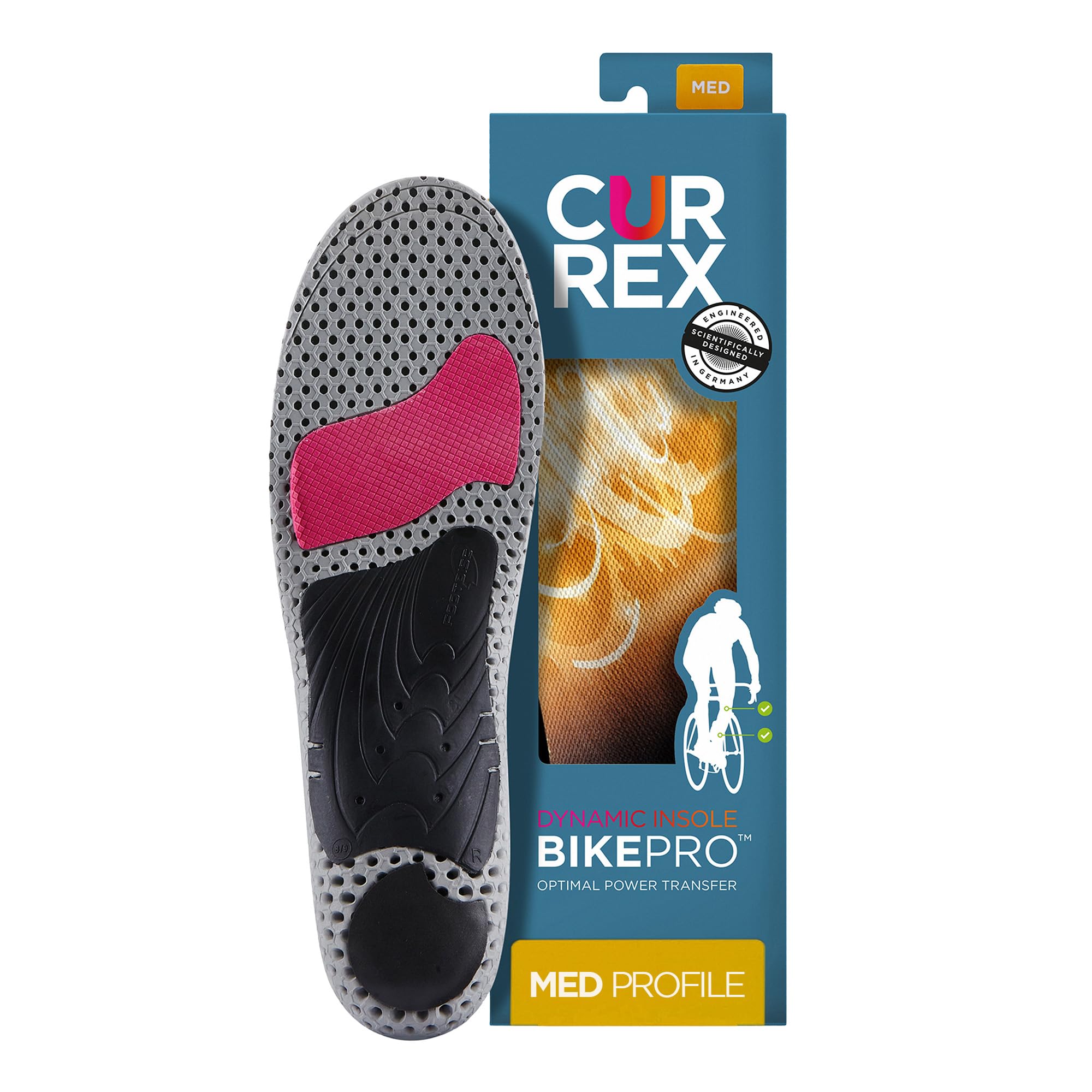
This is the only insert on the list built from the ground up for cycling — not adapted from a running or dress-shoe design. The CURREX BikePro uses a 3D Dynamic Arch Technology with three arch profiles (low, medium, high) so you get a precise fit for your foot type, not a one-size compromise. A deep decoupled heel cup locks your heel in place, and a discrete metatarsal pad in the forefoot prevents nerve compression — which is exactly the feature that stops that tingling numbness 40 miles into a ride.
Owners riding endurance distances — including Ironman training and 2,000-plus-foot climbing days — consistently report that the BikePro reduces post-ride soreness and improves muscle efficiency. The comfort leads the way in owner feedback, followed closely by pain relief and arch support. The trade-off is that the fit depends heavily on your shoe model; some cyclists found it worked perfectly in Sidi Dominator 7 shoes but misaligned in Shimano MT5 models.; some cyclists found it worked perfectly in Sidi Dominator 7 shoes but misaligned in Shimano MT5 models. The manufacturer also recommends replacement after 500+ miles or 12 months.
Versus the Icebug SLIM below, the CURREX offers a more refined metatarsal pad that owners describe as “discrete” rather than pronounced, and the multi-arch system gives it an edge for riders who need specific arch support without heat-molding. It is also noticeably more expensive than the FORM or FootChair options, but the activity-specific design justifies the jump for anyone logging serious saddle hours.
What wins riders over
- Eliminates numbness and hot spots on long rides — buyers report relief on 100+ mile days
- Three specific arch profiles mean you are not guessing at support level
- Moisture-wicking mesh top layer keeps cycling shoes fresh through sweaty efforts
The honest fit notes
- Fit varies by shoe model — may need a trim or return if arch placement does not align
- 500-mile lifespan means replacing twice a year for heavy riders; some find the ongoing cost worth the relief, others flinch at it
The pick for performance riders: If you ride 50+ miles per week, deal with numbness or arch fatigue, and want an insole engineered specifically for the bike — not a reused running insert — this is the one. The multi-arch system and metatarsal pad are purpose-built for the pedal stroke.
Best to look elsewhere if: You only ride casually a few hours a month, or you want a universal insole that also works in dress shoes without swapping. The short replacement cycle and tighter shoe-specific fit make it overkill for occasional use.
3. Icebug SLIM Low Cushion Support Insole

The insole with a metatarsal bump that cyclists credit for eliminating numb toes on century rides.
If numb toes are the reason you are reading this, the Icebug SLIM is the specific fix. A prominent metatarsal dome — a raised bump just behind the ball of the foot — lifts the forefoot and redistributes pressure away from the nerves that go numb on long rides. Owners mention it solved toe numbness on 55-mile rides and eliminated foot pain entirely on a 200-mile ride that had previously hurt at mile 20-30. The double-arc heel design cups the heel and reduces strain on the plantar fascia, while a low-friction top cover is easy to clean and holds up to sweat.
At 5mm thick with a choice of high, medium, or low arch profiles, the SLIM fits well inside cycling shoes — but the metatarsal bump is polarizing. Some owners love it; others find it “a bit much” and irritating, especially when standing around off the bike. The foam forward of the arch is thin enough to fold for some users, and the wide arch shape can be tricky to trim correctly. This is not an insole for everyone: it works best for riders whose primary complaint is numbness and who are willing to adjust to the feel of the dome.
Versus the CURREX BikePro, the Icebug metatarsal pad is more pronounced — the CURREX version is described as “discrete” while the Icebug one gets consistent mentions for its noticeable presence. The Icebug is also lighter at 4.66 ounces compared to the CURREX at 4.97 ounces, but the CURREX offers more arch customization. Between the two, the Icebug is the sharper tool for the specific job of stopping numb feet, while the CURREX is the broader performance upgrade.
Reach for this if: Numb toes are your main cycling complaint — the metatarsal dome is a proven solution for nerve compression in the forefoot. Also great if you want an insole that works in speed skates and other tight footwear. Look elsewhere if: You dislike a prominent bump under your forefoot or plan to do significant walking in these shoes, as the dome feels odd when you are not clipped into pedals. The fit also demands careful trimming and shoe-arch alignment.
4. FootChair Slim Dress Shoe Orthotics/Insoles
The slimmest adjustable-arch insole that lets you dial in support for each foot independently.
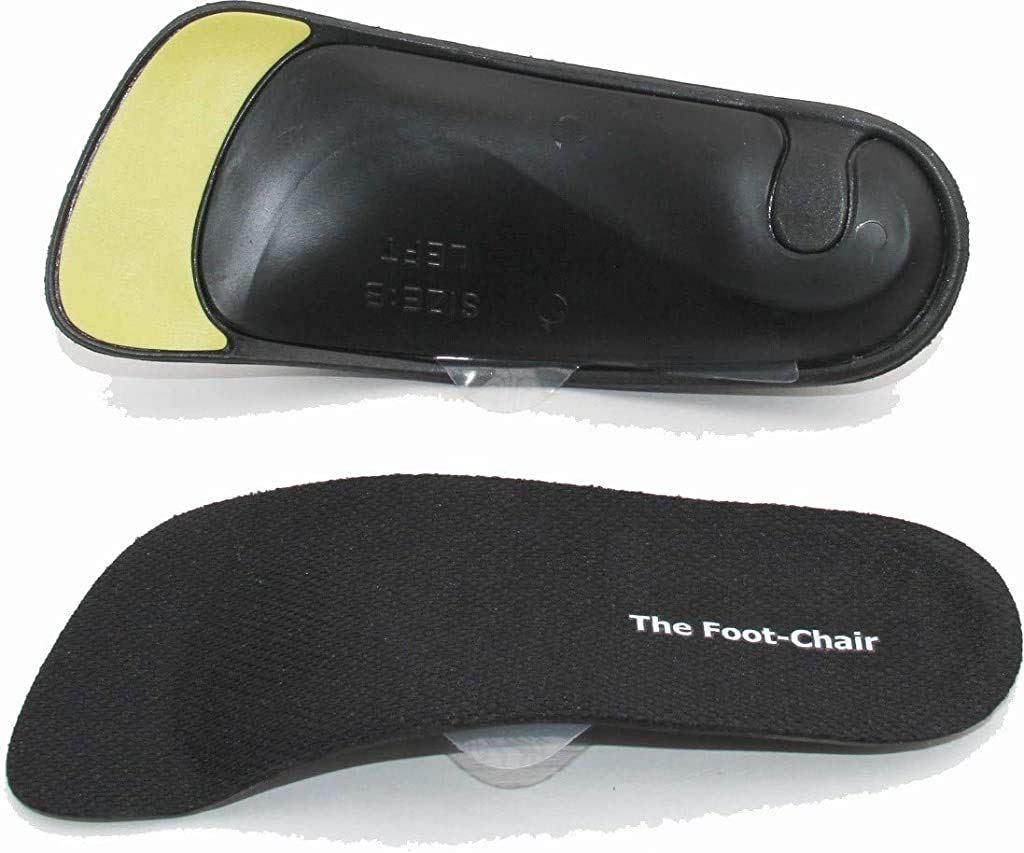
Not everyone has symmetrical arches, and the FootChair Slim is built for exactly that reality. Removable adhesive pads let you adjust the arch height on each insole independently — one high, one low, one medium — which is a standout if your left and right feet have different needs. Created by podiatrists, the slim profile fits dress shoes, flats, cycling shoes, and soccer cleats with a very low profile that does not crowd the toe box. The full-length footbed is made of firm polypropylene and contours from heel to toe to distribute weight evenly and act as a shock absorber.
Users consistently highlight the immediate relief for conditions like sesamoiditis and plantar fasciitis, with one noting that the adjustability allowed them to avoid more invasive podiatrist procedures. The slim design has even enabled riders to use previously unwearable shoes after foot injuries. The catch is durability: some customers note the heel cup breaks down faster than expected, and the slick bottom surface can slide when you put your foot into the shoe., and the slick bottom surface can slide when you put your foot into the shoe. The flocked exterior on newer units has also drawn mixed reactions for long-term hold-up.
At 3.21 ounces, the FootChair is significantly lighter than the icebug at 4.66 ounces — a 45% gap — which makes it feel nearly weightless inside a cycling shoe. Unlike the SOLE Active Thin, the FootChair does not require heat-molding; you just peel and stick the arch pads until the support feels right. That makes it the easiest adjustable system to use on the go, but the trade-off is that the polypropylene base is firmer than the EVA of the SOLE or CURREX, so there is less cushioning.
Best suited for: Riders with asymmetrical arches who need independent adjustment per foot. The slim profile and podiatrist-created design make it a smart alternative to custom orthotics at a fraction of the typical cost. Not ideal if: You want a cushioned insert — this is firm polypropylene with no padding. Also skip if you need a metatarsal pad, as the FootChair does not offer one, and be prepared that the heel cup may wear faster than premium alternatives like the CURREX.
5. FORM Premium Insoles Ultra-Thin

The true ultra-thin insole that slips into slim cycling shoes without cramping your toes.
At just over 4.66 ounces and built with an 80% EVA foam base, the FORM Premium Insoles are designed for shoes where the factory insole is not removable — think slim dress shoes, Chelsea boots, and tight cycling shoes. The arch support is firm and high, which is exactly what you need to counteract the stiff sole of a bike shoe, and the comfort-shaped arch is engineered to reduce stress on feet and knees during exercise. Reviewers consistently praise the material quality and the fact that it truly disappears inside the shoe while still providing thorough arch support.
Arch support is the most-discussed positive at 33 mentions, with thickness and comfort following closely. Owners with plantar fasciitis and flat feet report that these insoles reduce foot fatigue during long standing shifts and make snug shoes wearable again. The catch is that the arches are fixed — there is no adjustment and no metatarsal pad — so if your arch shape does not match the high fixed profile, the fit will not work. A few owners also had the heat-molding process ruin the insoles, which shrank and created gaps. The durability and value for money get mixed marks, with some finding them lasting and others reporting breakage.
Versus the FootChair Slim, the FORM Insoles are lighter on features (no adjustable arch, no podiatrist branding) but also more straightforward — you trim them to size and wear them. They are the budget pick for a reason: they work well for a specific arch type and shoe fit, but they lack the flexibility and features of the CURREX, Icebug, or FootChair options.
Who it works for: Riders with high fixed arches who need a very thin insole for the tightest cycling shoes or non-removable insoles. The price is accessible and the support is genuine. Who should pass: Those with low arches, flat feet, or a need for adjustable support. Also skip if you want metatarsal pressure relief — there is none here. And if you plan to heat-mold, be cautious; some owners ruined theirs in the oven.
Understanding the Specs
Metatarsal Pad / Bump
A small raised area behind the ball of the foot that lifts the forefoot slightly. This prevents the nerves that run between the metatarsal bones from getting compressed against the stiff sole of a cycling shoe — which is the most common cause of numb toes on long rides. The Icebug SLIM and CURREX BikePro both include this feature; the SOLE Active Thin and FootChair do not.
Heat-Moldable Arch
An insole that can be heated in an oven (typically 200°F for 2–3 minutes) and then immediately worn so the EVA material softens and forms to the exact shape of your arch and heel. This gives you a custom-contoured fit without a podiatrist visit. Among our picks, only the SOLE Active Thin offers this, and it is a significant advantage if you have low, medium, or high arches that do not match standard fixed profiles.
FAQ
Will cycling shoe inserts fit in all cycling shoes?
How often should I replace cycling shoe inserts?
Can I use running insoles in cycling shoes?
What is the difference between a metatarsal pad and a regular arch support?
Do I need heat-molding to get a good fit?
Can cycling shoe inserts help with knee pain?
Are these insoles suitable for walking off the bike?
How tight should the fit feel inside my cycling shoe?
What does “trim-to-fit” mean, and how do I do it correctly?
Is the CURREX BikePro worth the higher cost vs the FORM or FootChair?
Final Thoughts: The Verdict
For most riders, the best cycling shoe inserts are the CURREX BikePro because it combines a thin profile with a metatarsal pad and three arch choices — a combination no other pick here matches; it is the crowd favorite. If you need custom arch support without heat-molding hassle, grab the SOLE Active Thin — its 1.6mm profile and heat-moldable fit make it the best for plantar fasciitis relief in tight shoes. And for the specific problem of numb toes on long rides, the Icebug SLIM with its metatarsal dome is the focused solution that owners credit for saving century rides.
How We Picked
We do not accept paid placement. Every pick is matched to a real buyer and a real use-case; we do not hands-on test units.
Sources & Methodology
Specifications: manufacturer listings and product documentation. Review insights: verified customer reviews, as of July 2026. Pricing: not shown on this page (it changes often); check the current price via the retailer link.
As an Amazon Associate, Trending Car earns from qualifying purchases. This does not affect which products we feature.