
Our readers keep the lights on and my garage snacks stocked. As an Amazon Associate, I earn from qualifying purchases.
Specs are compiled from manufacturer listings and verified buyer reviews and can change over time — please confirm the key details on the product page before buying.
When you are shopping for a helmet under a hundred bucks, the real question is not which one looks best. It is which one keeps you safe and comfortable enough that you actually wear it on every ride — not just the long ones. A helmet that shifts or pinches will stay clipped to the bike, not on your head. This guide covers nine top-rated helmets that balance safety, fit, and features for your commute or trail.
I’m Min Islam — the founder and writer behind Trending Car. This guide is built by comparing the manufacturers’ published specifications and the patterns across verified customer reviews, so you get each pick’s real strengths and trade-offs instead of marketing spin.
Every helmet here meets US safety standards, but the differences in ventilation, weight, and included extras (like integrated lights or magnetic visors) will decide which one feels right for you. Our breakdown of the best cycling helmets under 100 helps you match a real-world use case — commuting, mountain biking, or casual weekend rides — to the specific design that suits it.
Our Picks at a Glance


How To Choose The Best Cycling Helmet Under
Focus on fit first, then decide how much weight, ventilation, and extra features matter for your riding style.
Fit and Retention System
A helmet that does not fit securely cannot protect you. Look for an adjustable dial (sometimes called a retention system) at the back — these let you fine-tune the snugness with one hand while riding. The helmet should sit level on your head, about two finger-widths above your eyebrows, and the straps should form a V around your ears. Most brands offer multiple sizes, so measure your head circumference in centimeters and match it to the size chart.
Safety Certifications and Impact Technology
Every helmet sold in the US must meet the CPSC safety standard. Many also meet the European EN 1078 standard. Beyond basic certification, look for rotational impact protection systems like MIPS (Multi-directional Impact Protection System), KinetiCore, or SPIN. These technologies allow the inner liner to slide on impact, reducing rotational forces that can cause brain injury. They add a bit of weight and cost but are widely considered a smart investment.
Ventilation and Weight
More vents generally mean more airflow, but also more openings in the shell. A road or commuter helmet might have 14 to 22 vents, while a mountain bike helmet may have fewer but channeled vents to keep debris out. Weight matters most on long climbs — a helmet under 300 grams (about 10.5 ounces) is felt barely at all. Heavier helmets can cause neck fatigue on multi-hour rides.
Extra Features for Your Style of Riding
Commuter helmets often include a built-in rear LED light for visibility at night. Some models offer a detachable visor or magnetic goggles for sun and wind protection. A magnetic buckle (like the Fidlock style) is a huge convenience for one-handed fastening. Mountain bike helmets typically have an adjustable visor and deeper rear coverage to protect from branches and falls. Choose the features that match where and when you ride most often.
Quick Comparison
| Model | Best For | Weight | Vents | Impact Tech | Amazon |
|---|---|---|---|---|---|
| Adult Urban Bike Helmet★ Best Overall | Budget Commuter | 11.5 oz | 8 | Standard EPS | Amazon |
| Giro Register MIPSAlso Great | Best Overall | 1.4 lb | 22 | MIPS | Amazon |
| OutdoorMaster GH35Versatile All-Rounder | Versatile Commuter | 0.4 kg | 17 | Standard EPS | Amazon |
| Retrospec Rowan | Budget MTB | 16 oz | 14 | Standard EPS | Amazon |
| Wildhorn Corvair | Trail & Gravel | 310 g | Multiple | Standard EPS | Amazon |
| Fox Racing Mainframe | Premium MTB | 1.7 lb | — | MIPS | Amazon |
| Bell Soquel MIPS | All-Around MIPS | 12 oz | Multiple | MIPS | Amazon |
| LAZER Tempo KinetiCore | Road Entry-Level | 475 g | Multiple | KinetiCore | Amazon |
| Thousand Heritage 2.0 | Stylish Commuter | 0.5 kg | Multiple | Standard EPS | Amazon |
In‑Depth Reviews
1. Adult Urban Bike Helmet with Integrated Taillight
The featherweight commuter that throws in a rechargeable rear light
At just 11.5 ounces, you might forget you are wearing it — until you tap the USB-C rechargeable rear light and get six to eight hours of blink mode. The helmet is built around an integrated polycarbonate shell with EPS foam liner (the standard impact-absorbing foam), and it meets both US and EU safety standards. The eight large vents offer decent airflow for city riding.
Fit is the feature that owners praise most — 51 mentions point to the easy adjustment and the ability to wear a thin winter hat or beanie underneath. Buyers report that they can slip the helmet into a backpack and that the light rarely needs charging. One rider even shared a real-world test: “I fell on my bike and smacked the back of my head HARD. No concussion. No headache. I got back on my bike and finished the race!” The helmet cracked, which is exactly what it should do to absorb energy.
There is no MIPS here, so if you want rotational-impact protection, you will need to spend a bit more on the Giro or Bell. Also, the paint and decals are not user-serviceable — the maker warns against custom painting. But for the price, you are getting a genuinely lightweight, well-vented helmet with a built-in safety light that works.
Best for the daily rider: who wants a barely-there weight and a rechargeable light that simplifies their morning commute.
2. Giro Register MIPS Bike Helmet
The commuter and weekend rider’s balance — MIPS safety with a dialed-in fit
You get the rotational-impact protection of MIPS (a slip-plane inside the helmet that reduces the forces that twist your brain in a crash) without paying over a hundred dollars. The Roc Loc Sport MIPS fit system gives you a seven-centimeter adjustment range with a satisfying click, so you can fine-tune the tension while riding. And with 22 vents, this may be the coolest head you have all summer.
What wins people over, according to the reviews, is how easy it is to dial the size in after putting it on — one buyer summed it up: “Comfortable, easy to dial in the correct size after putting on.” The helmet is lightweight and relatively cool in ventilation, and the visor is a genuine plus for blocking glare. The only recurring head-scratcher is the adjustability on the straps; some riders find them fussier than expected, but most get it dialed.
Note that the Giro is a Universal Adult size (54-61 cm), which fits a wide range. If you have an unusually large head, the Bell Soquel below might be a safer bet. The Giro is the crowd favorite here for a reason — it blends genuine safety technology, a quality feel, and a price that leaves room for a good pair of gloves.
Reasons to Pick This One
- MIPS impact protection at an entry-level price
- 22 vents for excellent airflow on hot days
- Easy one-handed adjustment with the Roc Loc Sport dial
Worth Knowing
- Strap adjustment can be fiddly for some riders
- Shell shape looks a bit large on average-sized heads
Reach for this when: you want MIPS protection and a cool, comfortable ride for commuting or recreational cycling without breaking the budget.
Pass it up if: you need a built-in rear light or a helmet smaller than 54 cm.
3. OutdoorMaster Adult Bike Helmet (GH35)
A helmet that comes with detachable magnetic goggles and a sun visor — a whole kit
This is the Swiss Army knife of the budget tier. You get a CPSC and ASTM-certified in-mold helmet with a Type-C rechargeable rear LED that offers nine presets (blinking, fading, strobing — you tap to cycle). The detachable magnetic goggles protect your eyes from UV, wind, and sand, and they stay on securely when not in use. The 17 vents boost airflow, making it comfortable on hot summer rides.
Fit is the most-discussed aspect by a wide margin; the adjustable dial and chin strap let you dial in the perfect tension. The rear light is bright enough to draw attention, though one owner notes it is not the brightest in full daylight. The straps are padded and comfortable, and the magnetic lens is a nice bonus for riders who dislike carrying separate sunglasses.
The trade-off is that the helmet lacks MIPS or any rotational-impact tech. If you are mostly riding bike paths and city streets, the standard EPS foam is perfectly adequate. But if you are hitting rocky singletrack, you might want the extra protection of a MIPS model. Also, the rear light is at eye level for following cars, which genuinely doubles your visibility at night.
Ideal for the value-conscious adventurer: who wants a helmet, light, and eyewear in one package for under.
4. Retrospec Rowan Mountain Bike Helmet

Mountain-bike styling and a deep visor at a price that leaves room for a pump
The Rowan uses a dense EPS foam liner bonded to an in-mold polycarbonate shell — the standard construction for absorbing impact energy. Its 14 vents are positioned for airflow during climbs, and the adjustable, detachable visor actually shields your brow and nose from the sun, which is a common complaint about cheap visors that point skyward. The padding is removable and washable, which keeps the helmet fresh after muddy rides.
Riders find the fit comfortable and the ErgoKnob dial system easy to adjust on the fly. One owner recommends ordering a size up from what you think you need — the helmet runs snug. The quality is praised, with several owners calling it as good as expensive helmets they have owned. A few mention that the padding can create a tight spot above the temples on long rides, so if you are sensitive to pressure points, test the fit carefully.
There is no MIPS here, which keeps the price low. If you are riding mellow trails and bike paths, the EPS foam is sufficient. For aggressive mountain biking, the Fox Mainframe or Wildhorn Corvair offer more advanced impact tech and deeper rear coverage.
Great for casual trail riders: who want a rugged look and a functional visor without spending over.
5. Wildhorn Corvair MTB Bike Helmet
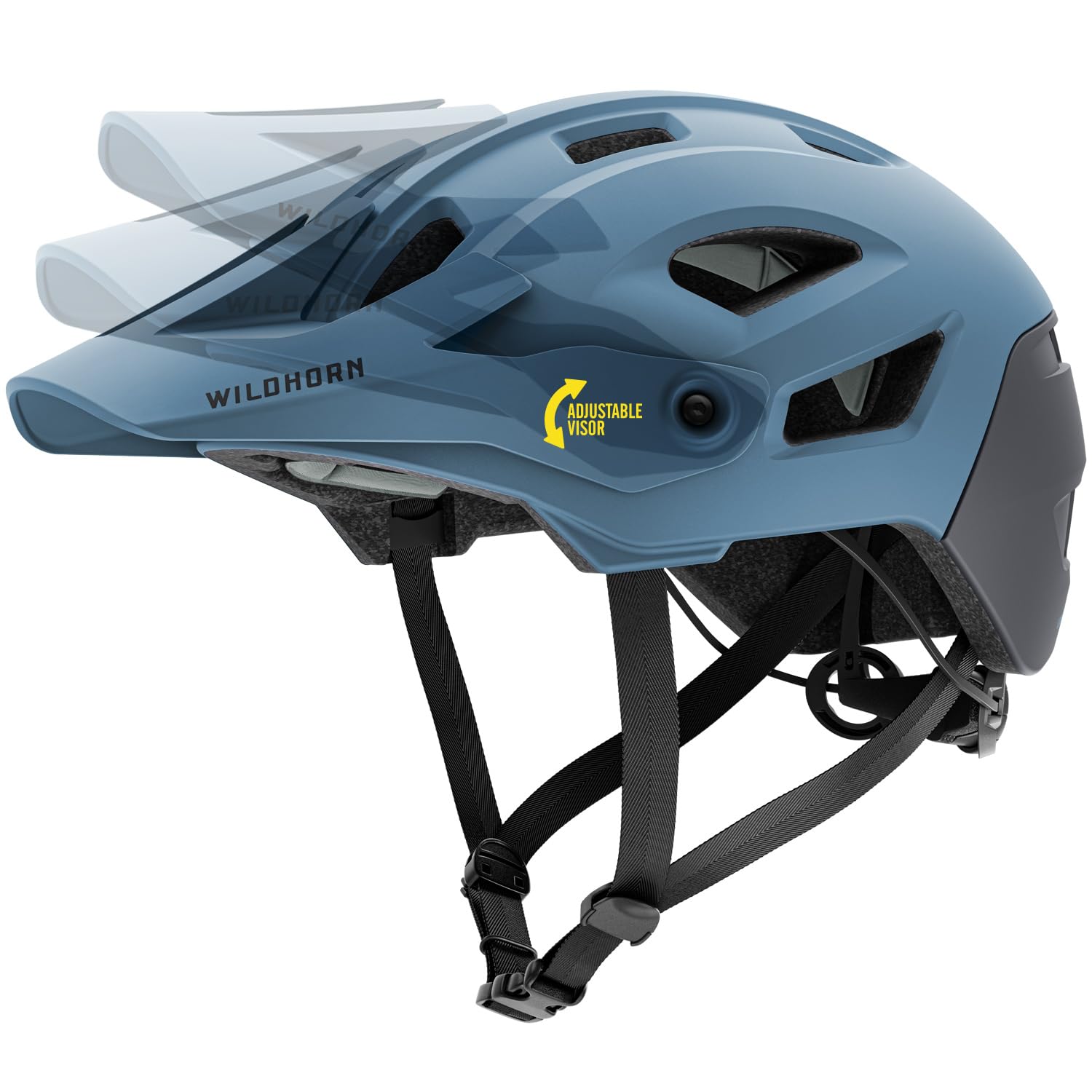
A shade over 300 grams, this one disappears on your head for hours on the trail
Weighing only 310 grams (about 10.9 ounces), the Corvair is one of the lightest MTB helmets in this price range. The low weight comes from a foam inner liner and an ABS (acrylonitrile butadiene styrene) outer shell — a tough plastic that resists impacts. The adjustable visor is useful for sunrise rides when you need to tilt the sun out of your eyes, and the multiple vents and internal airflow channels keep you cool on steep climbs.
Appearance is what owners praise most — the sleek look and available colors (Smoke Blue, for instance) get consistent compliments. Fit is a close second; the dial system is easy to use, and the helmet comes with extra foam inserts for fine-tuning. The Corvair runs slightly smaller than expected for a given size, so check the size chart carefully. One rider with a 58.5 cm head found the L/XL fit perfectly.
The lack of MIPS means you rely solely on the EPS foam for impact absorption. For technical mountain biking with risk of sharp-angle falls, a MIPS helmet like the Fox Mainframe offers an extra layer of protection. But for gravel rides, bike paths, and mellow singletrack, the Corvair’s light weight makes it a joy to wear.
Perfect for the weight-conscious rider: who does not want to feel a helmet on their head during long gravel or trail rides.
6. Fox Racing Mainframe Mountain Bike Helmet
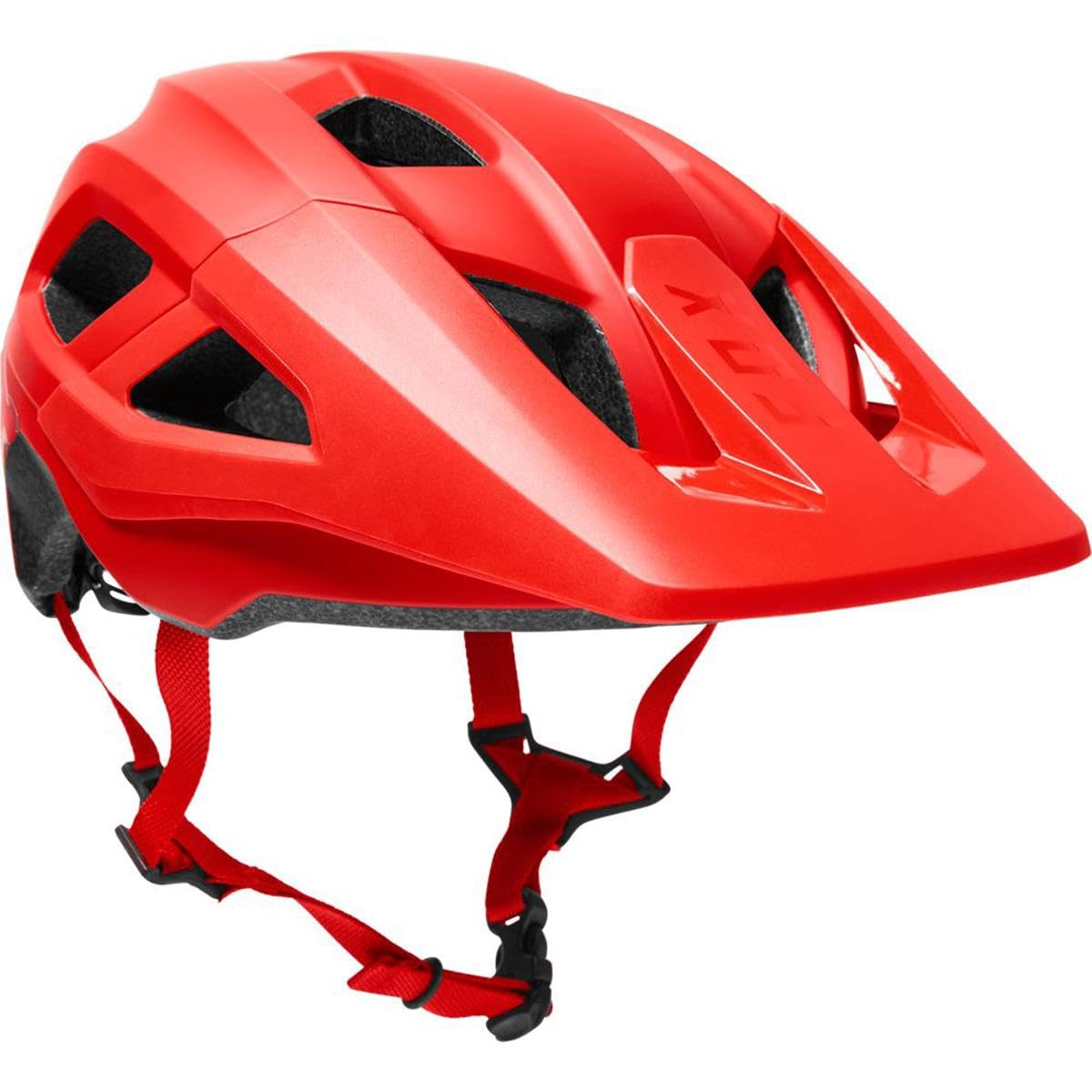
The helmet that sets the bar for MTB protection without three-figure pricing
Fox Racing built their reputation on mountain bike gear, and the Mainframe delivers a proven MIPS impact protection system — a layer inside the helmet that slides to reduce rotational forces on the brain. The extended rear coverage, tune venting with channeled EPS foam, and a removable washable moisture-wicking liner make it a helmet you can wear all day. The MIPS system is integrated directly into the fit system, keeping things clean and lightweight despite the 1.7-pound weight.
The consensus is that this helmet is top quality. Riders note that the ratcheting strap system ensures a tight, secure fit. However, the helmet runs conspicuously large — one owner had to go from their usual Large down to a Medium to get the right fit. Check the size chart and consider ordering a size smaller than you think you need. The color options also receive mixed reactions, so pick one you like in the photos.
For aggressive trail riding, this is one of the safest options you can get under a hundred dollars. The weight is noticeable compared to the Wildhorn Corvair, but the safety tech and build quality justify every gram.
The Upsides
- Proven MIPS protection for rotational-impact safety
- Extended rear coverage for added protection on the trail
- Removable, washable liner for long-term freshness
One Thing to Check
- Runs large — most riders should order one size down
- Heavier than the Wildhorn and Bell at 1.7 lb
Grab this if: you ride technical trails and want a proven MIPS system from a trusted MTB brand.
Think twice if: you prize a near-featherless weight or need a smaller/narrower fit.
7. Bell MIPS Soquel Bike Helmet

A featherlight MIPS helmet that fits large heads better than most
At just 12 ounces (340 grams), the Soquel is one of the lightest MIPS-equipped helmets you can buy under. Bell uses Fusion In-Mold construction, which bonds the polycarbonate shell to the EPS foam for a sturdier structure. The lightweight fit system with an easy-turn dial makes micro-adjustments simple. It is recommended for heads measuring 53-60 cm, but the real story is how well it accommodates larger heads — one owner with a US hat size 7 5/8 found a perfect fit on the last click.
Fit is the most-discussed aspect, and it is overwhelmingly positive. The MIPS system provides genuine rotational-impact protection, and the helmet is comfortable and breathable for hours. Several riders report surviving crashes — one was hit by a car and avoided a major concussion. The only consistent complaint is the sun visor: it sits too short and high to be effective for blocking direct sun. If you ride into the sun frequently, the Giro or Retrospec offer better visor coverage.
Durability gets a mixed reception, with a few owners finding the retention system feels a bit flimsy. But for the price, you are getting lightweight MIPS protection from a brand that has been making helmets since the 1950s.
Made for the big-headed rider: who needs MIPS protection without a heavy helmet or a heavy price tag.
8. LAZER Tempo KinetiCore Bike Helmet

KinetiCore — an integrated rotational-impact system built into the foam itself
Instead of a separate slip-plane like MIPS, LAZER’s KinetiCore design uses strategically placed crumple zones in the EPS foam that compress and redirect energy in a crash. The result is a lighter, more integrated helmet that still offers rotational-impact protection. The Tempo is a road-focused entry-level helmet with a one-size-fits-all design and the TurnSys dial system for instant adjustment. It is also compatible with the Universal LAZER LED light for extra visibility.
Comfort is the top praise, with riders noting that even someone not used to wearing a helmet finds it comfortable. The safety ratings are strong, and the ventilation handles hot days well. It is also lightweight, easy to adjust between wearing a hat and not, and the price is reasonable compared to other brands with similar safety ratings. The only notable drawback is that the one-size approach may not work for very large or very small heads.
If you want a road-specific helmet with a unique impact-tech approach, the LAZER Tempo is a smart, well-rated pick. It weighs 475 g, and the safety data is impressive.
Best for road cyclists: who want KinetiCore protection in a lightweight package without the extra cost of a separate MIPS liner.
9. Thousand Heritage 2.0 Adult Bike Helmet

The helmet that finally made bike helmets cool — and lockable to your bike
Thousand’s Heritage 2.0 reimagines a cycling helmet as a style accessory. The low-profile, retro-inspired design uses a leather inner lining and a polycarbonate shell. The signature PopLock is a hidden channel behind the logo that lets you thread a U-lock or chain through so you can leave the helmet with your bike — it comes with an Anti-Theft Replacement Guarantee. The magnetic clasp (a Fidlock-style mechanism) makes fastening a one-handed snap.
Appearance is the runaway top praise by far — 126 mentions, making it the most-celebrated aspect of any helmet in this guide. Fit is close behind; the Dial Fit System offers easy adjustment, and the helmet fits oval-shaped heads comfortably with no rocking. Riders also love the magnetic closure: “I love the magnetic closure,” one owner says. The cooling system is surprisingly effective, described as “like a mini-AC, even in 90°F heat.”
The trade-off: the Heritage 2.0 uses standard EPS foam, not MIPS or KinetiCore. If you are a cautious commuter who prioritizes visibility and style over advanced rotational-impact tech, this is a no-brainer. But if you want the latest safety science, the Giro or Fox offer more protection for a similar or lower price. Also, the brim covers the eyes well on sunny days, but some riders find the brim sits low in their field of vision.
What You Will Love
- Unique PopLock lets you secure the helmet to your bike
- Magnetic clasp is incredibly easy to use one-handed
- Stylish low-profile design that looks good off the bike
A Fair Warning
- No MIPS or rotational-impact protection at this price point
- Brim can feel low in the field of vision for some riders
This is for the style-first commuter: who wants a helmet they actually want to wear, with a clever lock feature for city living.
skip it if: MIPS protection or the latest impact tech is a non-negotiable for your rides.
Understanding the Specs
MIPS vs. KinetiCore vs. Standard EPS
MIPS (Multi-directional Impact Protection System) is a low-friction layer inside the helmet that allows the head to slide slightly on impact, reducing the rotational forces that can cause a brain injury. KinetiCore is LAZER’s own design that builds crumple zones directly into the EPS foam for a lighter, more integrated system. Standard EPS foam helmets meet the CPSC standard for impact absorption but do not address rotational forces. Any of these are safe, but MIPS and KinetiCore add an extra layer of protection for angled impacts.
Fit Systems and Dial Adjustments
Almost every modern helmet uses a rear dial to tighten or loosen the fit. These are called retention systems — they wrap around the back of your head and cinch the helmet snug. Better systems, like Giro’s Roc Loc Sport, use a ratcheting mechanism with a distinct click for each adjustment. Cheaper systems may use simple wheel turners. A good fit system makes it easy to adjust the pressure while riding, especially important if you switch between wearing a hat and not.
Ventilation and Channel Design
The number of vents influences airflow, but the design matters more. Vents positioned at the front and rear create a Venturi effect — air flows in at the front and exits at the back, pulling heat off your scalp. Mountain bike helmets often have fewer vents to keep debris out, but they channel air through internal grooves. Road helmets generally have more vents. A helmet with 14 to 22 vents is well-suited for most weather, but extremely hot climates might benefit from 20+ vents.
Weight and Long Rides
Weight directly affects comfort on long rides. A helmet under 300 grams (10.6 ounces) is considered lightweight and barely noticeable. Between 300 and 400 grams is average. Over 400 grams (14 ounces) can cause neck fatigue on long climbs or all-day rides. Heavier helmets often include more protection (MIPS layer, deeper rear coverage) or a more sturdy shell, so it is a trade-off between safety features and comfort.
FAQ
Is MIPS worth the extra cost on a helmet under?
How do I measure my head for a cycling helmet?
How often should I replace my bike helmet?
Can I wear a hat or beanie under my cycling helmet?
What is the difference between a road helmet and a mountain bike helmet?
Do I need a rear light on my helmet?
Will a helmet under protect me as well as a helmet?
What does CPSC certification mean?
How tight should a cycling helmet feel?
Can I use a cycling helmet for skateboarding or roller skating?
Final Thoughts: The Verdict
For the majority of shoppers, the best cycling helmet under is the Giro Register MIPS because it packs genuine MIPS protection, 22 vents, and a user-friendly Roc Loc Sport fit system all for under. If you commute daily through city streets and want a built-in rechargeable rear light, grab the Adult Urban Bike Helmet. And for the style-conscious rider who values design and the clever PopLock, the Thousand Heritage 2.0 looks sharp and secures to your bike. Every helmet here was chosen because its real-world reviews confirm the specs deliver — your only job is deciding which trade-off matters most for your ride.
How We Picked
We do not accept paid placement. Every pick is matched to a real buyer and a real use-case; we do not hands-on test units.
Sources & Methodology
Specifications: manufacturer listings and product documentation. Review insights: verified customer reviews, as of July 2026. Pricing: not shown on this page (it changes often); check the current price via the retailer link.
As an Amazon Associate, Trending Car earns from qualifying purchases. This does not affect which products we feature.