
Our readers keep the lights on and my garage snacks stocked. As an Amazon Associate, I earn from qualifying purchases.
Specs are compiled from manufacturer listings and verified buyer reviews and can change over time — please confirm the key details on the product page before buying.
Rust is the silent killer of any car, truck, or boat — starting in hidden seams and undercarriage nooks long before you see the orange bloom. The right corrosion inhibitor halts that chain reaction immediately., and this guide breaks down the nine best formulas for keeping bare metal, electrical connections, and frame rails alive through salt, rain, and humidity.
I’m Min Islam — the founder and writer behind Trending Car. This guide is built by comparing the manufacturers’ published specifications and the patterns across verified customer reviews, so you get each pick’s real strengths and trade-offs instead of marketing spin.
The crowd favorite here holds a 4.8-star score across hundreds of owners, and it is the benchmark every other rust fighter in this roundup is measured against when shopping for a corrosion inhibitor for cars.
Our Picks at a Glance

How To Choose The Best Corrosion Inhibitor for Cars
Not every rust spray does the same job. Some seal bare metal with a waxy barrier, others creep into threads to free seized bolts, and a few do both. Match the formula to the part you are protecting, and you will get years of rust-free service instead of a weekly re-spray.
Know what you are protecting
Undercarriage, frame rails, and cavity seams need a thick, non-hardening wax that flexes with the metal and self-heals if it gets chipped. Battery terminals and electrical connectors need a dielectric film that blocks moisture without conducting current. A single all-purpose spray rarely excels at both, so start by naming the part that worries you most.
Film type decides longevity
Waxy films dry to a firm layer that shrugs off pressure washing and road salt for months or years. Thin oils evaporate or wash away faster, which is fine for a quick lube but weak as a long-term shield. If you store a vehicle or tow a trailer through winter, a waxy or self-healing barrier is the one that actually lasts.
Check the safety and handling side
Flash point tells you how easily the spray ignites — higher numbers mean safer handling near sparks and hot parts. Some formulas need a solvent or mineral spirits to remove, and a few leave a strong odor for days. Read the label before you coat anything you will touch often.
Quick Comparison
| Model | Best For | Can Size | Film Type | Key Use | Amazon |
|---|---|---|---|---|---|
| H&H CB12 Corrosion Block★ Best Overall | All-round rust stopping | 12 oz | Spray | Marine & electrical | Amazon |
| CRC SP-400Best Value | Bare metal storage | 10 wt oz | Waxy | Indoor/outdoor parts | Amazon |
| Yamaha YamalubeMarine Ace | Saltwater engines | 12 oz | Waxy film | Marine protection | Amazon |
| Boeshield T-9 | Tools & garage doors | 12 oz | Drying | Lubrication + rust | Amazon |
| ACF-50 | Electronics & frames | 13 oz | Bonding | Aircraft/electrical | Amazon |
| CorrosionX Heavy Duty | Saltwater gear | 12 oz | Self-healing | Marine & trailers | Amazon |
| CorrosionX 90102 | Rusted bolts & circuits | 16 oz | Dielectric | Penetrant + protect | Amazon |
| CRC 06026 4-Pack | Whole-vehicle undercoat | 10 wt oz ×4 | Hard wax | Undercarriage | Amazon |
| 3M Cavity Wax Plus | Hidden frame cavities | 18 fl oz | Non-hardening | Frame rails & panels | Amazon |
In‑Depth Reviews
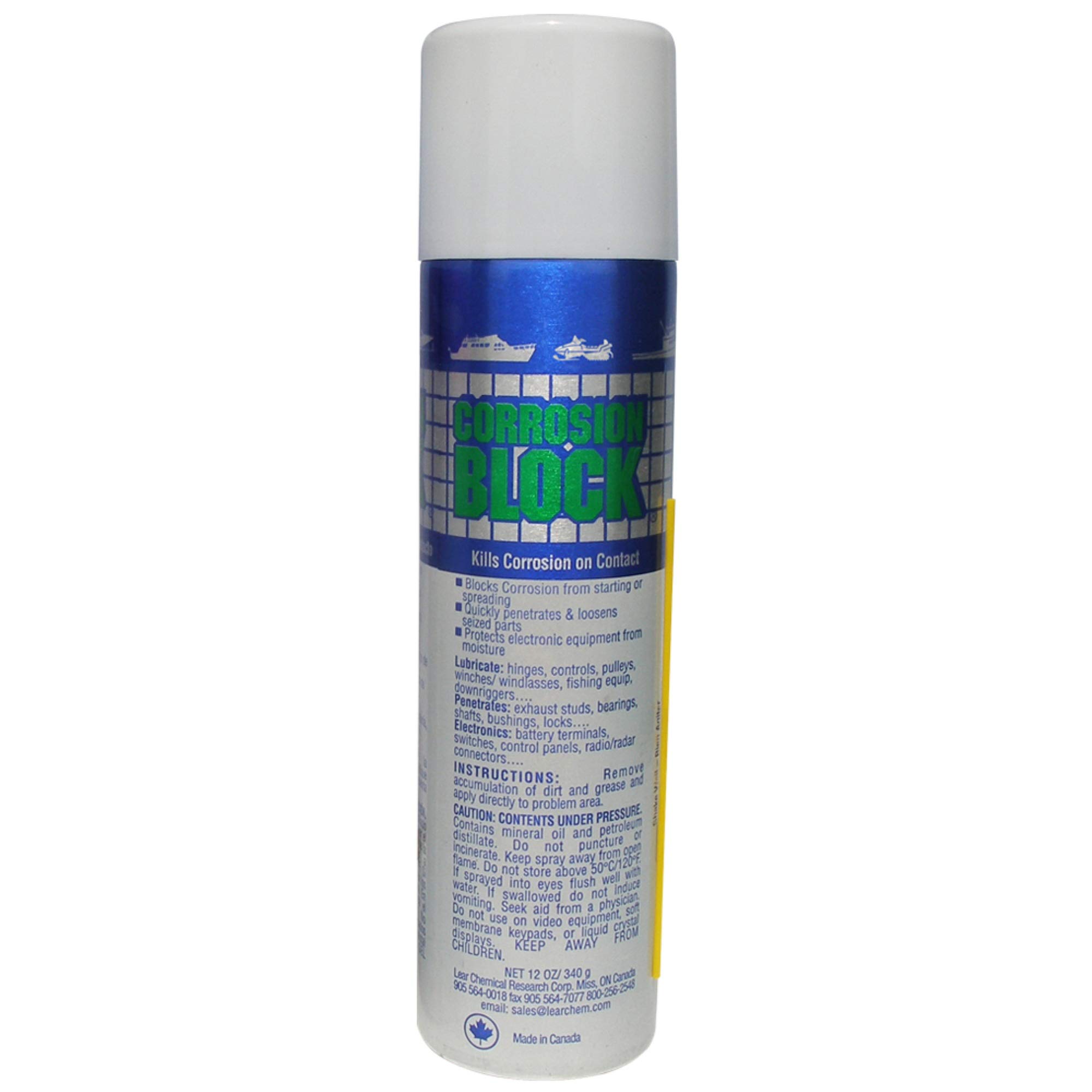
1. H&H CB12 Corrosion Block, 12-Ounce Aerosol Can
Our pick — over 4.5★ from 450+ verified ratings; the strongest balance of quality and price.
The rust-stopping champ that owners trust across boats, outboards, and electrical terminals alike.
This is the spray people reach for when lighter oils have already failed. Buyers report that CB12 eliminated aluminum corrosion on motorcycle fins where WD-40 and other penetrants had let rust return after a single ride — the CB12 coating held after one application and stayed gentle on paint.
What wins people over is corrosion resistance, the aspect owners raise most. The classic story from the review pages is a 20-year-old boat bought from Texas with hardware already showing corrosion; a single treatment stopped any further rust from progressing, with proper winterizing each fall. That long-term track record is why it earns the top spot here.
It also fixes invisible electrical gremlins. Owners mention it restores intermittent low-voltage connections between copper boards and tin connectors, and it keeps keyed door locks working for years with periodic reapplication. At 12 ounces it carries a flash point of 79 °C, so treat it with normal spray-can care around heat.
What owners love
- Stops active corrosion where other sprays failed
- Safe on paint and sensitive electrical circuits
- Long-lasting protection with yearly reapplication
Fair trade-offs
- Some buyers find it pricey for the can size
- Opinions split on value for money
Reach for this if: you want one proven spray for marine hardware, electrical terminals, and bare metal that outlasts the cheap stuff.
Look elsewhere if: you need a dedicated undercoating wax for an entire frame — that job suits the CRC or 3M picks below.
2. CRC SP-400 Corrosion Inhibitor, 10 Wt Oz
A firm, waxy shield that seals bare metal through winter rain and snow without washing off.
Customers note applying SP-400 to bare metal parts last fall and finding them corrosion-free after a full season of winter rain and snow. That is the core promise here: a firm, waxy film highly resistant to humidity and salt spray that never becomes brittle.
The drying behavior is the standout. It dries to a wax-like consistency instead of staying oily, which means it will not wash off and does not get all over your hands like red protectants. One owner has relied on it for 30 years as a battery protectant on golf cart batteries, noting you can break and remake a connection and still keep full protection.
It is NSF H2 registered for use in meat, poultry, and beverage plants, and suits motors, shafts, and outdoor equipment storage. The honest caveats are the dark amber tint and a strong odor — owners describe a crayon-like smell while it is wet. This is roughly a 50% bigger can than the Yamaha option above: 10 wt oz here versus 8 ounces there, giving you noticeably more coverage per can.
Why it earns its place
- Won’t wash off once it dries to wax
- Decades of proven use on battery posts
- NSF H2 registered for food plants
Know before you buy
- Dark amber color stains visibly
- Strong odor during and after application
- Not for daily-use parts — removal needs solvent
Best for the value shopper: long-term indoor and outdoor storage of bare metal, fasteners, and battery terminals where you want set-and-forget protection.
Think twice if: you need something invisible or pleasant-smelling on parts you touch often.
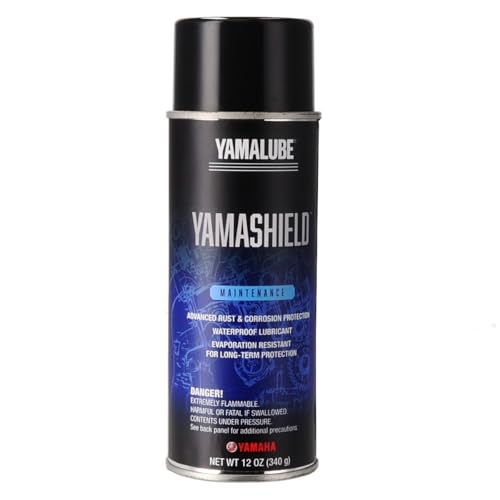
3. Yamaha Original OEM Yamalube Rust & Corrosion Protection
The factory-secret film that keeps saltwater from destroying everything under the cover.
This is the exact OEM product Yamaha builds for its own engines, and boat owners treat it like a discovery. As reviewers point out: “I always wondered what the oil was on everything and how saltwater don’t destroy everything under the cover. This is the stuff it leaves a film almost like a grease behind.”
The 12-ounce spray dries to a thin, waxy film that clings to metal and requires a solvent to cut through — meaning it stays put through launches, spray, and storage. Owners call it a must for all saltwater engines and note it beats generic sprays “by many miles” for marine corrosion protection.
One thing to weigh: at 8 ounces on the label, this can is the smallest in the lineup — the H&H CB12 above carries 12 ounces, a full 50% more product per can. If you are coating a whole outboard or jet ski, you will likely want two cans on hand.
Made for salt: if your ride lives near the ocean, this OEM Yamaha film is the trusted shield owners swear by — just stock up given the smaller can.
The catch: the grease-like residue is intentional and works, but it is not the cleanest-looking finish for a show car.
4. Boeshield T-9 Rust & Corrosion Inhibitor, 12 oz
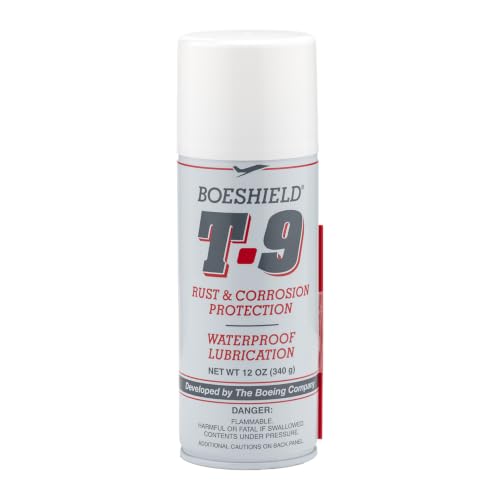
The drying lubricant that guards tools and garage hardware without staying slimy or attracting dirt.
Boeshield T-9 pulls double duty: it lubricates moving parts while its borate-based wax film blocks rust on metal surfaces. Owners have used it for years on tools, electronics, and automotive parts, and it is the go-to for metal garage door tracks where it keeps rollers sliding smoothly.
The defining trait is that it is not slimy. After it dries, it leaves a clean, non-sticky surface that does not attract dirt — a common complaint with heavier protectants. Owners tested it on stainless pool pieces after removing rust and found it prevented the rust from returning better than expected.
It is biodegradable and non-toxic, so it is a responsible pick for environmentally conscious buyers, and it dries quickly with no special tools needed. The one mixed note is greasiness: most find it clean, but a few report a gummy residue on certain surfaces, so test it on a hidden spot first. Lubrication is what owners praise most here — 37 of them single it out.
Grab it for: tools, garage door tracks, RV hardware, and electronics where you want lubrication plus rust defense in one clean-drying spray.
Skip it for: heavy undercarriage coating on a winter-driven car — that is a wax-barrier job.
5. ACF-50 Anti-Corrosion Lubricant Compound, 13 oz
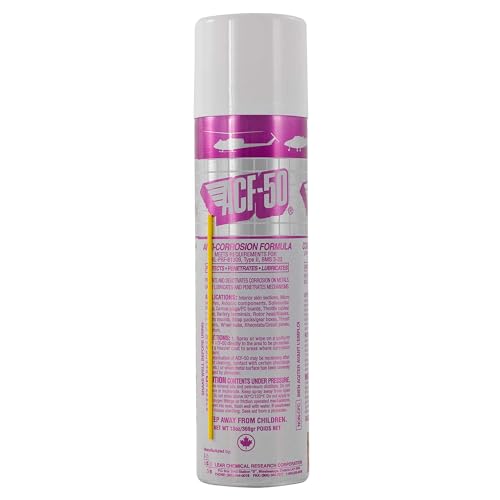
The aircraft-proven compound that chemically bonds to metal and kills corrosion in progress.
ACF-50 has a pedigree few rivals match: owners use it on Piper Cherokee aircraft, and the maker says it kills any corrosion currently in progress with a single application. It chemically bonds to metal surfaces, so it does not evaporate like thin oils, and it stays non-greasy enough to wipe on with a cloth.
It is built for electronics and electrical components alike. The formula is safe on radios, alternators, starters, battery terminals, wiring, and circuit breakers, and it provides low-shear lubrication to moving parts and cables. Shoppers say it kept a pellet grill rust-free through six months of Ohio weather after two applications, and it even removes existing rust on tools.
The safety profile is unusually strong: it is non-flammable, non-carcinogenic, and virtually non-toxic, with a flash point of 79.4 °C. The recurring complaints are the price and an occasional broken nozzle on delivery — the chemical itself earns consistent praise. It washes off easily with mineral spirits or acetone when you need to reapply.
Serious protection: if you want a corrosion fighter that handles electrical systems, motorcycle frames, and even aircraft, ACF-50 is the one the enthusiasts trust.
Fair warning: it is the premium-priced option here, and a defective nozzle slips through now and then.
6. CorrosionX Heavy Duty Anti Rust Spray, 12 oz

A thick, self-healing barrier rated for years of saltwater, rain, and pressure washing.
This is the heavy hitter for anyone whose gear lives outdoors. CorrosionX Heavy Duty uses a self-healing barrier that clings through rain, seawater, and pressure washing — it won’t drip or wash away, and if the film gets scratched it reflows to cover the gap. The maker rates it for up to 5 years indoors and 2 years outside.
Boaters are the loudest fans. Owners apply it monthly to boat motors to stop and prevent salt corrosion, and it works on metal, rubber, and plastic alike. It is also a favorite on trailer leaf springs, winches, and axles, where the thick formula stays bonded even as machinery shifts and vibrates.
The Polar Bonding mechanism locks onto surfaces to prevent electrolysis and galvanic damage in hidden spots like engine bays and docksides. The honest trade-offs are real: it is thick and goopy, stains hands and clothes, and attracts dirt over time so it can look messy. Owners also note the can does not go very far, so budget for a generous coat — some order a gallon after their first can.
Built for the brutal stuff
- Self-healing film survives pressure washing
- Rated up to 5 years indoors, 2 outside
- Strong on boat motors and saltwater gear
The messy side
- Thick and goopy — stains hands and clothes
- Attracts dirt and looks messy over time
- Can runs out fast on big projects
Choose this for: boat trailers, winches, heat pump cabinets, and anything that faces salt spray or pressure washing year-round.
Look elsewhere if: you want a clean, invisible finish — this one is a working shield, not a show finish.
7. CorrosionX 90102 Dielectric Corrosion Prevention, 16 oz

The industrial penetrant that frees rusted bolts and seals circuits with a 39,000-volt dielectric film.
This is the workhorse of the lineup, doing three jobs at once: it penetrates frozen bolts, lubricates moving parts, and shields electronics from corrosion. Owners used it to remove rust in a yacht’s engine room and to protect brake and suspension parts after a fluid change, leaving calipers looking new.
The dielectric rating is the spec that matters for electrical work. CorrosionX forms a dielectric film rated over 39,000 volts, which displaces moisture and stops galvanic corrosion between dissimilar metals — the reason it is safe on circuits, battery terminals, and sensors. It is qualified by the U.S. Navy under the Advanced Corrosion Preventive Compound military specification.
Owners praise lubrication most, with far more singling that out than any other trait. It clings to metal like a magnet and resists pressure, friction, and washout, making it ideal for locks, hinges, cable pulleys, and marine components under constant vibration. The big 16-ounce can gives you more coverage per spray than most rivals here.
Best for the DIYer: one can that frees seized bolts, coats battery terminals, and protects undercarriage parts — the marine-grade all-rounder.
Not the pick for: a full undercoating job where you want a thick, long-lasting wax layer rather than a penetrant film.
8. CRC 06026 Heavy Duty Corrosion Inhibitor, 10 Wt Oz — 4 Pack

Four cans of hard-wax armor that rust-belt drivers swear by for whole-vehicle undercoating.
This is the undercoating specialist. The 4-pack gives you the volume to coat an entire vehicle’s frame, and buyers report six years in the rust belt with a hitch and rear axle still looking near new. It dries to a hard, invisible wax that pressure washing does not remove — a key advantage over lanolin sprays that wash away faster.
Owners rate it highly in real-world tests, with one noting it won the Project Farm comparison. Applied in two coats with 10-12 hours of cure time between them, it has kept a new Jeep rust-free through three years of saltwater beach use. It protects steering and throttle linkages, electrical connections, fasteners, and motors subject to salt spray and high humidity.
The downsides are practical, not performance-related. It sprays as a fine mist that demands a mask or face shield, the odor lingers for days, and in cold weather the cans tend to clog. Owners recommend a painter’s suit and warn the sticky film will make your garage floor messy. At roughly two cans per vehicle — or six or more for full coverage — the 4-pack at this price is the economical way to protect a whole car.
Why undercoaters love it
- Dries to hard, invisible wax that survives pressure washing
- Proven multi-year protection in salt and rust belts
- 4-pack volume suits a whole vehicle
Application realities
- Fine mist needs a mask and protective suit
- Odor lingers for days after coating
- Cans clog in cold weather
Reach for this if: you drive in the rust belt or near the coast and want serious, lasting undercarriage armor for a whole vehicle.
skip it if: you only need to protect a few small parts — the application demands and 4-can commitment are overkill.
9. 3M Cavity Wax Plus Aerosol Spray, 18 fl oz
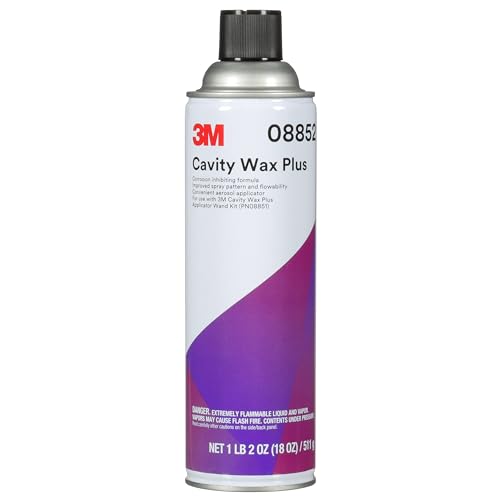
The professional cavity wax that reaches hidden frame rails and reflows into cracks by itself.
Rust almost always starts inside body panels and frame rails, where you cannot see or reach — and that is exactly the job 3M Cavity Wax Plus is built for. It protects internal body panels, frame rails, and structural enclosures, and its self-healing formula reflows into cracks and crevices for long-term coverage.
The material stays soft and pliable, so it will not crack, chip, or peel as the frame flexes on the road. Owners use it on all their vehicles after repairing body and frame rust, applying three quick coats with the extension wand kit (sold separately) to reach every interior cavity. It sprays thin, works into crevices, and sets to a translucent wax that does not hide what is underneath.
Each 18 fl oz can goes a long way when applied properly, which offsets the premium price — though owners are quick to note the cans and the applicator hoses are not cheap. Coverage is what owners praise most, and it works well on steel surfaces and hard-to-reach areas alike. Note that it is labeled for industrial and occupational use, not consumer sale, so it is aimed at serious restorers and shops.
For the restoration crowd: if you are welding in new panels or fighting frame rot, this non-hardening cavity wax is the professional-grade finish that keeps rust from coming back.
Plan ahead: budget for the wand kit and the premium can price — and know this is a specialty cavity tool, not an all-purpose spray.
Understanding the Specs
Film Type and Drying Behavior
The biggest decision is what the spray leaves behind. Waxy films like CRC’s dry to a firm layer that resists washing off, ideal for undercoating and storage. Self-healing films, found on CorrosionX and the 3M cavity wax, reflow into scratches and gaps over time. Thin oils evaporate faster and suit lubrication over long-term sealing. Match the film to the job: firm wax for frames, flexible film for moving parts, thin oil for quick penetrant work.
Dielectric Rating and Electrical Safety
If you are coating battery terminals, sensors, or circuit boards, the dielectric rating matters. A dielectric film blocks electrical current while displacing moisture, preventing galvanic corrosion between dissimilar metals. CorrosionX rates its film over 39,000 volts, which is why owners trust it on electronics and marine wiring. A spray without a dielectric claim is not automatically unsafe on circuits, but a rated product removes the guesswork for sensitive electrical work.
Flash Point and Handling Safety
The flash point is the temperature at which the spray’s vapors can ignite — higher is safer to use near sparks, heat, and running engines. The H&H CB12 sits at 79 °C and ACF-50 at 79.4 °C, while the CorrosionX 16 oz formula climbs to 132 °C. A higher flash point matters when you are coating an engine bay or exhaust-adjacent parts. Always let the solvent flash off before starting the engine, regardless of the number.
Can Size and Coverage Math
Corrosion inhibitors vary widely in can volume, from 8 ounces on the Yamaha up to 18 fl oz on the 3M cavity wax. A whole-vehicle undercoating job can eat six or more cans, so the per-ounce math matters as much as the formula. For large projects, the CRC 4-pack delivers the volume you need in one order. For spot protection on a few parts, a single 12 oz can is plenty — do not pay for volume you will not use within a season.
FAQ
What is the difference between a corrosion inhibitor and a rust remover?
Will a corrosion inhibitor work on battery terminals and electrical connections?
How long does a corrosion inhibitor actually last?
Can I use a corrosion inhibitor on my car’s undercarriage for winter?
Is corrosion inhibitor safe on paint and plastic?
What is a self-healing corrosion inhibitor?
How do I remove a waxy corrosion inhibitor if I need to?
What does dielectric mean on a corrosion spray?
Final Thoughts: The Verdict
If rust is already eating your car’s metal, the corrosion inhibitor for cars to buy first is the H&H CB12—it stops active corrosion on marine hardware and electrical terminals where cheaper sprays fail, and its 4.8-star rating shows buyers trust it. For winter driving, choose the CRC 06026 4-pack if you want a hard-wax undercoating that shields your underbody from road salt. And when hidden frame cavities rust from the inside out, the 3M Cavity Wax Plus is the one to reach for, because it creeps into those sealed spaces.
How We Picked
We do not accept paid placement. Every pick is matched to a real buyer and a real use-case; we do not hands-on test units.
Sources & Methodology
Specifications: manufacturer listings and product documentation. Review insights: verified customer reviews, as of July 2026. Pricing: not shown on this page (it changes often); check the current price via the retailer link.
As an Amazon Associate, Trending Car earns from qualifying purchases. This does not affect which products we feature.