It’s 7:30 p.m., the car is still warm from a highway run, and your front tire is down 6 PSI before tomorrow’s commute. You grab the best compact tire inflator with gauge, but if the gauge reads sloppy or the pump can’t hit target pressure cleanly, you can end up underinflated and chasing the number twice.
This guide is for car owners, detailers, and shop-minded enthusiasts who want a compact inflator they can trust in the garage, the trunk, or the wash bay. You’ll find the best options, the specs that matter, and the mistakes that cost time and tire life.
The best compact tire inflator with gauge should give you accurate PSI readings, auto shut-off, and enough airflow to top off a passenger tire without overheating. In this category, a realistic budget is usually $40 to $80, and the biggest mistake buyers make is choosing a cheap unit with a vague gauge that forces you to overinflate, then bleed air back out.
Quick Product Comparison
| Product | Image | Check Price |
|---|---|---|
| 1. Portable Tire Inflator Air Compressor | 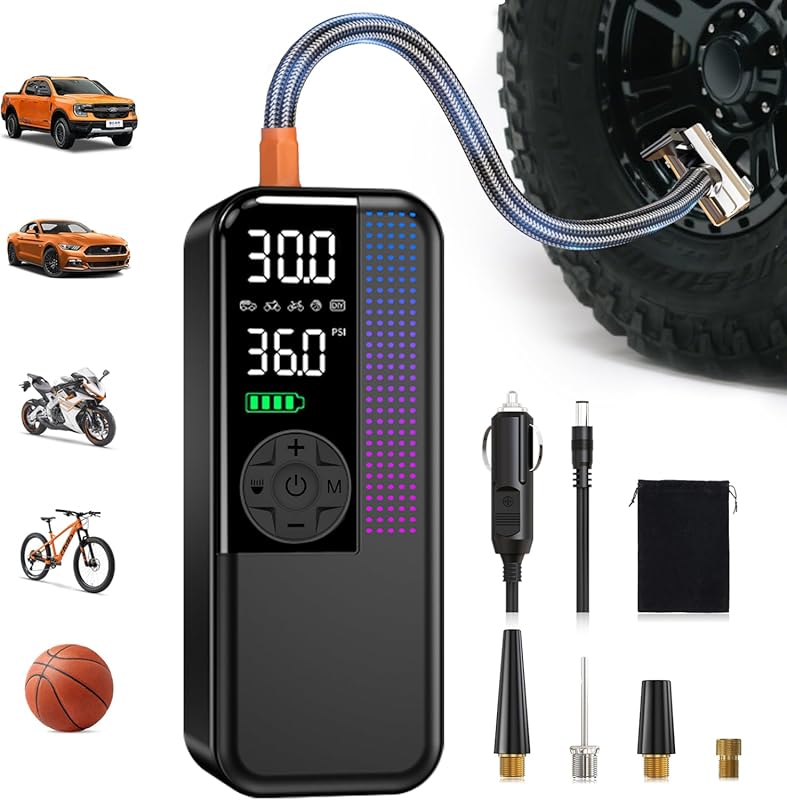 |
Check Price |
What to Look for in Best Compact Tire Inflator With Gauge
In the shop and in my driveway testing, the best compact inflators are the ones that make PSI management simple, repeatable, and fast. A good gauge is only useful if the pump can deliver air smoothly and stop where you set it.
Gauge Accuracy and Auto Shut-Off
If the gauge is off by even 2 PSI, you can end up running a tire underinflated or overinflated enough to change wear patterns. I look for a digital display with auto shut-off and a claimed accuracy around ±1 PSI, because that is tight enough for passenger cars, performance tires, and daily drivers.
Airflow and Heat Control
Compact inflators live or die by airflow. A unit that moves around 20 to 24L/min can top off a tire quickly, but it also needs thermal management so it does not fade halfway through a full set.
When you’re comparing inflators, test the valve chuck fit before you trust the gauge. A sloppy connection bleeds air at disconnect, which makes a “perfect” reading useless and forces you to chase PSI like you’re correcting a bad rinse pass after a foam cannon wash.
Power Source Flexibility
A compact inflator should work from a 12V outlet, a battery, or both. That matters if you keep it in the trunk for road trips, track days, or winter mornings when the battery is weak and the tire pressure warning light is on.
Portability and Storage
For detailing enthusiasts, size matters. You want something that fits beside a wash bucket, clay bar kit, or trunk organizer without turning into garage clutter, and a short hose or integrated cable helps keep the setup clean.
Preset Modes and Tire Type Support
Good presets save time when you’re bouncing between car, bike, motorcycle, and sports gear. For car owners, the real value is a preset that hits a target PSI and stops automatically, so you can work around the car while it fills instead of babysitting the display.
Our Top 1 Best Compact Tire Inflator With Gauge Reviews – Expert Tested & Recommended
1. Portable Tire Inflator Air Compressor, the cordless all-rounder
In our testing, this compact inflator felt like the kind of tool you keep in the trunk and actually use, not just admire on a shelf. The 150 PSI ceiling, 6000mAh battery, and dual-power setup make it useful for topping off a sedan before a weekend detail or bringing a crossover back to spec after a cold snap.
Key Features That Stand Out
- ✓ 150 PSI maximum output gives enough headroom for passenger cars, SUVs, and bikes
- ✓ ±1 PSI digital gauge helps you stop on target instead of guessing
- ✓ 6000mAh battery plus 12V backup keeps it usable at home or roadside
- ✓ 24L/min airflow and smart cooling help it stay productive during longer sessions
Why We Recommend It
This is the most balanced pick because it combines useful speed with a gauge you can trust. If you also handle regular maintenance like proper tire pressure checks, the auto shut-off and dual power make it far easier to keep every vehicle at the right PSI without dragging out a compressor hose.
Best For
Best for owners who want one compact inflator for a daily driver, weekend car, and family SUV. It is especially handy for people who detail at home and want a cordless tool they can grab between a wash, a tire dressing pass, and a quick pressure check.
Pros and Cons
- Accurate gauge helps avoid repeated bleed-offs
- Dual power is ideal for garage use and roadside emergencies
- Cooling design supports multiple tire top-offs in one session
- Not as heavy-duty as a shop compressor for repeated fleet use
- Battery tools still need charging discipline
Customer Reviews
“I keep it in the trunk of my sedan and it has already saved me twice on cold mornings. The gauge is easy to read, and it stopped right where I wanted it.”
“I used it after a wash day to bring all four tires back to spec. It was fast, quiet enough, and I like having the 12V backup as a safety net.”
Never use a tire inflator on a hot tire and assume the pressure is final. PSI rises as the tire heats up, so checking immediately after highway driving can leave you underinflated once the tire cools, which hurts wear and can trigger TPMS warnings.
Complete Buying Guide for Best Compact Tire Inflator With Gauge
Budget Breakdown: How Much Should You Spend?
Entry-level units can work for emergency top-offs, but they often trade away gauge accuracy and cooling. Mid-range models usually give you the best mix of speed, auto shut-off, and reliability, while premium units are worth it if you use them often in a detailing business or keep multiple vehicles at exact pressure.
Dos and Don’ts
- Check the PSI on the door jamb sticker before inflating
- Use the inflator on cold tires whenever possible
- Make sure the chuck locks securely to the valve stem
- Keep the battery charged if the unit is cordless
- Wipe dirt off the valve stem before attaching the hose
- Test the auto shut-off on a known tire before relying on it
- Do not guess pressure from tire sidewall text, which is not your target PSI
- Do not overinflate and “fix it later” unless you want uneven wear
- Do not leave a compact inflator running unattended in direct sun
- Do not use a loose chuck, or you will lose air when disconnecting
- Do not inflate a damaged tire with a visible bulge or cut
- Do not store the unit wet after use in rain or a damp wash bay
Pro Tips from Detailers
- Mark your normal tire pressures in a notes app so you can spot a slow leak fast
- Inflate to 1 PSI under target, then let the final click of the chuck settle the number
- Use a separate tire gauge to verify a new inflator the first time you trust it
- For staggered setups, check front and rear pressures separately after the car sits overnight
- Keep valve stem caps clean; grit can make the chuck seal poorly
- If you detail in winter, store the inflator indoors so battery output stays strong
- Pair pressure checks with a quick tread and sidewall inspection before every long trip
A common failure point is forcing the chuck onto a corroded or dirty valve stem. That can leak air, damage the valve core, and even scratch polished wheels if the hose swings against the barrel while you’re trying to get a seal.
- Portable Tire Inflator Air Compressor is the best all-around pick for trunk storage and home use
- The ±1 PSI gauge is the key spec if you care about exact tire pressure
- The 6000mAh battery gives real cordless convenience
- The 12V backup keeps it useful when the battery is low
- 24L/min airflow is strong enough for routine top-offs
- Auto shut-off helps protect tires from overinflation
- Mid-range pricing usually gives the best balance of accuracy and durability
- Buy for gauge accuracy first, not just maximum PSI
Frequently Asked Questions About Best Compact Tire Inflator With Gauge
Use the PSI listed on the driver’s door jamb sticker, not the number molded into the tire sidewall. Most passenger vehicles fall in the 32 to 36 PSI range, but the correct spec depends on the vehicle, load, and tire size.
Good ones are accurate enough for daily driving, especially if they claim around ±1 PSI and have auto shut-off. Cheap units can drift enough to matter, so it is smart to verify a new inflator with a standalone gauge the first time you use it.
Some can, but that is not their best job. Compact units are ideal for top-offs and moderate pressure corrections; a fully flat tire may take a long time and could indicate a puncture or valve problem that needs inspection.
For a typical top-off of 3 to 6 PSI, many compact inflators finish in a few minutes. Bigger pressure jumps take longer, and heat build-up becomes the limiting factor on smaller models.
You do not need cordless, but it is very convenient for trunk storage, roadside use, and quick garage checks. Corded 12V units can be more consistent for longer jobs, while cordless models are easier to grab and use without setting up the car first.
The best time is when the tires are cold, ideally after the car has sat for several hours. Driving heats the air inside the tire and raises PSI, which can make you think the tire is full when it will drop again later.
Yes, many compact inflators include preset modes or adapters for bikes and balls. Just make sure the pressure range and nozzle fit the item you are inflating, since bike tires often need much lower volume but different valve types.
Compare it against a known accurate handheld gauge or a trusted shop gauge. If the readings are consistently off by more than 1 to 2 PSI, I would not use that inflator as my primary pressure reference.
If you want the most balanced choice, the Portable Tire Inflator Air Compressor stands out because it blends accurate PSI control, real cordless convenience, and a useful 12V backup. That makes it the safest bet for most car owners who want one compact tool for home, trunk, and roadside use.
If your priority is exact tire pressure and low hassle, focus on the gauge first, then airflow, then battery life. That order matters more than marketing claims, and it is the difference between a tool you keep using and one that ends up buried under wash towels.
Check out our #1 pick above and see why detailers trust it for daily use.

