
Our readers keep the lights on and my garage snacks stocked. As an Amazon Associate, I earn from qualifying purchases.
Specs are compiled from manufacturer listings and verified buyer reviews and can change over time — please confirm the key details on the product page before buying.
The real question behind every “cheap tire” search isn’t the price tag — it’s whether you’ll be buying it again in 3,000 miles. Budget motorcycle tires now deliver confident wet grip, predictable cornering, and respectable wear without sport-bike pricing. This guide cuts through the marketing to show you which affordable tires actually hold up on the street, and which ones are best left on the shelf.
I’m Min Islam — the founder and writer behind Trending Car. This guide is built by comparing the manufacturers’ published specifications and the patterns across verified customer reviews, so you get each pick’s real strengths and trade-offs instead of marketing spin.
We’ve matched the highest-rated budget models to the riding styles they suit best, so you can find the ideal set of cheap motorcycle tires without overpaying for track-day tech you’ll never use.
Our Picks at a Glance


How To Choose The Best Cheap Motorcycle Tires
Buying on a budget doesn’t mean buying blind. Before you click, you need to match the tire’s construction and ratings to the weight of your bike and how you actually ride, so you don’t end up with a bargain that wears out in a season.
Match the Construction to the Ride
Tires come in two main builds. Bias-ply tires (like the Continental ContiMotion or Dunlop D404) use crisscrossing layers that give a smooth, forgiving ride — great for cruisers and touring. Radial tires (like the Kenda KM1 or Dunlop Sportmax) use steel belts running across the tread, which run cooler at highway speeds and offer sharper handling for sportier bikes. A good rule: match the tire’s construction to what your bike came with, or you’ll change the handling character.
Check the Load Index and Ply Rating
The load index is a number that tells you how much weight the tire can safely carry — a 58 index holds more than a 54. This is critical if you ride two-up or with luggage. The ply rating tells you how tough the carcass is: a 4-ply is standard for street bikes, while a 6-ply (or reinforced aramid-belted) carcass handles heavier loads and resists punctures better for long-distance touring.
Balance Grip Against Mileage
Softer rubber compounds stick to the road and feel confidence-inspiring in corners, but they wear faster. Harder dual-compound tires put a resistant center strip between the softer edges, so you get grip in the turns and longer life in a straight line. If you commute in a straight line daily, a harder compound saves you money in the long run; if you ride twisty backroads for fun, a stickier tire is worth the faster wear.
Quick Comparison
| Model | Best For | Ply Rating | Load Index | Item Weight | Amazon |
|---|---|---|---|---|---|
| Kenda KM1★ Best Overall | All-weather sport-touring value | 4-Ply | 54 | 10 pounds | Amazon |
| Continental ContiMotionTourer’s Choice | Budget touring mileage | 6-Ply | 58 | 9.4 pounds | Amazon |
| Shinko 777 Front H.D.Cruiser King | Cruiser cornering and grip | Aramid belted | 61 | 9.2 pounds | Amazon |
| Dunlop Sportmax GPR-300 | Sport bike cornering feel | Radial | — | 6 pounds | Amazon |
| Dunlop D404 Rear | Cruiser smoothness and mileage | Bias-ply | 67 | — | Amazon |
| Michelin Pilot Power 2 CT | Spirited sport riding | Radial | 54 | 9.4 pounds | Amazon |
| Shinko SR777 HD | Heavy cruiser touring loads | 4-ply aramid belt | 77 | 15 pounds | Amazon |
| Bridgestone Battlax BT46 | Vintage sport and touring | Bias | 63 | 5.9 kg | Amazon |
In‑Depth Reviews
1. Kenda KM1 Sport Touring Tire
The budget tire that corners like it costs twice the price, with a 4-ply radial build for all-weather confidence.
The Kenda KM1 is the tire that keeps showing up when riders talk about getting real performance for entry-level money. It’s a radial construction tire, which means it runs cooler and handles more predictably at highway speeds than a bias-ply would. The 4-ply carcass gives it strength without turning the ride harsh, and the 10-pound weight keeps it from feeling like a boat anchor in the corners.
Riders report the KM1 sticks to the road, with one buyer noting solid wet and dry behavior and another praising how it plants through turns. The headline number is the wear: buyers report the rear lasts around 8,000 miles, with half the tread still there at 4,000. That’s a longevity figure that would embarrass some tires at twice the price, and it earns the KM1 its reputation as “best bang for the buck.”
The trade-offs are worth knowing before you buy. The sidewalls run stiff, making installation a wrestle — expect to need around 40 PSI to seat the beads. The tire also runs a touch wider than its spec, and it can follow highway grooves and weave a little at top speed. For a budget tire, though, the balance, the wet grip, and the wear are a winning combination.
What earns its keep
- Reported 8,000-mile rear life with half tread at 4,000
- Grip and stability praised in both wet and dry conditions
- Near-perfect balance and agile cornering per riders
The honest catches
- Stiff sidewalls make mounting a challenge
- Wider than spec and can follow highway grooves
- Less sticky than premium sport rubber — not for knee draggers
Reach for this if: you want a sport-touring tire that balances all-weather grip, longevity, and price better than anything else at this level.
Think twice if: you do your own mounting with basic tools — the stiff sidewalls will test your patience.
2. Continental ContiMotion Front Tire
A 6-ply touring tire that shrugs off road punishment and keeps rolling past the 5,000-mile mark on the rear.
The Continental ContiMotion is built for riders whose priority is miles, not lap times. At 6-ply, its carcass is tougher than the Kenda KM1’s 4-ply build, which means it resists punctures and handles heavier loads with more composure on long hauls. The bias construction delivers that smooth, forgiving ride that makes day-long slogs feel less fatiguing.
You get strong value here — buyers estimate at least 5,000 miles out of the rear and more out of the front. One rider swapped it onto a DRZ400SM and praised excellent grip even in wet conditions, calling it “cheaper than any Dunlop and just as good if not better.” The ride gets consistently described as smooth and the traction solid.
The honest caveat is that grip has drawn mixed notes — most riders are happy, but some mention slippage under medium-to-heavy braking. That’s a reminder that a hard-compound touring tire prioritizes wear over ultimate stickiness. If you ride aggressively in the wet, budget for a little more caution on the brakes.
Mileage machine: the 6-ply build and bias construction make this a long-distance companion that delivers reported front-tire life beyond 5,000 miles.
Who it’s for: commuters and tourers who want a smooth, durable, wallet-friendly tire and ride with restraint in the rain.
Best suited to: riders who cover serious miles and value wear life and ride comfort over maximum cornering grip.
Look elsewhere if: you brake hard and ride fast in the wet — grip under medium-heavy braking has drawn mixed feedback.
3. Shinko 777 Front H.D. Tire
The cruiser favorite that owns winding roads, with a 908-pound load capacity and grip that punches above its price.
The Shinko 777 H.D. is the tire cruiser riders keep coming back to, and it’s easy to see why when you hear how it rides. This is the H.D. — Heavy Duty — version, meaning the reinforced carcass gives a more stable, planted feel that bigger V-Twin and metric cruisers need. The aramid belting adds structural strength without a punishing ride.
Reviewers sum the 777 up as “great all around — corners well, grips well on wet road, smooth on the highway, and cheap.” It’s a recurring theme: riders praise the confidence-inspiring traction you feel when accelerating, braking, and leaning into curves, and the functional siping in the tread helps it hold in wet conditions. It’s even earned a following among stunt riders on Harleys.
The real-world catch comes in a few notes about a wobble at speed and durability that some riders found mixed. The sticky compound also increases low-speed turning effort and needs a long break-in before it hits peak grip. For a tire that delivers this much cornering confidence at this price, those are fair trade-offs to live with.
Why riders love it
- Grip and traction praised heavily, especially on winding roads
- Smooth and stable on the highway per owners
- Aramid belted construction for a planted feel
What to expect
- Some riders report a wobble at speed
- Low-speed turning takes more effort
- Needs a long break-in period
Grab it for: cruiser cornering and confident wet-road grip on a budget — this is the tire riders recommend for twisty riding.
Pass if: you can’t tolerate any high-speed wobble or want a short break-in period.
4. Dunlop Sportmax GPR-300 Front Tire

The lightweight sport radial that delivers near-stock feel at half the price of premium rubber.
The Dunlop Sportmax GPR-300 is the sport bike owner’s answer to expensive stock replacements. It’s a radial tire, and at just 6 pounds it’s noticeably lighter than the 10-pound Kenda KM1 above — a difference you feel in how nimbly the front end flicks into corners. The 520-pound load capacity suits standard sport bikes, and the 120/70ZR17 sizing places it squarely in the sport-bike mainstream.
The most telling review comes from a Triumph Trident 660 owner who replaced a Michelin Road 5 with this Dunlop at half the price and found no perceptible difference in feel. Another rider swapped it onto a 2020 Suzuki GSX-S1000F after a Kenda KM1 developed a wobble at 600 miles, reporting no downsides. Riders consistently describe the grip as sticky, with great traction even in the rain.
The durability is the honest trade-off. One CB500F owner who commutes and tracks the bike found exceptional grip but faster center wear on straight-line highway riding — the edges last longer. If you’re a straight-line commuter, a harder compound might serve you better; if you ride for fun, this is the value play.
Cornering value: owners mention replacing premium tires like the Michelin Road 5 and feeling no perceptible difference, at a fraction of the cost.
The catch: the sticky compound wears faster in the center under straight-line commuting — it’s built for spirited riding, not freeway miles.
Pick this if: you ride a sport bike for fun and want sticky, confidence-inspiring grip without paying premium prices.
skip it if: most of your miles are straight-line highway commutes — the faster center wear will cost you.
5. Dunlop D404 Rear Tire
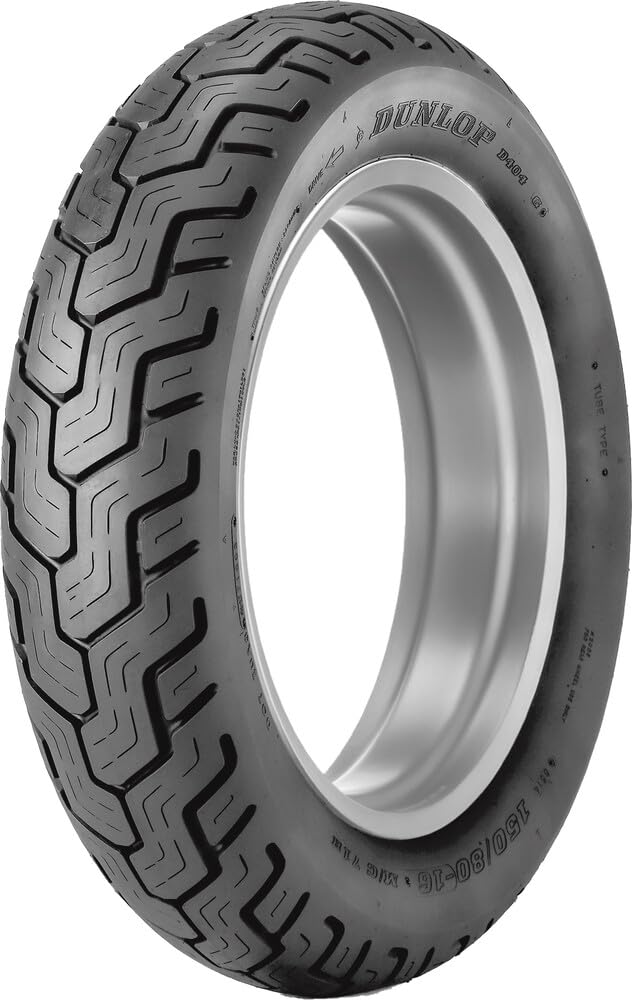
The cruiser rear that carries up to 1,200 pounds and rolls smooth at 80 mph without emptying your wallet.
The Dunlop D404 is a budget cruiser workhorse, and its specifications tell you exactly where its priorities lie. With a 1,200-pound load capacity and a 67 load index, it’s built to haul — two-up riding, saddlebags, and weekend touring are all in its comfort zone. The bias-ply construction delivers the smooth, forgiving ride that cruiser owners expect.
Riders have praised the grip and the ride quality, with one Harley owner reporting it runs great at 80 miles per hour. It’s a popular pick for older Sportsters, fitting bikes like a 1991 Harley Sportster and a 02 HD Sportster 1200 Custom. The value is a consistent theme across the reviews — “nice tire and nice price,” as one owner put it.
The durability is where opinions split. The tread compound balances mileage and grip, but one rider on a Sportster 1200 got around 4,500 miles and half a year of riding before showing wear, calling the rubber “very soft.” If you’re looking for a rear tire that will outlast a full season of heavy riding, you may want to look at the harder-compound options on this list.
Built to haul
- 1,200-pound load capacity for two-up and luggage
- Smooth bias-ply ride praised at 80 mph
- Strong value for classic cruisers
Know before you buy
- Reported wear at around 4,500 miles on a Sportster
- Softer compound means grip over longevity
- Durability opinions split among owners
Choose this for: a classic cruiser that needs a smooth, high-capacity rear tire for around-town and highway miles.
Consider another if: you want maximum miles per dollar — the softer compound wears faster than touring-focused rubber.
6. Michelin Pilot Power 2 CT Tire

Michelin’s dual-compound sport tire that leans to 51.2° and still rolls past 9,000 miles.
The Michelin Pilot Power 2 CT is the pick for sport riders who want premium grip without paying premium-sport prices. The “2CT” stands for dual-compound technology — a harder, wear-resistant rubber in the center and softer rubber at the edges. That means you get a long-lasting center strip for straight-line miles and sticky edges for cornering, and Michelin quotes an impressive 51.2° maximum lean angle.
The review pages are full of praise for how this tire grips. Riders note it doesn’t slip at all, performs well even in cold conditions, and one owner reported over 9,000 miles of use — a remarkable figure for a sport compound. One rider called it the best tire they’ve felt in a while, praising dry grip as “top tier” and noting wet grip is solid too. It’s a favorite for a reason.
The only real caveat is the expected one for a dual-compound: the softer side rubber wears faster than the center. One owner noted that once the sides wear, it changes how the tire feels in the turns — but acknowledged it’s a reasonable trade-off for the grip. For a budget-conscious sport rider, that’s a deal most would happily make.
Grip first: riders report top-tier dry grip with no slipping and solid wet performance, earning this tire a loyal following among sport riders.
Fair warning: the soft edge compound wears faster than the center, which is the predictable cost of that cornering grip.
Best for: sport riders who push hard in corners and want sticky edges plus a center that lasts — a rare combo at this price.
Not ideal for: riders who want maximum mileage out of the whole tire, since the edges give out first.
7. Shinko SR777 HD Rear Tire

A heavy-duty rear built for touring loads, rated to 130 mph and praised for swallowing freeway expansion joints.
The Shinko SR777 HD is the rear tire for big cruisers that carry weight, and it’s engineered for exactly that job. It’s H-rated for speeds up to 130 mph, carries a 908-pound load capacity, and its 4-ply-rated carcass with aramid belting handles the stress of passengers and luggage. It’s built for long-distance touring, and riders say it delivers.
The standout review describes a rider who “never even feel[s] the freeway expansion joints moving across” — that’s the heavy-duty construction smoothing out the road. Riders report excellent grip in turns, good handling, and a tire that doesn’t cup or wear funny. Several Sportster owners call it a great upgrade with strong value for the money, and one buyer notes it’s a very good choice if you don’t mind Chinese tires.
The honest concern is stability, which has drawn mixed feedback — some riders report issues with rear wheel death wobble. That’s worth taking seriously on a heavy touring bike. For the majority who report excellent high-speed stability and grip, this is one of the best-value heavy-duty rear tires going.
Why it stands out
- H-rated for speeds up to 130 mph
- Riders praise curve grip and smooth expansion-joint feel
- Built for heavy touring loads with aramid belting
The watchpoint
- Stability has drawn mixed notes, including rear wobble reports
- Heavier build at 15 pounds
- Designed for cruisers, not sport bikes
Reach for this if: you ride a heavy cruiser two-up or with luggage and want a stable, high-mileage rear tire — this is a solid upgrade for a Sportster.
Hold off if: a report of rear wheel wobble is enough to worry you — stability is the one mixed note in otherwise glowing feedback.
8. Bridgestone Battlax BT46 Rear Tire
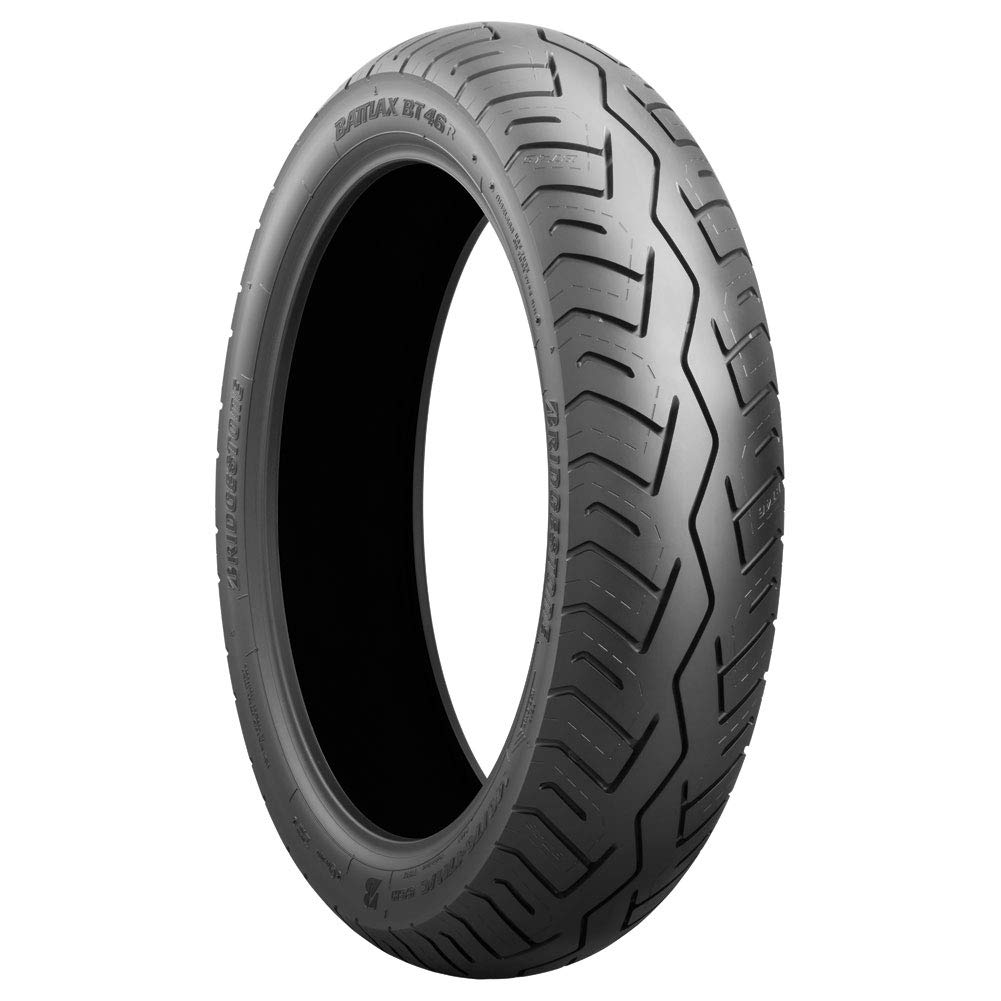
A silica-compound bias tire for vintage and touring bikes, with one owner reporting a jaw-dropping 35,830 miles.
The Bridgestone Battlax BT46 is a modern take on classic touring rubber, built for vintage sport and touring motorcycles. Its single silica compound in the rear is engineered to boost grip and wear without sacrificing one for the other, and the bias construction keeps the ride smooth for bikes that weren’t designed for radial stiffness. It’s a tubeless tire with a 600-pound load capacity and a 63 load index.
The wear figures here are frankly astonishing. One Goldwing owner reports getting 35,830 miles out of this tire — and that was 10,130 miles after plugging a flat — while another owner on a Royal Enfield Interceptor calls it a “big improvement over the OEM tires.” Another rider racked up 7,000 miles in mostly stop-and-go downtown traffic. Riders describe it as wearing “like iron” and balancing easily.
The mixed notes come down to fit — one buyer ordered the wrong size for their bike, which is a reminder to double-check your sizing before ordering. A few riders also found the balance and overall fit less than perfect. But for vintage and touring riders who want modern grip with classic-bike compatibility, the BT46 is a compelling value.
Mileage freak: with one Goldwing owner reporting 35,830 miles, this is the longest-wearing tire on this list by a wide margin.
The fine print: double-check your tire size before ordering — the one recurring negative is an occasional wrong-size purchase.
Best for: vintage and touring riders who want modern wet performance and exceptional wear life in a classic bias-ply package.
Verify first: confirm your exact tire size — fit is the one area where buyers have hit snags.
Understanding the Specs
Ply Rating and Load Index
The ply rating tells you how strong the tire’s carcass is, and it’s your first clue to how much weight it can handle. A 4-ply is standard for most street bikes, while a 6-ply or aramid-belted carcass — like the Continental ContiMotion’s 6-ply build versus the Kenda KM1’s 4-ply — resists punctures better and handles heavier loads. The load index is a separate number that rates the tire’s maximum safe weight: a 58 index carries more than a 54, and the Shinko 777’s 908-pound capacity versus the Dunlop Sportmax GPR-300’s 520 pounds shows how much this can vary. Match both to your bike’s weight plus you and your gear.
Radial vs. Bias Construction
This is the single biggest handling decision you’ll make. Bias-ply tires (like the ContiMotion and Dunlop D404) use crisscrossing layers that give a smooth, forgiving ride and are great for cruisers and touring bikes. Radial tires (like the Kenda KM1 and Dunlop Sportmax) run steel belts across the tread, run cooler at highway speeds, and offer sharper, more predictable handling for sportier bikes. Generally, match the construction your bike came with — swapping radial for bias, or vice versa, changes how the bike steers and feels.
FAQ
How long should a cheap motorcycle tire last?
Will a 120/70-17 tire fit my bike?
What does the load index number mean?
Is a 6-ply tire always better than a 4-ply?
What is the difference between radial and bias-ply tires?
Are cheap motorcycle tires safe for highway riding?
Should I replace my tire at 4,500 miles?
What does “H-rated” on a motorcycle tire mean?
Final Thoughts: The Verdict
For most riders, the clear winner among cheap motorcycle tires is the Kenda KM1, because it balances all-weather grip, an 8,000-mile rear life, and a 4-ply radial build at a price that’s tough to top. If you’re a cruiser rider who loves winding roads, the Shinko 777 H.D. delivers the cornering confidence you want. And if you want to squeeze every possible mile out of a tire, the Bridgestone Battlax BT46 is the mileage champion, with one owner reporting a remarkable 35,830 miles.
How We Picked
We do not accept paid placement. Every pick is matched to a real buyer and a real use-case; we do not hands-on test units.
Sources & Methodology
Specifications: manufacturer listings and product documentation. Review insights: verified customer reviews, as of August 2026. Pricing: not shown on this page (it changes often); check the current price via the retailer link.
As an Amazon Associate, Trending Car earns from qualifying purchases. This does not affect which products we feature.