
Our readers keep the lights on and my garage snacks stocked. As an Amazon Associate, I earn from qualifying purchases.
Specs are compiled from manufacturer listings and verified buyer reviews and can change over time — please confirm the key details on the product page before buying.
If you drive a CCS1 electric vehicle (an EV with the Combined Charging System port), the single most frustrating moment is pulling up to a Tesla Supercharger and realizing your port does not fit. That gap between your car and the largest fast-charging network in North America is exactly what a CCS-to-NACS adapter solves — it bridges the two plug standards so you can charge at thousands of stations your EV could not otherwise use.
I’m Min Islam — the founder and writer behind Trending Car. This guide is built by comparing the manufacturers’ published specifications and the patterns across verified customer reviews, so you get each pick’s real strengths and trade-offs instead of marketing spin.
Whether you drive a Ford, Rivian, GM, or Hyundai, these picks give you the real-world charging speed and safety certifications you need to pick the best ccs-to-nacs adapter for your EV.
Our Picks at a Glance
How To Choose The Best CCS-to-NACS Adapter
Not all adapters are built to the same safety or performance standard. The wrong one can slow your charge, overheat, or even damage your port. Here is what actually separates the reliable picks from the rest.
Safety Certification Comes First
The UL 2252 safety standard is the gold mark for NACS-to-CCS adapters. An independent lab (like SGS) tests the adapter for electrical safety, thermal runaway resistance (how well it handles heat without failing), and mechanical durability under North American standards. If an adapter lacks this certification, you are gambling on whether it can handle sustained high-current charging without melting or failing.
Look at the Amp and Voltage Rating
Every adapter in this category is rated for 500A and 1000V, but what that number actually means is the maximum it can safely carry. Real charging speed depends on the Tesla Supercharger generation (V3 vs V4), your EV’s battery voltage (400V vs 800V), and the adapter’s thermal management. A 500A rating guarantees the ceiling — not the floor.
Physical Size and Weight Matter for Daily Carry
These adapters range from 1.63 pounds to 4.1 pounds. If you plan to keep it in your glove box or under a seat, a compact and lighter unit is easier to store and handle. Larger units sometimes offer better heat dissipation, but they also take up more room and feel bulkier when plugging into a short Supercharger cable.
Quick Comparison
| Model | Best For | Amp / Volt Rating | Weight | Certification | Amazon |
|---|---|---|---|---|---|
| Lectron Vortex Plug★ Best Overall | Highest Verified Speed | 500A / 1000V | Not listed | Not listed | Amazon |
| Hugener 2025Smart Control | Smart Temp Control | 500A / 1000V | 1.98 lbs | UL Safety Claim | Amazon |
| SIFWEX NACS to CCS1 | Verified UL 2252 Testing | 500A / 250kW | 2.59 lbs | UL 2252 Tested (SGS) | Amazon |
| LENZ NACS to CCS | Compact & Lightest | 500A / 1000V | 1.63 lbs | UL 2252 SGS Certified | Amazon |
| A2Z EV Typhoon Pro | All-Weather Durability | 500A / 1000V | 4.1 lbs | UL2252 Pending | Amazon |
| Imdot NACS to CCS1 | UL 2252 Certified Value | 500A / 1000V | 2.61 lbs | UL2252 Certified | Amazon |
| Amphenol NACS to CCS1 | Industrial-Grade Build | 600A / 1000V | 2.66 lbs | CSA Certified UL2252 | Amazon |
In‑Depth Reviews
1. Lectron Vortex Plug
Our pick — over 4.5★ from 700+ verified ratings; the strongest balance of quality and price.
The adapter buyers trust for consistent 96 kWh sessions at V3 Superchargers — the most-reviewed pick in this group.
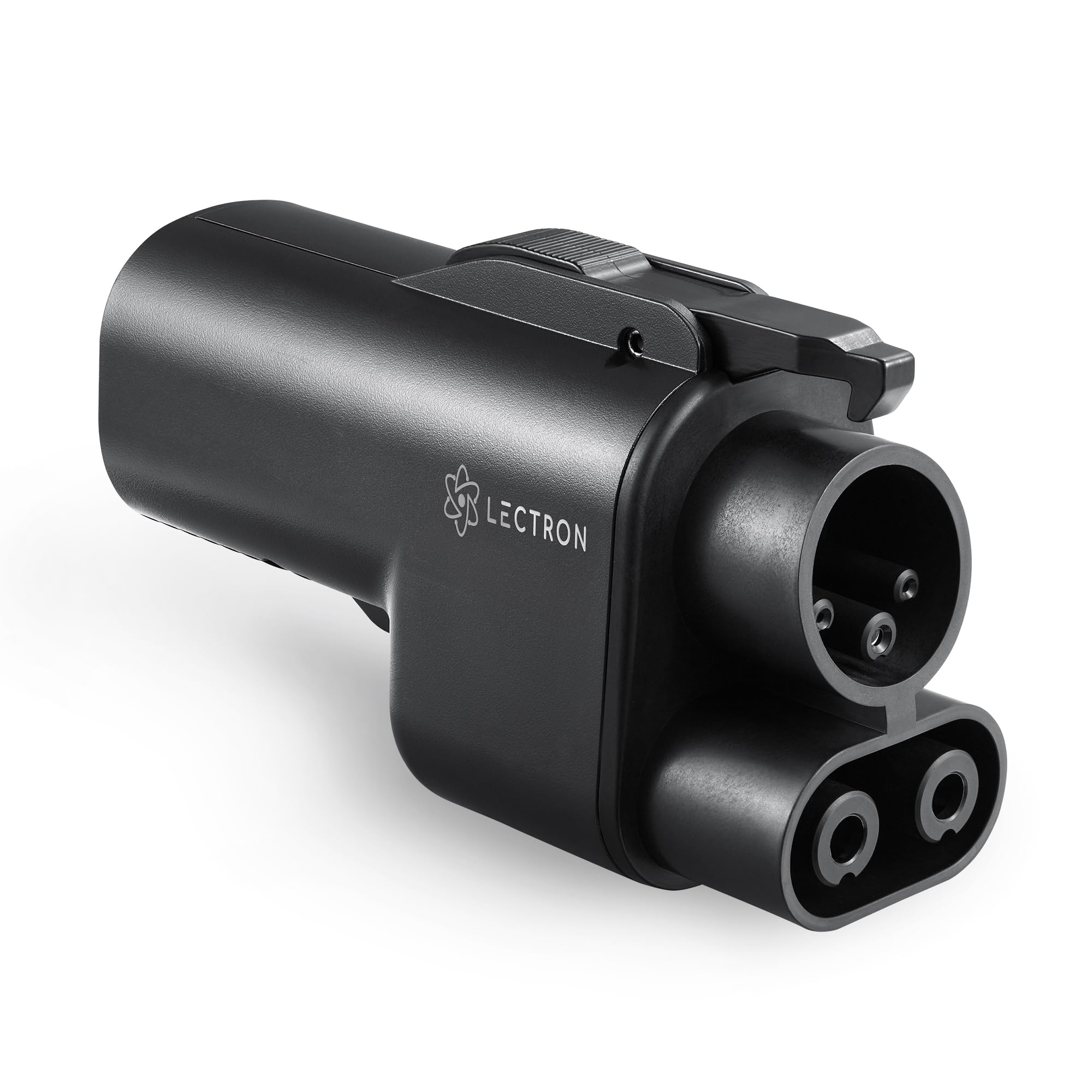
This is the pick that shows up most often in owner conversations because it delivers where it counts — real charging speed. The Lectron Vortex Plug is rated for 500A and 1000V, letting you add up to 150 miles in about 15 minutes if your EV and the Supercharger generation cooperate. One reviewer noted they achieved consistent 96 kWh at a V3 Supercharger, which tracks as a solid sustained rate for a CCS1 vehicle. That is sharper than the vague speed claims from the Hugener at V3 stalls, because those buyers report real numbers rather than promises.
The design includes secure locking mechanisms on both the NACS (Tesla-style plug) and CCS1 (your car’s plug) sides, so the connection stays physically locked during a session. At 4.6 out of 5 stars across 730 ratings, this is the most-reviewed adapter in the group — a sign that a large number of owners have put it through real road-trip miles. Note that it is designed exclusively for CCS1 EVs that your automaker has already granted Supercharger access to, so check your vehicle app before buying.
Why It Leads
- Verified high-speed charging — owners mention consistent 96 kWh at V3 Superchargers
- Secure dual-side locking prevents disconnects during high-current charging
- Highest review count (730) gives strong confidence in real-world reliability
Know Before You Buy
- No UL safety certification listed — you rely on Lectron’s own testing
- Tesla cables can be short if your EV’s port is at the front or rear bumper
Reach for this if: you want the most community-verified adapter with proven real-world charging speed and do not mind that UL certification is not stated.
Look elsewhere if: independent third-party safety certification is a non-negotiable requirement for your confidence.
2. Hugener 2025 NACS to CCS1
A 1.98-pound adapter with three thermal sensors that automatically adjust power to prevent overheating — unlike the Lectron, it actively manages heat rather than just relying on passive design.
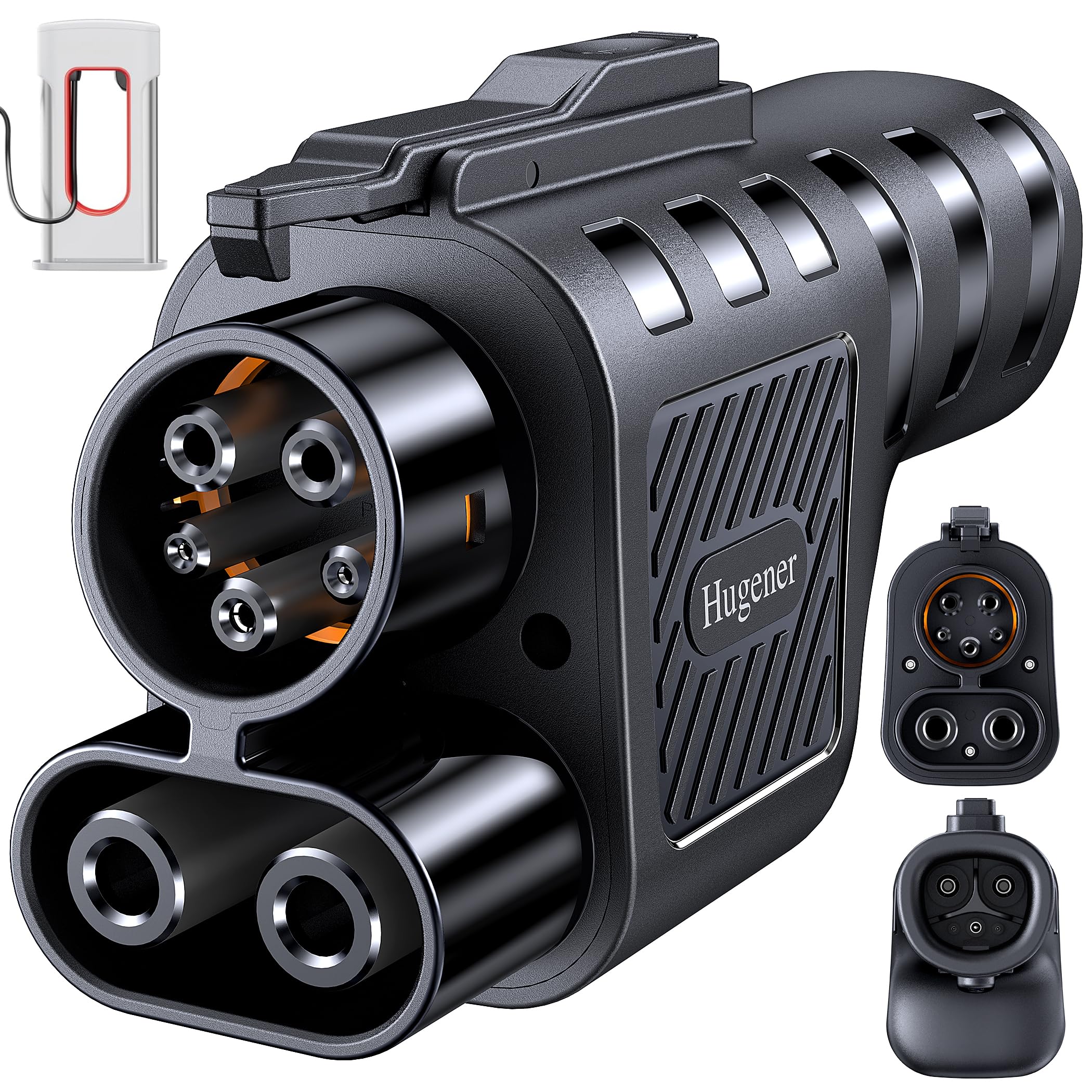
This contender stands out by putting thermal management front and center. The Hugener uses three sensors at the plug, cable, and chip to monitor temperatures in real time, and it automatically adjusts power delivery if things get too hot. That is a meaningful safety net for sustained charging sessions in summer heat — one buyer mentioned it got slightly warm after 20 minutes in 95°F weather while holding a steady 130-140 kW on a Ford Mustang Mach-E, with a peak of 170 kW. At 7.17 x 4.25 x 2.72 inches, it is noticeably larger than the most compact option in this list (19% larger than the LENZ).
The IP67 waterproof rating (meaning it is protected against dust and can handle being submerged in 1 meter of water for 30 minutes when plugged) means it can handle rain and snow without issue, and the anti-slip grip design makes attaching and removing it easier when your hands are cold or wet. The automaker compatibility list is broad — Ford, GM, Rivian, Hyundai, Kia, Volvo, Polestar, Lucid, Nissan, and Honda are all named — but it only works with Tesla V3 and V4 Superchargers, not older stations.
What Stands Out
- Three-sensor smart temperature control with auto-power adjustment
- IP67 waterproof rating for all-weather outdoor charging
- Customers note real-world peak speeds of 170 kW steady at 130-140 kW
Heads Up
- One negative review reports a 150 kW speed cap, below the theoretical maximum
- Compatible only with V3 and V4 Supercharger stalls
Who it fits: EV owners in hot or wet climates who want active thermal management as a built-in safety layer.
Who might pass: anyone who needs an adapter tested to a formal UL 2252 standard — the Hugener claims UL safety but does not name a certifying lab.
3. SIFWEX NACS to CCS1
Third-party tested to UL 2252 safety standards, with a mechanical lock that prevents accidental disconnects — safer than the Lectron but heavier than the LENZ.
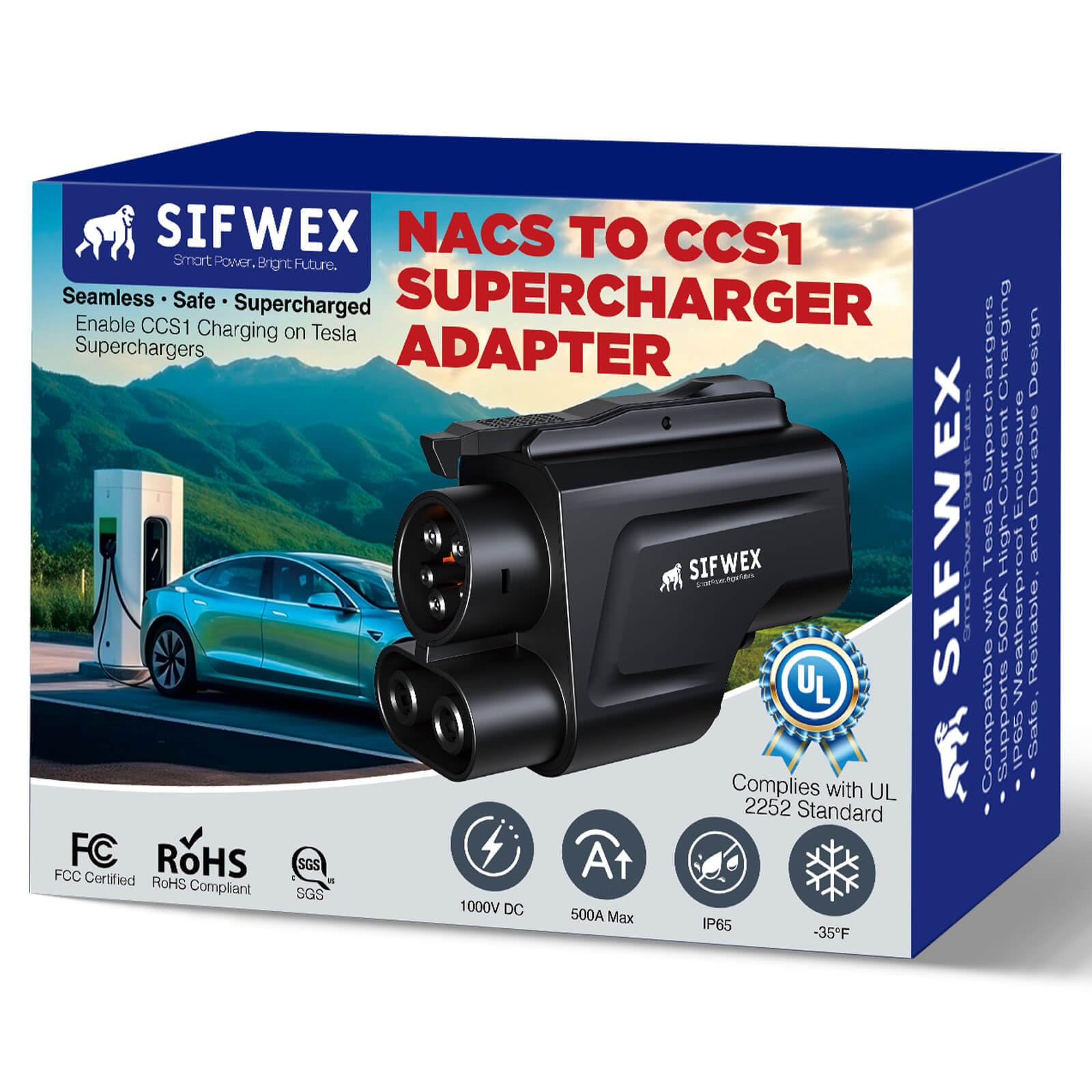
This is one of the few adapters where the UL 2252 testing is backed by an SGS verification — an independent lab confirmed the safety standard. That means the flame-retardant housing, precision copper contacts, and thermal resistance have been externally vetted, not just claimed in marketing copy. It is also the heaviest standard-sized adapter in the group at 2.59 pounds, which is notably 59% heavier than the lightest option (the 1.63-pound LENZ). That extra heft comes from the reinforced outer shell and anti-corrosion pins, making it feel more solid than the Hugener but bulkier to carry.
The mechanical safety lock engages on both sides during charging, so there is no risk of the adapter loosening from vibration or cable tug. It is rated IP55 for water and dust resistance (protected against low-pressure water jets but not full submersion — not as high as the IP67 on the Hugener, but still enough for rain and snow). One buyer using a Genesis G80 Electrified at a Supercharger reported a solid connection and normal speed, while another noted a ~100 kW limit on an 800V Audi at a V3 charger — a hardware ceiling worth knowing if you drive an 800V EV.
Why It Is Trustworthy
- UL 2252 standard tested and verified by SGS (independent lab)
- Mechanical safety lock prevents disconnects during high-current sessions
- IP55 waterproof and dustproof rating for outdoor use
The Trade-off
- At 2.59 pounds, it is noticeably heavier than lighter options like the LENZ
- Reviewers point out a ~100 kW limit on 800V vehicles at V3 Superchargers
Best for the safety-conscious buyer: if independent UL 2252 verification (SGS) is your deal-breaker, this pick delivers that proof.
Not ideal if: you want the lightest possible adapter for glove-box storage — several options are significantly lighter.
4. LENZ NACS to CCS
The lightest certified adapter in the list at 1.63 pounds, easily stored in a glove box — a full 1 pound lighter than the SIFWEX.
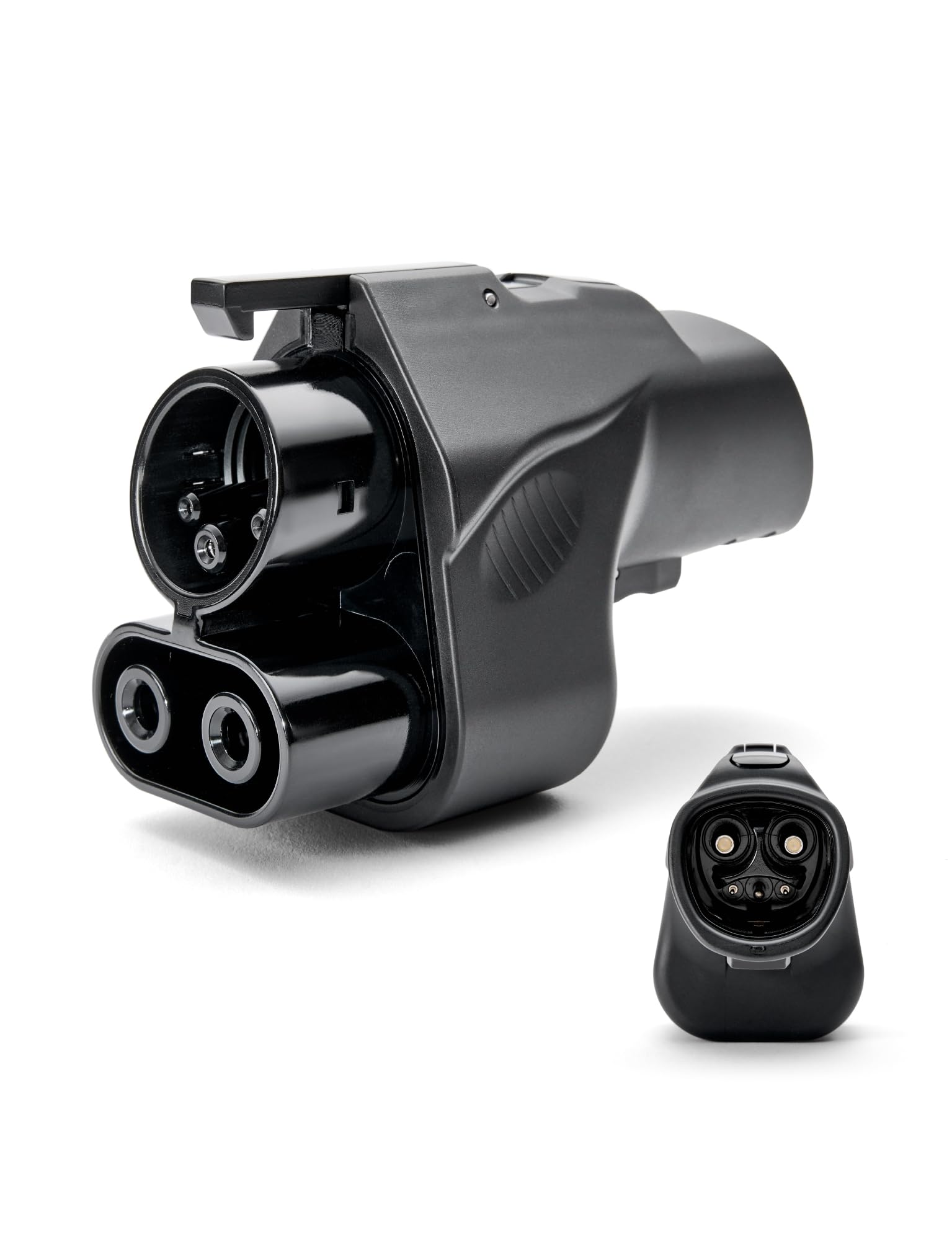
If storage space is tight or you want the least amount of extra weight hanging off your charge port, this is the pick. The LENZ weighs just 1.63 pounds and measures 6 x 4.75 x 2.8 inches — making it both lighter and more compact than the SIFWEX (2.59 pounds) and the Hugener. It is also one of the few adapters that carries the UL 2252 SGS certification, so the safety claim is backed by an actual test lab. One buyer using a 2017 Chevy Bolt reported that it works flawlessly, with a fast handshake (quick communication between the car and charger) and easy storage.
The 500A and 1000V rating matches the top of the category, and the precision-molded connectors are designed to give stable current delivery. LENZ backs it with what they describe as industry-leading customer service, which includes helping you identify the correct adapter if you bought the wrong one. A couple of buyers noted it worked reliably on a 2020 Chevy Bolt and a 2024 BMW iX xDrive50, calling it good value compared to the GM adapter alternative. The catch: one verified review reports that the product just stopped working, which is a durability flag note that the more established Lectron does not share.
What We Like
- Lightest of the bunch at 1.63 pounds — easy to store and handle
- UL 2252 SGS certified with independent lab verification
- Buyers confirm it works with older EVs like the 2017 Chevy Bolt
Watch Out For
- One verified review reports the unit stopped working entirely
- Works only with CCS1 EVs that your automaker has authorized for Supercharger access
Reach for this if: compact size and independent safety certification are your top priorities and you want an adapter that disappears into a glove box.
Think twice if: you want a proven long-term track record — the failure report suggests some variability in build consistency.
5. A2Z EV Typhoon Pro
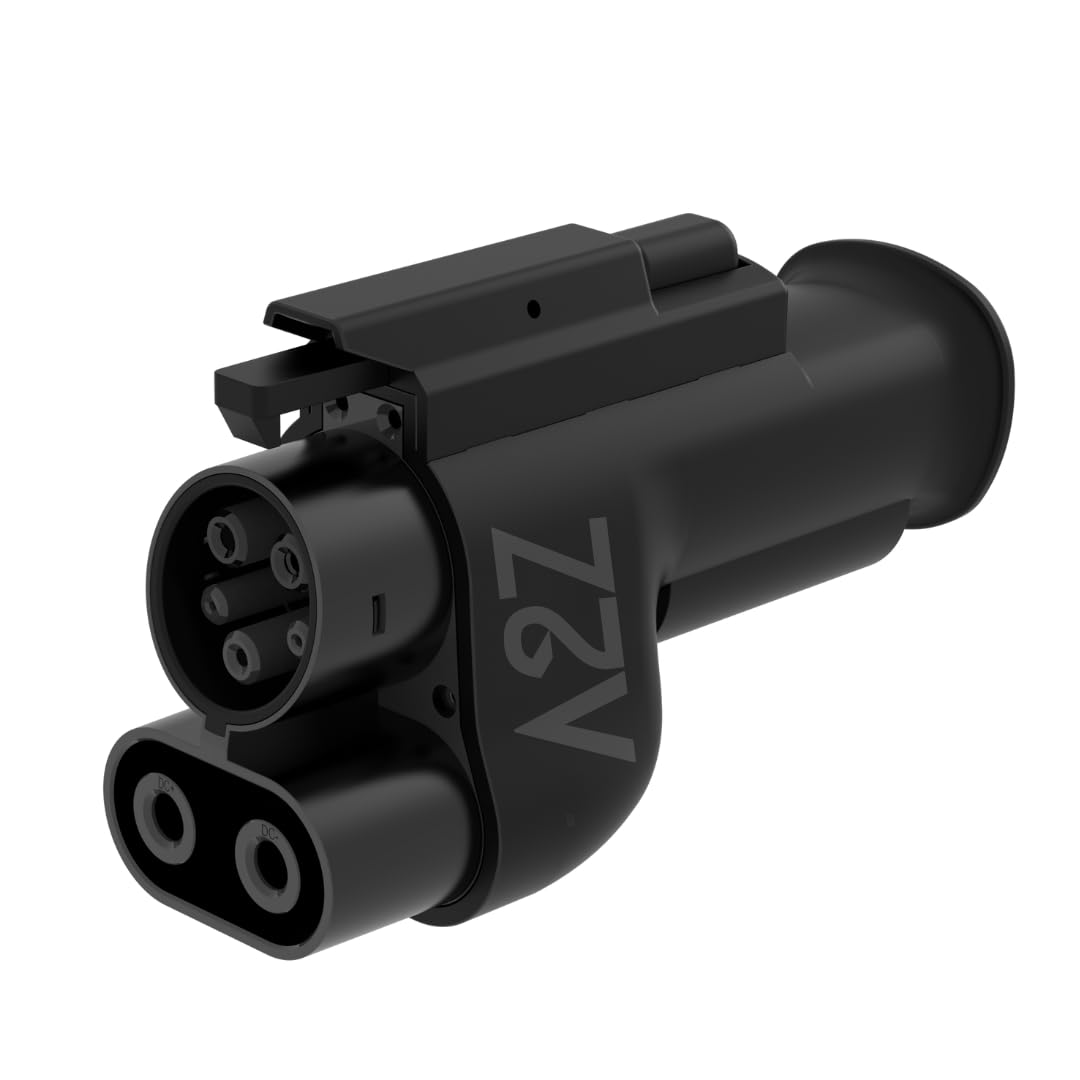
At 4.1 pounds, this is the heaviest adapter — built like a tank with dual temperature sensors for safety, but too bulky for daily glove-box carry unlike the LENZ.
The A2Z EV Typhoon Pro makes no apology for its size. It is rated for 500A (liquid cooled) or 400A (non-liquid cooled) at 1000V, and it uses two temperature sensors — the first derates charging power when it gets hot, and the second halts the session entirely if the first threshold is breached. That dual-layer thermal protection is a sturdy safety feature for sustained high-speed charging. One owner reported charging at 180kW then settling to 115kW when another car was sharing the same Supercharger cabinet, with the adapter warm but not hot.
The weather resistance is comprehensive: IP54 mating-surface protection (protected against limited dust ingress and water spray), IP67 enclosure protection (dust-tight and submersible), and an Enclosure Type 3R rating (protected against falling rain and sleet). The housing is made from UL-94-V0 PA66 material (a flame-retardant nylon), and the conductors are silver-plated copper. The catch is that UL2252 certification is listed as in progress — it has passed all required tests, but the certificate is pending. The manufacturer also notes that this adapter is not currently officially authorized for use on Tesla Superchargers, so you must confirm your vehicle’s network access before buying.
Strength
- Dual temperature sensors provide fail-safe thermal protection
- Comprehensive weather resistance (IP54/IP67/Type 3R) for harsh conditions
- Shoppers say 180kW peak charging speeds in real-world use
Caveat
- At 4.1 pounds, it is the heaviest pick — not ideal for frequent carry
- UL2252 certification is still pending (passed tests but no certificate yet)
Go for it if: you want the most sturdy physical build with dual thermal cutoffs and can handle the extra weight in your trunk.
skip it if: formal UL 2252 certification is a must-have, or you need something compact for daily glove-box storage.
6. Imdot NACS to CCS1
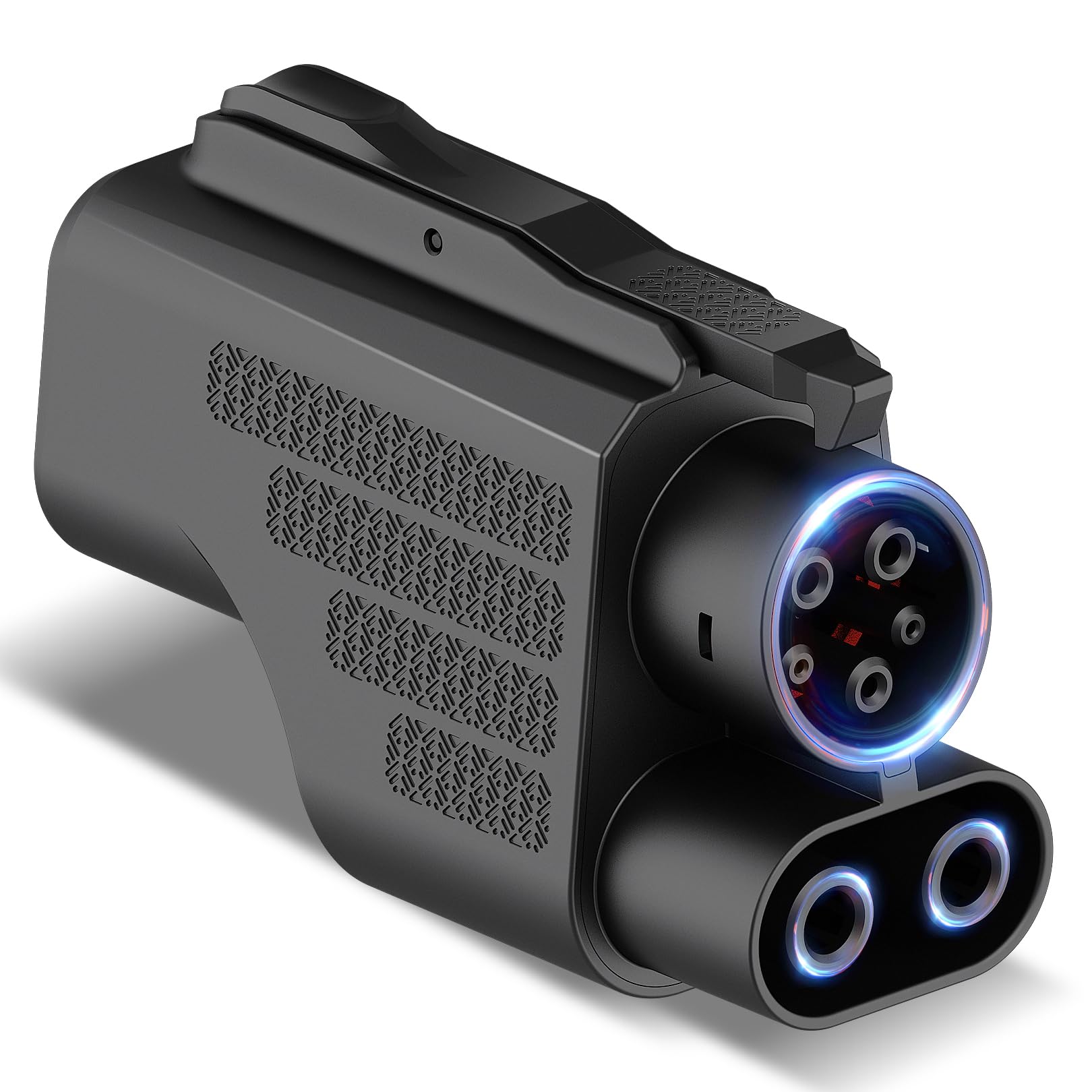
UL 2252 certified by SGS at a mid-range price point — the safety verification without the premium markup of the Amphenol.
Most adapters with a proper UL 2252 certification (SGS verified) sit at a higher price, but the Imdot brings that certification into the mid-range zone. It is rated for 500A and 1000V, and the manufacturer claims it is the first publicly available NACS adapter certified by SGS through UL 2252. That certification covers the electrical safety, thermal performance, and mechanical durability of the unit. At 2.61 pounds, it is on the heavier side of the group but still manageable for trunk storage.
The adapter is IPX67 waterproof (plugged) and rated for operation from -30°C to 50°C (a wide temperature range for cold winters or hot summers). It includes a security interlock on both the NACS and CCS1 sides, and the conductive pins are silver-plated copper alloy. The charger offers a 250-500 kW charging rate at V3 and V4 Superchargers, though real speed depends on your EV and the station. Buyers commented on the sturdy packaging and padded case, saying it works perfectly with no power loss and gets warm but stays within safe limits.
Why It Is Smart
- First publicly available NACS adapter with SGS-verified UL 2252 certification
- IPX67 waterproof rating for reliable use in wet or cold conditions
- Buyers confirm secure connection and no performance drop across stations
Limitations
- At 2.61 pounds, it is not the most travel-friendly option
- Charging rate cap depends on Supercharger generation and your EV’s specs
Ideal for the value-focused buyer: you get independent UL 2252 certification without paying the premium price charged by some competitors like the Amphenol.
Pass if: you prioritize a lighter, more compact form factor for daily carry in a small glove box.
7. Amphenol NACS to CCS1
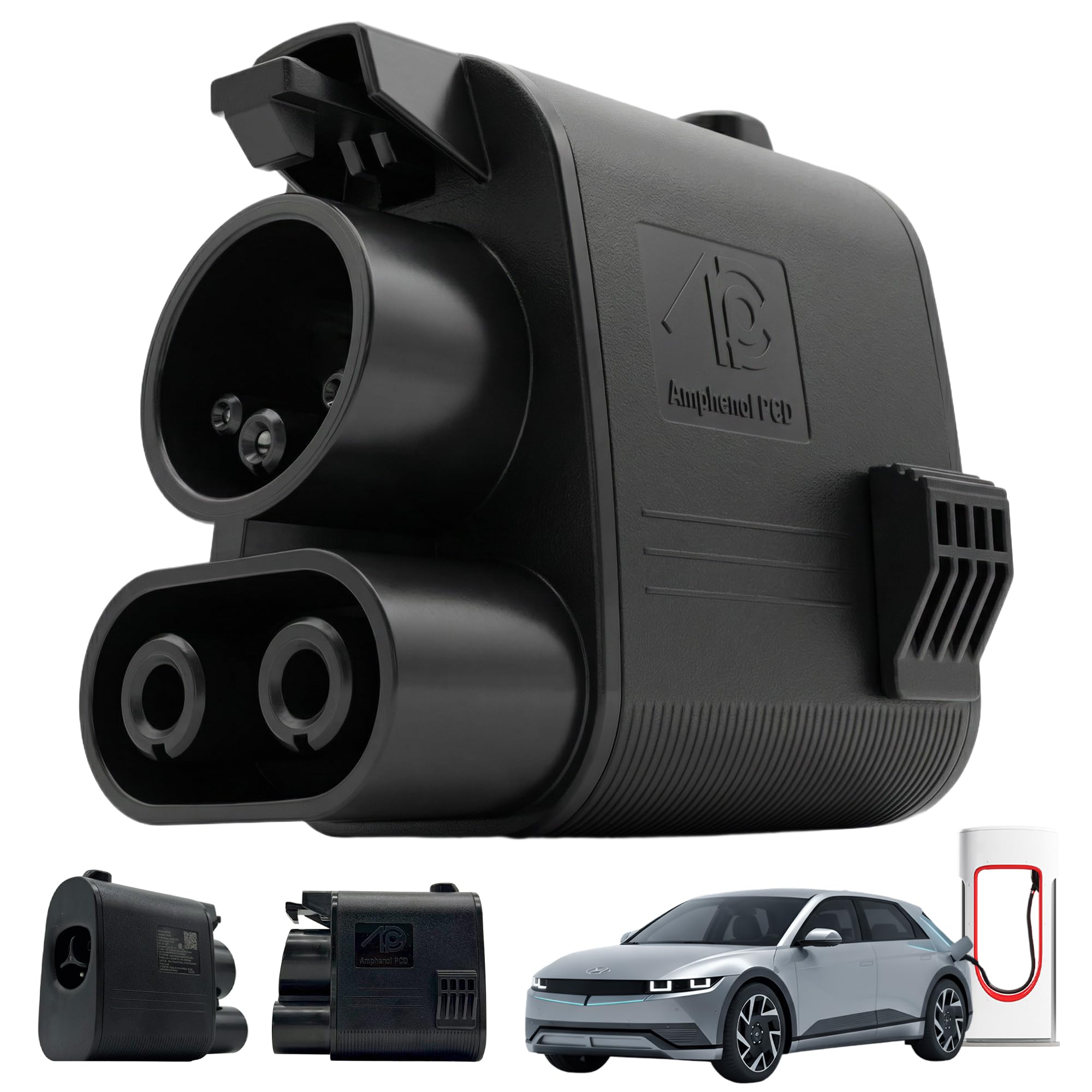
Rated for 600A — the highest current capacity in the group, with CSA certification to UL 2252 that beats the SIFWEX’s SGS testing by being a full certification rather than just testing.
This is the only adapter in the list with a 600A rating (the others max out at 500A), and the only one that also carries a CSA certification to UL 2252 — not just tested, but certified by CSA Group, a recognized safety standards organization in North America. Amphenol brings 90+ years of connector engineering experience, and it shows in the build: the housing is impact-resistant and rated for 10,000+ charging cycles, and the metal latch includes an ice-protection cover for freezing conditions. Buyers report it adds 100+ miles in about 15 minutes at V3 and V4 Superchargers.
The automatic interlock secures both connections during high-voltage sessions, and the dimensions (5 x 4.5 x 3 inches) make it one of the more compact options at 2.66 pounds. It works with Ford, Rivian, GM, Volvo, Polestar, and other CCS1 EVs that have automaker-granted Supercharger access. The trade-off is the premium price — it costs more than most options here — but owners mention it is cheaper than dealer-branded alternatives while meeting equal or higher safety standards.
What Makes It Unique
- 600A / 1000V rating — the highest current capacity of any adapter in this list
- CSA certified to UL 2252 and SAE J3400-1 (a connector standard) compliant
- Rated for 10,000+ charging cycles with impact-resistant housing
Considerations
- Premium price point — the most expensive adapter in the group
- One reviewer notes it exceeds 100kW DC fast charger speed but not 250-350kW
The investment pick: if you want the highest safety certification and the only 600A rating, from a brand with decades of industrial connector credibility.
Not for the budget-focused: if you just need basic Supercharger access without the premium engineering, lower-priced certified options like the Imdot will work fine.
Understanding the Specs
UL 2252 Safety Certification
This is the standard that covers NACS-to-CCS adapters for electrical safety, thermal runaway resistance (preventing overheating), and mechanical durability. An adapter tested or certified to UL 2252 has been put through a formal lab process (often by SGS or CSA) to prove it can handle sustained high-current charging without overheating or failing. Not every adapter in this category carries this certification, so it is the single most important differentiator between a safe long-term tool and a gamble.
500A / 1000V — What Those Numbers Actually Mean
The amp and voltage rating tells you the maximum electrical load the adapter can safely carry. A 500A, 1000V rating means the adapter can theoretically handle up to 500 amps at 1,000 volts — enough for any current Tesla Supercharger. In real-world use, your actual charging speed is capped by the Supercharger generation (V3 vs V4), your EV’s onboard charger, and the battery voltage (400V vehicles generally charge slower than 800V ones). The 600A rating on the Amphenol gives additional headroom for future charging infrastructure.
FAQ
Will a CCS-to-NACS adapter work with any Tesla Supercharger?
Do I need my automaker’s permission to use a Tesla Supercharger with an adapter?
How does UL 2252 certification affect my safety?
Will a heavier adapter charge faster than a lighter one?
Can I use a CCS-to-NACS adapter for home charging?
What does the 500A rating mean if my Supercharger only delivers 250kW?
How do I store a CCS-to-NACS adapter when not in use?
Will an adapter work on a 2017 Chevy Bolt or other older CCS1 EVs?
Final Thoughts: The Verdict
For most people, the best ccs-to-nacs adapter winner is the Lectron Vortex Plug because it has the strongest real-world track record across 730 ratings and delivers proven charging speeds like 96 kWh at V3 Superchargers. If you want independent UL 2252 safety certification without the highest price, grab the Imdot NACS to CCS1. And for the absolute highest current rating with industrial-grade CSA certification, the standout is the Amphenol NACS to CCS1.
How We Picked
We do not accept paid placement. Every pick is matched to a real buyer and a real use-case; we do not hands-on test units.
Sources & Methodology
Specifications: manufacturer listings and product documentation. Review insights: verified customer reviews, as of July 2026. Pricing: not shown on this page (it changes often); check the current price via the retailer link.
As an Amazon Associate, Trending Car earns from qualifying purchases. This does not affect which products we feature.