
Our readers keep the lights on and my garage snacks stocked. As an Amazon Associate, I earn from qualifying purchases.
Specs are compiled from manufacturer listings and verified buyer reviews and can change over time — please confirm the key details on the product page before buying.
Your car is one of the biggest purchases you will ever make, yet most factory security is only a few wires away from being defeated. A real car security system does two things: it stops a thief from stealing the vehicle, and it alerts you the moment something is wrong. That combination changes from a simple visible deterrent to a hidden electronic kill-switch to full smartphone-powered GPS tracking — and the right pick depends entirely on what kind of risk your car faces every day.
I’m Min Islam — the founder and writer behind Trending Car. This guide is built by comparing the manufacturers’ published specifications and the patterns across verified customer reviews, so you get each pick’s real strengths and trade-offs instead of marketing spin.
Below you will find the most trustworthy car security system recommendations for 2025, ranked by real-world owner feedback, reliability data, and the features that actually make a difference when protecting your vehicle.
Our Picks at a Glance


How To Choose The Best Car Security System
Picking the right security system depends on a single question: what is your biggest worry — a kid breaking in overnight, a professional stealing the whole car, or someone stealing the car while it warms up in the driveway? Each threat responds to a different kind of defense, so matching the system to the scenario is everything.
Visible vs Hidden Deterrence
A bright yellow club wrapped around the steering wheel is the cheapest form of security, and it works because criminals move on to an easier target. But it does nothing once the car is running. Hidden systems — immobilizers that cut the starter motor — stop a theft after the break-in, but they do nothing to stop a window being smashed.
Shock Sensors and False Alarms
The best alarm in the world is useless if it screams every time a truck rolls by. Look for a 2-stage shock sensor that distinguishes a gentle bump (the Warn-Away feature) from a real impact. The Viper and Avital systems in this list use that exact logic, and buyers report far fewer false alerts as a result.
GPS Tracking and Subscriptions
GPS trackers are only useful while they have power and signal. An OBD-II tracker loses all function if the thief unplugs it, while a properly hardwired system with a backup battery keeps reporting location. The Ring sensor in this guide uses Amazon Sidewalk for wide-area coverage, but it relies on a battery that lasts up to 7 days when parked — not infinite.
Installation Reality Check
A shocking number of negative reviews for even the best car alarms come from buyers who assumed installation was plug-and-play. Most hardwired systems require real automotive electrical knowledge, and some manufacturers — Compustar and Viper included — restrict their wiring diagrams to authorized installers only. If you do not know how to read a schematic, budget for professional installation and confirm availability first.
Quick Comparison
| Model | Best For | Type | Key Feature | Range | Amazon |
|---|---|---|---|---|---|
| Esploratori Steering Wheel Lock★ Best Overall | Simple Visual Deterrent | Mechanical Lock | Saw-proof steel | — | Amazon |
| Ring Car AlarmSmart Tracker | No Subscription Tracking | OBD-II Tracker | 7-day backup battery | Unlimited (Sidewalk) | Amazon |
| BANVIE ST806-BQValue 3-in-1 | Budget 3-in-1 System | Keyless Entry + Start | Remote engine start | Unspecified | Amazon |
| BANVIE 806-FT4-NS | Push Button Upgrade | Keyless Entry + Start | Push-to-start button | Unspecified | Amazon |
| EASYGUARD EC003 | Touch-Free Entry | PKE + Remote Start | Passive keyless entry | 6 feet (PKE) | Amazon |
| Viper 3100V | Reliable Basic Alarm | 1-Way Alarm | 2-stage shock sensor | 366 meters | Amazon |
| Viper 350 PLUS 3105V | No-Frills Deterrence | 1-Way Alarm | 121 dB siren | 100 meters | Amazon |
| Compustar CSX4900-S | Smartphone Control | 2-Way Remote Start | 3000-ft range + LTE | 3000 feet | Amazon |
| Avital 5303L | Full 2-Way Security | 2-Way Alarm + Start | Stinger shock sensor | 700 feet (approx.) | Amazon |
In‑Depth Reviews
1. Steering Wheel Lock Anti-Theft Device, Esploratori
Our pick — 4.5★ from 650+ verified ratings; the strongest balance of quality and price.
The steel bar that makes a thief pick the car next to yours instead.
Nothing stops a smash-and-grab faster than a visual barrier. This lock is made from cutting and hardening steel, and it comes with a U-shaped twin-hook design that is tougher to defeat than a standard straight bar. You can lock or open up it in about 5 seconds — fast enough that you actually use it every time you park. It spans up to 33.5 inches so it fits cars, vans, and SUVs alike.
Owners love the build quality most: the steel body and the plastic-sprayed coating resist rust and wear. The lock comes with three keys that cannot be duplicated by someone who buys the same model, so there is no master-key vulnerability across the product line. The biggest trade-off is that an occasional unit arrives with a lock that jams — treat the key gently and you are fine. Some owners also note the fit on very thick steering wheels is snug, so measure your wheel before buying.
What Wins Owners Over
- Build quality (25) and durability (24) are the top-cited strengths — owners trust the solid feel.
- Can double as a safety hammer in an emergency.
- Lock mechanism is quick: 5 seconds on, 5 seconds off.
The Real Caveat
- The lock can jam if forced — operate it smoothly.
- Very thick steering wheel grips may require a slightly different lock position.
- One lost key means you need to cut the lock; keep the spares safe.
Reach for this if: you want the cheapest, most visible defense that requires zero wiring, zero batteries, and zero monthly fees.
skip it if: your car already has a factory immobilizer and you need tracking or remote start features — this is a pure visual deterrent.
2. Ring Car Alarm
The plug-in that turns your car into a Ring-connected security zone.
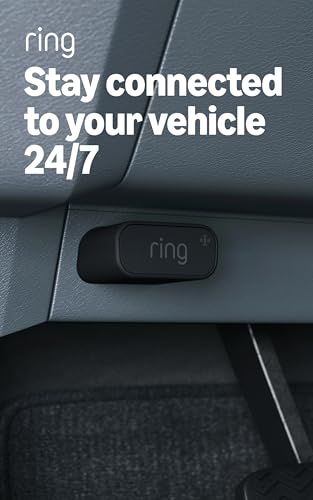
This device plugs into your OBD-II port — the same port mechanics use for diagnostics — and uses the Ring app to give you real-time alerts for impacts, door openings, and other disturbances. It has a built-in backup battery that lasts up to 7 days when parked, and it uses Amazon Sidewalk (a neighborhood-wide wireless network) to track your vehicle’s location with no monthly subscription fee.
Reliability is the most-praised aspect here: owners mention consistent notifications and accurate door alerts with almost no false alarms. The setup takes roughly 5 minutes, and the app integration with an existing Ring account is smooth. The catch is GPS location accuracy drops significantly under covered parking or inside a garage — the Sidewalk network needs open sky to work properly. The backup battery is also non-rechargeable, so if you leave the car parked for longer than a week, the device goes dark until you drive again.
Why Owners Stick With It
- Reliability (127) and ease of setup (102) dominate the feedback — it is genuinely easy.
- No subscription cost after purchase.
- Integrates directly with the Ring ecosystem and sends immediate alerts.
The Trade-Off to Know
- GPS tracking struggles in garages or locations without clear sky access.
- Backup battery lasts only 7 days parked — not suitable for long-term storage vehicles.
- No hardwired immobilizer; a thief can unplug the OBD-II device instantly.
Best for: daily drivers parked on the street who want low-cost location monitoring without monthly fees.
Not for: anyone seeking a physical theft barrier or a system that works for a vehicle stored off-grid for weeks.
3. BANVIE ST806-BQ Keyless Entry Security Alarm System
Keyless entry, push-to-start, and remote engine start in one budget bundle.
This BANVIE kit packs three functions into a single module: remote lock/open up, a keyless push-to-start button, and a remote engine start that runs for 15 minutes. It also includes a shock sensor alarm, door-open detection, and an ACC detecting alarm. The siren output can be connected to either an extra horn or your car’s existing horn.
The big caveat: reliability is marked as mixed by owners. Some report the system works flawlessly for years, while others say the car does not fully turn off or the remote start behaves randomly. Customers note: “Work perfectly but if you car have sensor key you will need to leave your key in the switch for remote turn on.” That is a real compatibility snag for vehicles with factory transponder keys. The instructions are also widely criticized as unclear — this is not a weekend project for someone who cannot read a vehicle wiring diagram.
The Appeal
- Combines keyless entry, push-to-start, and remote start at a very low cost.
- Works well for older vehicles that lack factory keyless entry.
- 15-minute warmup timer is generous for winter pre-heating.
Where It Falls Short
- Reliability is inconsistent — some units fail within months.
- Not compatible with factory push-to-start or sensor keys without leaving the key in the ignition.
- Installation instructions are poor; professional installation strongly recommended.
Reach for this if: you have a mechanically simple older car and you or your installer can work around unclear wiring instructions.
Look elsewhere if: your car uses a modern transponder key or you need dead-reliable electronics that never glitch.
4. BANVIE 806-FT4-NS 3-in-1 Car Alarm System

The push-button swap that modernizes an old ignition.
This BANVIE system focuses heavily on replacing your old key-and-turn ignition with a push-to-start button. The remote start function lets you pre-warm or pre-cool the car in winter or summer, and the auto-lock feature engages 30 seconds after the engine stops — so nobody can drive away if you forget to lock the push button manually. It also triggers an 8-second siren when the car body is shocked, and a 25-second siren if a side door is opened or the footbrake is pressed.
Functionality gets the most comments, but the verdict is mixed: some owners have installed three units across different cars and swear by the quality, while others report the circuit board developing a fault after a year. The recurring advice in the reviews is to pay for professional installation if you are not comfortable with vehicle wiring. The early units shipped with a programming issue that could cause the remotes to de-sync, but long-term owners say the remotes themselves have excellent battery life.
Solid when installed right: the push button itself feels durable and the auto-lock safety feature is genuinely useful for preventing accidental start-ups. Quality is rated positively overall.
The trade-off: if the control module develops a bad solder joint at the circuit board, the car may fail to start. A repeat BANVIE owner who repaired this with a soldering iron called it an easy fix, but most drivers should not have to do that.
Best for: drivers with a 90s or early 2000s car who want push-to-start luxury without buying a new vehicle.
Not for: anyone expecting a sealed-and-forget system that works perfectly for a decade without maintenance.
5. EASYGUARD EC003 Smart Key PKE System

Touch-free open up that works when you are 3 to 6 feet from the door.
The EASYGUARD EC003 uses Passive Keyless Entry (PKE) — meaning it detects the fob as you walk up to the car and open up the doors automatically within approximately 3 to 6 feet. When you walk away, the doors lock themselves. It also includes a remote start function for pre-heating or pre-cooling the cabin, plus a trunk release button.
This system requires professional installation — the manufacturer explicitly says so — and it is not compatible with vehicles that have double-pulse open up signals, pneumatic or vacuum locking systems, or factory push-to-start buttons. Cars with factory immobilizer chips will need an additional compatible bypass module. Owners who successfully installed it on older vehicles like a 2016 4Runner or a 1967 Chevy Corvair praise it. But the range at which the passive lock engages can be annoying if you walk within 10 feet while washing the car — and the key fobs themselves can break over time.
The best part: walking up to a locked car and having it open up without touching anything is a genuinely satisfying daily experience. The alarm is reliable after a battery upgrade.
The catch: the wiring diagrams lack detail, and some reviewers point out the push-to-start worked only 80% of the time before they replaced the entire system. Stick with a pro installer or be prepared to use tech support.
Reach for this if: you want a high-tech hands-free entry system and your car is on the compatibility list.
pass on it if: your vehicle has CAN BUS electronics, a factory push button, or you do not have access to a qualified installer.
6. Viper 3100V 1-Way Security System

The 1-way alarm that Viper built its reputation on.
This is the no-nonsense, wired-in security standard. The Viper 3100V includes a 2-stage shock sensor (warns on a light bump, triggers fully on a real hit), engine immobilization, and protection for doors, the bonnet, and the boot. The remote range is a strong 366 meters — about a quarter-mile — so you can arm or disarm from a good distance. The siren measures a noticeable 69 dB, enough to draw attention without being deafening inside the cabin.
Functionality leads the feedback with a positive rating: shoppers say it works without false alerts and the ignition kill-switch prevents starting even if someone has a key. The installation instructions are light on detail, so DIY buyers need to study wiring diagrams online. At 69 dB, the siren is not the loudest on this list, but owners say it is sufficient to deter casual thieves. A direct head-to-head with the Viper 350 PLUS 3105V shows the 3100V has better range (366m vs 100m) but a quieter siren.
What Makes It Great
- Functionality (45) and quality (24) are the top positive aspects — reliable and no false alerts.
- 2-stage shock sensor avoids the annoyance of false triggers from wind or traffic.
- 366-meter range is among the longest for a 1-way system in this price tier.
What to Watch For
- Installation requires real automotive wiring knowledge; the manual is sparse.
- Siren volume at 69 dB is quieter than the Viper 350 PLUS’s 121 dB.
- No 2-way confirmation — you only find out the alarm went off when you return to the car.
Best for: experienced DIYers who want a trusted brand with a long remote range and zero false alarms.
Not for: beginners who want a siren that shakes the street or a smartphone confirmation.
7. Viper 350 PLUS 3105V 1-Way Car Alarm

The Viper that screams at 121 dB and includes an anti-carjacking mode.
This is the louder, more feature-packed sibling of the Viper 3100V. The 3105V includes a Revenger six-tone soft-chirp siren that hits 121 dB — loud enough to be heard from a block away. It also adds an anti-carjacking feature (the system prevents the car from being driven after a theft) and a panic alarm that flashes the parking lights and sounds the siren. The bright blue status LED warns thieves and gives you visual feedback about the system’s status.
Owners consistently call it the best bang for the money. The 3-channel system has expansion ports for door locks and trunk release, and it works as a universal upgrade for older cars. The included shock sensor is the weak link — several buyers report it is largely insensitive even after adjustment, and a separate sensor is needed for reliable bump detection. At a remote range of 100 meters, it is significantly shorter than the 3100V’s 366 meters, so keep the fob close.
The standout trait: the siren is genuinely loud at 121 dB — Viper’s own spec sheet confirms it. The anti-carjacking and FailSafe starter kill are real peace-of-mind features that the cheaper systems lack.
The honest downside: the built-in shock sensor is nearly useless for many buyers, and the 100-meter remote range is noticeably shorter than the 3100V. Plan to buy a separate add-on sensor if you want proper impact detection.
Reach for this if: you want the loudest siren in this price bracket and anti-carjacking protection for confidence.
Look elsewhere if: remote range matters more than siren volume — the 3100V has better range but a quieter horn.
8. Compustar CSX4900-S 2-Way Remote Start System

The remote starter that talks to your phone from anywhere in the country.
With a 2-way LED remote that reaches up to 3000 feet and a built-in Drone X1 LTE module, this Compustar bundle gives you smartphone control over your car’s start, lock, and open up functions — no range limit. The system includes a water-resistant remote, walk-away locking, and 3X Lock Start that uses your OEM key fob to trigger remote start.
The Drone app is the real draw: owners say it is easy to set up and makes remote starting from a plane or across town genuinely convenient. The built-in Blade AL slot simplifies installation for compatible vehicles, but the wiring diagrams are restricted — Compustar only releases them to authorized installers. Owners mention the OP-500 programmer is required to change certain settings (like glow-plug delay for diesel engines), and the included cabin temperature sensor wire is too short for accurate readings in most cars. The system carries a limited lifetime warranty on the module and a 1-year remote warranty.
Why It Stands Out
- Functionality (26) and quality (10) are positive — the unit works reliably once installed.
- 3000-foot remote range is the best in this list; the Drone module removes range limits entirely.
- Water-resistant remote can handle rain and damp conditions.
Where It Gets Complicated
- Wiring diagrams are locked to authorized installers only — DIY installation is harder than most.
- Changing advanced features requires the separate OP-500 programmer.
- Cabin thermistor wire is too short for accurate in-car temperature sensing.
Best for: owners who want professional-grade remote start with smartphone control and are willing to pay for an authorized installer.
Not for: budget-focused buyers or anyone who needs a simple plug-and-play system.
9. Avital 5303L 2-Way Security & Remote Start System

The 2-way LCD that tells you your car is safe without leaving the couch.
The Avital 5303L gives you two-way confirmation — the remote beeps and vibrates when the alarm triggers, so you know instantly. It includes a Stinger Double-Guard Shock Sensor with Warn-Away (a soft pre-warning before a full alarm), a FailSafe starter kill (the car cannot be started without disarming), and active or passive arming. It comes with one 2-way LCD remote and one 1-way backup 4-button remote, plus four AUX outputs for add-ons like window roll-up or trunk pop.
Reliability is the single most-praised aspect here — customers note the system still working perfectly after 10 years with proper installation. The remote range is solid: reviewers point out it works from the basement and can reach about 700 feet. The big downsides are the button combinations on the LCD remote (they take time to memorize), and the remote clock has a known drift issue, losing hours within a day. The 2-way range is shorter than the 1-way range, so you may need to be within 400 feet for the alert signal. Professional installation is strongly recommended — the system has many wires and a clean install takes many hours.
The Long-Term Pick
- Reliability (93) is the highest-scored aspect — owners trust it for years.
- Stinger shock sensor with Warn-Away reduces false alarms by warning on light taps.
- 2-way LCD remote gives you real confirmation, not just a hope the alarm worked.
The Pain Points
- Remote clock drifts significantly over a day — a known pet peeve among owners.
- Button combinations are not intuitive; expect a learning curve.
- 2-way range is shorter than the 1-way range; do not expect 700 feet for the alert signal.
Reach for this if: you want a proven 2-way system with a long lifecycle, and you are willing to commit to a detailed professional install.
it’s not for you if: you want simple plug-and-play electronics or you cannot tolerate a remote clock that drifts.
Understanding the Specs
1-Way vs 2-Way Systems
A 1-way system sends a signal from your remote to the car, but you get no confirmation that the command was received. You lock the doors and you have to trust they locked. A 2-way system (like the Avital 5303L) sends a confirmation signal back to the remote — it beeps or vibrates to tell you the alarm armed successfully. This matters most when you are parking far from the car or inside a building. The trade-off is that 2-way systems usually have a shorter operational range than 1-way systems because the remote has to receive as well as transmit.
Shock Sensors and Warn-Away
A shock sensor detects physical impacts to the vehicle. A 2-stage sensor (found in the Viper 3100V and Avital 5303L) uses two thresholds: a light tap triggers a chirp as a warning, while a hard hit triggers the full alarm. This prevents the siren from wailing every time a shopping cart bumps your bumper. Systems without this feature often receive complaints about false alarms from wind, trucks, or car washes.
Remote Range and Frequency
Measured in feet or meters, the range tells you how far you can be from the car and still arm or disarm the system. The Viper 3100V pushes 366 meters (about a quarter-mile), while the Compustar CSX4900-S offers 3000 feet with its dedicated remote — and unlimited range when using the Drone LTE module. Range is affected by walls, metal structures, and interference from other electronics. Always expect real-world range to be less than the advertised maximum.
Engine Immobilization
Also called a starter kill or FailSafe relay, this feature cuts the starter motor circuit when the alarm is armed. Even if a thief breaks a window and knows how to hotwire ignition wires, the car will not start until the system is disarmed. This is the single most effective protection against professional theft because it does not rely on noise or visibility — it physically prevents the engine from turning over.
FAQ
Will a steering wheel lock damage my steering wheel?
How does the Ring Car Alarm work without a monthly subscription?
Can I install a Viper or Avital system myself?
What is the difference between a 1-way and a 2-way car alarm?
Do these systems work with cars that have a factory immobilizer?
How loud is loud enough for a car alarm siren?
What is the Compustar Drone module and does it need a subscription?
Can a 2-way system alert me while I am inside my house?
How long does professional installation take for a wired alarm system?
Is a steering wheel lock enough to stop theft?
Final Thoughts: The Verdict
Across the board, the car security system winner is the Esploratori Steering Wheel Lock because it costs the least, requires zero installation or batteries, and works immediately as a visible deterrent that makes a thief move on. If you want GPS tracking without a monthly fee, grab the Ring Car Alarm. And for full two-way security with proven long-term reliability, the Avital 5303L is the one to reach for — its nine years of owner praise is hard to ignore.
How We Picked
We do not accept paid placement. Every pick is matched to a real buyer and a real use-case; we do not hands-on test units.
Sources & Methodology
Specifications: manufacturer listings and product documentation. Review insights: verified customer reviews, as of July 2026. Pricing: not shown on this page (it changes often); check the current price via the retailer link.
As an Amazon Associate, Trending Car earns from qualifying purchases. This does not affect which products we feature.