
Our readers keep the lights on and my garage snacks stocked. As an Amazon Associate, I earn from qualifying purchases.
Specs are compiled from manufacturer listings and verified buyer reviews and can change over time — please confirm the key details on the product page before buying.
You have probably tried cheap seat covers that slip around or look worn after a month. The covers that actually work stay fixed to your seats, match your car’s shape, and use a material that does not peel in the sun. This guide compares each pick by its published specs and real owner feedback, so you know which set handles spills, which one cushions long commutes, and which one is tough enough for a work truck.
I’m Min Islam — the founder and writer behind Trending Car. This guide is built by comparing the manufacturers’ published specifications and the patterns across verified customer reviews, so you get each pick’s real strengths and trade-offs instead of marketing spin.
if you want to protect a new car’s resale value or refresh an old interior, this roundup of the best car seat covers focuses on the models that fit, hold up, and look good.
Our Picks at a Glance
How To Choose The Best Car Seat Covers
Picking the right set for your car depends on matching the material, fit type, and special features (like airbag compatibility or waterproof layers) to your daily driving routine. Here is what to consider before you buy.
Material Matters: Leather, Mesh, or Polyester
Leather or faux leather gives a premium look and is easy to wipe clean, but it can get hot in summer and cold in winter. Mesh or breathable fabric keeps you cooler on long drives but may not protect against spills as well. Polyester blends offer a good middle ground — they are washable, durable, and work in all seasons, which is why many entry-level and mid-range options use them.
Universal Fit vs. Custom Fit
The majority of budget-friendly and mid-range seat covers are “universal fit,” meaning they are designed to work with most sedans, trucks, and SUVs. While this saves cost, it often means the rear seat covers require extra tucking or hook-and-loop work to stay snug. If you want a tailor-made look that won’t shift, you may need to look at custom-fit options or be prepared to spend extra time during installation.
Airbag Compatibility and Safety
If your vehicle has side airbags built into the seats, you need a cover with advanced stitching technology that allows the airbag to deploy through the seam. Most modern covers (including the models on this list) advertise being airbag compatible, but always double-check the product description to ensure the cover doesn’t block the deployment zone.
Quick Comparison
| Model | Best For | Material | Set Type | Fit Style | Amazon |
|---|---|---|---|---|---|
| Skechers Work Leather | Full-set toughness | Oxford Fabric & Leather | Full Set | Universal Fit | Amazon |
| Skechers Air-Cooled Memory Foam | Ultimate comfort on long drives | Memory Foam & Air-Cool Mesh | Front | Universal Fit | Amazon |
| HAIYAOTIMES Baja Blanket | Budget style and color | Polyester & Foam | Full Set | Universal Fit | Amazon |
| CAR PASS 3D Foam Mesh | Sporty style with armrest access | 3D Foam & Faux Leather | Full Set | Universal Fit | Amazon |
| Coverado Nappa Leather | Premium full protection | Nappa Leather & Faux Leather | Full Set | Universal Fit | Amazon |
In‑Depth Reviews
1. Skechers Car Seat Covers, Work Leather Full Set
Our pick — over 4★ from 950+ verified ratings; the strongest balance of quality and price.
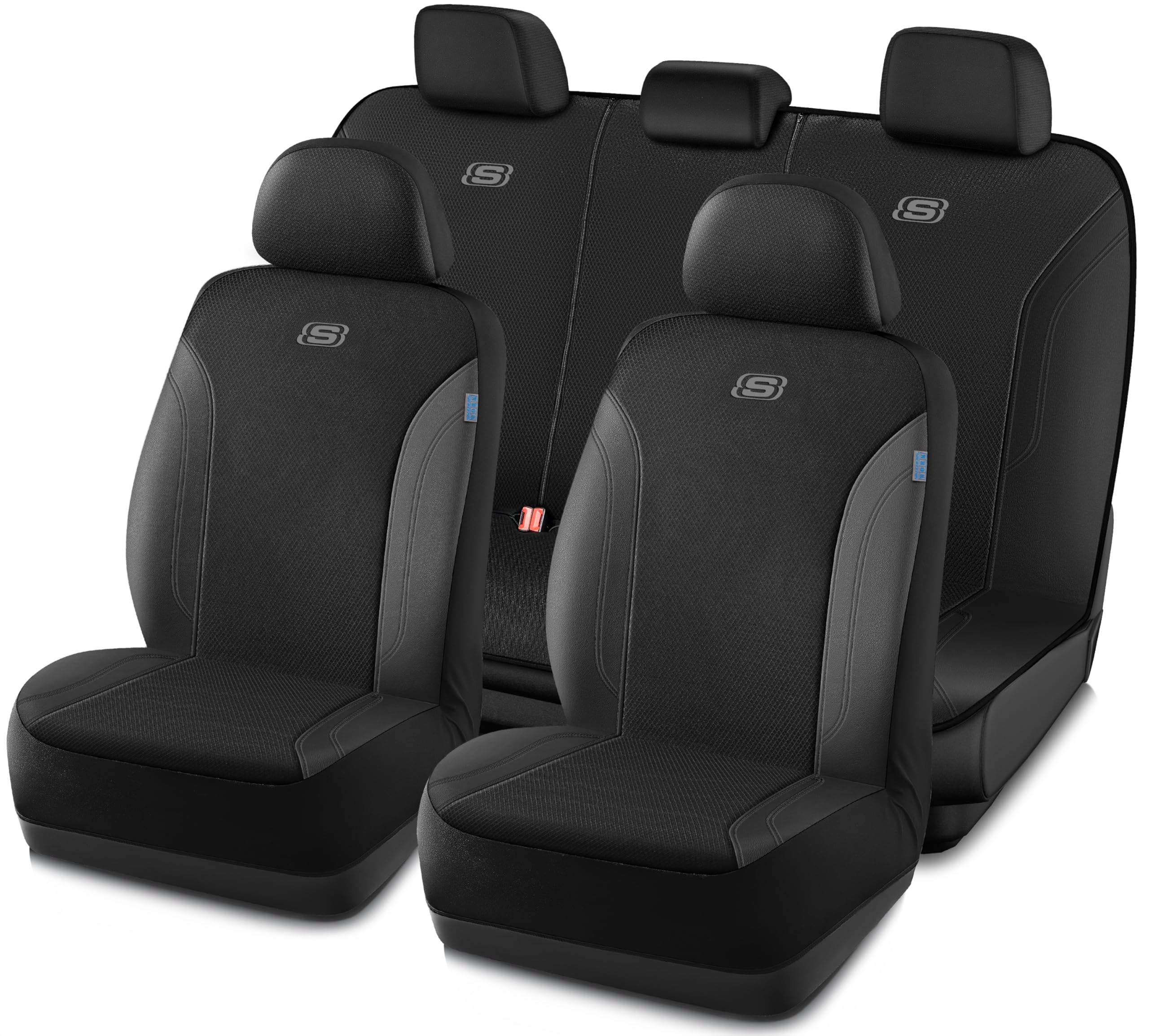
This Skechers full set uses reinforced webbing that the manufacturer says makes it five times stronger than conventional materials — so you can slide in and out of a work truck without tearing the cover.
That webbing (a dense woven strip meant to resist ripping) matters when you drive a Ford F-150 or a Kia SUV daily. Buyers report the covers hold their shape under heavy use, and the combination of Oxford fabric (a tightly woven, rugged cloth) and leather sections gives you a clean, modern look that does not feel cheap, according to multiple verified reviews. The airbag-compatible stitching allows side airbags to deploy through the seam, and the covers help keep the seat cooler in direct sun.
Installation is straightforward, though one buyer for a 2019 Accord noted the backseat does not 100% fit from the start — they tucked it in where the seats fold down and made it work. Unlike the Skechers Air-Cooled Memory Foam set, which covers only the front seats, this one is a full set including the rear. The trade-off is that you get a firmer, more protective seat, not the plush memory foam feel.
Built To Last
- Reinforced webbing adds serious tear resistance
- Full set covers front and rear seats
- No chemical odor reported, even new from the box
- Clean, modern look that blends well with most interiors
Install Note
- Rear seat covers may require extra tucking for a perfect fit on certain sedans
Reach for these if: you drive a truck, SUV, or family car and want a single rugged set that covers every seat without looking bulky.
Look elsewhere if: you want a plush, foam-cushioned feel — the leather-Oxford combo is firm.
2. Skechers Air-Cooled Memory Foam Seat Covers
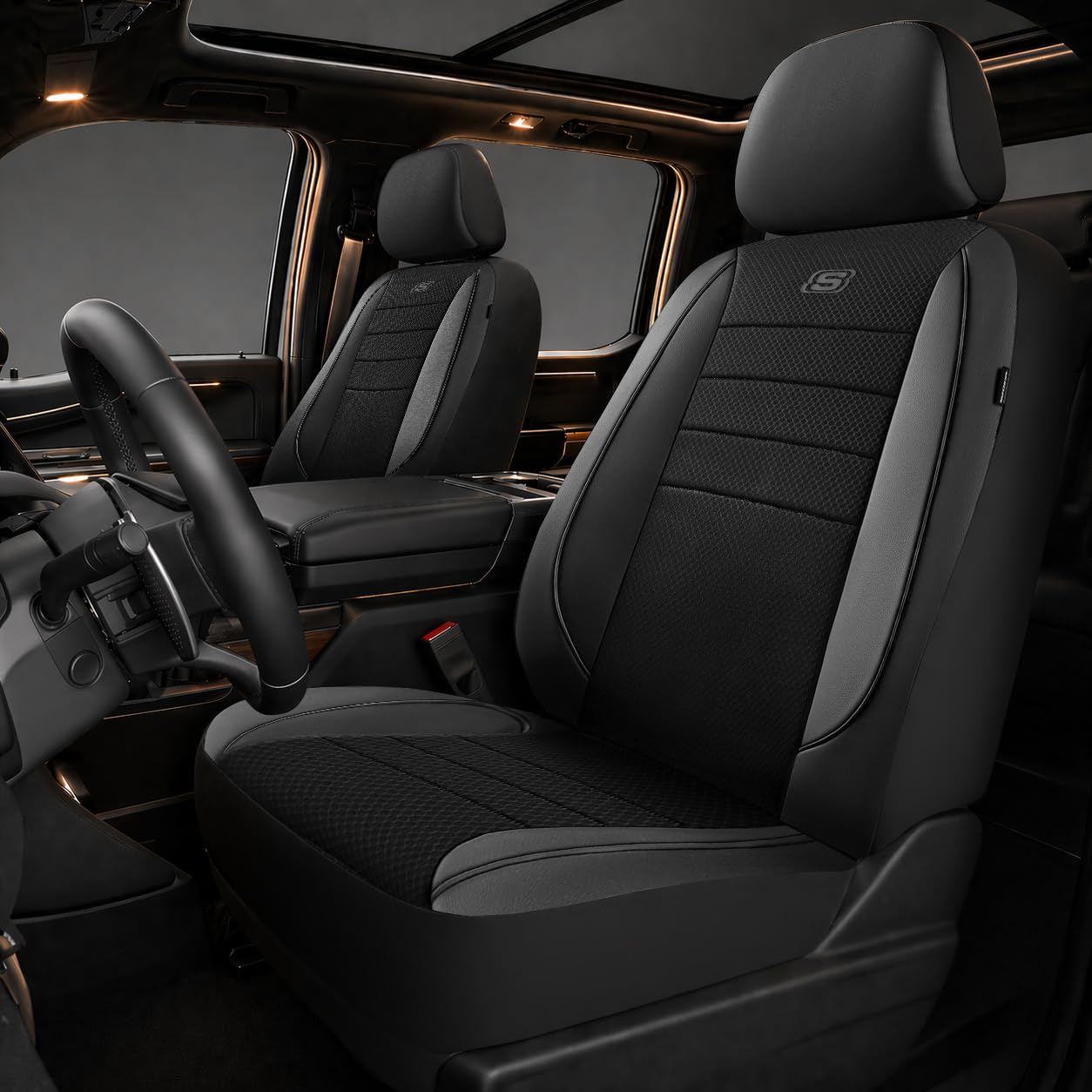
The key feature here is genuine Skechers Air-Cooled Memory Foam (a foam that lets air flow through it to reduce heat buildup) layered into a seat cover — it contours to your body and reduces pressure points on long drives, much like the brand’s shoes do.
The air-cool mesh fabric promotes airflow to reduce heat buildup, so you are not sweating during summer commutes. One reviewer noted it “transformed a dirty 2004 Prius interior” and that the covers fit nearly 100% of the seat and headrest. The 3-panel trim design means these are built to fit most cars, trucks, vans, and SUVs. However, this set covers only the front seats — you will need to buy a separate rear set if you want full coverage. The advanced stitching allows side airbags to deploy through the seams, and the leather-and-mesh combo can be cleaned with a damp cloth. Compared to the Skechers Work Leather full set, these are softer and more cushioned but less heavy-duty for extreme wear.
Buyers for a Hyundai Sonata and a 2008 Avalon both praised the fit and the added lumbar support, though a few mentioned needing a little extra hardware (tarp clamps and bungee straps) to keep the bottom section perfectly secure.
Why Commuters Love It
- Genuine memory foam that actually contours to your body
- Air-cool mesh reduces heat and sweat
- Easy to install and stays secure once on
- Wipes clean with a damp cloth
What’s Missing
- Front seats only — no rear covers included
- May need extra straps for a perfect bottom fit on some models
Ideal for: daily commuters and rideshare drivers who want cushioning that actually makes a difference on long drives.
Skip these if: you need a complete full-set protection in one box — this is front seats only.
3. HAIYAOTIMES Baja Saddle Blanket Car Seat Covers Full Set

The cheapest full set here (polyester and foam construction) but you trade a tailored fit for the bold, colorful Baja blanket look that freshens up a worn interior.
The multicolor Baja design is the main draw — it gives your car a bohemian style that gets compliments. The material is a durable polyester fabric with a high-density foam and mesh cloth finishing layer, so it is washable and breathable for all seasons. One buyer purchased the 2 bucket seats for a 2026 Honda CR-V and reported they fit great and look very good, though the seat part slides around a little — a common issue with universal-fit covers at this price point. A 2012 Chevy Equinox owner noted the headrests require an Allen wrench (a hexagonal key) to remove, and the plastic clasps are cheaply made with elastic that does not stretch enough to reach secure anchor points. They ended up cutting slits and buying extra extenders. Unlike the pricier CAR PASS set below, this one does not have a 3D foam structure, so it will not feel as plush, but the washable polyester fabric is easier to clean than faux leather.
Why Buy It
- Unique style that gets compliments wherever you go
- Washable and reusable — holds up well to cleaning
- Airbag compatible for safety
- Very affordable full-set option
Heads Up
- Rear seat installation is finicky — may need extra hardware
- Front seat cover can slide around a bit over time
- Not a precision fit; expect some excess fabric on certain models
Best suited for: teens, first cars, or anyone who wants a bold color refresh without spending much money.
Not for: drivers who want a tailored, tight fit with zero fuss during installation.
4. CAR PASS 3D Foam Mesh Leather Car Seat Covers Full Set
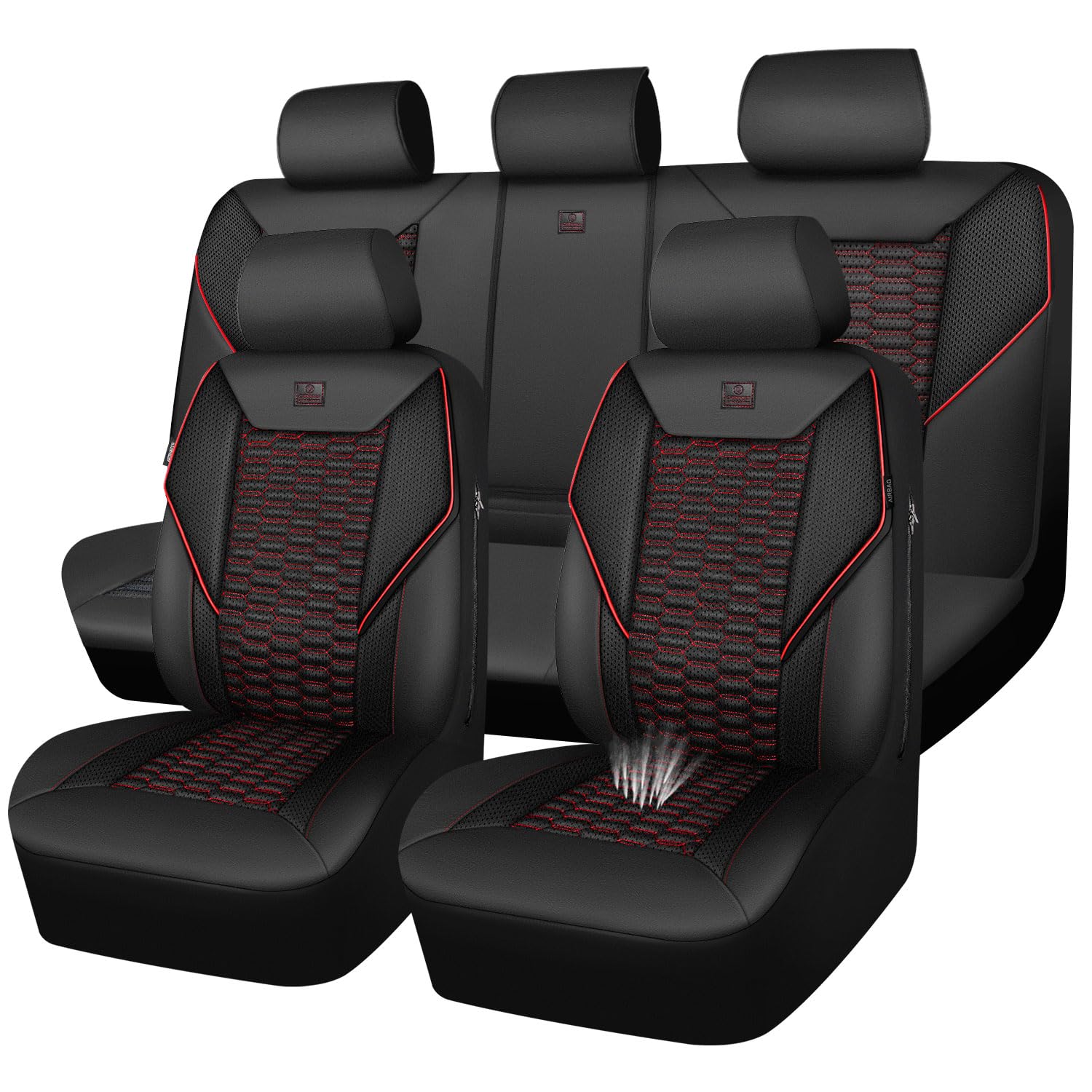
A thick 3D foam core (a dense, contoured padding layer) in both front and rear seats gives this universal-fit set a plush, structured feel that rivals covers costing twice as much.
The quilted design with red piping adds a stylish, performance-car look without being gaudy. What really separates it is the exclusive patented airbag deployment stitching — the seam is designed to release cleanly when a side airbag deploys, so you do not have to sacrifice safety for style. It also has a unique armrest-compatible design, meaning you can still access the center console armrest without fighting the cover. One owner of a 2024 Honda CR-V reported they were “very pleased” after installation, noting no funny smell from the start and a snug fit on the rear seat. A buyer with a 2011 Jeep loved the durability so much they bought a second set for their Mazda. The universal fit works for most sedans, trucks, vans, and SUVs, but a 2018 Ford EcoSport SE owner reported it did not fit their particular seats correctly. Compared to the HAIYAOTIMES set, this one is substantially thicker and more supportive — it feels more like a seat upgrade than just a protective cover. The synthetic leather is soft to the touch, and the stitching adds just enough color contrast.
What Impresses
- Thick 3D foam provides real cushion and support
- Quilted design with red piping looks expensive
- Armrest-compatible design — no blocking of center console
- Patented airbag deployment seam for safety
One Catch
- Not a perfect fit for every model — check reviews for your specific car
- Headrest covers can be slightly oversized on some vehicles
Go for this if: you want a sporty, cushioned interior upgrade that protects every seat and does not block your armrest.
Think twice if: your vehicle has unusual seat shapes — universal fit may leave excess fabric.
5. Coverado Car Seat Covers Full Set, Waterproof Nappa Leather
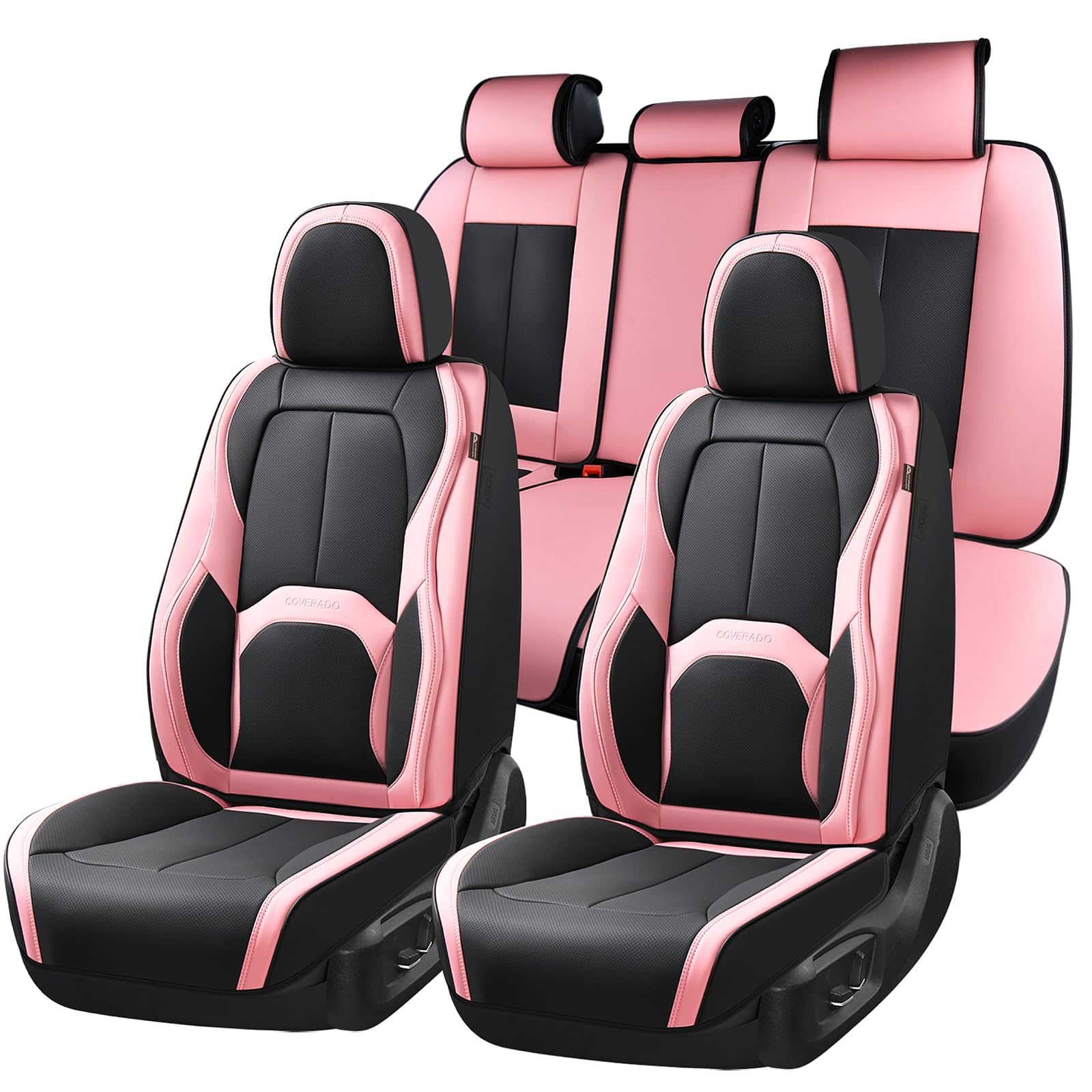
The most protective full set here features a waterproof Nappa leather surface (a soft, high-quality leather type) and built-in lumbar support (extra lower-back padding in the backrest) — so spills, pet hair, and long drives are all handled.
The Coverado set uses Nappa leather and durable faux leather with high-resilience density foam padding, making it the most premium-feeling option on the list. It is fully waterproof, so spills, pet hair, and UV rays will not damage your original seats. The added lumbar support in the backrest is something no other pick on this list offers. Owners mention the material is sturdy and feels top-quality compared to cheaper alternatives. Universal fit is claimed to cover 95% of all car seats without interfering with seat belts, buckles, or airbags. The package includes 2 front seat covers and 3 rear seat covers, plus a detailed manual. A buyer with grandkids tested these for 9 months and reported they held up very well to daily kid use. However, some owners noted the material is stiff when new, so if it does not fit just right, it can look a bit baggy in certain spots — especially on the rear seat of vehicles like the 2024 Subaru Outback. The manufacturer offers a 1-year warranty for confidence. Compared to the CAR PASS set, this one is less sporty and more luxury-focused, with a cleaner two-tone color scheme (Black & Pink). It is also about twice the price, so you are paying for the waterproofing and lumbar support.
Why It’s Worth It
- Waterproof Nappa leather surface protects against spills and UV
- Integrated lumbar support for back comfort on long drives
- 1-year manufacturer warranty included
- Full set with front and rear covers
Consider This
- Material is stiff at first — requires careful installation for a perfect fit
- May not fit every model perfectly; some trimming/tucking needed
Best for: families with kids or pets, or anyone who wants the highest level of spill protection and a luxury-finish interior.
Not for: bargain shoppers or drivers who want quick, tool-free installation — this one takes patience to fit properly.
Understanding the Specs
Material Types — Leather vs. Mesh vs. Polyester
The material determines how the cover feels, how easy it is to clean, and how well it handles heat. Faux leather (like the Coverado and CAR PASS sets) looks upscale and wipes clean easily, but can get sticky in summer heat. Mesh and air-cool fabric (like the Skechers Memory Foam set) stays breathable and comfortable on long drives, but may not repel liquid spills as effectively. Polyester blends (like the HAIYAOTIMES set) are washable and durable in all seasons, making them a good all-rounder for budget buyers.
Full Set vs. Front Seats Only
A full set includes covers for both front and rear seats, giving your entire interior a uniform look. Some products (like the Skechers Air-Cooled Memory Foam) sell only front seat covers at a lower price point, meaning you pay less upfront but need a separate purchase if you want the back seats covered. Always check the “Set Name” on the product page — if it says “Front,” you will need a second order for the rear.
FAQ
Will car seat covers interfere with my side airbags?
How do I know if a universal-fit cover will work for my car?
How long do car seat covers usually last?
Can I wash my car seat covers in a washing machine?
Are car seat covers difficult to install?
What is the difference between a “front set” and a “full set”?
Will seat covers affect my seat heater or ventilated seats?
How do I stop my seat covers from sliding around?
Final Thoughts: The Verdict
For most drivers, the best car seat covers are the Skechers Work Leather Full Set because it combines reinforced durability, a complete full-set design, and a clean modern look at a mid-range price point. If you prioritize plush comfort for long commutes, grab the Skechers Air-Cooled Memory Foam front set. And for full waterproof protection with lumbar support, the Coverado Nappa Leather Set is the premium choice that families and pet owners will appreciate.
How We Picked
We do not accept paid placement. Every pick is matched to a real buyer and a real use-case; we do not hands-on test units.
Sources & Methodology
Specifications: manufacturer listings and product documentation. Review insights: verified customer reviews, as of July 2026. Pricing: not shown on this page (it changes often); check the current price via the retailer link.
As an Amazon Associate, Trending Car earns from qualifying purchases. This does not affect which products we feature.