
Our readers keep the lights on and my garage snacks stocked. As an Amazon Associate, I earn from qualifying purchases.
Specs are compiled from manufacturer listings and verified buyer reviews and can change over time — please confirm the key details on the product page before buying.
That flake of orange on your frame rail or the brown bloom under a bolt head is not just an eyesore — it is a chemical fire that, left alone, eats through metal from the outside in. The right inhibitor stops that reaction cold; the wrong one wastes your afternoon and lets the rot continue underneath. This guide breaks down the nine best car rust inhibitor options ranked by real-world stopping power, cure speed, and owner experience after a season of road salt or sea spray.
I’m Min Islam — the founder and writer behind Trending Car. This guide is built by comparing the manufacturers’ published specifications and the patterns across verified customer reviews, so you get each pick’s real strengths and trade-offs instead of marketing spin.
Whether you are sealing a rocker panel before winter or coating a boat trailer that lives in saltwater, — and this roundup of the best car rust inhibitor options covers converters, sprays, and wax-based sealers that actually deliver.
Our Picks at a Glance

How To Choose The Best Car Rust Inhibitor
A rust inhibitor is not a one-size-fits-all buy. The formula that works beautifully on a boat motor can feel too greasy on a car frame, and the hard paint-like coating that seals a truck chassis can crack if you apply it to a flexible body panel. Here are the three factors to lock in before you pick a can.
Formula Type — Converter vs. Barrier vs. Penetrant
A rust converter chemically changes rust into a stable, paintable surface (like Rustins RUSC250, which neutralises rust into a matte black primer). A barrier inhibitor, like the wax-based CRC 06026, seals moisture out with a physical coating. A penetrant, like H&H CB12, soaks into existing rust and electrical connections to stop galvanic corrosion. Decide if you need to treat existing rust (converter) or prevent it from starting (barrier).
Cure Time and Drying Strategy
Cure time directly affects your workflow. Some products, like the Rustins rust converter, are fully cured in 2 hours — meaning you can apply a second coat or put the part back in service the same afternoon. Others, like the Rust-Oleum Rust Reformer spray, require a full 24 hours before a topcoat can go on. If your car is your daily driver and you cannot park it for a whole day, a fast-cure converter may be your better option.
Durability — Hard Finish vs. Flexible Film
Products like POR-15 cure into a rock-hard, chip-resistant shell. That is excellent for frames, suspension arms, and mower decks that take physical abuse. On the other hand, the lanolin-based B’Laster Surface Shield stays flexible and self-healing, which works well for underbody channels that flex and vibrate. A hard coating can crack over time under vibration; a flexible coating can attract dust and feel tacky. There is no perfect answer — it depends on the part you are protecting.
Quick Comparison
| Model | Best For | Formula Type | Cure Time | Item Volume | Amazon |
|---|---|---|---|---|---|
| H&H CB12 Corrosion Block★ Best Overall | Electrical & marine corrosion | Spray penetrant | — | 12 fl oz | Amazon |
| Rustins RUSC250Best Converter | Fast rust conversion | Water-based converter | 2 hours | 250 ml | Amazon |
| Rust-Oleum 248658 Rust ReformerTop Reformer | Body panels & frame touch-ups | Oil-based aerosol | 24 hours | 582 ml | Amazon |
| CorrosionX Heavy Duty | Marine & outdoor equipment | Self-healing spray barrier | — | 12 oz | Amazon |
| CorrosionX Rust Inhibitor (16 oz) | Electrical & seized parts | Dielectric penetrant spray | — | 16 fl oz | Amazon |
| CRC 06026 Heavy Duty Corrosion Inhibitor | Full-vehicle undercoating | Wax-based spray | — | 10 fl oz (per can) | Amazon |
| Eastwood Internal Frame Coating | Frame & cavity interiors | Aerosol with 360° wand | 24 hours | 14 oz | Amazon |
| B’Laster Surface Shield (6-Pack) | Underbody lanolin coating | Lanolin-based spray | — | — | Amazon |
| POR-15 Rust Preventive Coating | Frames & heavy-duty parts | Moisture-cured liquid | 5 hours (full cure) | 16 fl oz | Amazon |
In‑Depth Reviews
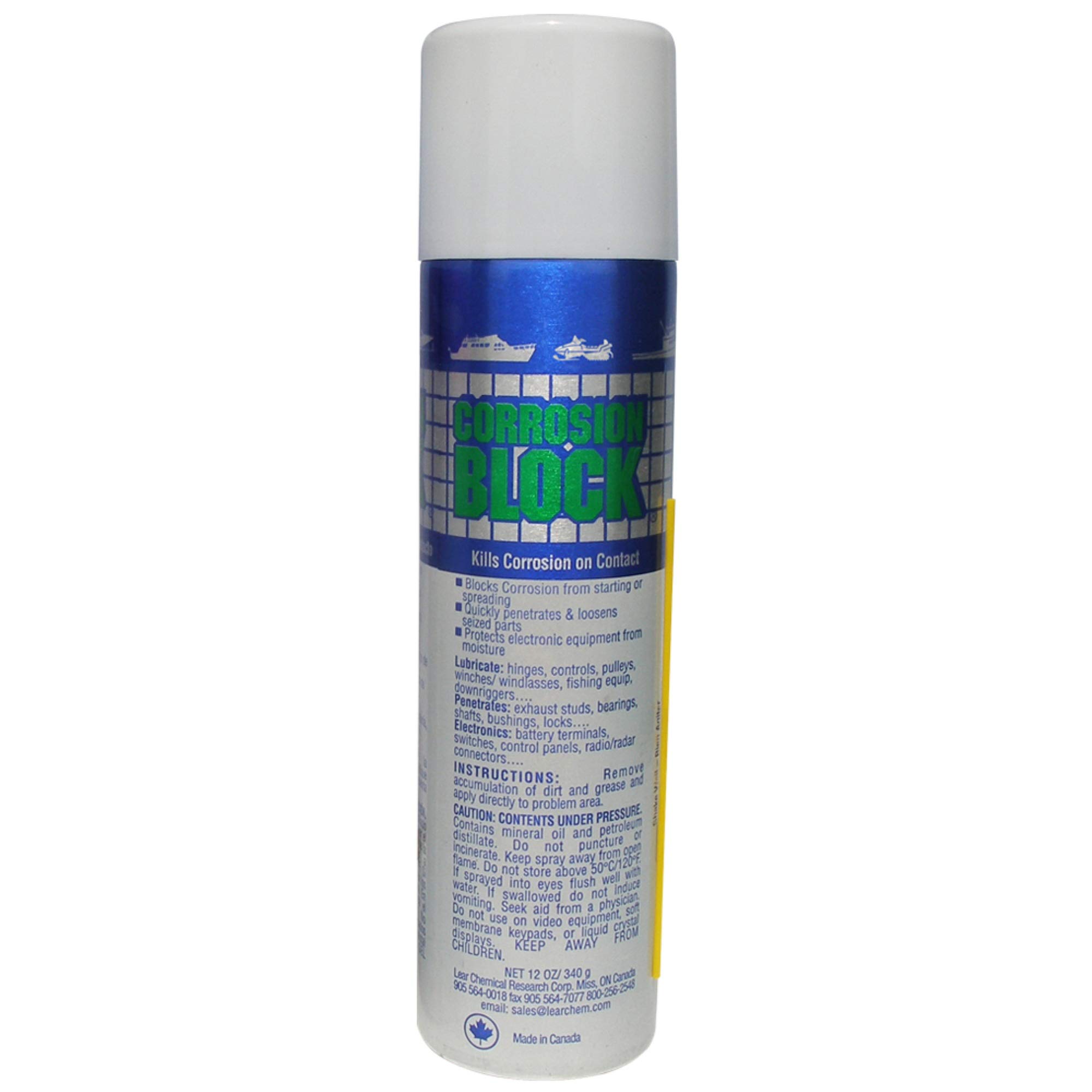
1. H&H CB12 Corrosion Block, 12-Ounce Aerosol Can
Our pick — over 4.5★ from 450+ verified ratings; the strongest balance of quality and price.
The penetrant that stops corrosion on electrical contacts and aluminum fins where other sprays fail.
This is the product you reach for when WD-40 and Aerokroil have already let you down. Owners confirm that H&H CB12 removed aluminum corrosion on motorcycle fins after other oils failed — and it kept the fins clean after a ride. The secret is a low-flash-point formula (79°C) that wicks into microscopic crevices on dissimilar metals, stopping galvanic corrosion between copper circuit boards and tin connectors. It works as well on a keyed door lock as it does on a boat outboard.
The corrosion-resistance aspect is what wins people over here — dozens of owners single it out. It is also safe on paint, so you can spray everything under a cowling or inside a battery tray without worrying about lifting the finish. The mixed feedback on value-for-money is the honest trade-off: at this size can, it is not a budget buy for large-frame jobs, but for targeted electrical and marine protection it is the crowd favorite — 4.8 stars from nearly 500 owners. Buyers sum it up: “H&M CB12 Corrosion Block removed aluminum corrosion on motorcycle fins after other oils (Aerokroil, WD40) failed.”
Corrosion Blocking Power
- Beats top penetrants on tough aluminum corrosion — buyers report it succeeded where Aerokroil and WD-40 could not.
- Safe on paint and sensitive materials, so you can spray under cowlings and inside door locks.
- Forms a long-term barrier on electrical terminals, preventing invisible corrosion on low-voltage circuits.
Limited Coverage Area
- Small 12-ounce can — not the most economical choice for coating large frame sections or entire underbodies.
- Some owners find it expensive for the volume you get.
Best for Quick Fixes: you need a penetrant that targets electrical connections, aluminum parts, and marine hardware with proven real-world results.
Skip for Large Jobs: you want a low-cost coating to cover a whole frame or underbody in one pass.
2. RUSTINS RUSC250 Rust Converter Water-Based Renovator for Metal 250ml
A water-based converter that neutralises rust into a protective matte finish in just two hours.
If your project has existing rust you need to stop and seal right now, this is the fastest path. The RUSTINS converter chemically changes red rust into a stable black compound, and it does it in a fraction of the time most alternatives need — the 2-hour full cure is a 12x gap compared to the Rust-Oleum Rust Reformer’s 24 hours. Owners describe the coverage as very good, with one noting it “worked very good at converting rust” when applied in thin coats. The water base means cleanup is easier, and you do not need a separate primer before painting.
There is a catch in the application method. The product dries to a matte, rubbery finish that is difficult to sand once set, so you want to apply thin coats to bare metal only and clean any overspill before it dries. A few owners mention that a heavy coat or poor surface prep can lead to the finish peeling. Still, for a fast, indoor rust-conversion job on a metal surface that will be painted over, this is one of the best converters you can buy — supported by a strong 4.5 stars across more than 500 ratings.
Eco-Friendly Formula: Apply two or three thin layers rather than one heavy one. The product dries quickly, so you can recoat in the same session. A single thick layer can trap moisture or dry unevenly.
Best for Light Rust: you need a fast-curing, water-based converter for small-to-medium rust spots that you plan to paint over.
Skip for Heavy Rust: your part needs a hard, chip-resistant finish or will face heavy road debris; this dries to a matte rubbery layer, not a rock-hard shell.
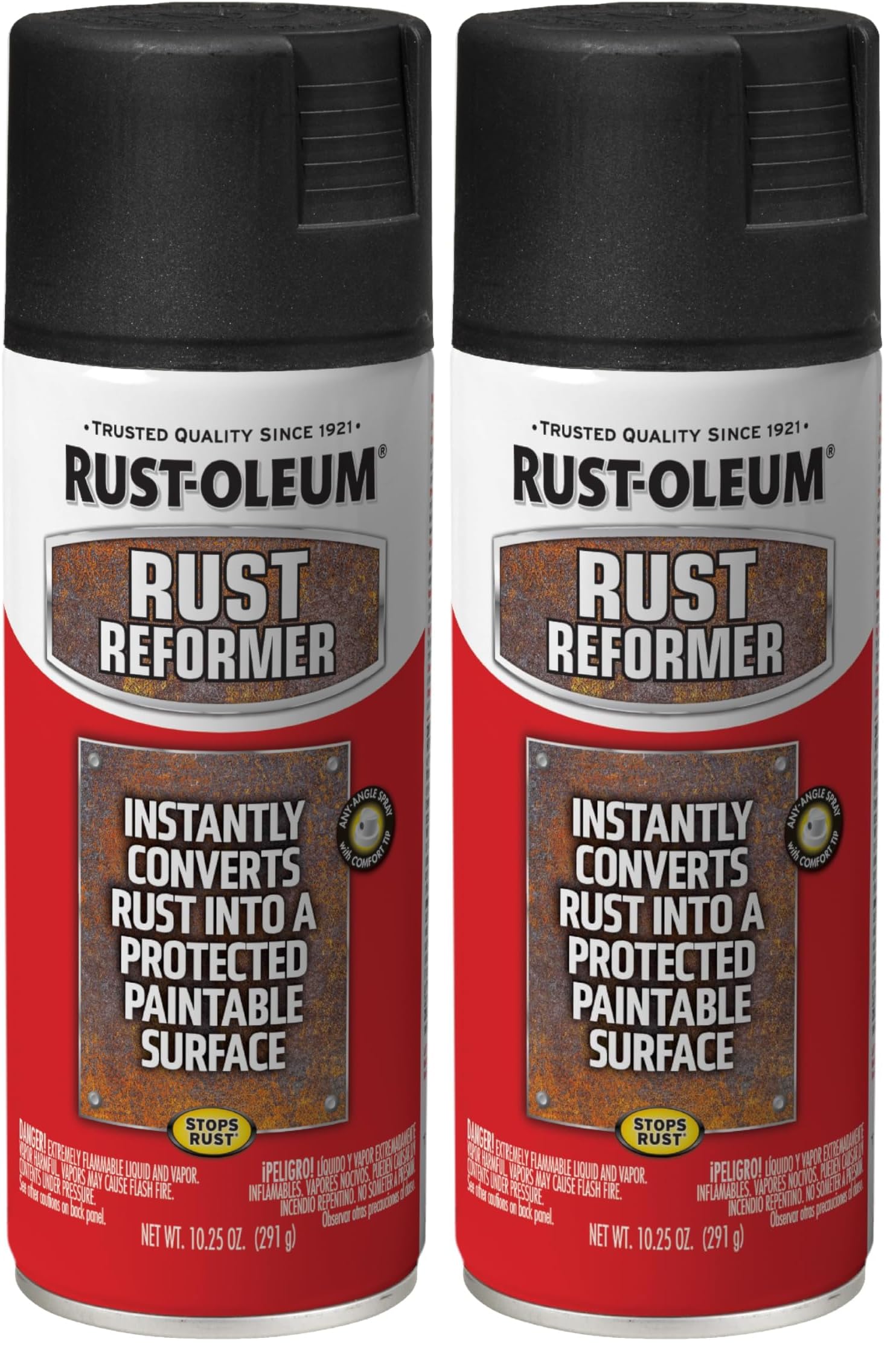
3. Rust-Oleum 248658 Rust Reformer Spray, 10.25 oz, Black (Pack of 2)
An oil-based aerosol that turns rust into a flat black, paintable surface without sanding to bare metal.
This is the spray for the rust-belt daily driver. The Rust Reformer’s oil-based formula chemically bonds with the rusted surface and converts it into a satin black layer that you can paint over. Owners living in salt-heavy areas confirm it stopped rust spread on rocker panels and made frame rails look almost brand new — one reported that rust “didn’t continue to spread at all” after a single spray. The 582-milliliter can is a 2.3x volume advantage over the Rustins converter, so you get more coverage per purchase.
The trade-off is patience. This spray needs 24 hours for a full cure before you apply a topcoat. The any-angle spray technology does let you reach upside-down spots, but the product is not suitable for high-impact areas like road-rash zones — the coating holds up well on non-abraded surfaces. The crowd performance rating is strong, with owners specifically calling out effectiveness and ease of use. The review pages sum it up: “Effective for stopping rust spread on rocker panels.”
Two-in-One Action: It reformer the rust rather than covering it, saving you the hours of sanding down to bare metal. Just degrease, spray, and let it sit overnight.
Best for Versatility: you have surface rust on undercarriage parts, frames, or rocker panels and want a no-sanding solution that dries to a paintable finish.
Skip for Color Matching: you need a fast turnaround — the 24-hour cure time means your vehicle is off the road for a full day.
4. CorrosionX Heavy Duty Anti Rust Spray, 12oz Aerosol

A self-healing barrier for marine and outdoor gear that clings through rain, salt spray, and pressure washing.
This is the heavy artillery for anything that lives outside and gets wet. The CorrosionX Heavy Duty formula uses polar bonding to lock onto metal surfaces and create a dripless, self-healing film. The maker claims up to 5 years indoors and 2 years outdoors — a claim backed by owners who report monthly aerosol coating on boat motors eliminates salt corrosion. Unlike waxy sprays that crack, this one stays flexible and bonds even as machinery shifts.
The obvious downside is the goopy consistency. It is thick enough that it does not drip, but it also attracts dust and can stain hands and clothes if you touch the coated surfaces. Owners also note the can does not go very far — you will likely need multiple coats for full coverage on a boat trailer or heat pump cabinet. Still, for marine and industrial applications where rust is a constant battle, this is a top contender, backed by 4.6 stars from nearly a thousand owners.
Self-Healing Coating: The film repairs itself after minor scratches, so a scrape on a boat trailer leaf spring does not leave bare metal exposed to saltwater.
Best for Long-Term: you need a long-term, flexible barrier for boat trailers, heat pumps, or agricultural equipment that faces constant moisture and salt.
Skip for Budget: you want a clean, dry-to-the-touch finish — this stays tacky and will collect dust on an undercarriage.
5. CorrosionX Rust Inhibitor, 16oz Aerosol (Industrial-Strength)

An industrial-strength dielectric spray that the U.S. Navy qualifies for advanced marine corrosion protection.
This is the penetrant with credentials. The CorrosionX Rust Inhibitor forms a dielectric barrier rated over 39,000 volts, meaning it stops galvanic corrosion between dissimilar metals in battery terminals, sensors, and circuit boards. It is also a deep-penetrating oil that frees rusted bolts and marine fittings, clings to metal under high pressure, and resists washout. Owners describe it as “one of the best products for marine use” and use it on everything from yacht engine rooms to jet skis.
The versatility comes at a higher price point than basic penetrants. You are paying for a multi-role product that works as a lubricant, corrosion inhibitor, and moisture displacer in one can. The 16-ounce volume is generous, and the self-healing film means you do not need to reapply after every wash. A few owners note the can is oily for a while after application, but the protection — especially in saltwater environments — is hard to match.
Industrial Strength
- Qualified by the U.S. Navy for the Advanced Corrosion Preventive Compound military specification.
- High dielectric rating (39,000+ volts) makes it safe for sensitive electronics and battery terminals.
- Penetrates and frees seized parts where other oils fail in salty, humid environments.
Strong Odor
- Premium price — you pay for military-grade certification and multi-role performance.
- Oily residue can attract dust; best for compartments rather than visible surfaces.
Best for Heavy Duty: you need a single can that protects electronics, lubricates moving parts, and frees rusted fittings in a marine or coastal environment.
Skip for Indoor Use: you only need a basic undercarriage spray and do not want to pay for dielectric capability you will not use.
6. CRC 06026 Heavy Duty Corrosion Inhibitor, 10 Wt Oz – 4 PACK

A wax-in-a-can that dries to a hard, invisible shield and stays on through pressure washing.
If you want the proven undercoating standard that mechanics have trusted for decades, this is your pick. CRC 06026 applies as a liquid and dries to a waxy film that bonds to metal, steering linkages, electrical connections, and engine components. Customers note using 2 cans per vehicle on 10-year-old trucks with surface rust — after a full winter, the underbody stayed clean. One owner documented 3 years on a new Jeep Wrangler used in saltwater beach areas with no rust except minor patina on welds.
The quality and rust-resistance aspects are the most-praised features, and the 4-pack format gives you enough volume for a full-vehicle undercoat. The honest downside is the odor — a significant number of owners note the smell is strong, so a Tyvek suit and mask are recommended during application. The coating is also not suitable for high-impact areas where rock chips can breach the wax film. CRC suggests reapplying every 2 years for best results.
Best for Electronics: you need a time-tested wax undercoat for winter protection on trucks, SUVs, and vehicles that face road salt.
Skip for Dry Surfaces: you are sensitive to chemical fumes or need a coating for surfaces that take direct rock impacts.
7. Eastwood Internal Frame Coating Aerosol, 14 Oz, Black

The aerosol with a 360-degree wand designed specifically for the inside of frame rails and cavities.
Most rust inhibitors cannot reach the inside of a frame rail, which is exactly where rust starts. Eastwood solves that with a flexible wand and four nozzles at the tip that spray in every direction at once. Owners show it coats the internal surfaces of a Jeep JKU frame rail evenly and dries to a gloss finish. The formula is both a rust prevention and a rust destroyer — it neutralises minor existing rust while sealing the metal against moisture.
The spray performance gets mixed feedback. Some owners find the wand flails without support and needs a DIY clothes-hanger reinforcement to stay on target. Others report that the can tends to drip through pinch welds, so you need to be careful where you spray. The 24-hour cure time means you will need to plan around a full day of drying. Despite these quirks, the performance and quality aspects are the most-praised by a wide margin, and for anyone restoring a classic car or treating a new frame before winter, this is the only option that reaches the inside.
Best for Hidden Areas: you need to coat the inside of frame rails, rocker panels, or enclosed cavities where no other spray can reach.
Skip for Visible Parts: you are applying to an open, visible surface — a standard aerosol gives you better control and less waste for exterior work.
8. B’Laster Surface Shield Rust Prevention Spray – Lanolin Undercoating, Pack of 6
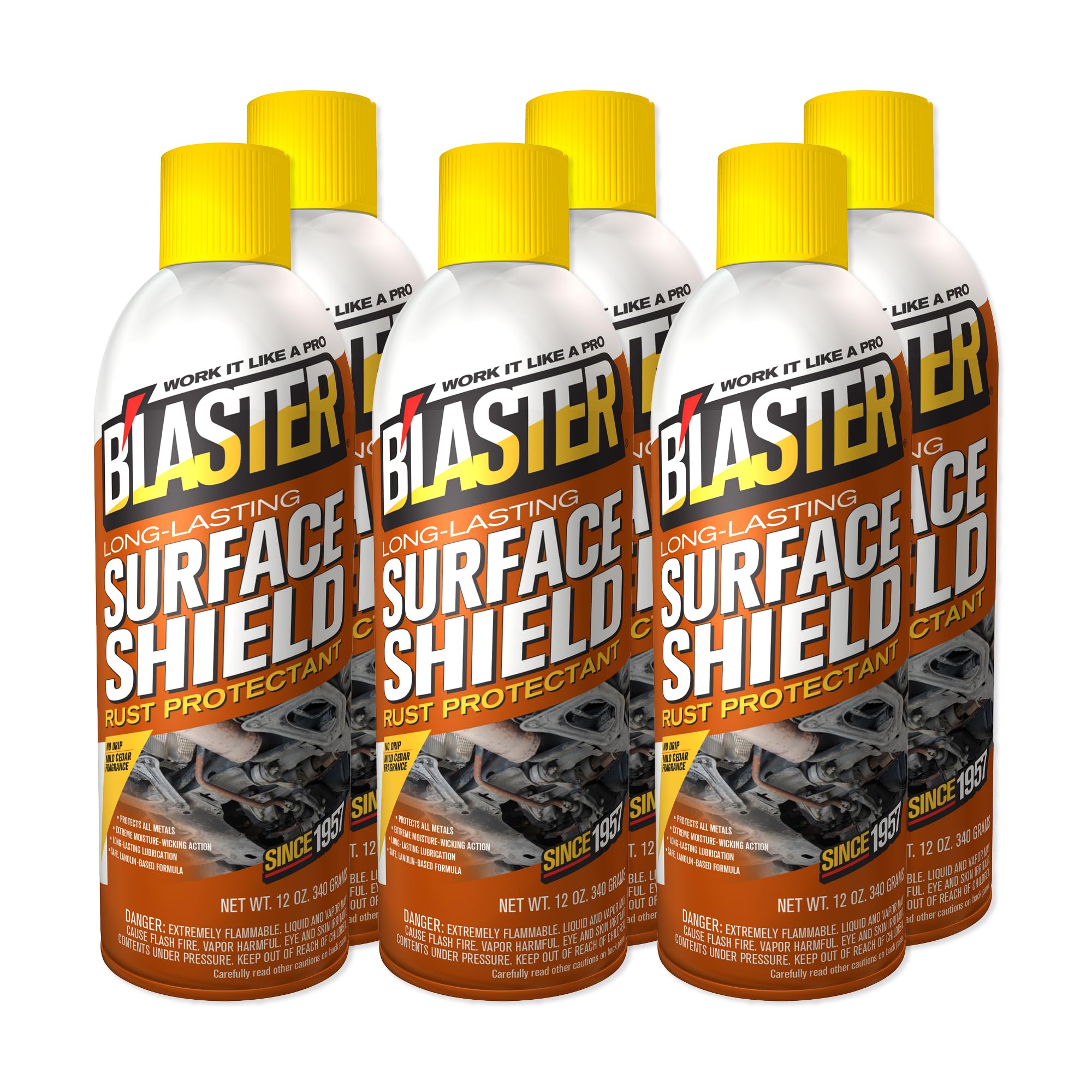
A lanolin-based coating that clings to metal without sagging or dripping — ideal for underbody protection.
This is the budget-friendly option for owners who want solid rust protection on a per-can cost. The lanolin formula creates a thick, waxy seal that displaces moisture and forms a non-drip barrier. The 6-pack gives you enough volume for at least two full underbody coats on a pickup truck.
The quality and functionality aspects are the most-praised, but nozzle clogging is a recurring complaint — a significant number of reviewers point out that cans can arrive with leaky nozzles, and there is no extension wand available for cavity spraying, so you are limited to external surfaces. The smell on exhaust components is also noticeable after application. For the price, however, this is one of the best values for beating road salt. Stick to outside surfaces and have a backup spray pattern in mind.
Best for Marine Use: you need an affordable, thick undercoat for the visible underbody of your car, truck, or SUV — especially in snow-belt states.
Skip for Clean Finish: you need to spray inside frame cavities or want a hard, dry-to-the-touch finish; this stays waxy and collects dust.
9. POR-15 Rust Preventive Coating, 16 Fluid Ounces, Gray

A moisture-cured coating that forms a rock-hard shell even under water, chemicals, and salt.
POR-15 is not a spray-and-forget product — it is a three-step system (clean, etch, coat) that delivers the hardest finish in this guide. The chemistry is unique: instead of drying by evaporation, it cures by absorbing moisture from the air, which means it actually dries faster in humid conditions. Once cured, it forms an indestructible, hammer-tough barrier. Shoppers say it stopped garage door rust for nearly a year in coastal salty air and has lasted 10 years on a truck chassis without peeling.
The catch is precision. POR-15 requires meticulous surface preparation — grease, oil, and old paint must be stripped first. The coating self-levels beautifully but spills must be cleaned immediately or they become nearly impossible to remove. Also, any unused portion will solidify in the can within days once opened, so you need to plan for a single-use session or transfer the remainder to a smaller container. For frames, mower decks, and off-road sliders where durability is the priority, nothing in this guide beats the final hardness of POR-15.
Durable Coating
- Rock-hard, chip-resistant finish that withstands road debris and abrasion better than any spray.
- Moisture-cured chemistry means it sets faster in humid conditions rather than slower.
- Covers up to 100 square feet per can, making it cost-effective for large frame sections.
Surface Prep Needed
- Requires the full 3-step prep (clean, etch, coat) for proper adhesion — not a quick spray job.
- Unused paint solidifies in the can within days; plan your application in a single session.
- Must be topcoated for UV exposure — the coating degrades in direct sunlight.
Best for Permanent Fix: you want the most durable, permanent rust-preventive coating available for frames, axles, and heavy-duty parts that take physical abuse.
Skip for Quick Jobs: you need a quick aerosol application or only have small spots to treat — the prep work is not worth it for a one-inch rust bubble.
Understanding the Specs
Cure Time
Cure time is the number of hours a rust inhibitor needs to fully harden before you can paint over it or put the part back in service. A product like Rustins RUSC250 cures in 2 hours, which means you can apply a second coat or use the vehicle the same day. Rust-Oleum’s Rust Reformer needs 24 hours. If your vehicle is your daily driver, a fast cure saves you from leaving the car on jack stands overnight.
Dielectric Rating
A dielectric rating tells you how many volts the product can insulate against before conducting electricity. CorrosionX’s 39,000-volt rating means it is safe to spray on battery terminals, sensors, and circuit boards without causing a short. Products without a published dielectric rating are fine for frames and body panels but should be kept away from sensitive electronics.