
Our readers keep the lights on and my garage snacks stocked. As an Amazon Associate, I earn from qualifying purchases.
Specs are compiled from manufacturer listings and verified buyer reviews and can change over time — please confirm the key details on the product page before buying.
An engine past 75,000 miles isn’t old—it’s seasoned—but it does have new needs. Old seals shrink, gaps widen, and a standard oil just can’t keep up with the consumption and leaks that come with age. That’s exactly why high-mileage oil exists—it’s the single best thing you can pour into a well-loved motor.
I’m Min Islam — the founder and writer behind Trending Car. This guide is built by comparing the manufacturers’ published specifications and the patterns across verified customer reviews, so you get each pick’s real strengths and trade-offs instead of marketing spin.
You need a formula that conditions seals, fights sludge, and protects worn internals, and this breakdown of the best car oil for high mileage options will get you there without guesswork.
Our Picks at a Glance

How To Choose The Best Car Oil for High Mileage
Choosing the right oil for an aging engine isn’t just about grabbing the first 5W-30 bottle on the shelf. The key difference is in the additives—seal conditioners that rejuvenate dried-out gaskets and stop annoying drips.
Viscosity Grade: The “5W-30” Explained
You need oil that flows quickly on a cold morning to protect your engine right at startup. The “5W” in 5W-30 is the oil’s thickness in cold weather (the W stands for winter), and the “30” is its thickness at normal engine operating temperature. For most older sedans and trucks, 5W-30 is the gold standard, but if your owner’s manual recommends 0W-20 or 5W-20, stick to that—especially in colder climates, where a thinner oil flows faster at startup to protect the engine instantly.
Quick Comparison
| Model | Best For | Protection Miles | Base Oil | Volume | Amazon |
|---|---|---|---|---|---|
| Mobil 1 High Mileage 5W-30★ Best Overall | Do-it-yourself owners wanting top-tier synthetic | Up to 10,000 | Full Synthetic | 5 Quarts (160 oz) | Amazon |
| Valvoline MaxLife 5W-30Best Value | Budget-conscious repair on seal leaks | Standard intervals | Synthetic Blend | 5 Quarts (160 oz) | Amazon |
| Castrol GTX HM 5W-30Sludge Fighter | Sludge protection at a value price | Standard intervals | Synthetic Blend | 5 Quarts | Amazon |
| Pennzoil HM 5W-30 (6-Qt) | Frequent oil changers with leaky engines | Standard intervals | Synthetic Blend | 6 Quarts (192 oz) | Amazon |
| Pennzoil HM 5W-20 (6-Qt) | Owners of 5W-20-spec Japanese engines | Standard intervals | Synthetic Blend | 6 Quarts (192 oz) | Amazon |
| Castrol GTX FS 0W-20 | Cold-weather starts and hybrid engines | Up to 10,000 | Full Synthetic | 5 Quarts (160 oz) | Amazon |
| Mobil FS HM 5W-30 (6-Pack) | Classic cars needing easy top-offs | Up to 7,500 | Full Synthetic | 6 Quarts (192 oz) | Amazon |
In‑Depth Reviews
1. Mobil 1 High Mileage 5W-30
Our pick — over 4.5★ from 10,000+ verified ratings; the strongest balance of quality and price.
The crowd favorite that keeps an aging engine humming past the 75,000-mile mark with total confidence.
If you want one oil that does everything a tired engine needs, this is it. The full-synthetic formula is engineered for vehicles over 75,000 miles and is built to stretch up to 10,000 miles between changes—meaning fewer trips under the car and more money left in your pocket.
Its signature Triple Action Formula delivers performance, protection, and cleanliness in one pour. That means it works to prevent damaging deposits and sludge buildup, while internal engine heat protection up to 500 degrees F and low-temperature protection down to -30 degrees F keep the motor safe in extreme weather.
Buyers report fuel-economy gains of 3–4 MPG, especially in older GM vehicles.
What Wins Owners Over
- Full synthetic design for engines with over 75,000 miles
- Helps improve fuel economy while keeping internals clean
- Stable jug design with a low center of gravity that won’t tip over
Who Should Look Elsewhere
- Owners whose manual requires 5W-20 or 0W-20 must pick a different grade
- Price-conscious shoppers on a strict budget might prefer the blend options below
The Verdict: The strongest all-around synthetic for high-mileage drivers who want protection and fuel savings.
Reality Check: It demands the 5W-30 spec—if your car needs a different grade, this isn’t your bottle.
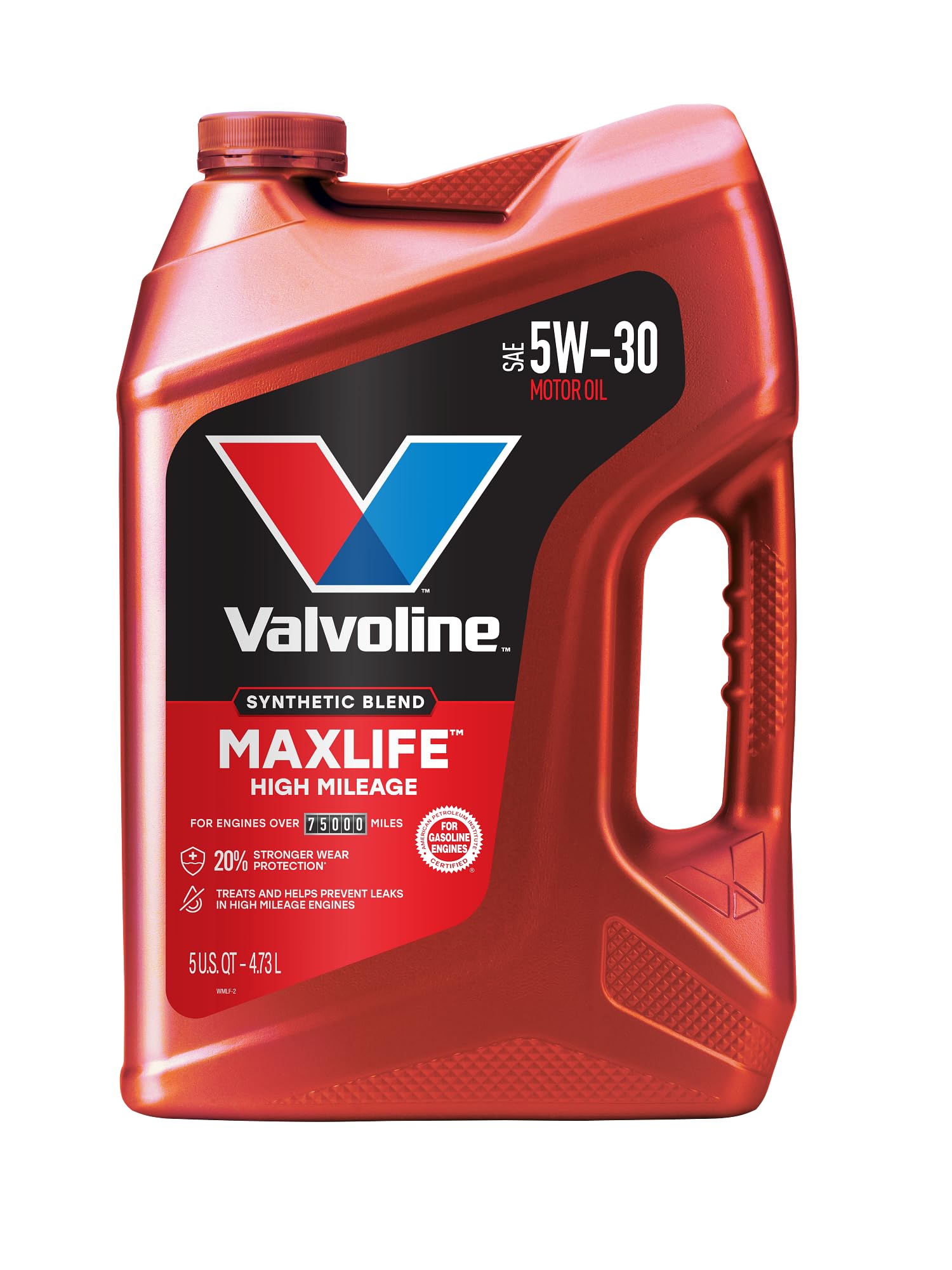
2. Valvoline MaxLife High Mileage 5W-30
The 300,000-mile champion that stops leaks without emptying your wallet.
This synthetic blend is built specifically for engines with 75,000 miles or more, and its seal conditioners are the star of the show. They work to prevent oil leaks and reduce oil consumption—the two most annoying problems with aging motors.
It delivers 20% better wear protection and 15% better sludge defense than industry standards. On top of that, extra detergents fight against friction, corrosion, and deposits, while advanced friction-fighting additives help improve fuel efficiency.
One owner put it simply: it “works well in my 1998 Honda Civic with 300.000 miles and still going.” That level of trust extends to small engine mechanics who use it in lawnmowers and snowblowers that require 5W-30, proving its versatility across very different machines.
Why It’s a Fan Favorite
- Seal conditioners actively fight leaks and oil consumption
- Extra detergents keep high-mileage engines clean
- Flash point of 394 °F handles high operating temperatures
Keep This in Mind
- Leakage feedback is mixed—some see improvement, others don’t
- Blend base means it won’t stretch as far between changes as full synthetics
Reach For This If: You own a high-mileage daily driver and want proven leak-fighting at a budget-friendly price.
Think Twice If: You’re after the absolute longest oil-change intervals—a full synthetic is the better route.
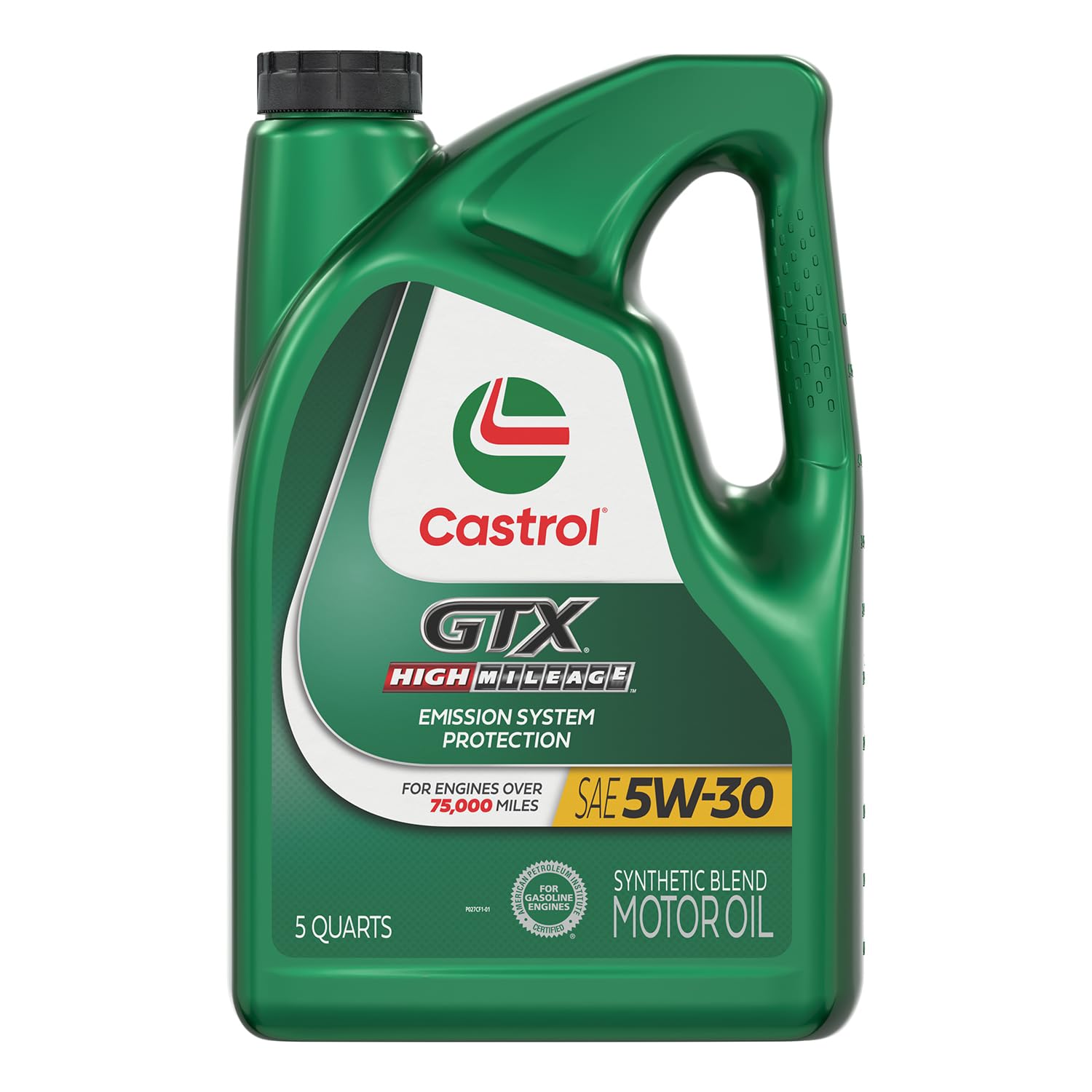
3. Castrol GTX High Mileage 5W-30
A longevity legend focused on one thing: keeping sludge from strangling your aging engine.
Castrol’s synthetic blend uses superior dispersancy—a fancy word for the oil’s ability to hold dirt and soot in suspension so it doesn’t settle and form sludge. This is exactly what a high-mileage engine needs when years of combustion byproducts have built up.
Its Phosphorus Replacement Technology helps extend emission system life by protecting the catalytic converter. Seal conditioners also help reduce leaks, while oil burn-off protection exceeds industry standards, meaning you’ll top up less often between changes.
Long-time owners are loyal for a reason: “I have used Castrol oils for many vehicles with complete satisfaction and reliability.” It meets API SP/SN PLUS/SN/SM and ILSAC GF-6 specifications (industry standards for engine protection and fuel economy), plus Ford WSS-M2C946-B1 and WSS-M2C961-A1 (Ford’s own factory specs)—so it’s a safe bet for Ford trucks too.
The Strong Suit
- Superior dispersancy actively fights sludge buildup
- Phosphorus Replacement Technology protects emissions parts
- Oil burn-off protection exceeds industry standards
The Trade-Off
- No published change-interval extension—stick to standard intervals
- Fewer detailed specs listed on the packaging than rivals
Best For: Owners who’ve had sludge issues before and want a trusted brand with serious emissions protection.
Not For: Drivers seeking a specific mileage claim on the bottle—Castrol keeps that number undefined here.
4. Pennzoil High Mileage 5W-30, 6 Quarts
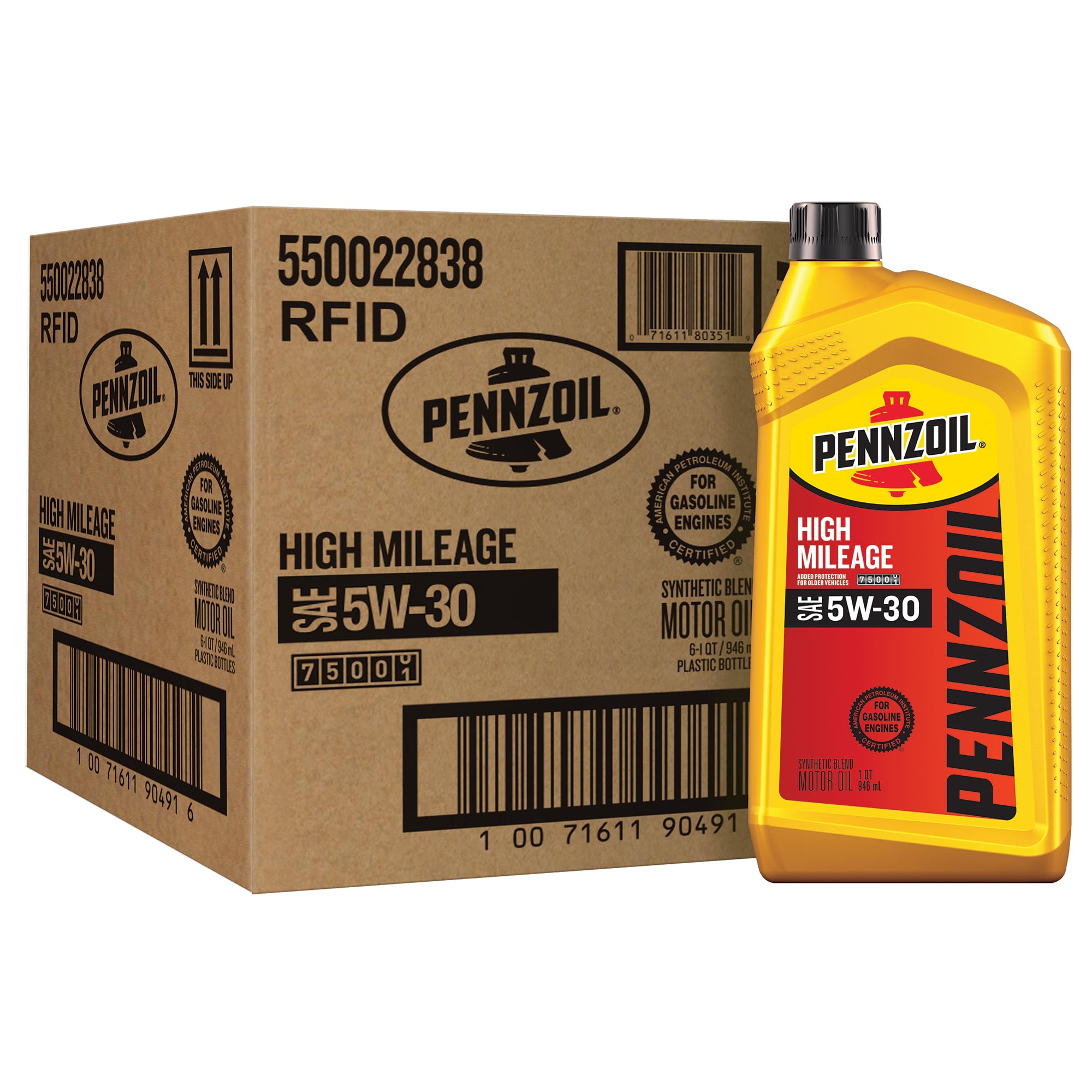
Six quarts of leak-stopping blend for engines that burn through the standard jug quickly.
This synthetic blend is specially formulated to help stop leaks and reduce oil consumption in worn engines, and it comes in a six-pack that gives you 192 fluid ounces—that’s 192 fluid ounces, versus the standard 5-quart jug from Mobil 1 at 160 fluid ounces.
Everything about this oil targets the problems of age: preventing sludge, providing proven wear protection, and even suiting modern turbocharged engines where low-speed pre-ignition protection is required. The six-pack means you’ll have enough for the oil change plus a top-off later.
The core value here is undeniable. Owners describe it as “long lasting made car driver smooth leakage free great lubricant no noise what so ever durable lubricant.” Even a Tiguan owner found it works well, showing it handles modern European engines too.
Six Reasons to Love It
- Six-pack gives 192 fluid ounces—enough for a full change plus top-ups
- Formulated to stop leaks and cut oil consumption
- Suitable for modern turbocharged engines
One Caveat
- At 11.9 pounds versus the 8-pound Mobil 1 jug—be ready for a lift
- Some buyers wait for the price to drop below before stocking up
Grab It If: Your engine drinks oil between changes and you want a bulk supply to keep it topped.
skip it if: You prefer the lighter, easier-to-pour 5-quart jug format.
5. Pennzoil High Mileage 5W-20, 6 Quarts
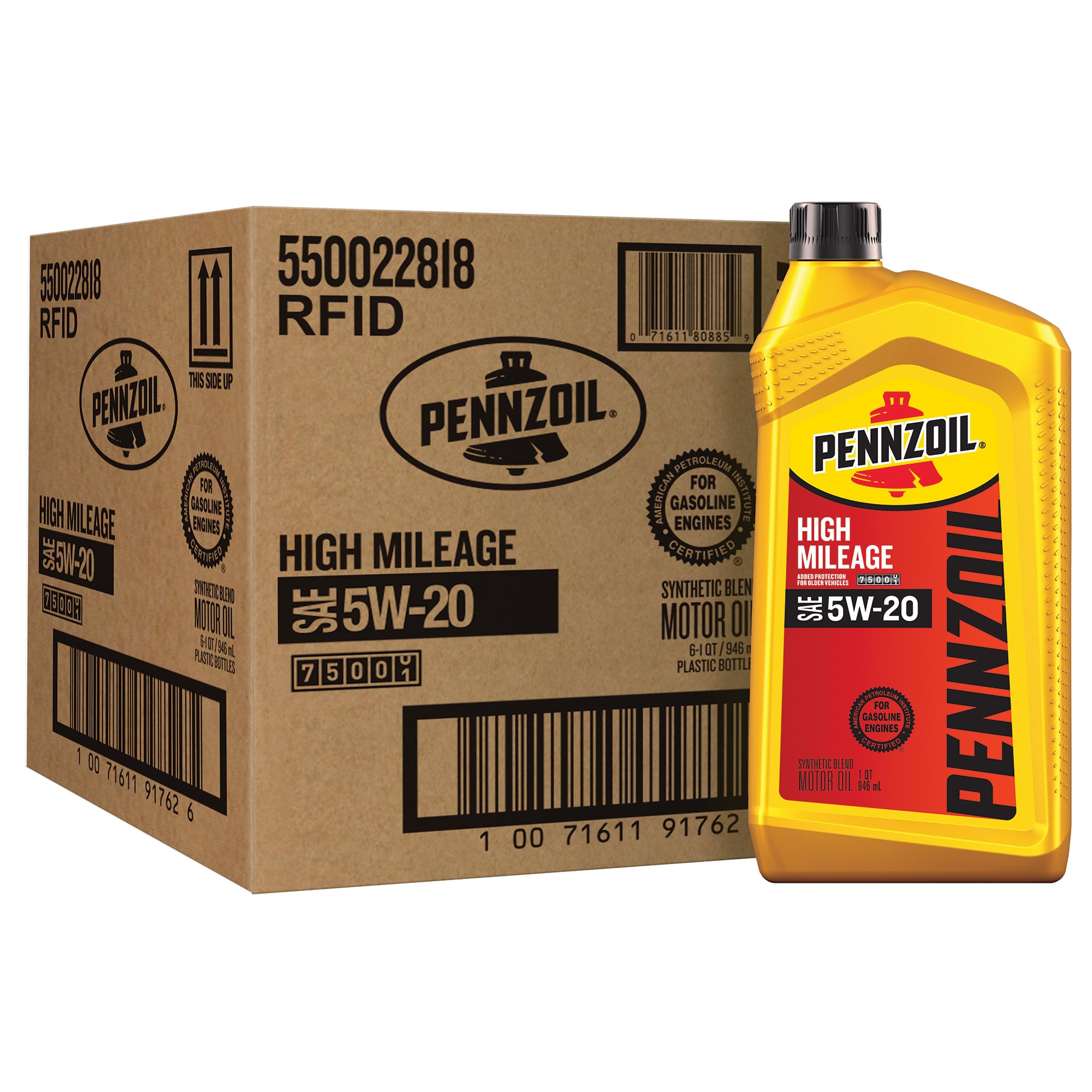
The right grade for Japanese engines that need the thinner 5W-20 flow.
Not every high-mileage engine wants 5W-30. Many Toyota, Honda, and other Asian-market cars specify 5W-20, and this Pennzoil blend is built exactly for those engines with over 75,000 miles on the clock.
Like its 5W-30 sibling, it helps stop leaks, reduces oil consumption, and prevents sludge, all with the same synthetic blend base. The six-pack format gives you 907.2 ml per bottle—more than enough for most 4-cylinder changes.
Owners with a RAV4 found it worked well, and One owner reported a 2 mpg fuel-economy improvement after the switch.. For those with a 5W-20 spec, this is the high-mileage formula that actually matches your owner’s manual.
The Right Spec
- Correct 5W-20 grade for engines that specify it
- Six-pack supply at 907.2 ml per bottle
- Owners mention a 2 mpg fuel-economy improvement.
The Limitation
- Only for 5W-20 engines—do not use in a 5W-30 spec motor
- Slightly lower rating history than the 5W-30 version
Perfect For: RAV4, Civic, Corolla, and other 5W-20 engines passing the 75,000-mile mark.
Not For: Trucks and V8s that need the thicker 5W-30 grade.
6. Castrol GTX Full Synthetic High Mileage 0W-20
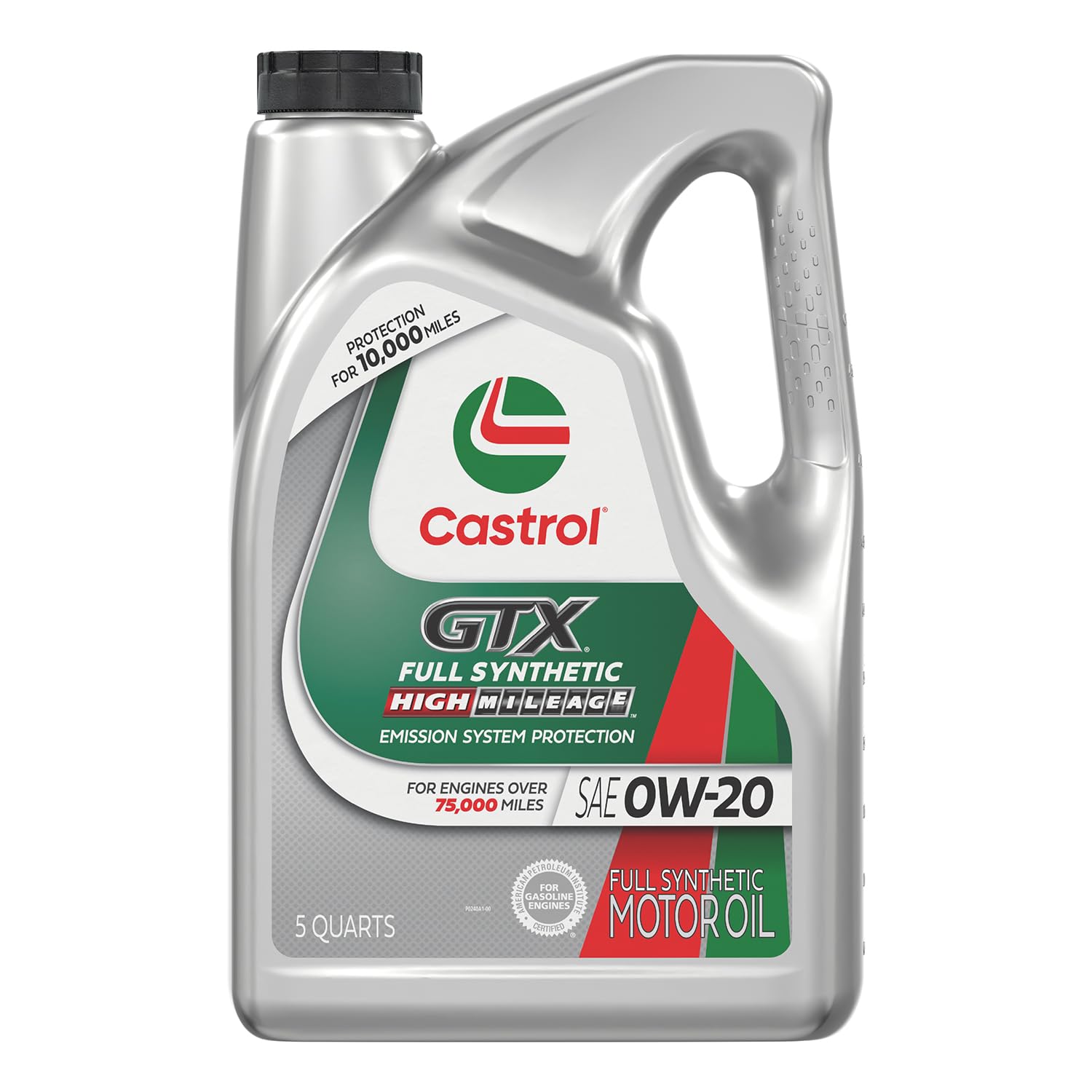
The cold-start specialist that flows like water at -40 degrees to protect instantly.
If you drive in a cold climate or own a hybrid, this 0W-20 full synthetic is built for you. The “0W” means it stays fluid in extreme cold, pouring quickly to coat engine parts the moment you turn the key—crucial for preventing wear on startup.
Castrol claims 6X better wear protection than the industry standard—a massive margin for an aging engine. Phosphorus Replacement Technology also helps prevent catalytic converter and emission system failure, keeping your car legal and efficient.
It protects for up to 10,000 miles between oil changes, and it’s also suitable for hybrids thanks to the 0W grade. Owners notice the difference immediately: “It runs noticeably smoother after the oil change, and I feel confident knowing it’s designed specifically for higher mileage engines.”
Cold-Weather Champ: The 0W-20 grade flows better in icy conditions than any 5W-30, making it the pick for northern winters and hybrid powertrains.
Wear Protection: At 6X the industry standard, this is one of the strongest anti-wear claims in the high-mileage category.
Reach For This If: Your car calls for 0W-20 and you want full-synthetic confidence in cold weather.
Look Elsewhere If: Your engine’s spec demands 5W-30—never swap grades without checking the manual.
7. Mobil Full Synthetic High Mileage 5W-30, 6-Pack

Six individual quarts of full-synthetic protection for trucks and classics that need six.
This is the full synthetic upgrade for engines over 75,000 miles that don’t need the top-tier Mobil 1 name but still want serious protection. It provides 1.5X longer protection than conventional and synthetic blend oils, up to 7,500 miles between changes.
The balanced additive system includes extra seal conditioner to prevent leaks, sludge, and deposit formation, helping reduce engine wear. It maintains oil viscosity at high operating temperatures, which is exactly what a hard-working V8 produces.
Owners running F150s and GM trucks report the engine “runs fantastic on this engine oil,” and those with a 177,000-mile vehicle note it performs well “considering its age.” The 6-pack format is perfect for trucks that need 6 quarts versus the standard 5.
The Upgrade Path
- 1.5X longer protection than conventional blends
- Six individual quart bottles for flexible topping
- Meets API SP resource-conserving for modern engines
Consider This
- At 7,500 miles, it doesn’t stretch as far as the 10,000-mile Mobil 1 option
- Six bottles mean more containers to manage than one jug
Standout Spec: 7,500 miles of full-synthetic protection in a convenient six-pack for big engines.
One Caveat: If you want 10,000-mile intervals, the larger Mobil 1 single jug is the better call.
Understanding the Specs
Viscosity Grade (5W-30 vs 0W-20)
The first number with “W” (for winter) tells you how the oil flows in cold weather—lower means thinner and faster-flowing at startup. The second number is the thickness at normal operating temperature. Always match what your owner’s manual says; don’t guess based on climate alone.
API and ILSAC Standards
These are industry certifications that tell you the oil meets current engine requirements. ILSAC GF-6 specifically adds low-speed pre-ignition (LSPI) protection and timing chain wear protection—both crucial for modern turbocharged engines that might not be that old yet.
FAQ
At what mileage should I switch to high-mileage oil?
Can I switch back to regular oil after using high-mileage?
Will high-mileage oil actually stop my engine leaks?
What’s the difference between full synthetic and synthetic blend?
Is 5W-30 or 5W-20 better for high mileage?
Can I extend my oil change interval with high-mileage oil?
Is high-mileage oil OK for newer engines?
How do I know which viscosity grade my car needs?
Final Thoughts: The Verdict
For the majority of shoppers, the car oil for high mileage winner is the Mobil 1 High Mileage because it pairs a 10,000-mile interval with proven fuel economy gains and the highest owner satisfaction in the lineup. If you want the absolute longest interval and don’t mind the premium, the Mobil 1 Extended Performance takes it to 20,000 miles. And for a budget-friendly pick that fights leaks effectively, the Valvoline MaxLife is the one to reach for.
How We Picked
We do not accept paid placement. Every pick is matched to a real buyer and a real use-case; we do not hands-on test units.
Sources & Methodology
Specifications: manufacturer listings and product documentation. Review insights: verified customer reviews, as of August 2026. Pricing: not shown on this page (it changes often); check the current price via the retailer link.
As an Amazon Associate, Trending Car earns from qualifying purchases. This does not affect which products we feature.