
Our readers keep the lights on and my garage snacks stocked. As an Amazon Associate, I earn from qualifying purchases.
Nothing ruins a morning faster than a dead battery and a low tire on the same driveway. A Car Jump Starter With Tire Inflator solves both problems in one trunk-friendly tool.
This guide is for drivers, detailers, and small shop owners who want real roadside utility without clutter. You will find the best options, the specs that matter, and the mistakes that can cost time or damage equipment.
Buy for starting power first, then inflator performance. The best units pair at least 2000A peak jump output with an auto shut-off compressor, because the #1 mistake is choosing a weak battery pack that inflates tires well but fails on a cold start.
Quick Product Comparison
| Product | Image | Check Price |
|---|---|---|
| 1. Portable Tire Inflator | 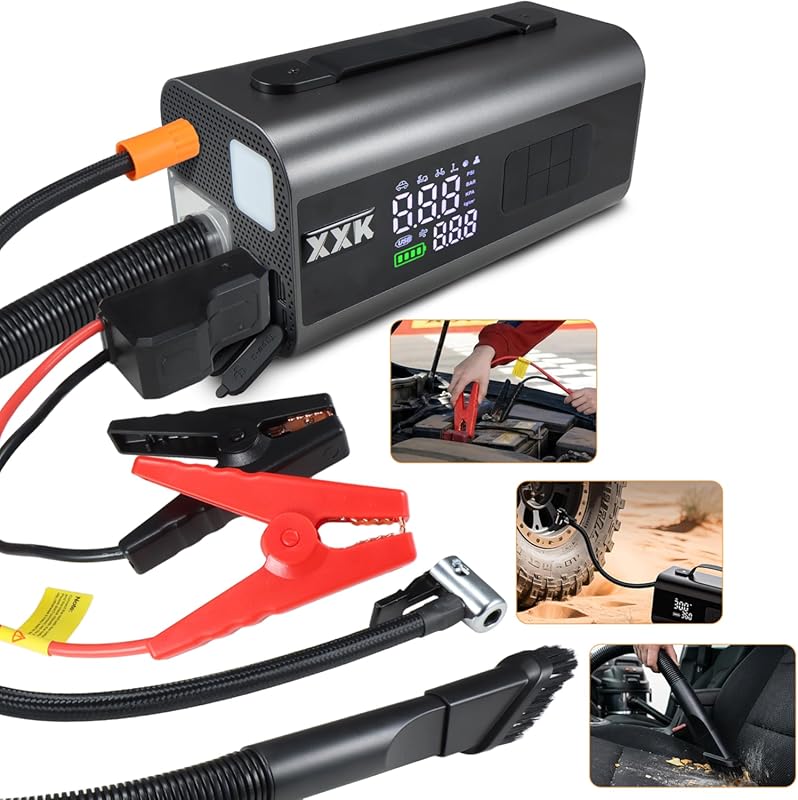 |
Check Price |
What to Look for in Car Jump Starter With Tire Inflator
In this category, the details matter more than the marketing. A good unit needs enough cranking power for a real dead battery, plus a compressor that can reach target PSI without overheating.
Jump-Start Output That Matches Real Engines
Peak amps are not the same as usable starting power, but they still matter. For most gasoline vehicles, 1000A to 2000A peak is the safe range to look at, while larger SUVs and older batteries benefit from the top end. If you drive in cold weather, extra reserve helps because battery output drops as temperatures fall.
Inflator Accuracy and Auto Shut-Off
A tire inflator should stop at the PSI you set, not just run until you guess it is close. That matters for everyday tire maintenance, especially around 30 to 35 PSI where a one- or two-PSI error can affect ride quality and wear. Accurate shut-off also helps avoid overinflation on low-profile tires and ceramic-coated vehicles parked on hot pavement.
Keep the inflator hose and jumper clamps separated in the trunk. Fine dust and road grit collect fast, and that grit can scratch painted bumper edges or dirty the battery terminals when you pull the unit out in a hurry.
Battery Capacity and Recharge Discipline
Look for enough internal capacity to hold a charge during long storage. A higher mAh rating can help with standby time, but the real question is whether the unit stays ready after weeks in the cargo area. For shop vehicles and weekend drivers alike, a unit that loses charge too quickly is not dependable roadside gear.
Safety Features for Modern Vehicles
Reverse polarity protection, overcurrent protection, and auto shut-off are not extras. They are essential if you work around newer vehicles with sensitive electronics, stop-start systems, or aftermarket accessories. Good protection matters even more when the unit is used by family members or employees who may not follow a perfect sequence.
Portability, Hose Storage, and Trunk Fit
Combined units should still be easy to carry and store. A compact body, integrated hose storage, and a clear display make a big difference when you are using it in a dark garage or on the shoulder. If the tool takes up half the trunk, it becomes less useful than a separate jump pack and inflator.
Top 1 Car Jump Starter With Tire Inflator Reviews
1. Portable Tire Inflator and 2000A Jump Starter with Auto Shut-Off, LED Light, and Vacuum Function
This all-in-one unit is aimed at drivers who want a trunk tool that covers the most common roadside problems. The 2000A jump rating and 160 PSI inflator make it practical for everything from a commuter sedan with a weak battery to an SUV that needs a quick tire top-off before a long drive.
Key Features That Stand Out
- ✓ 2000A peak jump output for gas engines and many light-duty roadside starts
- ✓ 160 PSI compressor with auto shut-off for accurate tire inflation
- ✓ LED light for nighttime use in parking lots, driveways, and roadside stops
- ✓ Built-in vacuum function for added utility in a garage or detailing kit
Why We Recommend It
For buyers who want one device instead of two, this is the cleanest solution in the roundup. It pairs well with routine tire maintenance and basic emergency prep, and it fits the same practical mindset as keeping your tire pressure maintenance routine on schedule.
Best For
Best for daily drivers, family SUVs, and anyone who wants a single roadside tool in the trunk. It is also a smart pick for detailers who keep a backup emergency kit in the shop vehicle.
Pros and Cons
- Strong 2000A peak rating for common jump-start needs
- Auto shut-off helps prevent overinflating street tires
- Vacuum function adds real utility beyond emergency use
- Bulkier than a dedicated jump pack
- One-device design means more dependence on a single battery
Customer Reviews
Buyers like the convenience of carrying one device for both tire inflation and battery emergencies. The auto shut-off feature is often mentioned as the reason it feels easier to trust.
Customers also appreciate the LED light and vacuum function for garage use. Many say it makes a practical emergency kit for road trips and winter storage.
Do not use the compressor on a hot tire immediately after a long drive unless the manufacturer allows it. Heat changes tire pressure, and forcing inflation against a hot sidewall can lead to inaccurate PSI readings and unnecessary wear on the inflator.
Complete Buying Guide for Car Jump Starter With Tire Inflator
Budget Breakdown: How Much Should You Spend?
Entry-level units can work for light-duty use, but they often give up compressor speed, clamp quality, or battery reserve. Mid-range products usually hit the best balance of jump performance, accurate inflation, and durability. Premium units are worth it for frequent use, larger vehicles, or shop fleets that need more consistent output.
Dos and Don’ts
- Do check peak amps and real vehicle fit before buying.
- Do confirm the inflator has auto shut-off and a clear PSI display.
- Do keep the unit charged every few weeks.
- Do store the clamps and hose so they stay clean.
- Do use the correct tire pressure for the vehicle placard, not the sidewall maximum.
- Do inspect cables and hose fittings before long trips.
- Don’t buy based on PSI alone and ignore jump-start output.
- Don’t leave the unit dead in the trunk for months.
- Don’t inflate a tire past the door-jamb placard.
- Don’t use damaged clamps or cracked hoses.
- Don’t connect the jumper leads in the wrong order.
- Don’t assume a tiny battery pack can handle a large V8 or diesel.
Pro Tips from Detailers
- Store the unit in a dry trunk corner, not under wet wash towels or rinse gear.
- Check tire pressure when the tires are cold for the most accurate reading.
- Use a microfiber towel to wipe dust off the clamps before attaching them.
- Charge the unit after winter storms, road trips, or repeated inflator use.
- Match the inflator hose to the valve stem gently to avoid scratching polished wheels.
- If you detail black paint, keep the unit away from the quarter panel while working.
- For fleet or shop use, label the charge date so the pack never sits forgotten.
A common failure point is using the compressor while the unit is already low on charge. That can cause weak inflation, shorten battery life, and leave you stranded with a tire that still is not at target PSI. Always recharge the pack after any serious inflator session.
- The best car jump starter with tire inflator should prioritize jump power first.
- Look for at least 2000A peak if you want broader vehicle coverage.
- Auto shut-off is essential for accurate tire inflation.
- 160 PSI is useful, but real-world accuracy matters more than the headline number.
- One-device designs are great for trunk storage and emergency readiness.
- Buy based on your vehicle size and how often you will use the inflator.
- Keep the unit charged and the hoses clean for dependable roadside use.
- The roundup’s top pick is the most complete all-around option for most drivers.
Frequently Asked Questions About Car Jump Starter With Tire Inflator
SUV owners should look for higher peak amps and a compressor that can reach 35 PSI without long run times. A unit with 2000A peak and auto shut-off is a strong fit for most family SUVs and crossovers.
Most passenger vehicles only need 30 to 35 PSI, but the inflator should be able to go higher for flexibility. A 160 PSI ceiling is common in this category and gives enough headroom for bikes, accessories, and emergency top-offs.
Yes, if the unit has enough peak current and the battery is not physically damaged. For best results, use a model with at least 1000A to 2000A peak and follow the clamp order exactly.
Check it every few weeks, especially in hot or cold storage. If it lives in the trunk, recharge it after long trips or after using the compressor so it stays ready.
Yes, because it prevents overinflation and makes tire maintenance easier. It is especially useful when you are topping off tires to exact placard pressure before a commute or road trip.
It can, but cold weather lowers battery output and makes starting harder. Choose a unit with extra headroom and keep it charged, since winter is when weak packs fail most often.
For a V8, look for stronger peak output and a unit built for larger engines. A 2000A-rated model is a safer pick than a small compact pack if you want more reliable starts.
Combo units are better for storage, convenience, and emergency readiness. Separate tools can be better if you use the compressor often, but most drivers prefer the all-in-one design for the trunk.
If you want one compact roadside tool, the top pick above is the best place to start. It offers the right balance of jump power, tire inflation, and practical extras for everyday drivers and detail-oriented owners.
For buyers who want a simple emergency kit, the all-in-one design makes sense. For larger vehicles or frequent use, focus on peak amps, auto shut-off accuracy, and long-term charge retention before anything else. Check out our #1 pick above and see why detailers trust it for daily use.