
Our readers keep the lights on and my garage snacks stocked. As an Amazon Associate, I earn from qualifying purchases.
Specs are compiled from manufacturer listings and verified buyer reviews and can change over time — please confirm the key details on the product page before buying.
When your temperature gauge starts climbing or the check engine light flashes, a faulty coolant temperature sensor is often the hidden culprit. This guide cuts through the confusion and rates the top seven coolant sensors by real-world fit, build quality, and the specs that actually keep your engine running safely.
I’m Min Islam — the founder and writer behind Trending Car. This guide is built by comparing the manufacturers’ published specifications and the patterns across verified customer reviews, so you get each pick’s real strengths and trade-offs instead of marketing spin.
Whether you drive a Chevy truck, a BMW sedan, or a Honda Civic, finding the right part means matching your exact engine code — and our breakdown of the best car coolant sensor options does just that.
Our Picks at a Glance

How To Choose The Best Car Coolant Sensor
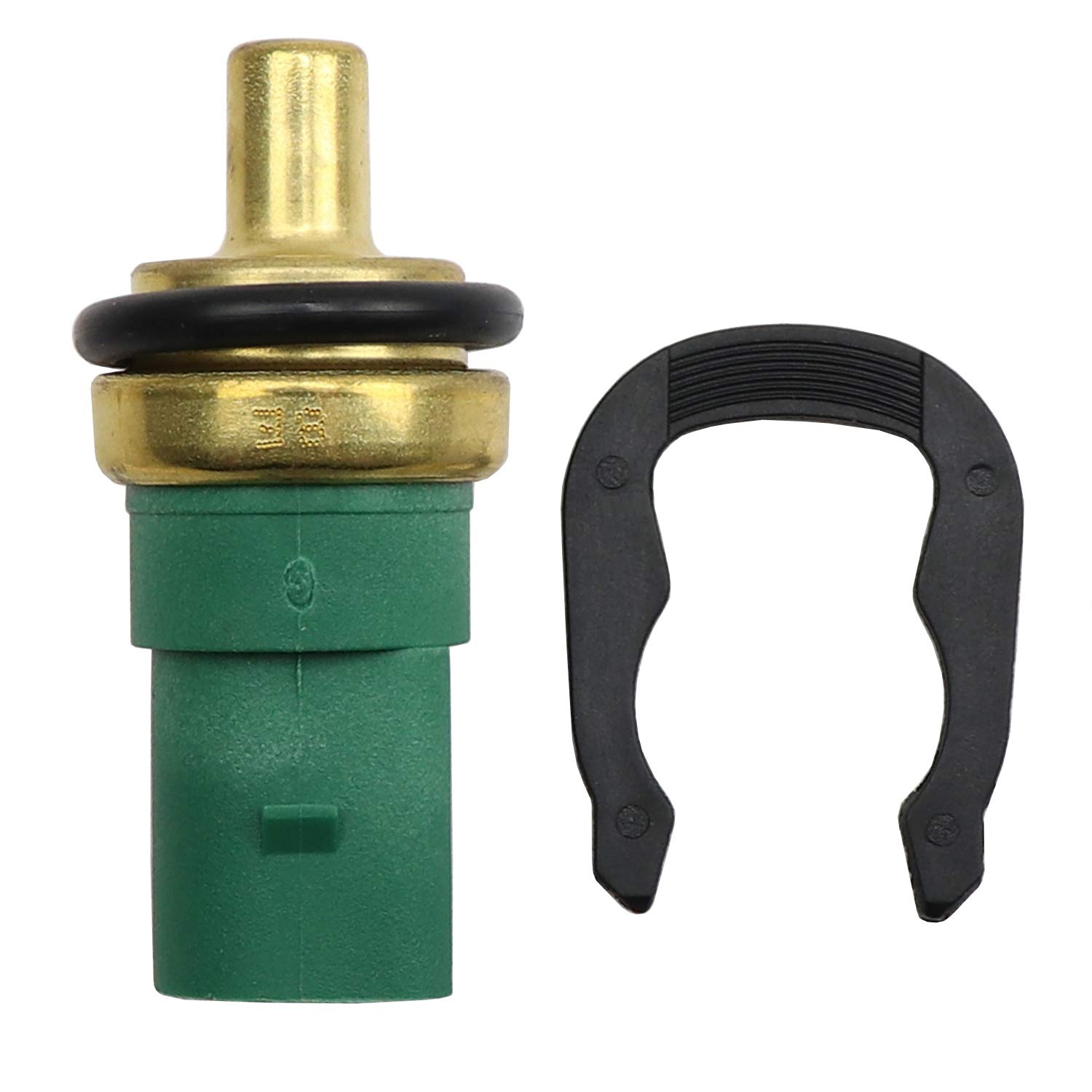
Your car’s coolant temperature sensor does one simple job: it reads the temperature of your engine coolant and sends that signal to the engine control unit. If that signal goes bad, your engine runs too rich (wasting gas and wearing out your catalytic converter) or too lean (risking overheating). Here are the key three things to check before you buy.
1. Vehicle-specific fitment and thread size
A coolant sensor is useless if the plug or threads don’t match. You need to look at the manufacturer’s specific list of compatible makes, models, and engine years. Ignoring this leads to a part that won’t screw in or a connector that snaps off.
2. Temperature range and material quality
Most aluminum-plastic sensors survive well in everyday driving (a measuring range like -30°F to 260°F is typical). If you push your engine hard or live in a hot climate, a sensor with a brass or stainless-steel body resists corrosion better and lasts longer.
3. Brand reputation and warranty
You can find sensors, but the cheap ones sometimes fail within two months (as many buyers report). A name-brand sensor from Bosch, Delphi, or GM Genuine Parts costs a few dollars more but typically comes with real OE tolerances and holds up for years.
Quick Comparison
| Model | Best For | Temp Range | Weight | Material | Amazon |
|---|---|---|---|---|---|
| Beck/Arnley 158-0629 | Daily drivers needing an OE-reliable digital sensor | — | 0.02 lbs | Stainless steel | Amazon |
| Delphi TS10175 | Jeep TJ & Grand Cherokee owners | 60 — 130 °C | 1.6 oz | Thermoplastic | Amazon |
| GM Genuine Parts 213-4333★ Best Overall | 2000s Chevy Silverado & GMC Sierra trucks | — | — | Ceramic/Polymer | Amazon |
| BOSCH 0280130122 | 2008-17 GM SUVs and crossovers | -40F to +260F | 1.12 oz | Electronic Sensor Materials | Amazon |
| BOSCH 0280130026 | Classic BMW, Porsche, Volvo & Saab | -40F to +260F | 0.704 oz | — | Amazon |
| Delphi TS10270-11B1 | BMW 3-series and BMW F800r motorcycle | -30 to 120 °C | 0.04 lbs | Metal, Plastic, Stainless Steel | Amazon |
| DOICOO 37870-PLC-004 | Budget-friendly swap for Honda Civic & CR-V 2001-2011 | — | 0.02 kg | ABS, Plastic, Metal, Brass | Amazon |
In‑Depth Reviews
1. GM Genuine Parts 213-4333 (12608814) Engine Coolant Temperature Sensor
The GM-verified replacement your Silverado or Sierra’s computer expects.
Sized at 2.7 x 1.6 x 0.8 inches, this sensor uses an immersion mount (the probe dips directly into the coolant stream) and a ceramic/polymer body — ceramic is excellent at conducting heat while the polymer outer layer resists engine vibration. GM says it meets their original equipment specifications, so the ECU receives the exact resistance values it was programmed to read.
One buyer summed it up neatly: “Replaced original at 100k miles.” The install requires a 19 mm wrench, and the sensor comes with Teflon coating and a crush washer. The catch, as multiple GM truck owners note, is that the crush washer seating is hard to gauge — the probe bottoms out simultaneously, so over-torquing can damage the sensor body. Go gently.
Unlike the Bosch 0280130122 which uses a flange mount, this GM sensor uses an immersion mount — a key difference for anyone whose engine bay has a deep port rather than a flat mounting surface.
GM-Spec Advantage
- Factory GM OE specification for exact resistance curve.
- Includes Teflon coating and crush washer.
- Ceramic/polymer body handles engine vibration well.
Watch Out For
- Crush washer seating is tricky — easy to over-torque.
- Only fits specific GM engines; not a universal part.
Reach for this if you drive a 2008+ Chevy Silverado or GMC Sierra: The perfect fit with GM’s exact electrical profile. skip it if you drive a Honda or a BMW — the thread pitch and connector type will be wrong.
2. Beck/Arnley 158-0629 Engine Coolant Temperature Sensor
The digital sensor that sends a clean, instant signal to your car’s computer.
The Beck/Arnley 158-0629 uses digital output (an on-off or precise voltage signal rather than simple variable resistance), so your engine control unit gets accurate temperature data . It is built from stainless steel to survive the harsh engine environment, with corrosion-resistant terminals and coatings that fight rust better than standard metal sensors.
Owners mention that installation is straightforward and the included o-ring and retaining clip make the swap a ten-minute job. One owner gave a quality score of 95 out of 100 but noted the plastic retaining clip feels flimsy compared to the original — keep a spare clip just in case. It also comes in at about 0.02 pounds (roughly 0.32 ounces) lighter than some brass competitors, which is a non-issue but shows the weight gap for those counting grams.
Compared to the GM Genuine Parts sensor below, the Beck/Arnley uses a digital output instead of a physical-type output, which can give a cleaner signal on modern electronically controlled engines.
What Stands Out
- Digital output provides fast, precise data to the ECU.
- Stainless steel body resists rust and corrosion.
- Includes retaining clip and o-ring for a complete swap.
One Weak Point
- Plastic retaining clip feels less durable than OEM; handle it gently.
- Application-specific fit — you must check compatibility.
Best for daily drivers: If you want a reliable digital signal and stainless steel durability, this is the pick. Look elsewhere if your car uses a physical analog output that expects a specific resistance curve — the Chevrolet Silverado drivers should consider the GM Genuine Parts sensor below instead.
3. Delphi TS10175 Engine Coolant Temperature Sensor

The exact-fit sensor that Jeep owners keep coming back to.
Delphi says the TS10175 offers “very high accuracy” in a measuring range of 60 to 130 °C (roughly 140°F to 266°F), a common operating band for most gasoline engines. The sensor uses a flange mount (a flat design that bolts directly to the engine block) and is made from thermoplastic — a lightweight, heat-resistant plastic polymer that won’t rust.
Several buyers confirm this Delphi fits perfectly on the 4.0L engine in the 1998-1999 Jeep TJ and Grand Cherokee. One reviewer even reported trying two other sensors that either fell apart or had the wrong plug before this Delphi solved the issue. Another mentioned installing it as “cheap insurance” while chasing an overheating problem — it gave accurate readings even if it didn’t solve the root cause, which shows the sensor itself is reliable.
The TS10175 comes with thread sealant, so you don’t need to buy extra thread tape or compound — a small convenience that saves a trip to the parts store.
Impressive Accuracy
- Very high accuracy in the 60-130 °C range.
- Flange mount fits securely against the block.
- Includes thread sealant for a leak-free install.
Note
- Thermoplastic body is durable but less impact-resistant than metal.
- Best documented for Jeep 4.0L and similar — check your engine.
For Jeep 4.0L owners: If you drive a TJ or Grand Cherokee from the late 90s, this is likely the one you want. If you drive a BMW or a European car, the Bosch 0280130026 or the Delphi TS10270-11B1 will be a closer match for your connector and thread.
4. BOSCH 0280130122 OE Engine Coolant Temperature Sensor

The Bosch that takes -40F cold and 260F heat without losing accuracy.
Bosch rates this sensor for an extreme temperature range of -40F to +260F (-40°C to +126°C), so it handles Arctic starts and desert traffic jams without losing accuracy. It uses a sturdy design that fights engine vibration and a flange mount style for a stable connection. The sensor delivers an electrical signal (a varying voltage the computer interprets) rather than a simple physical switch.
Customers note it fits 2008-17 GM SUVs like the Traverse and Acadia — one reviewer called it an “exact OEM match for 2014 Traverse” and noted the whole swap took about 30 minutes. A deep 19mm socket is recommended because the location is tight. Another user wrote, “Been over 1000 miles and still working fine.” The only common complaint: the plastic locking clip becomes brittle after about 70k miles. It still holds the connector, but you have been warned.
At 1.12 ounces, the 0280130122 is heavier than the 0.704-ounce Bosch 0280130026 below — that extra weight comes from the larger flange mount design used in GM engine bays.
Why It’s a Star
- Wide -40F to +260F temperature range for extreme conditions.
- OE or better quality — Bosch is a top brand.
- Direct OEM fit for dozens of GM models.
Minor Irritation
- Plastic locking clip can break after 70k miles.
- Tight spot — you may need a deep socket and patience.
Who it fits perfectly: Anyone with a Buick Enclave, Chevy Traverse, or GMC Acadia from 2008-2017. If you drive an older BMW 3-series, the Bosch 0280130026 below is the one for your engine.
5. BOSCH 0280130026 OE Engine Coolant Temperature Sensor

The Bosch that keeps your 80s BMW, Porsche, or Volvo running like factory.
Like its GM-targeted sibling, this Bosch sensor also covers the -40F to +260F range, so it works in freezing starts and hot traffic. But it is physically smaller and lighter at 0.704 ounces — weighing 0.704 oz compared to the 1.12 oz of the 0280130122. The machined exterior and tiny 0.31 x 1.06 x 1.85 inch footprint make it perfect for tight Euro engine bays where every millimeter counts.
Buyers on older BMWs report exact fit and immediate fixes. One 1984 Vanagon owner said it fixed a drop from 16 to 10 mpg and a sooty tailpipe — the old sensor looked fine but the Bosch replacement solved it. Another reviewer with a 1985 Westfalia called it “just as good as the original.” The sensor works on BMW 318i through M3, Porsche 944 and 968, Saab 900, and Volvo 240 and 740 models from the 1980s and 1990s.
One note: since this is a classic-car part, Bosch still manufactures it decades later — that speaks to the demand and the part’s reliability.
Euro-Spec Reliability
- Same -40F to +260F range as the larger Bosch but 59% lighter at 0.704 oz.
- Exact match for BMW, Porsche, Saab, Volvo 80s-90s engines.
- Machined exterior for precise sealing.
Catch
- Not for modern GM engines — different thread and connector.
- Verify your model year — the compatibility list is specific.
Classic Euro owners, this is your sensor: If your daily driver is a 1991 BMW 525i or a 1988 Porsche 944, grab this. If you drive a 2010 Chevy Malibu, the Bosch 0280130122 above matches your engine.
6. Delphi TS10270-11B1 Engine Coolant Temperature Sensor

The Delphi that doubled as a BMW motorcycle coolant fix.
The Delphi TS10270-11B1 has a measuring range of -30 to 120 degrees Celsius (-22°F to 248°F), which covers most gasoline engine operation. It uses analog output (a simple resistance signal that older ECUs read easily). It comes with an o-ring and circlip for installation. This sensor works especially well on European vehicles and bikes.
Reviewers point out that it is an “exact replacement for BMW F800r coolant sensor” — fixing an OBD code, high idle, and throttle issues that a dealership wanted to solve. On a BMW 335i, another driver said it was a “perfect fit” with no codes. One owner mentioned that a previous AutoZone sensor failed quickly on a 2003 BMW 330i, but this Delphi has held up fine.
At dimensions of 2.19 x 1.06 x 3.37 inches, it measures 2.19 x 1.06 x 3.37 inches, while the GM Genuine Parts sensor measures 2.7 x 1.6 x 0.8 inches — the shape difference matters for engines with shallow mounting ports where a longer sensor won’t fit.
Why You’d Pick This
- Analog signal suits older European ECUs perfectly.
- Works on BMW cars and the F800r motorcycle.
- Includes o-ring and circlip — no extra parts needed.
Limitation
- Not a universal fit — make sure your vehicle is on the list.
- Longer shape means it may not fit tight engine bays.
Best for BMW 3-series and F800r owners: If you have an E46 330i or that specific bike, this is the solution. If you drive a Chevy Silverado, the GM Genuine Parts sensor is the right choice.
7. DOICOO 37870-PLC-004 Coolant Temperature Sensor for Honda

The affordable fix for 2001-2011 Civics and CR-Vs that works—mostly.
The DOICOO sensor uses a +/-0.5% measurement accuracy rating — so it reads within half a percent of the real coolant temperature, which is excellent for a sensor in this price range. It uses a plug-in mounting style (you just push it into the port and secure it with a clip) and has a metal-brass body that is decently corrosion-resistant.
Buyers on 2002-2006 Honda Civics and CR-Vs say it fits perfectly and solves the common no-temp-reading-and-fan-always-running problem. One owner reported 6 months of steady temps and smooth idle. But there is a clear warning in the reviews: at least one verified buyer wrote, “Failed after 2 months. Stopped reading.” That is the risk you take with a budget brand. Read the fitment list carefully — this sensor replaces OEM numbers 37870-PLC-004, 37870-PNA-002, and 37870-PNA-003.
If you want a cheap, quick fix for an old Honda and you are handy with a wrench, this works for most people. If you want to low-maintenance for another 100k miles, spend a few extra bucks on a name brand.
The Good
- +/-0.5% accuracy is surprisingly strong for the price.
- Plug-in mount means easy install — no threading.
- Works on 2001-2011 Honda Civic and CR-V.
The Risk
- Multiple reports of failure after 2 months.
- One-year warranty is helpful but a hassle if you are stuck.
Reach for it if you are on a tight budget for an older Honda: Most buyers get months of reliable use. Look elsewhere if reliability matters more than price — the Bosch 0280130122 or the Beck/Arnley 158-0629 will last much longer.
Understanding the Specs
Temperature Range
This spec tells you the hot and cold extremes your sensor can safely measure. A range like -40F to +260F covers everything from a freezing morning start to a stuck-in-traffic heat soak. You want this range to match or exceed your engine’s normal operating temperature (typically 195°F to 220°F). A sensor with a narrow range (like -30 to 120°C) still works for most cars but has less safety margin.
Analog vs Digital Output
An analog output (like the Delphi TS10270-11B1 uses) sends a variable resistance signal that older engine control units read easily. Digital output (like the Beck/Arnley 158-0629) sends a cleaner on-off or voltage-coded signal that modern computers prefer. If your car is from the 1990s or earlier, analog is usually what it was designed for. If it is 2005 or newer, digital can give a more accurate reading.
FAQ
Will a coolant temperature sensor from a 2003 Honda Civic work on a 2008 Honda Accord?
What are the signs of a failing coolant temperature sensor?
How long does a coolant temperature sensor typically last?
Is a car coolant sensor a universal part that fits any engine?
Can I drive my car with a bad coolant temperature sensor?
What is the difference between a flange mount and an immersion mount sensor?
Do I need thread sealant when installing a new coolant sensor?
Why would a brand-new coolant sensor fail after just two months?
Final Thoughts: The Verdict
For the majority of shoppers, the winner is the Beck/Arnley 158-0629 because it combines a digital output with stainless steel construction at a mid-range price — a strong combination for daily drivers. If you want a sensor that matches the exact resistance curve of a 2008-2017 GM SUV, grab the BOSCH 0280130122. And for owners of classic European machines like a 1988 Porsche 944 or a 1991 BMW 525i, the BOSCH 0280130026 is the pick that keeps the original driving feel intact.
How We Picked
We do not accept paid placement. Every pick is matched to a real buyer and a real use-case; we do not hands-on test units.
Sources & Methodology
Specifications: manufacturer listings and product documentation. Review insights: verified customer reviews, as of July 2026. Pricing: not shown on this page (it changes often); check the current price via the retailer link.
As an Amazon Associate, Trending Car earns from qualifying purchases. This does not affect which products we feature.