
Our readers keep the lights on and my garage snacks stocked. As an Amazon Associate, I earn from qualifying purchases.
Specs are compiled from manufacturer listings and verified buyer reviews and can change over time — please confirm the key details on the product page before buying.
A car alarm that goes off only when a shopping cart taps your bumper is useless. So is one that screams at a passing thunderstorm. You want the balance — a system that threatens theft with brutal noise, but leaves the neighbors alone when the wind blows. This guide walks you through the real choices in that balance, from basic deterrent sirens to two-way LCD systems that tell your pocket exactly what your car is doing.
I’m Min Islam — the founder and writer behind Trending Car. This guide is built by comparing the manufacturers’ published specifications and the patterns across verified customer reviews, so you get each pick’s real strengths and trade-offs instead of marketing spin.
Whether you are upgrading an older ride or adding a layer of protection to a daily driver, these car alarm system picks cover the full range from budget-friendly entry-level units to premium 2-way remote start combos.
Our Picks at a Glance


How To Choose The Best Car Alarm System
A car alarm is not a one-size-fits-all add-on. The system that makes sense for a 1990s project car is different from the one you want on a new SUV. Here is what to look at before you buy.
One-Way vs. Two-Way Remotes
A one-way remote sends a signal to your car and that is it. You hit “lock” and trust it worked. A two-way remote does the opposite — your car sends a signal back to the remote confirming the command. Some two-way systems also alert you if the alarm is triggered while you are away, showing a pop-up on the remote screen. If you park in a lot where you cannot see your car, two-way is a genuine upgrade.
Range — How Far Away Can You Be?
The range you need depends on where you park. A system that reaches 66 feet works for a small driveway. A 1,200-foot range lets you start the car from across a supermarket parking lot. But keep it real — buildings and metal between you and the car cut range in half regardless of the box number.
Shock Sensors and False Alarms
A basic vibration sensor trips when the car gets bumped. A dual-stage shock sensor is smarter — a light tap triggers a warning chirp, and a harder hit sets off the full siren. This is the feature that keeps a car alarm from becoming the neighborhood nuisance. Look for adjustable sensitivity so you can dial it to your parking environment.
Quick Comparison
| Model | Best For | Siren Output | Maximum Range | Key Feature | Amazon |
|---|---|---|---|---|---|
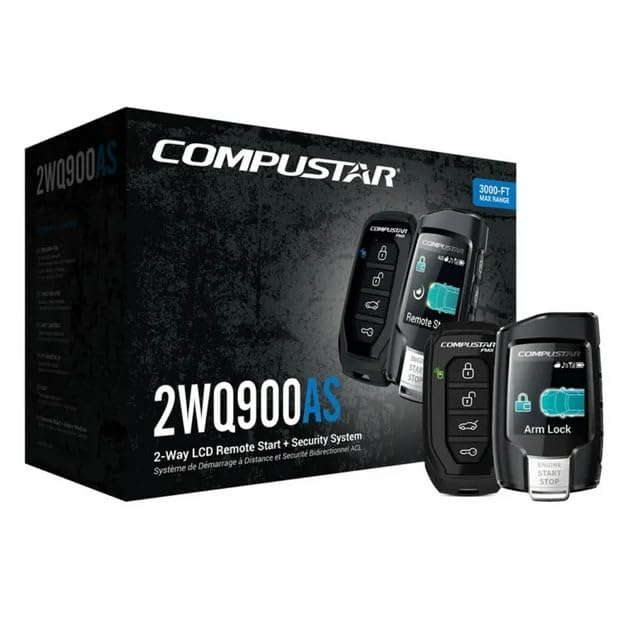
| CS 2-Way LCD 3000′ Alarm/Starter★ Best Overall | Long-range two-way control | 105dB | 3,000 feet | 2-way LCD remote with visual feedback | Amazon |
| Viper 3100V 1-Way Security SystemTop Performer | Reliable basic protection | — | 1,200 feet | 2-stage shock sensor, engine immobilization | Amazon |
| Avital 5303L 2-Way LCD Remote StartBest Value Remote Start | Remote start and two-way security | — | ~700 feet | 2-way LCD remote, Stinger shock sensor | Amazon |
| Prestige APS997Z Two-Way LCD | Long-range remote start and alarm | 120dB | 1 mile | Two-way confirming remote start, 120dB siren | Amazon |
| Viper Responder 350 2-Way | Code-hopping security, up to 1/4 mile | 70dB | 1,320 feet | Clone-safe Code-Hopping, 2 auxiliary outputs | Amazon |
| EASYGUARD EC003N-V-1 PKE | Passive keyless entry and push-start | 120dB | 6 feet (PKE) / 100 yards (remote start) | Passive keyless entry + push start button | Amazon |
| Car Alarm System Security Antitheft (BANVIE) | Full-featured budget alarm | 110dB | — | Shock & microwave sensor + engine cut-off relay | Amazon |
| Car Horn Siren Alarm (CHADWICK) | Simple, ultra-budget deterrent | 110dB | — | 2-wire install, 7-level sensitivity | Amazon |
| 108dB Car Alarm System (LNKERCO) | Magnetic no-drill installation | 108dB | 66 feet | Battery-operated, magnetic mount | Amazon |
In‑Depth Reviews
1. CS 2-Way LCD 3000′ Alarm/Starter, Blade Ready
Our pick — over 4.5★ from 100+ verified ratings; the strongest balance of quality and price.
The long-range two-way system that tells you your doors are locked from three blocks away.
You get a two-way LCD remote — the car confirms lock, open up, and start right on the screen. The range is an enormous 3,000 feet, so you can start the car from the office or check the alarm status from across a parking lot. The siren hits 105dB — loud enough to deter, though not the loudest on this list — and a dual-stage shock sensor (one that chirps on a light tap and screams on a hard hit) cuts nuisance trips.
Buyers report the “2-way LCD remote works flawlessly with lock/open up/start feedback.” The system works with both gas and diesel engines, and the backup one-way remote (a remote that sends commands only, without confirmation) covers you if the main battery dies. The catch is installation — this is not a plug-and-play job. You will need a Blade module, a T-harness, and possibly an OP-500 programmer if your car has a transponder (a chip in the key that must “talk” to the car). Experienced installers call it a 1.5-hour job; beginners say it is challenging without Firstech support.
What wins people over
- Huge 3,000-foot range — one of the longest you can get without a cellular module
- Clear LCD feedback eliminates the “did it actually lock?” doubt
- Works on gas and diesel, cars, trucks, and motorcycles
Who should think twice
- Not for basic DIY — you will need a programmer and bypass module for most late-model vehicles
- The Blade AL and weblink connector add cost beyond the kit price
Reach for this if: you want serious range and two-way confirmation, and you either have the wiring chops or have a pro lined up.
Look elsewhere if: you want a 30-minute plug-in install — this one demands patience and extra hardware.
2. Viper 3100V 1-Way Security System
The crowd-favorite workhorse with a cult following among owners who value no-nonsense reliability.
Viper is the name most people recognize, and the 3100V earns that reputation. This one-way system gives you keyless entry, a 2-stage shock sensor (warning chirp first, then full siren), and engine immobilization (a circuit that physically stops the car from starting) — so even if a thief gets in, the car will not start. You get door, bonnet, and boot protection, and the parking lights flash on arm, disarm, and trigger.
Buyers consistently call it a good value and note it “does not give false alerts.” The 1,200-foot range is realistic in open lots. The installation process gets mixed marks — the wiring instructions are not the clearest. Owners who know auto electrics, or are willing to watch YouTube diagrams, get it done in a few hours.
Solid, simple, trusted: for anyone who wants proven Viper security without the complexity of a two-way remote. It is a fundamental upgrade that works.
The honest limit: the siren tone is described as not the loudest out there, though owners say it is “good enough to deter.”
Best for: the driver who values reliability over flash — no screen, no smartphone integration, just clean, effective protection.
skip it if: you want confirmation that the alarm triggered while you were away. This is a one-way system, so you get no feedback.
3. Avital 5303L Car Alarm Remote Start and Keyless Entry Vehicle Security System with 2-way LCD Remote-Set
A two-way remote start and security combo that outlasts the competition — owners mention ten years of service.
You get a 2-way LCD remote and a 4-button backup remote. The system includes a Stinger Double-Guard Shock Sensor with Warn-Away — a light tap triggers a chirp, a harder hit triggers the full alarm. Multi-level security arming lets you choose which sensors stay active. The Fail-Safe starter kill ensures the engine will not crank even if the thief has the key.
Reliability is the standout here — aspect counts show reliability tops the list by a wide margin, and owners back that up with stories of systems still working a decade later. One buyer installed it on a 1991 Subaru Legacy and reported it working flawlessly after a challenging 24-hour install.
What owners love
- Rock-solid reliability over many years — a rare feat in car electronics
- Stinger shock sensor with Warn-Away cuts false alarms by giving a warning chirp first
- 4 AUX outputs let you add window roll-up, LED underglow, and other extras
The honest trade-offs
- The LCD remote eats batteries — keep spares handy
- Installation is complex; definitely not a beginner project
This fits you if: you want 2-way confirmation plus remote start without paying premium-tier money, and you have the electrical expertise to install it.
Not for you if: you want something you can install in an afternoon. Set aside a weekend, or pay a pro.
4. Prestige APS997Z Two-Way LCD Confirming Remote Start & Alarm 1-Mile Range

A 1-mile-rated two-way system with a siren that is among the loudest in its class at 120dB.
If you park far from the entrance, the mile-long range is the headline here. The two-way LCD confirming remote shows you what your car is doing from a distance that beats nearly everything in this list — it delivers 5,280 feet of claimed range versus the FIRSTEC CS’s 3,000 feet. The 120dB siren is genuinely loud — 15% louder than the 105dB CS model — making it a strong deterrent in noisy environments.
Owners who installed the system on complex vehicles like the Lexus IS300 found it handled dual lock/open up outputs well. The remote start runs for 20 minutes per cycle, which is standard but useful. The main con is the remote itself — some call the build quality “flimsy” compared to Prestige’s older remotes. You also may need extra relays and diodes for certain vehicles.
Best for experienced installers: the system has many programmable options and strong range, but the main remote’s feel disappoints some buyers given the price tier.
Choose this for: the raw range — 1 mile is tough to top if you park in big lots or at the far end of a shopping center.
Think twice if: you are a beginner. This one needs a pro installer who understands relay requirements.
5. Viper Responder 350 2-Way Security System 3305V

Code-hopping and a 2-way remote make this Viper hard to clone and easy to trust from a quarter mile away.
This is a 2-way system that focuses on security first. The Clone-Safe Code-Hopping changes the code every time you press the button, so a scanner cannot grab and replay your signal. You get up to 1,320 feet of two-way range, a bright blue LED status indicator, and 2 auxiliary outputs for add-ons like a window module or trunk pop. Reliability is the top-rated aspect by owners.
Customers note the installation is not for the faint-hearted — the wiring diagram situation is hit or miss, and the instructions can be lacking. Once installed, reviewers point out it is “the most reliable branded 2-way system for the price.” The 70dB siren is quieter than other models on the list — 50% quieter than the 120dB Prestige — though it still deters. If siren volume is your priority, the Prestige above is louder at 120dB.
What stands out
- Code-hopping technology protects against code-grabbing theft — a real threat in urban parking
- 1,320-foot two-way range gives solid coverage for most parking situations
- Reliability is the top-rated aspect — owners trust it
Where it falls short
- 70dB siren is modest — do not expect the neighborhood-shaking blast of a 120dB system
- Installation instructions are poor; professional install is strongly recommended
Reach for this if: code-hopping security and two-way confirmation are your top priorities, and you have an installer lined up.
Pass if: you want the loudest possible siren — the 70dB rating is tame compared to the 110-120dB models.
6. EASYGUARD EC003N-V-1 PKE Passive Keyless Entry Car Burglar Alarm Security Push Start Button Remote Start Starter DC12V

Brings modern passive keyless entry and push-start to older cars that never had it from the factory.
The headline attraction here is passive keyless entry (PKE) — walk within 3-6 feet of the car and it open up automatically. Walk away and it locks. You also get a push-start button that eliminates the need to insert a key into the ignition cylinder. The siren is rated at 120dB, which is among the loudest on this list — just as loud as the Prestige APS997Z. Remote start works up to about 100 yards with line of sight.
There are important compatibility limits. This system will not work on diesel cars, cars with double-pulse locking (a lock mechanism that sends two pulses to lock), factory push-start buttons, vans, or cars with pneumatic or vacuum locking. It also needs a bypass module (separate purchase) if your car has a chip immobilizer (a transponder in the key that must match the car’s computer). Owners who met the compatibility requirements report it works well after 6 months of daily use and takes about 2 hours to install if you know what you are doing.
Best for gas cars with simple door locks: the passive entry is genuinely convenient, but check your car’s lock type before buying. No shock sensor is included — you can add one separately.
Grab this if: you drive a gas car and want keyless entry and push-start without dealer installation costs.
Avoid it if: you drive a diesel, a van, a car with factory push-start, or any vehicle with a double-pulse lock system.
7. Car Alarm System Security Antitheft with Keyless Entry Kit | Shock Sensor, Microwave Sensor, Kill Switch, 6 tons, Universal

A shock sensor, a microwave sensor, a kill switch, and a 110dB siren — all at a price that makes it hard to ignore.
BANVIE packs a lot into the kit. You get a shock sensor (for physical bumps) and a microwave proximity sensor (one that detects motion in the air around the car) for layered detection. The engine cut-off relay (a switch that physically breaks the starter circuit) prevents the car from starting when the alarm is armed — a strong theft deterrent. The siren hits 110dB. Keyless entry includes lock/open up, car-finding, trunk release, and light flash. The automatic door locking when you start driving is a nice safety touch, especially with kids in the car.
Value for money is the top positive aspect, and the price appeal is clear. But functionality and installation get mixed reviews. It takes around 2 hours for someone comfortable with wiring, but the instructions are poorly translated and the wiring diagram has errors. The siren is quieter than some owners hoped for — one called it “not the loudest.” The aluminum wires and single-stage sensors (which lack a warning chirp) are a reminder that cost savings exist somewhere.
A lot of car alarm for the money, but with strings attached: you get a microwave sensor and kill switch at a near-entry-level price, but the build quality is a step below the Viper and FIRSTEC entries.
This works for: a budget-conscious owner who is comfortable sorting out wiring errors and wants a feature-packed alarm.
Not for: anyone who expects easy instructions or a premium-feeling siren.
8. Car Horn Siren Alarm, Universal Car Alarm Security Protection System with 2 Remote Controls, 7-Level Sensitivity, 12v, Anti-Theft Device, No Thread Trimming, Non-Destructive Installation (CW-8101)
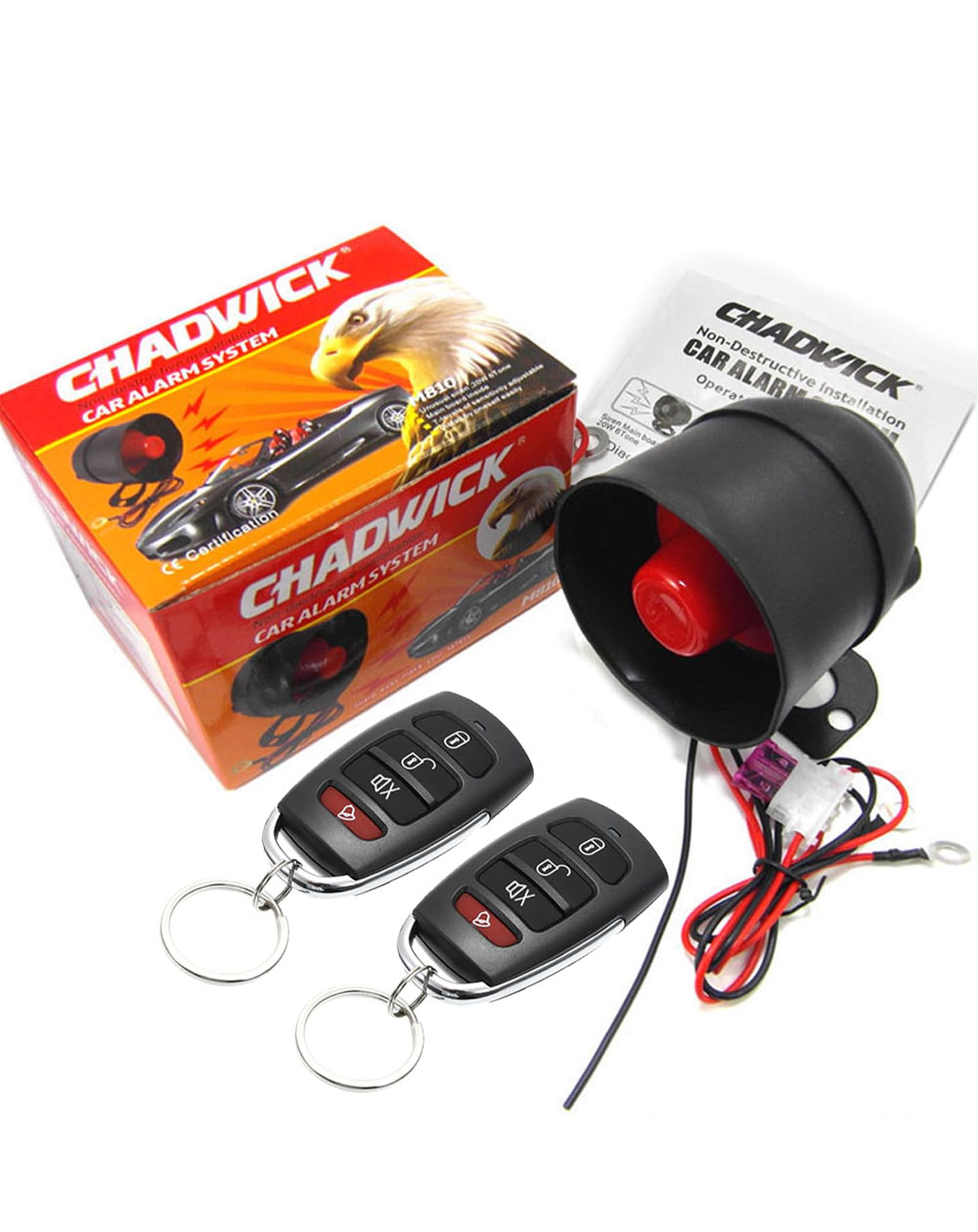
A two-wire, do-it-yourself alarm that one owner says “still works great after a few years.”
This is the simplest hardwired alarm on the list. The installation is famously easy — attach two wires and you are done. It works with any 12V car, truck, or van (electric, pneumatic, or retrofitted central locking). The siren is rated at 110dB, and you get 7 levels of sensitivity adjustment. The remote control runs on CR2016 batteries and has solid range for a budget unit.
The main weakness is the vibration-only trigger. Without a dual-stage sensor, this alarm tends to false-alarm. One owner found a passing airplane set it off, but a door slam did not. The fix is dialing sensitivity down to level 2 or 3. Owners who got it dialed in call it a “great product” and “well worth the price for confidence.”
Why it is popular
- Extremely easy install — about 5 minutes for basic setup
- 7 sensitivity levels give you control over false alarms once you find the balance
- 110dB siren is loud enough to deter in most residential settings
What to watch for
- Vibration-only sensor is basic — sensitivity tuning takes trial and error
- Be careful with the remote in your pocket; keys pressing against it can trigger the alarm
Best for: the absolute entry-level buyer or someone wiring up a work van where simple protection is enough.
pass on it if: you need layered detection (shock + microwave + tilt) — this is just a vibration sensor with a loud horn.
9. 108dB Car Alarm System, Car Anti-Theft Vibration Sensor Alarm & Red Light, 2 Wireless Remote, Anti Theft Vehicle Device with Magnetic Install Design for RV, SUV, Truck (Upgrade 4.0)
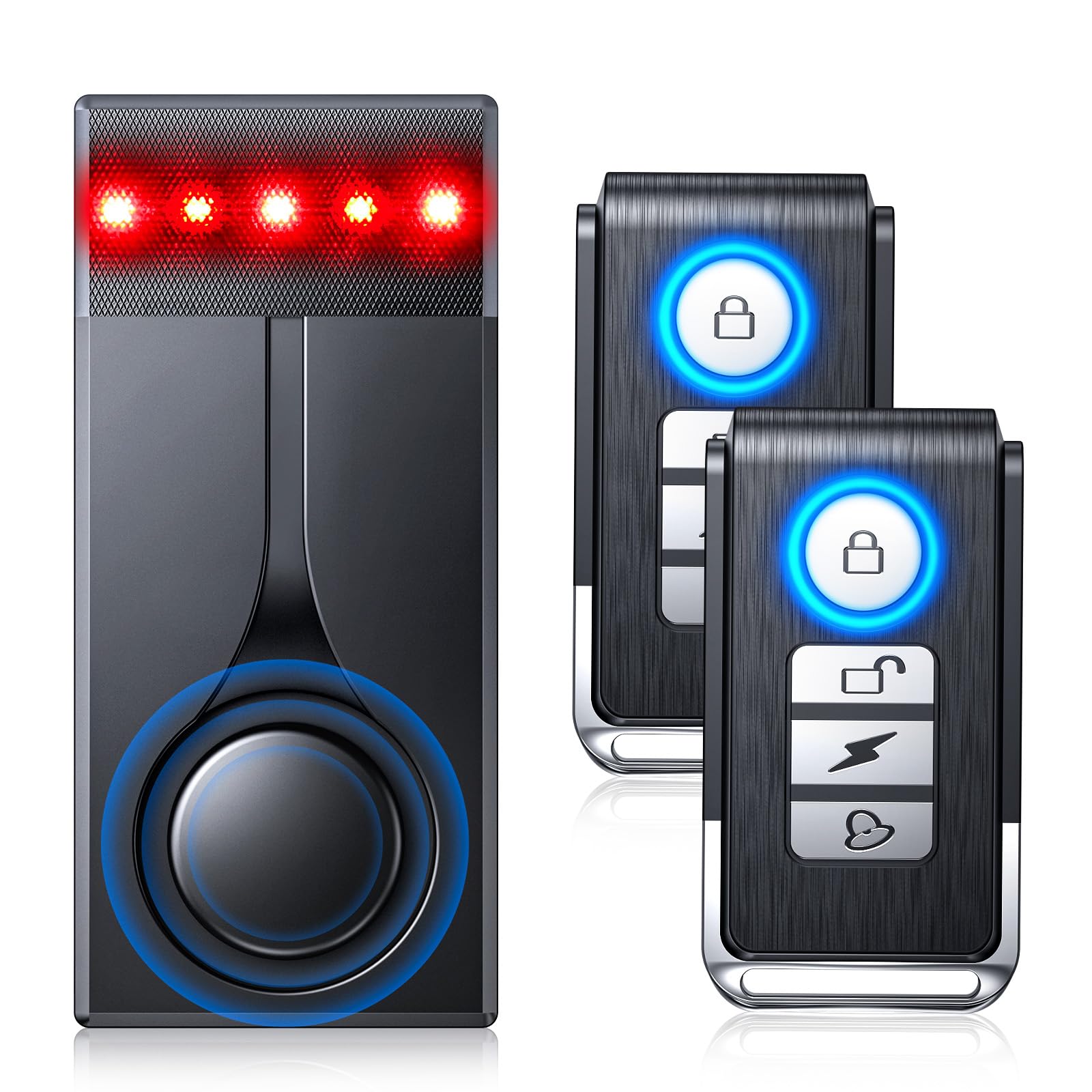
No wiring, no drilling — just magnets and batteries, making it the easiest alarm to install on the list.
This is a battery-operated alarm with a magnetic mount. Stick it under your seat or inside the glove box — no tools needed. It runs on two AAA batteries that last 1-3 months. The 108dB siren has three adjustable volume levels (96dB, 102dB, 108dB) so you can tone it down in quiet neighborhoods. A red flashing light pulses for 2 seconds on first vibration, then a full 30-second siren on a second hit within the same arming cycle.
The 66-foot wireless remote range is modest, but adequate for finding your car in a lot or disarming before you reach it. The algorithm uses a 3D accelerated sensor (one that measures vibration in all three directions) to reduce false alarms, and owners confirm it is “very loud” and effective as a deterrent. The main complaint is build quality — one owner reported the magnet coming off, and there is no way to silence the alarm without the remote if that happens.
Perfect for renters or multi-vehicle owners: you can move this between cars in seconds. The trade-off is battery life and occasional durability concerns.
Reach for this if: you want zero-wire installation and the ability to move the alarm between vehicles or even use it on a bike or luggage.
Think twice if: you want permanent, always-on protection that never needs battery swaps — wire a hardwired system instead.
Understanding the Specs
Sensor Type and Sensitivity
The sensor is the part that decides when the alarm goes off. A basic vibration sensor trips on any bump. A microwave sensor detects movement in the space around the car. A dual-stage shock sensor is the most practical — a light tap produces a warning chirp, and a harder hit triggers the full siren. Adjustable sensitivity is essential; without it, you will either have constant false alarms or no alarm at all when you really need it.
Range and Signal Type
One-way means you send a command and trust it arrived. Two-way means the car sends a confirmation signal back to your remote. Real-world range is always less than the advertised line-of-sight number — buildings, metal, and parked cars reduce it. If you park in a lot where you cannot see your car, two-way is worth the extra cost because it confirms your doors are actually locked.