
Our readers keep the lights on and my garage snacks stocked. As an Amazon Associate, I earn from qualifying purchases.
Specs are compiled from manufacturer listings and verified buyer reviews and can change over time — please confirm the key details on the product page before buying.
Your car’s voltage bounces around every time the alternator kicks in, the battery dips, or you switch on a powerful accessory. That ripple wrecks sensitive electronics or leaves you with a drained battery. A voltage stabilizer clamps those wild swings into a steady 12V stream, so your radio, GPS, LED lights, or cooler stay on when you need them.
I’m Min Islam — the founder and writer behind Trending Car. This guide is built by comparing the manufacturers’ published specifications and the patterns across verified customer reviews, so you get each pick’s real strengths and trade-offs instead of marketing spin.
After sorting through six contenders by their specs and real-world track records, here is what each one is actually good for and where it falls short, giving you a clear read on which automotive voltage stabilizer belongs under your hood or in your dash.
Our Picks at a Glance


How To Choose The Best Automotive Voltage Stabilizer
The right stabilizer depends entirely on what you are trying to power. A direct-fit replacement that bolts onto a classic Ford alternator is a completely different tool than a universal buck-boost converter that cleans up the power for your RV’s mini-PC. Start by figuring out your input source and your load, then match the amp rating and the form factor.
Match the Amp Rating to Your Gear
Every stabilizer has a maximum current rating, measured in amps. If your LED light bar draws 5 amps, you need a stabilizer that handles at least that much continuous current. The real-world trick is that most units run cooler and last longer if you stay below 80% of their rated load — so a 6A unit is a better fit for a 4A load than a 10A unit would be for the same 4A load, but the 10A unit gives you headroom.
Direct-Fit vs Universal Converter
A direct-fit voltage regulator (like the ACDelco or Standard Motor Products picks) is made for a specific vehicle family — it bolts into the factory location and replaces the old mechanical or electronic regulator that is wired into your alternator. A universal DC-DC converter (like the HOMELYLIFE or EKYLIN picks) accepts a wide input range and outputs a clean 12V; it is not an alternator regulator but a power conditioner for accessories, and you wire it between your battery and your gear.
Waterproofing and Build Quality
If the stabilizer goes under the hood, in a boat’s bilge, or on an RV frame, look for an IP67 rating and a fully potted (epoxy-filled) shell that seals out moisture. The epoxy also helps with heat dissipation. Units with painted metal cases and open vents are fine for dry cabin installations but will corrode fast in a wet environment.
Quick Comparison
| Model | Best For | Max Current | Input Range | Weight | Amazon |
|---|---|---|---|---|---|
| Standard Motor Products VR166T★ Best Overall | Budget-friendly OEM-style replacement | — | 12V system (vehicle-specific) | 4.6 oz | Amazon |
| EKYLIN 12A 144WAlso Great | High-power accessory stabilizer | 12A | 10-36V | 264g | Amazon |
| ACDelco Gold F662 | Classic Ford/Mercury/Jeep direct-fit | — | 12V system (vehicle-specific) | 11 oz | Amazon |
| Cllena 10A 120W | Boat/RV with charging systems | 10A | 8-40V | — | Amazon |
| Cocar 4A 48W | LED lighting and small accessory cleanup | 4A | 10-36V | 230g | Amazon |
| HOMELYLIFE 6A 72W | Garage/telescope/small gear clean power | 6A | 8-40V | 248g | Amazon |
In‑Depth Reviews
1. Standard Motor Products Tru-Tech VR166T
Our pick — 4.5★ from 550+ verified ratings; the strongest balance of quality and price.
This epoxy-filled unit outlasted pricier Motorcraft originals on a Ford IDI.
This Standard Motor Products Tru-Tech VR166T is a 12-volt negative-ground electronic regulator that replaces the external regulator found on many older Ford and other domestic vehicles. At 4.6 ounces, it is noticeably lighter than the ACDelco Gold F662 — at 4.6 ounces versus 11 ounces — but customers note it is fully epoxy-filled inside rather than an empty shell with a tiny circuit board. That empty-shell design is exactly what caused the more expensive Motorcraft OEM regulators to fail. One owner went through several Motorcraft units before switching to this one and has had no failures since. Its dimensions (4 x 1.8 x 4.1 inches) give it a slightly narrower body than the ACDelco Gold.
It works for a wide range of classic Fords: one reviewer fixed a 3-amp parasitic battery drain on an older alternator circuit by swapping in this regulator after replacing the alternator and the ignition switch first — a classic troubleshooting story that ends here. The flat prongs on the connector are not tapered like the original part, so you may need to open the spade connectors slightly for a firm fit. The painted top is a nice touch for a clean engine bay look.
At roughly entry-level pricing, this is the best value for anyone restoring a 1960s or 70s Ford who just wants the charging system to work without gambling on expensive OEM parts that fail on first use.
Precise voltage
- Full epoxy fill is more sturdy than hollow OEM units
- Direct fit for a wide range of classic Ford vehicles
- Low cost with a track record of fixing parasitic draws
Higher cost
- Flat connector prongs may need connector adjustment
- Lightweight feel may come across as cheap despite solid internals
Accuracy focus: you are on a budget and need a reliable external regulator for a classic Ford without the OEM markup.
Budget builds: you need a universal accessory stabilizer — this is vehicle-specific.
2. EKYLIN 12A 144W Heavy Duty Stabilizer
This 12-amp stabilizer keeps your cooler, ham radio, and mini-PC all humming through voltage dips and surges.
This EKYLIN unit is the highest-current universal stabilizer in the lineup. It takes a DC input range of 10 to 36 volts and locks the output to a steady 12V at up to 12 amps (144 watts). That means it can handle a cooler, a ham radio, a mini-PC (a small computer for navigation or entertainment), and a set of LED lights all on the same circuit. The IP67 waterproof alloy housing and heat-conduction silica gel seals it against rain and dust, so it is a strong fit for under-hood or on-deck installs. Buyers report it solved the classic problem of a radio rebooting every time a car’s auto stop kicked in — the stabilizer kept the voltage above the radio’s dropout threshold.
The specs list a conversion efficiency above 96% and an over-temperature protection cutoff at 150°C, so it runs relatively cool for a 144W unit. The connection wires are 12cm long (about 4.7 inches), which is short — plan to extend them depending on where you mount it. One owner noted a downside: the unit draws current from the battery even when the load is off, so if the vehicle sits for days it can drain the battery. A switch or a relay on the input side is a simple fix.
Compared to the Cocar 4A unit, this EKYLIN has triple the current capacity and a higher claimed conversion efficiency — 96% vs “more than 95%” — so it is the one to grab if you are running multiple accessories rather than just a single LED strip.
Heavy duty power
- 12A capacity handles multiple accessories at once
- IP67 waterproof shell is ready for exterior mounting
- Over-temperature protection at 150°C shuts it down before damage
Bulky size
- Parasitic draw can kill a battery if left connected without driving
- Short 12cm wires need extending for most installs
High wattage: you need the highest power headroom for multiple 12V accessories in a truck, boat, or RV and want waterproofing.
Small spaces: you are not driving regularly and cannot install a switched relay to prevent battery drain.
3. ACDelco Gold F662 Voltage Regulator
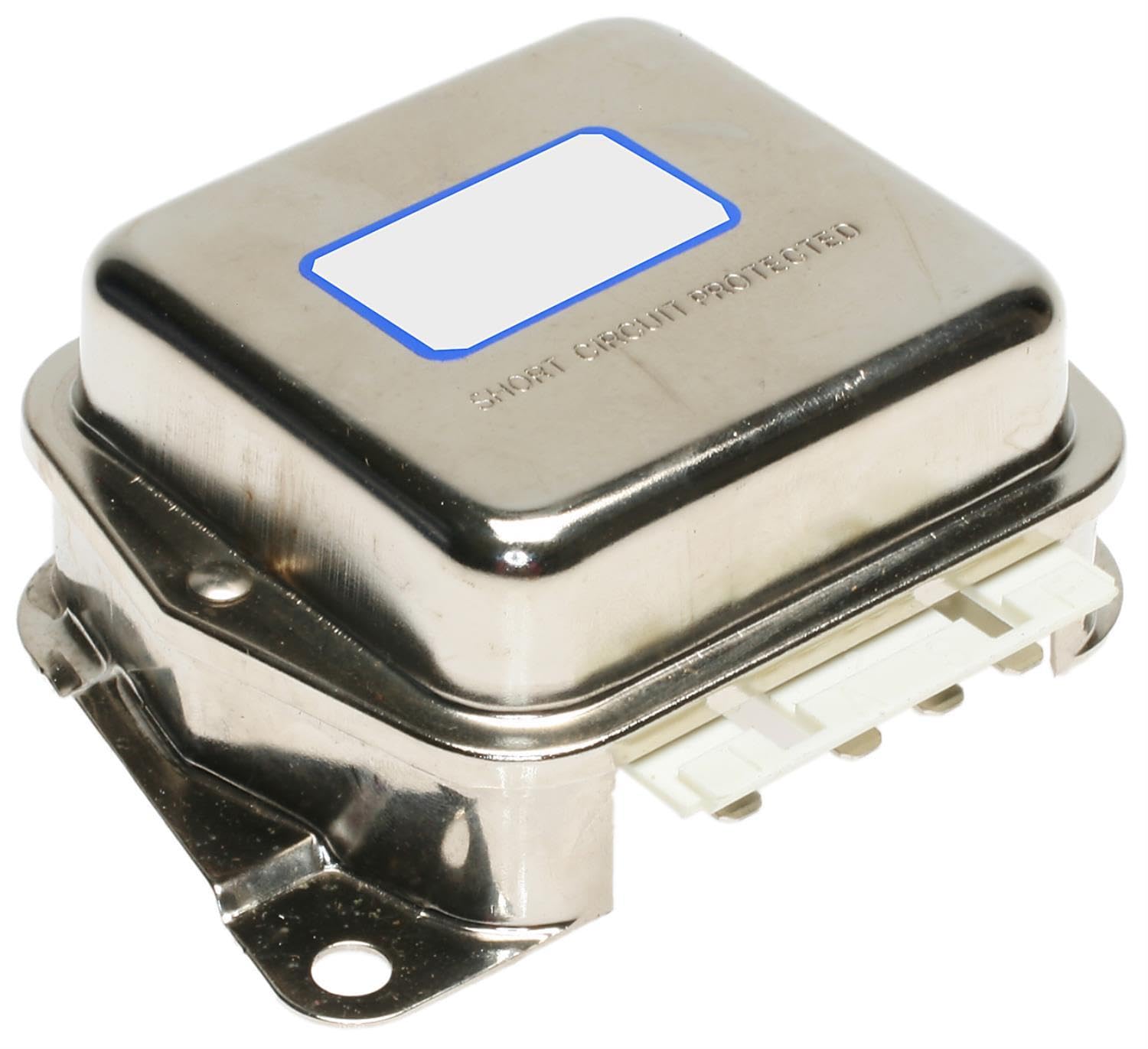
This drop-in replacement brought a 1970 pickup back from a dead-battery nightmare.
This is not a universal converter — this ACDelco Gold F662 is a direct-fit replacement voltage regulator designed for specific older Ford, Mercury, and Jeep models. It weighs 11 ounces, which makes it heavier than the Standard Motor Products Tru-Tech VR166T (4.6 ounces). Its dimensions are 4.3 x 4.2 x 2 inches — compared to the Tru-Tech’s 4 x 1.8 x 4.1 inches. That weight and size suggest a solid epoxy-filled construction. Owners mention it bolted directly onto a 1970 F100 and solved a dead battery the old part could not fix. Another owner said it stopped alternator backfeed on a 1970 Mercury Monterey, letting the engine actually turn off with the key.
It is important to note this is labeled “Made in China,” which one reviewer flagged, but the consensus across nearly 200 ratings is that it matches OEM fit and function. The tabs on the connector are described as slightly less wide than the original part, so you may need to pinch the spade connectors slightly for a snug fit. This regulator is grounded through its case, so the mounting surface must make good electrical contact with the vehicle’s body.
Unlike the universal stabilizers, the ACDelco Gold F662 serves a narrow purpose: if you own a 1965-1970s Ford or Mercury with a separate external regulator, this is the part that fixes overcharging and parasitic draws. It is not for wiring up LEDs or a modem in your trunk.
Reliable regulation
- Exact OEM fit for Ford/Mercury/Jeep external-regulator systems
- Heavier construction suggests sturdy epoxy potting
- Directly fixes alternator backfeed and overcharge issues
Fixed output
- Vehicle-specific; will not work on universal accessory circuits
- Made in China, which some buyers dislike for vintage restorations
OEM replacement: classic truck or car owners who need a direct OEM-style replacement for an external alternator regulator.
Variable needs: you need to clean up power for accessories rather than replace the alternator’s own regulator.
4. Cllena 10A 120W Buck-Boost Converter

This stabilizer tames the charging spike on a boat’s 12V system for sensitive electronics.
The Cllena 10A (120W) buck-boost converter accepts a wide input range of 8 to 40 volts DC and outputs a non-adjustable 12V. That buck-boost (step-up-or-down) capability is the key differentiator here — it can step the voltage up or down, so it does not care whether your input is a low 8V battery or a 40V solar array; it outputs a clean 12V either way. Reviewers point out using it on a boat where the nominal 12V system jumps above 14V when the alternator is charging, and the Cllena held steady at 12V output without issue. Another owner runs it to regulate power to a mini-PC in an RV that could not handle the 13-14V ripple from the house batteries.
The conversion efficiency is rated up to 95%, and the aluminum shell is sealed with silicone for waterproofing, though the product listing does not specify an IP rating. One reviewer noted that the unit draws high inrush current when first connected, which can trip the safety shutdown on an outboard motor’s charging system — so if you wire it to a small outboard, install a pre-charge resistor or switch it on after the motor is running. The 10A rating sits neatly between the Cocar 4A unit and the EKYLIN 12A unit, and it is a better all-rounder than the HOMELYLIFE 6A because of the buck-boost versatility.
This is the one to pick if your voltage source fluctuates both above and below 12V — for example, a boat battery that charges from an alternator and also from a solar panel — because a buck-only converter would fail if the battery dips below 12V.
Flexible conversion
- Buck-boost topology handles input both above and below the output voltage
- 10A rating is a strong middle-ground for medium-draw accessories
- Sealed aluminum housing holds up in damp marine environments
Lower wattage
- High inrush current at start-up can conflict with small outboard motors
- No official IP waterproof rating despite the sealed shell
Battery systems: boat or RV owners whose battery voltage swings above and below 12V and who need stable power for a PC, radio, or sensitive electronics.
High loads: small outboard charging systems without a pre-charge circuit.
5. Cocar 4A 48W Voltage Stabilizer

A compact power cleaner that keeps LED lights steady and security cameras out of reboot loops.
This Cocar unit is a small, purpose-built buck converter (steps voltage down only) with a 4A (48W) capacity and an input range of 10 to 36V DC. Its physical footprint is 74mm x 74mm x 32mm, and it weighs 230 grams — that is 18 grams lighter than the HOMELYLIFE 6A unit (which weighs 248 grams). The aluminum housing is IP67 rated and filled with heat-conduction silica gel, so it is fully waterproof and ready for exterior mounting. The connection wires are 12cm long, which buyers consistently note is very short — plan to extend them for any install that is not right next to the battery.
Shoppers say it works well for focused jobs: one owner wired it for suspension rock lighting with 11 LED modules drawing 1A total, and measured a steady 12.20V output from a 14.2V input with no heat at the terminals. Another uses it to stabilize voltage for security cameras connected to a solar battery system where the voltage wanders from 10V to 14V. A consistent complaint across reviews is that the output maxes out at about 11.91V rather than a true 12V — for most 12V appliances that need 12-12.5V to operate properly, that slight under-voltage can be a dealbreaker. There is also a report that it causes FM radio interference, manifesting as stereo loss and static.
If your load is under 4 amps and you do not need a perfect 12.0V, this is a compact, rugged unit. But if precision voltage matters — say for a circuit board device — the Cllena or EKYLIN units hold a tighter output.
Compact design
- Fully IP67 waterproof for under-hood or outdoor use
- Compact size fits tight spaces easily
- Stays cool under a 1A continuous load
Limited power
- Output may only reach 11.91V, too low for some 12V devices
- Can cause FM radio interference when installed near a radio head unit
Small devices: you need low-cost waterproof regulation for LED accent lights, security cameras, or small fans under 4A.
Heavy gear: your gear requires a true 12.0V output or you rely on FM radio reception near the install location.
6. HOMELYLIFE 6A 72W Buck-Boost Converter

This epoxy-potted problem solver fixed a garage door opener’s voltage droop.
The HOMELYLIFE 6A is a buck-boost converter that accepts an 8-40V DC input and outputs a regulated 12V at up to 6 amps (72W). Like the budget-friendly Cocar unit, it uses synchronous rectification technology for an efficiency rating of at least 95% and features a 50mV ripple wave (tiny AC fluctuation on the DC output). But unlike the Cocar, this unit is a buck-boost — it can raise a low input voltage as well as lower a high one, so it works on systems like a 24V golf cart that you want to step down to 12V, or a deeply discharged 12V battery that is sitting at 9V that you want to boost up to 12V. One buyer used it with an AGM battery box to power a telescope mount, a Raspberry Pi (a small single-board computer), a bridge, a camera, and dew heaters, noting the output held at 12.1-12.2V while the input swung from 13.3V down to 12V with no fluctuations.
The unit weighs 248 grams — at 248 grams versus the Cocar 4A unit’s 230 grams — and uses a compact aluminum shell with epoxy potting that makes it fully waterproof, anti-dust, and anti-shock. Due to its higher current capacity and buck-boost capabilities, it is more versatile than the Cocar unit, but a reviewer noted it “gets mighty hot” when driving a Synology NAS from a vehicle battery and recommended good airflow for any sustained load near its 6A maximum. The 6A current capacity compared to the 10A Cllena converter makes this more appropriate for small to medium loads rather than powering a full PC setup.
This is a strong pick for anyone who needs both step-up and step-down regulation in one package — golf carts, telescope gear, and backup power setups where the battery voltage is unpredictable.
Stable output
- Buck-boost operation handles input voltage swings in both directions
- 95% plus efficiency with low 50mV ripple keeps gear stable
- Fully potted shell is waterproof and shock-resistant
No adjustability
- Runs hot near 6A loads and requires good ventilation
- One unit reportedly burned out a maxxfan circuit board on first install
Fixed setups: golf cart, telescope, or off-grid power users who need a buck-boost regulator for varying battery chemistries.
Variable loads: high-current continuous loads near 6A without active cooling.
Understanding the Specs
Buck vs Buck-Boost Topology
A buck converter, like the Cocar 4A unit, can only step a higher voltage down to a lower one — if your battery drops below 12V, it cannot help. A buck-boost converter, like the Cllena 10A or HOMELYLIFE 6A, can step a low voltage up or a high voltage down. If your system sees both deep discharge (below 12V) and charging spikes (above 14V), you need a buck-boost.
Amps, Watts, and Your Load
The stabilizer’s current rating in amps tells you how much gear you can run through it. Multiply volts by amps to get watts (12V x 4A = 48W). A rule of thumb: total up the wattage of everything connected to the stabilizer and keep it below 80% of the unit’s rating so the regulator stays cool and efficient.
IP Rating and Environmental Sealing
IP67 means the unit is fully dust-tight and can handle submersion in water up to 1 meter for 30 minutes. The Cocar and EKYLIN units have this rating, making them the best choices for under-hood, exterior, or marine installations. Units without an IP rating or with simple metal cases are best kept in a dry interior compartment.
Ripple and Output Accuracy
Ripple is the tiny AC fluctuation left on the output DC line — measured in millivolts (mV). A lower ripple number (like the HOMELYLIFE’s 50mV) means cleaner power for sensitive gear like radios, computers, or medical equipment. Output accuracy matters too: the Cocar unit’s 11.91V output is technically outside the 12V spec and may not satisfy some devices.
FAQ
Will an automotive voltage stabilizer fix a flickering LED light bar in my truck?
Can I use a universal DC-DC stabilizer to replace the alternator regulator on a classic car?
What is the difference between a buck and a buck-boost converter for my RV setup?
How do I know what amp rating I need for my stabilizer?
Will a voltage stabilizer drain my car battery when the engine is off?
Does the Cocar 4A unit actually output a true 12 volts?
Can I use the Cllena 10A stabilizer on a 24V truck system?
Is the Standard Motor Products VR166T a direct fit for a 1965 Ford Mustang?
Why does my new stabilizer cause FM radio static?
How long do automotive voltage stabilizers typically last?
Final Thoughts: The Verdict
If you need a buck-boost stabilizer for a boat or RV where voltage swings both high and low, grab the Cllena 10A 120W Buck-Boost Converter. And for a classic Ford restoration where only a direct-fit external regulator will do, the standout is the ACDelco Gold F662 Voltage Regulator.
How We Picked
We do not accept paid placement. Every pick is matched to a real buyer and a real use-case; we do not hands-on test units.
Sources & Methodology
Specifications: manufacturer listings and product documentation. Review insights: verified customer reviews, as of July 2026. Pricing: not shown on this page (it changes often); check the current price via the retailer link.
As an Amazon Associate, Trending Car earns from qualifying purchases. This does not affect which products we feature.