
Our readers keep the lights on and my garage snacks stocked. As an Amazon Associate, I earn from qualifying purchases.
Specs are compiled from manufacturer listings and verified buyer reviews and can change over time — please confirm the key details on the product page before buying.
Water finds its way through every tiny gap where your car’s metal panels meet — that’s how rust starts and how cabins get that musty smell. A good seam sealer closes those joints and stops moisture before it begins. This guide breaks down the best options by how they apply, how fast they dry, and what they cost, so you can match the right one to your repair.
I’m Min Islam — the founder and writer behind Trending Car. This guide is built by comparing the manufacturers’ published specifications and the patterns across verified customer reviews, so you get each pick’s real strengths and trade-offs instead of marketing spin.
You want an auto seam sealer that kills rust at the source and stays flexible through every temperature swing your vehicle faces.
Our Picks at a Glance
How To Choose The Best Auto Seam Sealer
Seam sealer is a paste or liquid you brush, gun, or spread over welded joints and panel overlaps before paint. It blocks water and dirt from those crevices, so rust can’t start deep inside a panel. Your choice depends on three things: how you apply it, how long you can wait before painting, and where on the vehicle it goes.
Brushable Can vs. Caulk Gun Tube
A brushable sealer comes in a can and spreads with a brush, making it ideal for large open areas like floor pans and trunk floors where you want a thin, even coat. A cartridge tube loads into a standard caulking gun and lays a controlled bead, which suits tight joints, door jambs, and rocker panels where precision matters more than coverage.
Drying and Paint Time Matter
Some sealers claim they are paintable in under an hour, while others need a full day to cure properly. If you’re working in a home garage and can’t wait, a fast-drying formula gets you to primer and paint the same day. If you want maximum strength, a full cure of up to 24 hours is the safer bet before topcoating.
Match The Color To The Job
Gray and white sealers work when you are painting over them with a light-colored topcoat. Black sealer is the pick for undercarriages, rocker panels, and wheel wells where you want the seam to disappear against dark metal and don’t plan to paint over it.
Quick Comparison
| Model | Best For | Application Style | Paintable In | Material | Amazon |
|---|---|---|---|---|---|
| Barrier Bond Brushable Can★ Best Overall | Full floor pan & trunk coverage | Brush-on | 30-60 minutes | Polyurethane | Amazon |
| U-Pol Tiger Seal CartridgeBest Value | Adhesive & sealing trim | Caulk gun | — | Polyurethane | Amazon |
| Barrier Bond 10.1oz TubeFlexible Performer | Flexible joints in cold weather | Caulk gun | ~12 hours | Rubber | Amazon |
| Tylove Auto Seam Sealer | Quick-paint repairs | Caulk gun | 30 minutes | Liquid | Amazon |
| Berkland Black 2-Pack | Dark undercarriage & rockers | Caulk gun | 30 minutes | Polyurethane | Amazon |
| Berkland White 2-Pack | Restoration & RV panels | Caulk gun | 30 minutes | Polyurethane | Amazon |
| SEM Black Seam Sealer | Fast-skinning body work | Caulk gun | — | Resin | Amazon |
| 3M Heavy-Bodied Seam Sealer | OEM-matched vertical seams | Dual-syringe | Quick set | Resin (2-part epoxy) | Amazon |
| Eastwood Brush-On Sealer | Classic car restoration | Brush-on | 30 minutes | Concentrate | Amazon |
In‑Depth Reviews
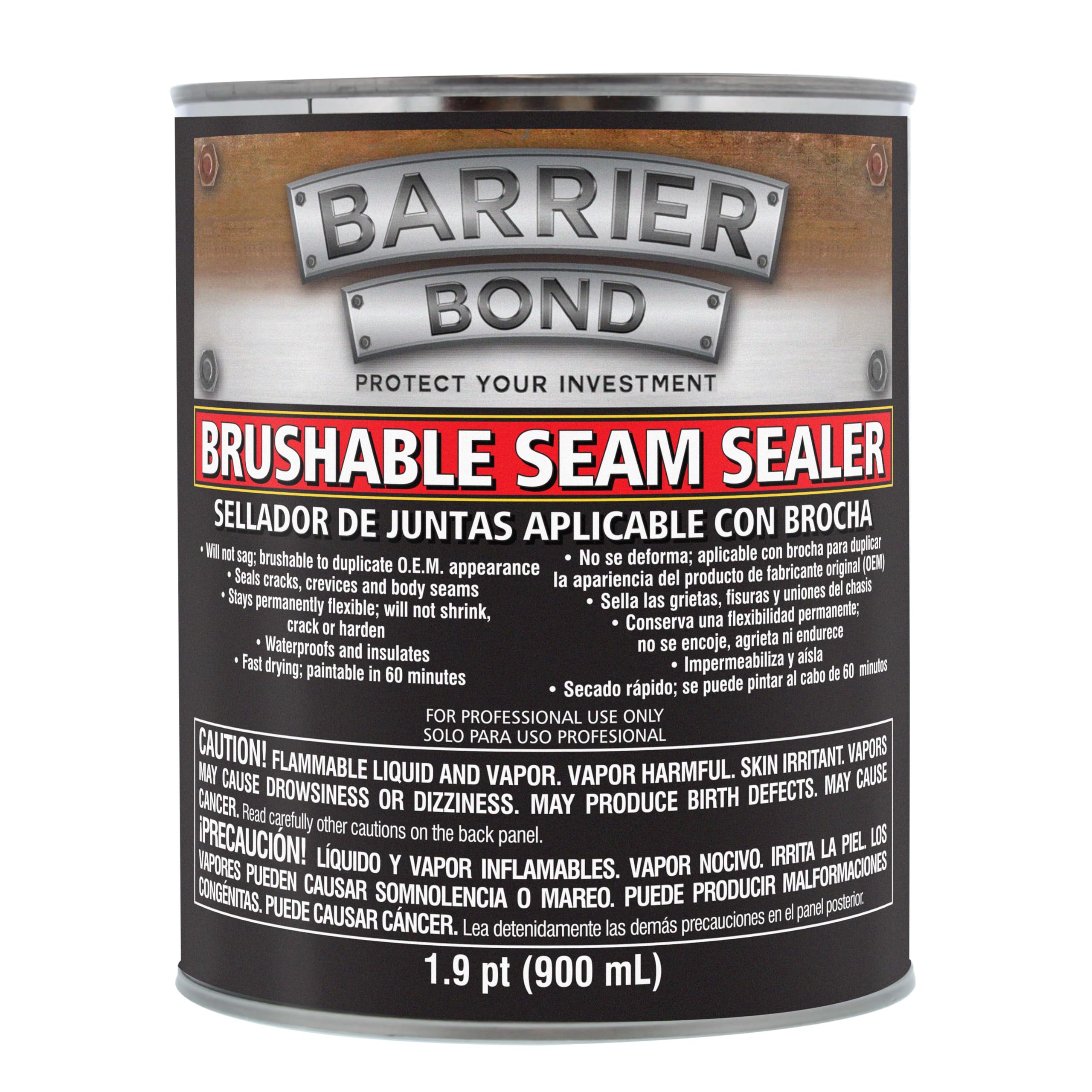
1. Barrier Bond Brushable Seam Sealer
Our pick — over 4.5★ from 550+ verified ratings; the strongest balance of quality and price.
The big can that brushes on thick and covers nearly a whole car in one go.
If you’re restoring a floor pan or trunk, this brushable quart can is the coverage king. It holds 30.4 fluid ounces, and owners say a single can will do almost an entire car — a money saver compared to buying tube after tube. Because it’s a paste you brush on, you can hold perfect brush marks that mimic factory OEM seams, which is exactly what a restoration wants.
This is a polyurethane (a flexible, waterproof plastic) formula that dries fast and stays pliable, so it won’t crack, harden, or sink after curing. You can paint over it in 30 to 60 minutes, meaning you reach primer the same day. Buyers report sealing a 1967 Beetle floor pan by brushing it on with tape for clean lines, and one noted the sealer holds even when the work is upside down — no sag, no drip while you work.
The thing everyone raves about is the sealing performance, with strong adhesion to glass, metal, and plastic surfaces. The one real knock is packaging: a can can arrive with a bent lip from shipping, needing a bit of repair before use. Compared to the U-Pol cartridge at 1.97 x 1.97 x 8.86 inches, this quart measures 4.25 x 4.25 x 5.25 inches, so clear shelf space before it lands.
Why the can wins
- One can covers a full floor pan — owners call it a money saver vs. tubes
- Brush-on texture replicates factory seams for a professional look
- Paintable in 30-60 minutes
Watch out for
- Shipping can dent the can lip — inspect on arrival
- Needs a brush, so it’s messier than a caulk gun for tight spots
Reach for this if: you’re doing a full floor pan or trunk restoration and want maximum coverage per dollar.
Look elsewhere if: you only need to seal a few tight door jambs where a caulk gun bead is cleaner.
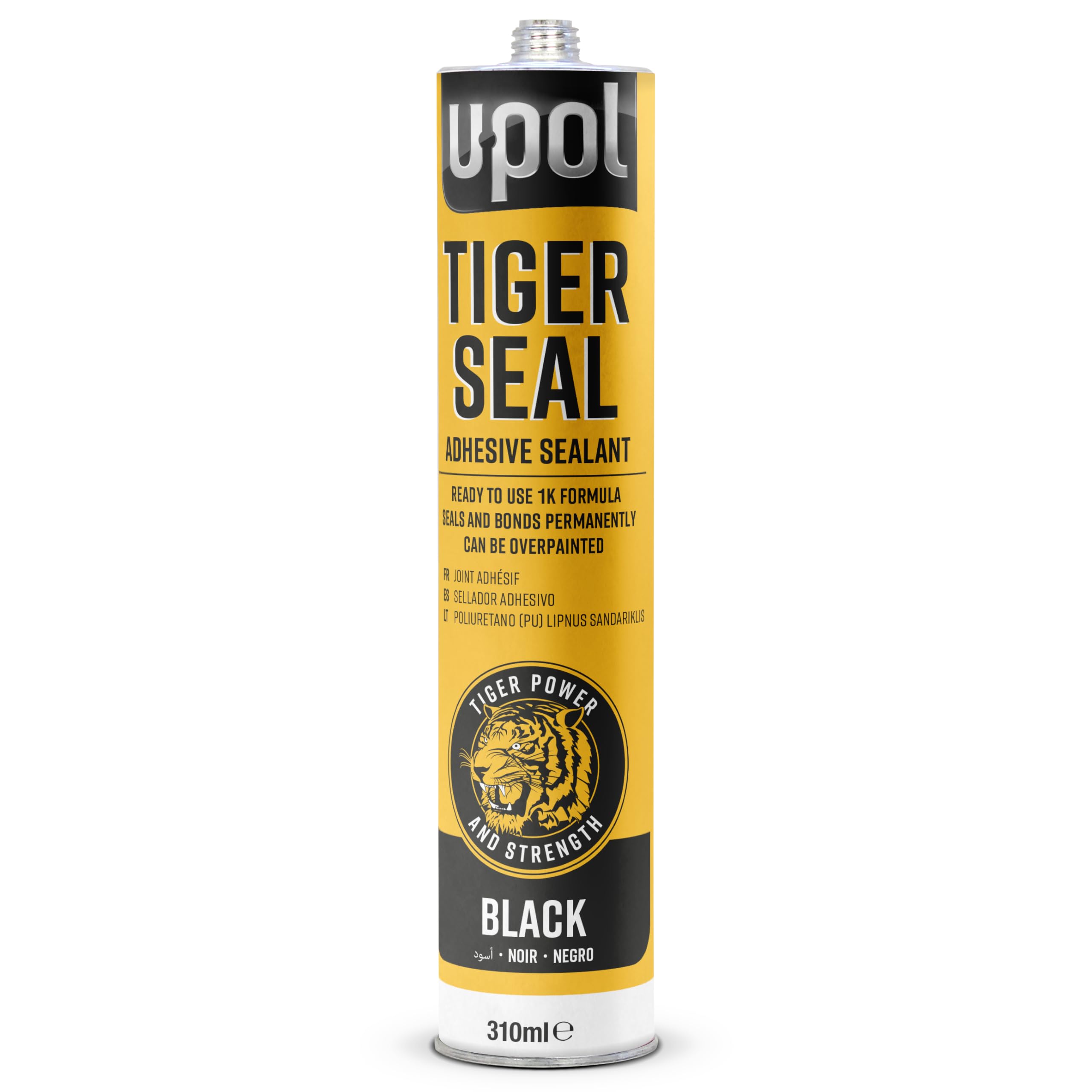
2. U-Pol Tiger Seal 310ml Cartridge
An adhesive that replaces screws for spoilers, plus a waterproof seal in the same cartridge.
This polyurethane cartridge from U-Pol is as much a structural adhesive as it is a sealer. Owners mention it creates a bond strong enough to replace screws when mounting spoilers — they applied the bead, held parts together for 1 to 5 minutes of pressure, and got an extremely durable bond. It also permanently seals and bonds body panels and trim, and it’s completely waterproof, so it handles window sealing and trim attachment equally well.
It’s a compact cartridge at 1.97 x 1.97 x 8.86 inches, loaded into a standard caulking gun. The catch is in the application: it needs warm weather to work its best, cleanup has to be quick, and you’ll want gloves on hand since they aren’t included. Owners found it outperformed Gorilla Glue and Flex Seal on an asphalt-to-rubber repair, with no leaks afterward.
What wins people over is the sealing performance, especially for a tube this size. The honest caveat is mixed feedback on expiration — a few cartridges arrived dried up, so check the tube before you start a job. If you need a flexible joint sealer that pulls double duty as an adhesive, this budget-friendly cartridge delivers.
Two-in-one value: seals windows and bonds trim, spoilers, and panels with a bond buyers call extremely durable.
Plan ahead: warm weather and gloves are needed, and an occasional tube arrives expired.
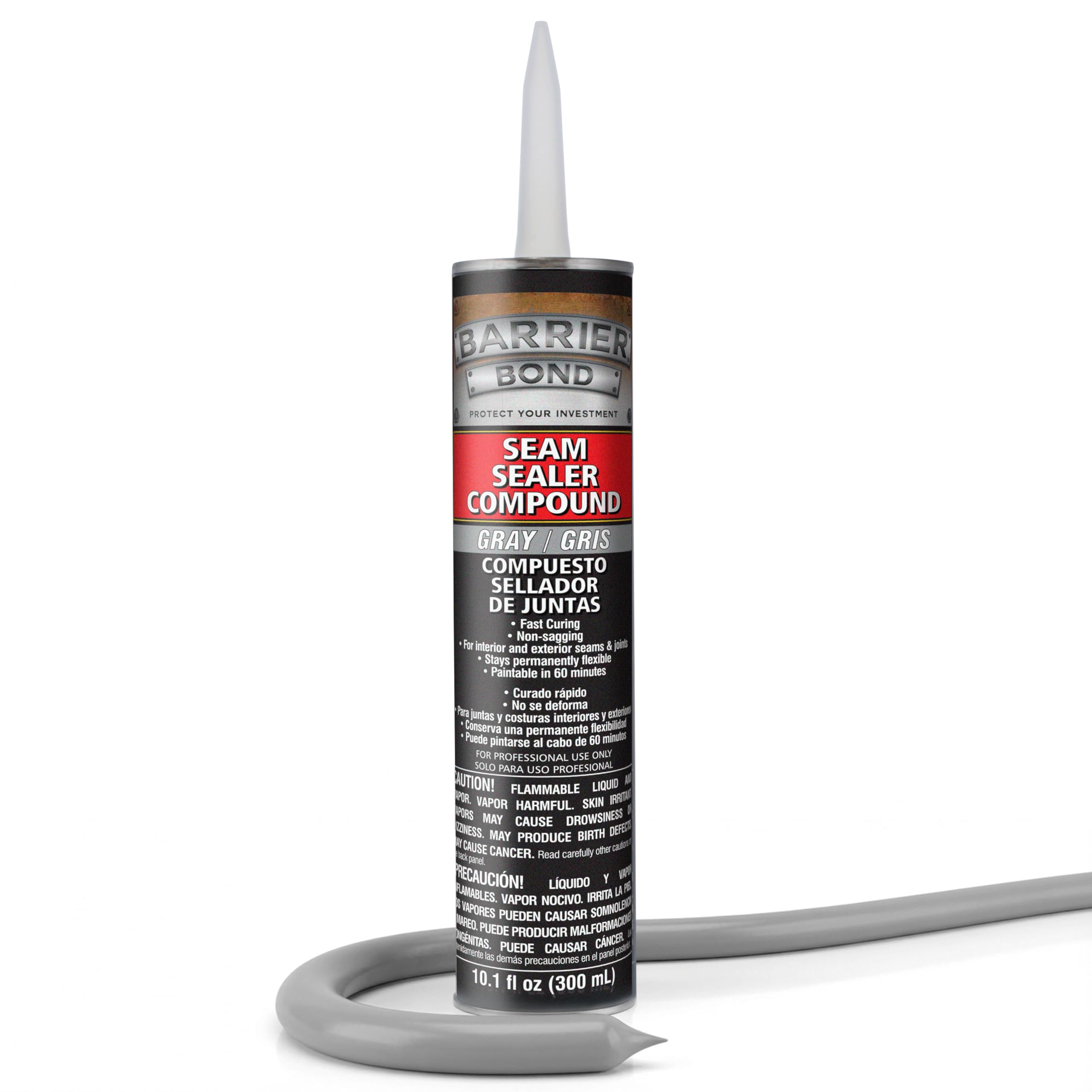
3. Barrier Bond 10.1oz Tube
A rubber-based tube that stays flexible in freezing weather without cracking.
This 10.1-ounce tube is built for joints that move and flex, with high rubber content that keeps its elasticity even in low temperatures. That makes it a smart pick for a camper trailer or any panel that sees cold-to-hot temperature swings — owners say it held up to travel and shifting weather with no leaks forming. It’s a creamy, non-sag texture that spreads smoothly from a standard caulking gun.
The flexibility is the defining trait here. It won’t shrink or crack as it cures, and it forms a permanent bond on rubber and metal surfaces. There’s a learning curve to the application though: users found the label’s 1-hour paint time is optimistic, with a more realistic 12 hours before it’s fully ready. They also recommend warming the tube in the sun for 20-30 minutes and puncturing the inner seal first, then working in 12-18 inch sections at a time to avoid application issues.
Quality is what owners praise most about this one, along with how easy it is to gun on. The trade-off is the smell — it emits strong vapors that off-gas for about a week, so a garage with the door open is a must for enclosed work. Unlike the brushable Barrier Bond can above, this tube trades broad coverage for precise, flexible joints.
Built for movement: high rubber content keeps joints sealed through temperature swings and road vibration.
Patience required: plan for a 12-hour paint wait and strong fumes — not a same-day job.
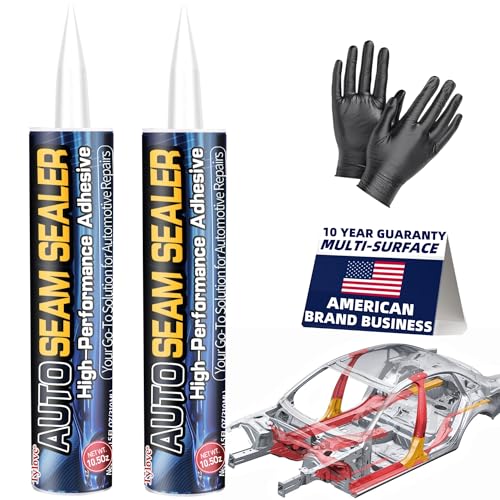
4. Tylove Auto Seam Sealer
A low-VOC, solvent-free formula that’s ready for paint in just 30 minutes.
Speed is the whole point of this Tylove cartridge. It’s paintable in 30 minutes with no sanding required, which makes it a solid choice when you’re sealing roof holes, cable pass-throughs, or RV seams and want to finish the job the same day. It bonds to primed, painted, or bare metal and works with any standard urethane caulk gun.
The formula is low-VOC and solvent-free, so it’s noticeably more pleasant to work with than solvent-heavy sealers that off-gas for a week. It’s engineered to withstand extreme weather without shrinking or cracking, and owners have put it to work on roof leaks with zero water getting through heavy rain. One useful tip from the shop floor: sand and prime first, use the open tube end for big gaps, and smooth the bead with a wet finger for a professional finish.
Quality is the most-praised aspect here, with good value for money right behind it. The honest caveat is drying time is a bit inconsistent — most users see fast set, but a few report it doesn’t dry properly, so test a small bead first. Full cure is 24 hours, so give it a day before heavy use. This one seals metal, plastic, and serves double duty as an RV roof sealant.
Speed benefits
- Paintable in 30 minutes, no sanding
- Low-VOC and solvent-free, easier on the nose
- All-weather flexibility, won’t shrink or crack
Know before you go
- Drying time is mixed in some batches — test first
- Full 24-hour cure before heavy-duty use
Grab this if: you want a fast, low-odor sealer for roof work or RV repairs you can paint the same day.
Think twice if: you need a guaranteed overnight cure with zero drying surprises.
5. Berkland Black 2-Pack

Black sealer with gloves included, made to vanish into dark undercarriage surfaces.
The black color is the headline feature here — it blends into rocker panels, wheel wells, and undercarriage joints where you don’t want a visible sealant line. It’s a polyurethane formula that won’t shrink or crack, and it’s paintable in 30 minutes on the fast side. Two 10 oz cartridges come in the pack along with nitrile gloves, so you have enough for a full panel or floor pan restoration and the gear to apply it cleanly.
It bonds to bare steel, primed surfaces, and already-painted panels, plus fiberglass and composites. Owners used it to finish sealing the bottom of a car restoration and to glue window fuzzies onto garnish molding, calling it an amazing product with many uses. The texture is thick and stays put, and it dries fast enough to take primer, paint, or epoxy bed liner right over it. There’s even a desiccant ball in the bottom of the tube to keep it fresh.
Owners praise its sealing performance and durability. It spreads far easier than locally bought tubes from other brands, including 3M, and pushes out of a normal caulking gun without a fight. The mixed note is adhesion — most see a strong hold, though a few found it weaker on certain surfaces, so test on a scrap panel first.
Color-matched coverage: black blends into undercarriages and rockers so the seam disappears.
Prep your surface: adhesion is mostly great but verify on your specific metal before a full spray.
6. Berkland White 2-Pack

A white sealer that stays flexible through travel and vibration without cracking.
This white 2-pack is the counterpart to the black Berkland above, sharing the same polyurethane base but in a color that suits light-painted panels, RVs, and restoration work. It’s paintable in 30 minutes and accepts all automotive primers and topcoats. Two 10 oz cartridges plus nitrile gloves give you solid coverage for full panel or floor pan restorations.
What sets this apart is its cured behavior — it dries to a firm yet flexible seal that survives temperature swings and road vibration without pulling away. Owners sealed the seams of a steel horse trailer with it and called it the best sealant they’d ever used; another sealed a sheet metal patch to a transmission tunnel, noting it doesn’t drip or run and fills large gaps easily.
Sealing performance leads the praise, with quality nearly tied right behind it. It’s easy to work with and dries to a rubbery feel that takes paint well. The honest notes are around paint resistance and removability, which some found mixed — once it’s on, it’s on, so mask off carefully and clean up spills fast.
Cures flexible: stays soft enough to absorb vibration yet firm enough to hold a seal for years.
Hard to remove: cleanup is unforgiving once cured, so mask and wipe early.
7. SEM Black Seam Sealer

A resin sealer that skins over fast, so you need your project ready before you squeeze.
SEM’s resin-based formula is trusted by body shops for its fast-skinning, flexible seal. It’s a resin-based paste that remains flexible without shrinking or cracking, and it dries to a hard rubbery consistency that owners swear by. One used it to splice a Chevy square body floor and firewall into an M37 cab, and the product filled hard-to-reach gaps in an amazingly easy way.
The defining trait is speed — once you break the seal, you have about 15 minutes depending on the weather to smooth it before it skins up. That means your panel needs to be masked, your rags ready, and your plan set before you start squeezing. Owners who plan for it say it gets super solid as it dries and is the brand they’ll use from now on. The recurring gripe is that the threaded application tip can be missing from the box, so check before you start.
Owners praise how effectively it seals and how well it adheres, with flexibility and durability coming up again and again. This pro-grade sealer handles serious restorations with a rock-hard, lasting seal. Compared to the 3M two-part below, SEM is a simpler single-tube option that still delivers a rock-hard, lasting seal.
Pro-grade speed: a fast-skinning resin sealer that dries super solid for serious body work.
Work fast: about 15 minutes of working time — and double-check the tip is in the box.
8. 3M Heavy-Bodied Seam Sealer
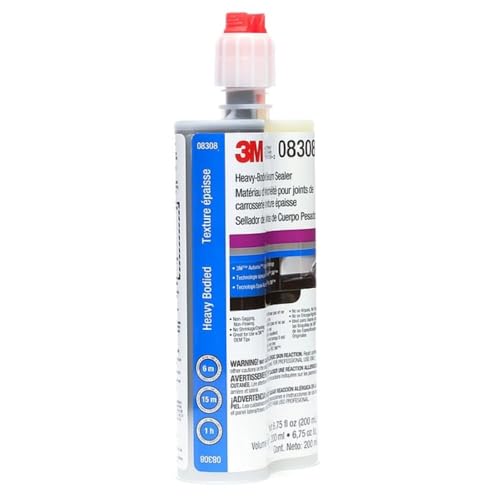
A two-part epoxy with a self-mixing syringe that matches OEM seams on vertical panels.
The 3M 08308 is the premium pick for its self-mixing, OEM-matching epoxy. The 3M 08308 is a two-part epoxy that self-mixes through a dual syringe cartridge, which eliminates the mess and guesswork of manual mixing. You load the 200 ml cartridge into a caulk-style gun, and the mixing tip blends the two parts 1:1 as fast as you can work, giving a perfect formulation every time. It’s a heavy-bodied, non-flowing paste that’s easy to tool into seams that match the original factory look.
It’s specifically designed to seal both vertical and horizontal seams to match OEM seals, and the non-sag property is a lifesaver on vertical applications — no dripping while you shape the bead. It’s used in busy collision repair centers, where it’s trusted for its strong bond and quick dry. One owner resealed the roof ditches on a 2003 Ford F350, applying epoxy primer first and topcoating after the sealer cured. The one warning they stressed: never apply this sealer over an acid-etching primer, it won’t bond.
Owners praise its quality, ease of use, and quick, strong adhesion. The self-mixing tip ensures a perfect 1:1 blend, and the bond is exceptionally strong. The trade-off is durability is a bit mixed — most find it super strong, but a few report the epoxy not hardening properly, so test the mix on a scrap piece first.
Why it’s the pro pick
- Dual-syringe self-mixes 1:1 epoxy, no measuring
- Non-flowing formula holds on vertical panels
- Tooled finish matches OEM seam look
Setup demands
- Needs a caulk-style gun to push the cartridge
- Sets up fast — be fully masked and ready before you squeeze
Choose this if: you want a factory-matched, simple to use mix for vertical seams and already own a caulk gun.
skip it if: you want a simple single-tube sealer without the extra mixing hardware.
9. Eastwood Brush-On Seam Sealer
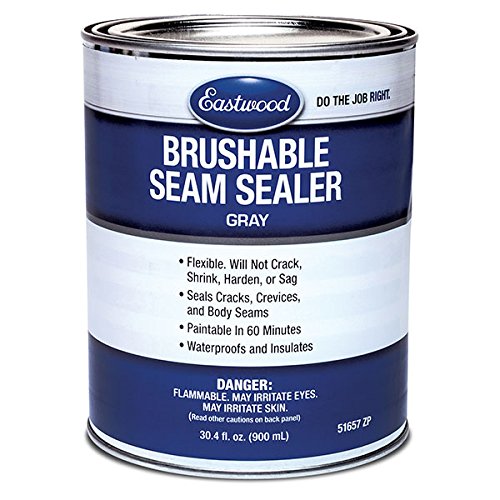
A thick brush-on sealer that protected floor pans through an actual flood.
Eastwood’s 30.4 oz brush-on can is the enthusiast’s favorite for classic car restoration. It seals cracks, crevices, and body seams while waterproofing and insulating, and it’s made for firewalls, floor pans, trunk seams, fender extensions, and taillight openings. It’s paintable in 30 minutes, and the flexible formula won’t shrink, harden, or crack as it ages.
Owners praise its thick consistency and reliable performance in real-world conditions. New floor pans survived a recent flood with zero water getting in where it was applied — a serious real-world test. It flows and levels out well but retains a slight build to look near original, which is exactly what a 60s car restoration wants. It stays adhered for many years, and the can doesn’t dry out even with 3 weeks between uses.
Owners praise its quality, effectiveness, and ease of application. This is the pick for a full restoration where you want original-looking brush strokes over a large area. The trade-off vs. a cartridge is precision — for a tight spot like a door jamb, you’ll still want a caulk gun tube.
Flood-tested: thick brush-on coverage that kept floor pans dry through real water submersion.
Big-area sealer: ideal for floors and trunks, less ideal for precision tight joints.
Understanding the Specs
Polyurethane vs. Resin vs. Rubber
Polyurethane is the most common base for seam sealers because it stays flexible after curing, which is critical for panels that flex and vibrate. Rubber-based sealers add extra low-temperature flexibility, making them a pick for cold climates. Resin-based formulas like the SEM and 3M options dry to a harder, more solid finish that mimics factory seams on body work.
Paint Time and Full Cure
Paint time is how long you wait before primer or topcoat can go over the sealer — fast formulas claim 30 minutes. Full cure is the true hardening window, which can be up to 24 hours for maximum strength. The real-world advice from owners is to be skeptical of the fastest paint times and give the sealer a bit longer before heavy use.
FAQ
Can I paint over seam sealer right after applying it?
Will seam sealer work on vertical panels without sagging?
How long does auto seam sealer take to fully cure?
Can I use seam sealer on my RV roof?
What’s the difference between brushable and cartridge seam sealer?
Is black or white seam sealer better?
Do I need gloves to apply seam sealer?
Can seam sealer act as an adhesive too?
Why does my seam sealer smell so strong?
How much seam sealer do I need for a full floor pan?
Final Thoughts: The Verdict
If you want one dependable pick, the auto seam sealer winner is the Barrier Bond Brushable Can because it covers nearly an entire car with a full 30.4 oz can and lets you paint in just 30-60 minutes — the fastest realistic dry time here. If you need a precise bead for tight joints, pick the U-Pol Tiger Seal. And for a factory-matched vertical seam like a collision shop would do, the 3M Heavy-Bodied Sealer is the one to grab.
How We Picked
We do not accept paid placement. Every pick is matched to a real buyer and a real use-case; we do not hands-on test units.
Sources & Methodology
Specifications: manufacturer listings and product documentation. Review insights: verified customer reviews, as of August 2026. Pricing: not shown on this page (it changes often); check the current price via the retailer link.
As an Amazon Associate, Trending Car earns from qualifying purchases. This does not affect which products we feature.