
Our readers keep the lights on and my garage snacks stocked. As an Amazon Associate, I earn from qualifying purchases.
Specs are compiled from manufacturer listings and verified buyer reviews and can change over time — please confirm the key details on the product page before buying.
That stale, musty smell when you first turn on the A/C? Or the creeping exhaust fumes you catch at a stoplight? A worn-out air filter is usually the culprit. Your 2014 Nissan Sentra has two filters—one for the engine and one for the cabin—and swapping them is a simple Saturday job that can transform your driving experience. This guide breaks down seven top contenders, looking at fit, filtration tech, and real owner feedback.
I’m Min Islam — the founder and writer behind Trending Car. This guide is built by comparing the manufacturers’ published specifications and the patterns across verified customer reviews, so you get each pick’s real strengths and trade-offs instead of marketing spin.
For most Sentra owners, the best combo is the Spearhead BE-177 cabin filter for odor control and the Spearhead MT-900 engine filter for long life. If allergies are your main concern, the BNX C7078 HEPA filter delivers the cleanest air. On a tight budget, the ECOGARD XA4675 engine filter is a reliable fit.
Quick Picks
- Spearhead Odor Defense Breathe Easy AC & — Best Overall
- BNX TruFilter C7078 Cabin Air Filter — Premium Cabin
- PUREFLOW PC4012HX HEPA Cabin Air Filter — Carbon+HEPA Combo
- BOSCH 6078C HEPA Cabin Air Filter — Lightest Cabin
- Spearhead Max Thrust Engine Air Filter (MT-900) — Engine Upgrade
- ECOGARD XA4675 Premium Engine Air Filter — Best Budget Engine
- A-Premium High-performance — Pre-Oiled Extended
How To Choose The Best 2014 Nissan Sentra Air Filter
Picking the right filter for your Sentra depends on one simple question: are you cleaning the air your engine breathes or the air you breathe? The engine air filter sits under the hood in a black plastic box and keeps dirt out of the combustion chamber. The cabin air filter hides behind the glovebox and scrubs pollen, exhaust fumes, and dust from the air streaming into the passenger compartment. Mixing them up is an easy mistake, but each serves a different purpose.
Cabin Air Filter: Fresh Air for the Driver
This is the filter that gets rid of that “garage smell” or the truck exhaust you just drove through. Look for three things: media type, activated carbon, and HEPA certification. Electrostatic media uses static charge to grab microscopic particles. Activated carbon—often from coconut shells—absorbs gases and odors rather than just trapping them. A true HEPA rating means the filter captures 99.97% of particles at 0.3 microns. That matters if you suffer from allergies or drive through heavy traffic. Check the depth as well: a thicker filter, around 1 to 1.38 inches, gives more surface area for trapping debris.
Engine Air Filter: Protecting Your Motor
Your Sentra’s engine is essentially an air pump, and it needs clean, unrestricted air to burn fuel efficiently. Key specs here include the service interval (most engine filters run 12,000 to 15,000 miles) and the pleat design. A hex-d or progressive-density pleat holds more dirt before airflow drops off. Pre-oiled cotton filters promise higher flow but must be cleaned and re-oiled, while standard pleated paper offers reliable, no-mess protection. Always cross-reference the OEM part numbers, like 16546-30P00 or CA6900, to be sure you’re getting a precise fit.
Quick Comparison
| Model | Best For | Type | Media | Life | Amazon |
|---|---|---|---|---|---|
| Spearhead BE-177 | Odor Elimination | Cabin | Activated Carbon | 15,000 mi | Amazon |
| BNX C7078 | Cleanest Cabin Air | Cabin | HEPA 99.97% | 12,000 mi | Amazon |
| PureFlow PC4012HX | Traffic Smell Control | Cabin | HEPA + Charcoal | 12,000 mi | Amazon |
| Bosch 6078C | Respiratory Protection | Cabin | HEPA 99.97% | 12,000 mi | Amazon |
| Spearhead MT-900 | Engine Power Upgrade | Engine | Hex-D Pleat | 15,000 mi | Amazon |
| ECOGARD XA4675 | Budget Engine Filter | Engine | High-Capacity Paper | 12,000 mi | Amazon |
| A-Premium APEAF1555 | Extended Engine Interval | Engine | Pre-oiled | Extended | Amazon |
In‑Depth Reviews
1. Spearhead Odor Defense Breathe Easy AC & Heater Cabin Filter (BE-177)
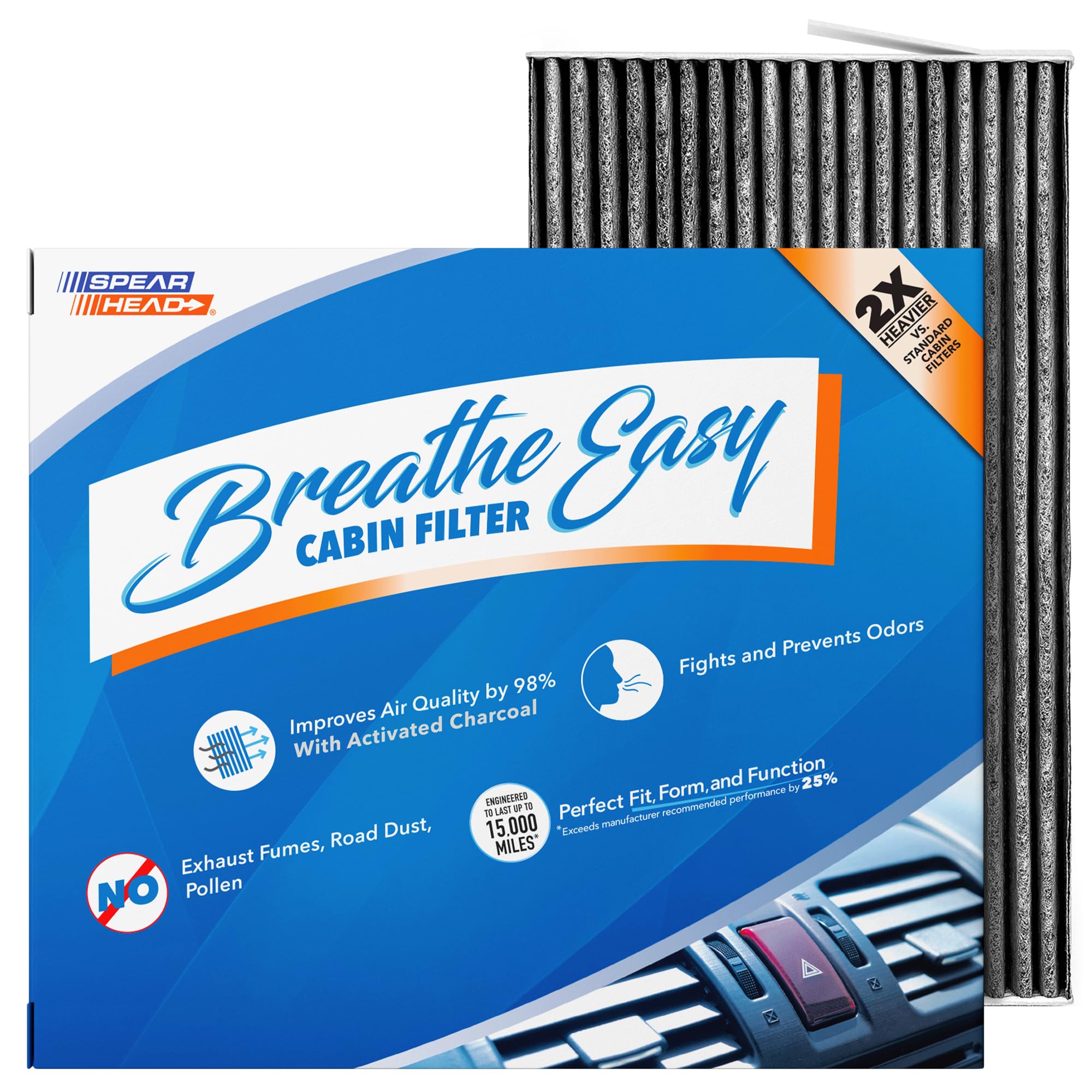
The cabin filter that kills smells and lasts 25% longer than a standard replacement.
This is the one to grab if the “musty vent” smell is your biggest frustration. The Spearhead BE-177 uses real coconut shell activated carbon to absorb gases and odors, not just mask them. It packs a dense, electrostatic media that weighs 3.2 ounces, so it pulls more particles out of the air without choking the fan. The official life is up to 15,000 miles, compared to the usual 12,000-mile interval. Compare that to the 1.6-ounce Bosch 6078C—the Spearhead weighs 3.2 ounces, giving it a much denser feel.
Buyers report that installation took about 10 minutes with no tools required, and several noted it fits the Sentra perfectly. One owner of a 2023 Acura TLX mentioned it was 1/16″ too long and needed trimming, but on the Sentra platform owners mention it drops right in with zero modification. The fit dimensions are 10.2 inches long, 5.83 inches wide, and 0.98 inches thick—matching the Sentra’s housing snugly.
There is no HEPA certification here; this is an activated-carbon-and-electrostatic combo designed primarily for odor and particle reduction. If you need a certified medical-grade barrier, the BNX or Bosch HEPA options below are a better call. But for day-to-day driving where exhaust fumes and mildew smells are the enemy, this Spearhead is a winner.
What Stands Out
- Coconut shell carbon absorbs real odors, not just filter them
- Lasts 15,000 miles
- Feels substantial at 3.2 oz vs a typical 1.6 oz cabin filter
One Snag
- No HEPA rating for dust mite or mold allergy suffers
- A single review noted it was 1/16″ too long for a non-Nissan model
Reach for this if… you smell every truck’s exhaust and want a denser, longer-lasting carbon filter that slides right into your Sentra’s cabin slot.
Look elsewhere if… you specifically need a HEPA-rated filter for severe allergies—you will want the BNX or Bosch instead.
2. BNX TruFilter C7078 Cabin Air Filter
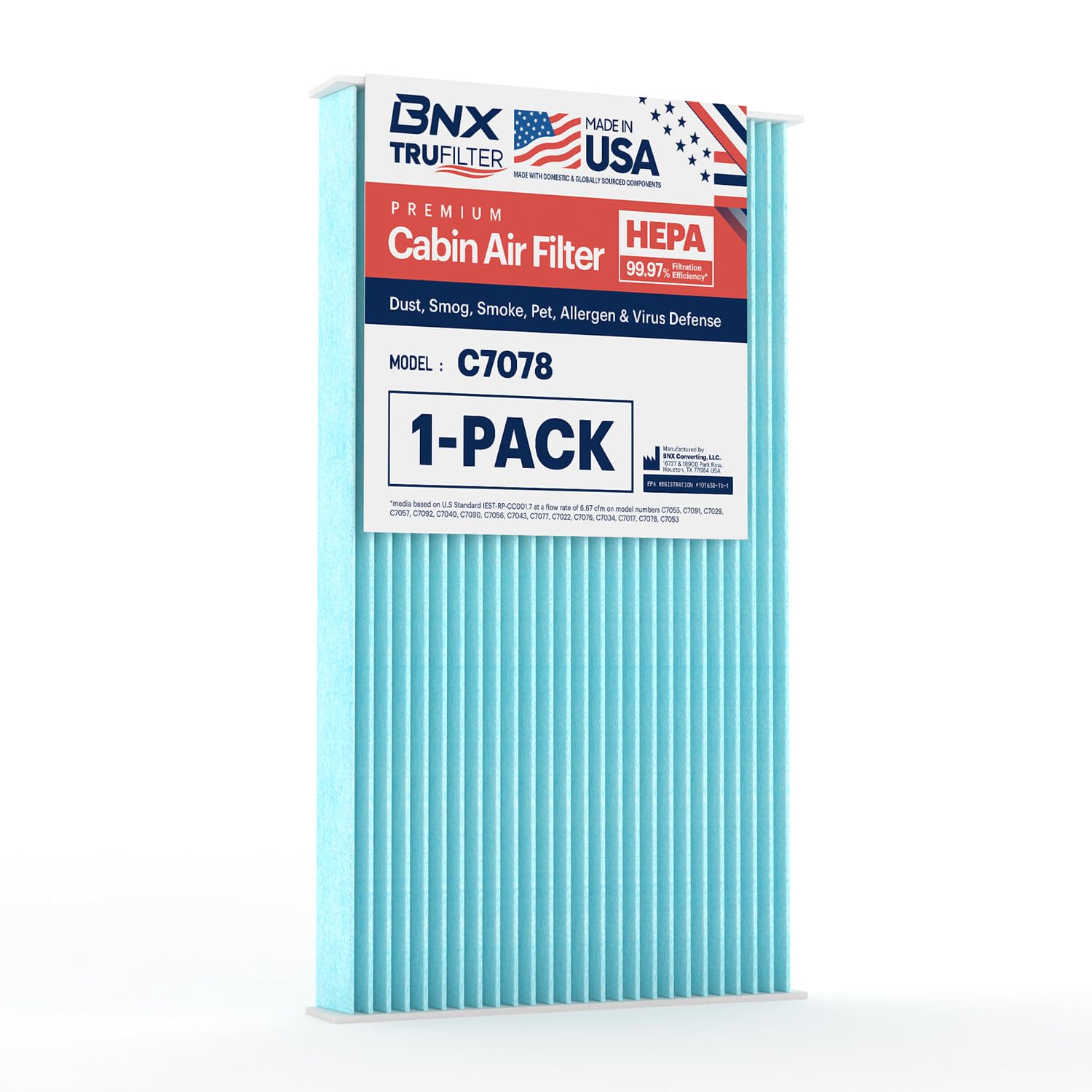
American-made HEPA filtration that captures 99.97% of microscopic particles your Sentra’s fan blows in.
If you have allergies or simply want the cleanest air possible in the cabin, the BNX C7078 steps up with real HEPA media—certified to filter 99.97% of particles down to 0.3 microns. That includes smoke, smog, mold spores, bacteria, and pet dander. The media is meltblown with a support layer, and the filter carries a MERV 16 rating. BNX is clear that this is made in the U.S., a differentiator from the many commodity filters assembled overseas. Its dimensions are 10.25 inches long, 6.75 inches wide, and 1 inch thick, so it is slightly wider than the Spearhead.
Customers note that the filter fit their Sentra perfectly, with several noting it saved them the the dealer quoted for installation. One reviewer was surprised at the factory-level fit and mentioned the filter was caked with debris after a long interval, proving how much it catches. There is a minor note about a slight scent the first day, which cleared up within 24 hours.
You are paying for the true HEPA certification and the U.S. manufacturing. Also, it does not have an activated carbon layer, so while it catches particles better than anything here, it is less effective at absorbing chemical odors and exhaust gases. If you sit in stop-and-go traffic daily, the Spearhead or PureFlow would handle the smell better.
Top Reason to Buy
- 99.97% efficient at 0.3 microns—actual HEPA, not “HEPA-like”
- Made in the USA with American workers
- Reviewers point out it fits the Sentra glovebox slot perfectly with no trimming
The Catch
- No carbon layer, so exhaust odors pass through more than with carbon filters
- Notably pricier than the budget cabin options
Best for: allergy-prone drivers or anyone who wants hospital-grade air in the car—the HEPA spec is real and tested.
skip it if: you need to eliminate “diesel truck smell”; choose a carbon-loaded filter like the Spearhead or PureFlow instead.
3. PUREFLOW PC4012HX HEPA Cabin Air Filter
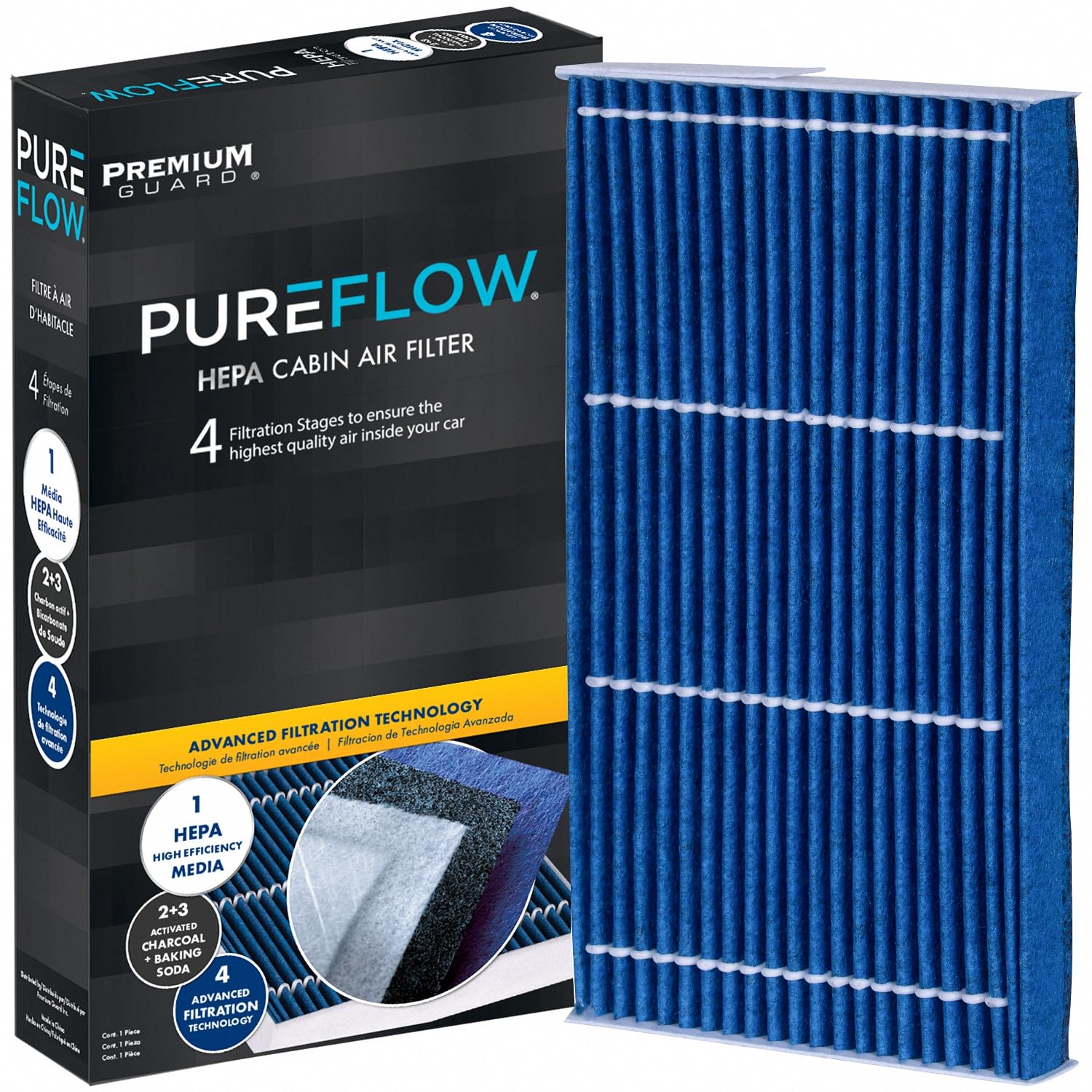
HEPA-grade media plus a charcoal layer means you get particle trapping and odor absorption in one filter.
The PureFlow PC4012HX tries to solve the “carbon vs. HEPA” dilemma by putting both layers into the same filter pack. You get HEPA-grade media that catches fine particles at 0.3 microns, plus a high-grade activated charcoal layer designed to soak up smelly traffic fumes and road odors. For commuters who drive through tunnels or sit behind buses, this is a compelling combo. The dimensions are 5.85 inches long, 10.22 inches wide, and 0.98 inches thick—flipped orientation compared to the others, so it’s wider rather than longer.
A few buyers on the Nissan Leaf (which shares the same filter form factor as the Sentra) found installation tricky, noting you need to flex the filter to squeeze it past the access door. One review described sitting “upside down in the passenger seat” to reach the slot, and called the filter opening “smaller than the filter itself.” That is a common Leaf/Sentra housing design issue, not a PureFlow problem—but it’s worth knowing the filter has plastic reinforcing ridges that require a rock-in motion.
The one downside to the “both worlds” media is slight airflow restriction. PureFlow notes that the combination may reduce fan flow noticeably compared to a thin carbon-only filter. If you set the fan to speed 1-2, you might notice less breeze. On the plus side, it’s a one-stop-shop part that replaces the stock filter without needing a separate odor filter.
Why It’s Unique
- HEPA + activated charcoal in a single drop-in filter
- Direct fit for 2013-2019 Sentra, 2011-2017 Juke, and 2011-2025 Leaf
- Replaces MicroGard 4028HP for exact OEM sizing
The Trade-Off
- Dual-layer media reduces airflow at low fan speeds
- Tight fit in the housing requires flexing the filter corners
Go for it when: you want one filter that both traps fine particles and kills odors—no need to stack two different filters.
Skip if: strong fan airflow is your priority and you rarely notice smells; the Spearhead flows more freely.
4. BOSCH 6078C HEPA Cabin Air Filter

Bosch’s well-known HEPA quality at a mere 1.6 ounces—the lightest and slimmest cabin filter of the group.
If weight and low resistance matter (say, you want the least strain on the Sentra’s blower motor), the Bosch 6078C is the featherweight contender. At 1.6 ounces, it is lighter than the Spearhead BE-177 (3.2 ounces), and it relies on a melt-blown electrostatic layer plus a static cotton layer to hit the HEPA standard of 99.97% at 0.3 microns. Bosch tested it against ISO 29463-3:2011, so the HEPA claim is documented. It measures 10.43 inches long, 6.1 inches wide, and 1.38 inches thick—the thickest (tallest) filter in the cabin group, giving it more media surface than the others.
Shoppers say that the filter reduces cabin exhaust smell compared to the stock filter, and the structural ribs prevent the media from collapsing if the plastic housing presses on it. One review on a Nissan Leaf noted the install took 45 minutes the first time because the glove box needed to be removed, while another did it in 5 minutes by just popping off one trim piece. It’s a fitment and accessibility issue that varies by Sentra trim level, not the filter itself.
The main gap here vs. the Spearhead or PureFlow is the lack of activated carbon. The Bosch relies purely on mechanical and electrostatic trapping, so odors like diesel fumes or mildew are reduced but not fully absorbed. If your priority is particle filtration (pollen, dust, smoke) and you want the most sturdy structural build, the Bosch is excellent. But for chemical odor elimination, the carbon-infused filters do better.
Strong Points
- True HEPA rating: 99.97% capture at 0.3 microns
- Anti-crinkle ribs keep the media intact during tight installs
- Thicker (1.38 in) means more media area than comparable filters
Limitation
- No carbon layer—gas odors pass through more freely
- At 1.6 oz it feels less substantial than the 3.2 oz Spearhead
Choose this if: you want a thin, light HEPA filter that won’t strain your blower and has the most structural support for tricky housing slots.
Pass it up if: you need a filter that actively absorbs exhaust fumes—go with a carbon-loaded option.
5. Spearhead Max Thrust Engine Air Filter (MT-900)
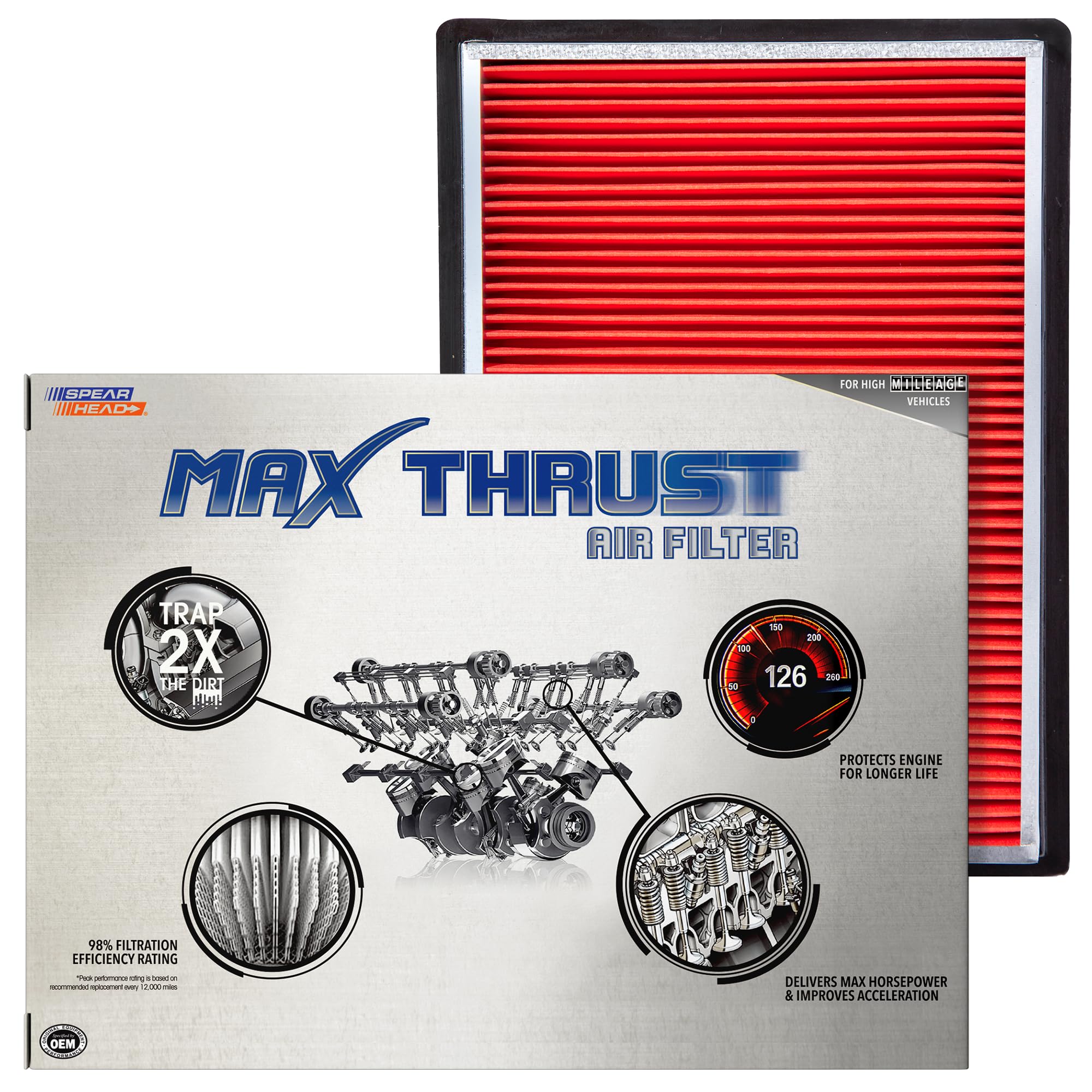
The engine air filter that uses Hex-D pleats to trap more dirt while flowing air freely up to 15,000 miles.
This is the pick when your Sentra feels sluggish and mileage has dipped. The Spearhead Max Thrust MT-900 replaces the standard paper panel filter with a hex-d (hexagon-shaped) pleat design that creates more dirt-holding space between the folds. The idea is simple: as the pleats fill with debris, airflow stays high because the dirt sits in the valleys of the hex structure, not blocking the peaks. Spearhead says the filter traps more dirt than a standard air filter. It’s rated up to 15,000 miles, which beats the typical 12,000-mile engine filter interval.
Buyers on Nissan models (2015 Altima 2.5L, 2010 Tacoma V6, and the Sentra) report it fits the factory box without any mods. One owner noted improved throttle response and a +2 MPG gain after installation, though another said they did not notice a performance difference—real-world results vary. The filter is dry (not pre-oiled), so there is no risk of over-oiling the mass airflow sensor, a common issue with reusable cotton filters.
The catch: this is a mid-range pleated filter, not a high-flow performance filter like K&N. If you are chasing maximum horsepower on the track, a cotton gauze filter would flow better. But for a daily driver Sentra where you want solid filtration and dirt capacity between oil changes, this is a strong, low-hassle choice.
Why It Makes Sense
- Hex-D pleat holds more dirt before airflow dips
- Rated for 15,000 miles, extending change intervals
- No oil needed—easy for anyone to swap in minutes
One Reality Check
- Not a high-performance upgrade; it’s a sturdy OEM-replacement
- Some owners reported no change in acceleration feel
Reach for this if: you just want a durable, long-life engine filter with proven dirt-holding claims and zero mess.
Look elsewhere if: you want peak horsepower numbers—a cotton reusable filter would flow more air at the cost of less filtration.
6. ECOGARD XA4675 Premium Engine Air Filter
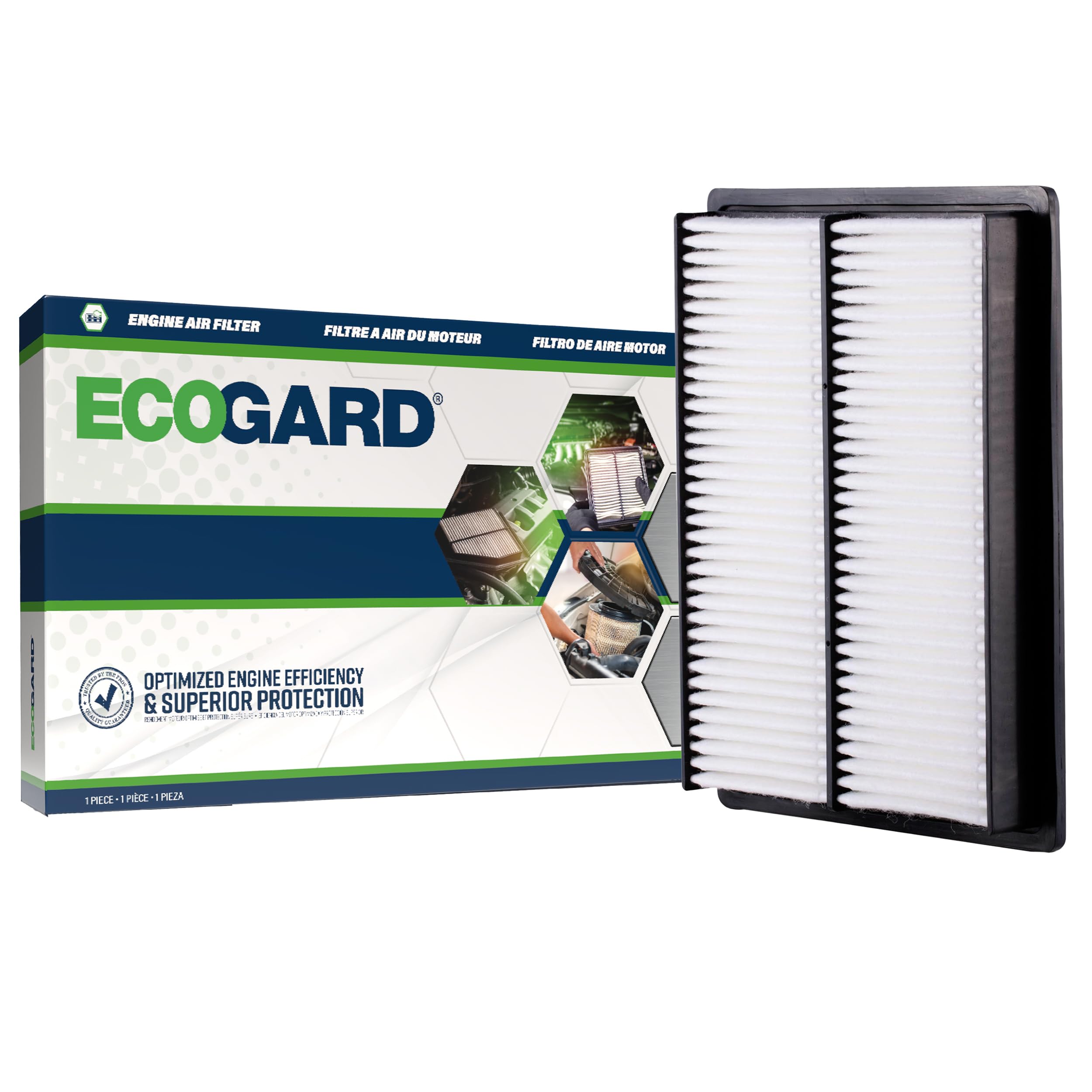
A simple, high-capacity engine filter that fits the Sentra precisely and is packed with more pleats than name-brand rivals.
Sometimes you just need an OE-quality replacement without paying for marketing hype. The ECOGARD XA4675 is a straightforward pleated paper engine filter that carries a 12,000-mile service interval. The specs show it at 8.6 inches long, 1.4 inches wide, and 6.6 inches tall—rectangular, same as the factory panel. It replaces the Nissan OEM part number 16546-30P00 and cross-references FRAM CA6900 and ACDelco A1257C, so compatibility is well-documented.
Buyers report that the ECOGARD has more pleats than the FRAM filters they had been using, which suggests better filtration area. A buyer with a 2014 Nissan Rogue Select said it fit well and seemed “better quality (more pleats) than the Fram filters.” For the Sentra 1.8L, reviewers confirm it slides in and seals without gaps. It is dry (no oil), so you can swap it in under two minutes with a screwdriver or a clip release.
The downside? This is a pure paper media filter, so it won’t hold as much dirt between changes as the Spearhead MT-900 with its Hex-D pleats. In dusty climates or long intervals, the Spearhead is a better bet. The ECOGARD is fine for standard suburban and highway driving with 12,000-mile oil change cycles.
What You Get
- More pleats per inch than typical budget filters—buyers confirm the density
- Direct cross to Nissan OEM 16546-30P00 for zero-fitment guessing
- Backed by a 1-year limited warranty against defects
Where It Falls Short
- Standard paper media holds less dirt than progressive-density pleats
- No extended-life feature; replace on the standard 12K schedule
Best for: the budget-conscious Sentra owner who wants a reliable, well-reviewed paper filter that fits exactly and costs little—no frills, no fuss.
Not ideal for: heavy dust conditions or off-road use where the MT-900’s extra dirt capacity would be more useful.
7. A-Premium High-performance, Pre-oiled Engine Air Filter
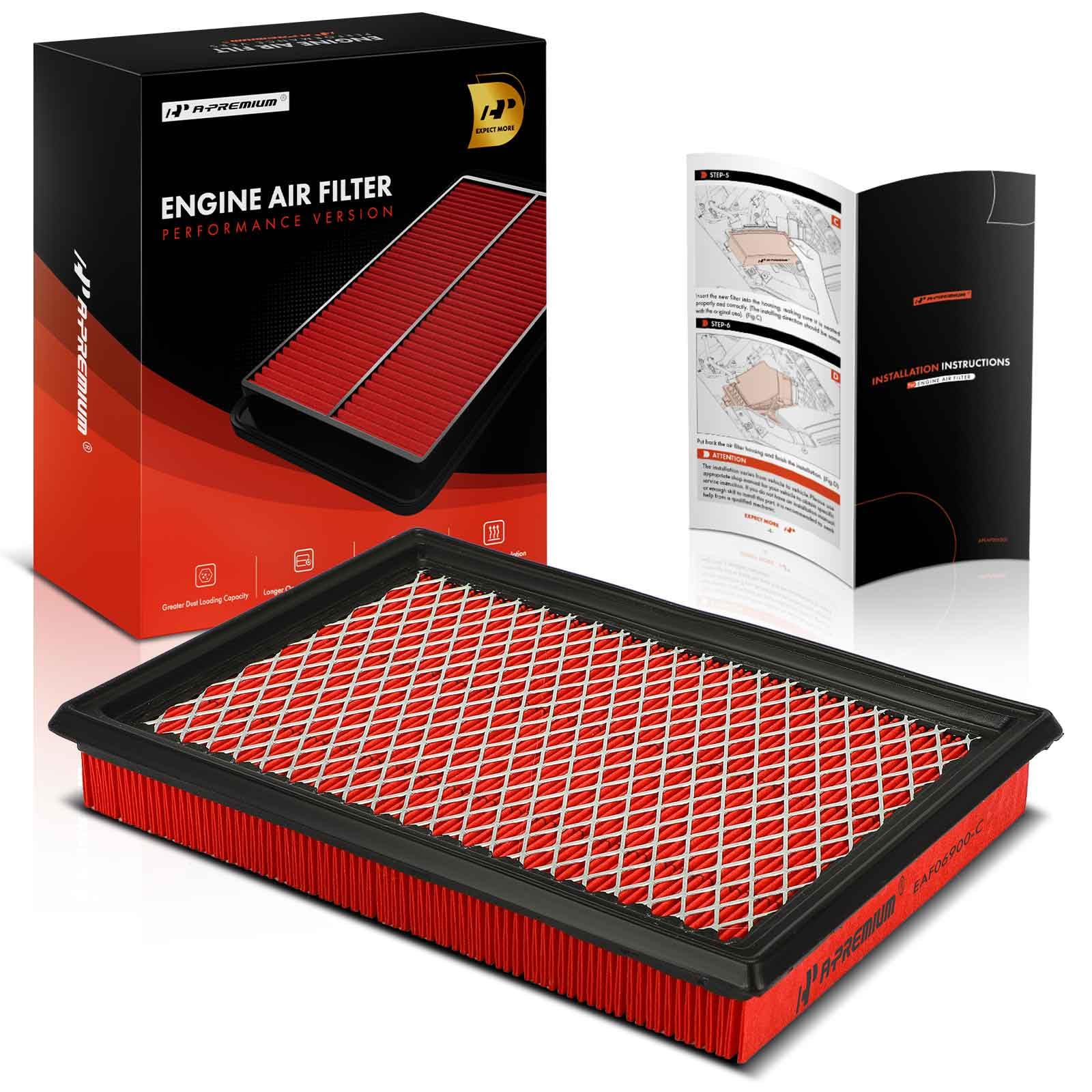
A pre-oiled cotton-style filter that claims longer replacement intervals for the Sentra’s engine bay.
This A-Premium engine filter sits at the intersection of disposable paper and reusable cotton performance filters. It comes pre-oiled from the factory with a tacky filtering media designed to catch fine dust particles without restricting airflow as heavily as packed paper. It is one-time use—washable reusable filters like K&N require re-oiling kits, but A-Premium says this is a disposable unit with an extended lifespan. It fits the Sentra 1.8L from 2013-2019 and also covers various Infiniti and Nissan V6 models. The dimensions are 9.25 inches long, 6.97 inches wide, and 1.5 inches tall.
Buyers on the Nissan Juke and Rogue confirm it fits perfectly. One owner on a Juke gave it 5 stars and called it “made just as well as the more expensive ones.” The pre-oiled nature means it starts working immediately—no break-in period like some cotton filters. The warranty is a one-year unlimited mileage quality guarantee from A-Premium, covering the part itself (not installation labor).
Here is the honest trade-off: oiled filters carry a small risk of coating the mass airflow (MAF) sensor if over-oiled. A-Premium pre-oils it at the factory, so the amount is controlled, but it is a risk that does not exist with dry paper filters like the ECOGARD. Also, A-Premium says it is not reusable, so you are paying more per change than a standard paper filter. It splits the difference between paper disposables and washable cotton.
Why Consider It
- Pre-oiled media traps fine dust better than standard paper
- Extended replacement interval reduces swap frequency
- One-year unlimited mileage warranty from the manufacturer
The Honest Downside
- Oiled filters can gum up the MAF sensor if the oil migrates
- More expensive per filter than a dry paper replacement
Reach for this if: you drive in dusty conditions and want enhanced particulate capture without committing to a washable reusable filter system.
pass on it if: you want a zero-risk, no-oil, drop-in replacement—the ECOGARD is simpler and cheaper for the same fit.
Understanding the Specs
Cabin vs. Engine Filter Location
The cabin air filter lives behind the glovebox on the passenger side. It filters the air coming out of your vents. The engine air filter sits in a black plastic housing on top of your engine (usually on the driver’s side, near the intake). It filters the air the engine sucks in for combustion. They look similar but have different part numbers and are not interchangeable. You need to replace both for full “fresh everything” coverage.
HEPA and Activated Carbon
HEPA stands for High Efficiency Particulate Air. A HEPA filter must capture 99.97% of particles at 0.3 microns—the “most penetrating particle size.” That means it stops smoke, bacteria, and mold spores. Activated carbon is a different trick: the carbon is “activated” by heating it to create millions of tiny pores that trap gas molecules. HEPA traps particles. Carbon traps gases. A HEPA+carbon combo does both but reduces airflow because there are two media layers.
FAQ
How often should I replace the air filter in my 2014 Nissan Sentra?
What is the difference between a cabin air filter and an engine air filter for a Sentra?
Will a HEPA cabin filter fit my 2014 Nissan Sentra without modifications?
How do I know which engine air filter size fits my 2014 Sentra?
Does a carbon cabin filter reduce airflow in my Sentra?
Can I wash and reuse a 2014 Sentra engine air filter?
What does “99.97% at 0.3 microns” mean for my Sentra’s cabin air?
How do I remove the glovebox to access the cabin filter in a 2014 Sentra?
Final Thoughts: The Verdict
For most Sentra owners, the best 2014 nissan sentra air filter setup is the Spearhead BE-177 cabin filter paired with the Spearhead MT-900 engine filter because both offer 15,000-mile life and excellent real-world dirt capacity at a fair price. If you want the absolute cleanest cabin air for allergies, grab the BNX C7078 HEPA filter. And for the best budget engine replacement that fits like factory plastic, the ECOGARD XA4675 is the one.
How We Picked
We do not accept paid placement. Every pick is matched to a real buyer and a real use-case; we do not hands-on test units.
Sources & Methodology
Specifications: manufacturer listings and product documentation. Review insights: verified customer reviews, as of July 2026. Pricing: not shown on this page (it changes often); check the current price via the retailer link.
As an Amazon Associate, Trending Car earns from qualifying purchases. This does not affect which products we feature.