
Our readers keep the lights on and my garage snacks stocked. As an Amazon Associate, I earn from qualifying purchases.
Specs are compiled from manufacturer listings and verified buyer reviews and can change over time — please confirm the key details on the product page before buying.
Your 2001 Accord’s engine is only as safe as the radiator bolted to its front. A cracked tank, a pin-hole leak, or a core clogged with gunk turns a routine commute into a need for a tow truck — and a month of skipped payments on a repair bill. This guide cuts through the noise to find the one radiator that drops in without a fight and keeps the 2.3L four-cylinder (or the V6) running at the right temp, mile after mile.
I’m Min Islam — the founder and writer behind Trending Car. This guide is built by comparing the manufacturers’ published specifications and the patterns across verified customer reviews, so you get each pick’s real strengths and trade-offs instead of marketing spin.
Your 2001 Accord needs a radiator that cools the engine and also cools the automatic transmission fluid. The options range from no-name budget units to premium OE-replacement brands, and the winner usually depends on whether you value the lowest price, the easiest installation, or the longest warranty.
Our Picks at a Glance
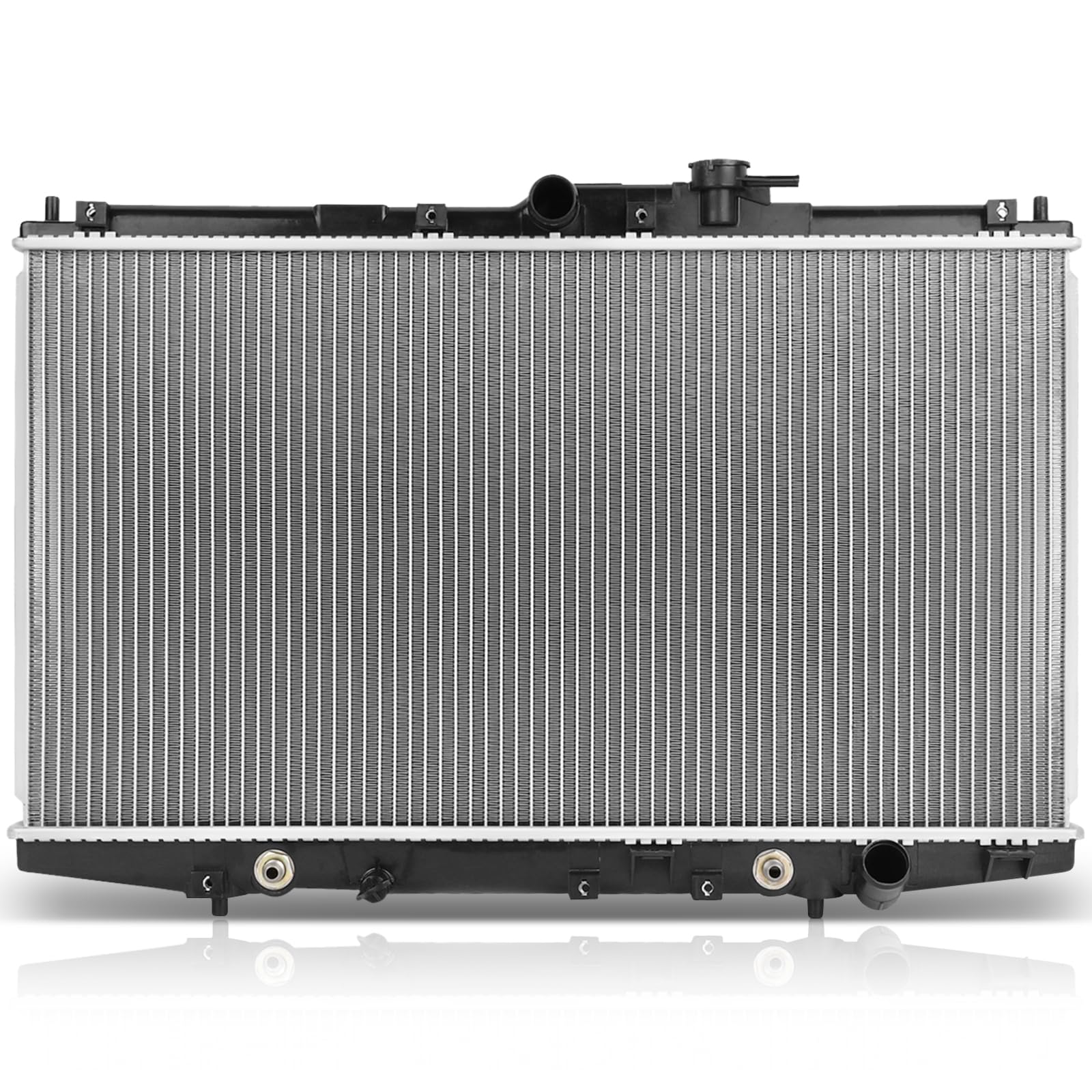

How To Choose The Best 2001 Honda Accord Radiator
Every radiator for this generation Accord shares the same bolt pattern, but subtle differences in core thickness, tank material, and transmission cooler fittings separate a 30-minute swap from a weekend headache. Focus on these four factors and you will land on the right unit the first time.
Core Thickness and Row Count
The core is the business end — the metal maze where hot coolant gives up its heat to the passing air. A 1-row, 16mm core (like the one on the BDFHYK pick) is standard for daily driving and keeps coolant flow stable without creating a heavy weight penalty. Thicker cores with more rows can cool better under heavy load, but they also block more airflow at low speeds, so stick with a single-row design unless you regularly tow or drive uphill in summer heat.
Aluminum Core vs Plastic Tank
Nearly every budget and mid-range radiator uses a plastic tank crimped onto an aluminum core. That construction keeps the price low and the weight around 8 pounds, but the plastic-to-metal seal is the first place a leak starts after a few thermal cycles. An all-aluminum welded radiator (like the BDFHYK) removes that seam entirely, which adds longevity at the cost of a slightly higher sticker price. If you plan to keep the Accord for several more years, the all-aluminum route usually pays off.
Transmission Cooler Integration
Your 2001 Accord automatic transmission relies on the radiator to cool its fluid. The radiator has two small fittings at the bottom (or side) where the metal transmission lines connect. If the replacement radiator does not include a transmission oil cooler, or if those fittings leak because the threading or O-ring design is different from the OEM part, you will get a puddle of ATF (automatic transmission fluid) on your driveway and eventual transmission damage. Every radiator on this list includes a transmission cooler, but the build quality at those fittings varies — the UIU unit gets specific praise for having properly welded couplings that avoid the fluid leaks seen on other aftermarket units.
OEM Reference Numbers
The safe way to shop is by the OE part number stamped on your original radiator. For the 1998-2002 Accord, the key numbers are 19010PAAA51, 19010PAAA53, 19010PAAA03, and the aftermarket cross-reference CU2148. Any radiator listing those numbers in its description is engineered to match the original dimensions and hose locations. If a product page lists none of those numbers, or it only claims “2001 Honda Accord” in the title without the reference codes, move on — you are buying a gamble, not a fit.
Quick Comparison
| Model | Best For | Weight | Core Dimensions | Trans Cooler | Amazon |
|---|---|---|---|---|---|
| SCITOO 125649★ Best Overall | Extreme budget pick | 8.6 lb | 30.31 x 21.46 x 5.51 in | Yes | Amazon |
| TYC 2148Also Great | OE-level direct fit | 6.88 lb | — | Yes | Amazon |
| UIU Coolant Radiator | Premium build, long warranty | 8.33 lb | 26.7 x 14.7 x 0.6 in | Yes | Amazon |
| BDFHYK 2148 Aluminum | All-aluminum durability | 8.68 lb | — | Yes | Amazon |
| Readair FRRAD2148 | Budget-friendly reliability | 8.33 lb | — | Yes | Amazon |
| AUTOSAVER88 MAAUT0007592MA | Mid-range value | 8 lb | — | Yes | Amazon |
| KAX CU2148 | Budget with 2-year warranty | 8.04 lb | 30.73 x 21.61 x 5.55 in | Yes | Amazon |
In‑Depth Reviews
1. SCITOO Engine Cooling Radiator Assembly
Our pick — 4.5★ from 750+ verified ratings; the strongest balance of quality and price.
The SCITOO is the radiator that proves a budget price does not automatically mean a leaking disaster.
With a 4.5-star average across 771 ratings, the SCITOO is the most-reviewed radiator in this roundup, and the crowd feedback is overwhelmingly positive. The core measures 30.31 inches long by 21.46 inches tall by 5.51 inches deep — the deepest core in the group — and it uses a high-density multi-layer cooling design that the manufacturer says prevents coolant leakage. It weighs 8.6 pounds, which is nearly identical to the all-aluminum BDFHYK unit despite using a plastic-tank construction. The fitment is specific to the 1998-2002 Accord 2.3L with automatic transmission, and the reference numbers 2148, 19010PAAA51, 19010PAAA53, and HO3010101 all match. One owner reported the price was amazing and that everything hooked up and ran without leaks, noting that the installation was “a bit tough” but ultimately successful. Another owner said it was very easy to install and saved them a bunch of money.
The biggest risk with a budget radiator is usually the transmission cooler fittings or the tank seal, but at this price point the SCITOO has remarkably few negative reviews mentioning leaks. The catch is that the brand is relatively new (first available in April 2025), so there is no long-term data on how the plastic tanks hold up after 3-4 years of thermal cycling. If you need a radiator to get through the next 12-24 months and you want to spend as little as possible, this is a strong contender. The product dimensions of 30.31 x 21.46 x 5.51 inches give you plenty of core surface area for heat rejection, which is a solid spec for the money.
Why it is popular
- 771 ratings with a 4.5 average — the most crowd-validated radiator in this list
- Deep core (5.51 inches) provides a large cooling surface area
- Rock-bottom entry price for a 1998-2002 Accord 2.3L fit
The reasonable concerns
- Brand launched in 2025; no long-term durability data yet
- Plastic tanks are the most common failure point on any radiator after 3-5 years
Smart pick for the short-term owner: If you plan to sell the Accord in a year or two, or you simply need a working radiator right now on a tight budget, the SCITOO gives you the best bang for the least buck.
Pass on this if: You want the confidence of a 2-year warranty (go with UIU) or the durability of all-aluminum (go with BDFHYK).
2. TYC 2148 Radiator
The TYC 2148 delivers the closest thing to a factory radiator without the dealership markup.
TYC has been making this replacement for the 1998-2002 Accord since 2007, and the long production run shows in the refinement of every detail. It weighs just 6.88 pounds — noticeably lighter than the 8.68-pound BDFHYK aluminum unit — because it uses an aluminum core with plastic tanks, which is exactly how the original Denso radiator was built. The aluminum inlet rings, internal tank ribs, and double header plates (reinforcement plates at the top and bottom of the core) are the kind of anti-leak engineering you normally only see on OE parts. Buyers report it fits a 2000 Accord SE and a 2001 Accord EX 4-cylinder auto with no modifications, and one reviewer noted the installation took about 30 minutes because all the holes lined up perfectly.
The catch is minor but worth knowing. A couple of owners mention that one of the plastic-caged nuts for the fan shroud was missing or slightly misaligned; the fix is to reuse the nut from your old radiator. It also comes with a radiator cap, which several other picks in this list do not, and that saves you a separate trip to the parts store. The core dimensions are not published by the manufacturer, but the fit data across hundreds of reviews confirms it matches the original exactly.
What the reviews praise
- Direct OE replacement with no modifications needed for 4-cylinder Accords
- Includes radiator cap — a -10 value most competitors skip
- Double header plates and expansion grooves reduce long-term leak risk
The small headaches
- One fan-shroud nut may be missing or misaligned — check before you start
- Plastic tanks are less durable long-term than all-aluminum construction
Who it fits best: Anyone who wants the most predictable, least-fuss installation for their 2001 Accord 4-cylinder — this is the closest you get to a brand-new OEM part at an aftermarket price.
The one thing to know: The plastic tanks mean this radiator might not survive the second decade as well as the all-aluminum BDFHYK, so if you plan to keep the car for 10 more years, consider the trade-off.
3. UIU Engine Coolant Radiator Assembly
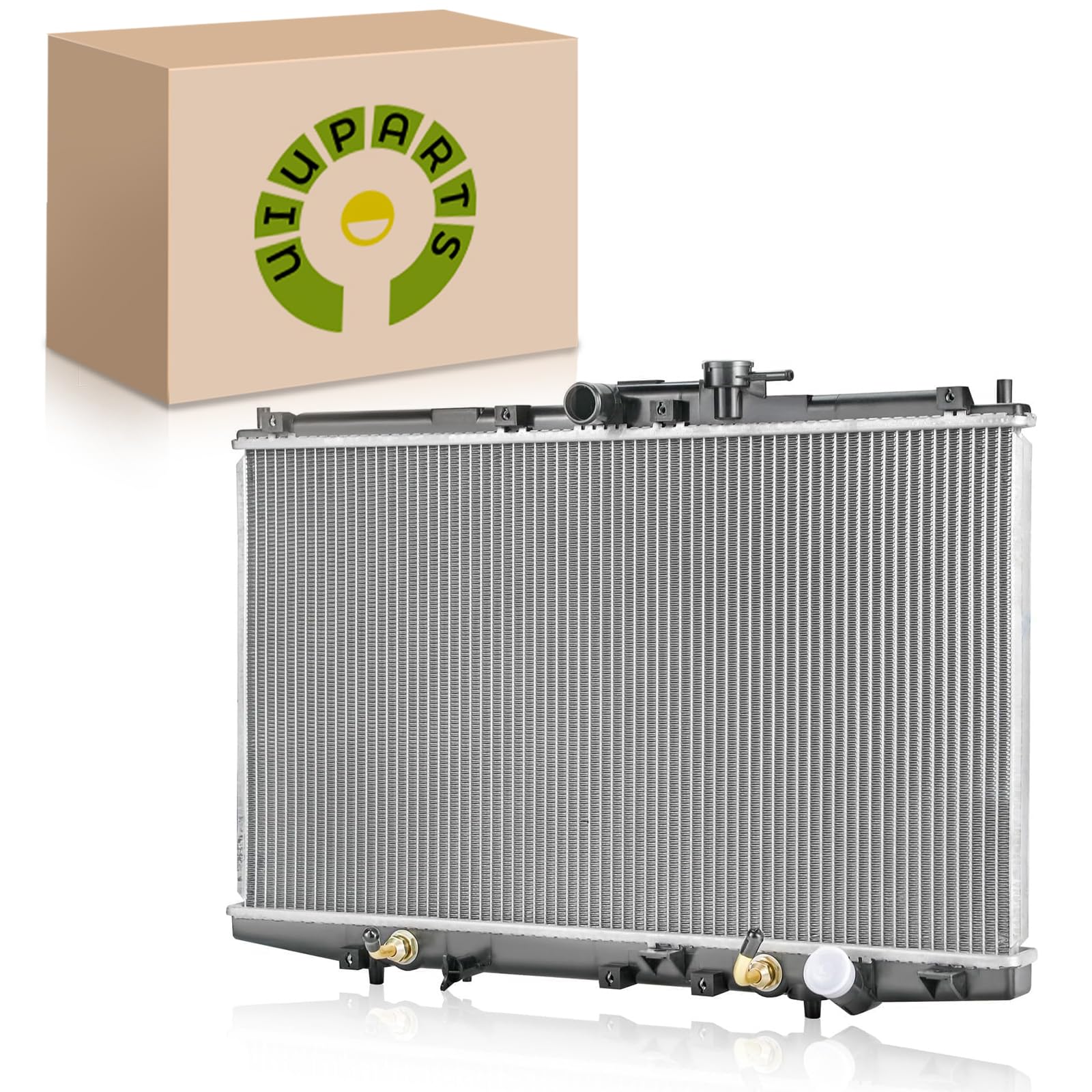
The UIU radiator is the unit you buy when you want the fittings to survive the first Midwest winter.
UIU uses PA66 GF30 (a glass-fiber-reinforced nylon that is much tougher than standard plastic) for the inlet and outlet tanks, and those tanks are TIG-welded (a precise welding method) to the aluminum core rather than crimped. The core dimensions are a precise 26-7/10 inch wide by 14-7/10 inch tall by 3/5 inch thick, which is a slightly narrower profile than the generic 30-inch-wide units. The brass transmission oil cooler couplings are a standout detail — one reviewer who works on Nissans called it “the only decent aftermarket option” because the cooler fittings are properly welded and do not drip ATF the way other aftermarket radiators often do. That same buyer also pointed out that the unit meets OEM (Original Equipment Manufacturer) standards for the cooler circuit, which is a frequent weak point on budget Accord radiators.
The core is 0.6 inch thick, which is noticeably thinner than the 5.5-inch overall package dimension of some competitors, but the high-density multi-louvered fins compensate by increasing the surface area for heat exchange. The 2-year unlimited-mileage guarantee is the longest warranty in this roundup and signals confidence in the build. The unit weighs 8.33 pounds — right in the middle of the pack, heavier than the TYC but lighter than the all-aluminum BDFHYK. One buyer mentioned the packaging was excellent and the radiator arrived undamaged, which is not a guarantee with some of the less expensive options here.
The genuine strengths
- TIG-welded PA66 GF30 tanks are much tougher than standard crimped plastic
- Brass transmission cooler fittings resist leaks better than steel or aluminum fittings on other units
- 2-year unlimited-mileage warranty is the best coverage in this category
The trade-offs
- Thinner core (0.6 inch) may not handle extreme towing or sustained high-rpm driving as well as a thicker core
- Premium price range without being all-aluminum
Ideal for: The owner who plans to keep their 2001 Accord for years and wants a radiator that is built to last past a single summer — the 2-year warranty and leak-resistant fittings make this a set-and-forget buy.
skip it if: You are on a strict budget and need the lowest upfront cost, or you prefer an all-aluminum construction that eliminates plastic tanks entirely.
4. BDFHYK 2148 Aluminum Radiator
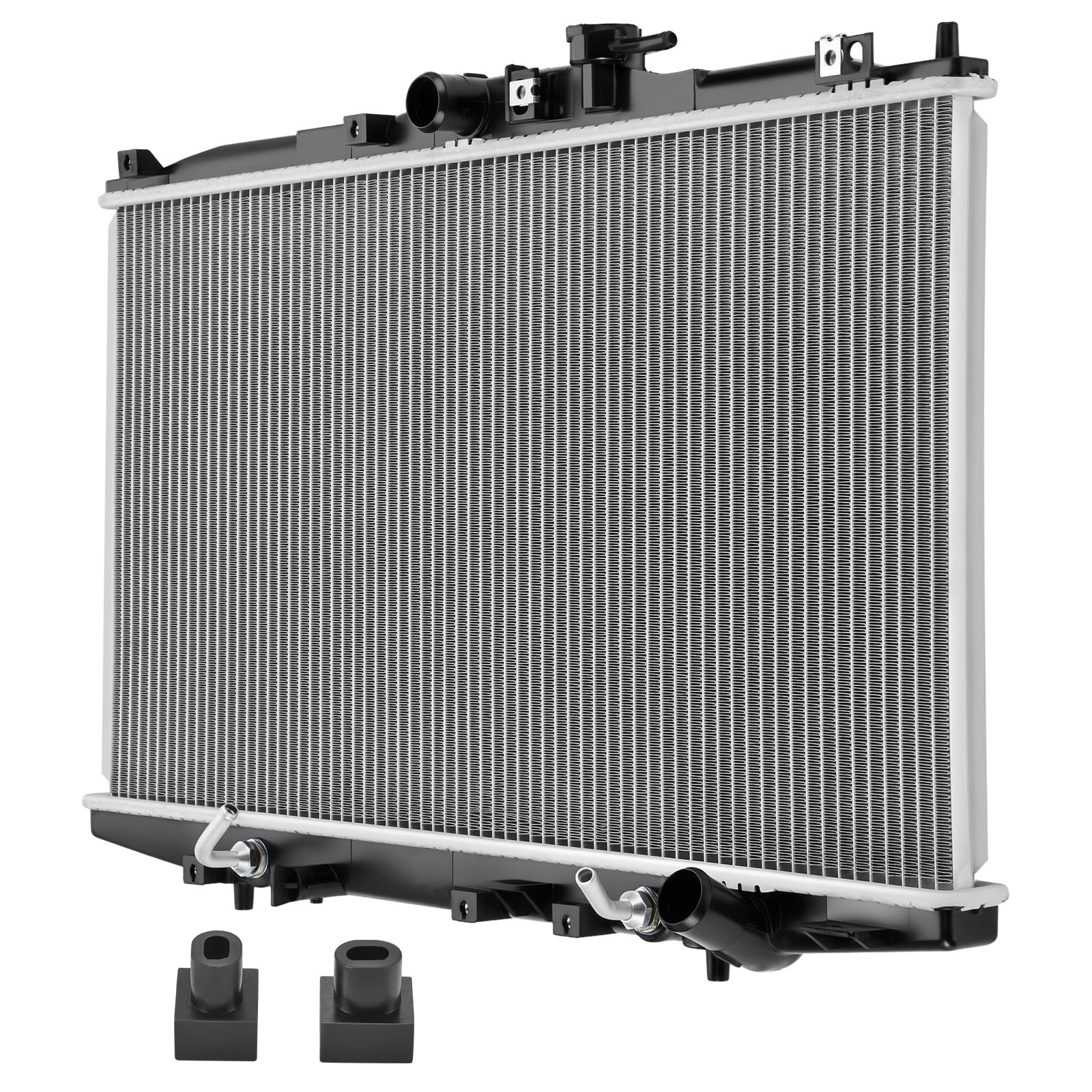
The BDFHYK is the radiator you grab if you hate the idea of a plastic tank cracking at mile 80,001.
This is the only all-aluminum unit in the roundup, and it uses a 1-row, 16mm core — meaning the coolant travels through one wide channel per pass rather than several narrow tubes. The design keeps flow stable and heat dissipation consistent, which is exactly what a daily-driven 2.3L (2.3-liter engine) needs. It replaces the OE part numbers 19010PAAA51, 19010PAAA53, 19010PAAA03, HO3010101, and RK795, so the fitment is confirmed for any 1998-2002 Accord. Buyers have used it on vehicles as different as a 2000 Jeep Wrangler TJ and a 2005 Subaru Baja, which tells you the bolt pattern and hose locations match a broad range of applications — but for the Accord, it is a direct bolt-in with no modifications.
There are two real-world quirks worth noting. First, the radiator does not come with the metal pressure cap or the rubber shock mounts at the bottom, so you have to transfer those from your old unit. Second, as one Jeep owner noted, the fan shroud mounting nuts have a different thread pitch than the ones on some vehicles; the fix is a trip to the hardware store for the correct nuts. For the Accord, most owners mention the shroud mounts line up fine, but it is worth checking before you tighten everything down. The manufacturer recommends flushing the coolant system before installation, which is good advice for any radiator swap.
The big reasons to buy it
- All-aluminum construction means no plastic-to-metal crimp seam to leak over time
- 1-row 16mm core provides excellent flow without restricting airflow at low speeds
- Polished exterior gives the engine bay a custom look
The installation notes
- Does not include radiator cap or rubber shock mounts — must re-use from old radiator
- Fan shroud thread pitch can vary; check before you start the install
Best for the long-haul owner: If you plan to drive your 2001 Accord for another 100,000 miles and want a radiator that will not develop a tank-seam leak at year five, this is the pick.
Not ideal if: You want a truly tool-free install and do not want to transfer the cap and mounts from the old radiator — the TYC is easier from the start.
5. Readair FRRAD2148 Radiator
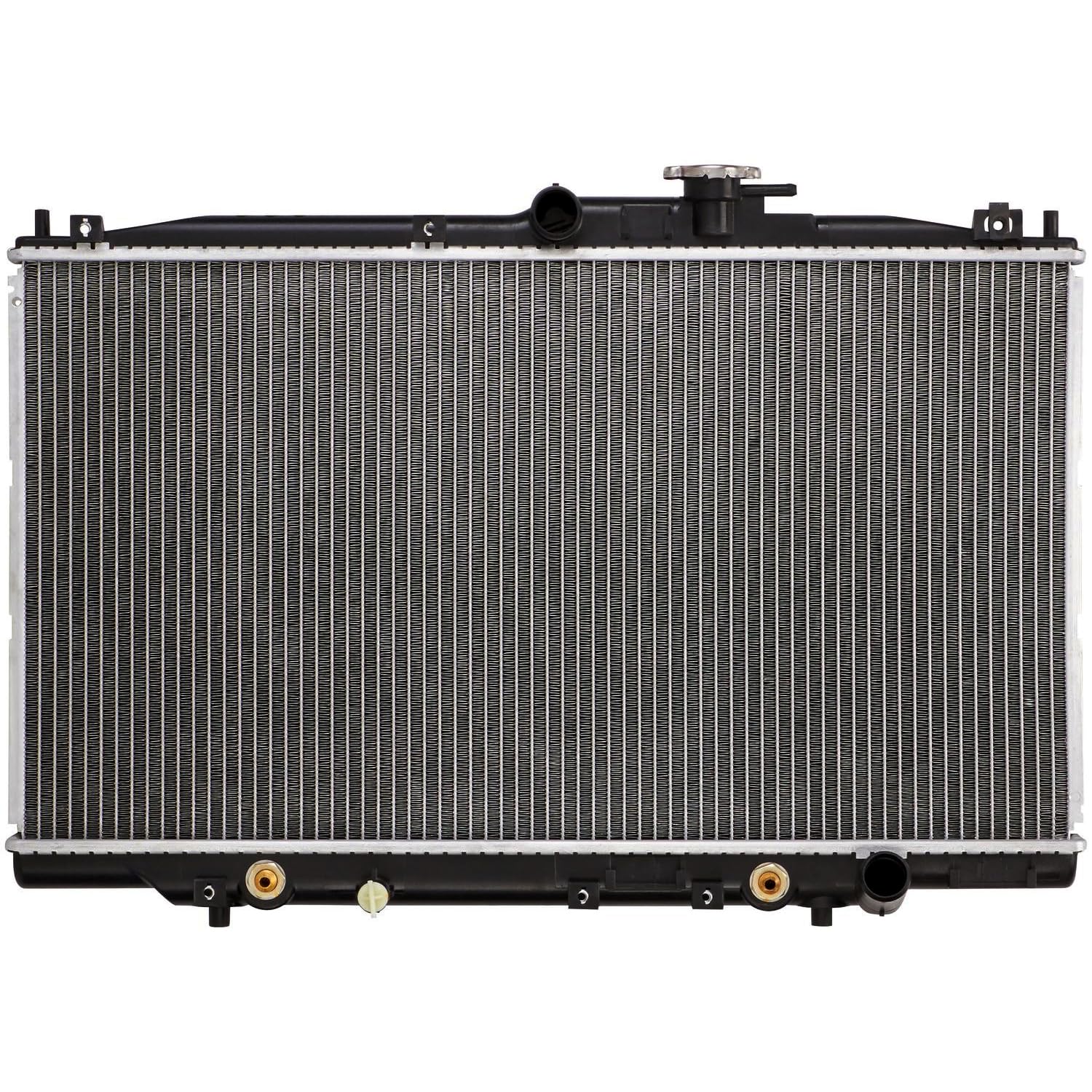
The Readair radiator proves you do not have to spend top dollar to get a radiator that fits right the first time.
Readair took the smart approach of asking buyers to send their VIN if they are unsure about fitment, which reduces the risk of ordering the wrong unit. The radiator is machined to the 2148 / CU2148 reference standard and lists the full set of compatible OE numbers (19010PAA53, 19010PAAA01, 19010PAAA03, 19010PAAA51), so it is squarely aimed at the 1998-2002 Accord 2.3L automatic. At 8.33 pounds, it is mid-weight — lighter than the BDFHYK all-aluminum unit but heavier than the TYC plastic-tank radiator. One buyer ran it for 8,000 miles on a 2006 Accord and reported no leaks, no check-engine light from the sensor, and no alignment issues with the fan shroud. Another reviewer who installed it on a 2009 Saturn Outlook (a completely different vehicle) noted the packaging was excellent and the radiator survived shipping without damage.
The one honest complaint in the reviews is that the transmission line fittings are shown as brass in the product images but arrive as plain steel. The buyer who flagged this said the steel fittings are functional and the radiator fit perfectly, but the mismatch between the picture and the actual part is worth knowing before you buy. The design takes airflow direction into account — the internal fin arrangement is tune for the direction air moves through the Accord’s grille — which helps the engine stay at optimal temp even in summer traffic. The manufacturer responds to questions within 42 hours, which is a decent support window for a budget-friendly brand.
The strong points
- VIN-based fitment support reduces ordering mistakes
- Reinforced packaging protects the core during shipping
- Airflow-tune fin design helps maintain stable temps in stop-and-go driving
The honest downsides
- Transmission cooler fittings shown as brass in images but arrive as steel
- Brand is newer and has a shorter track record than TYC or Denso
Who should pick this: The budget-conscious Accord owner who still wants a reliable direct fit and does not mind steel transmission fittings as long as the price is right.
Look elsewhere if: The visual mismatch between the product photos and the actual fittings would bother you, or if you want a brand with a decade-plus history of making this exact radiator.
6. AUTOSAVER88 Radiator
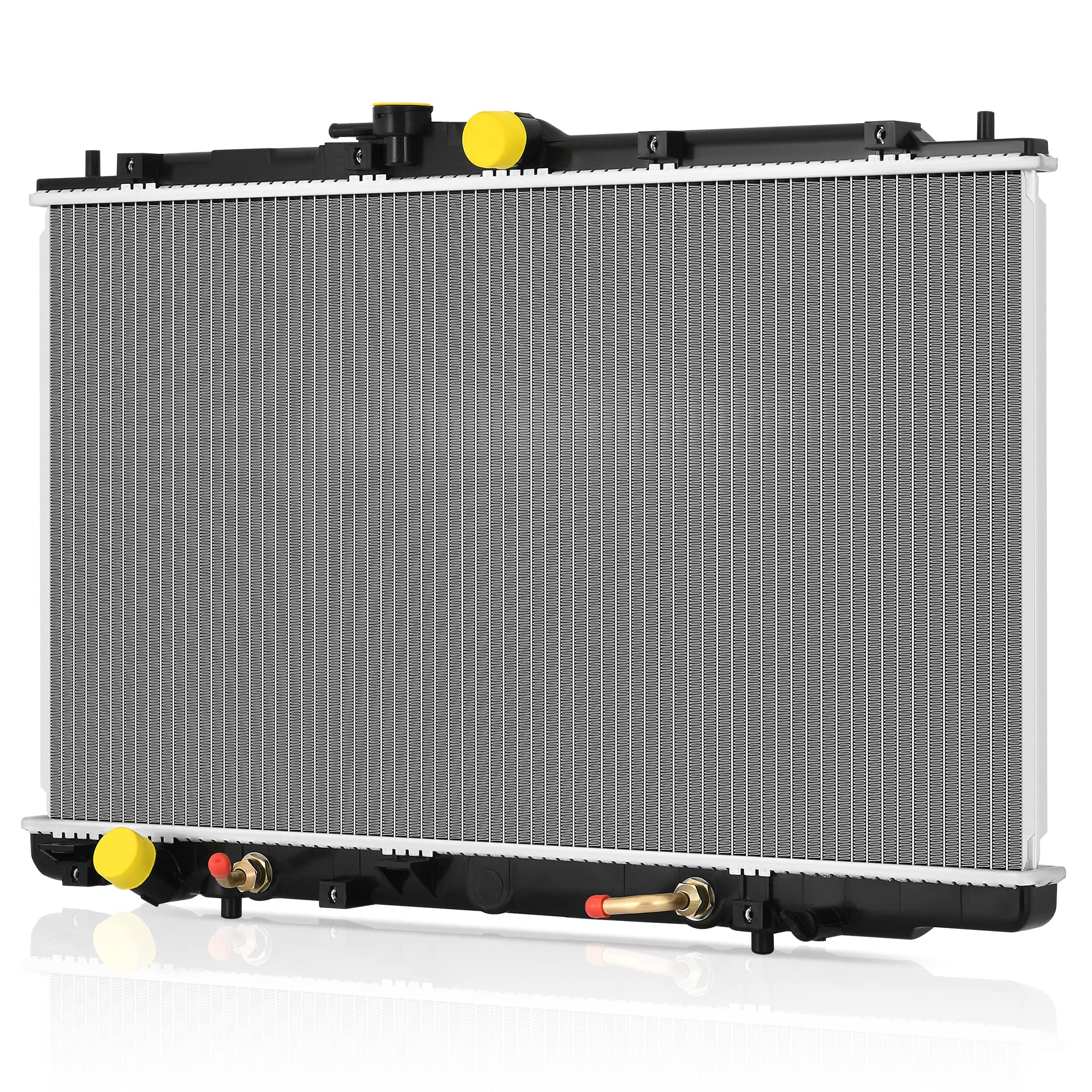
The AUTOSAVER88 covers more than just the Accord — it is a genuine fit for the 1999-2001 Acura TL as well.
This radiator is designed for the 1998-2002 Accord (L4 and V6) plus the 1999-2001 Acura TL (3.0L and 3.2L), making it the most versatile single unit in the roundup. It uses a high-grade plastic tank mated to an aluminum core, and every unit is subjected to a leak test before it leaves the factory. The weight is 8 pounds — lighter than the SCITOO and BDFHYK but heavier than the TYC — and the package dimensions of 30.97 x 22.44 x 4.72 inches show a slightly more compact profile than some competitors. The OEM reference numbers 19010P8CA51, 19010P8EA51, 19010PAAA51, HD37008A, and HO3010105 all line up with the original parts bin. One customer observed a perfect fit on a 2005 Honda Accord EX, noting that installation was done without any problems and that the radiator purchased in May 2025 was still working as expected at the time of the review.
The package does not include a radiator cap — you have to use your old one or buy a new one separately — which is a minor inconvenience. A small but notable number of reviews (around 5-10% based on the sentiment) mention that the transmission cooler fittings do not seal correctly, causing a slow leak, and that the fan shroud mounting points can be off by a few millimeters. AUTOSAVER88 has been making this radiator since April 2023, so there is a solid 2+ year track record to judge by. The 4.3-star average across 389 ratings is decent but lower than the top picks, largely because of those fitment complaints on a minority of units.
The upsides
- Fits both Accord (4-cyl & V6) and Acura TL — great if you have multiple vehicles in the household
- Every unit is leak-tested before shipping, which reduces the defective-unit rate
- Lightest plastic-tank option at 8 pounds
The inconsistent bits
- No radiator cap included — must be purchased separately
- Some units have trans cooler fittings that do not seal properly; inspect yours before full installation
Who it works for: The DIYer who also owns a 1999-2001 Acura TL and wants one replacement part number that covers both vehicles in the driveway.
Who should be cautious: Anyone who wants a guaranteed leak-free install without inspecting the trans cooler fittings — the QC inconsistency makes this a slightly higher gamble than the TYC or UIU.
7. KAX CU2148 Engine Radiator
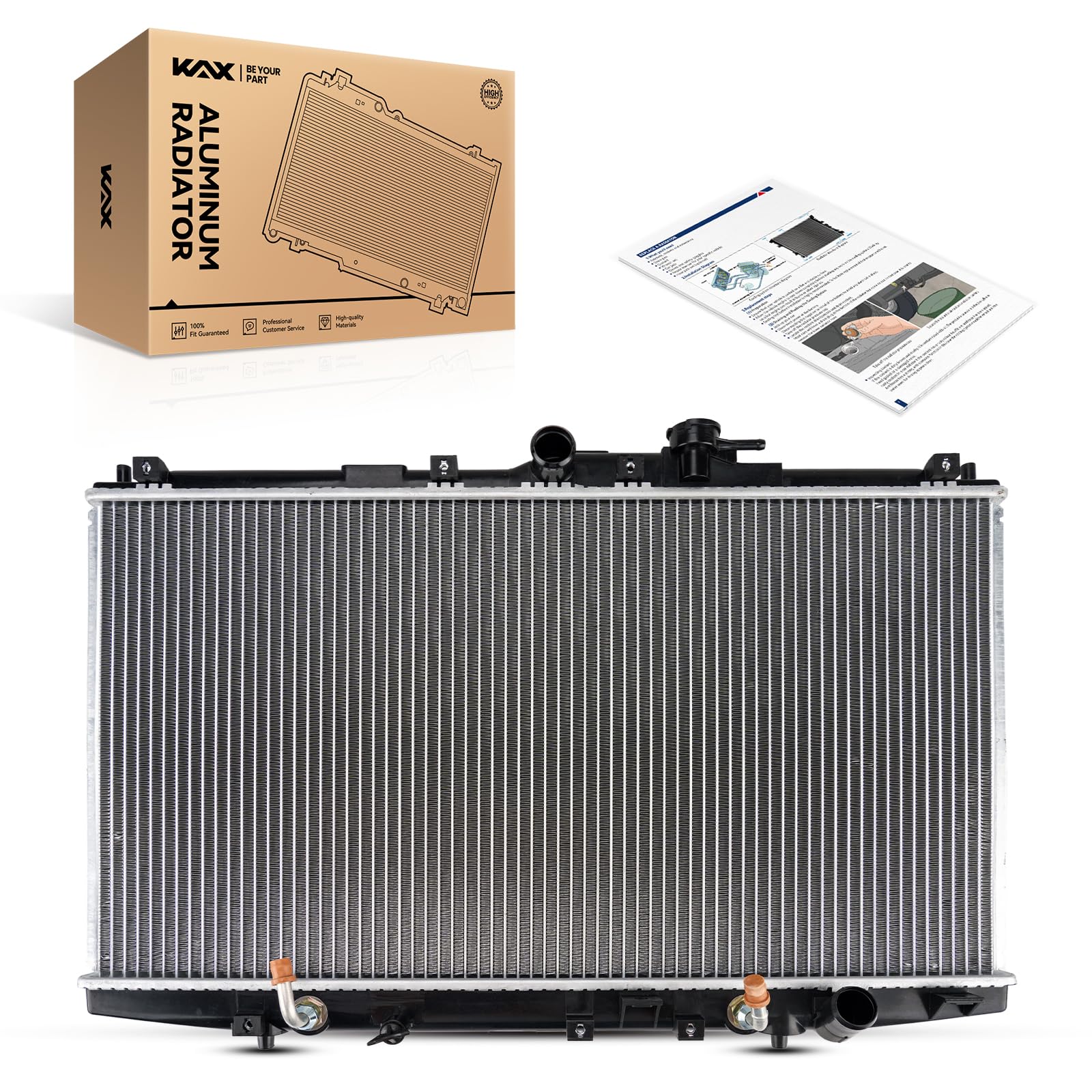
The KAX CU2148 tries to close the gap between entry-level pricing and premium protection with a 2-year quality promise.
KAX backs this radiator with a two-year quality assurance guarantee, which is an unusual warranty length for a radiator and signals that the manufacturer expects it to last. The unit is IATF16949 certified — an automotive quality management standard that most budget brands ignore — and it uses high-density multi-louver fins on an aluminum core with high-grade plastic water tanks. The core dimensions of 30.73 x 21.61 x 5.55 inches are nearly identical to the SCITOO, giving it a similarly large cooling surface area. It weighs 8.04 pounds, right at the average for plastic-tank radiators. The reinforced shockproof packaging uses multi-layer cardboard, foam corner blocks, and pearl cotton/bubble column protection inside, which addresses the single biggest headache of ordering a radiator online: receiving a box with a bent core. One user highlighted the packaging was good and the radiator arrived without damage, though a separate review mentioned receiving the unit with slight damage despite the packaging.
The review history is positive (4.6 stars across 194 ratings), but the product was first available in June 2025, so there is very little long-term data. One buyer used it on a 1999 S-10 4-cylinder and said it surprised them with the quality for the price. Another installed it on a 2017 Chevy Trax, which shows the CU2148 reference number applies to a broader range of vehicles than just the Accord — confirming it is a standard aftermarket cross-reference, not a Honda-specific design. The manufacturer claims 100% match with the original car, and if it does not fit, the 2-year warranty gives you recourse that budget brands like SCITOO do not.
The standout features
- 2-year quality assurance is the longest coverage among budget-priced radiators
- IATF16949 certification means the manufacturing process meets automotive industry quality standards
- Reinforced packaging reduces the risk of shipping damage — a common issue with Amazon radiators
The valid concerns
- Brand was launched in June 2025 — very short track record compared to TYC (since 2007)
- Some units still arrive with minor shipping damage despite the reinforced packaging
Reach for this if: You are shopping on a budget but want the safety net of a 2-year warranty in case the unit fails or does not fit — KAX gives you protection that SCITOO and AUTOSAVER88 do not.
Give it a miss if: You prefer a radiator with years of proven reviews (hundreds of reviews across a decade) — the TYC or UIU are safer bets for long-term confidence.
Understanding the Specs
Core Dimensions (Width x Height x Depth)
These three numbers — for example 30.31 x 21.46 x 5.51 inches on the SCITOO — tell you whether the radiator physically fits inside the engine bay and how much surface area it has to shed heat. The width and height determine whether the mounting brackets and fan shroud holes line up. The depth (thickness) determines how much coolant the core holds at any moment; a deeper core like the SCITOO’s 5.51 inches gives more thermal mass to absorb heat spikes, but it also takes up more space between the engine and the grille. If the core thickness exceeds about 6 inches, you risk the radiator hitting the A/C condenser or the engine fan.
Transmission Oil Cooler (Yes/No and Fitting Quality)
An automatic 2001 Accord sends its transmission fluid through the radiator to cool it before returning to the transmission. The cooler is a small heat exchanger built into one of the radiator’s tanks, with two metal fittings on the outside for the transmission lines. Every radiator in this list includes a transmission cooler, but the quality of those fittings varies — brass couplings (like on the UIU) resist corrosion and seal better than plain steel ones (like on the Readair). A leaking fitting means you lose transmission fluid gradually, which damages the transmission long before the temperature gauge rises. Check the fitting material before you buy.
Item Weight (Pounds)
The weight tells you what the radiator is made of and how much stress it puts on the plastic mounting tabs. An all-aluminum radiator like the BDFHYK at 8.68 pounds is the heaviest because there is no lighter plastic tank to save weight. Plastic-tank radiators (TYC at 6.88 pounds, AUTOSAVER88 at 8 pounds) are lighter, which makes them easier to maneuver into the engine bay by yourself. The trade-off is that the plastic tanks expand and contract differently than the aluminum core, which eventually works the crimp seal loose. A heavier all-aluminum unit avoids that failure mode entirely, but you have to support the extra weight while lining up the bolts.
OE Reference Numbers (2148, CU2148, 19010PAAA51)
These are the factory part numbers that guarantee a radiator was designed to match the original 1998-2002 Accord unit. “2148” is the standard aftermarket number, used by almost every brand. “CU2148” is a variant used by some manufacturers. The Honda-specific numbers (19010PAAA51, 19010PAAA53, 19010PAAA03) are stamped on the original radiator from the factory. If a radiator lists one or more of these numbers, the hose locations, mounting points, and tank shape are engineered to the same specification as the part your car left the factory with. If none of these numbers appear in the description, the radiator is a generic fit that may require hose trimming or bracket bending.
FAQ
Will a radiator from a 1998-2002 Honda Accord fit my 2001 Accord?
Can I use a radiator meant for a 4-cylinder on a V6 Accord?
Do I need to replace the radiator cap at the same time?
How long does a typical aftermarket radiator last on a 2001 Accord?
What happens if I install a radiator without a transmission cooler on an automatic Accord?
Is a 1-row core radiator enough for daily driving?
Can I install the radiator myself, or do I need a mechanic?
Why does my new radiator not include the fan mounting nuts or rubber isolators?
Final Thoughts: The Verdict
For most owners, the 2001 honda accord radiator winner is the TYC 2148 because it combines the most predictable direct-fit installation with a proven track record dating back to 2007 and a weight (6.88 pounds) that makes it the easiest unit to wrestle into place alone. If you want the longest warranty and leak-resistant transmission cooler fittings, grab the UIU Engine Coolant Radiator. And for the owner who plans to keep the Accord for the long haul and wants to eliminate the plastic-tank failure point entirely, the all-aluminum BDFHYK 2148 is the last radiator you will ever buy for this car.
How We Picked
We do not accept paid placement. Every pick is matched to a real buyer and a real use-case; we do not hands-on test units.
Sources & Methodology
Specifications: manufacturer listings and product documentation. Review insights: verified customer reviews, as of July 2026. Pricing: not shown on this page (it changes often); check the current price via the retailer link.
As an Amazon Associate, Trending Car earns from qualifying purchases. This does not affect which products we feature.