
Our readers keep the lights on and my garage snacks stocked. As an Amazon Associate, I earn from qualifying purchases.
Specs are compiled from manufacturer listings and verified buyer reviews and can change over time — please confirm the key details on the product page before buying.
You buy a dash cam for that one-in-a-hundred moment when a lane-change turns into a he-said-she-said — or worse, a hit-and-run in a parking lot. A good 1080p dash cam makes license plates readable at night, locks the clip when a bump happens, and spits it out to your phone fast enough to hand to an officer before the adrenaline fades. The cameras here deliver that clarity while staying affordable or requiring a degree in automotive wiring.
I’m Min Islam — the founder and writer behind Trending Car. This guide is built by comparing the manufacturers’ published specifications and the patterns across verified customer reviews, so you get each pick’s real strengths and trade-offs instead of marketing spin.
The real question is which 1080p dash cam will reliably produce clear footage of license plates and road signs in the exact driving conditions you face every day.
Our Picks at a Glance

How To Choose The Best 1080P Dash Cam
A 1080p resolution is a solid floor for plate-reading, but the real separation between a good dash cam and a frustrating one happens in the details you can’t see on the spec sheet. Here are the three things experienced buyers look beyond first.
Channels and Coverage: Two is Good, Four is Insurance
A dual-channel dash cam (front and rear) covers the two most likely accident angles. But if you drive for a rideshare, have a truck with long blind spots, or park on a busy street, a four-channel system — adding left and right interior cameras — is the difference between catching a door ding and wondering who did it. Four-channel models need more wiring and a larger SD card, but they provide evidence from angles a single front lens will always miss.
The Sensor Dictates the Night Vision
The resolution is the frame, but the image sensor is the artist. A camera with a Sony STARVIS 2 sensor (a low-light sensor that captures color footage even in near-darkness) will produce dramatically cleaner, color-accurate footage in low light than a budget sensor with the same 1080p label. Pair that with a wide F1.7 or F1.8 aperture (a larger lens opening that lets in more light) and HDR (High Dynamic Range, a processing trick that balances bright headlights and dark shadows), and you get plates that are actually legible at night.
Power Source: The Heat Test
Many dash cams use a lithium-ion battery, which degrades in high heat and can eventually swell. A supercapacitor (a component that stores energy electrostatically rather than chemically) handles extreme temperatures far better and lasts longer, making it the wise choice if you live in a climate where car interiors hit 150°F. The trade-off is that a supercapacitor-powered cam needs constant power — it has no battery to run on after the engine shuts off unless you buy a hardwire kit.
Quick Comparison
| Model | Best For | Channels | Night Vision Tech | Storage | Amazon |
|---|---|---|---|---|---|
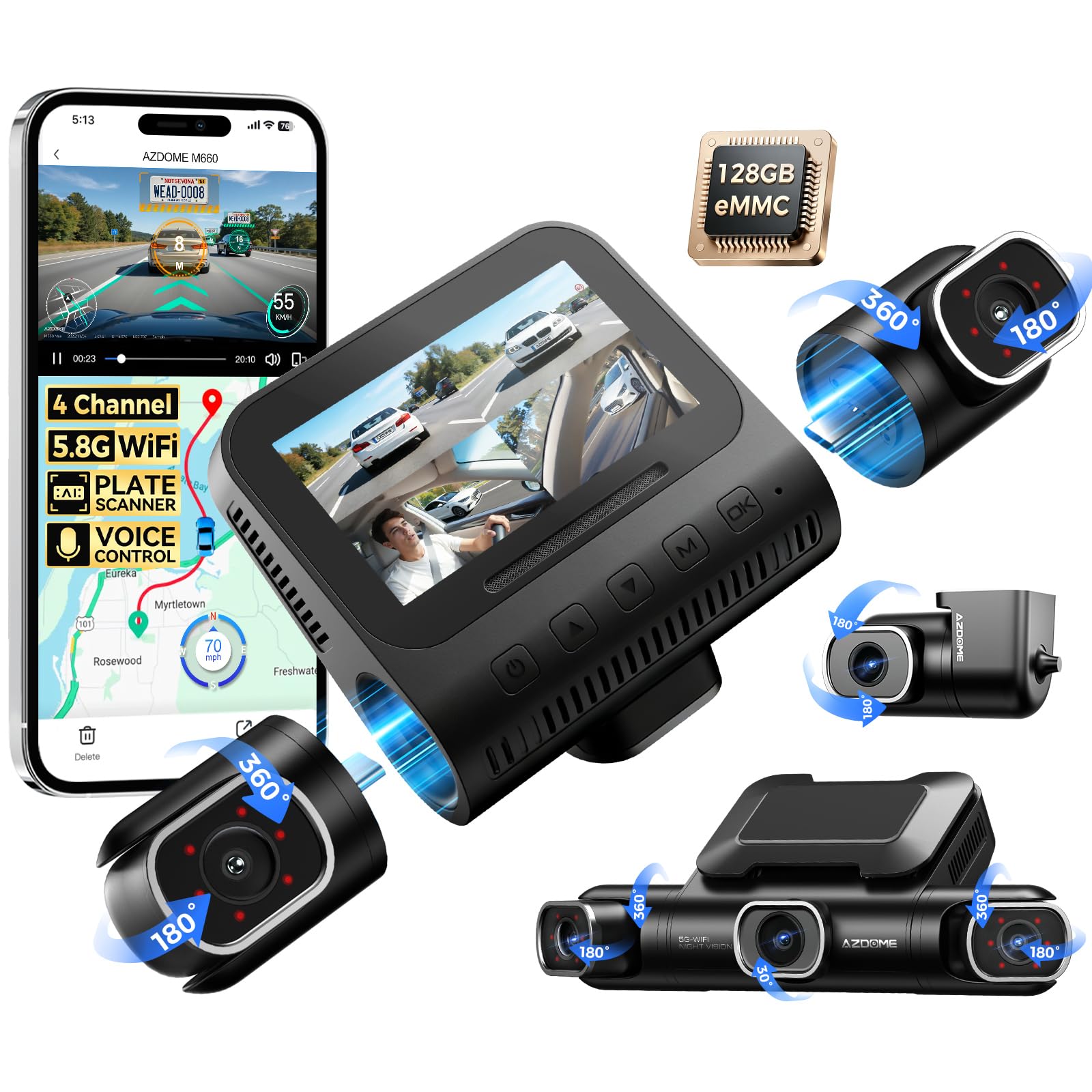
| AZDOME M660★ Best Overall | Full 360° coverage | 4 | 12 IR LEDs | Built-in 128GB | Amazon |
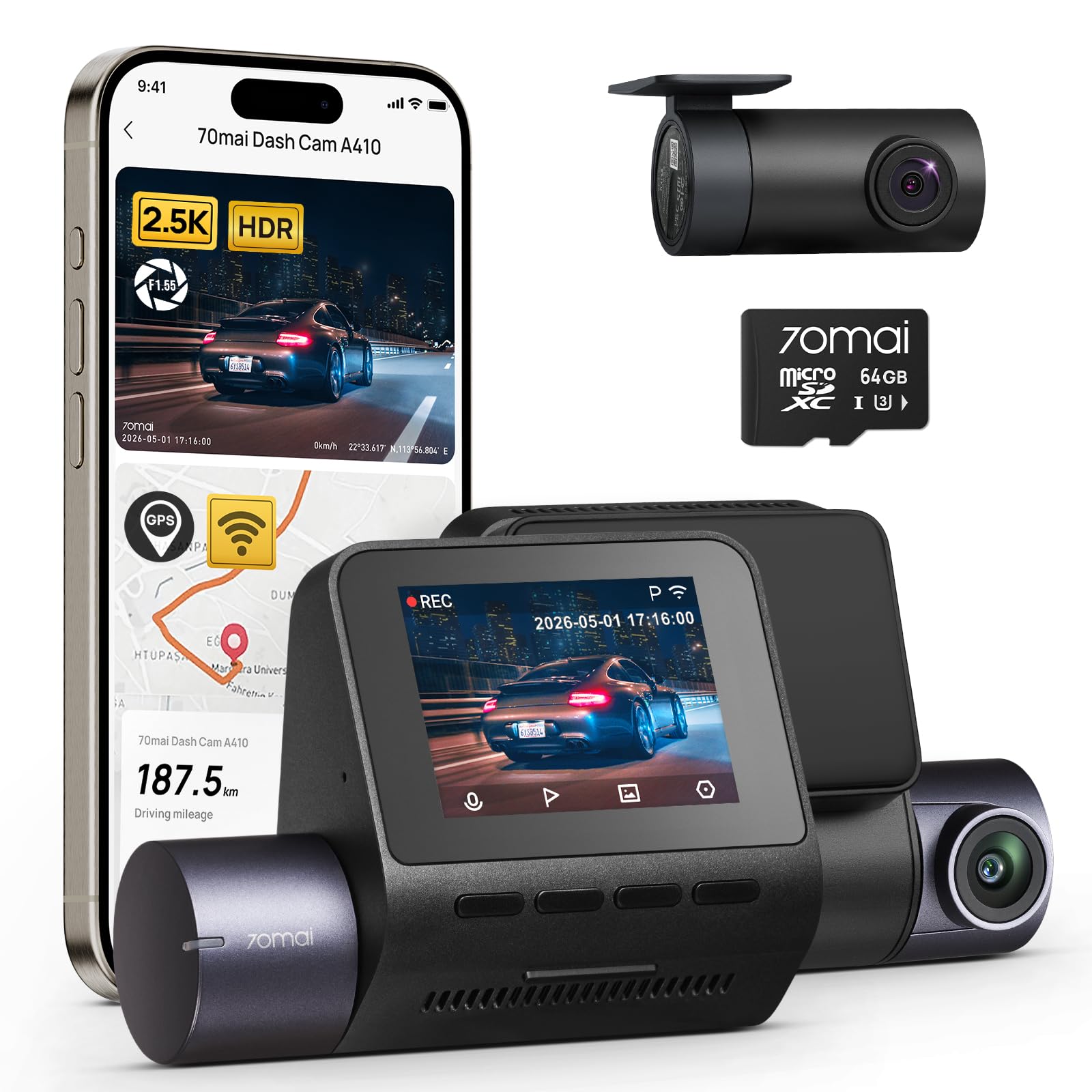
| 70mai A410Best Value | Budget value with GPS | 2 | F1.55 + HDR | 64GB incl/256GB max | Amazon |
| ZMOPO 360Budget 4-Channel | Budget 4-channel | 4 | 8 IR + WDR | 128GB incl/256GB max | Amazon |
| REDTIGER F7N (4K) | Best-selling 4K front | 2 | STARVIS 2 + WDR/HDR | 128GB incl | Amazon |
| IIWEY N5 | Value 4-channel system | 4 | 8 IR Lamps | 128GB incl/256GB max | Amazon |
| 70mai A810S | Top-tier 4K with 4G | 2 | Dual STARVIS 2 + F1.7 | Up to 512GB | Amazon |
| REDTIGER F7N (4K, 5GHz) | Fast downloads + 4K | 2 | STARVIS 2 + WDR | No SD card incl | Amazon |
| VROAVIE Mirror | Rearview mirror replacement | 4 | F1.8 aperture | 128GB incl | Amazon |
In‑Depth Reviews
1. AZDOME 360° 4 Channel Dash Cam (M660)
Our pick — 4.5★ from 1,500+ verified ratings; the strongest balance of quality and price.
The four-camera setup that blankets every inch of your ride in high-definition.
You get a 2.5K (2560x1440P) front camera and three additional 1080P channels for the rear and both side interiors — a configuration that catches not just the car ahead but the ding from a door swinging open next to you or a passenger event inside the cabin. The four lenses are all adjustable, so you can tweak the angle of the side cameras to eliminate blind spots completely. That 360° view is the single biggest reason rideshare drivers and delivery pros reach for this unit.
The internal storage is a key advantage here: a built-in 128GB eMMC chip (embedded MultiMediaCard, a storage chip soldered directly to the circuit board) reads and writes data, reducing the chance of file corruption during a sudden impact. Night footage gets a boost from 12 IR LEDs — six per side camera — that illuminate the cabin without blinding the driver. The 5G WiFi (limited to about 10 feet of range) downloads an 800MB video in roughly 13 seconds, making it easy to pull a clip for insurance right from the parking lot. The trade-off is that storage is non-expandable; you are capped at 128GB total, and some owners find the 3-minute loop recording setting too rigid.
Who it protects best: Rideshare drivers, delivery workers, and anyone who parks on a busy street — the four channels give you evidence from angles a front-only camera will always miss.
The honest limit: The built-in 128GB can fill fast with four simultaneous channels, and there is no way to upgrade it. A few units have arrived with a rattling windshield mount; check the fit early.
2. 70mai Dash Cam Front and Rear (A410)
Packs GPS, HDR night vision, and a 2.5K front cam into a sub- kit.
This is the kit that does nearly everything right at a price that undercuts most competitors by a wide margin. The front camera records at 2.5K (2560x1440P) while the rear runs at 1080P — and the 125-degree wide-angle lens covers four lanes of traffic. The F1.55 aperture (the measurement of how much light the lens can capture) works with HDR technology to keep license plates legible in dark parking lots and under streetlights. The built-in GPS stamps your route, speed, and coordinates directly onto the footage, a feature usually reserved for more expensive units.
Included in the box is a 64GB SD card, and the slot supports up to 256GB for longer trips. Set-up takes less than five minutes using the included electrostatic sticker that leaves no residue. The app connection is straightforward enough that the overwhelming consensus among owners is that this is the one to get for a first-timer. The battery is the only weak point — buyers report it lasts about 1.5 to 2 years before needing replacement, a normal lifespan for a dash cam in this tier.
Why it wins at this price
- 2.5K front + 1080P rear with HDR and F1.55 aperture for excellent night captures.
- Built-in GPS logs speed, route, and coordinates on the video file.
- Includes a 64GB SD card; supports up to 256GB for extended recording.
The trade-off
- The internal battery has a finite lifespan of about 1.5 to 2 years before replacement.
- Rear camera cable is long — which is good for routing, but requires tidying up.
Reach for this if: you want a reliable dual-camera system with GPS and strong night vision, and you don’t need four-channel coverage.
Think twice if: you park in extreme heat daily — a supercapacitor model would last longer without a battery swap.
3. ZMOPO 360 View 4 Channel Dash Cam
Four 1080P cameras for under a hundred bucks — a rare combo that actually works.
For a price that normally buys a decent dual-cam, the ZMOPO gives you four full HD channels covering front, rear, left, and right simultaneously. The adjustable front lenses let you angle the view inward if you want to capture interior activity, making this a solid fit for rideshare drivers on a tighter budget. The kit includes a 128GB SD card and supports up to 256GB, so you can record for days before a loop-overwrite.
The built-in supercapacitor is a significant advantage at this price point: it handles extreme heat far better than a lithium battery, surviving temperatures from -4°F to 167°F without swelling or failure. Eight infrared lights support the night vision, and the WDR (Wide Dynamic Range) technology helps balance the exposure between a bright windshield and a dark road. The WiFi app in the unit does get mixed feedback — about a third of owners mention that the 5GHz connection can be finicky — but the core video quality, build feel, and ease of installation get top marks from a large buyer base. The fact that it has no internal battery means the camera shuts off the moment the 12V plug loses power; a hardwire kit is required for true 24-hour parking mode.
Ideal for the budget-conscious buyer: 81 owners praise the video quality alone, and the 360° coverage makes it a compelling alternative to a dual-cam at nearly the same cost.
Know before you buy: The 5GHz WiFi can be inconsistent for some users, and you will need a separate hardwire kit for parking mode. The power cord uses a cigarette plug — not USB-C.
4. REDTIGER F7N Touch 4K Dash Cam Front and Rear
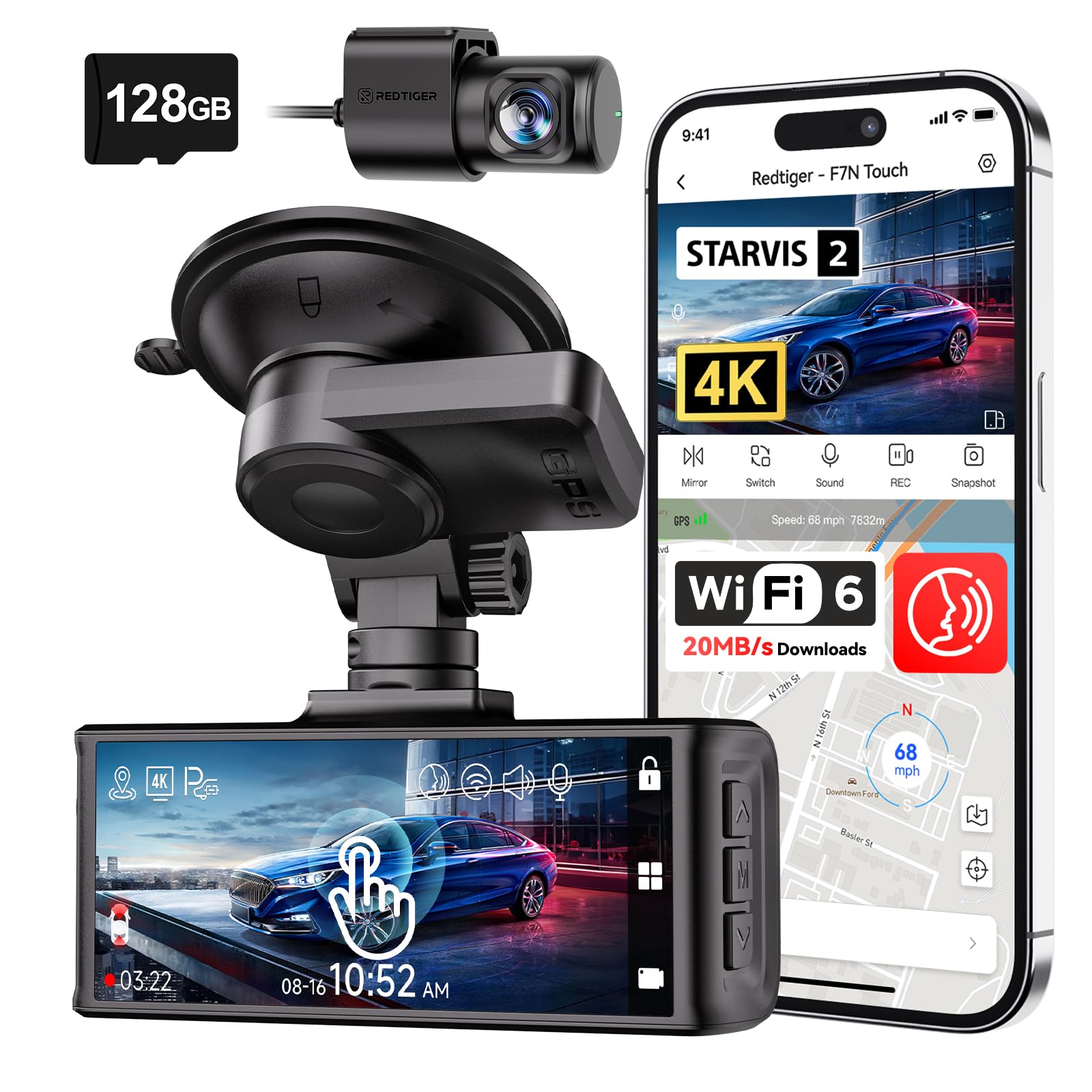
The crowd-favorite dash cam that made 4K mainstream, now with a touch screen and an included SD card.
It combines a Sony STARVIS 2 sensor (a low-light sensor that captures color footage even in near-darkness) with a 3.18-inch touch screen, voice control, and a pre-loaded 128GB card — all at a price that undercuts other premium models. The front camera captures true 4K UHD (3840x2160P) at 170 degrees wide, while the rear runs at 1080P with a 140-degree view. HDR and WDR processing keep the footage balanced when you transition from a sunny highway into a tunnel.
The 5.8GHz WiFi transfers clips to the REDTIGER Cam app at up to 20MB/s, so a two-minute 4K clip is on your phone in about 30 seconds. Built-in GPS logs your speed and route on the video itself, a feature that has proven valuable in insurance disputes. The touch screen makes menu navigation far simpler than button-only models, and the voice command (“Lock Video”) works hands-free. A small number of owners in extremely hot climates (Arizona, Texas) reported the included SD card can fail in prolonged heat, so upgrading to a high-endurance card is a cheap insurance policy.
Why thousands chose this
- True 4K front camera with STARVIS 2 sensor for exceptional night detail.
- Touch screen and voice control reduce distraction while driving.
- Includes a 128GB card and long rear-camera cable for easy hatchback install.
One thing to watch
- The included SD card may not hold up in extreme heat; consider a high-endurance replacement.
- Hardwire kit for parking mode is sold separately.
Grab this if: you want the most-praised 4K dash cam on the market with a touch screen and fast WiFi downloads.
Pass it by if: you live in a desert climate and plan to leave the camera baking on the windshield all summer — you’ll want a supercapacitor model instead.
5. IIWEY N5 4 Channel Dash Cam 360°

Four HD cameras, a 3-inch IPS display, and a supercapacitor — all for the price of a mid-range dual-cam.
The IIWEY N5 records in four full HD channels (1080Px4) with a 170-degree front and rear wide-angle lens and 150-degree side cameras. It can also record in a 2.5K+1080P+1080P+1080P mode if you want higher detail on the front view. The supercapacitor power system means this unit can handle interior temperatures from -4°F to 167°F without the risk of battery swelling, making it a strong choice for hot climates. The 128GB SD card is included and pre-installed in the slot — a welcome time-saver — and it supports up to 256GB.
The 5GHz WiFi connects to both the iiwey and viidure apps for live preview and downloads, though you must manually press a button to turn on the WiFi each time (it auto-off after five minutes to prevent overheating). The parking mode requires a separate hardwire kit, and importantly, this unit has no GPS and no OBD port — so speed and route data won’t be stamped on your footage. Owners consistently praise the video quality for the price and the easy installation, but some note that the rear camera cable is fiddly on hatchbacks.
Who it fits: Drivers who want four-camera coverage in a heat-resistant, supercapacitor-powered package without spending over a hundred dollars.
The omission to note: No GPS logging, no OBD support, and no battery backup — the camera powers off the moment the ignition is off unless you install a hardwire kit.
6. 70mai 4K Dash Cam Front and Rear (A810S)
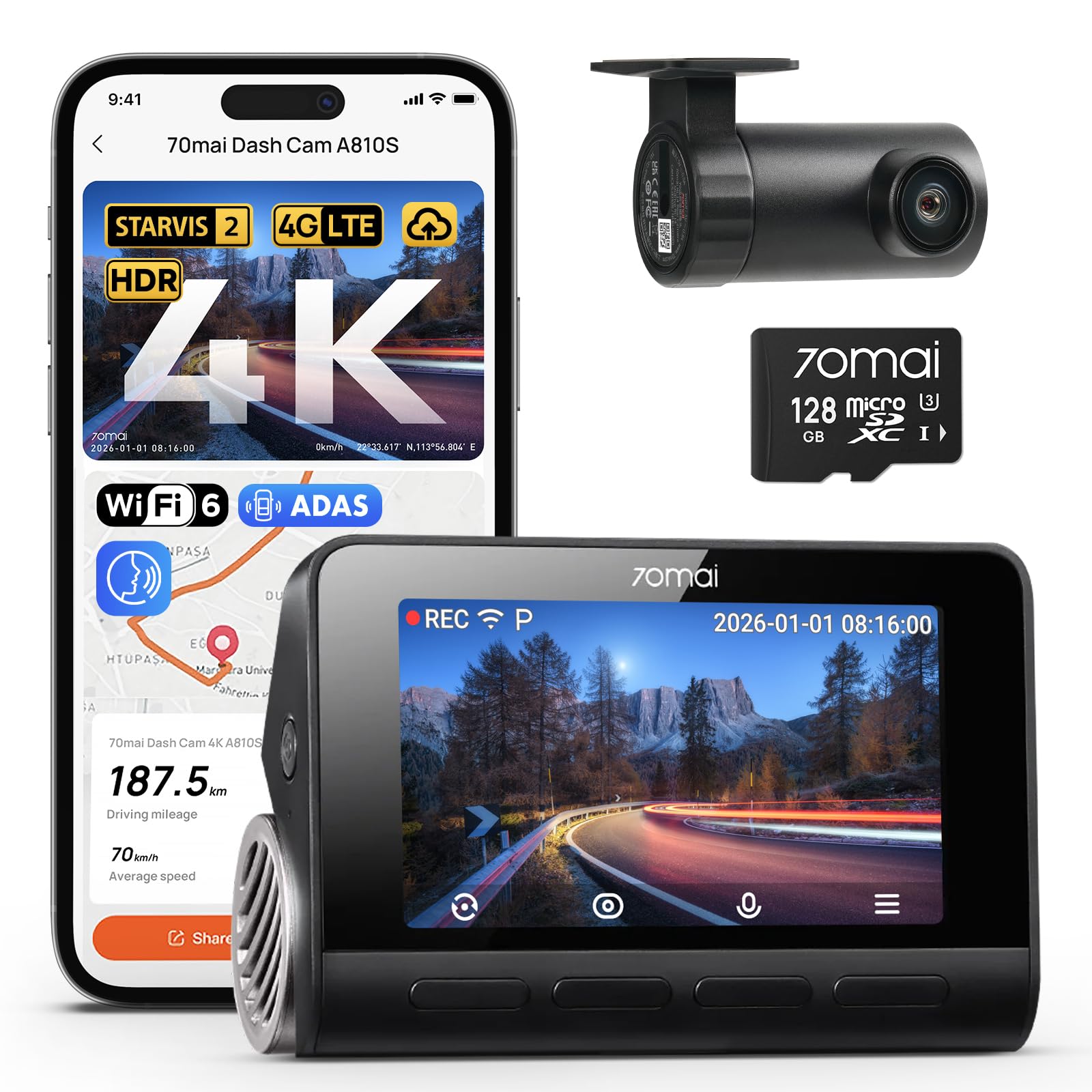
The one that adds 4G remote viewing, WiFi 6 speeds, and ADAS alerts on top of a stunning 4K sensor.
This is the most thoroughly equipped dash cam on the list. The front camera uses a Sony STARVIS 2 IMX678 sensor for true 4K UHD (3840x2160P), while the rear uses the STARVIS 2 IMX662 — both are paired with 70mai’s Lumi Vision technology for color night footage in extremely low light. The F1.7 aperture and Night Owl Vision algorithm mean plates and street signs stay readable even on unlit rural roads. The 146-degree front and 130-degree rear field of view covers your blind spots without the fisheye distortion that plagues cheaper wide-angle lenses.
The 4G LTE connectivity (using an optional hardwire kit) is the feature that sets this apart: you can check live footage, receive motion and collision alerts, and track your vehicle’s location remotely through the 70mai app, even when you are in a different city. The built-in five-mode GPS (GPS, BDS, GALILEO, GLONASS, QZSS) ensures accurate speed and route logging. WiFi 6 means video transfers are noticeably faster than on WiFi 5 models. The ADAS system (Advanced Driver-Assistance Systems) provides lane departure and forward collision warnings, though owners note the lane departure alert can be overly sensitive in construction zones. Supports up to 512GB microSD.
The standout features
- Dual Sony STARVIS 2 sensors (front IMX678, rear IMX662) for exceptional night color.
- Optional 4G hardwire kit for remote live view, GPS tracking, and instant alerts.
- WiFi 6 for the fastest video transfers in this roundup; supports up to 512GB storage.
What to consider
- The optional 4G kit and hardwire kit are separate purchases that add to the cost.
- ADAS lane departure warnings can produce false alerts during routine lane changes.
Choose this if: you want the ultimate feature set — remote monitoring, dual STARVIS 2 sensors, WiFi 6, and ADAS — and are willing to budget for the optional kits.
Look elsewhere if: you just need a simple front-and-rear cam without the extra cost of accessories.
7. REDTIGER 4K Dash Cam Front and Rear (F7N, 5GHz WiFi)
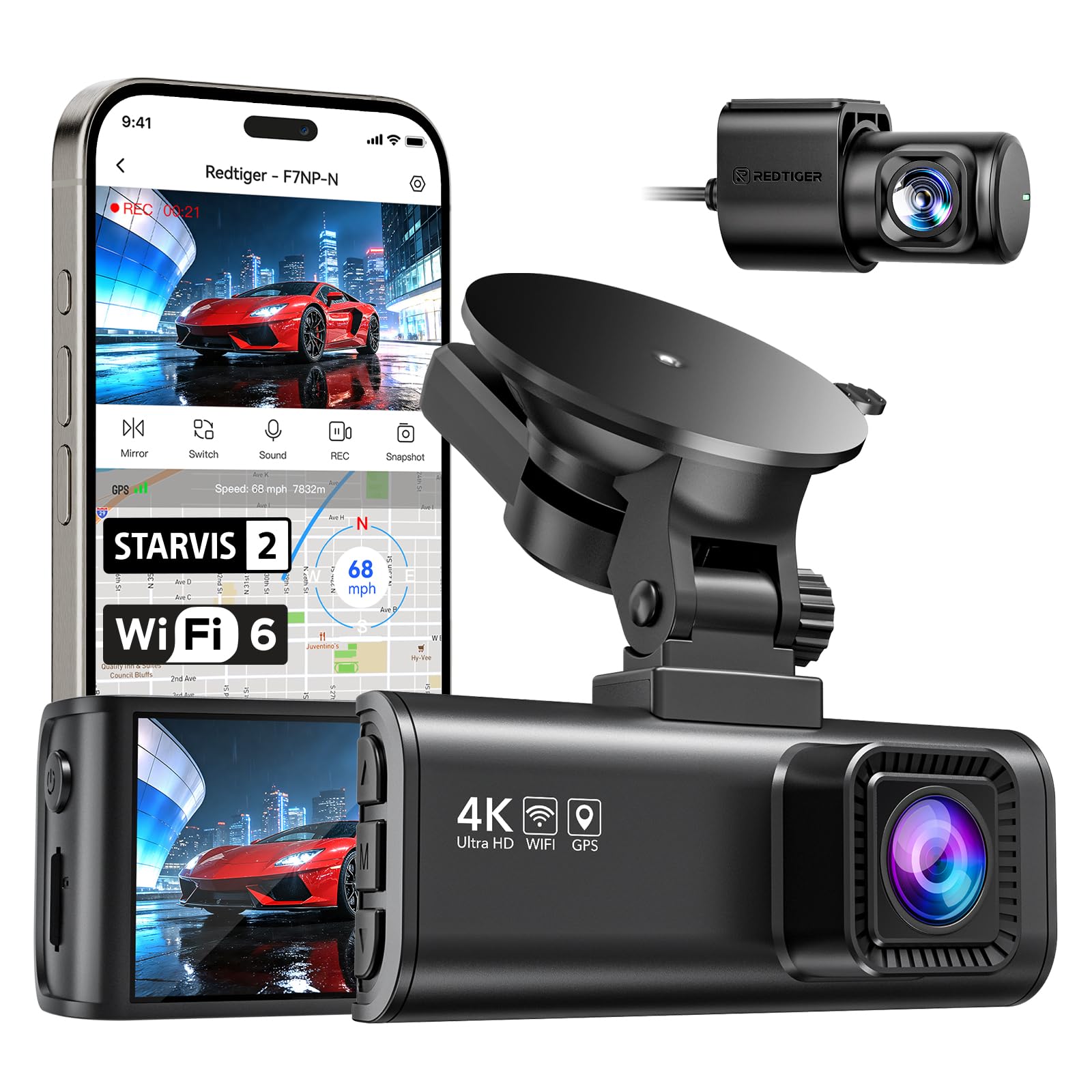
The 4K front cam that thousands trust for its STARVIS 2 sensor and 20MB/s WiFi transfers.
This is the version of the F7N that came before the touch-screen model, and it remains a massive seller for a reason. The STARVIS 2 sensor captures true 4K (3840x2160P) front footage, and the 1080P rear channel handles the view behind you. The 170-degree front wide-angle lens covers the full width of a four-lane road. HDR and WDR technology ensure the exposure stays balanced whether you are driving into the sunrise or through a dark tunnel. The 5.8GHz WiFi hits up to 20MB/s download speeds, making it one of the fastest dash cams for pulling clips onto your phone.
The supercapacitor design gives it excellent heat resistance for a long lifespan. The parking mode works with a separate hardwire kit and offers both time-lapse and impact-detection recording. One recurring theme in owner feedback is that the parking mode setup instructions are incomplete — some buyers found the undocumented steps frustrating. The unit weighs just 4 ounces and measures about 3.8 inches tall, so it tucks neatly behind the rearview mirror without obstructing your view.
Who it works for: Drivers who want the proven STARVIS 2 4K image quality and the fastest WiFi download speeds in the REDTIGER line.
A heads-up: No SD card is included, and the parking mode hardwire installation can be tricky without clear documentation.
8. VROAVIE 360° 4 Channel Mirror Dash Cam
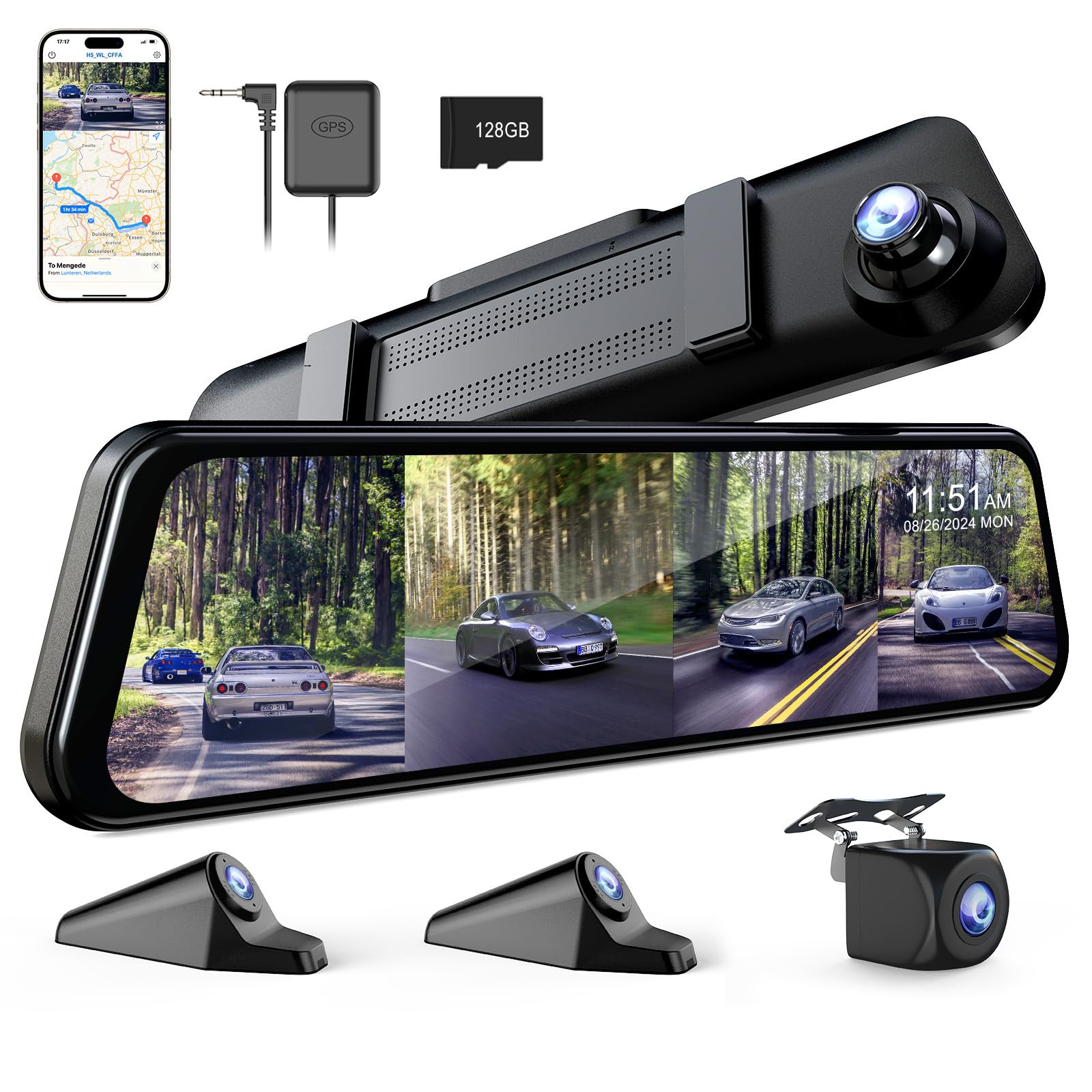
Replaces your rearview mirror with a 12-inch screen that shows all four camera feeds at once.
This is the only rearview mirror-style camera on the list, and it takes a fundamentally different approach to coverage. The 12-inch IPS screen clips over your existing mirror using rubber straps, turning your standard rearview into a live 360-degree display. The four channels — front, rear, left side, and right side — each record in 1080P, and the camera heads are detachable, so you can mount them separately for the best angle. The front camera uses an F1.8 aperture for better low-light performance, and the WDR processing handles the sudden brightness of headlights.
The external GPS module logs your route, speed, and coordinates onto the footage for insurance-grade evidence. The parking mode offers both time-lapse and collision-detection recording (hardwire kit required, sold separately). Installation is tool-free for the mirror body — just strap it on — though routing the side camera wires takes some patience. A minority of customers note that the screen’s dynamic range makes dark shadows look too black and bright areas too white in direct sunlight, which is a trade-off of this mirror-style form factor. It weighs 1.3 pounds, which is heavier than a standard rearview mirror, so be sure your factory mirror mount is secure.
Best for large vehicles: Vans, trucks, and SUVs benefit most from the wide 360° view that replaces the traditional blind spot.
Consider before buying: The screen brightness can struggle in direct daylight, and the extra weight may be noticeable on smaller car mirrors.
Understanding the Specs
Field of View (FOV)
This is the angle the lens can see. A 140-degree to 170-degree FOV covers three to four lanes of traffic, which is the balance for capturing side-swipe incidents and cars merging from the next lane. Too wide (above 170°) can cause a fisheye effect that makes plates hard to read in the center of the frame.
Supercapacitor vs Battery
A supercapacitor stores energy in an electric field rather than through chemical reactions. It handles extreme heat (up to around 160°F) without swelling or failing, making it ideal for cars parked in sun. A lithium-ion battery is cheaper but degrades over time in heat and may eventually need replacement. A supercapacitor also powers down instantly, so it requires constant power to operate — it has no reserve for parking mode without a hardwire kit.
STARVIS 2 Sensor
Sony’s STARVIS 2 is a back-illuminated CMOS sensor designed for low-light environments. It captures color footage in near-darkness with significantly less noise than older sensors, which means license plates and street signs remain readable even in unlit parking lots. You’ll see this paired with HDR (High Dynamic Range) to balance bright headlights and dark shadows in the same frame.
G-Sensor and Parking Mode
A G-sensor (a small motion sensor that detects rapid acceleration or a bump) automatically locks the current video file when it feels an impact. In parking mode, this triggers emergency recording even when the engine is off. Most cameras need a hardwire kit (a cable that connects directly to your car’s fuse box) to run parking mode for more than a few hours, because the cigarette lighter socket turns off with the ignition.
FAQ
Can a 1080P dash cam read license plates at night?
How much storage do I need for a 1080P dash cam?
What is the difference between a dash cam with a battery and one with a supercapacitor?
Do I need a hardwire kit for parking mode?
Is a 4K dash cam better than a 1080P one?
Can I hide the wires for a rear camera without professional help?
What SD card speed do I need for a 1080P dash cam?
Will a dash cam drain my car battery when parked?
Do dash cams work in extreme cold?
What does loop recording mean?
Final Thoughts: The Verdict
For most drivers, the 1080p dash cam winner is the AZDOME M660 because its 4-channel coverage, built-in 128GB eMMC storage, and 12 IR LEDs provide the most complete evidence-gathering package without requiring you to buy a separate SD card or hardwire kit. If you want a dual-cam with excellent night vision and GPS at a lower price, grab the 70mai A410. And for the best-selling 4K front-cam with a touch screen, the REDTIGER F7N Touch remains the crowd favorite for good reason.
How We Picked
We do not accept paid placement. Every pick is matched to a real buyer and a real use-case; we do not hands-on test units.
Sources & Methodology
Specifications: manufacturer listings and product documentation. Review insights: verified customer reviews, as of July 2026. Pricing: not shown on this page (it changes often); check the current price via the retailer link.
As an Amazon Associate, Trending Car earns from qualifying purchases. This does not affect which products we feature.