
Our readers keep the lights on and my garage snacks stocked. As an Amazon Associate, I earn from qualifying purchases.
Specs are compiled from manufacturer listings and verified buyer reviews and can change over time — please confirm the key details on the product page before buying.
Finding a 1 1/2 inch tail pipe that actually measures up to its name is harder than it sounds — some pipes rust in months, others arrive too short, and a few just don’t fit the flange. This guide cuts through the guesswork to show you which pipes hold up, which ones weld clean, and which flex tube actually keeps your generator running without tripping CO alarms.
I’m Min Islam — the founder and writer behind Trending Car. This guide is built by comparing the manufacturers’ published specifications and the patterns across verified customer reviews, so you get each pick’s real strengths and trade-offs instead of marketing spin.
Whether you are patching a rusted muffler or building a custom exhaust from scratch, these are the best 1 1/2 tail pipe options that actually deliver on their promises for your money.
Our Picks at a Glance

How To Choose The Best 1 1/2 Tail Pipe
A tail pipe that rusts through in a single season is worse than no pipe at all. Before you click “buy,” you need to match the right material, the right diameter, and the right length to your specific setup — whether that is a generator, a motorcycle, a tractor, or an RV.
Material: Stainless vs Galvanized vs Mild Steel
T304 stainless steel is the gold standard for corrosion resistance and weldability, especially if you live in a salt-spray zone or drive on winter roads. Galvanized steel costs less and resists rust reasonably well, but the zinc coating can burn off during welding, requiring extra cleanup. Mild steel is the cheapest and easiest to weld — but it will rust if you do not paint or coat it immediately after installation. If the pipe lives under a vehicle where it gets sprayed with salt water and mud, the extra cost of T304 stainless usually pays for itself within a year.
Inside Diameter vs Outside Diameter: Which One You Measure
This is where most returns happen. A pipe described as “1.5 inch” might mean the inside diameter (the hole the gas flows through) or the outside diameter (the metal that slides over your existing flange). If your muffler outlet is 1.5 inches on the outside, you need a pipe with a 1.5-inch inside diameter to slip over it. Measure the actual flange with a caliper or a ruler before ordering — a half-inch mismatch means the pipe either won’t go on or will be too loose to clamp.
Flex Tube vs Rigid Straight Pipe
A rigid straight pipe is ideal for a clean replacement run where you have a straight shot from the muffler to the bumper. A flexible exhaust tube (braided or corrugated stainless) is your answer when you need to route the exhaust around a frame rail, a suspension component, or a fuel tank. Flex tubes absorb engine vibration, too, which takes stress off the welds and hangers. The trade-off: flex pipes are harder to seal perfectly at the ends, and they are not designed for long straight runs — keep them under two feet for a repair, not a full-length replacement.
Length and Clearance
A tail pipe that is too long will hit the bumper, the suspension, or the ground on bumps. A pipe that is too short dumps hot exhaust under the vehicle body or, in an RV or generator setup, too close to a compartment door. Measure the distance from your muffler outlet to where you want the exhaust to exit, then add two inches for the clamp overlap. For motorhome and RV applications, a turn-down tip (like the AP Products U.S. Gear CTD-1500) is designed to redirect exhaust away from a towed trailer or an RV generator compartment.
Quick Comparison
| Model | Best For | Material | Length | Diameter | Amazon |
|---|---|---|---|---|---|
| Tritrust Chrome TipBest Value | Cosmetic upgrade on 1.5-2″ pipe | Stainless Steel | 5.75″ | 1.5-2″ Inlet / 2.5″ OD | Amazon |
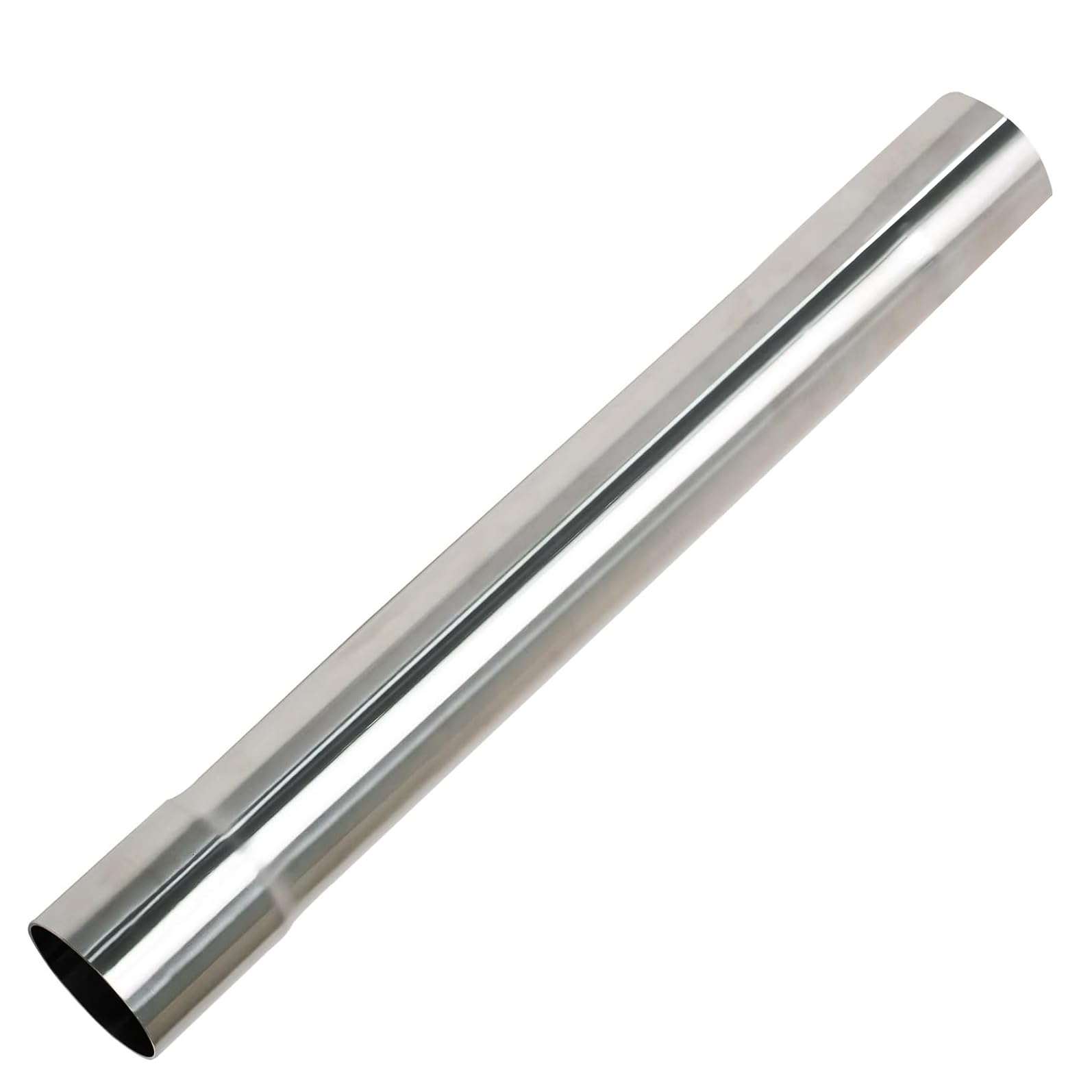
| HiBuyer T304 Straight PipeTop Performer | Welded custom exhaust extensions | T304 Stainless Steel | 18″ | 1.5″ ID to OD | Amazon |
| FORTLUFT Straight Pipe | Generator exhaust extension | Stainless Steel | 38″ | 1.5″ | Amazon |
| TORDXICS Flex Pipe | Small engine & portable generator vents | T304 Stainless Steel | 72″ (6 ft) | 1.5″ ID | Amazon |
| Walker Flex Tube | Tractor & vehicle flex repairs | Galvanized Steel | 72″ (6 ft) | 1.5″ | Amazon |
| Patriot Exhaust J-Bend | Small engine & ATV exhaust fabrication | Mild Steel | N/A (J-bend) | 1.5″ | Amazon |
| Fast Pro Hexagon Muffler | Street bike & ATV muffler replacement | Aluminum/Stainless/Titanium | 390 mm | 38-51mm (1.5-2″) Inlet | Amazon |
| AP Products U.S. Gear Turn Down | Motorhome & tractor exhaust redirection | Chrome Plated Steel | 10″ | 1.5″ | Amazon |
In‑Depth Reviews
1. Trinrust Chrome Exhaust Tip
A shiny chrome tip that bolts onto your old pipe and makes the whole rear end look new.
If your tail pipe is structurally sound but looks like a rusted pipe from a tractor graveyard, this is the cosmetic fix. The Tritrust chrome tip fits any pipe measuring between 1.5 and 2 inches in diameter, clamps on in minutes with the included hardware, and the review pages sum it up: “looks great have had for a couple of years now and no issues.” The 2.5-inch outlet diameter gives the exhaust a larger, more finished appearance without changing the sound or backpressure — the pipe is purely a visual extension.
The installation is genuinely simple: slide it over your existing tail pipe and tighten the included clamp or screws. Owners mention a perfect fit on mufflers from Bosal and others, though one noted the bolts stick out a little. The 4.2-star score from several hundred owners confirms this is a solid budget upgrade, and the stainless steel construction resists surface rust for years. That said, this is a tip, not a replacement pipe — it will not fix a rusted-through section or a broken flange.
Cosmetic Upgrade Benefits
- Bright chrome finish transforms the look of a rusty or plain tail pipe
- Clamp-on install takes minutes with basic hand tools
- Fits a wide range of pipe diameters from 1.5 to 2 inches
The Functional Limit
- Bolts can look cheap and stick out past the body of the tip
- This is a cosmetic cover — it does not repair a damaged or leaking pipe
- Longevity is unproven on salted winter roads according to some owners
Pick this for: a quick weekend cosmetic refresh on a daily driver or project truck where the existing pipe is sound but unsightly.
skip it if: your tail pipe has holes, a crushed section, or needs an actual length extension — this tip is purely an aesthetic cover.
2. HiBuyer 1.5 Inch T304 Exhaust Tubing
The 1.5-inch T304 tube that arrives perfectly sized — inside, outside, and every mm in between.
Precision matters most when you are welding a short extension or a crossover pipe. The HiBuyer tube holds a consistent 1.5-inch inside diameter to a 1.5-inch outside diameter across the full 18-inch length, which is rare for budget exhaust tubing. One owner reports “it is well made, fitment was perfectly sized. Length, inside and outside diameter and thickness.” That uniformity means your welds sit flush with no step, and the T304 alloy resists corrosion from road salt and condensation.
The polished surface is clean enough for a visible section of exhaust without looking like a repair patch. At 18 inches, it is slightly longer than the ZJXDZY, giving you more room for a precise cut or a butt weld. The wall thickness is substantial enough that owners are using it as a crossover pipe in 2.25-inch systems by welding the ID side. The only honest limitation: at 1.5 inches OD, it is smaller than the 2-inch ZJXDZY pipe above, so if your muffler outlet is larger than 1.5 inches, you cannot use this piece.
Precision Advantages
- True 1.5-inch ID and OD — no measurement surprises for a clean weld fit
- Polished T304 stainless with excellent corrosion resistance
- Heavy-duty wall thickness suitable for structural exhaust fabrication
The Diameter Limit
- Only 1.5 inches OD — will not fit over a larger muffler outlet
- 18-inch length is useful for extensions but not a full tail pipe run
- Some owners repurpose it for non-exhaust projects due to the precise sizing
Best for: a precision welded extension on a small engine, motorcycle, or custom exhaust where you need the exact 1.5-inch dimension and a polished look.
Not for: anyone needing a pipe with a larger diameter — this is strictly a 1.5-inch ID/OD piece for exact-match applications.
3. FORTLUFT Exhaust Straight Pipe 1.50″ Stainless Steel

The 38-inch stainless straight pipe that reaches from the generator to the outside air without a joint.
At 38 inches long, the FORTLUFT is the longest single-piece straight pipe on this list — nearly four inches longer than the HiBuyer, so it bridges the gap from a muffler outlet to a thru-wall vent in one continuous run. Owners use it primarily for generator exhaust extensions. One calls it a “great product for my extension of the exhaust system on my generator.” The stainless steel finish welds cleanly and the 3.1-pound weight suggests a substantial wall thickness that won’t buckle under heat.
The honest trade-off: FORTLUFT’s 12-month warranty is the best on the list, but an owner reported that a 1.75-inch pipe from this brand “rusted severely after 8 months in salt spray on a boat.” That is a pier-side environment, not a dry-garage one. If your pipe will sit in rain or road salt, you may want extra coating or the T304-grade alternatives above. The 4.3 stars across over a hundred owners show most buyers are happy with the value for a generator or a dry-climate vehicle.
Standout Specs
- 38-inch length reduces the need for multiple welded sections on long runs
- Stainless steel welds easily with standard MIG equipment
- 12-month warranty — the longest coverage on this list
The Marine Risk
- Not rated for saltwater or boat use — one owner reported severe rust in 8 months
- Heavier than the other straight pipes at 3.1 pounds
- Only 1.5 inches in diameter; cannot adapt to larger flanges without a reducer
Reach for this if: you need a long, unjointed run from a portable generator to an exterior wall vent or a dry-climate vehicle exhaust extension.
Think twice if: your pipe will live on a boat, in coastal air, or under a vehicle driven on salted roads — you want T304 stainless for that duty.
4. TORDXICS Universal T304 Exhaust Flex Pipe
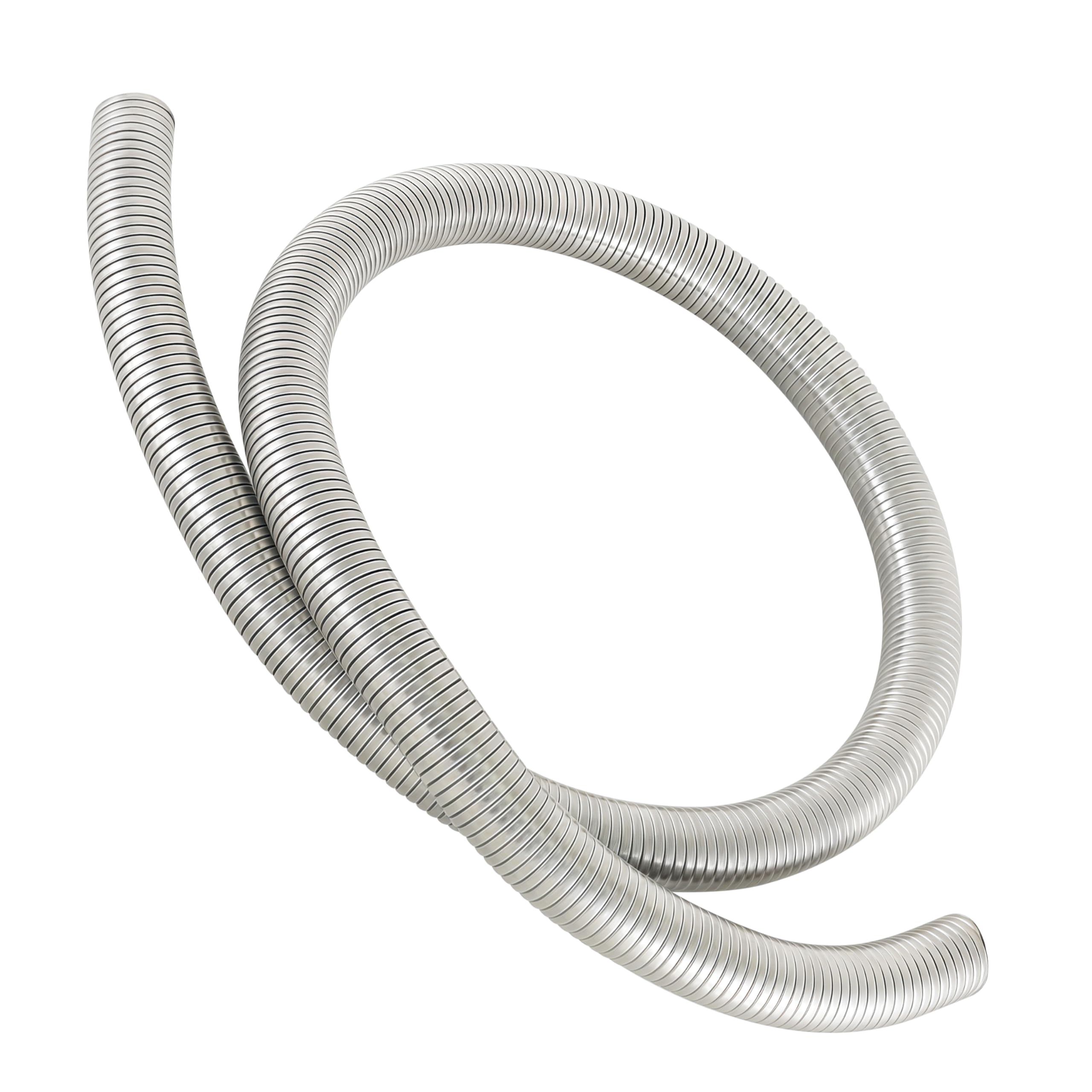
The 6-foot flex tube that routes generator exhaust around corners without a single weld.
When a straight pipe cannot bend around your frame rail, suspension, or generator shed wall, the TORDXICS flex pipe solves the problem. At 72 inches long and 1.5 inches ID, this is the longest single piece on the list, and the T304 stainless construction inhibits rust. The single roll-band design gives it durability while staying flexible enough to route under a semi-truck or out of a generator enclosure. One buyer reports “great tubing for extending the exhaust discharge on a portable generator” and calls it perfect for routing exhaust out of a shed so the CO safety system does not keep shutting the generator down.
The 4.6-star score from over a hundred buyers backs up the quality claim. Owners do note that the pipe does not slide over a 1.5-inch OD flange pipe — it needs an expander or a slightly larger flange. That is a minor fitment hurdle for a flex pipe, but worth knowing before you order. The flexibility is a double-edged sword: it solves routing problems but requires more careful clamping to stay in position.
Flexibility Wins
- 6-foot length lets you route exhaust around obstacles without multiple joints
- T304 stainless resists rust better than galvanized flex pipe
- Works great for generator exhaust venting — prevents CO alarm triggers
The Fitment Quirk
- Will not slide easily over a 1.5-inch OD flange — may need an expander
- Flexible construction requires tight clamping at both ends to prevent sag
- Gets hot at the generator end; buyers recommend foil wrap at the door seal
Best for: routing generator or small engine exhaust through a wall, under a vehicle, or around tight frame obstacles where a rigid pipe simply cannot go.
Not for: a direct slip-on replacement if your flange is exactly 1.5 inches OD — bring an expander or choose a rigid pipe instead.
5. Walker 46971 Universal Flex Pipe

The galvanized flex tube that tractor owners trust to route exhaust into groundhog holes.
The Walker name carries decades of exhaust manufacturing weight, and the 46971 flex pipe shows why. The galvanized steel construction resists rust better than bare mild steel, and the flex-lock design gives you leak-free movement where a rigid pipe would crack. Owners use it for everything from generator wall kits to tractor exhaust — one buyer installed it as a breather hose on a 1950s tractor, noting it “handles offsets and 90-degree bends without flopping.” Another tested it for 30 minutes on a generator and got no CO2 alarm, calling the seal “nice and tight.” That kind of versatility explains the 4.4-star score across nearly 700 ratings.
The biggest caveat: the “6 feet” in the title is optimistic. Owners consistently report the pipe measures between 57 and 67 inches fully stretched, not 72 inches. If your run requires a full 6 feet, you will come up short. For short 12-to-15-inch repair sections, it works perfectly. The galvanized coating can also burn off at the weld points, so you need to grind and re-coat those areas if you are welding rather than clamping.
Versatile Performance
- Flex-lock construction absorbs vibration without leaking
- Proven on generators, tractors, and vehicles across nearly 700 owners
- Good value for short repair sections where you need flexibility
The Length Issue
- Sold as 6 feet but measures 57 to 67 inches — not enough for a full 6-foot run
- Galvanized coating burns off during welding, requiring post-weld touch-up
- Some customers note surface rust after a season of road salt exposure
Reach for this if: you need a short, flexible repair section for a generator, tractor, or vehicle and you value the ability to bend it around obstacles without kinking.
Think twice if: your run needs the full 72 inches — order the TORDXICS flex pipe instead, which actually measures to 6 feet.
6. Patriot Exhaust H7013 1-1/2″ Mild Steel J-Bend
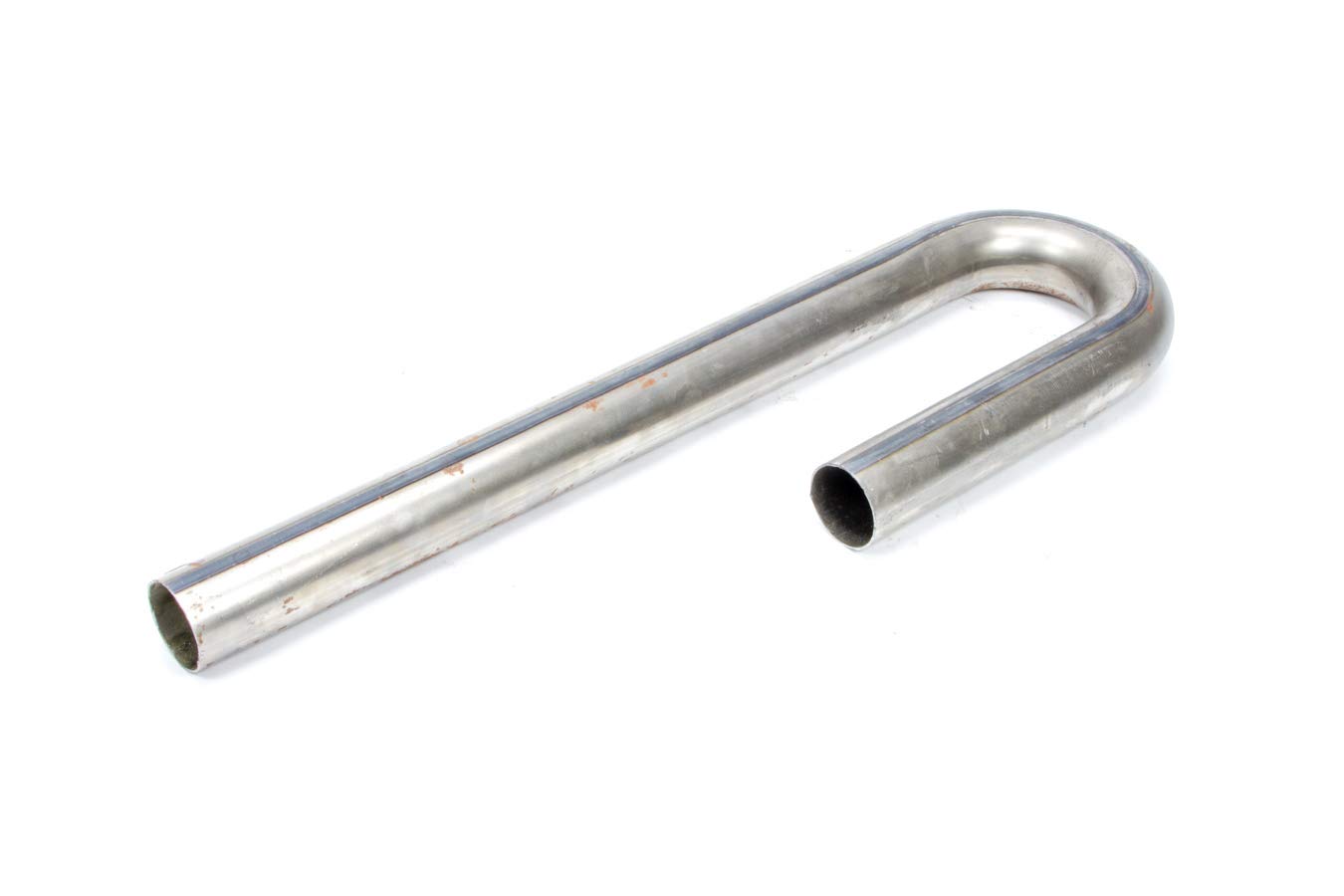
The American-made J-bend that is the exact radius you need to clear an ATV frame rail.
When a straight pipe sends your exhaust straight into a suspension mount or frame crossmember, the Patriot J-bend is the solution. This pre-bent 1.5-inch mild steel pipe gives you a smooth U-turn in the exhaust path without kinking or crushing the tube. One owner used it to route around a frame piece on an ATV — “worked for me, I cut it in the u and flipped it around to get by a piece of the frame.” The mild steel welds easily with a standard MIG and develops a blue-purple heat tint over a few cycles that looks good on a visible section.
The trade-off is durability: mild steel rusts. Buyers explicitly warn “it is mild steel so keep in mind it will start to rust if not coated.” The radius wall is also thin on the outside of the bend — one owner pointed out it is “super thin on the outside radius, be careful when welding.” For a project car, a small engine, or an ATV where you can paint or powder-coat the pipe after welding, this is a perfect solution. For an under-vehicle exhaust that gets salted year-round, you want the T304 stainless alternatives.
Fabrication Benefits
- Pre-bent 180-degree J-bend saves you the work of bending your own pipe
- Made in the USA with consistent wall thickness through the straight sections
- Welds beautifully and develops a nice heat-tint color on exhaust systems
The Rust Reality
- Mild steel will rust quickly if not painted, coated, or kept dry
- Outside radius of the bend is thin — burn-through is a real risk for beginners
- Not suitable for salt-belt vehicles without protective coating
Reach for this if: you are building a custom exhaust for a small engine, motorcycle, or ATV and need a pre-formed bend to clear a frame rail, plus you plan to paint or coat the pipe afterward.
pass on it if: the pipe will live under a vehicle exposed to road salt — the mild steel will rust through faster than the stainless options above.
7. Fast Pro Universal Hexagon Exhaust Muffler

The muffler that makes a Honda Hornet sound like it has a race can.
This is the only complete muffler on the list, not just a pipe. The Fast Pro hexagon muffler accepts pipes from 38mm to 51mm (roughly 1.5 to 2 inches), so it drops onto most dirt bikes, street bikes, ATVs, and scooter exhausts. The review pages sum it up: owners call the sound “perfect loudness and sound for the price” and note it is “much quieter than the Supertrapp” while still offering an aggressive note. The hexagonal aluminum and stainless body looks aggressive and weighs just 3.3 pounds, keeping the bike’s center of gravity low.
The honest downside is installation. The stainless steel muffler cannot be welded directly to a mild steel pipe, so you need clamps and possibly JB Weld. The springs and brackets are also stainless, which means they will not stick to a steel hanger with a magnet. Some owners on specific bikes (like the 2018 Honda Rancher 420) report a hard time getting it to seat. The sound also depends heavily on your engine — it sounds incredible on an R1 or VFR750 but “meh” on some inline-4s and narrow-angle V-twins. This is a bike-specific purchase, not a universal magic box.
Sound & Value
- Loud aggressive tone that is quieter than straight-pipe but much more affordable than premium race cans
- Universal 38-51mm inlet fits most dirt bikes and street bikes
- Solid build quality with decent welds and stainless hardware
Installation Challenges
- Stainless body cannot be welded to a steel pipe — clamp-only or JB Weld needed
- Sound quality varies massively by engine type and configuration
- No instruction or dB killer included
Best for: street bike and ATV owners who want a louder, better-looking muffler on a budget and are comfortable with clamp-on installation.
Not for: riders who need a direct bolt-on fit without modification, or those with narrow-angle V-twins or small-displacement scooters where the sound will disappoint.
8. AP Products U.S. Gear Chrome Turn Down Exhaust Tip

The double-chromed turn-down that redirects exhaust away from your towed trailer or RV compartment.
If you tow a trailer behind a motorhome or a truck, exhaust blow-back can stain the trailer front and fill the cabin with fumes. The AP Products turn-down tip solves that by aiming the exhaust straight at the ground. The heavy-gauge tubing and double-chrome plating resist the heat and weather better than a standard painted tip. One owner used it on a 2019 John Deere 1025R to redirect the tractor exhaust, and another calls it “well made and fits a standard Cummins Onan diesel pipe.” The 10-inch length adds enough extension to clear a generator compartment or a bumper.
The premium price brings a premium fitment issue: the clamp is subject to substitution. One reviewer noted receiving a cheap steel clamp instead of the stainless one, and several noted the tip was too long for their setup and had to cut it and add new slots. The chrome finish also limits welding options — you are stuck with clamping, which is fine for a generator or tractor but less ideal for a permanent vehicle installation. The 4.3-star rating stands on only a few dozen reviews, so the sample size is smaller than other picks here.
Purpose-Built Design
- Turn-down shape directs exhaust away from towed trailers, boat covers, and RV compartments
- Double-chrome plating holds a show-quality shine longer than paint
- Heavy-gauge tubing handles generator and diesel exhaust heat
Fitment Frustrations
- The clamp can be substituted with a cheap steel unit rather than the stainless one
- 10-inch length is often too long, requiring cutting and new slot-making
- Chrome finish cannot be welded without damaging the plating
Reach for this if: you own a motorhome, tractor, or truck that tows a trailer and you need to redirect exhaust downward to keep fumes and soot off your gear.
Think twice if: you plan to weld the tip onto your existing exhaust — the chrome coating prevents a clean weld, and the clamp supplied may not be the quality you expect.
Understanding the Specs
T304 vs Galvanized vs Mild Steel
T304 stainless is the highest rust resistance on the market — it contains 18% chromium and 8% nickel, which means it can sit under a car in a salt-belt winter and still look clean after years. Galvanized steel has a zinc coating that resists rust fairly well until you weld it (which burns the coating off at the joint), and mild steel is the cheapest and easiest to weld but will rust within months if left uncoated. For an exhaust that lives under a daily driver or in coastal air, the extra cost of T304 pays off. For a generator extension that stays in a dry shed, galvanized or mild steel is fine.
Inside Diameter vs Outside Diameter
This single number is responsible for more returned exhaust pipes than any other spec. A pipe sold as “1.5 inch” might mean the inside diameter (the hole the exhaust flows through) or the outside diameter (the metal ring that slides over your muffler outlet). If your muffler pipe measures 1.5 inches on the outside, you need a tail pipe with a 1.5-inch inside diameter to slip over it. If you buy a pipe with a 1.5-inch outside diameter, it will slide inside your muffler outlet, not over it. Always use a caliper or a ruler to measure your existing flange, then match the pipe’s inside or outside diameter to that measurement.
FAQ
Will a 1.5-inch tail pipe fit my car or truck?
Can I weld a stainless steel pipe to a mild steel pipe?
How long does a T304 stainless tail pipe last?
What is the difference between a flex pipe and a rigid tail pipe?
Can I use an exhaust flex pipe on my generator?
Does a chrome exhaust tip change the sound or performance?
How do I measure my exhaust pipe diameter correctly?
What is a J-bend pipe used for?
Can I use the AP Products turn-down tip on a tractor or motorhome?
Does the Fast Pro muffler fit a 1.5-inch pipe?
Final Thoughts: The Verdict
If you need a flexible solution for routing around obstacles, grab the TORDXICS T304 Flex Pipe. And for a quick cosmetic upgrade that transforms the look of a rusty tail pipe, the Tritrust Chrome Tip is the one to reach for.
How We Picked
We do not accept paid placement. Every pick is matched to a real buyer and a real use-case; we do not hands-on test units.
Sources & Methodology
Specifications: manufacturer listings and product documentation. Review insights: verified customer reviews, as of July 2026. Pricing: not shown on this page (it changes often); check the current price via the retailer link.
As an Amazon Associate, Trending Car earns from qualifying purchases. This does not affect which products we feature.