
Our readers keep the lights on and my garage snacks stocked. As an Amazon Associate, I earn from qualifying purchases.
Specs are compiled from manufacturer listings and verified buyer reviews and can change over time — please confirm the key details on the product page before buying.
A 1-1/2 inch socket is that oddball size you never think about — until you are staring at a water heater anode rod, a trailer hitch ball nut, or a truck’s axle hub and realize nothing in your toolbox comes close. Getting the right one means the difference between a five-minute job and an afternoon of rounded corners and busted knuckles. This guide cuts through the chrome and chrome-moly options to find the socket that actually fits your impact wrench, matches the fastener, and handles the torque without cracking.
I’m Min Islam — the founder and writer behind Trending Car. This guide is built by comparing the manufacturers’ published specifications and the patterns across verified customer reviews, so you get each pick’s real strengths and trade-offs instead of marketing spin.
Understanding steel type, drive size, and point configuration separates a socket that slips from one you can trust for years. Here is everything you need to confidently choose the right 1 1/2 socket for your next job.
Our Picks at a Glance
How To Choose The Best 1 1/2 Socket
The right 1-1/2 inch socket depends on what you are loosening. A single heavy axle nut under a truck needs a thick-walled, 6-point impact socket. A water heater anode rod often fits a standard 12-point. Your choice of steel, drive size, and depth flows from that decision.
Steel Type: CR-MO vs CR-V
Chrome-molybdenum (CR-MO) steel is the gold standard for impact sockets because it flexes slightly under shock instead of cracking. Chrome vanadium (CR-V) is harder but more brittle — adequate for hand-tool use but risky under a high-torque impact wrench. Most picks here use CR-MO for good reason; the design drives the side of the fastener instead of the corner, extending the life of your bolts.
Drive Size: 1/2-inch vs 3/4-inch
A 1/2-inch drive socket fits standard impact wrenches and ratchets — it is the common choice for most cars, trucks, and home jobs. A 3/4-inch drive socket suits higher torque applications like semi-truck axle nuts and large machinery, but it needs a 3/4-inch drive tool. You cannot use a 1/2-inch ratchet on a 3/4-inch socket. Two picks here run 3/4-inch drive for extreme duty; the rest stick to the universal 1/2-inch standard.
6-Point vs 12-Point Openings
A 6-point socket grips the fastener’s flats with full contact, making it best for high-torque removal of stubborn bolts. It reduces the chance of rounding off corners. A 12-point socket offers more engagement positions — useful for square fasteners or tight spots where you cannot rotate the tool fully. Most impact sockets are 6-point; 12-point is rarer in this size range but valuable for specific jobs like pool filter nuts.
Quick Comparison
| Model | Best For | Steel | Points | Drive Size | Amazon |
|---|---|---|---|---|---|
| TUZkozs 1-1/2★ Best Overall | Best Overall | CR-MO | 6 | 1/2 in | Amazon |
| Aiourx 1-1/2Top Value | Budget Value | CR-MO | 6 | 1/2 in | Amazon |
| TEKTON SHD23238Multi-Point Master | 12-Point Versatility | Alloy Steel | 12 | 1/2 in | Amazon |
| DEWALT 1-1/2″ Deep | Brand Trust | CR-V | 6 | 1/2 in | Amazon |
| BLACKROBOT 1-1/2 | Thin-Wall Access | CR-MO | 6 | 1/2 in | Amazon |
| BILITOOLS 3/4 Dr | Heavy Axle Nuts | CR-MO | 6 | 3/4 in | Amazon |
| Jetech 3/4 Dr Deep | Extended Reach | CR-MO | 6 | 3/4 in | Amazon |
| TIGHTSPOT 1-1/2 | Suspension Work | CR-V | 12 | 1/2 in | Amazon |
| SUNEX 248 | Premium Durability | CR-MO | 6 | 1/2 in | Amazon |
In‑Depth Reviews
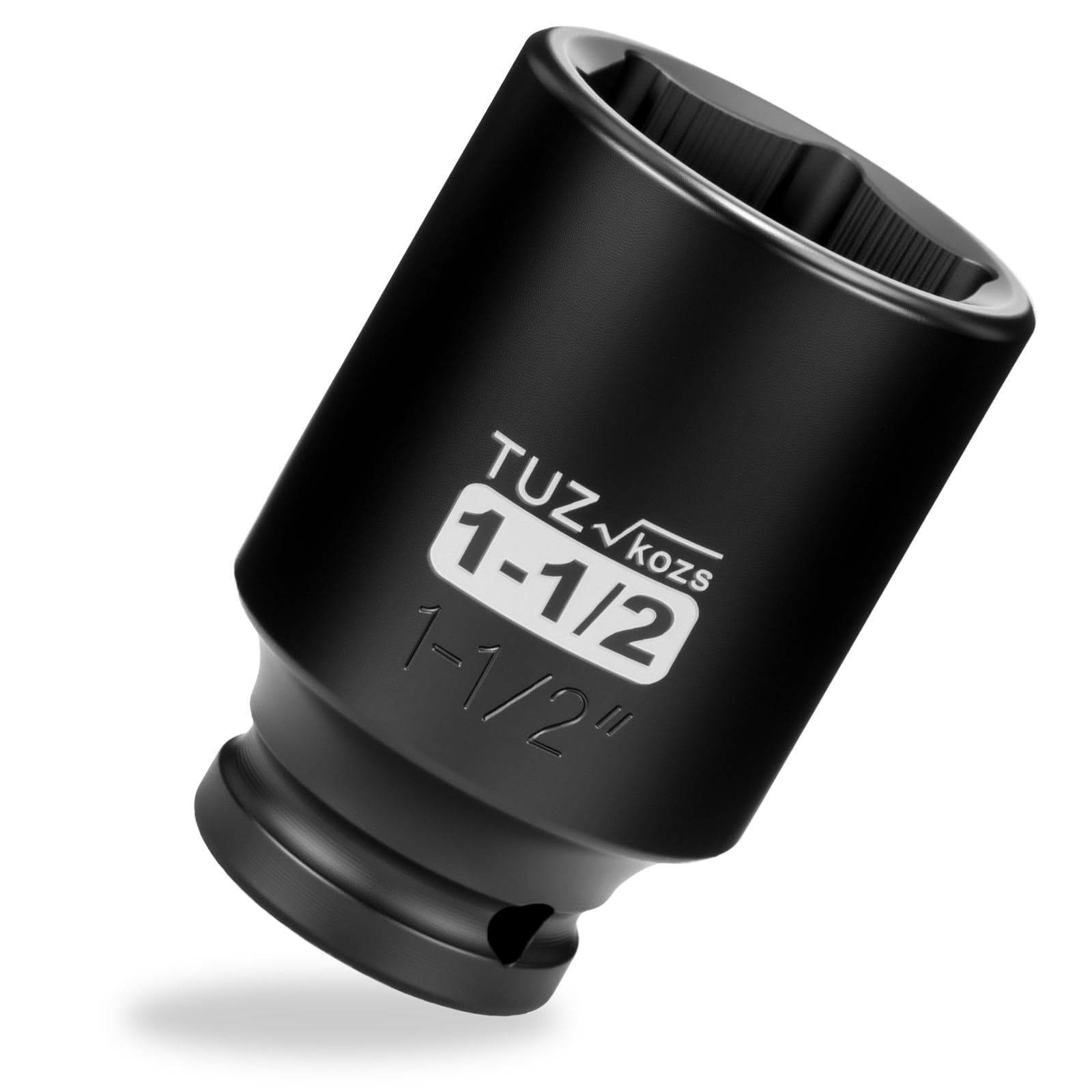
1. TUZkozs 1/2 Inch Drive 1-1/2 Inch Deep SAE 6 Point CR-MO Impact Socket
Our pick — over 4.5★ from 800+ verified ratings; the strongest balance of quality and price.
The everyday workhorse that wrenches around tough lug nuts without slipping.
The radius corner design applies force to the fastener’s flat sides instead of its corners. This lets you apply higher torque without rounding a bolt head. The 6-point opening provides full contact on hex fasteners, and CR-MO steel withstands daily impact gun use. At 3.08 inches long, it has enough reach for recessed nuts on axle shafts and water heater elements.
The black phosphate finish resists corrosion, and dual markings (laser etching plus permanent stamp) keep the size readable after years of grime. What wins people over, as the review pages sum it up, is that the socket is “excellent quality, nicely marked, spot on size.” The deep-well shape reaches inner nuts that standard sockets cannot touch, making it a natural fit for automotive and industrial repairs alike.
Compared to the shorter TEKTON (which is 1.5 inches long), this TUZkozs adds the extra depth you need for long bolts. The only honest trade-off is the thin-wall construction — a few owners note it feels less substantial than older impact sockets, though none report it failing under normal impact wrench use.
Reasons to reach for it
- Radius corner design protects fasteners from rounding
- Dual size markings (laser + stamped) for long-term readability
- Deep 3.08-inch length reaches bolts others cannot
One thing to know
- Wall thickness feels modest compared to premium-grade sockets
Your go-to for: daily automotive work and home repairs where you need a deep reach and a reliable grip on hex fasteners.
Consider something else if: you are wrenching on heavy industrial equipment with 3/4-inch drive tools — this is a 1/2-inch drive socket.
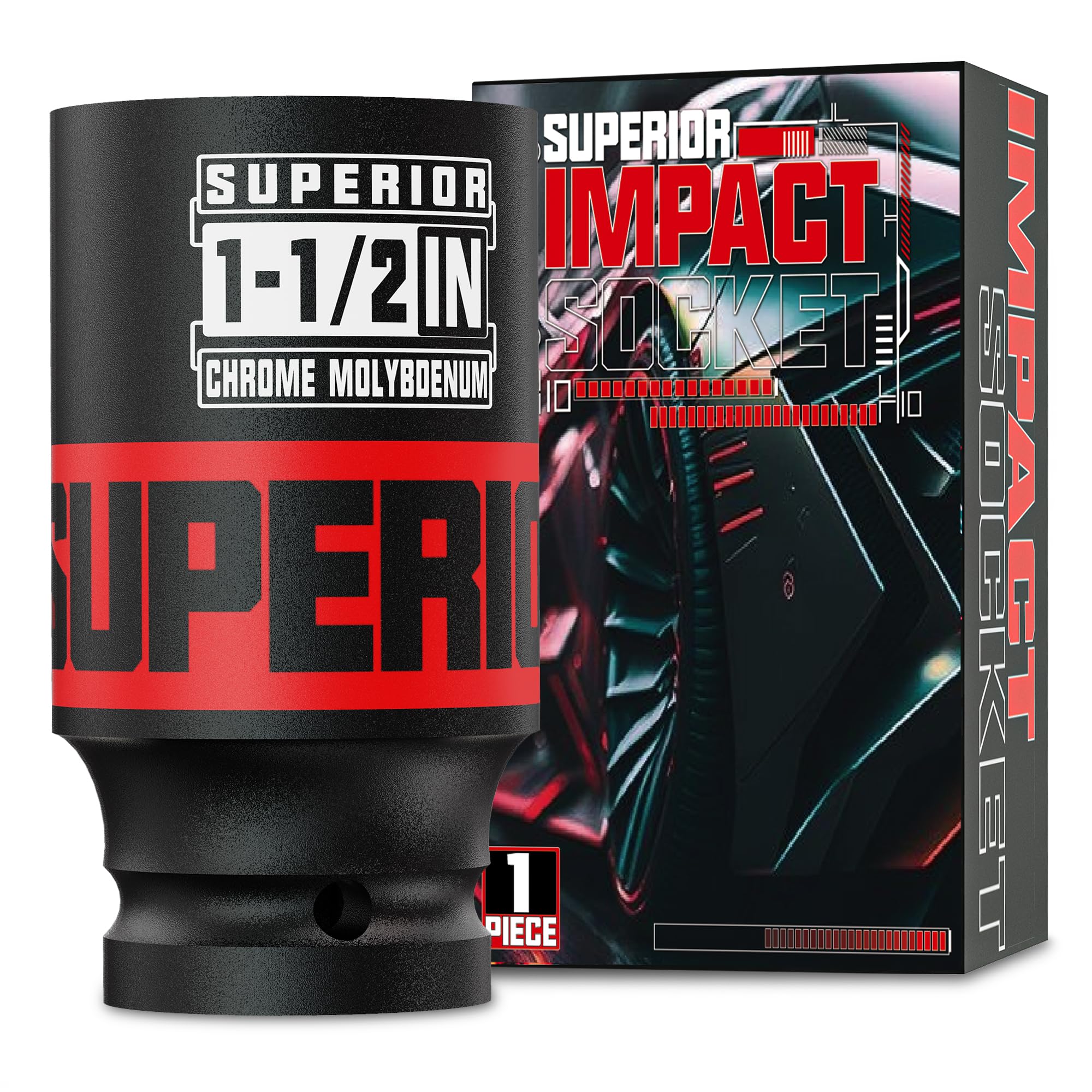
2. Aiourx 1/2″ Drive Impact Socket, 1-1/2 Inch Deep Socket, SAE, 6 Point, CR-MO
A no-frills CR-MO socket that nails the essentials at an entry-level price.
Do not let the budget-friendly sticker fool you — this Aiourx socket is forged from chrome-molybdenum steel just like sockets that cost twice as much. It measures 3.07 inches long, giving you a deep profile that reaches into recessed fasteners on truck tires and jumbo bolts. The 6-point opening grabs the hex flats tightly, so the socket does not slip under the high torque output of an impact wrench.
The high-contrast markings are a small but real win in a greasy under-car environment — you can spot the 1-1/2 inch label at a glance without squinting. One owner sums up the experience: “Was the correct size and seems to be good quality.” The painted finish is less corrosion-resistant than the phosphate coatings on higher-end picks, but for the occasional automotive job, it holds up fine. At roughly 1.5 inches shorter overall than the TUZkozs (3.07 vs 3.08 inches), they are effectively identical in reach.
Smart buy for: the DIY mechanic who needs a single deep 1-1/2 inch socket for a specific job — changing a lug nut or removing a damaged bolt — and does not want to overspend.
The reason to skip: if you work in a shop where sockets see solvent baths and daily impacts, the paint finish may wear faster than a phosphate or chrome plating.
Best for occasional use: your garage toolbox gets a solid CR-MO impact socket without the premium price tag.
Look elsewhere if: you need a 12-point opening for square fasteners or pool filter nuts.
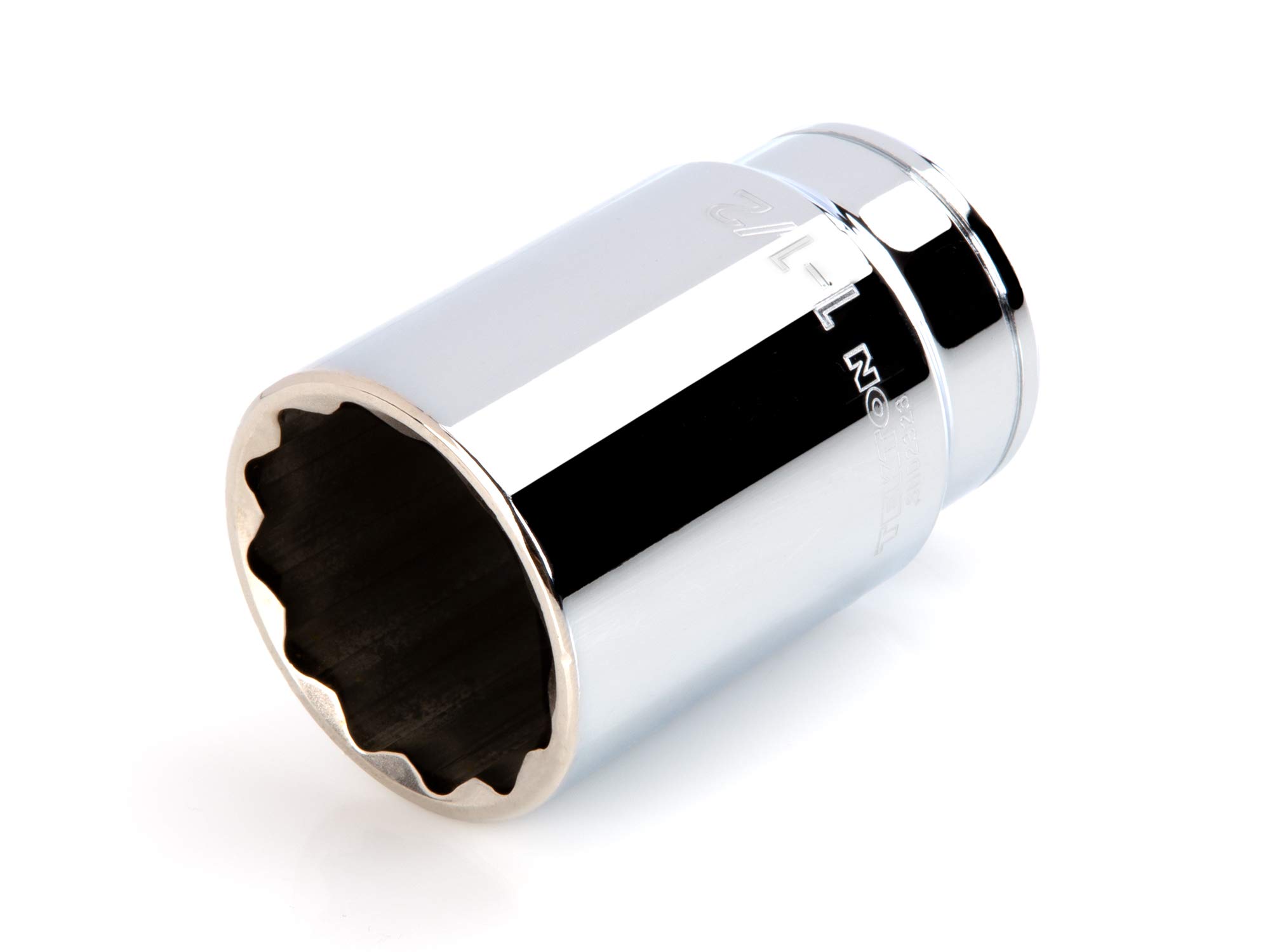
3. TEKTON 1/2 Inch Drive x 1-1/2 Inch Deep 12-Point Socket | SHD23238
The oddball specialist that tackles square nuts and filter rims other sockets cannot.
Most 1-1/2 inch impact sockets are 6-point, but the TEKTON SHD23238 breaks the mold with a 12-point opening. That gives you more access positions on hex, double-hex, and square fasteners — a real edge when you are working in a tight spot and the ratchet can only swing 20 degrees. The review pages sum it up: “This thing works great for getting the metal filter rim nut on and off.”
The chrome-plated exterior and interior resist rust, and the alloy steel construction feels solid in the hand. At only 1.5 inches in length, it is notably shorter than the TUZkozs and Aiourx deep sockets which means it cannot reach recessed nuts on long bolts. But for surface-level jobs like pool filter nuts, water heater anode rods, or foundation bolts, the reduced length actually makes it easier to maneuver. The radiused corners prevent fastener round-off by applying force to the fastener’s flat sides, a detail that protects your bolts as well as the socket.
Standout trick: the 12-point opening lets it handle square nuts that 6-point sockets cannot engage — perfect for specialty fasteners on pool filters and certain HVAC equipment.
The catch: the shallow depth (1.5 inches) means it will not work on long threaded rods or axle nuts that sit deep in a cavity.
Reach for this if: you regularly work on pool filter housings, water heater elements, or equipment with square nuts — the 12-point opening is the key.
Look elsewhere if: you need the deep profile for recessed fasteners on truck suspension or axle nuts.
4. DEWALT 6 PT 1/2″ Deep Drive Impact Socket 1-1/2″ SAE

A name you trust, with Direct Torque Technology that makes fastener stripping less likely.
DEWALT’s 1-1/2 inch deep drive socket brings their Direct Torque Technology to the job site — the design helps spread force across the flat sides of the fastener instead of concentrating it on the corners. That means you can lean into higher torque without rounding the bolt head. The knurled control ring around the base gives your fingers extra grip when spinning the socket onto a stud by hand.
This socket is made from chrome vanadium steel rather than CR-MO, which makes it slightly harder but theoretically less impact-resistant. In practice, buyers report it handles impact wrench abuse without issues — one owner used it to replace water heater elements and called it “very durable and high quality.” The hard-stamped markings will not wear off over time, and the full lifetime warranty backs the tool. One honest note: the socket thickness gets mixed feedback, with several owners finding the shoulder thin compared to older DEWALT sockets, but no one reports structural failure under normal use.
What stands out
- Direct Torque Technology reduces fastener rounding
- Knurled control ring improves hand grip during setup
- Lifetime warranty from a major brand
The fine print
- Chrome vanadium steel is less impact-tough than CR-MO
- Socket thickness draws mixed opinions from users
Grab it for: water heater element swaps and household automotive work where brand familiarity and warranty confidence matter.
Think twice if: you need the extra impact toughness of CR-MO steel for daily pneumatic wrench use.
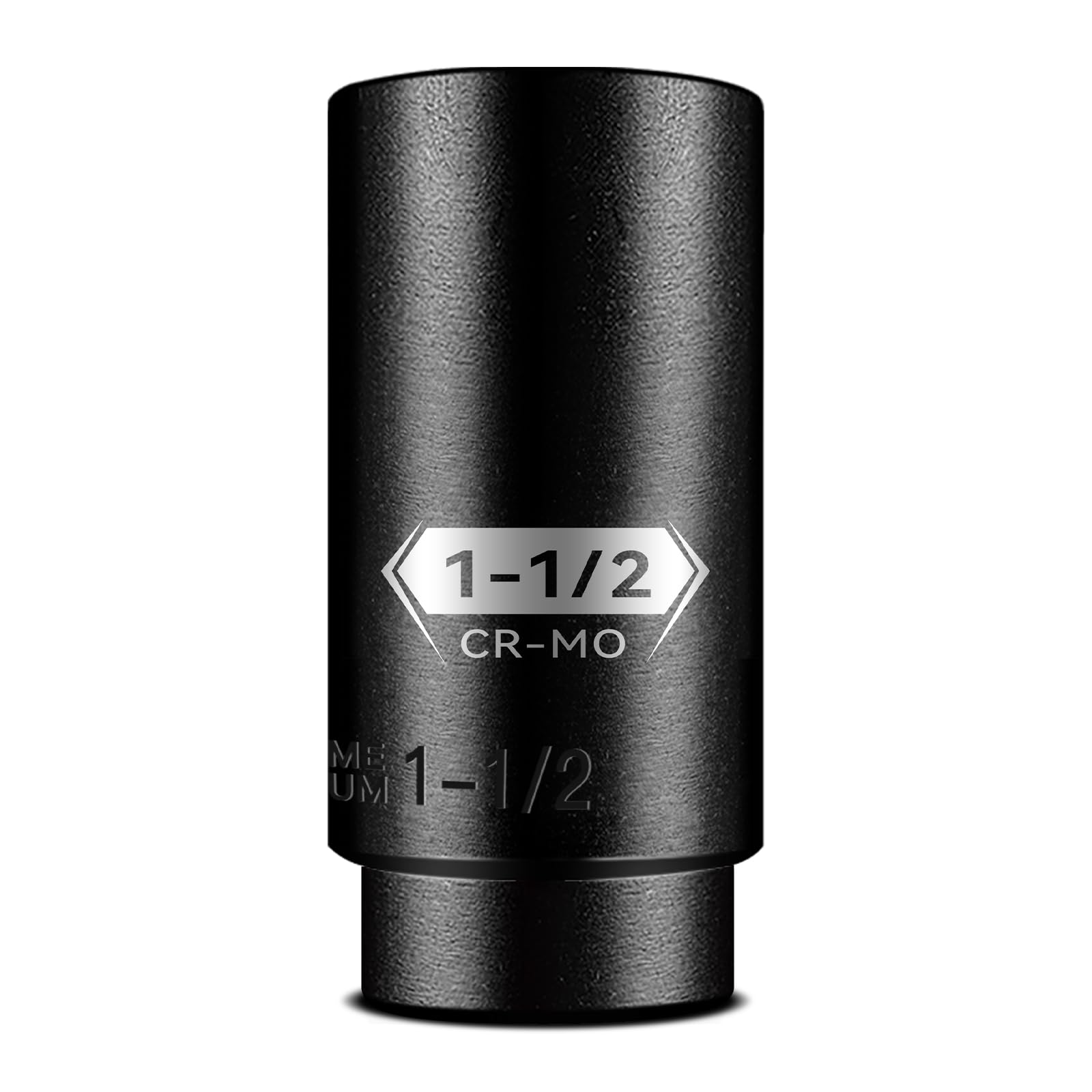
5. BLACKROBOT 1/2 Inch Drive 6-Point Deep Socket, 1-1/2 inch Deep Impact Socket, CR-MO Steel
The slim-profile deep socket that slides into tight engine compartments without binding.
BLACKROBOT’s 1-1/2 inch socket uses heat-treated chrome molybdenum steel, so it can take the hammering stress of an impact wrench without deforming. The black phosphate coating adds corrosion and wear resistance, which helps when you are working around road salt or coolant drips. Owners mention accurate sizing — one confirmed the 21mm equivalent fits lug nuts perfectly with no slop.
The thin-wall construction is the main story here: it lets you reach into tighter spaces where a thicker socket would get stuck, but it also draws mixed feedback from owners who prefer a more substantial feel. For its intended use — automotive fasteners like swollen lug nuts — owners say it works “real good.” The laser marking plus labeled slot make quick identification easy, even with greasy fingers. Unlike the shorter TEKTON, this is a true deep socket that reaches long bolts and recessed nuts.
Why it stands out: the thin wall profile gives you extra clearance in cramped engine bays and suspension areas where every millimeter counts.
The trade-off: the same thin wall that helps in tight spots can feel less sturdy than thicker sockets — though no failures are reported in the review data.
Best for close quarters: if you are wrenching on modern cars where components are packed tight, the thin-wall design earns its keep.
Pass on it if: you prefer a thick-walled socket that feels indestructible in your hand, even if it means less clearance.
6. BILITOOLS 3/4″ Drive Impact Socket 1-1/2″, SAE, CR-MO Steel, 6 Pt. Impact Grade
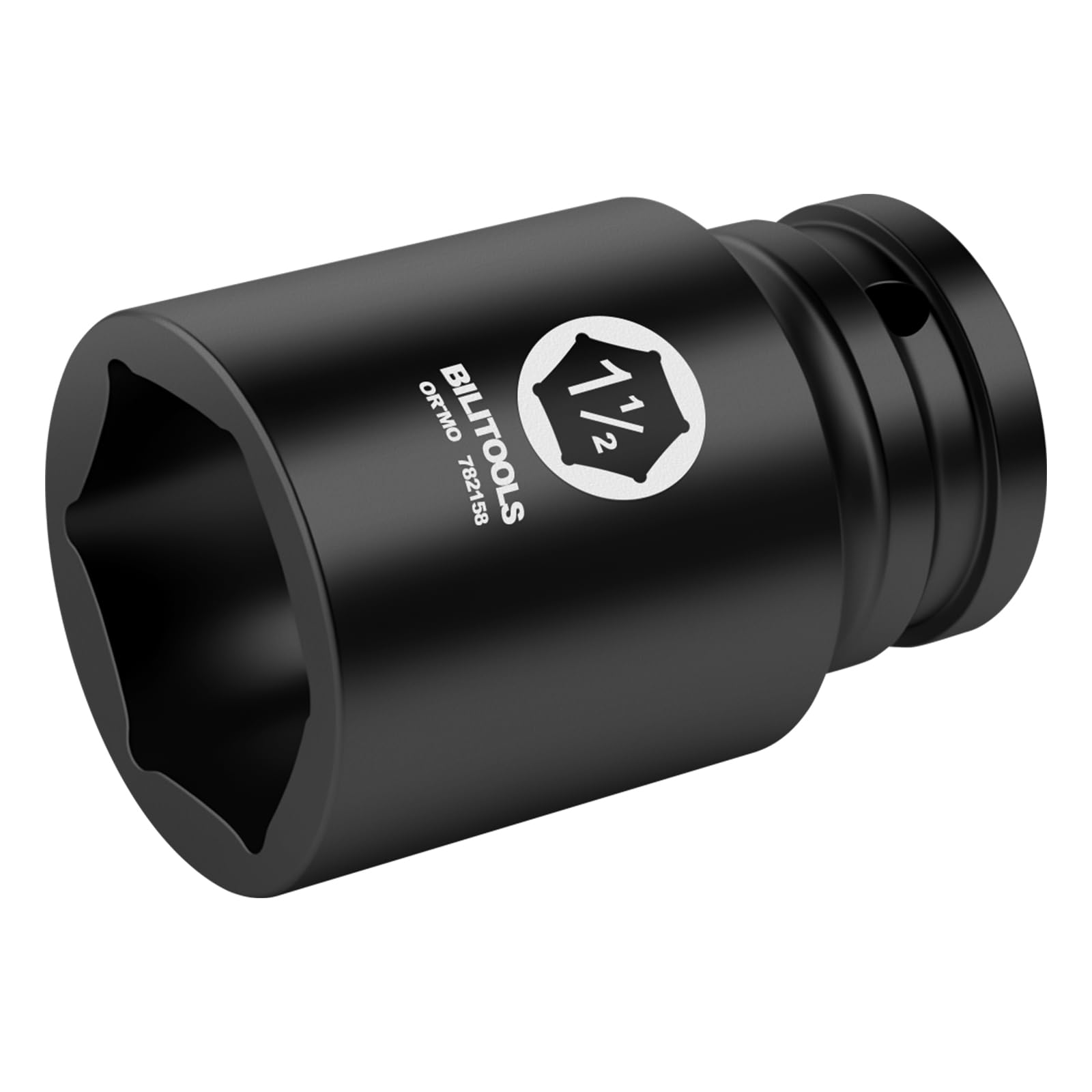
The 3/4-inch drive workhorse that survived a 150 psi impact gun without measurable distortion.
This is not a standard 1/2-inch drive socket — the BILITOOLS runs on a 3/4-inch drive system, which immediately tells you it is built for higher torque. Forged from premium CR-MO steel with a black phosphate finish, it is designed to withstand the punishment of large axle nuts, leaf spring bolts, and heavy equipment fasteners. The 6-point design gives you larger, thicker contact points that reduce the risk of rounding off fastener corners under extreme load.
The evidence of its toughness comes from the review pages: one owner hit it with a 1-inch impact gun at 150 psi through a 3/4 reducer and reported only minimal wear to the internal coating — no distortion, no cracks. Another used a 20-inch breaker bar with a pipe extension to break a heated axle nut, and the socket came out undamaged. The color-coded hang tag and laser-etched markings help you grab the right size fast from a pegboard, and it meets or exceeds ANSI performance standards for safety.
class-leading toughness
- Withstood high-torque abuse with no measurable distortion
- 3/4-inch drive handles heavy truck and equipment work
- Meets or exceeds ANSI standards
Important note
- Requires a 3/4-inch drive tool — incompatible with standard 1/2-inch impact wrenches and ratchets
Your pick for heavy gear: if you work on semi-trucks, large agricultural equipment, or industrial machinery with a 3/4-inch drive tool, this socket is built to survive.
Not for standard toolboxes: you need a 3/4-inch drive set — do not buy this expecting it to fit a 1/2-inch impact wrench.
7. Jetech 3/4 Inch Drive 1-1/2″ Deep Impact Socket, SAE, Heat-Treated Cr-Mo, 6-Point
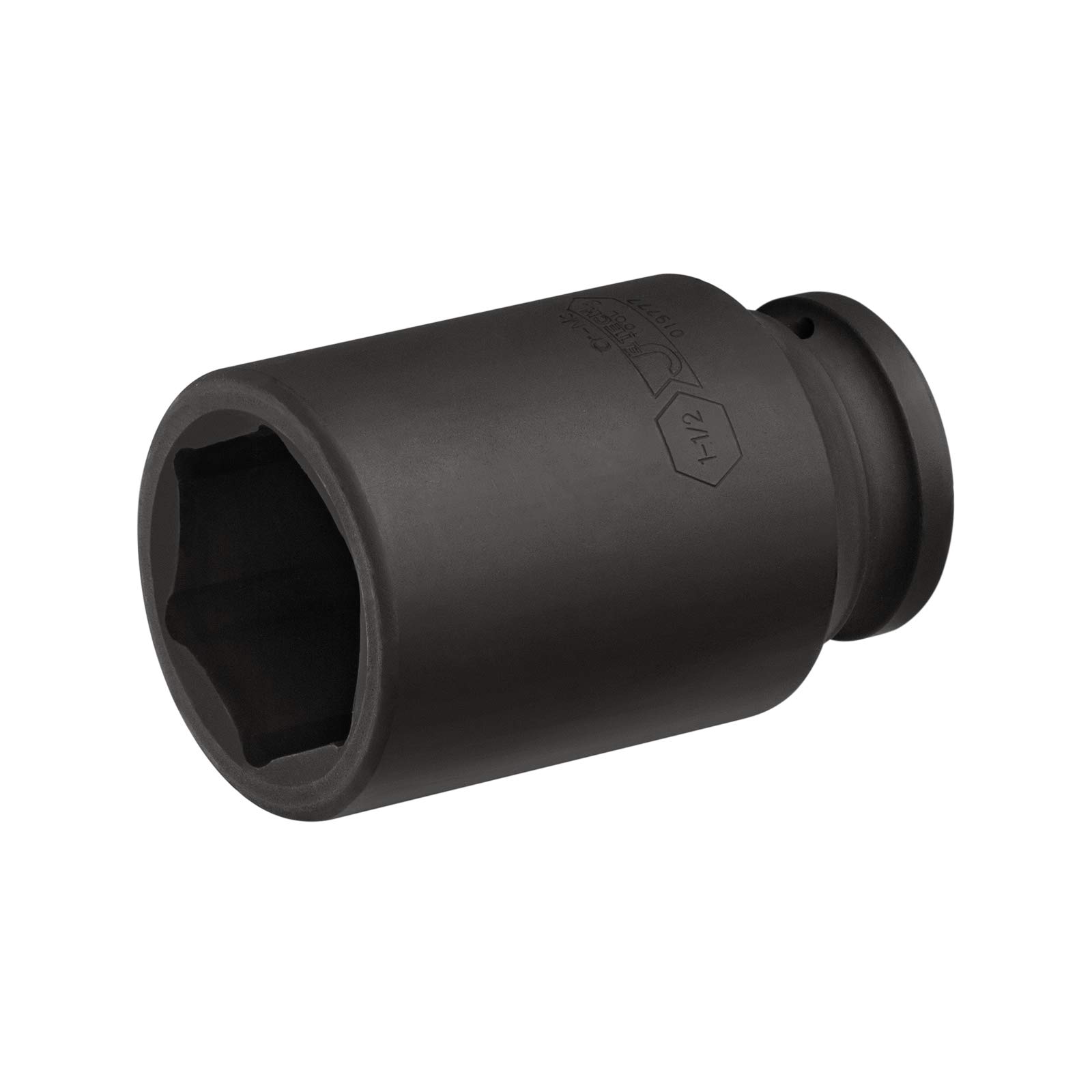
The cold-forged, heat-treated deep socket that survives 750 foot-pounds without complaint.
Like the BILITOOLS above, this Jetech socket uses a 3/4-inch drive and is forged from premium chrome molybdenum steel. what separates it is the manufacturing process: cold forging followed by precise heat treatment tune the steel’s grain structure for exceptional hardness and wear resistance. The deep profile provides extra clearance for reaching nuts on long bolts, threaded rods, and recessed fasteners on trucks and heavy machinery where standard sockets cannot reach.
The review pages offer real-world proof of its toughness — one owner confirmed using it with 750 foot-pounds of torque with “no problems.” Another used it to loosen the nuts holding a semi-trailer fifth wheel in place and reported it “still looks new with no deformities.” The internal radius corner design distributes stress evenly across the fastener’s flats, protecting both your socket and the bolt. The black phosphating finish resists rust and grease, keeping the socket functional in harsh workshop conditions.
Its key advantage: the extended deep profile gives you more clearance on long bolts than the standard-depth BILITOOLS, making it the better choice for recessed fasteners.
The same catch: 3/4-inch drive means you need the corresponding impact tool — it will not work on a 1/2-inch ratchet or impact wrench.
Reach for this if: you are working on large machinery or heavy trucks with recessed nuts that a standard-depth 3/4-inch socket cannot reach.
Consider the BILITOOLS if: you do not need the extra depth and want to save a small amount on a standard-depth 3/4-inch socket.
8. TIGHTSPOT 1/2″ Drive 1-1/2 Inch Deep Impact Socket, 12-Point, CRV Steel
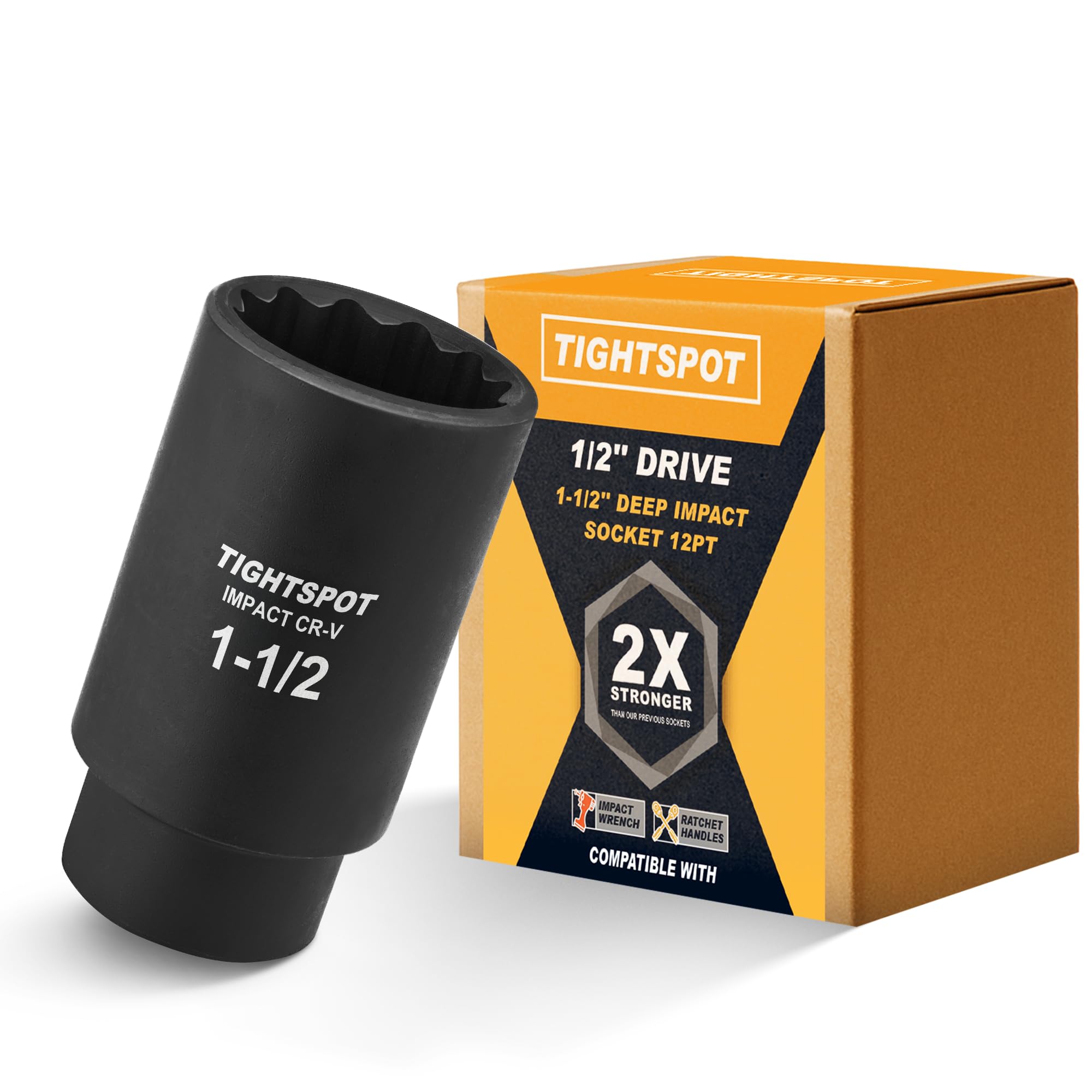
A 12-point deep socket built from aerospace-grade steel for suspension rebuilds that demand grip.
The TIGHTSPOT stands out for its material claim — aerospace-grade chrome vanadium steel — and its 12-point opening. That means it can engage fasteners more easily in tight spots, and it works on square nuts in addition to standard hex hardware. The manganese phosphate finish provides a corrosion-resistant layer that helps the socket slide smoothly onto bolts without binding. Customers note using it for suspension and steering rebuilds on trucks, with one noting it “took all the abuse I threw at it and still finished the job.”
The radius corner design grabs the fastener by its flats, not its corners, reducing the risk of rounding. The chamfered opening helps the socket align faster on the fastener, saving time when you are working blind. Compared to the TEKTON 12-point (which is also 1/2-inch drive but shorter), this TIGHTSPOT is a deep socket, so it handles recessed nuts better. The CR-V steel is harder than CR-MO but the durability feedback is strong — owners mention minimal wear after extensive use.
What impresses
- 12-point opening works on square and hex fasteners
- Aerospace-grade CR-V steel with high tensile strength
- Deep profile suits suspension work
One consideration
- CR-V is more brittle than CR-MO under extreme impact shock
Grab it for: suspension, steering, and under-chassis work where you need both the deep reach and the versatility of a 12-point opening.
Think twice if: your primary tool is a high-torque pneumatic impact wrench — CR-MO steel is generally tougher for that use.
9. SUNEX TOOLS 248 1/2-Inch Drive 6 Point Impact Socket 1-1/2-Inch

The 16-ounce brute that popped a trailer hitch nut in 15 seconds after a wrench failed for 30 minutes.
SUNEX Tools has a strong reputation in the professional mechanic world, and this 248D socket lives up to it. Forged from chrome molybdenum alloy steel with a radius corner design, the socket applies force to the side of the fastener instead of the corner — extending both the socket’s life and the fastener’s life. At 16 ounces it has a noticeably hefty feel compared to other 1/2-inch drive sockets on this list.
The real-world proof comes from the review pages: one owner spent 30 minutes trying to remove an RV trailer hitch ball nut with a 1-1/2 inch open-end wrench — and broke the wrench. The SUNEX socket, paired with a Milwaukee M18 impact wrench, removed the nut in 15 seconds. Others report it works flawlessly with high-torque impact drivers (450 ft-lb tightening, 600 ft-lb breaking torque) over multiple days of heavy-duty equipment installation. The impact retention groove gets mixed feedback — some owners find the socket sits loosely on the anvil — but the structural toughness and value draw consistent praise. The hard-stamped markings and painted finish are basic but durable.
Why pros like it
- CR-MO steel and radius corners handle high torque without cracking
- Proven to remove seized nuts that defeated other tools
- Hefty 16-ounce construction signals quality
Be aware
- Impact retention (how tightly it grips the tool anvil) gets mixed feedback
Your pick for tough jobs: if you frequently deal with seized fasteners and need a socket that can take the full force of a high-torque impact wrench without cracking.
Consider the TUZkozs instead if: you want a deep socket at a lower price and the shorter 1.5-inch length of the SUNEX is not enough reach for your application.
Understanding the Specs
Chrome Molybdenum vs Chrome Vanadium Steel
The steel type is the single most important factor in how much abuse your socket can take. Chrome molybdenum (CR-MO) is softer and more ductile — it flexes slightly under impact shock instead of cracking, making it the standard for impact sockets. Chrome vanadium (CR-V) is harder and more brittle, which suits hand tools but risks fracture under a high-torque impact wrench. If you plan to use a pneumatic or electric impact tool daily, CR-MO is the safer choice.
6-Point vs 12-Point Openings
A 6-point socket has six internal corners that match the six sides of a hex fastener. It provides full contact across the flat sides, minimizing the risk of rounding the bolt head. A 12-point socket has twelve internal corners and can engage a fastener in twice as many positions — handy when you have limited swing space. The trade-off is that 12-point sockets have thinner contact areas and are slightly more likely to round a worn fastener. Most impact work calls for 6-point; 12-point is best for specialty applications like square nuts or double-hex bolts.
Drive Size: 1/2-inch vs 3/4-inch
The drive size is the square hole on the back of the socket that connects to your ratchet or impact wrench. A 1/2-inch drive is the most common and fits standard impact wrenches and torque wrenches. A 3/4-inch drive socket requires a 3/4-inch drive tool — it is larger and handles significantly more torque, making it necessary for heavy truck and industrial work. If you only own 1/2-inch drive tools, stick with 1/2-inch drive sockets; 3/4-inch sockets will not fit.
Radius Corner Design
Traditional sockets apply force to the corners of a fastener — the weakest point. A radius corner design shifts the contact point to the flat sides of the fastener, distributing the load more evenly. This allows you to apply higher torque without rounding the bolt or nut. It also protects the socket itself from wear at the corners. Most modern impact sockets include this feature, but it is worth checking for if you work on rusted or stubborn fasteners regularly.
FAQ
Will a 1-1/2 inch socket fit a standard 1/2-inch impact wrench?
Can I use a 12-point socket on a hex fastener?
What is the difference between deep and shallow sockets?
Is chrome vanadium steel good enough for impact use?
Why does my socket keep rounding bolts?
How do I know which drive size my tool uses?
Can a 1/2-inch drive socket handle axle nuts on trucks?
What does the black phosphate coating do?
How long should a 1-1/2 inch impact socket last?
Is it worth paying more for a brand-name socket like DEWALT or SUNEX?
Final Thoughts: The Verdict
For the majority of shoppers, the 1 1/2 socket winner is the TUZkozs 1/2-Inch Drive Deep Socket because it combines CR-MO steel, radius corners, a deep 3.08-inch reach, and a crowd-pleasing track record from over 800 owners. If you need a versatile 12-point opening for pool filters and square nuts, grab the TEKTON SHD23238. And for heavy truck work or high-torque axle nuts, the BILITOOLS 3/4-Inch Drive Socket is the one to reach for — it survived conditions that would crack a lesser socket, and the review data backs up its toughness.
How We Picked
We do not accept paid placement. Every pick is matched to a real buyer and a real use-case; we do not hands-on test units.
Sources & Methodology
Specifications: manufacturer listings and product documentation. Review insights: verified customer reviews, as of July 2026. Pricing: not shown on this page (it changes often); check the current price via the retailer link.
As an Amazon Associate, Trending Car earns from qualifying purchases. This does not affect which products we feature.