
Our readers keep the lights on and my garage snacks stocked. As an Amazon Associate, I earn from qualifying purchases.
Specs are compiled from manufacturer listings and verified buyer reviews and can change over time — please confirm the key details on the product page before buying.
You need a wheel spacer that actually fits your vehicle without causing a shake at 60 mph. A mismatched spacer can ruin your ride, but a well-chosen one gives you a wider track (the distance between left and right tires), better handling around corners, and a look that fills the wheel wells. This guide cuts through fitment confusion by comparing real specs and owner experiences across six proven sets.
I’m Min Islam — the founder and writer behind Trending Car. This guide is built by comparing the manufacturers’ published specifications and the patterns across verified customer reviews, so you get each pick’s real strengths and trade-offs instead of marketing spin.
You need a hub-centric design (a spacer that centers itself on your vehicle’s factory hub flange, not on the lug nuts) whether you drive a Jeep, a Ram, an F-150, or an ATV. Read on for the 1.5 inch wheel spacers that owners actually trust for daily driving and off-road use.
Our Picks at a Glance

How To Choose The Best 1.5 Inch Wheel Spacers
A wheel spacer is a solid aluminum ring that sits between your hub (the part of the axle the wheel bolts onto) and your wheel, pushing the wheel outward. Getting the right one means matching bolt pattern (the lug pattern), hub bore (the center hole size), stud thread pitch (the spacing of the threads on the bolts), and thickness to your vehicle. The details matter because the hardware carries your truck’s full weight in every turn and pothole.
Hubcentric vs Lug-Centric: Why It Decides Your Ride
A hub-centric spacer centers the wheel on your vehicle’s hub flange (the raised metal ring that sticks out from your axle). This transfers the load to the hub itself, not the lug nuts. Without a hub-centric design, the entire weight rides on the studs, which can cause a shimmy (a vibration or wobble) at highway speeds or looseness over time. Every spacer on this list is hub-centric because that is the standard for safe, vibration-free driving.
Material Matters: 6061-T6 Aluminum vs Cheaper Cast Options
Forged 6061-T6 aluminum (a specific aerospace-grade alloy that is heat-treated for extra strength) is the industry benchmark for wheel spacers. It is lightweight and strong — far better than cast aluminum, which can crack under heavy loads. A forged spacer resists corrosion thanks to an anodized surface treatment (a protective coating applied electrically), so it holds up to road salt and mud. If a spacer is listed only as “aluminum” without the “6061-T6” spec, it likely uses a lower-grade alloy.
Grade 10.9 vs 12.9 Studs — The Right Bolt for Your Truck
Studs are the threaded bolts that hold the spacer to your hub. Grade 10.9 bolts (a hardness rating) are strong enough for heavy-duty automotive use and are designed to bend slightly before failing. Grade 12.9 bolts are harder but more brittle — they can snap rather than stretch. The trade-off is real: some premium brands use 12.9 because they are stronger in tension (pulling force), but buyers report that proper torque matters more than the stud grade. Look for “geomet” or “DACROMAT”-treated hardware (anti-corrosion coatings) for added rust resistance.
Quick Comparison
| Model | Best For | Bolt Pattern | Hub Bore | Stud Size | Amazon |
|---|---|---|---|---|---|
| dynofit 1.5″ for JK/WJ/WK★ Best Overall | Jeep JK daily-driver & off-road | 5×5″ (5x127mm) | 71.5 mm | 1/2″-20 | Amazon |
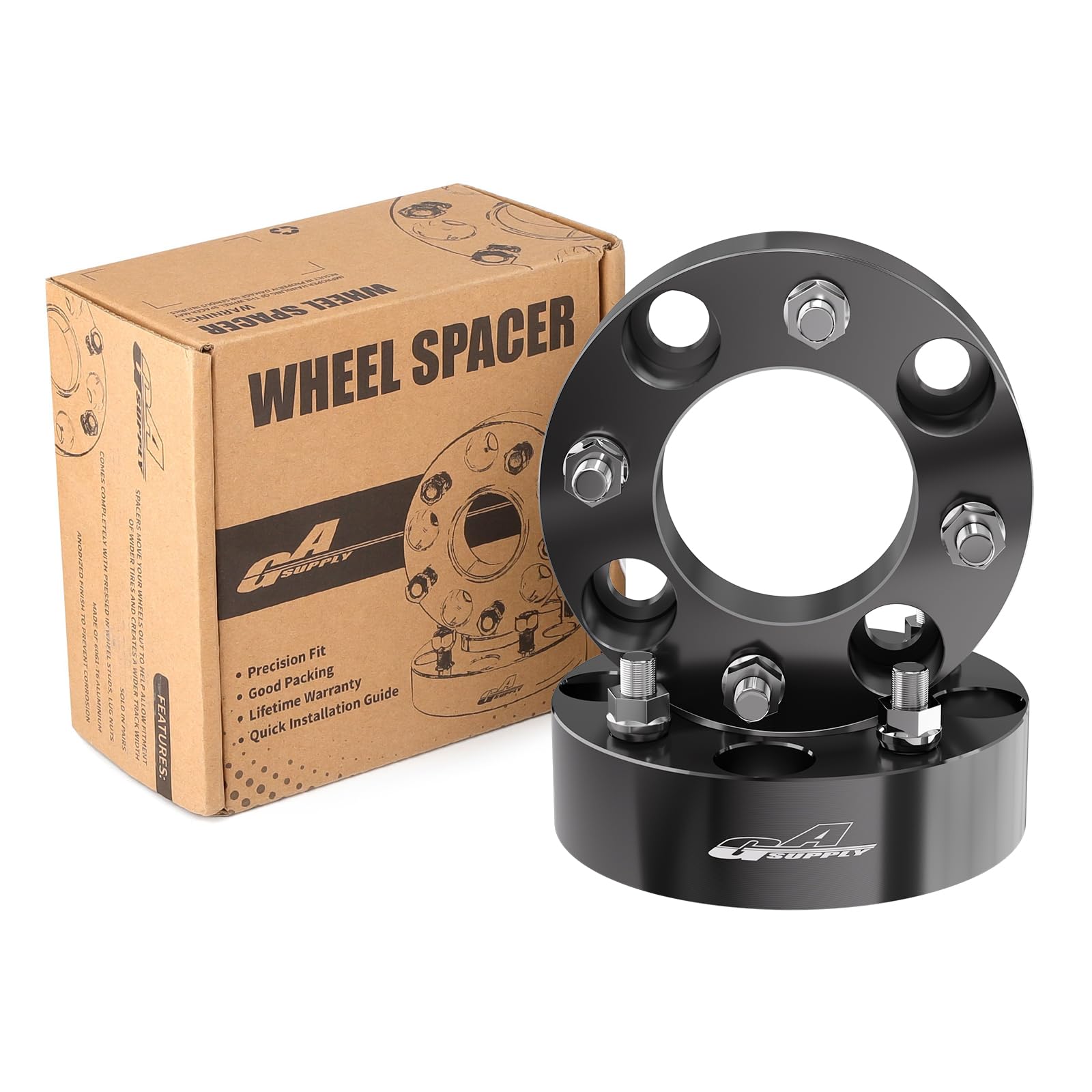
| GAsupply 4×110 ATVBest Value | ATV brake-drum clearance | 4×110 mm | 74 mm | M10x1.25 | Amazon |
| Rough Country 1.5″ JK | Jeep JK with 34″ tires | 5×5″ (5x127mm) | 71.5 mm | 1/2″-20 | Amazon |
| Richeer 1.5″ for JL/WK2 | 2018+ Wrangler JL & Grand Cherokee | 5×5″ (5x127mm) | 71.5 mm | M14x1.5 | Amazon |
| KSP 5×5.5 Ram 1500 | 2012-2018 Ram 1500 (5-lug) | 5×5.5″ (5×139.7mm) | 77.8 mm | M14x1.5 | Amazon |
| KSP 6×135 F150 | 2015+ F150 / Expedition | 6×135 mm | 87.1 mm | M14x1.5 | Amazon |
In‑Depth Reviews
1. dynofit 1.5″ Wheel Spacers (5×5 for JK/WJ/WK)
Our pick — over 4.5★ from 900+ verified ratings; the strongest balance of quality and price.
Owners call this a perfect fit even after 5,000 miles. The forged 6061-T6 aluminum delivers strength without extra weight.
The dynofit spacers give you rust-resistant, anodized 6061-T6 aluminum (a heat-treated aerospace-grade alloy) with a forging process that is denser and stronger than casting. They come with DACROMAT-treated bolts (a coating approved by SGS that resists corrosion) — the studs use a 1/2″-20 thread pitch (the standard for Jeep Wrangler JK models). The hub bore (the center hole that fits over your axle hub) is 71.5mm, and the set includes 20 open lug nuts plus a 1-year warranty.
32 owners single out quality as the top strength. Fit runs a close second at 29 mentions — owners mention a zero-gap fit that improves handling stability noticeably. Installation is straightforward: owners say to use red Loctite (a thread-locking glue) and torque the nuts to 100 ft/lb (foot-pounds of tightening force), then re-torque after 500 miles. The Grade 10.9 studs (a hardness rating) are a deliberate safety choice — the maker says they are more likely to deform than snap compared to harder 12.9 bolts, making them safer for car use. That is a smarter choice than the harder 12.9 bolts found on the Richeer spacer.
The catch is weight: at 16.4 pounds for the set of four, these are noticeably heavier than the GAsupply ATV picks (5.1 pounds for a pair). For a full-size Jeep or Grand Cherokee, the extra heft reflects the rugged build. One year of after-sales service backs the purchase.
Owner consensus: “I installed them onto our 2021 Jeep Wrangler and they improved the appearance of the vehicle immensely.”
One trade-off: You must torque them to 100 ft/lb with Loctite. Skip that step and you risk loosening.
Choose this if you drive a 2007-2018 Jeep Wrangler JK, a 1999-2010 Grand Cherokee, or a 2005-2010 Commander. Owners trust it for daily driving and light off-roading. skip it if your vehicle uses a different bolt pattern or hub bore — it will not fit.
2. GAsupply 1.5″ ATV 4×110 Wheel Spacers
The budget-friendly ATV fix that solves clearance problems with your brake drum (the metal drum inside the wheel that the brake shoes press against).
These spacers are CNC machined (cut by a computer-controlled machine) from 6061-T6 aluminum billet — not forged but still a solid alloy. They come with pre-installed Grade 12.9 bolts, which are harder than the Grade 10.9 bolts on the heavier-duty dynofit set. The spec set is specific: a 4×110 mm bolt pattern with a 74mm hub bore and M10x1.25 studs, designed for ATVs like the Honda Rancher, Yamaha Grizzly, and Polaris RZR 170.
Fit is the top aspect with 57 positive mentions — customers note that these solved brake drum clearance issues on Honda Ranchers and pushed wheels to the fender edge for a wider, more stable stance. Stability at higher speeds improves, and the anodized surface resists corrosion. The 10×1.25mm thread pitch is standard for many ATVs, but owners warn that the supplied nuts do not have enough bite on the studs — they recommend replacing them with Tusk extended-shank lug nuts (longer nuts that grip more threads).
At 5.1 pounds per pair, these are far lighter than the dynofit set (16.4 pounds for four), making them easy to handle during a driveway install. The trade-off is durability — it is the most-mentioned negative. A few reviewers point out the studs can be fragile, so careful torque matters. They come in a 2-pack, so you need to order two sets for all four wheels.
Owner summary: “Solved brake drum clearance issue on Honda Rancher.” — rounds are precise, fit is tight.
Heads-up: Replace the included lug nuts with extended-shank versions for a safer bite on the studs, according to some owners who experienced limited thread engagement.
Perfect for a 4×110 ATV (Honda Rancher, Yamaha Grizzly, Polaris RZR) needing a low-cost fix for tire clearance or a wider stance. If you hit rough terrain full-time, a forged set like the dynofit will last longer.
3. Rough Country 1.5″ 5×5 Wheel Spacers for JK
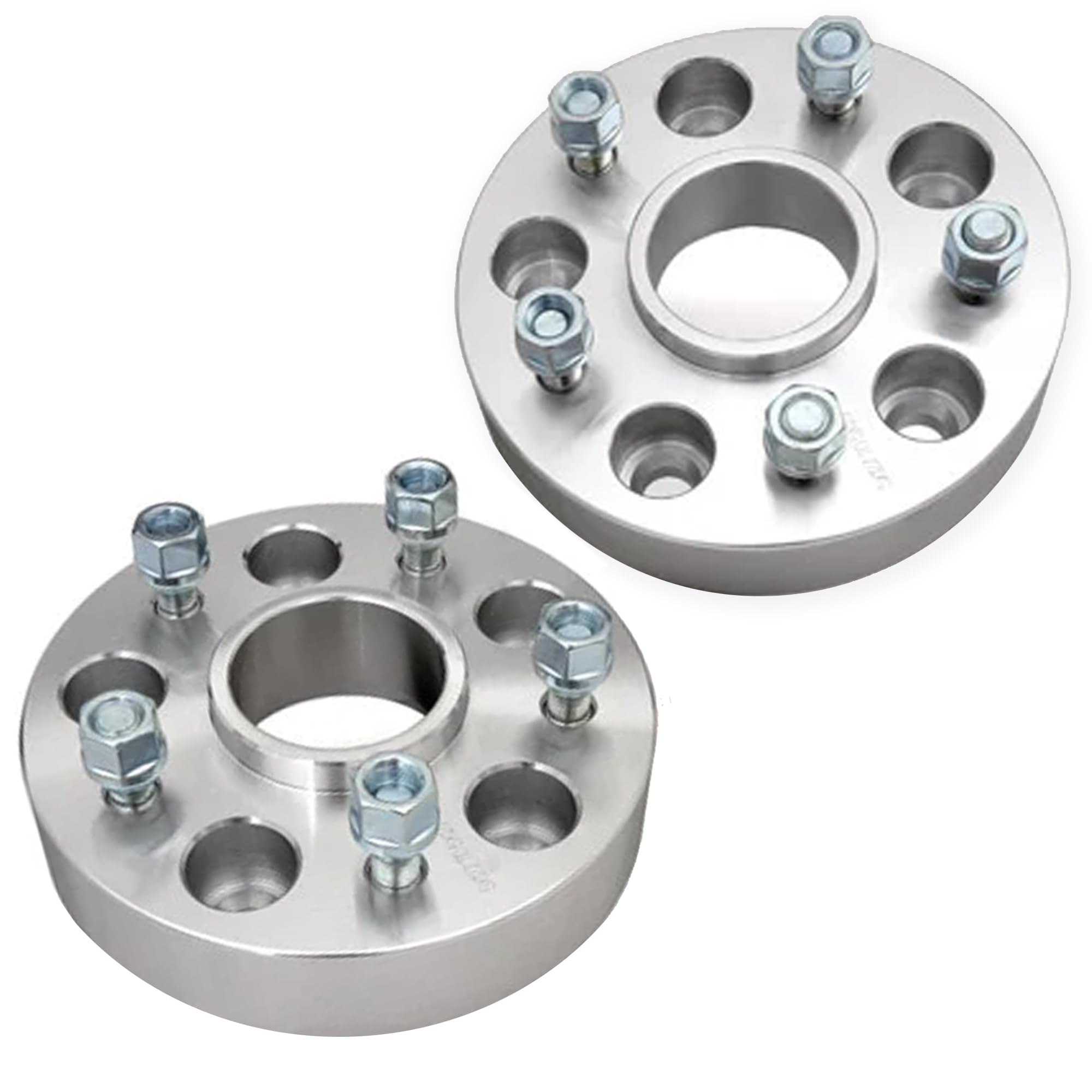
A well-known off-road brand backs this spacer with a lifetime replacement policy. Shoppers say over a year of trouble-free use.
Rough Country’s 1.5-inch hub-centric spacer fits 2007-2018 Jeep Wrangler JK and 2006-2010 Commander models. It is built from 6061-T6 aluminum with pre-installed studs and uses a 5×5.0-inch bolt pattern. Buyers have run 34-inch tires on stock rims with zero rubbing (the tire contacting the fender or suspension) after install.
Owners praise quality and reliability equally, each earning 14 positive mentions. The hub-centric design (centering on the hub flange, not the lug nuts) eliminates vibration when installed correctly with blue or red Loctite and a re-torque after 500 miles. Stability is a common positive — owners say handling and road performance improve, especially on the highway.
The downside is sturdiness: feedback is mixed. A small number of buyers report broken studs, though this is not the majority experience. The spacer is sold as a pair, so you need two pairs — one for the front and one for the rear — which pushes the total cost higher than the dynofit all-in-one set. At 10.45 pounds per pair, it is heavier than the GAsupply ATV option but lighter than the full-set dynofit or KSP spacers.
Owner insight: “Perfect size for stock rims and 34 inch tires. Provides clearance to avoid rubbing and makes sidewalls flush with fender flares.”
Know before you buy: Sold as a pair only — budget for two pairs if you plan to space all four wheels.
This is the choice for 2007-2018 JK Wrangler or 2006-2010 Commander owners who want a USA brand with a lifetime replacement guarantee. It is not the right pick if you want a full set in one box or prefer studs with a higher grade than 10.9.
4. Richeer 1.5″ Hubcentric Wheel Spacers for JL/WK2

The 12.9-grade build brings a more aggressive stance to newer Jeeps. It uses a 1000 MPa tensile strength stud (able to withstand that much pulling force before breaking).
Richeer targets newer Jeep owners: 2018-2024 Wrangler JL/JLU, 2011-2024 Grand Cherokee WK2, and 2019-2024 Gladiator JT. The spacer is 1.5 inches thick with a 71.5mm hub bore and M14x1.5 studs — a larger thread pitch than the 1/2″-20 found on the older JK dynofit. The Grade 12.9 studs reach a tensile strength of 1000 MPa (megapascals, a unit of pressure), which the maker says provides better structural support than the 900 MPa of Grade 10.9.
Quality is the most-discussed strength at 58 positive mentions, followed closely by fit at 35. Owners mention that the spacers are precisely machined, come with clear instructions, and improve ride quality noticeably — with no vibrations up to 80+ mph on gravel roads. Installation is straightforward: the recommended torque is 85-90 ft/lb, and applying thread locker and letting it cure for 24 hours is critical. After a 564-mile trip, one owner checked at 50 miles and reported no looseness or strange sounds.
The trade-off: durability gets a mixed verdict, with 32 mentions. Some owners note the studs, while Grade 12.9, are made in China and may require careful torque to avoid breakage. The spacer is also 16 pounds for the full set of four, so it is not lightweight compared to the GAsupply ATV option.
Owner takes: “No rubbing or vibration up to 80+ mph. Strong buy.” Another reports “no vibrations, looseness, or strange sounds” after 564 miles.
The fine print: Make sure the spacer is thick enough that the studs do not stick out past the wheel — if they do, the lugs can snap.
This is the best option for 2018+ Wrangler JL, Gladiator JT, or 2011+ Grand Cherokee owners wanting 12.9-grade studs and precise hub-centric fit. It matters less if you prefer Grade 10.9 studs for their ability to bend before breaking rather than being extremely hard.
5. KSP 5×5.5 Ram 1500 Wheel Spacers 1.5″
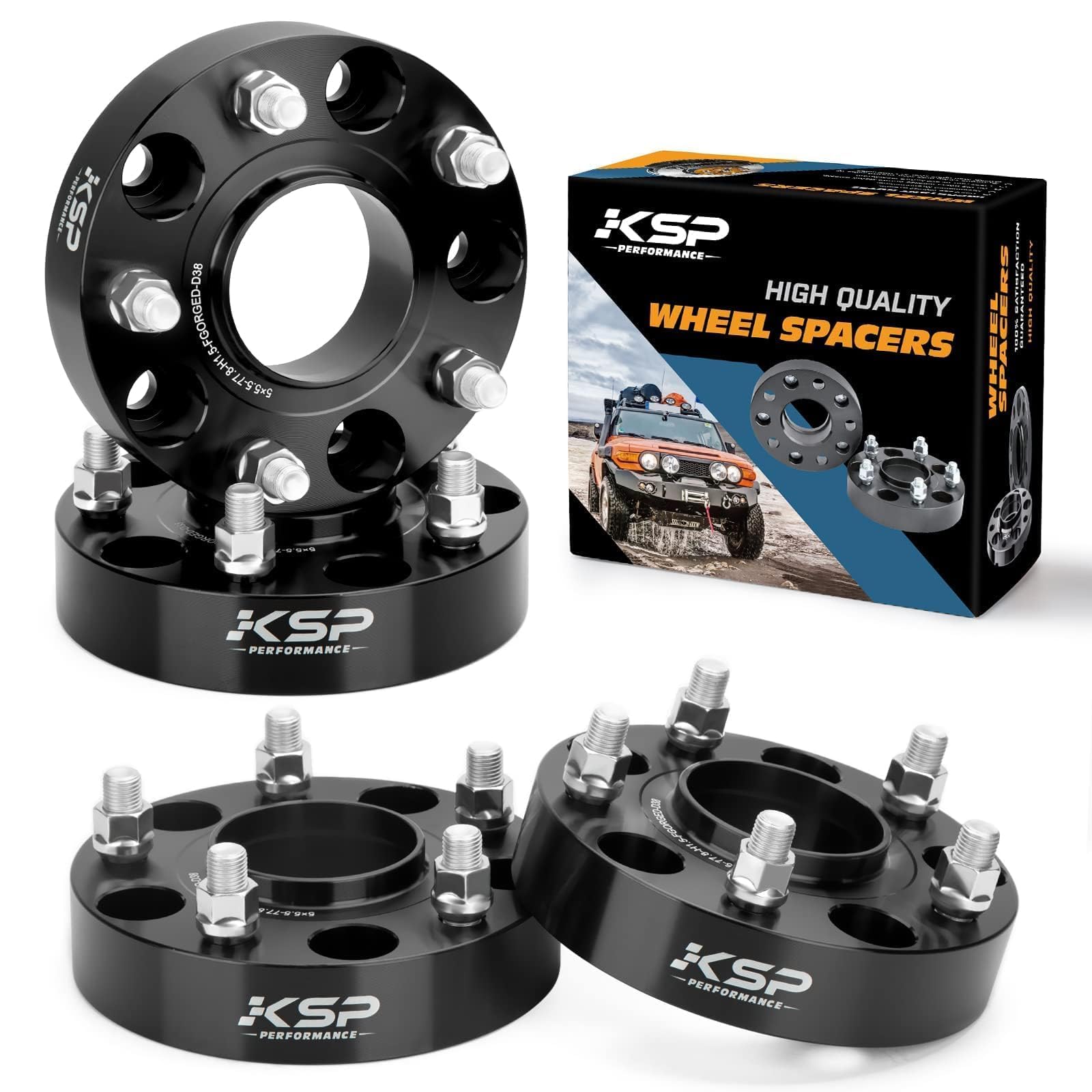
A Ram-specific spacer that aligns perfectly with factory fender flares (the plastic arches over the wheel). It has the highest quality rating of any product here.
KSP designed this set for 2012-2018 Ram 1500 and 2019+ Ram 1500 Classic (5-lug models only). The bolt pattern is 5×5.5 inches (5×139.7mm) with a hub bore of 77.8mm and M14x1.5 studs — matching the Ram’s factory setup. The spacer is forged from 6061-T6 aluminum with a black anodized surface for corrosion resistance and uses Grade 10.9 geomet studs (SGS Test Approved).
Quality leads the aspects at 65 positive mentions — the most of any product here. Fit follows with 53, and appearance with 44. Owners consistently report a “perfect hub centric fitment” and a “beefy, wide tire look” after installation. The recommended torque is 85-95 ft/lb, and the kit includes a small tube of thread locker. The hub-centric design centers the spacer on the OEM hub, eliminating vibrations. One owner ran them for nearly a year on a Ram Rebel with no issues during suspension or brake work.
The recurring negative is durability: 31 owners give mixed feedback. Some report studs breaking off, though this is not the majority experience. A minor complaint: the kit comes with only one small tube of Loctite for all four spacers, so you may need to buy more. At 19.43 pounds for the full set, these are the heaviest spacers in this lineup, reflecting the sturdy 6061-T6 forged construction. They are heavier than the 16-pound Richeer set.
Owner says: “Perfect hub centric fitment. Give me the ‘stance’ I wanted without having to go to an aftermarket wheel.”
Note: Bring extra thread locker — the included tube is small for installing all four spacers.
Built for 2012-2018 Ram 1500 (5-lug) drivers who want a quality-first, hub-centric spacer that matches the factory hub. Double-check that your 2025+ Ram 1500 is still 5-lug before ordering — later models often use a different setup.
6. KSP 6×135 Wheel Spacers for F150 1.5″
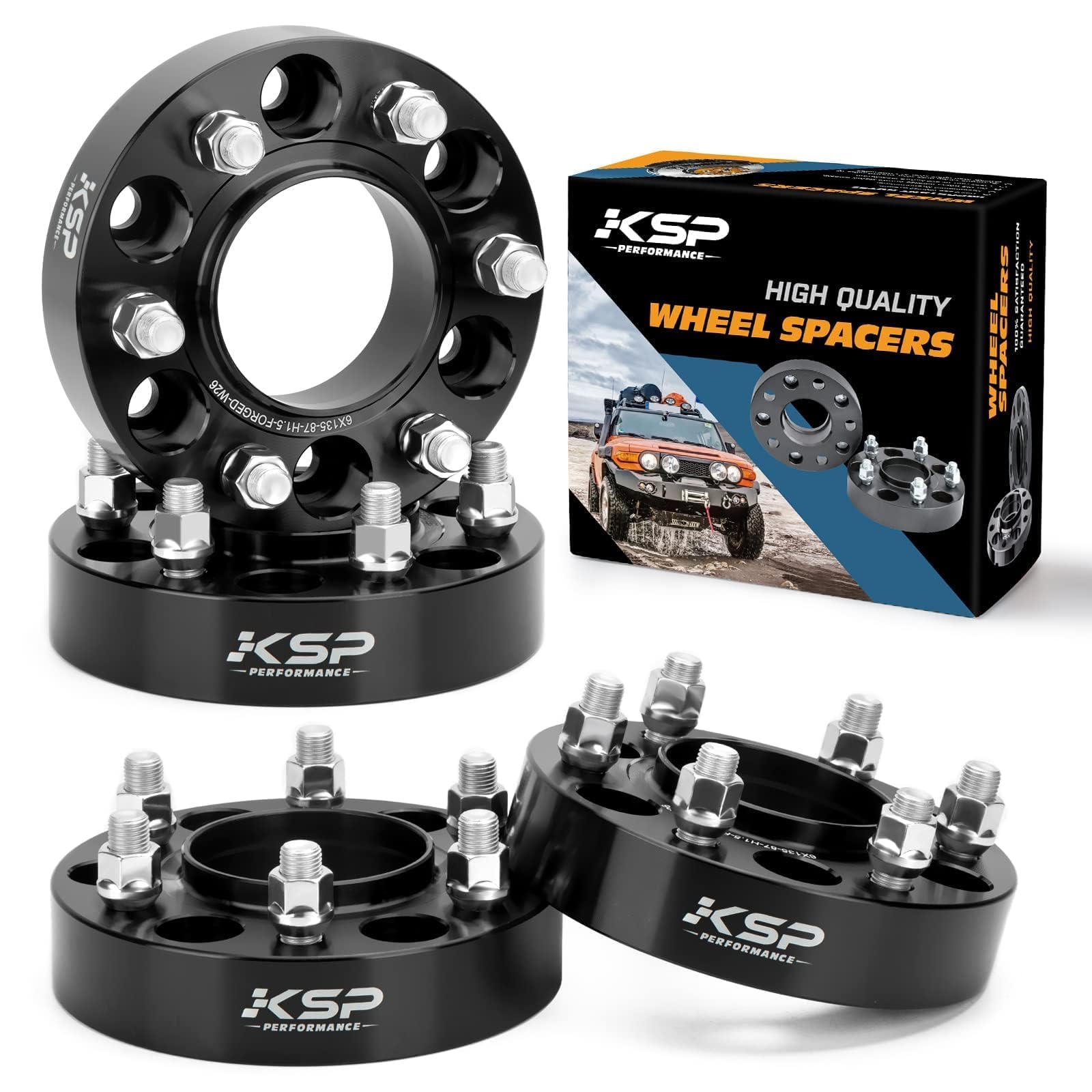
The forged 6-lug spacer with the highest quality praise in this entire guide (72 positive mentions). It gives a 2015+ F-150 a beefy, aggressive stance.
KSP’s 6×135 spacer is engineered for 2015-2025 Ford F-150, 2015-2024 Expedition, and 2015-2025 Navigator models. The bolt pattern is 6x135mm with a large 87.1mm hub bore and M14x1.5 threaded studs and nuts. The spacer is forged from 6061-T6 aluminum with a black anodized finish, heat-treated Grade 10.9 geomet bolts, and CNC-machined fit. Each spacer has laser-engraved sizing for easy identification.
Quality is the top aspect with 72 positive mentions — the highest count in the entire list. Fit follows at 46, and appearance at 42. Customers note a super tight fit on both hub and wheel. One running 2.5-inch spacers on a 2021 F-150 V8 said the wheels moved from 1.5 inches inside the wheel well to 1 inch outside, improving stance. The install is easy: the kit includes 24 open-ended lug nuts and a pro instruction manual. One owner logged 16,000 miles with no issues — no cracks or loosening reported.
The set is heavy — 19.63 pounds — and comes as a 4-pack, so it is not for compact applications. Durability gets 25 positive mentions, and performance gets 25, so owners are confident in the long-term build. The only snag: this spacer does NOT fit F-150s before 2015 (those have M14x2.0 studs). If you have a 2014 or older, measure your stud thread pitch before ordering.
Owner insight: “1.5 KSP spacers on F-150 with 2.5 leveling kit eliminated tire rubbing. Solid build, precise machining, perfect fit on 6×135 hub.”
Heads-up: NOT compatible with pre-2015 F-150s that use M14x2.0 studs — confirm your thread pitch before buying.
This is the pick for 2015-2025 F-150, Expedition, or Navigator owners wanting a forged, hub-centric spacer that owners trust for high-mileage use. If you drive a pre-2015 F-150, this one will not fit.
Understanding the Specs
Bolt Pattern (PCD)
This is the circle formed by your wheel’s lug holes, measured in millimeters or inches. A 5×5 pattern means 5 lugs on a 5-inch diameter circle. If the pattern does not match, the wheel cannot be mounted at all. Count your lugs, measure from the center of one lug to the center of the opposite lug, and match that to the spacer’s spec.
Hub Bore
This is the diameter of the spacer’s center hole that fits over your vehicle’s hub flange (the raised metal ring on your axle). A hub-centric spacer matches this bore exactly to your hub, so the wheel centers itself on the metal lip rather than on the lugs. If the bore is too small, the spacer will not slide on. If it is too large, you risk vibration because the wheel is centered only by the lug nuts.
FAQ
Will 1.5-inch wheel spacers cause vibrations?
Can I use 1.5-inch wheel spacers on a stock Jeep Wrangler JK?
What is the difference between Grade 10.9 and Grade 12.9 studs?
Do I need to re-torque wheel spacers after installation?
Will 1.5-inch spacers fit on a 2018+ Wrangler JL?
How do I know if my ATV needs 4×110 wheel spacers?
Are forged wheel spacers better than cast ones?
Will 1.5-inch spacers work on a Ram 1500 with 5-lug wheels?
Do I need to buy longer lug nuts for wheel spacers?
How much weight do 1.5-inch wheel spacers add?
Final Thoughts: The Verdict
For most truck and Jeep owners, the 1 1 2 inch wheel spacers winner is the dynofit 1.5″ set. It combines forged 6061-T6 construction with Grade 10.9 studs that the maker chose for safety over hardness, and it has the strongest owner consensus — 4.7 stars across hundreds of ratings, with quality and fit both topping 30 positive mentions each. If you own a 2018+ Wrangler JL or Grand Cherokee WK2, grab the Richeer set for its 12.9-grade studs and newer platform fitment. And for a Ram 1500 or F-150 owner, the KSP Ram 1500 spacers or the KSP F150 6×135 spacers are the ones to reach for — both forged, hub-centric, and backed by high owner confidence.
How We Picked
We do not accept paid placement. Every pick is matched to a real buyer and a real use-case; we do not hands-on test units.
Sources & Methodology
Specifications: manufacturer listings and product documentation. Review insights: verified customer reviews, as of July 2026. Pricing: not shown on this page (it changes often); check the current price via the retailer link.
As an Amazon Associate, Trending Car earns from qualifying purchases. This does not affect which products we feature.