
Our readers keep the lights on and my garage snacks stocked. As an Amazon Associate, I earn from qualifying purchases.
Specs are compiled from manufacturer listings and verified buyer reviews and can change over time — please confirm the key details on the product page before buying.
You need a pipe that fits your welder and the tight bend in your build, not a pile of wrong elbows. For most jobs, the best 1 1 2 inch exhaust pipe is the Patriot H7013 J-Bend: it welds clean on small engines, costs less than stainless, and buyers report it develops a “nice color after a few heat cycles.” This guide cuts through the specs on seven proven picks so you grab the right piece the first time.
I’m Min Islam — the founder and writer behind Trending Car. This guide is built by comparing the manufacturers’ published specifications and the patterns across verified customer reviews, so you get each pick’s real strengths and trade-offs instead of marketing spin.
The seven picks cover 90-degree elbows, 180-degree U-bends, and straight sections from 18 to 24 inches.
Our Picks at a Glance

How To Choose The Best 1 1 2 Inch Exhaust Pipe
Choosing the correct 1.5-inch diameter pipe upfront prevents mismatched elbows. First decide on material — mild steel is cheaper and easier to weld, but it rusts if you do not coat it. 304 stainless costs a little more, resists corrosion, and stays clean. Then look at wall thickness: 0.065-inch (16-gauge) is the standard for most car and equipment exhausts, while 0.06-inch on the thinner side needs a careful weld hand. Finally, match your bend — a 90-degree elbow, a long straight section, or a 180-degree U-turn.
Material Choice — Mild Steel vs. 304 Stainless
Mild steel is the budget-friendly choice for a one-season project or something you coat with high-temp paint. The Patriot J-bend is a classic example, and owners mention it develops color after a few heat cycles but warn it starts rusting without a protective coating. 304 stainless, used by nearly every other pick here, resists oxidation and heat without a coating. Spend the extra few dollars if the pipe sits exposed under a car or lawn machine.
Bend Type — Mandrel vs. Pressed
A mandrel bend supports the inside of the tube during forming so the cross-section stays round and flow (the exhaust-gas movement) never bottlenecks. Every pick in this list uses a mandrel process — even the cheaper elbows. A pressed bend, which caves the inner wall, is the one to avoid for any exhaust application. If the listing does not say “mandrel bend,” assume it is pressed.
Quick Comparison
| Model | Best For | Material | Length / Leg | Wall Thickness | Amazon |
|---|---|---|---|---|---|
| Patriot H7013 J-Bend★ Best Overall | Small-engine weld-ups | Mild Steel | 18″ leg | 0.065″ (16GA) | Amazon |
| M METERXITY 90° Elbow 2-PackBest Value | Diverting exhaust away | 304 SS | 3.54″ leg | 0.06″ (1.5mm) | Amazon |
| PATIKIL 90° Elbow | Generator & mower exhaust | 304 SS | 3.55″ leg | 0.06″ (1.5mm) | Amazon |
| HiBuyer 18″ Straight Tube | Custom tailpipe extension | T304 SS | 18″ straight | 0.065″ (est.) | Amazon |
| Hicarer 24″ Straight Tube | Longest single run | 304 SS | 24″ straight | 0.06″ (1.5mm) | Amazon |
| Stainless Bros 180° U-Bend | Fabricating an S-pipe | 304 SS | 6″ leg/6″ leg | 0.065″ (16GA) | Amazon |
| Vibrant 90° Mandrel Bend | Turbo dump tubes | T304 SS | 4″ x 12″ legs | 0.065″ (1.65mm) | Amazon |
In‑Depth Reviews
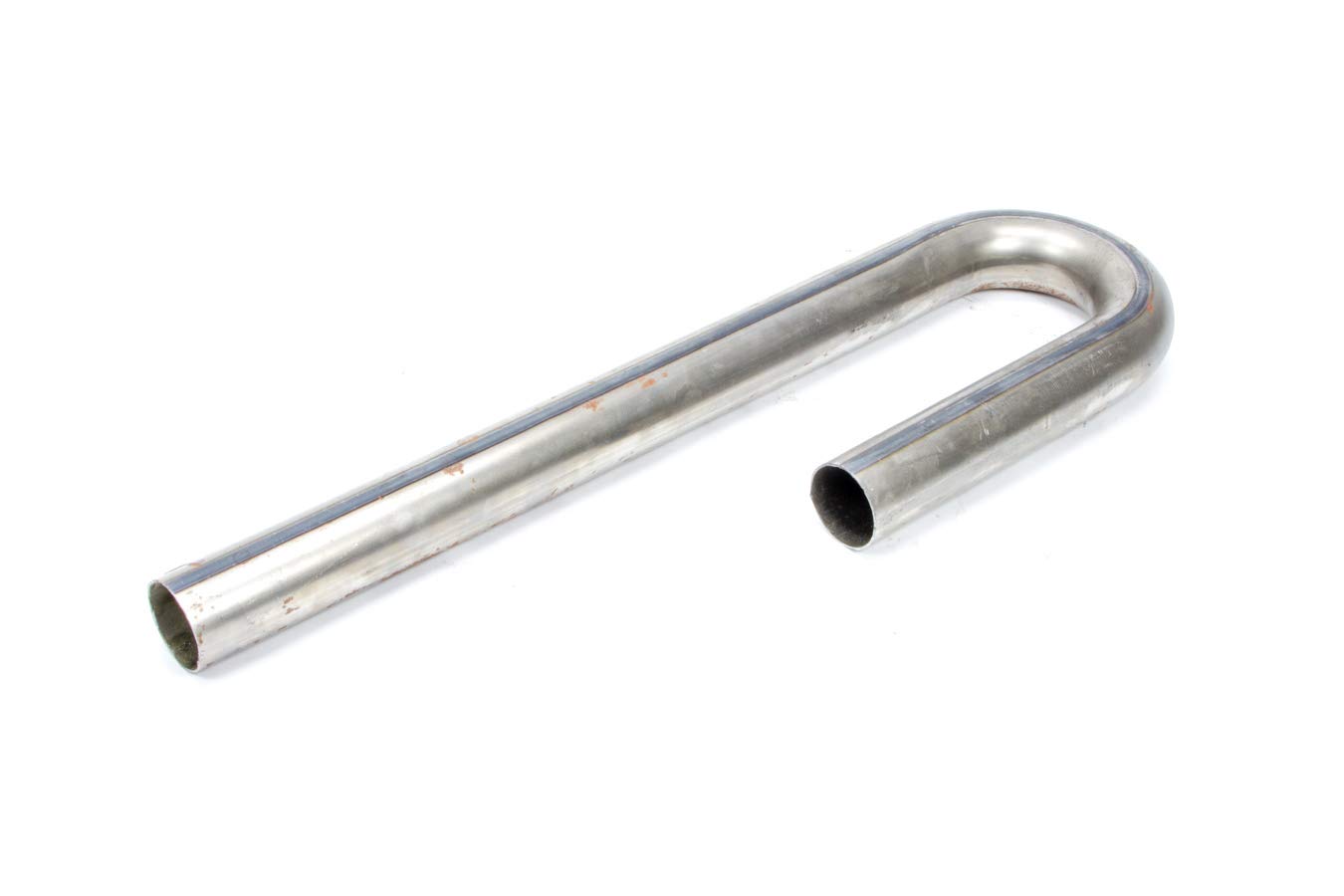
1. Patriot Exhaust H7013 1-1/2″ Mild Steel J-Bend
Our pick — over 4.5★ from 100+ verified ratings; the strongest balance of quality and price.
The go-to J-bend for small-engine repairs — welds clean and costs less than stainless when you plan to coat it.
If your project lives on a bike, ATV, or vintage tractor, this mild steel J-bend is the crowd favorite. The straight sections weld clean, and customers note the pipe develops “nice color after a few heat cycles.” At 1.5 inches in diameter, it fits the header on an old John Deere 112 or a small-bore motorcycle muffler without modification. The J-shape gives you both a long 18-inch leg and a curved return, making it versatile for routing around frame rails.
The catch is the outside radius — it runs thin, so reduce your weld heat on that outer curve to avoid burn-through. And since this is mild steel, expect surface rust if you leave it bare. But this piece pops up in garage builds more than any other, and it has a thick 0.065-inch (16-gauge) wall that handles distortion better than the thinner 0.06-inch tubes in this list.
What makes it versatile
- Made in the USA with a mild steel that takes a weld beautifully
- Delivers consistent wall thickness on the straight sections
- Rated for bolt-on or cut-and-weld installation
Where to take care
- Outer radius is thin — watch your weld heat on the bend
- Mild steel rusts without a high-temp coating
Reach for this if: you need a single J-bend for a small engine, ATV, or tractor exhaust and you plan to paint or coat the final assembly.
Look elsewhere if: you need stainless corrosion resistance for an uncovered under-car application.
2. M METERXITY 2-Pack OD 1.5 Inch 90 Degree Mandrel Bend Elbow
Two 90-degree elbows in 304 stainless for the price of a single sandwich — the best value when you need a spare or a symmetrical pair.
You get a pair of mirror-polished elbows that measure a 1.5-inch outside diameter and a 3.54-inch height. At 0.06 inches thick (1.5mm), the wall is on the thinner side of the range here, so a buyer noted it welded fine without kinks. One owner used this to divert exhaust on a Predator engine that was blowing toward the seat — the elbow slipped over the muffler exit and solved the problem. The 304 stainless resists rust without paint, so it stays clean even on a mower or generator that lives outdoors.
The trade-off: at 0.06 inches thick, this is not the piece for a high-pressure turbo manifold the way the Vibrant 13032 with its 0.065-inch wall is. But for rerouting small-engine exhaust or building handrails, the two-pack gives you a spare for the same cost as competitors charge for one.
Why owners pick this over one-piece elbows
- Two elbows in one package means you have a backup or a symmetrical pair
- 304 stainless construction with no coating needed
- Mirror-polished finish that looks clean on exposed systems
The size to keep in mind
- 1.5mm wall is thin — high-heat high-pressure applications need a thicker gauge
Grab it for: two identical 90-degree bends in stainless for a generator, mower, or small-engine project.
Not for: heavy-duty exhaust runs that see sustained high heat and vibration.
3. PATIKIL 90 Degree Mandrel Bend Elbow, 1 1/2 Inch OD

A tight 90-degree turn with a short arc that keeps exhaust or fuel flowing without a kink in cramped spaces.
This elbow uses a 1.5mm wall made from 304 stainless and measures exactly 1.5 inches outer diameter. The short arc of this elbow is its real advantage — the bend radius lets you turn a corner in tight engine bays. Buyers have used it on walk-behind mowers to redirect exhaust from the front to the right, on a DuroMax generator to shrink a flexible hose radius from 12 inches down to 3.5 inches, and even as a gas filler neck elbow on a pickup. Each owner reports precise sizing and a solid feel.
The one tip from the installers: if you are connecting rubber fuel hose over this elbow, you need to warm the hose slightly and secure it with a clamp. Otherwise the steel is high enough quality that a single band clamp seals it.
Where this elbow shines
- Mandrel-bent with a smooth inner radius that does not restrict flow
- Excellent mirror finish out of the package
- Precise 1.5-inch outer diameter matched every buyer’s measurement
The fit detail to watch
- If pairing with rubber hose, you need mild heat and a clamp to get a leak-free seal
Ideal for: a single, tight 90-degree turn in a generator, mower, or automotive exhaust where clearance is tight.
skip it if: you need a longer leg on both ends — this is a compact elbow with short legs.
4. HiBuyer 1.5 Inch Stainless Steel T304 Exhaust Tubing, 18” Straight
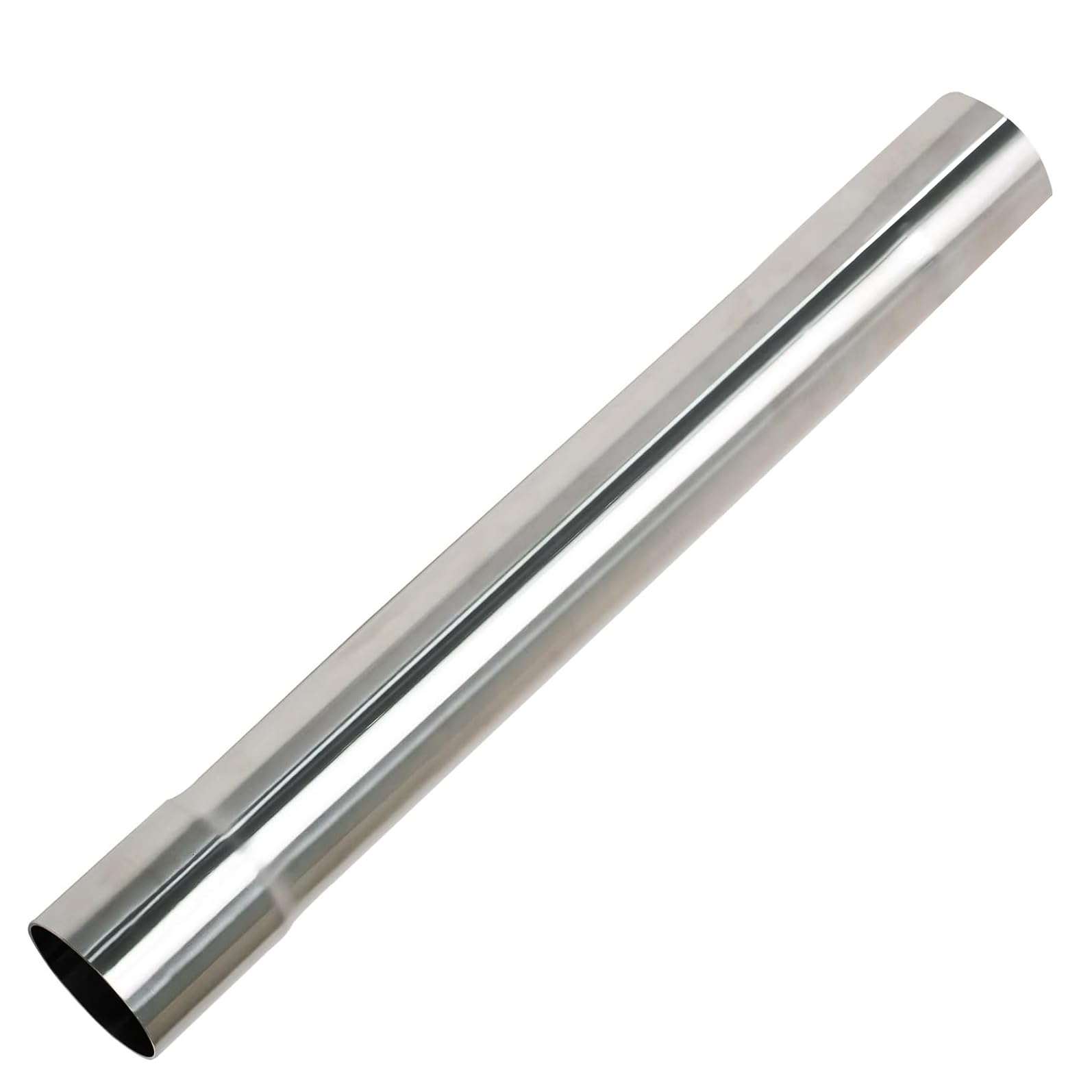
An 18-inch straight section of T304 that slides on and looks clean, with 16 customers praising the quality.
The polished surface is the second-most praised feature, giving the tubing a sleek look under a car or on an exposed exhaust tip. The outer diameter measures exactly 1.5 inches, and the 18-inch length gives you room to cut a custom tailpipe or a straight section between bends. As one owner put it, the pipe improves exhaust flow and engine performance when added to a system.
Note that this pipe body uses a welded-on expanded joint (a widened end that slips over another pipe) at one end. One buyer flagged that configuration as unusual, though it looks fine when installed under the vehicle. The T304 material resists corrosion long-term, and at an estimated 0.065-inch wall it is the same 16-gauge thickness as the Patriot and the Vibrant picks.
What earns the praise
- T304 stainless steel is durable and resists oxidation
- Polished finish gives a clean, visible upgrade
- 18 inches of straight pipe works for cutting custom lengths
The one configuration note
- The expanded joint is welded on where you might expect a smooth section
Best suited for: a visible tailpipe extension or a straight run where appearance and corrosion resistance matter.
Consider another pick if: you need a smooth straight section for a visible build without any welded joints.
5. Hicarer 1 Pcs 1-1/2″ OD 304 Stainless Steel Tubing, 24 Inch Length

A full 24 inches of 304 stainless for a longer straight run, reducing joints in a tailpipe or chassis run.
At two feet long, this tube gives you the longest single continuous section in the lineup. The outer diameter hits 1.5 inches, wall thickness is 0.06 inches, and the surface is polished end to end. Reviewers point out the cuts are precise and the tube welds without issue. One owner even used it as a dowel for a cable spool — proof the sizing is straight and true. The 304 grade steel covers automotive exhaust, marine handrails, and industrial framing.
At under 2 pounds, it is easy to position in a jig before welding. The thinner wall means you get a longer piece for less material cost, but treat those first tack welds gently to avoid burning through. Its 24-inch length is 6 inches longer than the HiBuyer 18-inch straight tube.
Why the length matters
- 24-inch length means fewer joints in a long tailpipe or chassis run
- Polished 304 stainless needs no coating
- Precise cuts reported by every buyer
Weld carefully
- 0.06-inch wall is standard but requires a controlled heat on the weld
Reach for this when: you need a single two-foot straight section of 304 stainless without any join.
Better to skip if: you need a thicker wall (above 0.06 inch) for high-heat exhaust manifolds.
6. Stainless Bros 1.5″ 180° Mandrel Bend, 16GA

A 180-degree U-bend fabricators use to build an S-bend in a single cut, with a 16-gauge wall that handles high heat without warping.
This pipe from Stainless Bros is a 16-gauge (0.065-inch) 304 stainless U-bend with a 2.25-inch centerline radius and two 6-inch legs. The bend quality and overall build quality are the top two things buyers praise — the mandrel process leaves no creases on the inner wall so flow stays clean. One owner cut this U-bend in half and welded it back together flipped to create an S-bend for a 1975 Celica exhaust. Another used it straight for a muffler modification and reported it welded fine. The 180-degree angle is slightly below true 180 on some pieces, but that has never stopped a proper fit.
At 1.5 pounds, it is heavy enough that you feel the quality. The 16-gauge wall gives you more margin on heat distortion than the 0.06-inch tubes in this list, making it the stronger choice over the thinner M METERXITY elbows for a hot exhaust system.
What makes this a shop staple
- 16-gauge (0.065-inch) wall handles high heat without warping
- Mandrel bend is clean with no inner radius collapse
- Two 6-inch legs give you material to work with for cutting and shaping
The slight inconsistency
- A few units arrive with a bend just a touch under 180 degrees
Fabricators will love this for: building a custom S-pipe or a tight U-turn in a 304 stainless exhaust.
pass on it if: you need a standard 90-degree elbow — this is a 180-degree turn.
7. Vibrant Performance (13032) 90° T304 Mandrel Bend Tube

A 90-degree bend with a long 12-inch leg — the right shape for turbo dump tubing and downpipe transitions.
This is the dedicated turbo-build piece. The 1.5-inch outer diameter pairs with a 4-inch leg on one side and a 12-inch leg on the other, creating the shape you need for a wastegate dump tube or a downpipe transition. The 0.065-inch wall thickness (1.65mm) is standard for a boosted application. One owner used it to finish the dump tube on a 2003 Civic Si EP3 turbo build where a knock-off elbow with a 70-degree angle was hitting the downpipe. The Vibrant 90-degree turned the path cleanly.
The finish is not polished from the factory — a buyer described it as natural stainless, not shiny like the listing photos. That is common for Vibrant pipe. A quick pass with 1000- then 1500-grit sandpaper and car polish brings up the shine. It has the same 0.065-inch wall as the Patriot J-bend, but in T304 stainless that resists corrosion without paint.
Why turbo builders reach for it
- 0.065-inch wall thickness handles boost pressure without issue
- Unequal leg lengths (4″ x 12″) fit dump tube routing layouts
- smooth mandrel bend with no restriction inside
The finish reality
- Pipe arrives with a natural stainless sheen, not a mirror polish
Built for: turbo wastegate dump tubes and custom downpipe sections where a longer leg is needed.
Look elsewhere if: a polished show finish is a requirement from the start.
Understanding the Specs
Wall Thickness — 16 Gauge vs. Thin Wall
Most 1.5-inch exhaust pipes come in 16-gauge (0.065 inches) or a metric 1.5mm (0.06 inches). The 16-gauge version is the standard for automotive exhaust — it resists heat distortion and weld burn-through better. The 1.5mm wall is lighter and easier to cut, but treat the outside radius of any bend with a cooler weld setting. If you often burn through pipe, step up to 16-gauge.
Mandrel Bend vs. Press Bend
A mandrel bend inserts a supporting ball into the tube during bending. The cross-section stays perfectly round so exhaust flow (the gas movement) never gets a bottleneck. A press bend flattens the inside wall, creating a reduced diameter at the curve. Every product in this guide uses a mandrel process. If a listing does not explicitly say “mandrel bend,” assume it is a press bend and do not use it for exhaust flow.
FAQ
Will a 1.5-inch outer diameter pipe fit my car’s exhaust hangers?
Can I weld a 1.5mm thick pipe with a standard MIG welder?
Do I need to coat a 304 stainless exhaust pipe?
What is the difference between T304 and 304 stainless steel?
How many 90-degree elbows do I need for a typical cat-back system?
Can I use these pipes for a fuel or hydraulic line?
Does a 180-degree U-bend need to be cut before welding?
What is the maximum temperature 304 stainless steel handles?
Final Thoughts: The Verdict
For most buyers, the 1 1 2 inch exhaust pipe winner is the Patriot Exhaust H7013 J-Bend because it welds clean, fits small engines, and costs less than stainless options when you plan to coat it anyway. If you want two 90-degree elbows in stainless for a generator or mower, grab the M METERXITY 2-Pack. And for a turbo dump tube with a long leg, the Vibrant Performance 13032 is the one to reach for.
How We Picked
We do not accept paid placement. Every pick is matched to a real buyer and a real use-case; we do not hands-on test units.
Sources & Methodology
Specifications: manufacturer listings and product documentation. Review insights: verified customer reviews, as of July 2026. Pricing: not shown on this page (it changes often); check the current price via the retailer link.
As an Amazon Associate, Trending Car earns from qualifying purchases. This does not affect which products we feature.