
Our readers keep the lights on and my garage snacks stocked. As an Amazon Associate, I earn from qualifying purchases.
Specs are compiled from manufacturer listings and verified buyer reviews and can change over time — please confirm the key details on the product page before buying.
Picking the wrong 1.5-inch exhaust pipe means fighting with fitment, dealing with thin metal that burns through on the first weld, or watching rust eat your work in a season. This list covers the eight best options — from a mild-steel J-bend for custom bike builds to a 6-foot galvanized flex tube for routing generator exhaust — so you grab the right material, shape, and wall thickness for your project without wasting cash on trial and error.
I’m Min Islam — the founder and writer behind Trending Car. This guide is built by comparing the manufacturers’ published specifications and the patterns across verified customer reviews, so you get each pick’s real strengths and trade-offs instead of marketing spin.
Every option here is a genuine 1.5-inch inside-diameter product, whether it is a mandrel-bent elbow (a smooth, kink-free curve made by a machine), a straight flex section, or a U-bend for headwork — giving you a practical, no-fluff look at the 1 1/2 in exhaust pipe choices that actually get the job done for backyard welders, mechanics, and home-fabrication guys.
Our Picks at a Glance


How To Choose The Best 1 1/2 In Exhaust Pipe
An exhaust pipe is not just a metal tube — the material, wall thickness, and bend shape determine how easily it welds, how long it lasts, and whether it fits your vehicle or equipment. Focus on these three factors before you click buy.
Material — Mild Steel vs Stainless vs Aluminum
Mild steel (like the Patriot H7013) is budget-friendly and welds easily, but it will rust if you leave it uncoated — plan to paint or ceramic-coat it. T304 stainless steel (used by Stainless Bros) resists corrosion and handles high heat, which makes it the right pick for a long-term exhaust system you want to last. Aluminum (the 90-degree elbow from Podavelle) is lighter and resists rust, but it is best for cool-side intercooler piping — not for direct exhaust heat.
Wall Thickness — 16-Gauge vs.065-inch
Thicker metal takes more heat to weld but gives you a stronger joint that resists cracking from vibration. A.065-inch wall (often called 16-gauge) is the standard for automotive exhaust — it is stiff enough to hold shape but thin enough to MIG or TIG without burning through. Thinner stuff (around.049-inch) is easier to bend but can blow out on a novice weld.
Bend Shape — J-Bend, U-Bend, 45°, 90°, and Flex
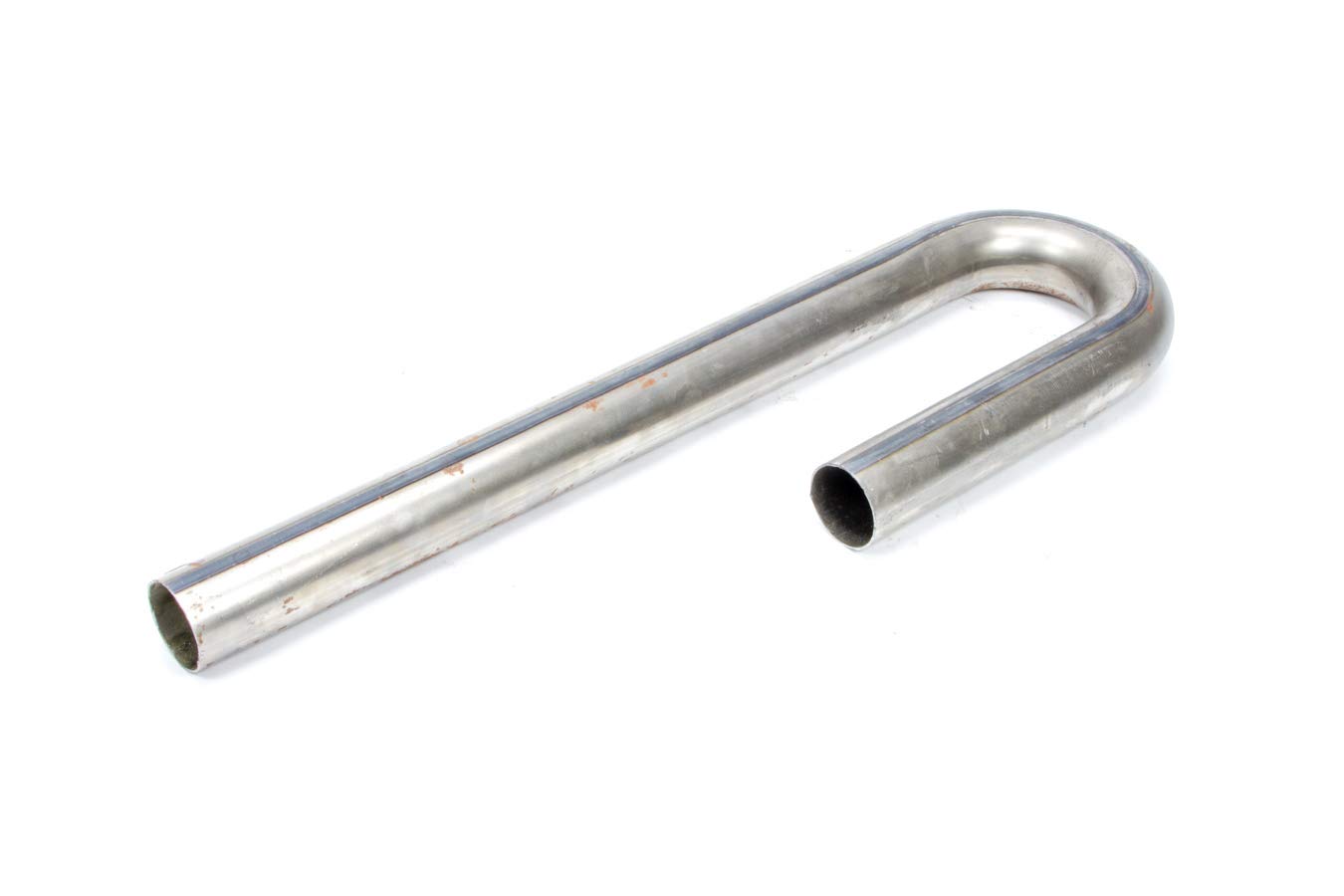
A J-bend lets you cut and rotate to sneak around a frame rail, which is why the Patriot H7013 works for ATV and bike builds. A U-bend (like the Patriot H7010) gives you both legs to modify header tubes. Mandrel-bent 45-degree or 90-degree elbows (from Stainless Bros) keep the inside diameter constant so exhaust flow does not choke at the turn. Flex pipe (the Walker 46971) is your choice for linking a rigid exhaust to a vibrating engine or routing generator fumes — it absorbs movement and seals with a clamp or weld.
Quick Comparison
| Model | Best For | Material | Wall Thickness | Shape | Amazon |
|---|---|---|---|---|---|
| Patriot H7013 J-Bend★ Best Overall | Custom bike/small-engine exhaust | Mild Steel | — | J-Bend | Amazon |
| Stainless Bros 90° ElbowPremium Pick | Custom exhaust routing | SS304 | 16GA /.065″ | 90° Elbow | Amazon |
| Podavelle 90° ElbowBest Value | Intercooler/intake piping | T6061 Aluminum | 0.059″ | 90° Elbow | Amazon |
| KOTVTM 45° Elbow | Air intake/turbo piping | 6061 Aluminum | 0.059″ | 45° Elbow | Amazon |
| Patriot H7010 U-Bend | Header modification | Mild Steel | — | U-Bend | Amazon |
| Stainless Bros 45° Bend | Durable exhaust systems | SS304 | 16GA /.065″ | 45° Mandrel Bend | Amazon |
| TORDXICS Flex Pipe | Generator/equipment exhaust | Stainless Steel | — | Flex (36″) | Amazon |
| Walker 46971 Flex Tube | Auto exhaust repairs | Galvanized Steel | — | Flex (6 ft) | Amazon |
In‑Depth Reviews
1. Patriot Exhaust H7013 1-1/2″ Mild Steel J-Bend Exhaust Pipe
Our pick — over 4.5★ from 100+ verified ratings; the strongest balance of quality and price.
The J-bend that small-engine and ATV builders reach for first.
This is fabricated in the United States from mild steel — it welds clean with a standard MIG setup, takes on a nice color after a few heat cycles, and cuts easily with a bandsaw or cutoff wheel. The shape lets you chop the straight sections and flip the bend to route around a piece of frame, exactly what you need when the pre-made header kit does not clear your ATV’s lower rail.
The honest trade-off is surface rust. Because this is bare mild steel, it will start to corrode if you do not paint or ceramic-coat it soon after welding — that is the nature of the material. One long-time fabricator noted the outside radius is notably thin, so back off your amperage on the tight curve to avoid a burn-through. For a home garage project where the pipe will live inside a muffler or get painted, this is the most versatile J-bend for the money.
Versatile cutter: You can cut the U-section and flip it to clear a frame obstacle, then weld it right back — the mild steel takes and holds the joint without cracking.
The one catch: Mild steel rusts bare — coat it within days of welding, or plan to replace it after a wet season.
Reach for it if: You are building a custom exhaust for a small engine, bike, ATV, or vintage tractor and need a J-bend shape that cuts and welds easily.
Look elsewhere if: The pipe will live in a wet or salt-exposed area and you cannot apply a protective coating.
2. Stainless Bros 1.5″ 90° Mandrel Bend
A thick-wall 90-degree elbow that arrives longer than advertised — extra working room for the fit.
The legs measure 6.5 inches each, giving you plenty of straight section to trim for a custom installation. Builders mention the actual legs sometimes run even longer than the spec, which is welcome when you need to sneak the pipe over a transmission crossmember or around a steering shaft. The mandrel bend keeps the full 1.5-inch inner diameter through the turn, so you get no flow restriction at the elbow.
This is 16-gauge /.065-inch 304 stainless — the same alloy that resists rust and stands up to high exhaust heat year after year. The wall thickness makes it forgiving for TIG welding: you can lay down a nice puddle without blowing through. For a permanent repair or a full custom exhaust on a daily driver, this elbow is the quality tier that justifies the price. The recurring observation is that the price is higher than budget mild steel — but the long-term corrosion resistance means you do it once and move on.
What owners value most
- Leg length is generous — you get real straight sections to cut and clock
- 304 stainless resists rust far longer than mild steel
- Mandrel bend keeps full ID through the 90° turn
The honest drawback
- Costs noticeably more than a comparable mild-steel elbow
Grab this for: An under-car exhaust repair or a full custom system where you want the stainless durability to outlast the car.
Pass if: You need a cheap one-off piece for a non-critical application like a shop exhaust fan.
3. 90 Degree Elbow 1.5 Inch 38mm OD Aluminum Intercooler Pipe
A mandrel-bent aluminum 90 that saves weight and flows air without a hitch.
This is a T6061 aluminum elbow with a 1.5-inch outside diameter and a 0.059-inch wall — the same material used in intercooler and turbo intake systems. The 90-degree mandrel bend keeps the inside path smooth, and the brushed finish gives the engine bay a clean, built-not-bought look.
Buyers consistently report the size is exactly correct and installation is straightforward. The aluminum welds easily with a TIG setup, and the 3.94-inch straight legs on each side give you enough room to splice into a silicone coupler or weld a bead. Keep in mind this is an intake and intercooler pipe — it is not designed for the high heat of an exhaust manifold. For your cold-side charge piping or a custom cold-air intake, this is the elbow that fits right the first time.
Light and accurate: Half the weight of a comparable steel elbow, and owners say the machining is spot-on — “the size is exactly correct and install was relatively easy.”
Not for hot exhaust: Aluminum loses strength above 400°F, so keep this on the intake side of the engine.
Best for: A turbo intercooler pipe, cold-air intake, or any cool-side air-flow project where weight and flow matter.
Not for: Direct exhaust plumbing — the heat will anneal the aluminum and cause a failure.
4. Patriot Exhaust H7010 1-1/2″ Mild Steel U-Bend Exhaust Pipe
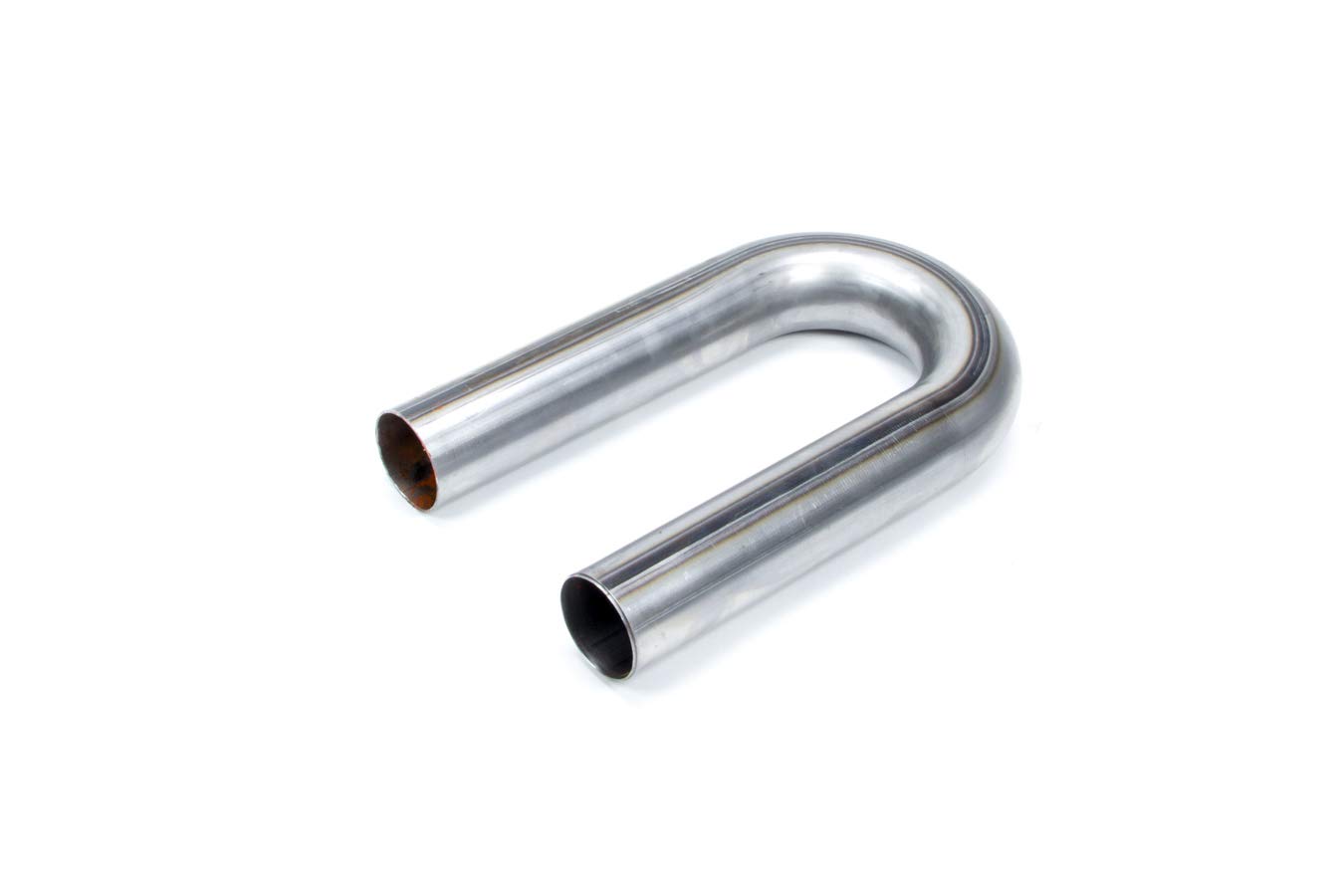
A U-bend that fabricators reach for when they need to build or modify a header tube.
This Mexico-made mild steel U-bend gives you two long legs to cut and position for a custom header or a tight exhaust route around steering components. At 1.5 inches, the inside diameter matches standard small-block and four-cylinder header tubing, making it a direct fit for merging into a collector or extending a primary tube. The steel responds well to both MIG and oxy-acetylene welding — it takes filler metal without splatter.
Buyers have used this bend to modify headers, fabricate sport-equipment exhaust, and even build replacement pipes for vintage tractors. The material weight is a manageable 16 ounces, so it is easy to hold in place with a single magnet while you tack it. The honest note is that, like any mild steel, it can surface-rust quickly if left bare. For a professional-looking header build where you will coat the finished piece, this U-bend gives you the length you need at the price you want.
Strengths
- Two long legs give plenty of straight material for custom routing
- Mild steel welds easily and holds a bead well
- Light enough to hold in place with a magnet while tacking
Weakness
- Bare mild steel rusts without a coating — plan to paint or ceramic-coat it
Reach for this if: You are building a set of headers or need a U-shape section to route around a tight engine bay obstacle.
skip it if: You need a pre-calculated 45° or 90° elbow — the U-bend is meant to be cut and re-aimed.
5. 1.5″ Stainless 45° Mandrel Bend 16GA.065″ SS304

A mirror-finished 45-degree stainless bend that welds clean and looks the part.
The 304 stainless steel surface comes with a high-polish shine that resists brake dust and road grime far better than a brushed finish. The 16-gauge (.065-inch) wall is thick enough to TIG-weld confidently — the metal wets out nicely without drooling through. Builders report the “perfect form” makes it easy to match up to existing tubing, and the 1.5D / 2.25-inch centerline radius gives a gentle turn that does not choke exhaust velocity the way a sharp crimp bend does.
One common observation is that local muffler shops may charge double what this costs for a single custom bend, so ordering this and welding it yourself saves serious money. The mandrel-bent shape keeps the full 1.5-inch opening throughout the curve, which matters for turbo wastegate dump tubes or any performance exhaust where every bit of flow counts. The main caution involves size — a few owners note the outside diameter measurement can run a hair over 1.5 inches, so check your couplers and clamps before you commit to a full system.
Welds beautifully: “Perfect form, very nice finish and easy to weld” is the repeated verdict from owners who TIG’d it into their exhaust.
Check diameter first: A small number of buyers report the OD is slightly larger than 1.5″, so test-fit your clamps before you cut and weld.
Best for: A performance exhaust where you want 304 stainless durability, a polished look, and a smooth 45-degree bend that flows well.
Hold off if: You need a bend that fits into a tight location (like a 1.5D radius) — this is a standard 1.5D radius, not a tight-radius bend.
6. KOTVTM 1.5″ 45 Degree Aluminum Elbow Pipe

A polished 45-degree aluminum elbow for intake builds that is tough enough to weld into a fuel tank.
The 6061 aluminum construction includes a surface polishing treatment that gives it a bright, clean look in the engine bay. The wall thickness is 0.059 inches (1.5 mm), and the leg length is 3.94 inches (100 mm) on each side — enough straight section to join to a coupler or weld into a larger assembly. Owners have used this to build intakes for a Civic Si (07 Si) and even to TIG-weld it into a custom fuel tank with a cap and filler neck.
The mandrel-bent design keeps the airflow uniform inside the elbow, which matters for turbo cars where a pinch in the intake path can cause turbulence. The 1.5D radius (2.25-inch centerline radius) makes this a gentle curve that fits most charge-pipe routing. A 3-month warranty backs the product, which is an uncommon confidence signal at this price point. The only real note is that this is an intake/intercooler elbow — it cannot handle direct exhaust manifold heat, so keep it on the cold side of the system.
Why it works
- Polished surface looks good and resists minor corrosion
- Mandrel-bent for smooth airflow — no kinks inside
- Comes with a 3-month warranty for confidence
Limitation
- Aluminum cannot tolerate direct exhaust heat — for intake/intercooler use only
Great for: A cold-air intake on a tuned car or a custom intercooler pipe build on a budget.
Not for: Exhaust system use — the aluminum will anneal and fail under continuous exhaust heat.
7. Universal T304 Stainless Steel Exhaust Flex Pipe 36″
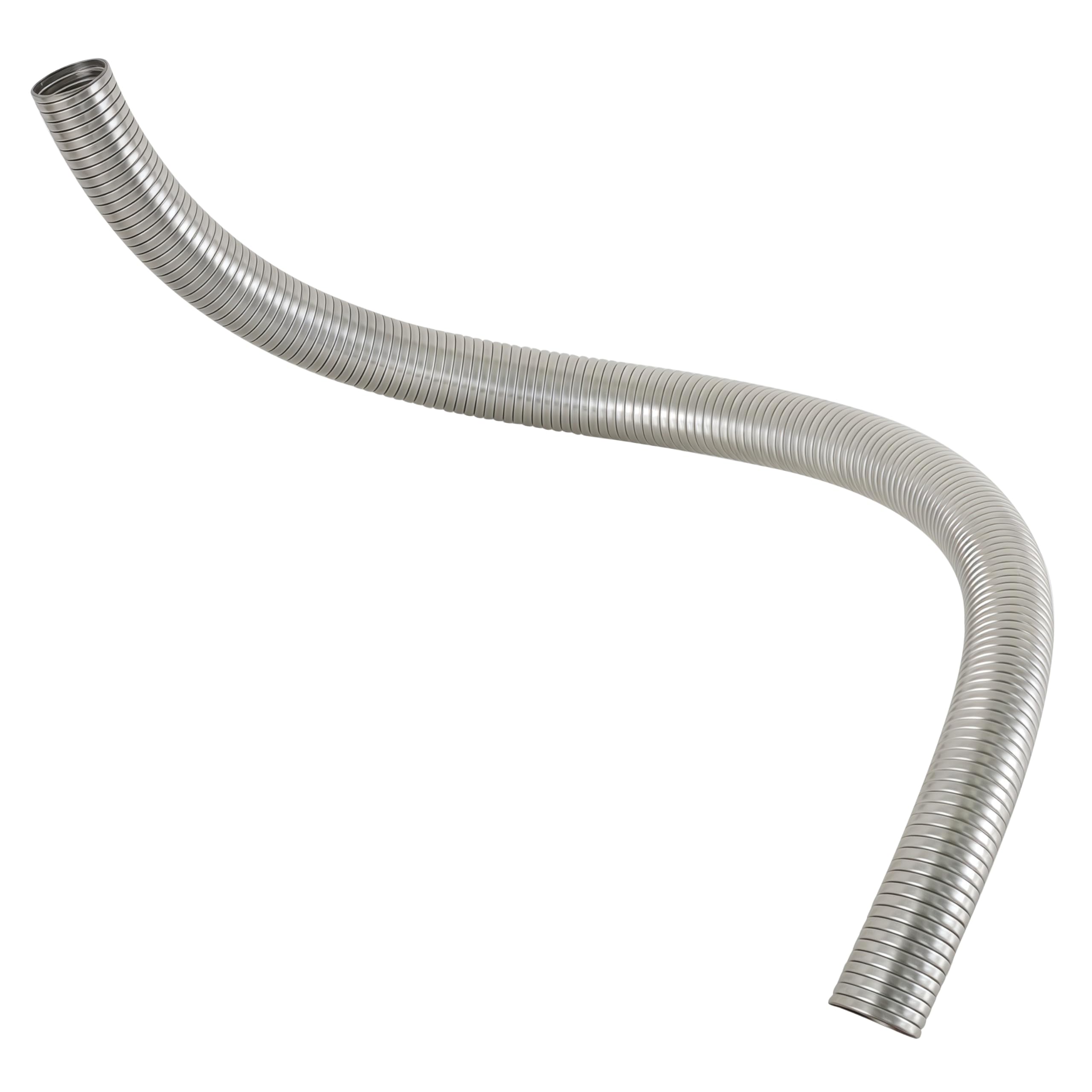
A 3-foot stainless flex tube that vents generator exhaust safely out of a shed.
The pre-cut 36-inch length is ready to clamp or weld onto a 1.5-inch inside-diameter exhaust port. The single-roll-band construction gives it good flexibility for routing around obstacles while keeping the structure strong enough to hold shape under vibration. On a portable Generac generator, the pipe fits the muffler outlet directly and extends the discharge far enough to keep the CO safety sensor happy.
The T304 stainless build resists corrosion far better than a standard galvanized flex pipe, which matters when the pipe lives outdoors or near moisture. Owners also use it on semi-truck auxiliary power units and Toyo laser stoves — it handles both moderate heat and the occasional bump. The one honest fitment note: the inside diameter measures 1.5 inches, but the pipe can be snug over a 1.5-inch outside-diameter flange — some buyers use an exhaust pipe expander to open it a hair. For the price, this is the most versatile stainless flex section in the category for quick generator or equipment exhaust jobs.
Generator-ready: “Fits my portable Generac generator muffler perfectly” and vents fumes outside without tripping the CO shutoff.
Can be tight: The 1.5″ ID may not slide over a true 1.5″ OD flange without slight expansion — plan for a quick expander step.
Reach for it if: You need a stainless flex pipe for a generator, small engine, or equipment exhaust discharge up to 36 inches long.
pass on it if: You need a flex section longer than 3 feet — look at the Walker 6-foot option below.
8. Walker 46971 Universal Exhaust Flex Pipe 6 Ft.

The six-foot flex tube that mechanics trust for under-car exhaust repairs and generator hookups.
This Walker flex pipe uses a galvanized-steel construction that resists surface rust far better than bare mild steel. The 1.5-inch diameter mates with standard exhaust flanges and muffler inlets, and the flex-lock design lets you route it around the transmission, axle tubes, and frame rails without crushing the inner bore. The single-roll-band build keeps it durable enough for a daily-driven car or truck.
Buyers have used this for everything from a generator wall-exit kit to a breather hose on a 1950s tractor. The Walker name carries weight in the exhaust world — it is the same brand used by professional muffler shops. The one recurring note is a length discrepancy: several owners mention the pipe measures closer to 5 feet when compressed, not the advertised 6 feet. If you need exactly 6 feet of run, plan to buy extra. For a 12- to 15-inch repair chunk on a car exhaust or a generator-to-wall hookup, this is the flex pipe with the most real-world reviews backing it.
Standout traits
- Galvanized coating provides better rust resistance than bare mild steel
- Flexible enough to shape around tight under-car obstacles
- Trusted Walker brand — used in professional exhaust repair shops
Honest issue
- Length runs short of 6 feet when compressed — measure your run and allow a margin
Best for: A car exhaust repair where you need a flexible section to absorb engine vibration, or a generator exhaust run up to 5 feet.
Think twice if: You need a guaranteed true 6-foot length — check the actual shipped length or buy two.
Understanding the Specs
Mandrel Bend vs Press Bend
A mandrel bend uses an internal support (the mandrel) that keeps the pipe’s inside diameter constant through the curve. On a 1.5-inch exhaust pipe, that means you get the full 1.5-inch opening all the way around the turn — no restriction. A press bend (what you get at a cheap muffler shop) collapses the inside of the turn, shrinking the ID by as much as 20 percent and creating a choke point that hurts flow. Every elbow on this list is mandrel-bent.
1.5D vs 2.5D Bend Radius
The bend radius is measured as a multiple of the pipe’s outside diameter. A 1.5D radius on a 1.5-inch pipe means the centerline radius is 2.25 inches — a relatively tight turn that fits in compact engine bays. A 2.5D radius (3.75 inches) gives a gentler sweep that flows better but needs more space. For a turbo downpipe or a tight header primary, 1.5D is the practical choice. For a long straight section with a gentle curve, 2.5D reduces backpressure slightly.
FAQ
Will a 1.5-inch outside-diameter pipe fit a 1.5-inch inside-diameter coupler?
Can I weld aluminum exhaust pipe with a MIG welder?
How do I keep mild steel exhaust pipe from rusting?
What is the difference between 304 and 409 stainless steel exhaust pipe?
Can I use a 1.5-inch exhaust pipe on a generator exhaust?
How long does galvanized exhaust flex pipe last compared to stainless?
Do I need a flex section in my exhaust system?
Can I cut and re-weld a J-bend exhaust pipe?
What wall thickness should I use for a street car exhaust?
Can I use aluminum intercooler pipe for my exhaust?
Final Thoughts: The Verdict
If you want one dependable pick, the 1 1/2 in exhaust pipe winner is the Patriot H7013 J-Bend because it combines a versatile bend shape, easy weldability, and a price that leaves room to buy a second piece for a full build. If you want a stainless pipe that will outlast the car, grab the Stainless Bros 90° Elbow. And for a quick generator exhaust or an under-car flex repair, the Walker 46971 6-Foot Flex Tube is the one to reach for.
How We Picked
We do not accept paid placement. Every pick is matched to a real buyer and a real use-case; we do not hands-on test units.
Sources & Methodology
Specifications: manufacturer listings and product documentation. Review insights: verified customer reviews, as of July 2026. Pricing: not shown on this page (it changes often); check the current price via the retailer link.
As an Amazon Associate, Trending Car earns from qualifying purchases. This does not affect which products we feature.