
Our readers keep the lights on and my garage snacks stocked. As an Amazon Associate, I earn from qualifying purchases.
Specs are compiled from manufacturer listings and verified buyer reviews and can change over time — please confirm the key details on the product page before buying.
A 1 1/2 hp water pump is the workhorse that keeps your lawn green and your household pressure steady — but the wrong one leaves you swapping units every few years. This guide identifies which 1.5 HP pump delivers long-term durability and which falls short in real-world use.
I’m Min Islam — the founder and writer behind Trending Car. This guide is built by comparing the manufacturers’ published specifications and the patterns across verified customer reviews, so you get each pick’s real strengths and trade-offs instead of marketing spin.
A reliable 1.5 HP pump maintains consistent pressure across multiple seasons without unexpected breakdowns. Here are the picks that actually earn their keep in the world of the 1 1 2 hp water pump.
Our Picks at a Glance
How To Choose The Best 1 1/2 HP Water Pump
A 1.5 HP pump moves substantial water, but its effectiveness depends on matching flow rate and lift to your water source and sprinkler design. Here are the key factors to focus on.
Flow rate (Gallons Per Minute) and your sprinkler heads
The flow rate, measured in gallons per minute (GPM), determines how many sprinkler heads you can run at once. A pump pushing 45-50 GPM can handle around 10 standard heads, while a 71 GPM model can power 14 or more. If your system has large zones, higher GPM is a must.
Lifting height — how far up must the water go?
Maximum lifting height, measured in feet, tells you how high the pump can move water from a lake or well to your sprinklers. A 20-foot lift works for ponds or shallow wells, but deeper sources or long horizontal runs need 100 feet of lift capacity.
Dual voltage motors for wiring flexibility
Many 1.5 HP pumps come with motors that run on either 115V or 230V. 230V wiring halves the amperage draw, which means less voltage drop over long extension cords and better efficiency. Check your existing setup before buying.
Quick Comparison
| Model | Best For | Flow Rate | Max Lift | Weight | Amazon |
|---|---|---|---|---|---|
| Goulds GT15★ Best Overall | Long-term reliability | 64 GPM | 25 Feet | 60 Pounds | Amazon |
| K2 IRP15001KBest Value | Budget value | 47 GPM | 20 Feet | 33.9 Pounds | Amazon |
| Wayne WLS150 | High lift height | 45.8 GPM | 100 Feet | 57 Pounds | Amazon |
| Star JHU15S | High pressure output | 50 GPM | 25 Feet | — | Amazon |
| Red Lion RL-SPRK150 | Highest flow rate | 71 GPM | 25 Feet | 63 Pounds | Amazon |
| Sta-Rite SNF-L | Quiet powerhouse | — | — | 60 Pounds | Amazon |
In‑Depth Reviews
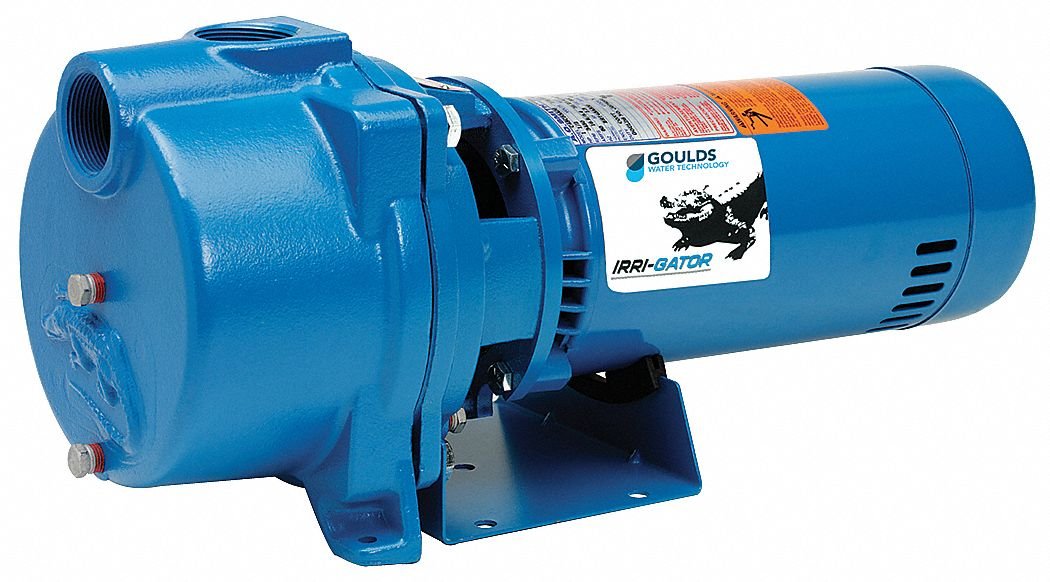
1. Goulds GT15 IRRI-Gator Self-Priming Single Phase Centrifugal Pump
Our pick — over 4★ from 450+ verified ratings; the strongest balance of quality and price.
A 60-pound cast-iron workhorse that owners trust for decades — not years.
This pump delivers a 64 GPM flow rate with a maximum lifting height of 25 feet, so it handles multiple sprinkler zones without breaking a sweat. The self-priming design means you fill it once and it pulls water from above-ground sources reliably. What wins people over is the build quality: BUNA elastomers, carbon and ceramic seals, and an FDA-compliant impeller make it corrosion-resistant enough for continuous operation.
The customer consensus is that Goulds pumps are a buy-it-for-life proposition. Buyers report replacing pumps that lasted 15 to 26 years with this exact model, calling it a “work horse” that primes flawlessly from retention waterways. One owner noted the pump is heavy — at 60 pounds, plan for a solid base and two-person installation. The 230-volt motor is powerful yet notably quiet, a detail owners consistently mention.
The occasional dent-on-arrival shipping complaint appears, but the recurring gripe here is a small one: the unit does not include a pressure switch, so budget for that separately. Given the lifespan, this is the pick for anyone who wants to install once and forget about it for a decade and a half.
The 15-Year Bet
- 64 GPM flow — enough for large sprinkler zones
- FDA-compliant impeller adds corrosion resistance
- Whisper-quiet 230V operation
The Fine Print
- At 60 pounds, installation is a two-person job
- No included pressure switch
- Shipping damage reported on some units
Install-once choice: For owners who plan to keep the same pump through a decade of summers.
Plumbing note: You need to buy a pressure switch separately before installation.
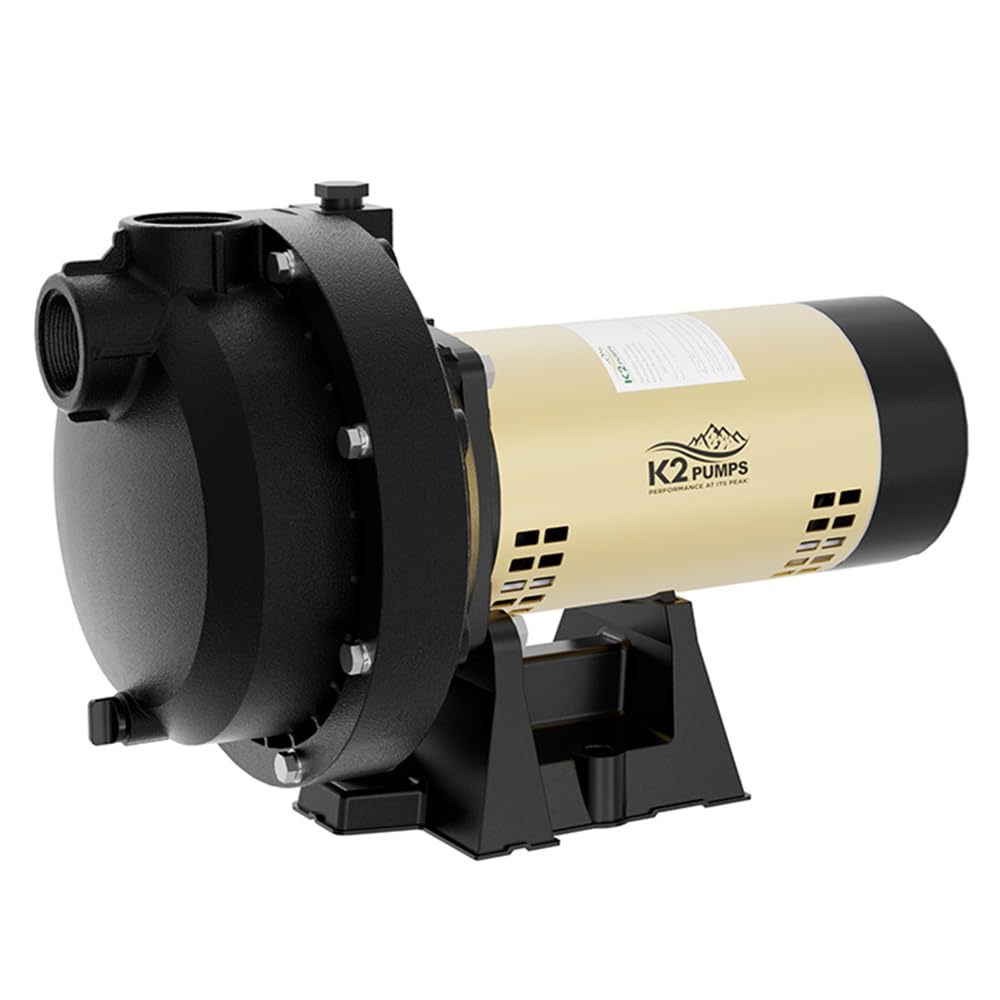
2. K2 Pumps IRP15001K 1-1/2 HP Sprinkler Pump Dual Voltage
A lightweight thermoplastic pump that saves you cash upfront but asks for careful handling.
This K2 pump delivers 47 GPM at 0 feet of lift, with a maximum lifting height of 20 feet — enough for a lake-water sprinkler system with 10 to 12 sprinkler heads. The dual-voltage motor (115/230V) is preset at 230V but switches easily, and the pump is self-priming after an initial fill. At 33.9 pounds, it is the lightest pump in this roundup — nearly half the weight of a cast-iron unit.
Buyers praise the value for money, calling it a solid alternative to big-box store pumps that saves roughly. One owner reported running four of these on a farm, though two failed. The key spec to watch is the plastic construction: the thermoplastic body resists corrosion but does not match the impact durability of cast iron. It handles four sprinkler heads easily and has the capacity for 10 to 12, as one owner verified.
The trade-off is reliability at scale. This pump is ideal for a single residential sprinkler system where the cost savings matter more than industrial-grade longevity. It fits a straightforward lake-water setup where you can manage moderate lift demands.
Budget-minded pick: Reliable for one standard sprinkler system, but farm-scale duty cycles may push its limits.
Reach for this if: You want the lowest upfront cost for a lake or pond sprinkler setup.
Look elsewhere if: You need a pump for continuous heavy-duty use across multiple properties.
3. WAYNE WLS150 1-1/2 HP Cast Iron High Volume Lawn Sprinkling Pump

The WAYNE WLS150 climbs 100 feet vertically — versus the 20 to 25 feet of most other 1.5 HP pumps — making it the go-to for deep wells or long horizontal runs.
While most pumps in this category top out at 20 to 25 feet of lift, this one handles 100 feet, so you can draw from a deep well or push water across a large property. The cast-iron volute and thermoplastic body are built for outdoor care, with a 2-inch NPT suction and 1.5-inch NPT discharge. The dual-voltage motor (115/230V) ships preset to 230V for efficient long-distance wiring. Owners note that upgrading from the smaller Wayne PLS model delivers noticeably better sprinkler range.
Owners mention this pump delivers strong water pressure and good value for the price, but installation gets mixed reviews. A few early units had cracked volutes (the spiral casing inside the pump) or seized motors, though customers note Amazon replaced those quickly and without hassle. The pump is assembled in the USA, a detail many buyers like.
The 45.8 GPM flow rate is moderate compared to the 64 GPM Goulds or the 71 GPM Red Lion, but the extreme lift height makes this the specialist pick for unconventional water sources.
Lift Specialist
- 100-foot max lift — best in class for deep wells
- Dual voltage 115/230V for flexible wiring
- Assembled in the USA
Install Gotchas
- 45.8 GPM is lower than top-flow competitors
- A few reviewers point out short-term casting defects
Best for: Situations where water has to climb 50 feet or more — nothing else here comes close.
Think twice if: Your water source is at ground level; the lift advantage goes unused and slower flow becomes a downside.
4. Star JHU15S High Pressure 1-1/2 HP Shallow Well Jet Pump

Pressures up to 80 PSI and flow up to 50 GPM — this Star pump excels at boosting household water pressure while handling sprinkler duty.
This shallow well jet pump from Star Water Systems delivers a maximum of 80 PSI and 50 GPM, making it ideal for homes that need both well water boosting and lawn irrigation. The durable cast-iron construction with a carbon/ceramic mechanical shaft seal resists corrosion and extends lifespan. The dual-voltage 115/230V motor includes a capacitor start for maximum starting torque — that means it spins up reliably every time the sprinkler timer kicks on. Thermal overload protection prevents overheating during continuous-use periods.
The pump includes an ejector, pressure switch, and a special priming port for quick above-ground installation. An accessible drain plug simplifies winterizing, which is a nice seasonal convenience. Owners who replaced failed pumps confirm it is an exact bolt-in replacement, so no rerouting of existing piping is needed. The consensus is that this is a strong, powerful pump that ships fast.
The trade-off is that this pump is a shallow-well unit with a 25-foot max lift — it is not built for deep wells. It is the right choice if your water source is close to the surface but you need the pressure for multiple household fixtures and sprinkler zones.
Pressure specialist: The 80 PSI max pressure leads this category — perfect for houses with long pipe runs or two-story sprinkler demands.
Reach for it if: You need high household water pressure and sprinkler support from a shallow well.
skip it if: Your water source sits deeper than 25 feet — you need a different pump type.
5. Red Lion RL-SPRK150 115/230 Volt, 1.5 HP Cast Iron Sprinkler/Irrigation Pump

A 71 GPM cast-iron beast that handles up to 14 sprinkler heads per zone — the highest raw flow in this roundup.
This Red Lion pump delivers a maximum flow of 71 GPM at 10 PSI, or 44 GPM at 30 PSI. That translates to powering 14 sprinkler heads with 1/2-inch fittings or 7 heads with 3/4-inch fittings per zone. The rugged cast-iron housing with a glass-filled thermoplastic impeller is built for well water and lake water — the impeller resists chemical wear from varied water sources. The dual-voltage motor (115/230V) ships preset to 230V for optimal efficiency.
The thing everyone raves about is the quiet operation under full load, which is unusual for a pump this size. Shoppers say running it for several summers straight from a lake, watering lawns, trees, and plants without issues. The pump features one-time priming after an initial fill, though a few owners needed to back-fill via a garden hose if the foot valve had debris. Installation is straightforward with clear wiring instructions.
The main caveat: at 63 pounds, this is the heaviest pump here, and the maximum pressure maxes out at 44 PSI — lower than the Star JHU15S’s 80 PSI. It is built for volume, not pressure. If you need to push water a long distance uphill, this is not your pump. But for moving massive volumes across flat terrain, nothing here beats it.
Volume Leader
- 71 GPM — top flow rate in the list
- Runs 14 heads per zone with 1/2-inch fittings
- Exceptionally quiet during operation
Pressure Limitation
- 44 PSI max — not for high-pressure scenarios
- 63-pound weight requires a sturdy platform
- Loss of prime possible if foot valve gets debris
Best for: Large, flat lawns where raw water volume is the priority over high pressure.
Not ideal for: Delivering household water pressure or irrigating uphill terrain.
6. STA-Rite SNF-L 1-1/2 HP Shallow Well Pump

A 60-pound STA-Rite that owners consistently praise for being so quiet you forget it is running.
This STA-Rite pump uses cast iron and polypropylene construction for durability with some corrosion resistance. The 1.5 HP motor runs 6 zones with up to 12 heads each, according to one owner who replaced a 12-year-old STA-Rite with this exact model. The standout experience comes from owners replacing pumps that lasted 18 years: the new unit is described as powerful enough that sprinkler heads pop up 2-3x faster and water reaches farther than the old setup. It handles 115V or 220V wiring.
The owners confirm this is the quietest pump in its class. That matters if the pump sits near a patio or bedroom window. One long-time owner noted their last pump lasted 12 years with no motor failure — just the pump mechanism wore out, and they bought a rebuild kit to keep the old unit as a backup. That speaks to the durability of the brand’s engineering.
The recurring installation note: the carriage bolts on the base have minimal clearance for a wrench, and some buyers recommend swapping them for hexhead bolts upfront. The inlet port can be threaded at an angle, causing cross-threading if rushed. Take it slow during installation and these issues are manageable.
Quiet contender: If noise matters, this is the pump to beat — owners universally call it whisper-quiet and powerful.
Best suited for: Anyone replacing an existing STA-Rite or prioritizing peace and quiet in their yard.
Install tip: Swap carriage bolts for hexhead bolts before mounting — it saves frustration.
Understanding the Specs
Flow Rate (GPM)
Gallons per minute tells you how much water the pump moves. Higher GPM means you can run more sprinkler heads at once. A pump at 45-50 GPM handles roughly 10 standard heads, while 71 GPM supports up to 14 heads with 1/2-inch fittings. Match this to your zone sizes — an oversized pump on a small zone wastes energy.
Maximum Lifting Height (Feet)
This spec measures how high the pump can push water vertically. Most 1.5 HP pumps lift 20-25 feet, enough for a pond or shallow well. The WAYNE WLS150 is the outlier at 100 feet, designed for deep wells or properties where the water source sits far below ground level. If your water is at grade, a 25-foot pump is sufficient.
FAQ
Can a 1.5 HP water pump run 10 sprinkler heads?
What is the difference between a shallow well pump and a sprinkler pump?
How often should I winterize a 1.5 HP water pump?
Is a dual-voltage pump better than a single-voltage pump?
What size NPT fittings do I need for a 1.5 HP pump?
How long does a cast-iron water pump typically last?
Can I run a 1.5 HP pump on a 15-amp circuit?
What is self-priming and do I need it?
Final Thoughts: The Verdict
For most buyers, the 1 1 2 hp water pump winner is the Goulds GT15 because it pairs a rock-solid 64 GPM flow with decades-long owner confidence. If you need maximum water volume for a flat property, grab the Red Lion RL-SPRK150 and its class-leading 71 GPM. And for deep wells or high-lift scenarios, the Wayne WLS150 with its 100-foot max lift is the one to reach for.
How We Picked
We do not accept paid placement. Every pick is matched to a real buyer and a real use-case; we do not hands-on test units.
Sources & Methodology
Specifications: manufacturer listings and product documentation. Review insights: verified customer reviews, as of July 2026. Pricing: not shown on this page (it changes often); check the current price via the retailer link.
As an Amazon Associate, Trending Car earns from qualifying purchases. This does not affect which products we feature.