6 Best 1 1 2 Exhaust | Stainless That Won’t Rust on You

Our readers keep the lights on and my garage snacks stocked. As an Amazon Associate, I earn from qualifying purchases.

Specs are compiled from manufacturer listings and verified buyer reviews and can change over time — please confirm the key details on the product page before buying.

You are fabricating a custom exhaust for a project car, a small engine, or a generator, and you already know the headache: one wrong bend and you start over. A 1 ½-inch pipe is a surprisingly common size, but finding the right material, shape, and wall thickness in one product without overpaying at a local shop takes legwork. These picks show you which stainless mandrel bends (bent with an internal support so the inner diameter stays smooth), mild steel J-bends (a U-shape that routes around frame sections), and flexible extensions actually deliver on fit and durability.

I’m Min Islam — the founder and writer behind Trending Car. This guide is built by comparing the manufacturers’ published specifications and the patterns across verified customer reviews, so you get each pick’s real strengths and trade-offs instead of marketing spin.

The world of 1 1 2 exhaust parts is split between welding-ready raw bends and ready-to-bolt flex sections. The right choice depends entirely on whether you are building, repairing, or extending an existing system.
Our Picks at a Glance

Patriot Exhaust H7013 1-1/2' Mild Steel J-Bend Exhaust Pipe
Best OverallPatriot Exhaust H7013 1-1/2″ Mild Steel J-Bend Exhaust Pipe4.7★133 ratingsThe fabricator’s default — a mild steel J-bend that accepts a torch without complaint. If you are building an exhaust for a small engine, an ATV, or an old tractor, the Patriot H7013 is the kind of part that simply works.Check Price on Amazon
Stainless Bros. 1.5' 45° Mandrel Bend (SS304, 16GA)
Top PerformerStainless Bros. 1.5″ 45° Mandrel Bend (SS304, 16GA)4.6★152 ratingsA 45-degree stainless bend that arrives shiny and stays shiny through the weld. The Stainless Bros.Check Price on Amazon

How To Choose The Best 1 1/2 Exhaust Pipe

Three decisions define whether your exhaust project goes smoothly or turns into a re-cut-and-weld ordeal. Start with the material, then the shape, then the wall thickness — in that order.

Material: mild steel vs. stainless steel

Mild steel is cheap and easy to weld. It forms a beautiful blue-gold heat tint after a few heat cycles, but it will rust within weeks if you skip a coating (paint, ceramic, or oil). Stainless 304 (a corrosion-resistant grade of stainless steel) resists rust on its own and keeps its polish. It demands higher heat input to weld properly. For a show car or a daily driver in a salt-belt state, stainless is the long-term answer. For a shop-only project or a quick repair that you plan to paint, mild steel saves money.

Shape: J-bend, U-bend, or straight tubing

A J-bend (a 180-degree U with one long leg) lets you snake around a frame rail or a suspension component without a separate joint. A 45-degree mandrel bend (bent with an internal support so the inner diameter stays constant) handles a tight corner without collapsing the inner radius — that matters for keeping exhaust flow smooth. Straight tubing is the cheapest per foot, but you need a bender or you settle for a multi-piece assembly. Buy the shape that matches the tightest obstacle in your routing.

Wall thickness and gauge

For a 1.5-inch pipe, 16-gauge (roughly 0.065 inch) is the standard: thick enough to hold a bead during MIG or TIG welding, thin enough to bend without a hydraulic machine. Thinner walls (0.049 inch) are lighter but blow-through easily under a torch. Heavier walls (14-gauge / 0.083 inch) add durability for high-heat or high-vibration applications like diesel heaters, but they are noticeably harder to cut with a hacksaw.

Quick Comparison

Model Best For Material Wall Thickness Shape / Length Amazon
Patriot Exhaust H7013★ Best Overall Welding & fabrication projects Mild Steel 16-gauge (nominal) J-Bend (U-shape) Amazon
Stainless Bros. 45° Mandrel BendTop Performer Polished stainless fabrications 304 Stainless Steel 16GA /.065″ 45° / 2.25″ CLR Amazon
Hicarer 304 Tube Cut-to-length straight sections 304 Stainless Steel 0.06″ Straight / 24 inches Amazon
PAZLAM Flexible Exhaust Tubing Generator & heater exhaust extensions Stainless Steel (laser-welded) Not specified Flex / 27.6 inches (1.5″ ID) Amazon
TORDXICS T304 Flex Pipe Long generator exhaust runs T304 Stainless Steel Not specified Flex / 72 inches (1.5″ ID) Amazon
Vibrant Performance VIB2601 Show-quality U-bend sections 304 Stainless Steel 16-gauge U-J / 180° / 3″ CLR Amazon

In‑Depth Reviews

★ Best Overall

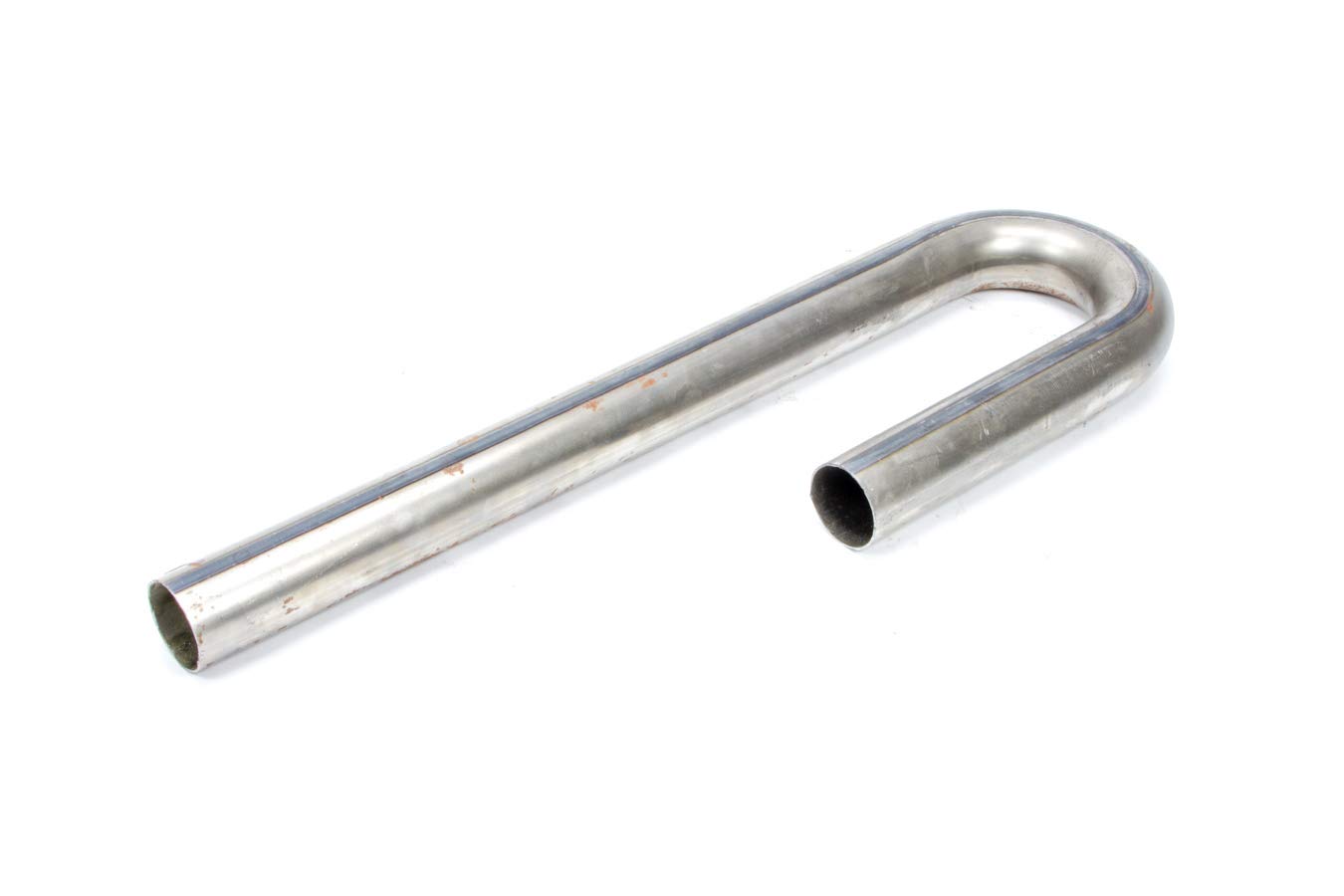
1. Patriot Exhaust H7013 1-1/2″ Mild Steel J-Bend Exhaust Pipe

Our pick — over 4.5★ from 100+ verified ratings; the strongest balance of quality and price.

Mild SteelJ-Bend

The fabricator’s default — a mild steel J-bend that accepts a torch without complaint.

If you are building an exhaust for a small engine, an ATV, or an old tractor, the Patriot H7013 is the kind of part that simply works. It is a 1.5-inch, 16-gauge (roughly 0.065-inch wall) J-bend (a U-shape with one longer leg) made from mild steel. The material takes heat cycles well — owners note that it “welds good & gets some nice color after a few heat cycles” — which is exactly the behavior you want when laying down beads with a standard MIG setup. This pipe welds easier than the Stainless Bros. 45° bend because mild steel needs less heat input to fuse.

The obvious trade-off with mild steel is rust if left bare. The same buyers point out the metal “will start to rust if not coated,” so plan on painting, powder-coating, or oiling it before installation. Compared to the stainless options below, this Patriot pipe asks for a few minutes of post-weld protection, but it also costs considerably less. It is a straightforward part that lets you chop, flip, and weld your way around frame obstacles without the cost of a full stainless system.

Why it wins

  • Mild steel welds easily with standard equipment and shows that blue-gray heat tint many builders love
  • As a J-bend shape, it gives you a built-in U-turn to route around suspension or frame sections
  • Cut-and-weld feedback is strong — owners say “cut and welded fine” and “nice little pipe”

Before you buy

  • Mild steel corrodes without coating — this is not a fit-and-forget pipe
  • The outside radius is thin; careful welding is needed to avoid burning through on the bend

Reach for this if: you are welding up a small-engine or ATV exhaust and want a J-bend that takes heat well.

Look elsewhere if: you need stainless corrosion resistance or a factory-polished appearance from the start.

Top Performer

2. Stainless Bros. 1.5″ 45° Mandrel Bend (SS304, 16GA)

304 StainlessMandrel Bend

A 45-degree stainless bend that arrives shiny and stays shiny through the weld.

The Stainless Bros. 45° mandrel bend is the pick for anyone who wants a clean, polished look without extra finishing work. It is built from 304 stainless steel (a corrosion-resistant grade) with a wall thickness of 16-gauge /.065 inches, and the 1.5D / 2.25-inch centerline radius keeps the inner cross-section smooth so exhaust flow is not restricted. Buyers report “perfect form, very nice finish and easy to weld” — the kind of feedback that tells you the surface is ready for TIG (tungsten inert gas) welding immediately. Its polished appearance beats the Patriot H7013 from the start, since the Patriot arrives as raw mild steel.

One honest note: the quality-per-dollar debate comes up here. Several owners point out that while the bend itself is excellent, you may find comparable stainless tubing locally for less. Compared to the Patriot mild steel J-bend above, this Stainless Bros. part costs more but never needs paint or coating to resist corrosion. The shape is a simple 45-degree section rather than a full J-bend, so plan your routing accordingly. If your build calls for a single smooth corner with a factory-like finish, this is the one.

What owners love

  • Uniform, shiny finish that matches a professional exhaust system — “beautiful polished appearance” is the top compliment
  • Mandrel-bent construction means the inner diameter stays constant around the turn
  • The 16-gauge wall is a balance for welding, whether you MIG or TIG

What to consider

  • Some buyers found local shops offering the same quality for less; the convenience of two-day delivery is the real value here
  • Size feedback is mixed — a few owners say the fit was not exactly as advertised (verify your specific outer diameter needs)

Grab it for: a visible exhaust section where appearance matters and you want a weld-ready polished stainless surface.

Skip if: you are on a tight budget and can accept a mild steel pipe plus coating.

Best Value

3. Hicarer 1-1/2″ OD 304 Stainless Steel Tubing, 24 Inch Length

Straight Tube0.06″ Wall

A straight 24-inch stainless tube that arrives polished, precisely cut, and ready to weld.

The Hicarer tubing is about as simple and effective as it gets: a 1.5-inch outer diameter, 0.06-inch wall, 2-foot length in 304 stainless. If your project needs a straight run — a connector between two bends, a tailpipe extension, or even a custom dowel (yes, one owner admitted to using it “incorrectly as a form of dowel for a cable spool”) — this is the cheapest way to get a corrosion-resistant section without driving to a metal supplier. Buyers consistently note “the stainless-steel tube I got was nicely polished and the cuts were precise.” It costs less than the Stainless Bros. 45° bend per inch of material.

The trade-off is the straight shape: this is not a bend, so you either need a pipe bender or you plan to join multiple straight segments. Against the Patriot J-bend (product 1), the Hicarer tube is stainless for a similar price point, but you lose the pre-made curve. If you already have a bender or you just need a clean section of stainless tube, the Hicarer delivers proven value with no surprises. Multiple reviewers confirm “it’s exactly what is advertised.”

Straight talk: The polished, weldable finish and exact dimensions make this the budget stainless option — just remember it is straight tubing, not a pre-bent section.

Heads-up: At 1.74 pounds for a 24-inch length, this is a light, easy-to-handle piece. The 0.06-inch wall is on the thinner side of 16-gauge (which is roughly 0.065 inch), so use a steady hand when welding to avoid burn-through.

Reach for this if: you need a straight stainless section for a repair or custom fab and want precise, polished tube without a trip to the steel yard.

Look elsewhere if: your routing requires a pre-bent curve — for that, the Stainless Bros. 45° bend or the Patriot J-bend are better picks.

Best Kit

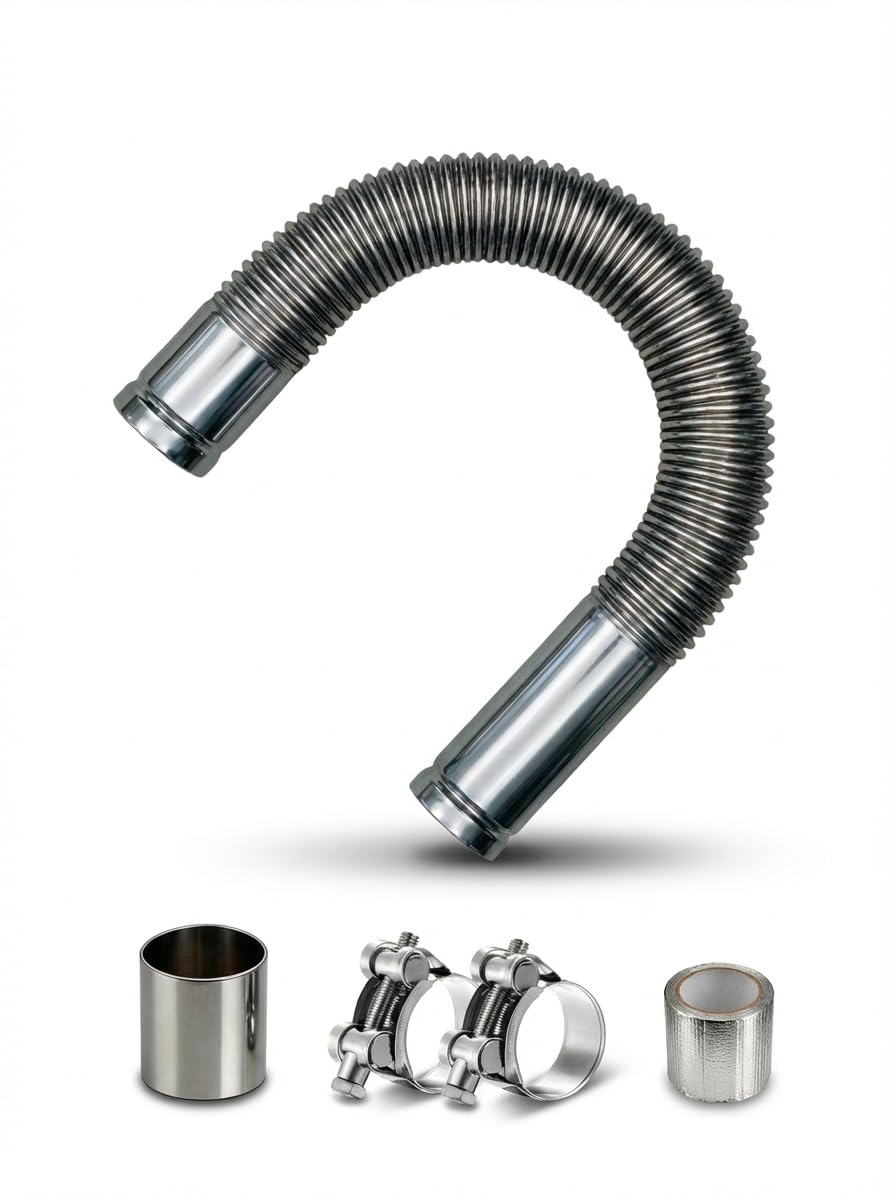
4. PAZLAM Flexible Stainless Steel Exhaust Tubing 1.5″ ID x 27.6″ (Laser Welded)

Flex PipeIncludes Clamps & Tape

A laser-welded flex pipe that bends where you need it and holds that shape.

When a rigid pipe simply will not fit — for a generator exhaust extension or a tight diesel heater routing — the PAZLAM flex pipe is the answer. It has a 1.5-inch inner diameter and is 27.6 inches long, built with laser-welded stainless steel that buyers find “very good quality” and “very simple to assemble.” The kit comes with two stainless clamps, a straight connector, and high-temperature sealing tape, so you have everything to create a leak-resistant joint right from the start. Owners note “it seems to be very durable so far. Haven’t had any slips or issues.” It is shorter than the TORDXICS 72-inch flex pipe, so it works best for a contained repair.

The manufacturer explicitly states this flex pipe is designed for exhaust extension, not direct generator exhaust connection — meaning it routes hot gas away from an existing outlet but should not be the primary manifold. The pipe is bendable but not stretchable or compressible, so plan your path carefully before clamping. At 13.6 ounces, it is light and easy to position. Against the TORDXICS 72-inch flex pipe below, the PAZLAM is shorter and comes with a more complete installation kit, making it the better choice for a contained repair or a small-engine extension.

Kit completeness: Two clamps, a connector, and sealing tape included — unusual for this price point. Owners confirm the package “includes a stainless connector for matching inner diameter exhaust systems.”

Best for: a quick generator exhaust extension or a diesel heater install where you need a flexible, ready-to-clamp section.

Skip if: you need a longer run — the 27.6-inch length is short for routing across an RV or truck frame.

Best Extension

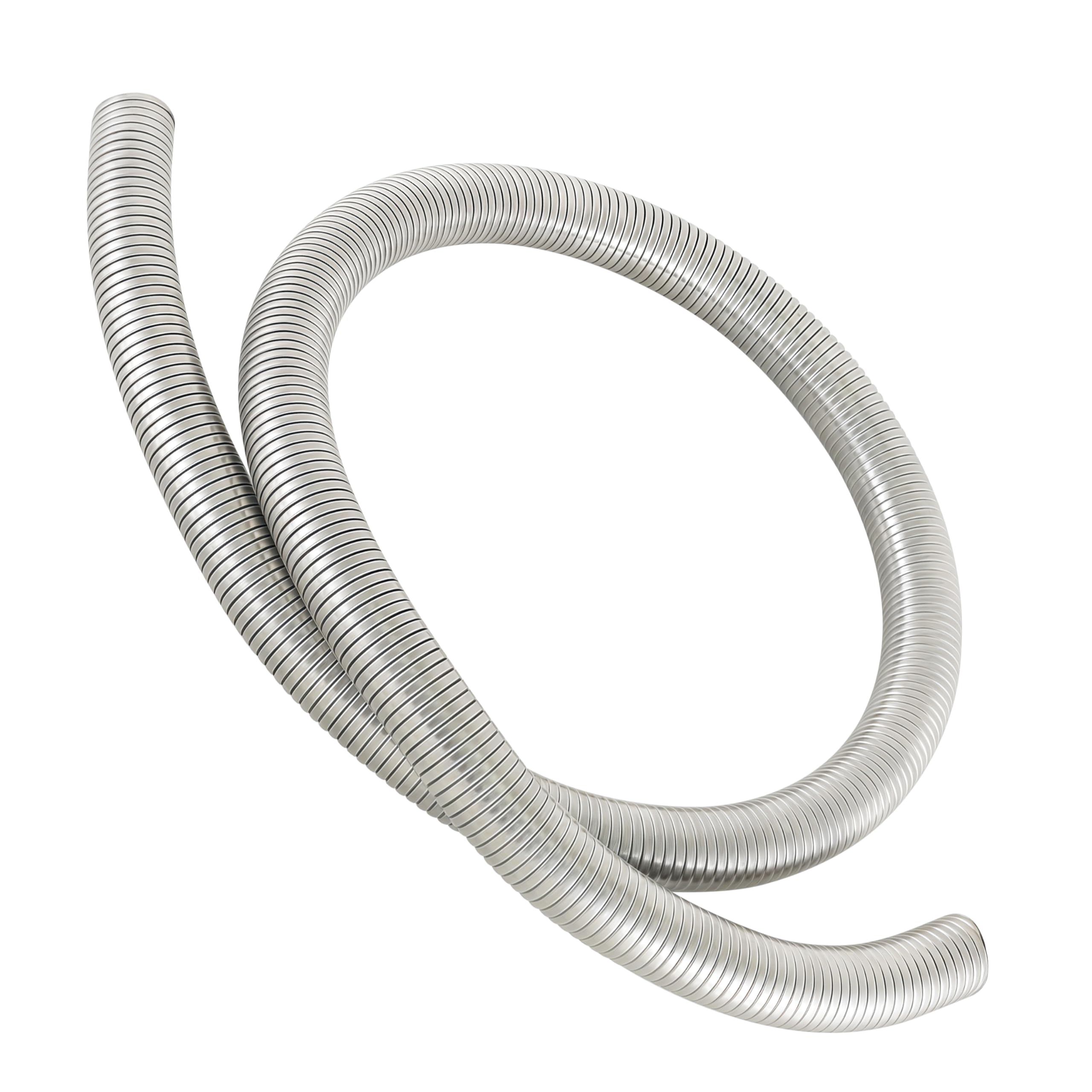
5. TORDXICS Universal T304 Stainless Steel Exhaust Flex Pipe 72″ x 1.5″ ID

6-Foot FlexT304 Steel

A full 6 feet of T304 flex pipe that routes generator exhaust safely outside.

For a portable generator or a semi-truck alternative power unit, the TORDXICS flex pipe solves the problem of moving hot exhaust gas well away from the intake. It is a 1.5-inch inner diameter, 72-inch long section of T304 stainless steel with a single-roll band construction that buyers find flexible enough for tight engine compartments. One owner running a Generac generator says “this tubing fit my portable Generac generator muffler perfectly. I extended the exhaust out of my generator shed so that the CO safety system would not stop my generator from running.” Others running it on semi-trucks praise the flexibility for routing “out from underneath my semi from my alternative power unit.” Its 72-inch length is more than double the PAZLAM’s 27.6 inches, so it covers longer runs without a splice.

The catch is fitment on 1.5-inch OD flanges: a few owners mention the flex pipe does not slide over a 1.5-inch outer diameter flange pipe without an expander tool. If your exhaust port has a flared lip, you may need a pipe expander or a careful clamp strategy. Compared to the PAZLAM flex pipe (product 4), the TORDXICS is more than twice the length and uses T304 instead of generic stainless, making it the right pick when you need to cover serious distance. The quality wins consistent praise — buyers call it “good quality” and note “the pipe is of good quality. Expanded it and it works like a charm.”

Long-run specialist: The 72-inch length is the standout feature here — no other flex pipe in this list gets you that distance in one continuous section.

Ideal for: generator exhaust extensions, heater venting, or any application that needs a 6-foot flexible stainless run.

Caution: If your exhaust flange measures exactly 1.5-inch outer diameter, the inner diameter of this pipe may be a tight fit; factor in a minor expansion step.

Premium Pick

6. Vibrant Performance VIB2601 1.5″ Stainless Steel U-J Mandrel Bent Tubing

U-J Shape3″ CLR

The U-bend that builders re-order immediately — quality that meets “higher standards.”

Vibrant Performance has a reputation in the automotive fabrication world, and the VIB2601 lives up to it. This is a U-J style mandrel bend in 304 stainless steel: 1.5-inch outside diameter, 16-gauge wall, a 3-inch centerline radius (the center of the bend circle), and 10-inch leg lengths on both sides — so you get a 180-degree U-turn with long straight sections to connect into your system. Its 3-inch centerline radius is a tighter U than the Patriot J-bend’s looser curve, so it fits in more compact spaces. Customers note “the quality of bends and the fact that it was decently polished” stood out enough that they “purchased another one days afterwords.” The finish is good enough for a visible exhaust on a show car.

At a higher price point than any other product in this list, the Vibrant bend is for the builder who prioritizes precision and appearance over budget. The 3-inch centerline radius means a tighter U than the Patriot J-bend, which has a longer, looser curve — so if you need a compact turn to clear a suspension arm or a frame crossmember, this is your part. One caveat: the package weight is listed at 2 pounds, and the U-J shape is not as forgiving as a flex pipe for alignment errors. Measure twice before cutting the legs.

Why it stands out

  • The 180-degree U-J design with 10-inch legs gives you maximum flexibility for positioning the turn where you need it
  • Owners rate the polish and bend quality as good enough to buy a second unit — a strong vote of confidence
  • 304 stainless construction means no rust worries and a heat tint that enhances the look

Fit note

  • Premium pricing means this is the most expensive single bend here; the extra cost is for the brand’s quality control and finish
  • The 3-inch centerline radius is a tighter radius than some other U-bends — verify this fits your routing before cutting

Grab it for: a custom exhaust system where the U-turn is the focal point and you want a bend that looks as good as it flows.

skip it if: you can make do with a mild steel J-bend and some coating — the Patriot H7013 handles the same job at a lower cost.

Understanding the Specs

Wall Thickness (Gauge)

This is the thickness of the pipe wall. It determines how much heat you need to weld it and how well it resists vibration cracking. For a 1.5-inch exhaust pipe, 16-gauge (roughly 0.065 inch) is the workhorse standard — thick enough to accept a MIG or TIG bead without blowing through, thin enough to bend with a manual bender. Thinner pipe (like the Hicarer’s 0.06-inch wall) is lighter but requires a careful welding technique. Heavier 14-gauge is rare at this diameter but would add longevity in high-heat applications.

Mandrel Bend vs. Crush Bend

A mandrel bend uses a support ball inside the pipe during bending so the inner diameter stays the same around the curve. A crush bend (which most local muffler shops do with a simple bender) flattens the inside of the turn slightly, restricting exhaust flow. Every stainless product in this list — the Stainless Bros. 45°, the Vibrant U-J, and the Patriot J-bend — uses mandrel-bent construction. That matters most at the bend point: a mandrel 45° flows measurably better than a crush 45° under load because the gas does not have to squeeze past a flattened section.

FAQ

What does 1 1/2 exhaust pipe actually measure?
1 1/2-inch exhaust pipe refers to the outer diameter of the tube. That means the outside of the pipe is 1.5 inches across. The inner diameter will be slightly smaller — roughly 1.38 inches for a 16-gauge wall, or 1.40 inches for a thinner 0.06-inch wall. Always check whether a product lists outer diameter or inner diameter, especially for flex pipes. For example, the PAZLAM and TORDXICS flex pipes specify a 1.5-inch inner diameter, so they slip over a 1.5-inch outer diameter rigid pipe.
Can I weld 304 stainless with a standard MIG welder?
Yes, but you need the right wire and gas. Use 308L or 309L stainless wire and a tri-gas mix (90% helium / 7.5% argon / 2.5% CO2 or straight argon with a small CO2 addition). Mild steel wire on stainless will produce weak, rust-prone welds. For TIG welding, 304 stainless is easier and produces cleaner results — several buyers of the Stainless Bros. 45° bend and the Vibrant U-J specifically note they TIG-welded them without issues.
Will a 1.5-inch flex pipe fit on a standard portable generator?
It depends on the generator’s exhaust outlet diameter. Many portable generators use a 1-inch to 1.25-inch outlet, so a 1.5-inch inner diameter flex pipe will slide over it if the outlet is not flared. If the outlet is exactly 1.5 inches outer diameter, the PAZLAM or TORDXICS flex pipes should fit, though a few owners of the TORDXICS pipe found the fit was tight and needed an expander. Always measure your generator’s exhaust port before ordering.
Mild steel vs. stainless: which one lasts longer in winter?
Stainless 304 lasts longer in wet, salty, or snowy conditions because it forms a passive chromium oxide layer that resists rust. Mild steel (like the Patriot H7013) will rust within a few weeks of exposure to road salt or rain unless it is painted, ceramic-coated, or oiled. For a daily driver in the Northeast or Midwest, the Stainless Bros. or Vibrant stainless bends are worth the extra cost. For a garage-kept project vehicle, mild steel plus paint is perfectly fine.
What is the difference between a J-bend and a U-bend?
Both form a 180-degree turn, but a J-bend (like the Patriot H7013) has one leg that is significantly longer than the other — the “J” shape — while a U-bend has two equal-length legs. The Vibrant VIB2601 is a U-J bend with two 10-inch legs. A J-bend is useful when you need the turn near one end of the pipe, while a U-bend is better for a symmetrical routing change.
Can I use a 1.5-inch exhaust pipe on a 150cc or 250cc motorcycle?
Yes, many small-bore motorcycle and ATV exhaust systems use 1.5-inch tubing. The Patriot H7013 is a popular choice for small-engine exhaust fabrication — buyers have used it on bikes, ATVs, and even an old John Deere 112 tractor. Just make sure the wall thickness is compatible with your welding equipment; 16-gauge is ideal for home shop work.
Do I need to use the sealing tape included with the PAZLAM flex kit?
The high-temperature sealing tape in the PAZLAM kit is recommended for a leak-resistant joint, but it is not mandatory if you are clamping onto a smooth pipe. The kit’s stainless clamps alone can create a solid seal if the surfaces are clean. The tape adds extra protection against exhaust gas leaks in high-vibration applications like generators or RV mounts.
Can I cut a stainless exhaust bend with a regular hacksaw?
Yes, but it takes more effort than cutting mild steel. Use a bi-metal blade with 18-24 teeth per inch and lubricate the cut with cutting oil or WD-40. A cutoff wheel on an angle grinder is faster but generates heat that can warp thin-walled 304 tubing. The Hicarer tube, at 0.06-inch wall, cuts relatively easily with a sharp blade.

Final Thoughts: The Verdict

If you want one dependable pick, the 1 1 2 exhaust winner is the Patriot Exhaust H7013 because it combines proven weldability, a J-bend shape that solves frame-routing problems, and a price that leaves room in your budget for coating. If you want polished stainless that needs no paint and arrives ready to TIG, grab the Stainless Bros. 45° Mandrel Bend. And for a generator exhaust extension that reaches where rigid pipe cannot, the PAZLAM Flex Pipe Kit is the one to reach for.

How We Picked

We do not accept paid placement. Every pick is matched to a real buyer and a real use-case; we do not hands-on test units.

Sources & Methodology

Specifications: manufacturer listings and product documentation. Review insights: verified customer reviews, as of July 2026. Pricing: not shown on this page (it changes often); check the current price via the retailer link.

As an Amazon Associate, Trending Car earns from qualifying purchases. This does not affect which products we feature.

Related Guides

Please use a real email you check. If it's fake or mistyped, your message won't reach us and we can't reply — wrong addresses are rejected automatically.

Leave a Comment

Your email address will not be published. Required fields are marked *