
Our readers keep the lights on and my garage snacks stocked. As an Amazon Associate, I earn from qualifying purchases.
Specs are compiled from manufacturer listings and verified buyer reviews and can change over time — please confirm the key details on the product page before buying.
Fitting 1 1/2 exhaust tubing is a double game — you need exact diameter for the slip joint or weld prep, plus a material that survives exhaust heat without turning into a rusted mess. Whether you are patching a rotted muffler inlet on an old bike, running a generator exhaust away from a window, or building a custom turbo-back on a project car, the three specs that decide everything are: tube gauge (wall thickness), bend radius (how tight the turn is), and alloy choice (mild steel vs stainless vs aluminized).
I’m Min Islam — the founder and writer behind Trending Car. This guide is built by comparing the manufacturers’ published specifications and the patterns across verified customer reviews, so you get each pick’s real strengths and trade-offs instead of marketing spin.
These seven picks sort the 1.5-inch landscape into what genuinely delivers a clean weld, resists corrosion, and routes around obstacles without kinking — every model below is proven by buyers for 1 1/2 exhaust tubing repairs, custom builds, and generator extensions.
Our Picks at a Glance
How To Choose The Best 1 1/2 Exhaust Tubing
The right 1.5-inch exhaust tube starts with knowing your repair environment. Under-vehicle exhaust that sees road salt and winter slush demands a corrosion-resistant alloy — 304 stainless or at minimum aluminized steel. A short generator extension in a dry garage can get away with cheaper mild steel, as long as you coat the welds.
Wall Gauge: Strength vs Bend-ability
Most hobby-grade exhaust tubing lands on 16-gauge, which measures 0.065-inch wall thickness. That wall is thick enough to take a MIG weld bead without burning through, yet thin enough to bend smoothly in a mandrel die. Thinner 18-gauge (0.049″) is harder to weld without blowing holes on a novice setting; thicker 14-gauge (0.083″) is overkill for naturally aspirated car exhausts and adds unnecessary weight to a homemade header.
Bend Type: Press vs Mandrel
A press-bent pipe collapses the inside radius, creating a flat spot that restricts exhaust flow. A mandrel bend supports the tube on the inside of the curve so the cross-section stays round — the exhaust gas moves freely, which matters for power and scavenging on small engines. All of the picks here use mandrel bends or straight sections that let you cut and weld your own radius.
Flex Pipe vs Solid Tube
A flexible exhaust section (woven stainless braid over a corrugated inner liner) is designed to absorb engine vibration and thermal expansion so a rigid line doesn’t crack at the welds. Use a flex section near the exhaust manifold or between the engine and a solid mounted muffler. If you are building a full custom system from scratch, start with solid mandrel bends and add one short flex piece where the vibration is worst.
Quick Comparison
| Model | Best For | Material | Wall Thickness | Bend/Type | Amazon |
|---|---|---|---|---|---|
| Patriot H7013 J-Bend Mild Steel★ Best Overall | Budget ATV / lawn-tractor repair | Mild Steel | — (thin wall noted) | J-bend, 1.5″ ID | Amazon |
| Verocious Motorsports 4′ TubeAlso Great | Premium straight runs & structural builds | 304/304L Stainless | 0.065 in (16 ga) | Straight, 48″ | Amazon |
| 1.5″ Stainless 180° Bend | U-turn routing & muffler mods | 304 Stainless | 0.065 in (16 ga) | 180° mandrel, 2.25″ CLR | Amazon |
| Stainless Bros 90° Mandrel Bend | Precise 90° elbows for turbo & header work | 304 Stainless | 0.065 in (16 ga) | 90° mandrel, 2.25″ CLR | Amazon |
| FORTLUFT Aluminized Bend Set | Budget-friendly dual-bend kit | Aluminized Steel | 0.06 in (16 ga) | 90° & 180° mandrel | Amazon |
| TORDXICS 6ft Flex Pipe | Long generator/rv exhaust extensions | T304 Stainless | — (flex braid) | Flex, 72″ | Amazon |
| TORDXICS 22.5″ Flex Pipe | Short generator & heater vent patches | T304 Stainless | — (flex braid) | Flex, 22.5″ | Amazon |
In‑Depth Reviews
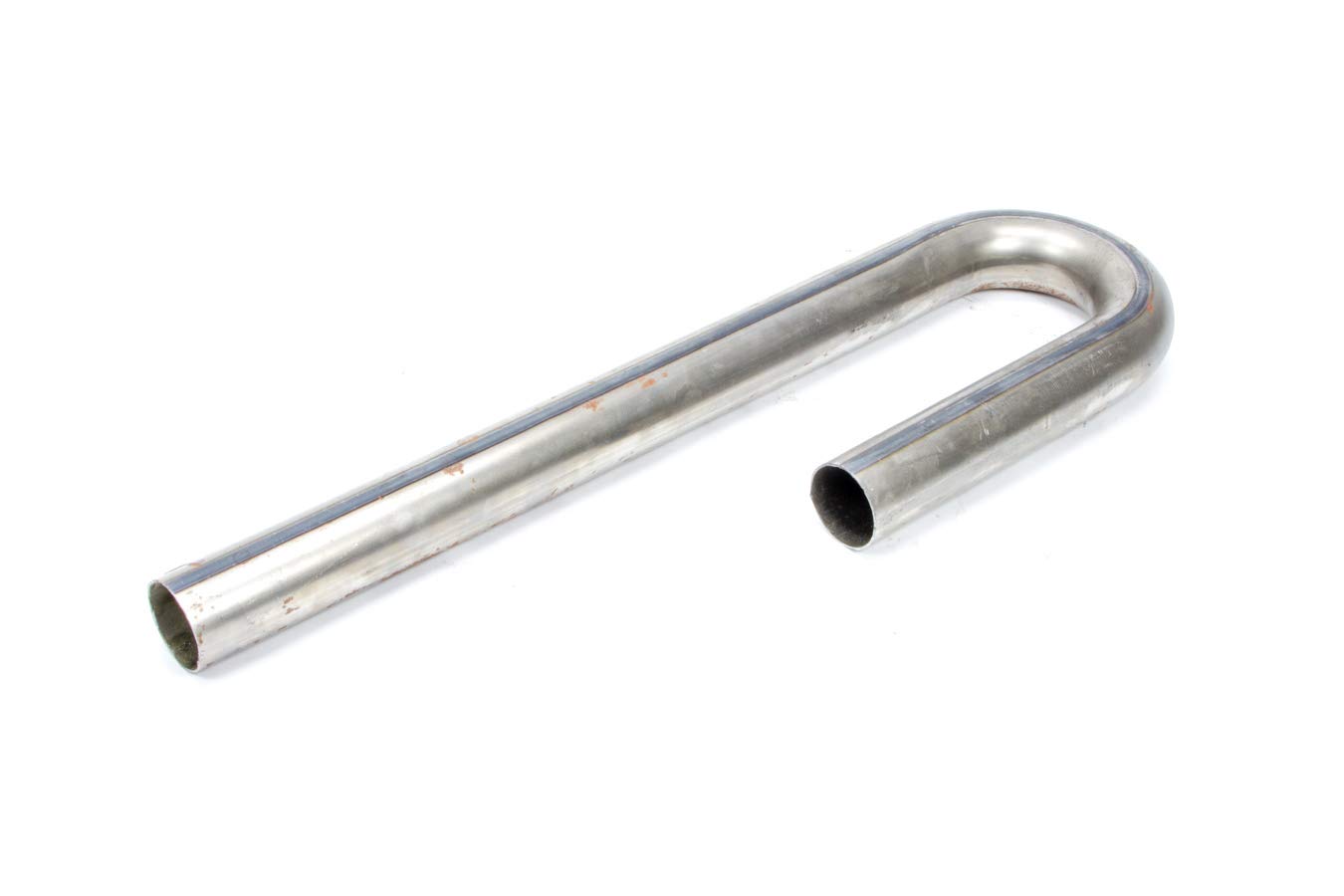
1. Patriot Exhaust H7013 1-1/2″ Mild Steel J-Bend Exhaust Pipe
Our pick — over 4.5★ from 100+ verified ratings; the strongest balance of quality and price.
A cheap, thin-wall mild steel J-bend for small engines, ATVs, and lawn tractors where you plan to paint or wrap the final assembly.
Patriot’s H7013 is the most bare-bones option in the lineup — a single J-bend made from mild steel that weighs just 0.454 kg (about 1 pound). The wall is noticeably thin on the outside radius, which buyers flag as a caution when welding: “super thin on the outside radius, be careful when welding,” as one report puts it. The straight sections are fine for cutting and flipping, and the mild steel accepts a MIG bead easily so long as you do not linger on the outer curve. The 4.7-star score from 133 buyers is surprisingly high for a budget piece, driven by the fact that it works exactly for the small-engine repairs buyers bought it for — John Deere 112 tractors, mini-bike exhausts, and ATV clearance fixes.
The mild steel will rust if left uncoated, so budget for a can of VHT paint or header wrap before you install it on a vehicle that sees rain. Unlike the stainless entries that you can weld and forget, this one demands a protective coating. The weight difference — 1 pound for the Patriot versus 4.2 pounds for the FORTLUFT set — confirms how light this single piece is. Buyers love the “fair price” for a cut-and-weld part that disappears into a frame rail.
Wallet-Friendly Fit
- Lowest entry cost for a one-off repair on small engines and ATVs
- Mild steel welds quickly with standard MIG wire; no special purge needed
- Light enough (1 lb) to hang off a small engine mount without extra brackets
Corrosion Caveat
- Mild steel starts rusting immediately if not coated with high-temp paint or wrap
- Thin outer radius requires a careful welding hand to avoid burn-through
Buy this for: a quick, one-time repair on an ATV, minibike, or vintage lawn tractor where you will paint the final assembly.
Skip this for: any vehicle driven in winter salt — go with the aluminized FORTLUFT set or stainless options.
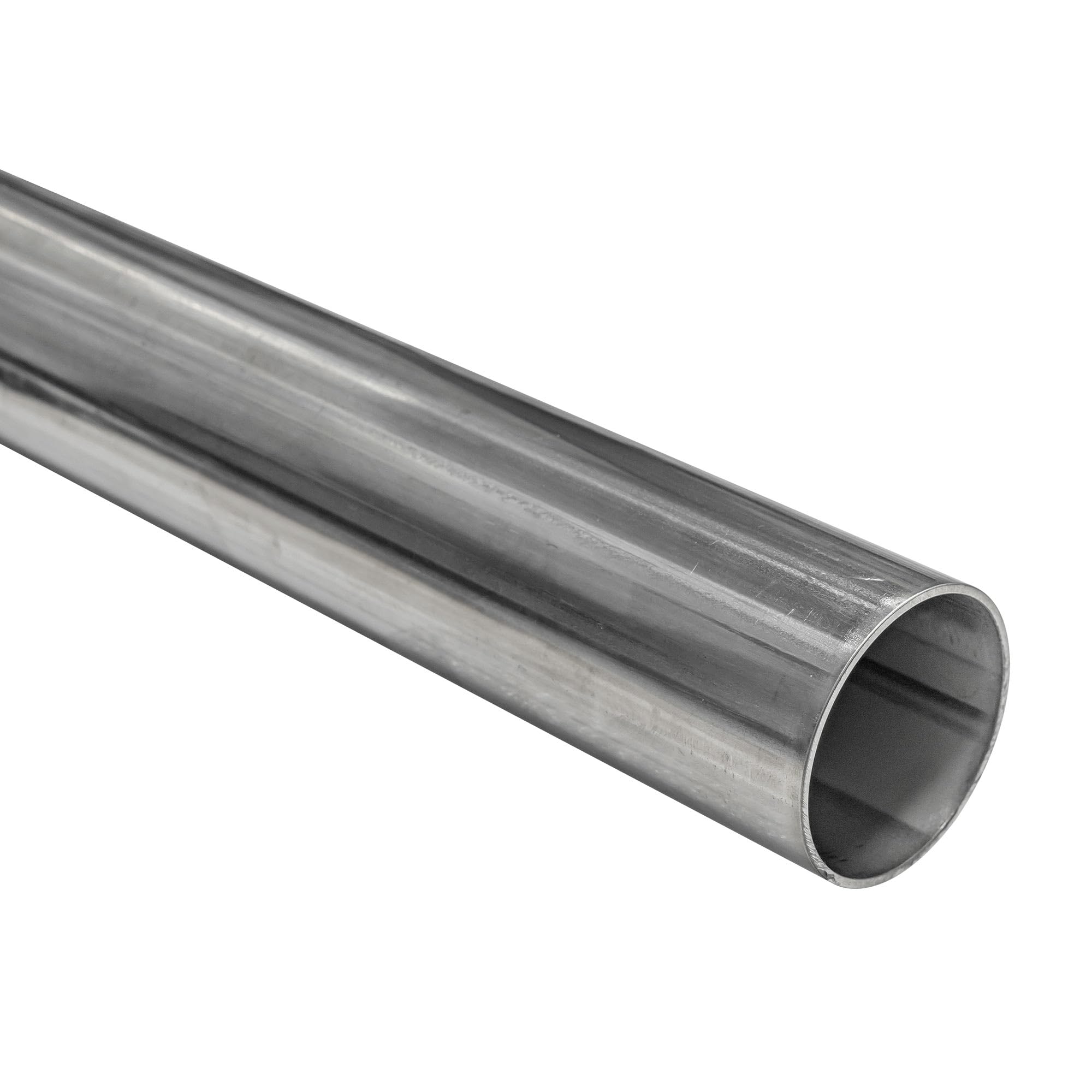
2. Verocious Motorsports 1-1/2″ OD 304/304L Stainless Tubing, 4′ Length
The straight-tube champ that builders keep coming back to for its dead-on measurements and clean welds.
The standout is starting a custom exhaust from a straight piece that arrives truly straight. This Verocious tube is a 4-foot length of 304/304L stainless steel at 16 gauge (0.065-inch wall), which means you cut only what you need and keep the rest for the next project. The bright-annealed outer finish resists surface rust, and the mill-finished interior stays smooth for free-flowing exhaust gas. Several owners used this tube for non-exhaust tasks — one mounted a Starlink dish on a boat using it as a support pole — which speaks to how precisely made the piece is. The crowd favorite rating (4.8 stars across 60+ ratings) backs up the “welds great, no issues” consensus in the review pool.
Builders working on engine swaps or header repairs appreciate that this one piece covers both the primary runner and the collector section. It is a single 4-ft length, so if your job needs multiple tight curves you will also need separate mandrel bends. The Verocious ships with a cut tolerance of plus or minus one-eighth of an inch, so you get a ready-to-weld edge right out of the packaging. The 4-pound weight is noticeably heavier than the 1.5-pound 180-degree bend — a difference of 2.5 pounds — but that heft comes from having nearly four feet of solid stainless wall.
Build-It-Yourself Strengths
- Full-length 48″ gives maximum flexibility for cuts and layout
- 304/304L stainless shrugs off road salt and moisture far better than mild steel
- MIG welds penetrate cleanly without excess spatter, owners confirm
One Real Trade-Off
- No pre-formed bend — you need to buy elbows separately for tight-radius routing
Reach for this if: you want a single premium straight section for a structural exhaust or intake repair where precise OD matters.
Look elsewhere if: your job is a tight U-bend around a frame rail — you will save money buying a pre-bent elbow.
3. 1.5″ Stainless 180° Mandrel Bend — 1.5D/2.25″ CLR

A 180-degree U-bend in 16-gauge stainless that welds clean and holds up under heat cycles.
When you need to route exhaust back on itself — think dual-outlet muffler modifications or wrapping around a suspension component — this 180-degree mandrel bend from Stainless Bros delivers. The centre-line radius is 2.25 inches (1.5 times the tube diameter), which keeps the ID fully round so the engine never struggles against a flat spot. The 6-inch legs on each side give you plenty of straight material to trim, and owners note the bends are “fantastic” with no creases on the inside curve. One builder cut the U in half and welded the two pieces back together flipped to create an S-bend for his 1975 Celica, proving how versatile a clean 180-degree section can be.
Quality is the most-praised aspect across the reviews — 13 owners highlight it directly, and the bend quality itself pulls 11 mentions. The finish draws its own positive feedback, described as a “great finish” that complements the high-quality stainless look. At just 1.5 pounds, this 180-degree bend is lighter than the 4.2-pound FORTLUFT set, which is logical since it is a single piece with short legs rather than a heavier two-bend multi-pack. The crowd puts this at 4.7 stars from 130+ ratings.
Routing Freedom
- 180° turn with a smooth, constant radius — no flow restriction
- 304 stainless resists scaling and pitting well past mild steel’s lifespan
- Short 6-inch legs allow tight packaging in engine bays
Minor Fit Note
- Some bends arrive a touch shy of a perfect 180°, so measure your frame angle before welding
Ideal for: builders fabricating a muffler bypass, an S-turn, or a heat exchanger loop in 1.5-inch stainless.
Skip it for: long straight runs — you want the full-length Verocious tube instead.
4. Stainless Bros 1.5″ 90° Mandrel Bend — 1.5D/2.25″ CLR

A 90-degree stainless elbow that buyers regularly put into turbo dump tubes and Ram 1500 Y-pipes.
If your custom exhaust layout calls for a right-angle change of direction, this single 90-degree elbow in 16-gauge 304 stainless is the go-to. The 2.25-inch centre-line radius (1.5D) keeps the bend gentle enough to avoid back-pressure, while the 6.5-inch legs on each side give you generous material for trimming to exact fit. The review pool is consistently impressed — one owner used a cut section to extend a Grimmspeed dump tube, reporting it “matched up perfectly.” Another welded it into a Ram 1500 Sport Y-pipe repair, calling the stainless “good” quality that handled the weld heat without discolouring badly.
The rating sits at 4.7 stars from 115+ buyers, and the consensus is that the build quality exceeds what you expect at this tier. Owners note the legs were “actually longer than advertised,” which is a rare bonus for tight fabrications. At 1.5 pounds it is comparable to the 180-degree bend above, making it a lightweight choice for hanging exhaust sections where sprung weight matters — unlike the 4.2-pound FORTLUFT set, which carries more weight because it bundles two steel pieces.
Sharp-Angle Strengths
- 90° mandrel bend with generous leg length for custom fitment
- 304 stainless matches exhaust-system expectations for corrosion resistance
- Verified to mate with Grimmspeed parts without re-drilling or adapters
Single-Piece Reality
- You get one elbow — a multi-bend project needs multiple orders or the FORTLUFT two-pack
Grab this for: one-off 90-degree turns in a turbo-back, a downpipe extension, or a Ram truck Y-piece.
Skip this if: you need both a 90- and a 180-degree bend in one shipment — the FORTLUFT set covers both angles.
5. FORTLUFT Exhaust Bend Set 1.50″ Aluminized Steel — 2pc

Two mandrel bends — one 90°, one 180° — in aluminized steel that offers more corrosion resistance than bare mild steel.
This is the only multi-bend kit in the lineup, giving you a 90-degree and a 180-degree pre-formed bend in the same box. The material is aluminized steel (16 gauge, 0.06-inch wall), which means the surface has a thin aluminum-silicon coating that holds off surface rust far better than uncoated mild steel — a real advantage for a tractor, ATV, or generator exhaust that lives outdoors. The outside diameter is 1.75 inches (for a 1.50-inch ID), and the wall thickness matches the same 16-gauge standard as the stainless entries above. Buyers loved the smooth, kink-free mandrel bends, and one owner came back to buy two more kits after the first one worked so well on his 1971 Honda SL125.
Quality is the top aspect with 14 positive mentions, and the bends themselves earn a separate 7 mentions for being smooth. At 4.2 pounds for the pair, it is 2.8x heavier than the individually sold 1.5-pound stainless elbows, but that extra weight buys you two pre-shaped tubes in a single shipment. The 4.6-star rating across 160+ owners makes this the most-reviewed mid-range pick on the list. One honest note: the product photo suggests longer pipes, so measure your frame space before assuming the exact leg lengths.
Kit Convenience
- Two common angles in one box saves shipping and planning time
- Aluminized coating outlasts plain mild steel in damp storage and occasional rain
- 16-gauge wall welds easily with a standard MIG setup
Honest Warning
- Photo overstates the actual pipe length — check the dimensions before layout
Perfect for: a first-time custom exhaust on a vintage bike or lawn tractor that needs two bends and no leftover waste.
Think twice if: you need a single long straight section — buy the Verocious 4-foot tube instead.
6. Universal T304 Stainless Steel Exhaust Flex Pipe — 72″ Length, 1.5″ ID
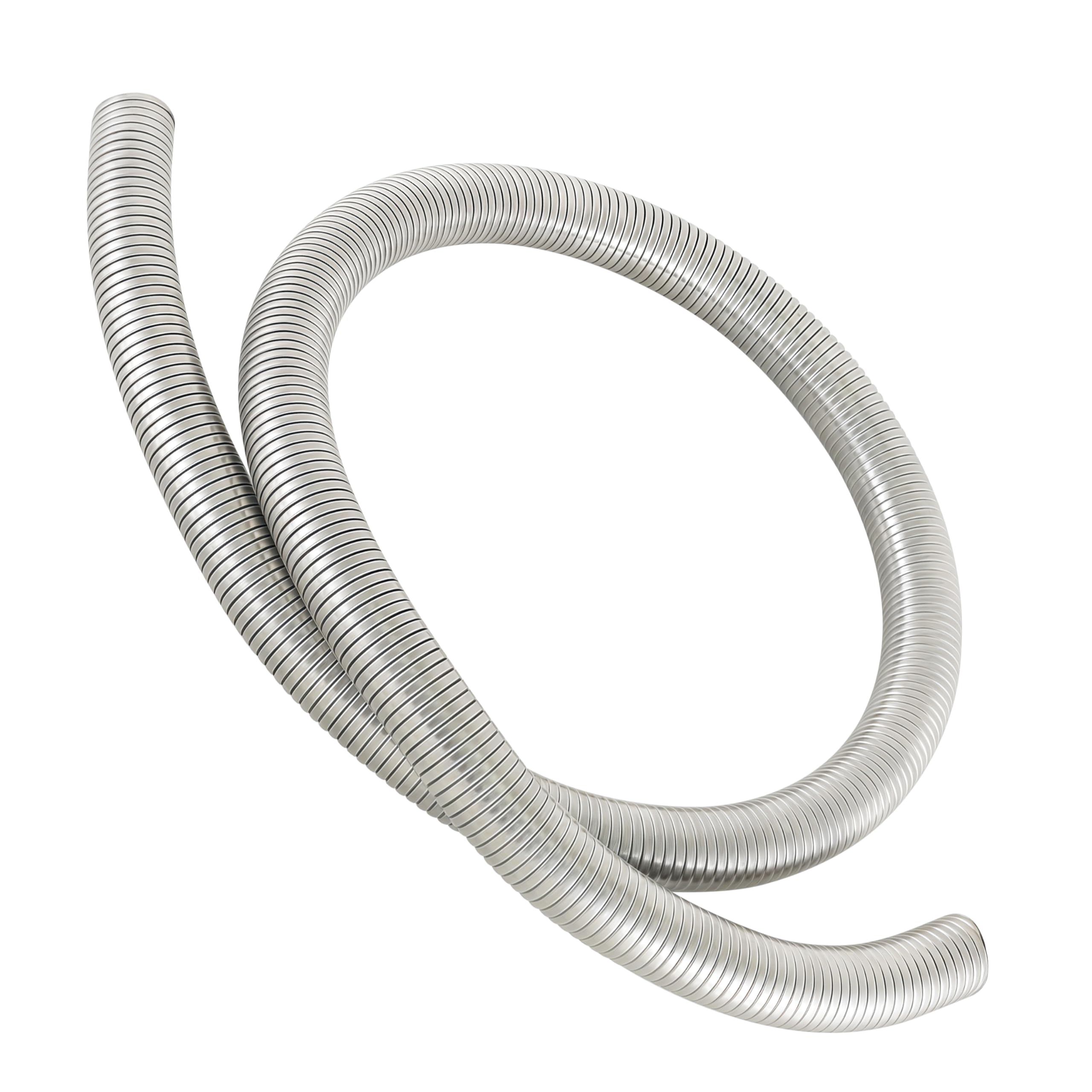
Six feet of T304 braided flex that fits Generac generators perfectly and vents exhaust out of sheds without triggering CO shutoff.
When your generator, semi-truck APU, or Toyo laser stove needs the exhaust moved a long distance away from a living space, this 72-inch flex pipe covers the gap. The inner diameter is a true 1.5 inches, and the single-roll band construction in T304 stainless steel resists both heat and outdoor corrosion. Several owners installed it on portable generators — one used it to route exhaust outside a shed so the carbon-monoxide safety system would not shut the generator down. The 4.6-star rating from 130+ ratings confirms the broad satisfaction across generator, stove, and vehicle applications.
The quality aspect leads with 16 mentions, and functionality follows at 14 mentions, which matches the real-world feedback — buyers report it “works like a charm” after a slight expansion over a 1.5-inch OD flange. The pipe’s flexibility is the standout trait: one owner routed it from a semi’s APU under the chassis “easy,” and the metal braid handles the vibration of a running engine without fatiguing. Fit is a strong third aspect with 7 mentions, specifically praising its compatibility with Generac models. The flex braid is not a solid tube, so it cannot replace a mandrel bend for structural routing, but for absorbing movement it is exactly the right tool.
Distance & Damping
- Full 6-foot run lets you move exhaust well past doors and windows
- T304 braid takes engine vibration without cracking welds
- Works with clamp or weld installation — no adapter piece required
Fitment Check
- ID may be tight over a true 1.5″ OD pipe; an expander tool helps seat it
Reach for this if: you need a long, flexible exhaust extension for a generator, RV heater, or stationary engine.
Reach for a solid bend if: your route is short and rigid — this flex pipe’s braid is not structural for supporting muffler weight.
7. TORDXICS 1.5″ ID x 22.5″ Length T304 Stainless Flex Pipe
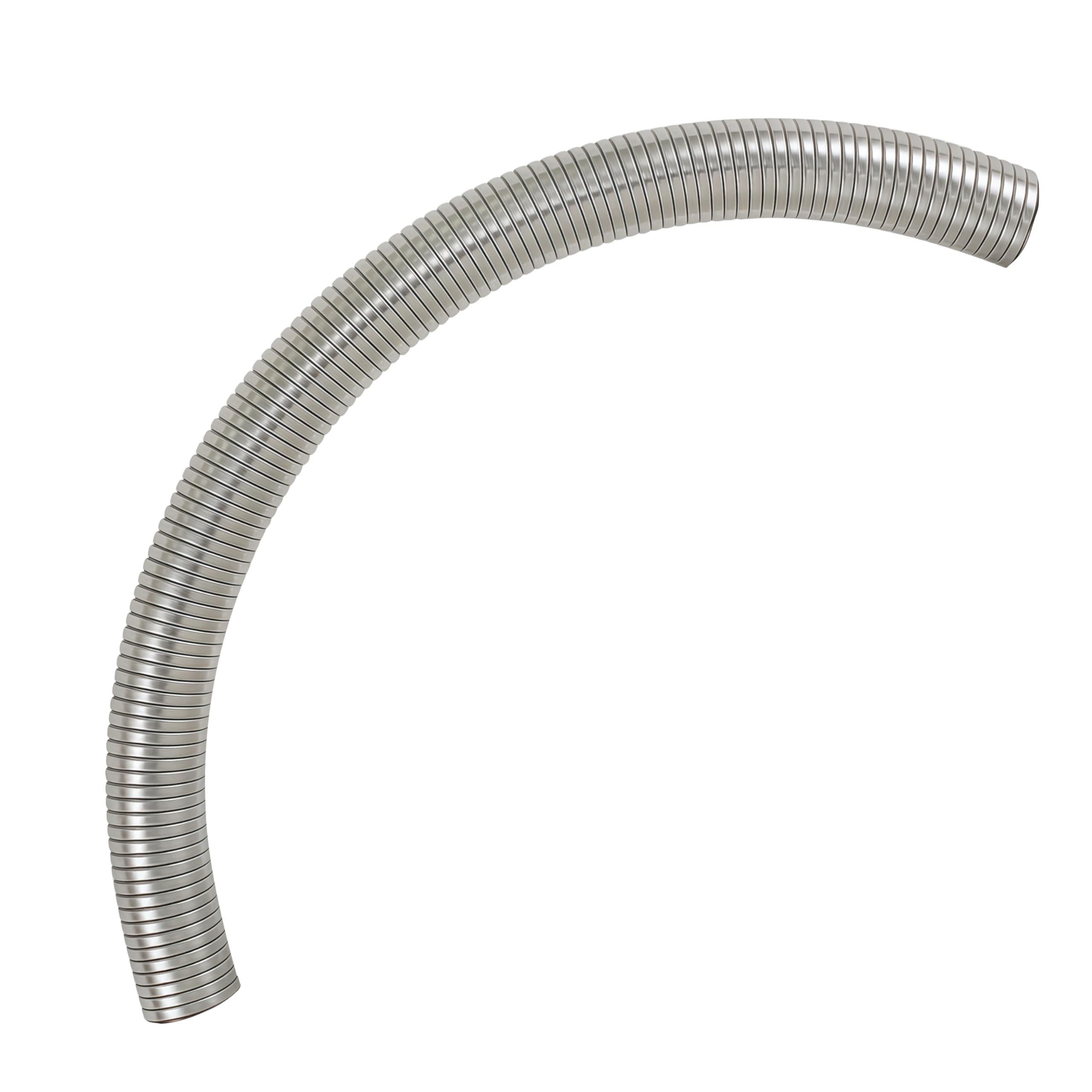
A short 22.5-inch T304 flex section that slots into tight spots for generator extensions and heater vents.
For a tight space — connecting a generator’s exhaust outlet to a longer run, or patching a section where a catalytic converter was cut — this 22.5-inch T304 stainless flex pipe is the right length. The buyer reports are clear: “used as an exhaust extension for my generator” and “fit perfect” for a heater vent. The single-roll band construction gives it the same durability as the 72-inch version above, but the shorter length makes it easier to handle on a workbench and less likely to sag under its own weight. The 4.4-star average across 125+ ratings is still solid, though a notch below the longer flex pipe’s 4.6, likely because the shorter length means it fits fewer applications.
Because this is flex braid rather than solid tube, you need to plan for proper support — the pipe itself does not hold a shape, so use hangers or clamps to keep it off hot engine parts. The T304 alloy fights corrosion aggressively, which is why buyers keep it on generator exhausts that stay outdoors year-round. The 22.5-inch length is exactly half the 45-inch length of the 4-foot Verocious tube, making this the most space-efficient option for a small patch. The main complaint across the reviews is that the braid can be tough to cut cleanly; a rotary tool with a cut-off wheel is the recommended approach.
Short-Run Strength
- Precise 22.5″ length for confined spaces where a full 6-foot flex is overkill
- T304 stainless shrugs off moisture and road salts
- Weld and clamp compatible — adapts to flanged or slip-fit systems
Cutting Reality
- Flex braid is tough to cut with hand tools; a power cutter is recommended
- Needs external support clamps — not self-supporting like solid tube
Great for: a generator exhaust extension or a short patch that needs vibration isolation in a tight engine bay.
Not ideal for: a full exhaust system layout — you want solid mandrel bends for structural routing.
Understanding the Specs
Mandrel Bend vs Press Bend
A mandrel bend uses an internal support (the mandrel) that prevents the tube wall from collapsing inward as it curves. You get a perfectly round cross-section throughout the turn, which keeps exhaust velocity high and avoids power-robbing turbulence. A press bend, by contrast, just crushes the tube over a die, leaving a flat inside radius that acts like a choke point. Every pre-formed elbow on this list is a mandrel bend — the FORTLUFT, Stainless Bros, and Patriot bends all maintain their inner diameter through the curve.
For straight-tube builds like the Verocious 4-foot section, there is no bend to worry about, so mandrel quality applies to your own cuts and joins. If you are welding two straight pieces together to form your own angle, chamfer the edges and keep the weld bead flush inside so you do not create the same flow problem a press bend would cause.
16-Gauge (0.065″) Wall Thickness
Sixteen-gauge tubing measures 0.065 inches thick (about 1.65 mm). That wall strikes a balance: thick enough to withstand the heat and pressure of an automotive exhaust without warping, yet thin enough to weld with a standard 110v MIG welder at the hobbyist level. Thinner 18-gauge (0.049″) tube is prone to burn-through if you are not running a pulse setting. Thicker 14-gauge (0.083″) is overbuilt for naturally aspirated 1.5-inch exhausts and adds unnecessary weight, especially on a small engine where every pound affects mounting stress. The Verocious, Stainless Bros, and FORTLUFT picks all use 16-gauge (or 0.06-0.065-inch) wall thickness, making them the universal balance for this diameter.
Flex pipes do not come in standard gauge because they are a corrugated liner rather than a solid drawn tube. Their strength comes from the woven stainless braid outer layer and the multi-ply inner bellows, not from a single wall thickness. Always support flex sections with a hanger every 18-24 inches so the corrugation does not work-harden and crack over time.
FAQ
Can I weld 1.5 inch exhaust tubing with a standard 110v MIG welder?
Will 1.5 inch ID tubing fit over a standard 1.5 inch OD exhaust pipe?
How do I prevent mild steel exhaust tubing from rusting?
What is the difference between 304 and T304 stainless steel for exhaust tubing?
Can I use a flex pipe to replace a solid exhaust section permanently?
How long does 304 stainless exhaust tubing last compared to mild steel?
What is the maximum exhaust temperature 1.5 inch 16-gauge stainless tubing can handle?
Can I cut and re-weld a mandrel-bent elbow to change the angle?
Is 1.5 inch exhaust tubing large enough for a V8 engine?
Does the FORTLUFT aluminized steel set need painting before installation?
Final Thoughts: The Verdict
For the majority of shoppers, the 1 1/2 exhaust tubing winner is the Verocious Motorsports 4-Foot Tube because it gives you a full-length 16-gauge 304 stainless straight piece that welds cleanly, resists corrosion permanently, and can be cut into multiple sections. If you need a quick U-turn, the Stainless 180° Mandrel Bend is the obvious second purchase. And for generator or heater exhaust extensions, the 72-inch T304 Flex Pipe is the one to reach for — its 6-foot reach handles the longest shed-to-outside routing jobs without splices.
How We Picked
We do not accept paid placement. Every pick is matched to a real buyer and a real use-case; we do not hands-on test units.
Sources & Methodology
Specifications: manufacturer listings and product documentation. Review insights: verified customer reviews, as of July 2026. Pricing: not shown on this page (it changes often); check the current price via the retailer link.
As an Amazon Associate, Trending Car earns from qualifying purchases. This does not affect which products we feature.