
Our readers keep the lights on and my garage snacks stocked. As an Amazon Associate, I earn from qualifying purchases.
Specs are compiled from manufacturer listings and verified buyer reviews and can change over time — please confirm the key details on the product page before buying.
If your manual calls for 0W-16, you are hunting a specific grade that is thinner than what most gas stations stock. The payoff is real: faster oil flow at startup, better fuel economy, and protection designed for modern hybrid and high-efficiency engines. But the shelf is small, and not every bottle delivers the same wear-fighting chemistry.
I’m Min Islam — the founder and writer behind Trending Car. This guide is built by comparing the manufacturers’ published specifications and the patterns across verified customer reviews, so you get each pick’s real strengths and trade-offs instead of marketing spin.
Choosing the right one is about matching your engine’s specific needs — from extreme cold starts to extended drain intervals — and that is exactly what this breakdown of the best 0w16 engine oil options helps you do.
Our Picks at a Glance

How To Choose The Best 0W16 Engine Oil
0W-16 is a low-viscosity full synthetic designed primarily for late-model Japanese and Korean engines, plus a growing number of hybrids. The wrong viscosity can cost you fuel economy or, worse, lead to insufficient film strength. Here are the three specs that matter most.
API SP and ILSAC GF-6B Certification
The latest standards — API SP and ILSAC GF-6B — are not optional if you own a 2020 or newer vehicle. These certifications test for low-speed pre-ignition (LSPI) resistance, timing-chain wear protection, and deposit control. An oil that only meets API SN is outdated; stick to SP or newer.
Base Oil Chemistry: Group III vs. PAO vs. Ester
Most shelf-stable synthetics use Group III hydrocracked oil, which works well for standard drain intervals. Group IV (PAO — polyalphaolefin) and Group V (Ester) base oils handle extreme heat better and resist oxidation longer, making them a smart pick for extended drain plans or turbocharged hybrids.
Viscosity Retention and Flash Point
A higher flash point — measured in degrees Fahrenheit — means the oil is less prone to evaporating under high heat, keeping its film strength intact. For 0W-16, a flash point around 390°F or higher is a solid baseline for engines that see sustained highway speeds or hot climates.
Quick Comparison
| Model | Best For | Volume | Flash Point | Base Oil Type | Amazon |
|---|---|---|---|---|---|
| Pennzoil Platinum 0W-16 (Case of 6)★ Best Overall | Overall best value | 192 fl oz | 399°F | Group III (Gas-to-Liquid) | Amazon |
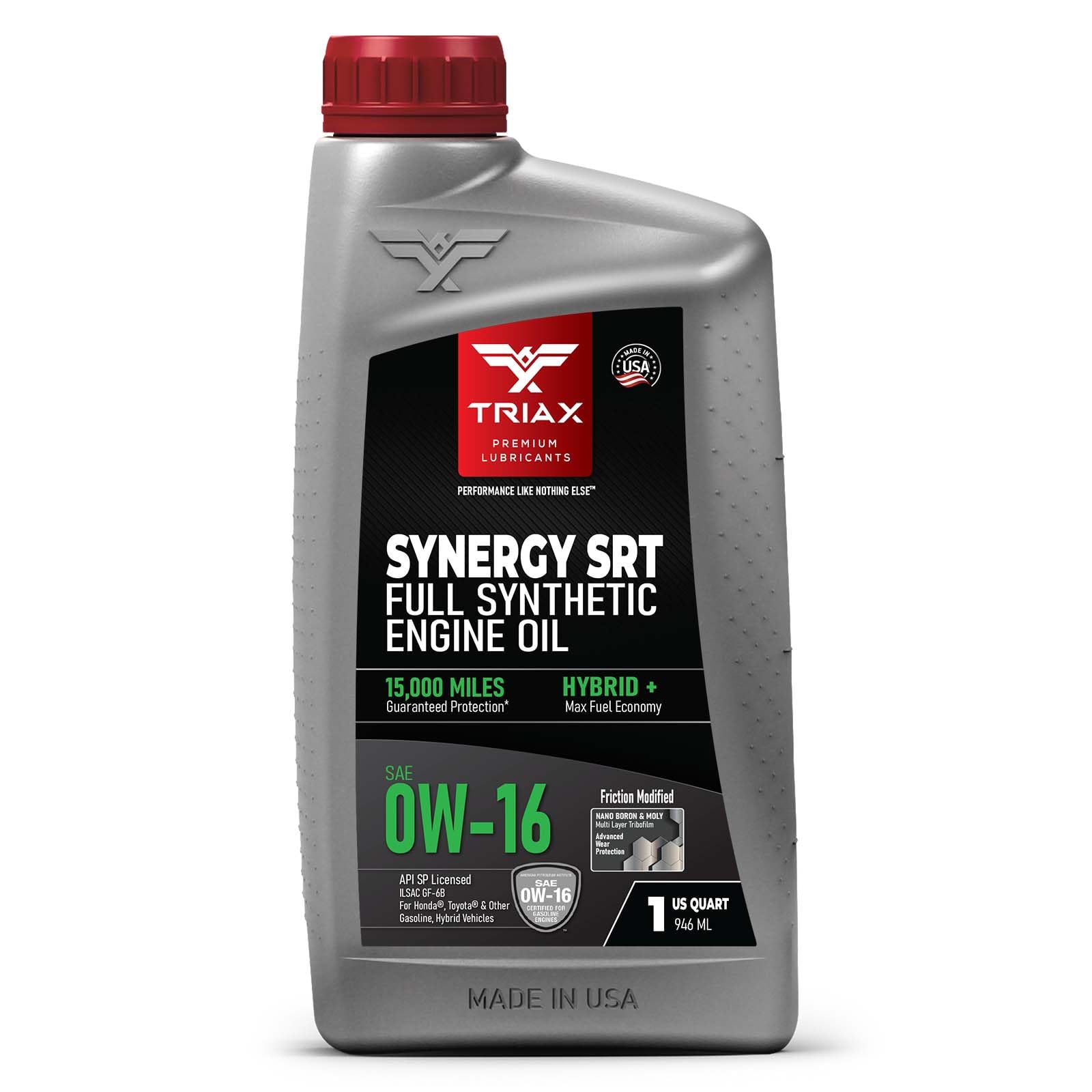
| TRIAX Synergy SRT 0W-16Best For Extended Drains | Extended drain / hybrid longevity | 32 fl oz | 428°F (220°C) | Group IV/V (PAO + Ester) | Amazon |
| Idemitsu IFG5 0W-16 | Asian OEM / Toyota-Honda hybrids | 32 fl oz | — | Group III | Amazon |
| Valvoline Advanced 0W-16 (5 QT) | Budget-friendly bulk buy | 5 qt (160 fl oz) | 390°F | Group III | Amazon |
| Liqui Moly Special Tec AA 0W-16 | Premium German formulation | 5 L (169 fl oz) | — | Group III | Amazon |
| Castrol EDGE 0W-16 (Pack of 6) | High-stress / turbo engines | 192 fl oz | — | Group III | Amazon |
| Genuine Toyota 0W-16 (1 qt) | OEM confidence | 32 fl oz | — | Group III | Amazon |
In‑Depth Reviews
1. Pennzoil Platinum Full Synthetic 0W-16 Motor Oil (1-Quart, Case of 6)
Our pick — over 4.5★ from 8,500+ verified ratings; the strongest balance of quality and price.
The natural-gas derived synthetic that quietly dominates the 0W-16 shelf.
This is the crowd-favorite pick for a reason. Pennzoil Platinum is made from natural gas via a gas-to-liquid process, which produces a cleaner base oil with fewer impurities than crude-oil refining. The result shows in the numbers: a flash point of 399°F; the Valvoline Advanced has a flash point of 390°F — meaning it resists evaporation under high heat better. Buyers report it starts easily in cold weather and keeps the engine running “smoothly and quietly,” with the quality of the bottle earning the most praise outright.
The 15,000-mile protection guarantee is the headline here, but what makes this the balanced pick is the sheer value across a 192-fluid-ounce case. That is six full quarts, enough for two changes in many hybrids, at a price that undercuts premium boutique oils. The review consensus sums it up as “excellent value full synthetic” — and the six-pack format means you are not hunting for a single quart mid-change.
One honest trade-off: a small number of owners flagged leaking bottles on arrival, so inspect the seal before pouring. That is a packaging QC issue, not a chemistry one — the oil itself is spec-perfect for any engine requiring API SP and ILSAC GF-6B.
What wins buyers over
- Gas-to-liquid base means fewer engine deposits over time
- 15,000-mile drain interval backed by Shell testing
- Highest flash point in this roundup at 399°F
One thing to watch
- Occasional packaging leaks reported; check bottle seals before pouring
Reach for this if: you want a proven, widely-available 0W-16 that fits every modern Japanese and Korean engine at an honest price.
Think twice if: you insist on Group IV or V base chemistry for extreme extended-drain use — this is Group III, which is excellent but not the ultimate thermal survivor.
2. TRIAX Synergy SRT 0W-16 Full Synthetic PAO and Ester Engine Oil for Hybrid Vehicles
The small-batch Texas blend that leans on PAO and Ester chemistry for max thermal stability.
This is the one you turn to when your commute involves long highway stretches or you simply want the longest possible oil life. TRIAX uses a full synthetic Group IV (PAO) and Group V (Ester) base stock — the same chemistry found in premium engine oils from Red Line and AMSOIL. That translates to a flash point of 220°C (approx 428°F), noticeably higher than the Pennzoil and Valvoline options, which means the oil film stays intact under sustained high-load heat. Buyers who ran it 10,000 miles reported the car “felt very smooth” and noted higher molybdenum content than competitor oils.
The liquid volume is 32 fluid ounces per quart — about one-sixth the volume of the Pennzoil case — so cost per quart is higher. But the drain interval claim of 12,000 to 15,000 miles means you change oil half as often, offsetting the per-quart premium. The compatibility list covers Honda, Toyota, Nissan, and Mitsubishi hybrids, making it a legitimate choice for any Asian-engine owner who wants boutique-level protection without the boutique price tag of a Red Line.
The real-world caveat: the small batch nature means it is less available on local shelves, and oil analysis fanatics note the additive package differs from OEM and Pennzoil recipes. It is an enthusiast-grade oil, not a grab-and-go jug.
Why you want this
- Group IV/V base oil resists thermal breakdown better than Group III
- Rated for 15,000-mile drain intervals on hybrid engines
- Cold-start rated down to -50°F for extreme winter climates
Fair trade-off
- Per-quart cost is higher — expect to pay more upfront for the chemistry upgrade
Grab this for: a hybrid that sees long drives or high summer temperatures, where Group III oils might shear down earlier.
Look elsewhere if: you do not trust extended drain intervals and prefer to change oil every 5,000 miles — the premium chemistry is wasted on short cycles.
3. Idemitsu IFG5 0W-16 SP/GF-6B Full Synthetic Motor Oil – 1 Quart
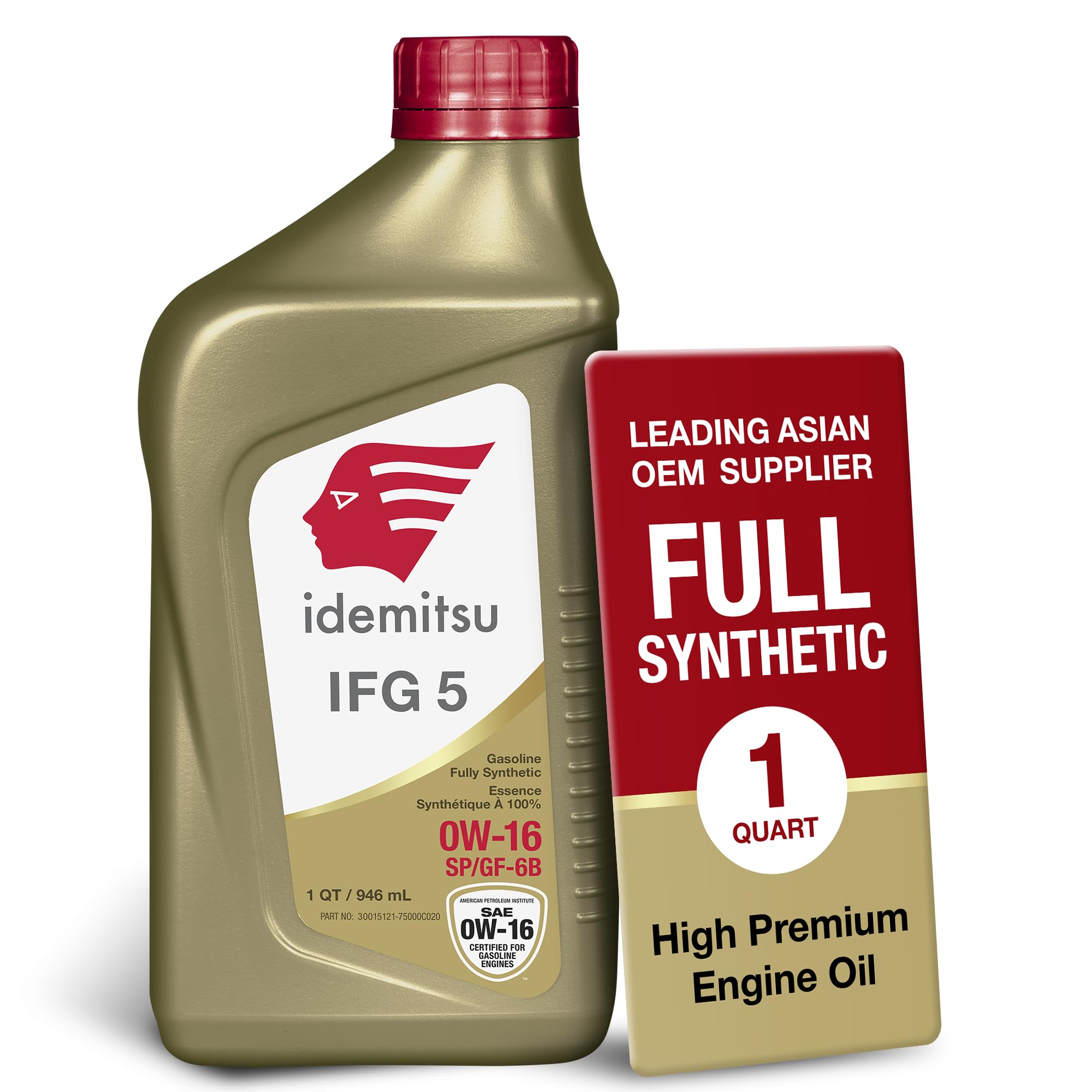
A Japanese refiner’s own recipe, engineered for the exact engines that roll off Toyota and Honda lines.
Idemitsu is a primary supplier to Japanese automakers, so this oil is essentially what your RAV4 or CR-V was designed to drink. It meets the latest API SP and ILSAC GF-6B certifications — the gold standard for low-speed pre-ignition protection and timing-chain wear prevention. Owners mention it “never fails” in 2022 Toyota RAV4 Hybrids and Sienna Hybrids, and note that finding the correct viscosity from a Japanese brand is harder than you think in the U.S. market.
The 32-fluid-ounce bottle is a single-quart format, which works well for top-offs or single-vehicle households that do not need a six-pack. The formulation is tune for fuel efficiency — advanced synthetic technology reduces internal friction to improve gas mileage, exactly what the GF-6B standard targets. And because it is ISO and IATF certified at the manufacturing level, the quality control is consistent batch to batch.
The catch is availability: Idemitsu is not on the shelf at most auto parts stores, so you will be ordering online. The price per quart sits near the middle of the field, but the confidence from using a genuine Asian OEM oil is worth it for owners who value warranty compliance.
What makes it right for your Toyota/Honda
- Engineered by a Japanese refiner that supplies OEMs directly
- Low-temperature fluidity ensures fast lubrication on cold starts
- Advanced friction modifiers reduce drag for real fuel economy gains
Worth noting
- No PAO or Ester base — this is standard Group III synthetic, not for extreme extended drain
Best for: owners who want the closest thing to OEM fill from a brand that actually makes oil for Japanese engines.
Skip if: you need bulk — single-quart bottles mean more units to store for multi-vehicle households.
4. LIQUI MOLY Special Tec AA SAE 0W-16 Fully Synthetic Engine Oil (5 L)

The German brand that makes Japanese-spec engines run quieter, according to owners.
Liqui Moly’s Special Tec AA is engineered specifically for Asian and American engines (the AA stands for Asian American), and it earns rare praise for NVH — noise, vibration, and harshness — reduction. Owners who switched from Toyota-branded oil or Valvoline reported an “engine nearly silent” at idle, with one driver clocking 48+ MPG city after the change. The 5-liter bottle (169 fluid ounces) is a European-standard size that conveniently covers most 5-quart oil changes with a bit left over.
The formulation focuses on instant lubrication after cold start and excellent wear resistance, backed by a brand that is legendary in German automotive circles. The oil quality is the most-praised aspect by far in customer feedback, with performance and value for money tied as secondary highlights. Customers note it “outperforms Royal Purple in idle smoothness and longevity,” which is a strong claim from real-world side-by-side use.
The honest downside: it is a German import, so you pay a premium over domestic synthetics. And while it meets 0W-16 specs perfectly, the brand is less commonly stocked in U.S. auto stores, so plan your orders ahead of oil-change day.
What owners love
- Noticeably quieter idle and smoother power delivery
- 5-liter bottle aligns neatly with standard drain intervals
- Excellent wear protection for turbo and hybrid engines
One nuance
- Higher price per quart compared to Pennzoil and Valvoline
Reach for this if: engine noise bothers you and you want a premium synthetic with proven results in hybrids and Asian cars.
Step back if: you prefer to source oil locally or want the lowest price per quart — this is a treat for your engine, not a budget buy.
5. Valvoline Advanced Full Synthetic SAE 0W-16 Motor Oil 5 QT
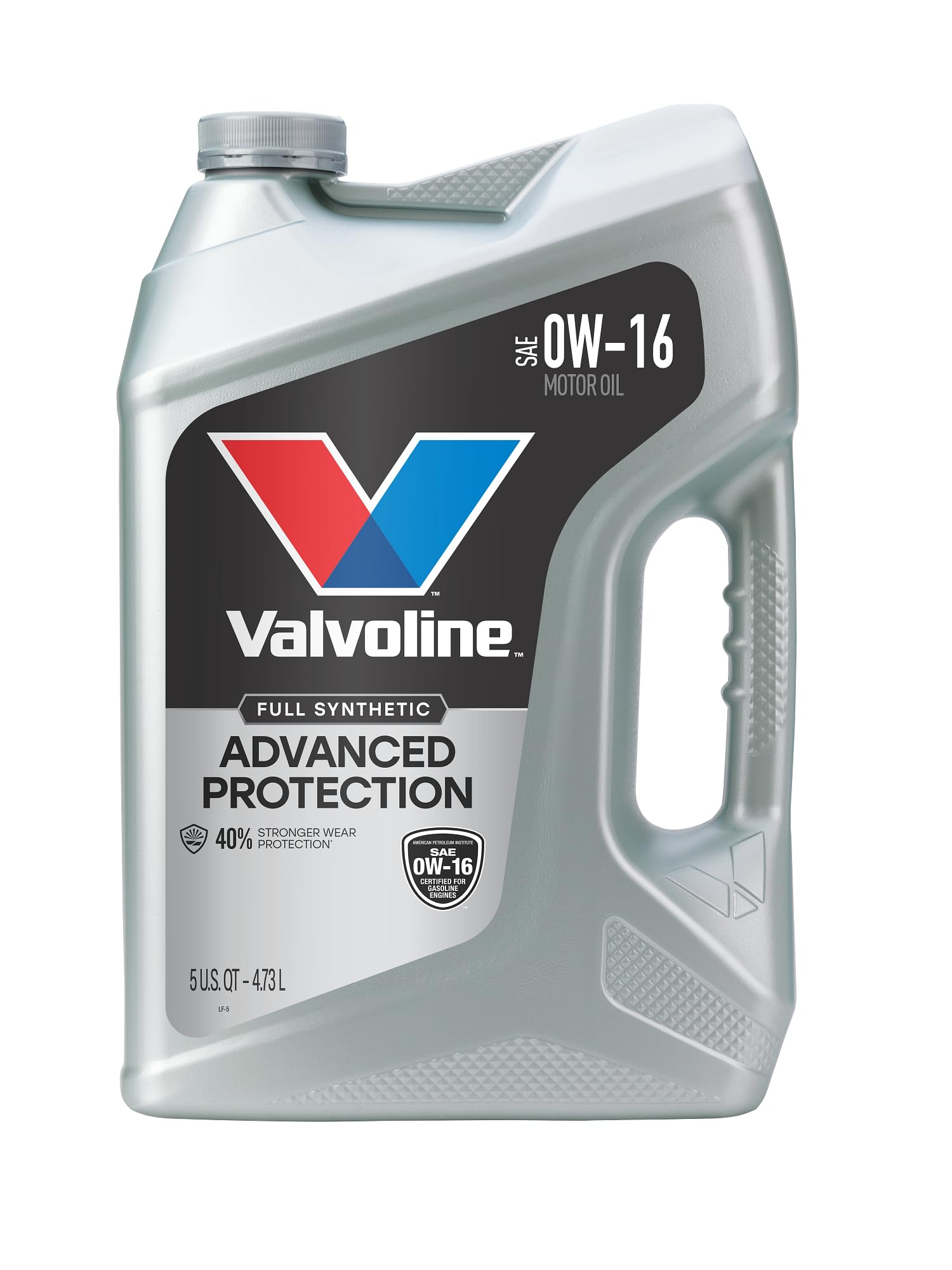
The 5-quart jug that undercuts the shelf price at Costco, and still meets every modern spec.
Valvoline Advanced is the quiet overachiever of this category. The 5-quart jug delivers 160 fluid ounces of full synthetic that meets JASO M364:2019 — a low-viscosity gasoline engine oil spec that goes beyond standard API requirements. Buyers who used it in their Toyota Camry noted it “kept the car clean” and called it “one of the best oils on the market” at a price that beats local wholesale clubs. The formulation targets the four main causes of engine breakdown — wear, friction, heat, and deposits — with a flash point of 390°F that, while lower than Pennzoil’s 399°F, is still well within spec for any normal driving cycle.
The cold-flow benefit is real: Valvoline engineers this for excellent low-temperature flow, reducing metal-to-metal contact during the first seconds of startup when the majority of engine wear happens. Reviewers point out zero issues in cold climates, and the oil quality is the top-cited positive in customer feedback. The 5-quart jug is also the most space-efficient format here — one jug covers almost every Asian 4-cylinder change.
Where it falls short versus the Pennzoil is the flash point (390°F vs 399°F) and the lack of a gas-to-liquid base, meaning it is a conventional Group III crude-oil synthetic. For the standard 5,000-to-7,500-mile change cycle, you will never notice the difference — but for extreme hot-weather towing or 10,000-mile stretches, the Pennzoil holds a slight edge.
Why it works for most drivers
- 5-quart jug is the most cost-effective per-ounce format
- JASO M364 certification adds an extra layer of low-viscosity protection
- Excellent cold-flow for winter-start confidence
The small compromise
- Flash point: 390°F (Valvoline) vs 399°F (Pennzoil), a minor factor in extreme heat
Reach for this: you change oil every 5,000-7,500 miles and want the lowest price per quart from a top-tier brand.
Think twice: you plan to push 10,000+ mile intervals or drive in sustained desert heat — the Pennzoil handles heat slightly better.
6. Castrol EDGE 0W-16 Advanced Full Synthetic Motor Oil, 1 Quart, Pack of 6

The brand that Kia uses as factory fill for the Niro, approved for hybrids and turbos alike.
Castrol EDGE is not just another synthetic — it is the OEM-specified oil for vehicles like the Kia Niro 1.6L engine. The 6-quart pack (192 fluid ounces) carries the API SP and ILSAC GF-6B certifications, and Castrol advertises “10x better high stress performance” measured in the Seq IIIH X test under high load and torque conditions versus the API SP test limits. That is marketing speak, but the takeaway is real: this oil is designed to hold up under sustained high RPM and turbocharged operation better than a baseline synthetic.
Buyers who use it in hybrid cars note the 10,000-mile drain interval works as advertised, with one owner reporting the engine oil “stays cleaner” after several changes. The universal fit format covers cars, hybrids, and trucks, making it a flexible choice for households with multiple vehicle types. The value is competitive — six quarts for a price that often beats buying individually at local stores where 0W-16 is hard to find anyway.
The one place Castrol loses ground is in the boutique chemistry race: this is a Group III synthetic, not PAO or Ester. For most daily drivers the standard formulation is plenty, but if you value the absolute highest flash point and oxidation resistance, the TRIAX or a dedicated PAO blend surpasses it.
What Castrol does right
- OEM-approved for Kia Niro and other 0W-16 engines
- High-stress formulation holds up in turbocharged units
- 6-quart pack covers two changes in most hybrids
Fair to mention
- Standard Group III base — not the ultimate choice for extended drain beyond 10,000 miles
Best for: Kia, Hyundai, and Toyota owners who want an OEM-compatible oil with a proven high-stress track record.
Not the right pick if: you want a PAO or Ester base oil for extreme extended intervals — this is a solid daily, not a lab-spec oil.
7. Genuine Toyota 0W16 Synthetic Oil 1qt 00279-16QTE

The exact oil that came in your new Toyota — and the only one that fully satisfies some dealer visit requirements.
There is no guesswork with this one. Toyota’s own 0W-16 is the factory-fill formulation for RAV4, Camry, Corolla, and Sienna models requiring this viscosity, and it carries the highest star rating in this roundup. Owners of late-model RAV4s report using it “since I got my car” and note the oil “stays cleaner longer” compared to some aftermarket options. The quality is the most-praised aspect in feedback, with value for money and engine cleanliness trailing close behind.
The 1-quart bottle is the smallest container here, intentionally. Toyota designed this for single-vehicle households or DIY top-offs — you buy exactly as many quarts as your engine needs (typically 4.4 to 4.8 quarts for most four-cylinder units). The price per quart is higher than the Pennzoil or Valvoline bulk options, but there is a simple truth for warranty-conscious owners: some Toyota dealers require proof of oil that meets their exact spec. This bottle eliminates that argument entirely.
The trade-off is clear: you pay a premium for the Toyota badge. The oil itself is a standard Group III synthetic, not a boutique PAO blend, so the extra cost is not buying you better chemistry — it is buying you documented compliance and zero compatibility risk.
Why owners stick with it
- Genuine Toyota formulation — no compatibility questions
- Excellent cleanliness reported, with less sludge buildup over time
- The safest choice for keeping your factory powertrain warranty intact
The honest catch
- Per-quart cost is higher than aftermarket alternatives
Grab this if: you own a Toyota or Lexus under warranty and do not want any paperwork friction at the service desk.
Save your money if: your warranty period is over and you are comfortable with any API SP / GF-6B oil — the Pennzoil or Valvoline will protect your engine just as well for less.
Understanding the Specs
Viscosity Grade (0W-16)
The “0W” means the oil flows like a thin winter-grade at low temperatures — tested at -35°C — so your engine gets lubrication instantly during a cold start instead of grinding dry metal. The “16” is the hot viscosity at 100°C: thinner than a 0W-20 but thicker than a 0W-8. If your engine calls for 0W-16, stepping up to a 0W-20 can reduce fuel economy and increase wear on startup because the oil does not reach tight bearing clearances as fast.
Flash Point
This is the temperature at which the oil starts to vaporize and become combustible. A higher flash point, measured in degrees Fahrenheit or Celsius, means the oil resists evaporation under high heat — important for engines that see sustained highway speeds, turbocharging, or hot climates. For 0W-16, a flash point of 390°F or higher is a solid benchmark; the Pennzoil leads at 399°F, while the Valvoline sits at 390°F.
FAQ
Can I use 0W-20 instead of 0W-16?
Is 0W-16 only for hybrid cars?
What does API SP mean on a bottle?
What does ILSAC GF-6B mean?
How many quarts does a typical 0W-16 engine need?
Can I mix different 0W-16 brands?
What is the difference between Group III and Group IV oil?
Does 0W-16 improve fuel economy?
How often should I change 0W-16 oil?
Is Toyota 0W-16 the same as Mobil 1 0W-16?
Final Thoughts: The Verdict
If you want one dependable pick, the best 0w16 engine oil winner is the Pennzoil Platinum because it combines a 399°F flash point, 15,000-mile protection guarantee, and top-rated cleanliness in a six-quart case that sets the value standard for this viscosity. If you want PAO-level thermal stability for long highway stretches, grab the TRIAX Synergy SRT. And for the owner who wants documentation-proof OEM compliance, the Genuine Toyota is the one to reach for.
How We Picked
We do not accept paid placement. Every pick is matched to a real buyer and a real use-case; we do not hands-on test units.
Sources & Methodology
Specifications: manufacturer listings and product documentation. Review insights: verified customer reviews, as of July 2026. Pricing: not shown on this page (it changes often); check the current price via the retailer link.
As an Amazon Associate, Trending Car earns from qualifying purchases. This does not affect which products we feature.