
Our readers keep the lights on and my garage snacks stocked. As an Amazon Associate, I earn from qualifying purchases.
Specs are compiled from manufacturer listings and verified buyer reviews and can change over time — please confirm the key details on the product page before buying.
Your engine needs oil that flows easily on a freezing morning but stays thick enough to protect metal parts at high speed. 0W-20 viscosity (the “0W” means it pumps quickly in cold weather, and “20” means it holds its thickness at operating temperature) delivers that balance. The seven oils here are the best in the category, each picked for a specific trade-off between price, mileage interval, and engine type — whether you drive a daily commuter, a high-mileage veteran, or a turbocharged performance car.
I’m Min Islam — the founder and writer behind Trending Car. This guide is built by comparing the manufacturers’ published specifications and the patterns across verified customer reviews, so you get each pick’s real strengths and trade-offs instead of marketing spin.
If you are looking for the best 0W-20 viscosity engine oil that balances protection and value, the castrol edge 0w-20 leads the list with a 4.8-star crowd rating across nearly ten thousand owners.
Our Picks at a Glance

How To Choose The Best 0W-20 Viscosity Engine Oil
0W-20 is the thinnest common multigrade oil you will find at a parts store. The “0W” means it flows like a weight-zero oil in freezing temperatures — that is critical for engines with tight tolerances that need oil pressure immediately on a cold start. The “20” is the hot-running viscosity at engine operating temperature.
Match the Certification to Your Engine
Look for the API SP or ILSAC GF-7A stamp on the bottle. These are the current industry standards for 0W-20. If your car is a 2020 or newer model, those certifications ensure the oil has the right additive package for turbocharged direct-injection engines, including protection against Low-Speed Pre-Ignition (LSPI). Older API SN oils will work but lack that specific protection.
Consider Your Mileage and Driving Style
If your car is past 75,000 miles, a high-mileage 0W-20 formula (like the Valvoline MaxLife on this list) includes seal conditioners that help keep aged gaskets flexible and reduce small leaks. For trucks that tow or haul, look for an oil specifically tested for high heat and load — the Mobil 1 Truck & SUV, for example, protects internal parts up to 500 degrees Fahrenheit.
Choose the Right Quantity
Most engines take either 5 quarts or 6 quarts. A 5-quart jug is the standard size. If your engine needs 5.5 or 6 quarts, you will either buy an extra single quart or choose a 6-quart pack like the Havoline PRO-DS. Getting the exact fill saves a second trip to the store.
Quick Comparison
| Model | Best For | Volume | Certifications | Mileage Interval | Amazon |
|---|---|---|---|---|---|
| Castrol EDGE 0W-20★ Best Overall | Best Overall | 5 Quarts | API SQ/SP/SN, ILSAC GF-7, GM dexos1 Gen 3 | 20,000 miles | Amazon |
| Havoline PRO-DS 0W-20Best 6-Quart Value | Best 6-Quart Value | 6 Quarts | API SP, ILSAC GF-7 | Standard | Amazon |
| Mobil 1 Truck & SUV 0W-20 | Heavy-Duty Towing | 5 Quarts | API SP, ILSAC GF-7 | 10,000 miles | Amazon |
| Valvoline MaxLife 0W-20 | High-Mileage Engines | 5 Quarts | API SQ/SP/SN, ILSAC GF-7A | Standard | Amazon |
| K&N Premium 0W-20 | Long-Term Engine Cleanliness | 5 Quarts | API SP | Standard | Amazon |
| Idemitsu IFG3 0W-20 | Asian OEM Compatibility | 5 Quarts | API SP, ILSAC GF-7A | Standard | Amazon |
| Pennzoil Ultra Platinum 0W-20 | Maximum Protection Warranty | 6 Quarts | API SP | 20-year warranty | Amazon |
In‑Depth Reviews
1. Castrol EDGE 0W-20 Advanced Full Synthetic Motor Oil, 5 Quarts
Our pick — over 4.5★ from 9,000+ verified ratings; the strongest balance of quality and price.
Castrol EDGE delivers a full 20,000 miles between changes without sacrificing protection.
Castrol EDGE is the top pick because it combines an extremely long change interval with a certification list that covers almost every modern engine. It meets API SQ/SP/SN PLUS/SN, ILSAC GF-7, and GM dexos1 Gen 3 standards. That means it works in everything from a 2024 Honda Ridgeline to a 2012 Toyota Tundra — buyers report using it in both without issues.
The real standout here is the mileage. Castrol claims 20,000 miles between oil changes based on its “3X Stronger” viscosity breakdown resistance and “10X Better high stress performance” as measured in the Kurt Orbahn and Seq IX tests. While your owner’s manual still sets the final interval, the oil’s film strength holds up well under Blackstone Laboratories used-oil analysis according to owner feedback.
Crucially, the Castrol EDGE comes in a 5-quart jug. Owners of the 2024 Ridgeline and third-gen Tacoma (which take 5.5 or 6 quarts) will need one additional quart. But for the vast majority of cars that call for a straight 5-quart fill, this is the one-stop purchase.
Edge turbo protection
- Industry-leading 20,000-mile change interval saves time and money over the long run.
- GM dexos1 Gen 3 certification means it is warranty-safe for many newer GM and Asian vehicles.
- Owners consistently confirm it “holds up well by blackstone labs testing after use” — real lab proof, not marketing.
Price premium
- The 5-quart jug falls short for engines that need 5.5 or 6 quarts — you will need a separate single quart.
- The 20,000-mile claim depends on driving conditions; severe service schedules may still call for more frequent changes.
Turbo engine users: You drive a modern gasoline car (especially a GM, Toyota, or Honda) and want a single oil that covers the broadest warranty spec with the longest change window.
Budget buyers: Your engine requires a 6-quart fill — the 5-quart jug means an extra purchase every change.
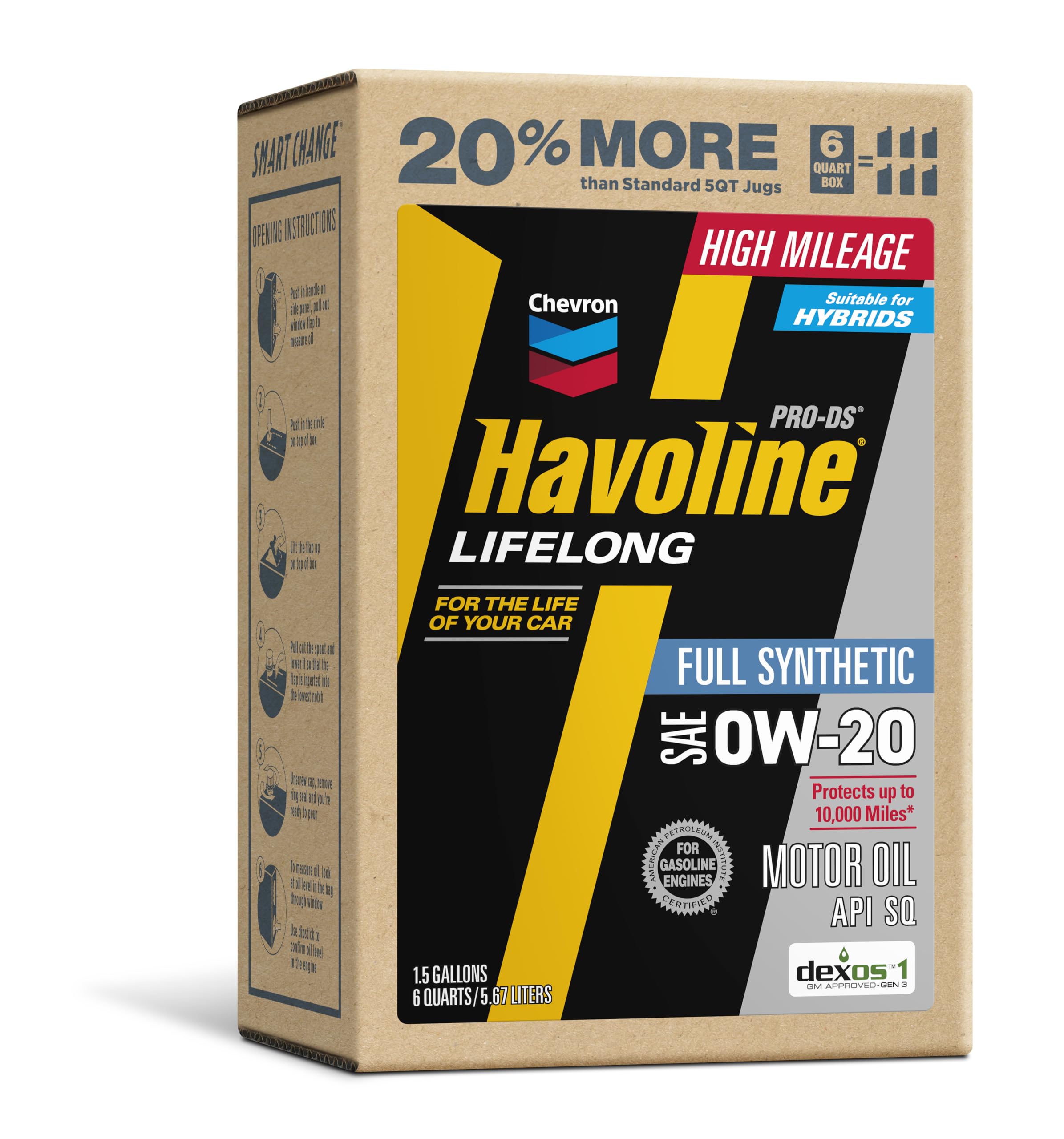
2. Havoline Motor Oil 0w20 PRO-DS Lifelong Full Synthetic, 6 Quarts
Havoline PRO-DS is the six-quart pack that matches the exact fill of a third-gen Tacoma or a Jeep 3.6-liter.
Havoline’s PRO-DS formula specifically targets “Low Speed Pre-Ignition (LSPI) in turbocharged direct injection engines” — a destructive event where the fuel ignites before the spark plug fires. That makes this oil a smart choice for modern downsized turbo engines that run hot and lean. Owners running it in a Jeep Grand Cherokee 3.6 report it “protecting the engine and being durable.”
The 6-quart capacity is the hidden advantage here. It holds 6 quarts, compared to the standard 5-quart jugs from Castrol or Mobil 1. For a 2020 Tacoma that needs exactly 6 quarts, this is the one-stop change — no second jug needed. Owners confirm it is “convenient for 3rd gen Tacomas using 6qts.”
The recurring praise centers on quality and value — the two most-discussed aspects among owners, with quality earning the highest mention count. The only caveat is the pouch-style container, which owners say can be messy if it tips during pouring. That is a minor inconvenience for the convenience of a perfect fill.
Lifelong durability: If your engine takes 6 quarts, this Havoline pack saves you the hassle of buying a separate quart. Owners call it “easy to carry” and praise its “great quality” for the price.
Long-term owners: You own a Tacoma, Jeep 3.6L, or any vehicle that calls for exactly 6 quarts of 0W-20 — this is the easiest single-buy option.
Casual drivers: Your engine needs only 5 quarts; the extra quart is waste and the pouch container is slightly harder to pour neatly.
3. Mobil 1 Truck & SUV Full Synthetic Motor Oil 0W-20, 5 Quart
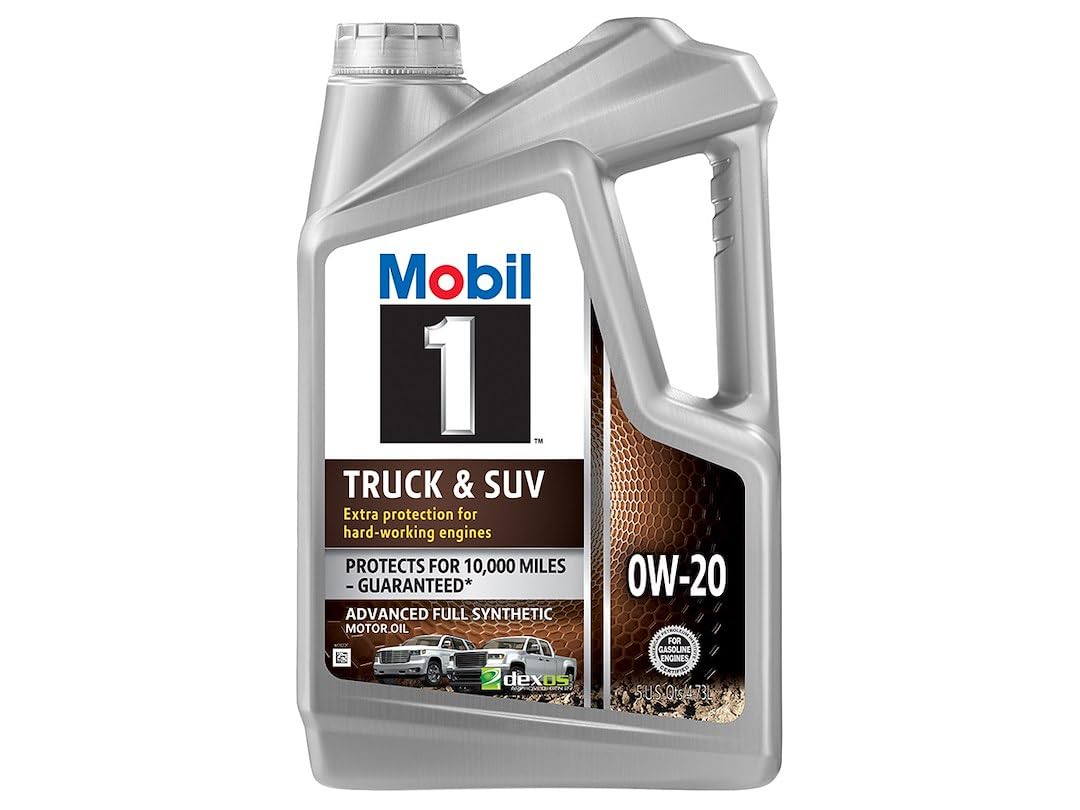
Mobil 1 Truck & SUV is built to handle towing heat without thinning out.
Mobil 1’s Truck & SUV formula is separate from the standard Mobil 1 0W-20 for a reason: it is tested for “internal engine heat protection up to 500 degrees F” and cold-start protection down to -40 degrees F. That 500-degree ceiling is the highest on this list and directly addresses the heat spike that occurs during heavy towing or sustained highway grades.
Mobil 1 claims its “Triple Action Formula” delivers “engine protection, cleanliness, and proven performance.” Owners confirm it is “reliable for heavy vehicles in hot weather” and that it “handles high temps, maintains stability under load.” One owner in Arizona reported “clean cold starts” even in extreme summer heat. The 10,000-mile change interval is shorter than the Castrol EDGE, but realistic for severe service schedules.
Quality is the most-praised aspect among owners — earning the top mention count — followed closely by value for money. The 5-quart jug is standard, which works for most full-size trucks and SUVs. If your heavy-duty vehicle takes 6 or 7 quarts, budget for one or two extra single quarts.
Heavy-duty performance
- 500°F heat protection is the highest temperature tolerance in this lineup — ideal for sustained towing or desert driving.
- Tested to -40°F cold starts, so it flows instantly in northern winters.
- Owners call it “best oil for gm cars” and praise its “strong wear protection for trucks/SUVs.”
Not car-specific
- The 10,000-mile interval is shorter than the Castrol EDGE — you will change more often under similar driving.
- The 5-quart size may not fill larger truck engines completely in one jug.
Truck and SUV: You tow a trailer, haul heavy loads, or live in a hot climate — the 500-degree protection is real insurance against oil breakdown.
Compact cars: You only do stop-and-go city driving in a small car; the heavy-duty additive package is overkill for light duty cycles.
4. Valvoline MaxLife Extended Protection High Mileage 0W-20 Full Synthetic, 5 Quart
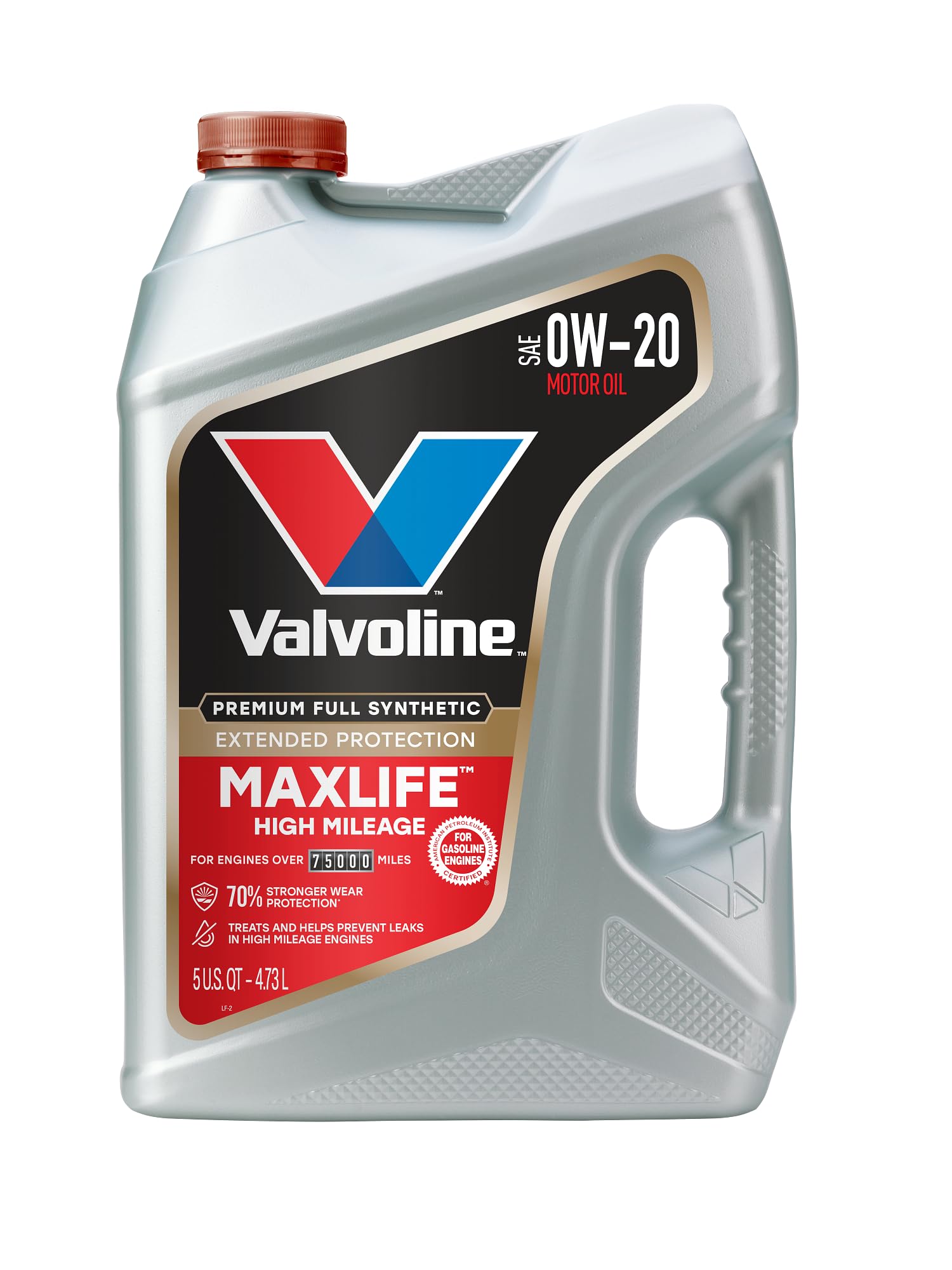
Valvoline MaxLife brings older engines back to smooth, leak-free operation.
Valvoline MaxLife is the only oil on this list specifically formulated for vehicles with over 75,000 miles. Its “Dual Defense Additive Technology” combines seal conditioners (to treat existing leaks and reduce oil consumption) with a detergent system that fights deposits and sludge that builds up in high-mileage engines. The oil also delivers “70% stronger wear protection vs. industry standards.”
Real-world owners back this up. One owner reported using it in a Honda with 331,000 miles — the engine is “still going” after thousands of miles on Valvoline. Another noted that their Toyota 4Runner runs “very quietly” after 4,000 miles on the oil, with the oil darkening slightly but maintaining protection. That seal-conditioner claim is not marketing fluff; owners running it in Mini Coopers at 80,000 miles report “smooth, no leaks.”
Oil quality earns the highest praise among owners — it is the top-mentioned aspect — followed by smooth operation. The only logistical hiccup is that some engines (like the Mini Cooper) need 5.5 quarts, so the 5-quart jug leaves you a half-quart short. You will need an extra single quart to finish the job.
High-mileage formula: Owners confirm it provides “solid performance for high mileage engines” and is a “dependable choice for routine maintenance” in vehicles well past the 100,000-mile mark.
Older engines: Your car or truck has over 75,000 miles — especially if you notice small oil leaks or increased oil consumption between changes.
New vehicles: Your engine is still under 75,000 miles; the seal conditioners are unnecessary and you can save money with a standard full synthetic.
5. K&N Motor Oil: 0W-20 Synthetic Engine Oil, 5 Quarts

K&N Premium kept a 2014 BMW X1 running clean past 135,000 miles.
K&N is best known for air filters, but their 0W-20 synthetic oil uses “Advanced Synthamax Technology” — a proprietary additive package designed to minimize harmful contaminants and sludge buildup. The oil is marketed for “all weather protection” and is formulated to keep the engine running smoothly in both cold and hot conditions.
The most compelling owner story comes from a 2014 BMW X1 owner who has used K&N exclusively for 135,000 miles. They report the engine “looks really clean and almost ‘New’ still.” That level of long-term testimonial is rare for an oil that costs more per quart than the Castrol EDGE. The 5-quart jug weighs 9.23 pounds — slightly heavier than a standard jug — which some owners attribute to the thicker bottle construction.
The trade-off is cost. K&N sits at a premium price point without offering a longer mileage interval or a broader certification list than the cheaper alternatives. You are paying for the additive technology and the brand’s reputation for filtration precision. It works as advertised, but the value proposition is narrower than the top picks.
High-flow filter
- Synthamax Technology is explicitly designed to prevent sludge buildup — owners confirm clean internals even past 100,000 miles.
- All-weather protection that works equally well in sub-freezing starts and summer heat.
Filter not included
- The price per quart is higher than the Castrol EDGE, which offers a longer 20,000-mile change interval for less money.
- Certification list is limited to API SP — no GM dexos1 or Ford spec mentioned on the bottle.
Performance builds: You are willing to pay a premium for a brand you trust and want maximum sludge prevention in a high-mileage European or performance engine.
Basic maintenance: You want the best value per quart or need a broad warranty certification like dexos1 Gen 3 — the Castrol EDGE covers more bases for less.
6. Idemitsu IFG3 0W-20 SP/GF-7A Full Synthetic Motor Oil, 5 Quart
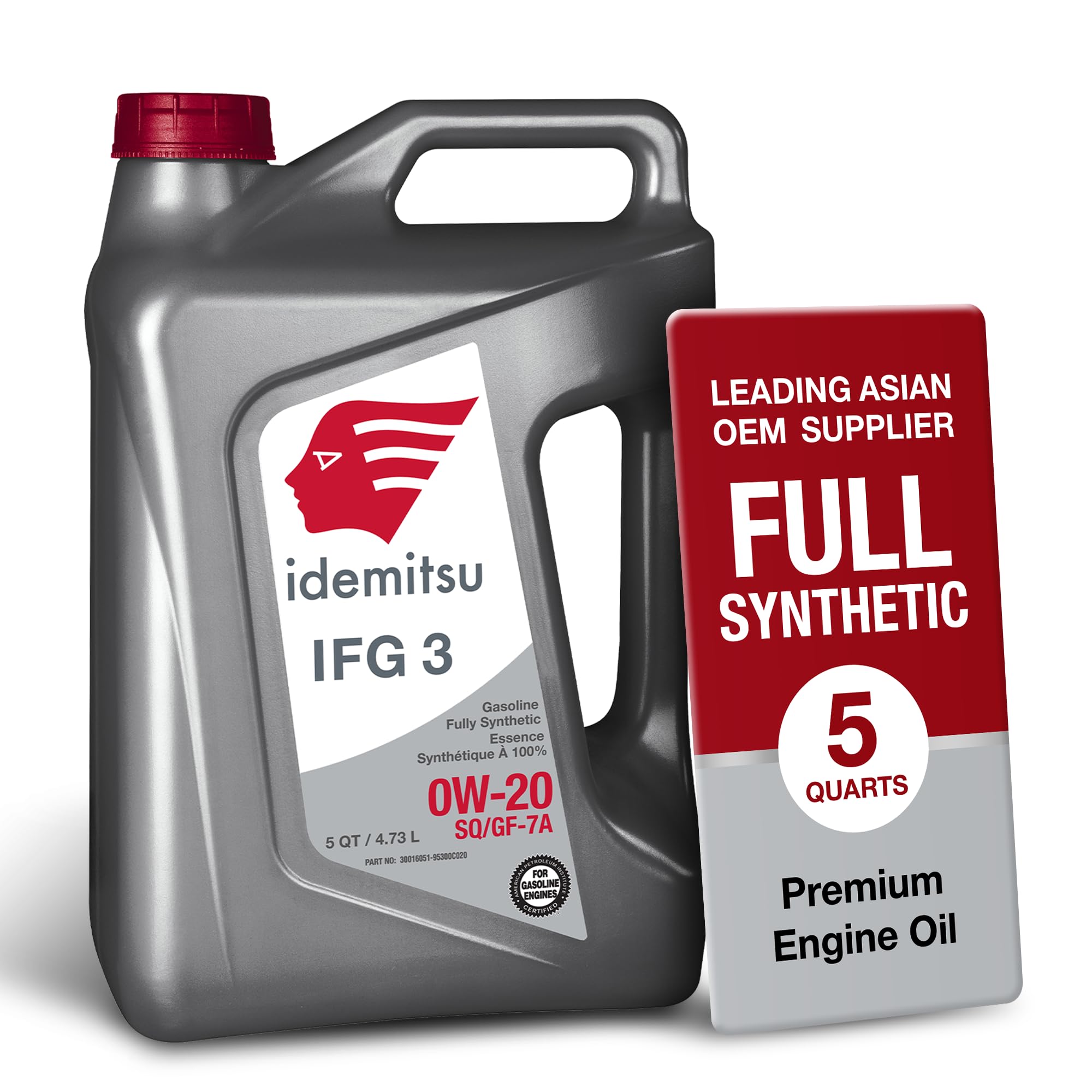
Idemitsu is the Japanese oil maker that supplies Honda and Subaru with their rebadged OEM oil.
Idemitsu is a Japanese refiner that produces OEM-grade (original equipment manufacturer quality) oil for Honda, Subaru, and Toyota. Owners mention that “Honda actually uses this oil for their engines they just rebadged it as their own.” That means the IFG3 is chemically identical to what your Japanese car rolled off the assembly line with — not a generic “meets or exceeds” claim, but the actual factory fill formula.
The oil is certified to the latest SP/GF-7A standards and specifically includes additives to protect against Low-Speed Pre-Ignition (LSPI) in turbocharged direct-injection engines — a common issue in modern Subaru and Honda turbo models. Owners running it in a 2021 Subaru sent a sample to Blackstone Labs for analysis after 25,000 miles and found the “engine is heathy, no issues.”
The most-discussed aspects among owners are quality (the top praise) and OEM compatibility. The oil is specifically “engineered for maximum fuel efficiency” with friction-reducing additives, and owners notice “improved fuel efficiency” and a “quieter engine and lower oil temp” compared to other brands. If you drive an Asian import and want the exact spec the factory intended, this is the closest you can buy without a dealer trip.
Japanese engine match: Owners consistently confirm this is the same oil Honda and Subaru rebadge — meaning zero compatibility guesswork for modern Japanese engines.
Asian imports: You own a Subaru, Honda, Toyota, Mazda, or Nissan from 2020 or newer and want the exact OEM formulation without paying the dealer parts counter markup.
Domestic trucks: You drive a domestic or European car; Idemitsu’s additive package is tune for Asian engine tolerances and fuel-efficiency targets.
7. Pennzoil Ultra Platinum Full Synthetic 0W-20, 6-Pack (1-Quart Each)

Pennzoil Ultra Platinum is the only oil here backed by a 20-year, 750,000-mile warranty and made from natural gas.
Pennzoil Ultra Platinum is the most advanced formulation in the Pennzoil lineup, and it is unique because it is “made with natural gas” rather than crude oil. The result is a pure synthetic with fewer impurities that the company backs with a “20-year, 750,000 mile warranty.” That warranty applies to the engine — if the oil fails and causes damage, Pennzoil will cover it. That level of confidence is class-leading in this category.
The oil is “designed for high-performance engines” and “helps protect engines from loss of power.” Owners confirm it is “very fuel efficient and long lasting” and call it “some of the best quality oil” available. The 6-quart case means you get six individual 1-quart bottles, which is convenient for engines that need exactly 6 quarts or for topping off between changes — no heavy jug to pour.
The main drawbacks are cost and packaging. The price per quart is the highest on this list, and the 6-pack means you either use all six quarts or store one. A few owners reported the “package came damaged” in shipping — the individual bottles are not as well-protected as a single heavy jug. But if you want the absolute best protection guarantee for a high-performance or modified engine, the warranty alone makes it worth considering.
Ultra-clean engine
- The 20-year/750,000-mile limited warranty is the strongest engine protection guarantee in the category.
- Natural-gas base stock means virtually zero contaminants — customers note “very fuel efficient and long lasting” performance.
- Individual quart bottles are easier to pour precisely and store leftover oil for top-offs.
Six-pack bulk
- Highest cost per quart on this list — you pay a significant premium for the warranty and the natural-gas base.
- Shipping damage is a recurring issue with the 6-pack format; a few units arrive with leaky bottles.
Pure synthetic fans: You own a high-performance or modified engine and want the strongest manufacturer-backed protection available — the warranty is genuine confidence.
Small oil changes: You drive a daily commuter and change oil every 5,000 miles; the premium price does not pay off at that interval compared to the Castrol EDGE or Havoline.
Understanding the Specs
API SP and ILSAC GF-7A
These are the most current engine oil certifications. API SP (American Petroleum Institute, Service SP) is the standard for gasoline engines built after 2020. It includes protection against low-speed pre-ignition (LSPI) — a destructive event where fuel ignites early in turbocharged direct-injection engines — and improved sludge control. ILSAC GF-7A (International Lubricant Standardization and Approval Committee, Gasoline Fuel 7A) is the same spec with an added fuel-economy requirement. If your car is a 2020 or newer model, look for one of these stamps on the bottle.
Viscosity Grade: 0W-20
The “0W” means the oil flows like a winter-grade SAE 0 oil in freezing temps — critical for engines with tight tolerances that need oil pressure immediately on a cold start. The “20” is the hot-running viscosity at 100°C (engine operating temperature). A 0W-20 is thinner than a 5W-30 or 10W-40. Using the wrong grade can trigger check-engine lights, reduce fuel economy, and cause long-term wear. Always check your owner’s manual; some modern engines require 0W-20 specifically for the variable-valve timing system to work correctly.
Mileage Interval
This is how many miles the manufacturer recommends between oil changes under normal driving. The Castrol EDGE claims 20,000 miles — the longest on this list. The Mobil 1 Truck & SUV claims 10,000 miles. All others follow a standard interval (typically 5,000-7,500 miles depending on your car). The “20,000 miles or one year” claim from Castrol is based on specific lab tests (Kurt Orbahn and Seq IX). But your owner’s manual’s severe-service schedule (frequent short trips, towing, extreme temps) may still recommend shorter intervals. Use the oil’s claim as the upper bound, not the default.
High-Mileage Additives
Oils like Valvoline MaxLife contain “seal conditioners” — additives that help soften and expand aged rubber gaskets and seals. As engines age past 75,000 miles, seals can harden and shrink, causing small oil leaks. Seal conditioners reverse that process slightly, cutting oil consumption and reducing drips. These oils also have higher detergent levels to clean out sludge that accumulates over decades. If your engine is young, these additives are unnecessary; you are paying for features you do not need.
FAQ
Can I use 0W-20 in an engine that calls for 5W-30?
How often should I change 0W-20 synthetic oil?
Is 0W-20 good for high-mileage engines?
What is LSPI and why should I care?
Does 0W-20 improve gas mileage?
Can I mix different brands of 0W-20 oil?
What does the “dexos1 Gen 3” certification mean?
How do I know if my car needs 0W-20 or 0W-16?
Is there a difference between “full synthetic” and “synthetic blend” 0W-20?
Why is Pennzoil Ultra Platinum made from natural gas?
Final Thoughts: The Verdict
For most drivers, the 0w-20 viscosity engine oil winner is the Castrol EDGE 0W-20 because it delivers the longest change interval at a competitive price with the broadest warranty certification. If you own a Tacoma, Jeep, or any engine that needs exactly 6 quarts, grab the Havoline PRO-DS — it saves you the hassle of a second bottle. And for high-mileage engines past 75,000 miles, the Valvoline MaxLife is the one to reach for, with seal conditioners that owners confirm keep older engines running smooth and leak-free.
How We Picked
We do not accept paid placement. Every pick is matched to a real buyer and a real use-case; we do not hands-on test units.
Sources & Methodology
Specifications: manufacturer listings and product documentation. Review insights: verified customer reviews, as of July 2026. Pricing: not shown on this page (it changes often); check the current price via the retailer link.
As an Amazon Associate, Trending Car earns from qualifying purchases. This does not affect which products we feature.