
Our readers keep the lights on and my garage snacks stocked. As an Amazon Associate, I earn from qualifying purchases.
Specs are compiled from manufacturer listings and verified buyer reviews and can change over time — please confirm the key details on the product page before buying.
If your modern car or hybrid calls for 0W-16, using the wrong oil risks poor cold-start lubrication and reduced fuel economy. This low-viscosity synthetic is designed to flow instantly in freezing weather while protecting critical engine parts under heat. We’ve dug through the specs and owner feedback to find the best 0W-16 oil for your specific driving needs.
I’m Min Islam — the founder and writer behind Trending Car. This guide is built by comparing the manufacturers’ published specifications and the patterns across verified customer reviews, so you get each pick’s real strengths and trade-offs instead of marketing spin.
Below you’ll find the top oils for everything from daily commutes to high-mileage hybrids, all meeting the latest industry specs for your car. Here is your complete guide to the 0w 16 oil you can trust.
Our Picks at a Glance

How To Choose The Best 0W-16 Oil
Picking the right oil is about matching viscosity to your engine’s design and your driving conditions. Here’s what to focus on before you buy.
API Rating and OEM Approval
The latest standard is API SP, which includes protections against low-speed pre-ignition (LSPI) in modern turbo engines and timing-chain wear. If your car requires ILSAC GF-6B, ensure the bottle carries that label to keep your warranty intact and your engine running smoothly.
Base Oil Type
Most 0W-16 oils use Group III base stocks, which provide excellent performance for standard driving. For extreme temperatures or extended drain intervals, look for Group IV (PAO) or Group V (Ester) oils—they offer superior thermal stability and resistance to oxidation.
Drain Interval and Your Driving Style
Standard full synthetics are good for 5,000 to 7,500 miles under normal driving. If you do mostly short trips, heavy towing, or live in a dusty area, stick to shorter intervals. Some oils advertise 10,000 or even 15,000-mile protection—but always follow your owner’s manual first.
Quick Comparison
| Model | Best For | Volume | Flash Point | Key Additive | Amazon |
|---|---|---|---|---|---|
| Pennzoil Platinum Case★ Best Overall | Overall Value & Protection | 192 fl oz (6 qt) | 399 °F | Natural Gas Base | Amazon |
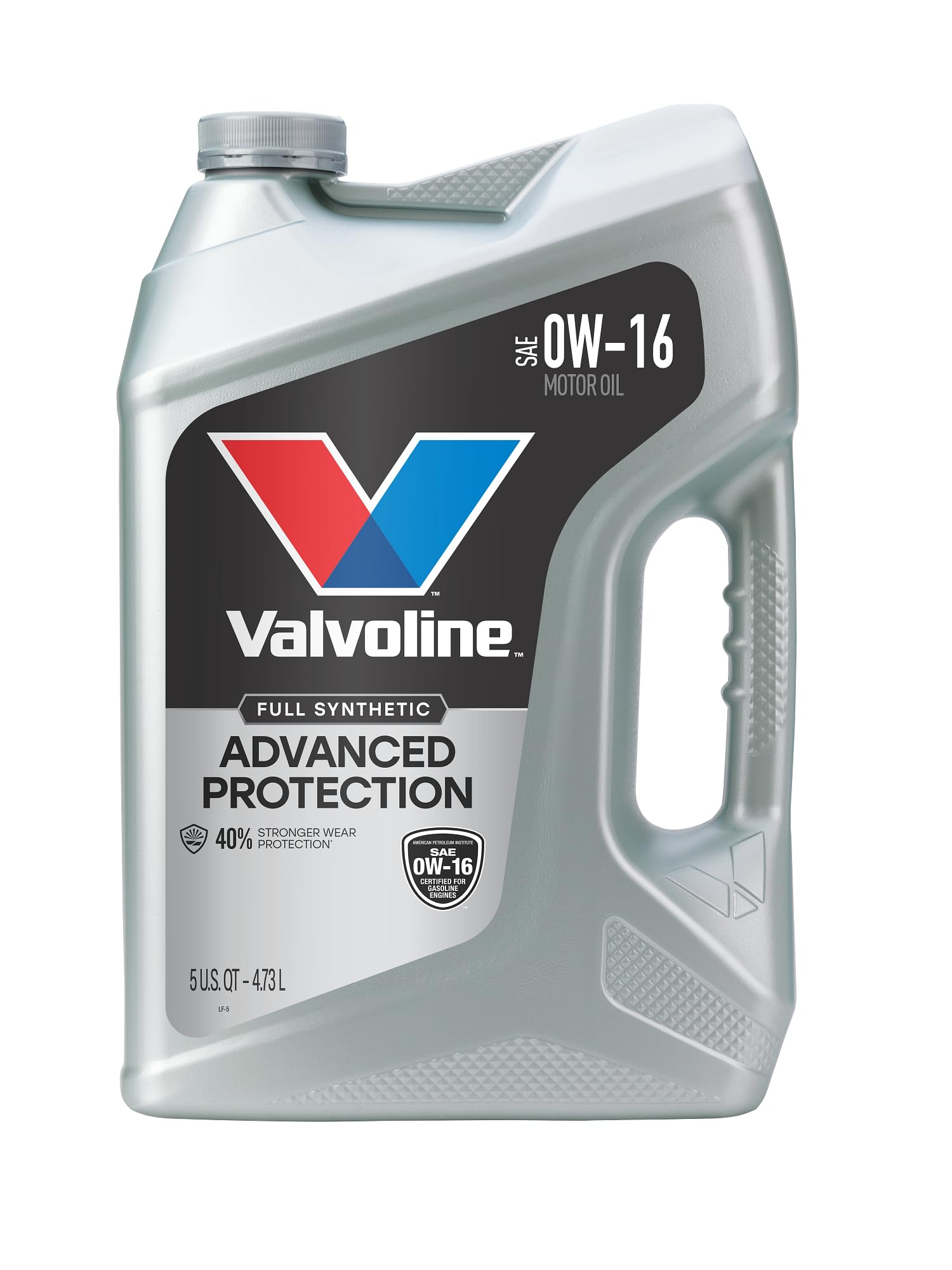
| Valvoline Advanced 5 QTBest Value | Budget Bulk Buy | 5 qt | 390 °F | Anti-Sludge | Amazon |
| TRIAX Synergy SRT | Extended Drains | 32 fl oz (1 qt) | 220 °C | PAO & Ester | Amazon |
| LIQUI MOLY Special Tec AA | Quiet Operation | 5 L | — | German Engineering | Amazon |
| Castrol EDGE 6-Pack | High-Stress Protection | 6 qt | — | Titanium FST | Amazon |
| Genuine Toyota 1qt | OEM Match | 1 qt | — | Factory Fill | Amazon |
| Motul Hybrid 4L | Hybrid Specific | 4 L | — | Hybrid Formulation | Amazon |
In‑Depth Reviews
1. Pennzoil Platinum Full Synthetic 0W-16 (Case of 6)
Our pick — over 4.5★ from 8,500+ verified ratings; the strongest balance of quality and price.
The crowd-favorite synthetic that delivers proven wear protection and better fuel economy.
This is the oil that owners trust most for good reason. It’s made from natural gas (a Gas-to-Liquid process) which creates a cleaner base oil with fewer impurities. The result is a fluid that flows faster on cold starts and holds up under extreme heat. Buyers consistently praise the value and quality, calling it an “Excellent value full synthetic.”
The flash point of 399 °F is one of the highest in this list, meaning it resists burning off at high temperatures better than the Valvoline (390 °F). Owners running this in Ford Escapes and Toyota Camrys report smoother startups and quieter idle.
The honest trade-off? A few dozen owners mention leakage from the bottle spout during shipping. That’s a packaging gripe, not an oil-quality issue—but worth handling the bottles carefully on arrival.
Top shelf protection: Pennzoil backs this with a 15,000-mile protection guarantee. It also meets the latest API SP and ILSAC GF-6B standards, so it’s safe for any modern engine. “Excellent engine oil! It keeps the engine running smoothly and quietly,” sums up the consensus.
The smart pick for nearly everyone: If you want the best blend of quality, price, and real-world proof from over 8,700 owners, start here. Think twice if: you need a single quart for a top-off—buy the single, not this case.
2. Valvoline Advanced Full Synthetic SAE 0W-16 5 QT
A budget-friendly giant jug that delivers full-synthetic protection for Camrys and Corollas.
At 5 quarts, this is the most efficient way to buy oil for a single change if your car takes that exact fill. Valvoline uses advanced anti-sludge chemistry to fight thermal breakdown, and the 390 °F flash point keeps the oil film strong under load. Owners often buy it because “it was cheaper than Costco brand,” and they report the engine stays clean between changes.
It exceeds the JASO M364 GLV-1:2019 standard for low-viscosity gasoline oils, which is the spec many Japanese hybrids require. That gives confidence to hybrid owners who worry about fuel dilution thinning the oil over time. The crowd calls it “one of the best oils on the market.”
Straightforward value: If you want a single jug that covers a full drain-and-fill without mixing quarts, this is the easiest option. It weighs 9.3 pounds, nearly identical to the LIQUI MOLY (9.31 pounds) but at a lower per-mile cost.
Reach for it if: you drive a Toyota Camry, RAV4, or Honda Accord that takes 5 quarts flat. Look elsewhere if: your engine needs exactly 5 liters (5.28 quarts)—you’ll be short by about a quarter quart.
3. LIQUI MOLY Special Tec AA SAE 0W-16 (5 L)

The German-engineered oil that owners say makes their engine “nearly silent” at idle.
LIQUI MOLY is known in enthusiast circles for its meticulous base-oil quality. The 5-liter (5.28-quart) bottle is a perfect fit for many Japanese cars that spec a 5-liter fill—no mixing or leftover quarts. Owners switching from Toyota or Valvoline report a noticeably quieter idle and improved fuel mileage, with one hitting 48+ MPG city afterward.
The oil provides instant lubrication after a cold start and maintains oil pressure across all operating conditions. While it weighs 9.31 pounds—almost the same as the Valvoline 5-quart—it offers a larger volume. The recurring praise is for “oil quality” (mentioned 20 times), and the consensus is that it outperforms Royal Purple in smoothness and longevity.
Quiet performer: The trade-off is price—it costs more per quart than the Pennzoil case. But as one owner put it, “If you take care of your car, any difference between this and other more expensive brands won’t matter.”
Go for it if: you want a 5-liter bottle for a RAV4 or Camry and prize a quieter, smoother-running engine. skip it if: you are on a strict budget for every oil change—the Pennzoil case gives more oil for less money.
4. TRIAX Synergy SRT 0W-16 Full Synthetic PAO and Ester (1 Quart)
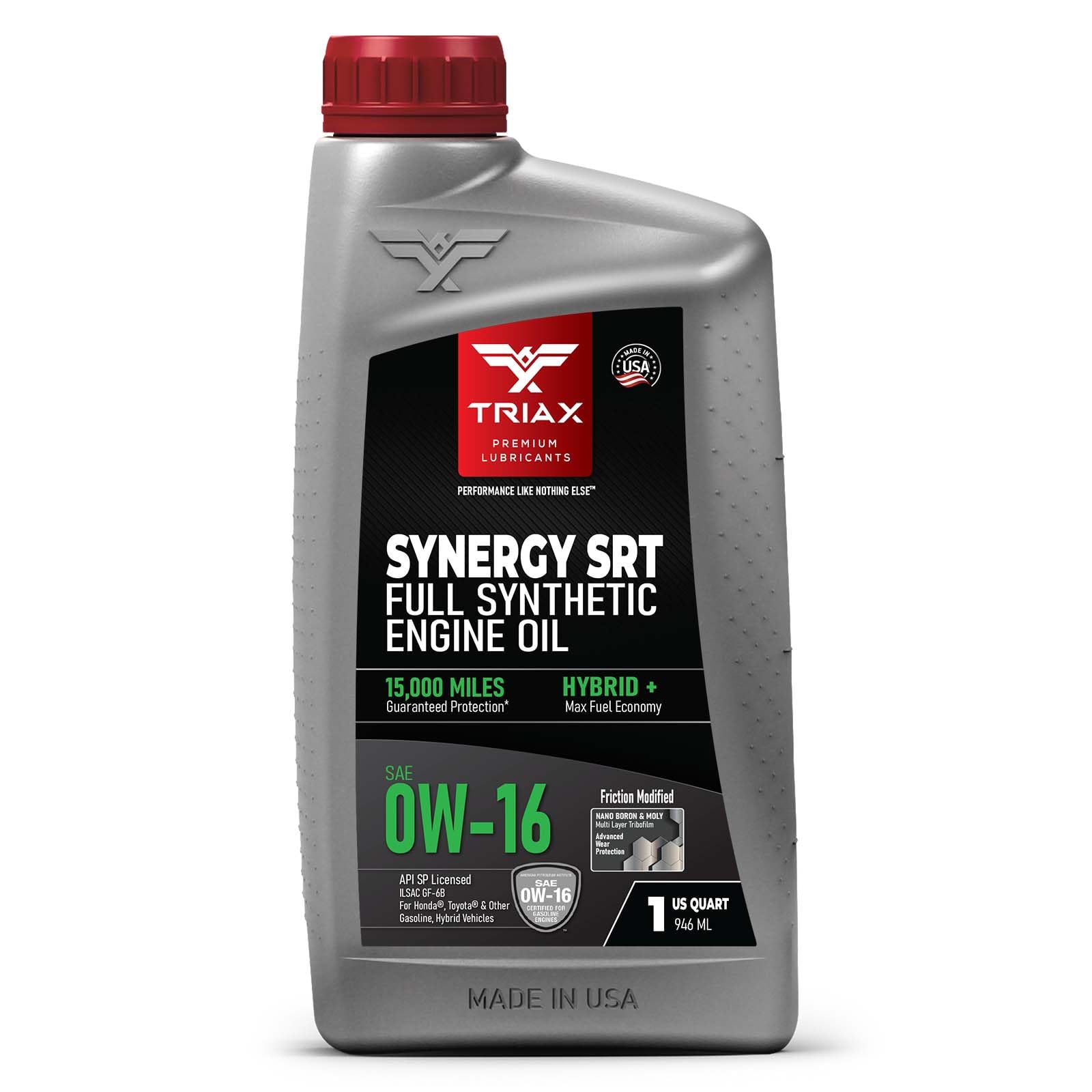
A true PAO and Ester synthetic for owners who want the maximum drain interval.
Most 0W-16 oils on the shelf are Group III synthetics—better than conventional but not the highest tier. TRIAX uses Group IV (PAO) and Group V (Ester) base stocks, which are far more stable under extreme heat and oxidation. That means it can run longer, and the manufacturer claims a 15,000-mile drain interval. One owner ran 10,000 miles and said the “car felt very smooth,” planning to oil-test the remaining additive package.
It contains built-in Molybdenum and Boron friction modifiers to reduce engine wear, and it’s rated for cold starts down to -50 °F. The oil is designed for hybrids from Honda, Toyota, Nissan, and Mitsubishi. At 32 fluid ounces (1 quart) versus the Pennzoil case at 192 fl oz, you need to buy multiple bottles for a full change.
Lab-grade formula: The honest downside is the price. As owners note, it is “pretty expensive” at a per-quart cost that far exceeds the Valvoline or Pennzoil. However, if you run long intervals and want the best chemistry, this is the one.
Best for: the DIY enthusiast who does oil analysis and wants to push change intervals beyond 10,000 miles. Not for: the budget-conscious owner doing standard 5,000-mile changes—you are paying for longevity you won’t use.
5. Castrol EDGE 0W-16 Advanced Full Synthetic (1 Quart, Pack of 6)

A high-stress defender that claims 10-times better performance under load vs. industry limits.
Castrol EDGE is engineered for engines that work hard—towing, climbing, or stop-and-go traffic. The brand claims 10X better high-stress performance in the Seq IIIH X test compared to API SP limits, and it supports 10,000-mile drain intervals (or one year). It meets API SP, SN PLUS, SN, SM and ILSAC GF-6B, covering pretty much every modern gasoline engine.
Owners running this in Kia Niro hybrids and other small-displacement cars report the engine oil stays cleaner after multiple changes. The six-pack gives you 192 fluid ounces total (identical to the Pennzoil case volume), and it’s a direct OEM recommendation for Kia 1.6L Niro engines. “Meets all specs for warranty purposes” is a common line.
Confidence under load: The 48 total ratings are a smaller sample than the Pennzoil (8,763) or Valvoline (648), but the 4.8-star average matches the top picks. If you drive a turbocharged hybrid or tow occasionally, the extra heat protection matters.
Reach for this if: you own a Kia Niro, Hyundai Ioniq, or any car recommended for Castrol EDGE. Think twice if: your driving is all highway cruising—the standard Pennzoil is equally good for less money.
6. Genuine Toyota 0W-16 Synthetic Oil (1 Quart)

The exact factory-fill oil for Toyota and Lexus owners who want zero guesswork.
Sometimes the best oil is the one the engineers who built your engine recommend. This is the genuine Toyota 0W-16, poured into every new Camry, RAV4, Corolla, and Lexus NX from the factory. It’s a single quart bottle, which makes it ideal for top-offs between oil changes or for owners who prefer measuring exact amounts.
You get factory-grade protection for your Toyota or Lexus engine because this oil is designed specifically for those engines—it meets the exact 0W-16 viscosity and additive package Toyota specifies. One long-time RAV4 owner says “it’s the genuine oil for my RAV4! Been using it since I got my car.” Reviewers mention the quality 27 times, and the consensus is that it “stays cleaner longer” than generic oils. The trade-off: it is a vehicle-specific fit for Toyota/Lexus engines only, so you will not find it on the shelf at every auto parts store.
You get confidence from a trusted brand, but the honest trade-off is the price per quart. Owners note it “is not cheap,” though many mechanics reportedly say the extra cost buys superior protection for your engine.
Best for: the Toyota/Lexus owner who just wants the factory spec and doesn’t want to research alternatives. pass on it if: you drive a Honda, Subaru, or Kia—this oil is tune for Toyota designs.
7. Motul 0W-16 Hybrid Motor Oil (4L)

A specialty hybrid oil from a French brand with a motorsport pedigree.
Motul designed this 0W-16 specifically for hybrid vehicles that spend a lot of time with the engine cycling on and off. The 4-liter bottle is an unconventional size (most are 5 liters or 5 quarts), and owners appreciate the easy-fill container design. It’s a great fit for Toyota hybrids—one owner calls it the “best fit for toyota hybrids, very good overall.”
It weighs 7.8 pounds, making it the lightest full-change bottle on this list. The oil is part of Motul’s 8100 100% Synthetic line, known for thermal stability. However, a lab-test review flagged that this oil uses calcium-based detergents at levels that may increase LSPI risk in GDI (gasoline direct injection) engines—a concern for some Honda and Toyota hybrid GDI engines.
Hybrid-heritage formula: The 4-liter volume is tricky—it’s about 0.28 quarts short of a 5-liter fill. Owners advise measuring carefully because “4L bottles are dangerous” if you pour in a full 5 quarts out of habit. The 103 ratings and 4.5 stars reflect good overall satisfaction, but the GDI note is a real caveat for modern engines.
Reach for it if: you own an older Toyota hybrid without GDI and want a premium oil. Think twice if: you have a GDI hybrid engine—check your owner’s manual about the recommended additive package first.
Understanding the Specs
Flash Point
This is the temperature at which the oil’s vapors can ignite. A higher flash point (like 399 °F on the Pennzoil) means the oil resists burning off in high-heat conditions—important for turbo engines, towing, or hot climates.
API SP and ILSAC GF-6B
API SP is the latest gasoline-engine oil standard. It includes protections against low-speed pre-ignition (LSPI) in modern turbo engines and timing-chain wear. ILSAC GF-6B is the fuel-economy-focused version for 0W-16 oils. Look for both on the bottle to ensure the oil meets modern engine requirements.
FAQ
Can I use 0W-20 instead of 0W-16?
Is 0W-16 oil only for hybrid cars?
How often should I change 0W-16 oil?
Does 0W-16 oil expire?
What is the difference between 0W-16 and 5W-30?
Which cars use 0W-16 oil?
Is synthetic 0W-16 worth the extra cost over conventional?
Can I use 0W-16 in an older car that uses 10W-30?
What does API SP mean on a bottle of oil?
How do I know if my oil meets the GF-6B standard?
Final Thoughts: The Verdict
For most people, the 0w 16 oil winner is the Pennzoil Platinum Case of 6 because it combines a proven natural-gas base, a high flash point of 399 °F, and the overwhelming trust of over 8,700 owners. If you want a single 5-quart jug for a quick change, grab the Valvoline Advanced 5 QT. And for the enthusiast who wants PAO/Ester chemistry and long drain intervals, the TRIAX Synergy SRT is the one to reach for.
How We Picked
We do not accept paid placement. Every pick is matched to a real buyer and a real use-case; we do not hands-on test units.
Sources & Methodology
Specifications: manufacturer listings and product documentation. Review insights: verified customer reviews, as of July 2026. Pricing: not shown on this page (it changes often); check the current price via the retailer link.
As an Amazon Associate, Trending Car earns from qualifying purchases. This does not affect which products we feature.