
Our readers keep the lights on and my garage snacks stocked. As an Amazon Associate, I earn from qualifying purchases.
Specs are compiled from manufacturer listings and verified buyer reviews and can change over time — please confirm the key details on the product page before buying.
The worst part of a mountain bike crash isn’t the impact—it’s the week of wincing every time you breathe afterward. A bruised rib or a scraped spine can sideline you for a month, and that’s exactly the pain the right chest protector prevents before it starts. Modern chest protectors are light and breathable enough to wear all day without overheating.
I’m Min Islam — the founder and writer behind Trending Car. This guide is built by comparing the manufacturers’ published specifications and the patterns across verified customer reviews, so you get each pick’s real strengths and trade-offs instead of marketing spin.
Whether you chase downhill speed or pedal miles of cross-country singletrack, the right mountain bike body armor balances protection, weight, and airflow so you ride safer without cooking in the heat.
Our Picks at a Glance


How To Choose The Best Mountain Bike Body Armor
Mountain bike armor comes in two main styles: a simple chest guard that shields your ribs and sternum, or a full body protector that adds spine and shoulder coverage. Your choice depends on the trails you ride and how much heat you can tolerate, so start by matching the protection level to your risk.
Match the coverage to your riding style
Cross-country riders who pedal for hours need the lightest option that still blocks branches and stray rocks. Downhill and enduro riders who hit jumps and rock gardens want the extra spine and back coverage of a full protector. If you only worry about roost from other bikes, a slim chest guard at 9.6 ounces will disappear under your jersey, whereas a full body protector at 2.4 pounds covers your back and flanks for bigger impacts.
Read the certification and the vents
Look for a CE EN 14021 certified stone shield, which means the shell is tested to stop flying debris and small stones. A heavily perforated shell lets air move through so you don’t overheat on hot climbs, while thermoformed foam padding absorbs the energy of a branch or bar strike. Check whether the shoulder straps are adjustable, because a guard that shifts around while you pedal is worse than no guard at all.
Quick Comparison
| Model | Best For | Weight | Coverage | Certification | Amazon |
|---|---|---|---|---|---|
| Fox Racing R3 Chest Guard★ Best Overall | All-around trail protection | 1.8 pounds | Chest, back, shoulders | CE EN 14021 | Amazon |
| Fly Racing Barricade VestBest Value | Hot-day roost protection | 9.6 ounces | Chest, back | — | Amazon |
| Leatt Chest Protector 1.5Slim Fit Pick | Slim, adjustable fit | 16 ounces | Chest, back (removable) | EN14021 | Amazon |
| Alpinestars Bionic Action | Breathable all-day riding | 1.7 pounds | Chest, spine, ribs | — | Amazon |
| Troy Lee Designs Rockfight | Durable torso and spine guard | 1.7 pounds | Chest, back, sides | CE EN14021 | Amazon |
| Leatt 3.5 Body Protector | Hard-shell spine protection | 2 pounds | Chest, back, shoulders | — | Amazon |
| Alpinestars Bionic Action V2 Jacket | High-impact chest and back | 10.58 ounces | Chest, back | CE and UKCA | Amazon |
| Leatt 3DF AirFit Hybrid | Full-body enduro armor | 2.4 pounds | Chest, back, flanks, arms | — | Amazon |
In‑Depth Reviews
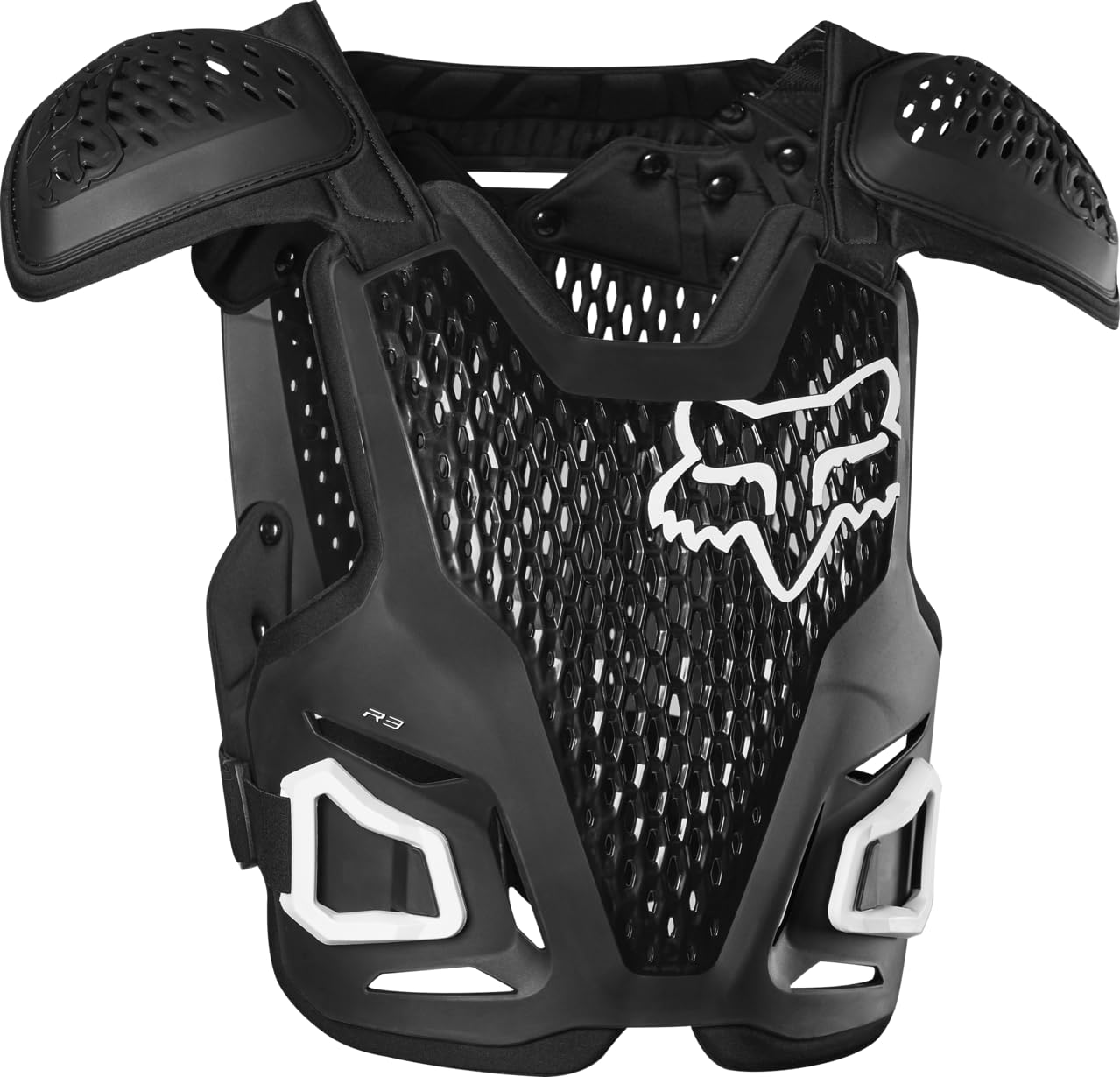
1. Fox Racing R3 Motocross Dirt Bike Chest Guard
Our pick — over 4.5★ from 450+ verified ratings; the strongest balance of quality and price.
The certified stone shield that riders trust to keep ribs whole on rocky trails.
The Fox R3 is built for real crashes, with a certified shell that stops roost and debris. It’s CE EN 14021 certified as a stone shield, which means the ventilated main body shell is tested to stop flying rocks and roost while still letting plenty of air flow through. The verdict from owners is blunt: “My husband rides a mountain ebike on dirt trails. This has saved his ribs from being broken (again).” Owner reports confirm it has saved ribs from breaking on rocky trails.
Adjustable shoulder and waist straps let you dial in a secure, custom fit. Adjustable shoulder and waist straps let you dial the fit to your body, while low-profile shoulder cups and an elastic slide-buckle waist closure keep the guard locked tight to your torso as you move. At 1.8 pounds, it’s a touch heavier than the Alpinestars Bionic Action at 1.7 pounds, but the extra weight buys you that certified shell and the confidence that comes with it.
Riders report it works worn over or under a jersey, and the secure fit stays in place without any choking sensation around the neck. It’s designed to fit a wide variety of neck braces too, so your protection can grow as your riding does. Owners praise the certified protection most, with the adjustable fit a close second.
What wins riders over
- CE EN 14021 certified stone shield stops roost and debris
- Adjustable shoulder and waist straps for a custom fit
- Low-profile shoulder cups keep it snug without bulk
Where it sits on the scale
- Heavier than the leaner Fly Racing vest at 9.6 ounces
- Adjustability gets mixed notes from some owners
The crowd favorite: the best blend of certified protection, adjustability, and trail-proven durability for riders who want one guard that does it all.
Think twice if: you’re a weight weenie on long climbs, because the 1.8-pound shell is noticeable on the ups.
2. Fly Racing Barricade Pullover Vest Protection
The featherweight pullover that keeps you cool when full gear is pure misery.
At 9.6 ounces, this vest is built for hot days when full gear is too much. It tips the scales at just 9.6 ounces versus the 16-ounce Leatt Chest Protector 1.5 above, which makes it feel more like a jersey than a piece of armor. The dual layer perforated and thermoformed EVA foam padding shields your chest from painful roost and branches while the stretch mesh main construction breathes.
Owners highlight the pullover fit that stays put without riding up. The shirt-style pullover design and body-contoured front sit in a riding position without riding up your back, which is the classic failure of bulkier guards. As buyers report: “It will keep SOME rocks out, but it’s light weight, fit well, doesn’t ride up your back and keeps you cool. Not a lot of protection, but the whole point is not crashing, lol. I use it on the really hot days, when full gear is too hot.”
The honest trade-off is in the name: this is roost protection, not crash armor. Branch stabs can still hurt through the foam, and the vest won’t stop a serious handlebar strike the way a hard shell will. That makes it a smart second layer for hot days or a first protector for riders who stay conservative on the trail.
Built for the heat: the lightest option here at 9.6 ounces, with stretch mesh that keeps you cool when the mercury climbs.
Reach for this if: you ride hot, dry trails and want bare-minimum chest coverage that disappears under a jersey.
Look elsewhere if: you hit serious downhill lines, because the EVA foam won’t absorb a hard bar slam the way a hard shell will.
3. Leatt Chest Protector 1.5 Wht
The adjustable roost guard that riders swear disappeared once the trail got going.
The 3D design hugs your torso for a close, comfortable fit that riders forget they’re wearing. The 3D design hugs your torso for a comfortable, close fit, and the hook-and-loop closure lets you tighten it precisely to your frame. One rider at 5’3″ and 120 lbs reported they could cinch it perfectly to their body, which tells you the adjustability range is genuinely wide.
The protection story is backed by real crashes. Weighing 16 ounces, it sits between the featherweight Fly Racing vest and the 1.8-pound Fox chest guard, and riders report it’s both “Very adjustable, lightweight, and strong” and that it “Saved me from some broken ribs.” The removable front and rear plates plus the BraceOn system mean it works over or under your jersey and pairs with a Leatt neck brace if you want to add cervical protection later.
Effectiveness is what owners praise most here, with fit close behind. If you’re torn between this and the Fox R3, know that this one is slimmer at 16 ounces versus the Fox R3’s 1.8 pounds, making it the pick for riders who prioritize a low-profile feel over maximum shell coverage.
The under-jersey winner: riders say they honestly don’t feel it under a jersey, and the airy design keeps it cool on long rides.
Best for: riders who want genuine EN14021 roost protection in a slim, adjustable package they can forget they’re wearing.
The single caveat: the front shell is lighter than a full motocross guard, so it’s built for roost and branches, not high-speed impacts.
4. Alpinestars Bionic Action Chest Protector

The breathable body shell that protects your ribs and spine without ever feeling bulky.
Alpinestars built this around a simple idea: protection you don’t notice is protection you’ll actually wear. The all-new Cell Technology chest protector uses a highly perforated shell for serious ventilation, and the thermoformed padded chassis keeps the whole thing close to your body. At 1.7 pounds, it’s a hair lighter than the Fox R3’s 1.8 pounds, and owners consistently describe it as barely noticeable once it’s on.
Quality is the thing that wins people over here — it’s the most-praised aspect by a wide margin, with protection close behind. The flexible sides adapt to your body shape as you move, and the removable shoulder pads let you customize the coverage for your discipline. Riders report excellent coverage with zero movement restriction, and it stays in place under gear even through rough descents.
The black/red colorway is visible on the trail, which is a genuine safety bonus, and the whole unit is breathable enough for hot-weather riding. This is the pick for the aggressive trail rider who wants rib, spine, and shoulder coverage in one piece that doesn’t feel like a turtle shell.
Why it earns top marks
- Highly perforated shell delivers excellent breathability
- Flexible side panels adapt to your body shape
- Removable shoulder pads for custom coverage
A fair caution
- Not designed for motorcycle motocross use
- Black/red styling won’t suit every rider’s taste
The build-quality king: riders who want Alpinestars’ top-tier construction with rib and spine coverage they can wear all day.
skip it if: you specifically need a certified stone shield rating, because this shell isn’t CE EN 14021 listed.
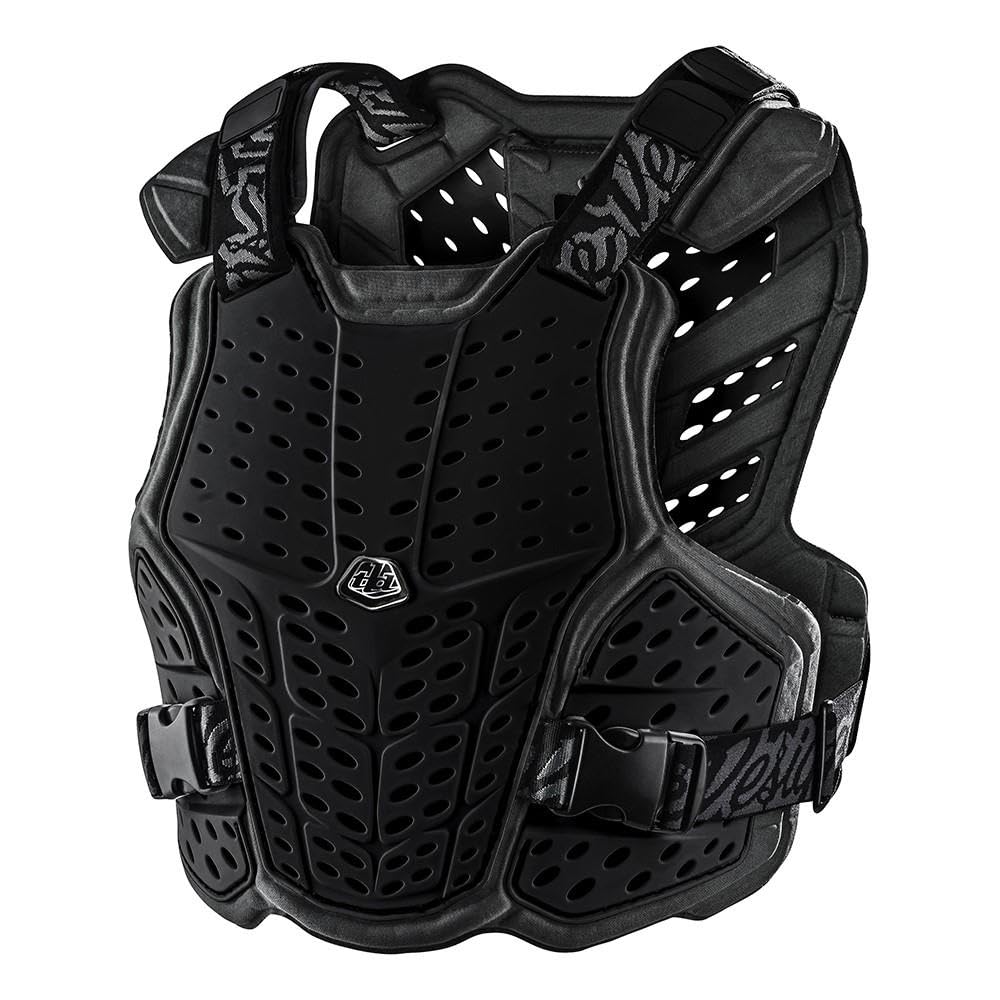
5. Troy Lee Designs Rockfight Chest Protector
The ventilated torso guard that survived countless falls without a single crack.
There’s a difference between a protector that looks tough and one that’s been repeatedly tested by gravity, and this Troy Lee Designs unit is the latter. It carries CE EN14021 certification for stone shield protection across the chest, back, sides, and shoulders, and the polyethylene and polypropylene construction has survived many falls with no cracks, dents, or scratches. Owners who’ve put it through rock gardens report it just keeps going.
The fit story is unusually flexible. One rider at 5’8″ and 230 pounds with a 45-inch chest found the medium/large fit great, while another reported wearing it over a T-shirt in the heat after a rib and clavicle injury to boost confidence. The 1/4-inch ventilated foam keeps things cool, and the secure waist clips hold the guard in place through rough sections.
Protection and quality are the two most-praised aspects, tied at the top of what owners mention. The honest limitation is that the design protects your torso and spine but doesn’t cover shoulders and belly at the same time, so it’s a torso-focused guard rather than a full body protector. The 1-year manufacturer warranty adds a layer of confidence to an already durable piece.
Built to take a beating: riders report it survived many falls with zero cracks, dents, or scratches and wipes clean easily.
Who it suits: riders who want certified chest and spine protection in a durable, lightweight shell that runs cool.
The one gap: shoulders aren’t covered simultaneously with the torso, so rocky trail riders may want separate shoulder pads.
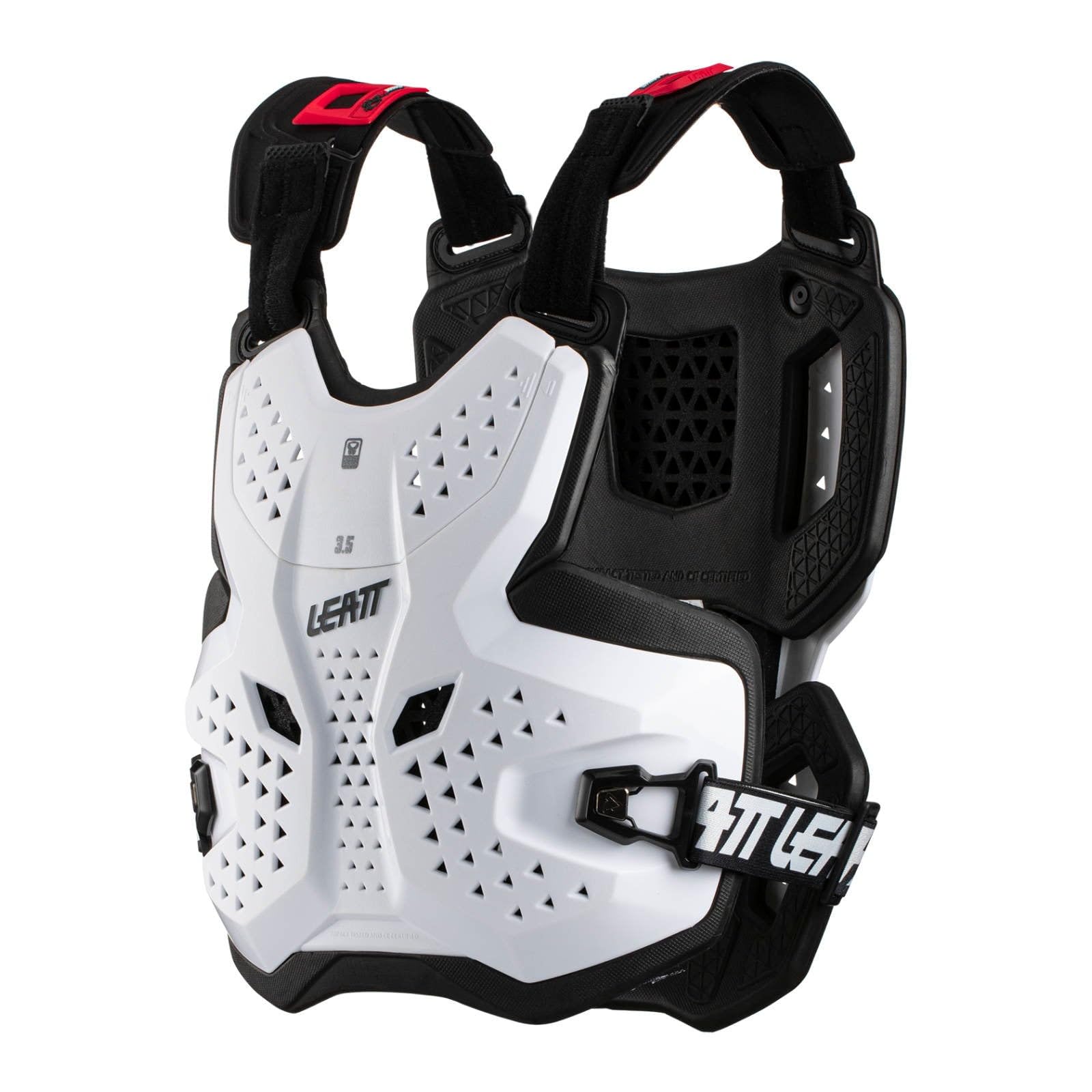
6. Leatt 3.5 Body Protector
The hard-shell body protector that riders call the best investment after a real crash.
Some riders only understand the value of good armor after they’ve needed it, and the Leatt 3.5 is the protector those riders recommend most. It pairs a very lightweight hard shell with 3DF AirFit ventilated soft impact foam, and the 3D design delivers a fit that owners describe as “crazy well built” and “super comfortable.” Riders report feeling far more protected in this than in other guards they’ve worn, with several noting they forgot they were wearing it.
Weighing 2 pounds, it’s the heaviest chest guard on this list, but that weight buys serious coverage. The protection is what owners praise most, and the fit is a close second. One rider who slid 30 feet across rocks on this protector came away with his back spared from rash, and another wore it on 99% of rides for a year through spills that injured knees and fingers while leaving his chest and back unscathed.
The ventilation slots boost airflow, and the removable front and rear plates with the BraceOn system let you pair it with a Leatt neck brace. It’s a motocross-grade piece, but mountain bikers who want that level of assurance on aggressive descents will find it worth the weight.
Forgive-and-forget armor: the slim profile and super-comfortable fit mean riders genuinely forget it’s on, even on long rides.
Best for: aggressive riders who want hard-shell spine and chest protection and don’t mind 2 pounds of weight for the security.
The cost of confidence: heavier and pricier than the Fox R3, so casual trail riders may find it more than they need.
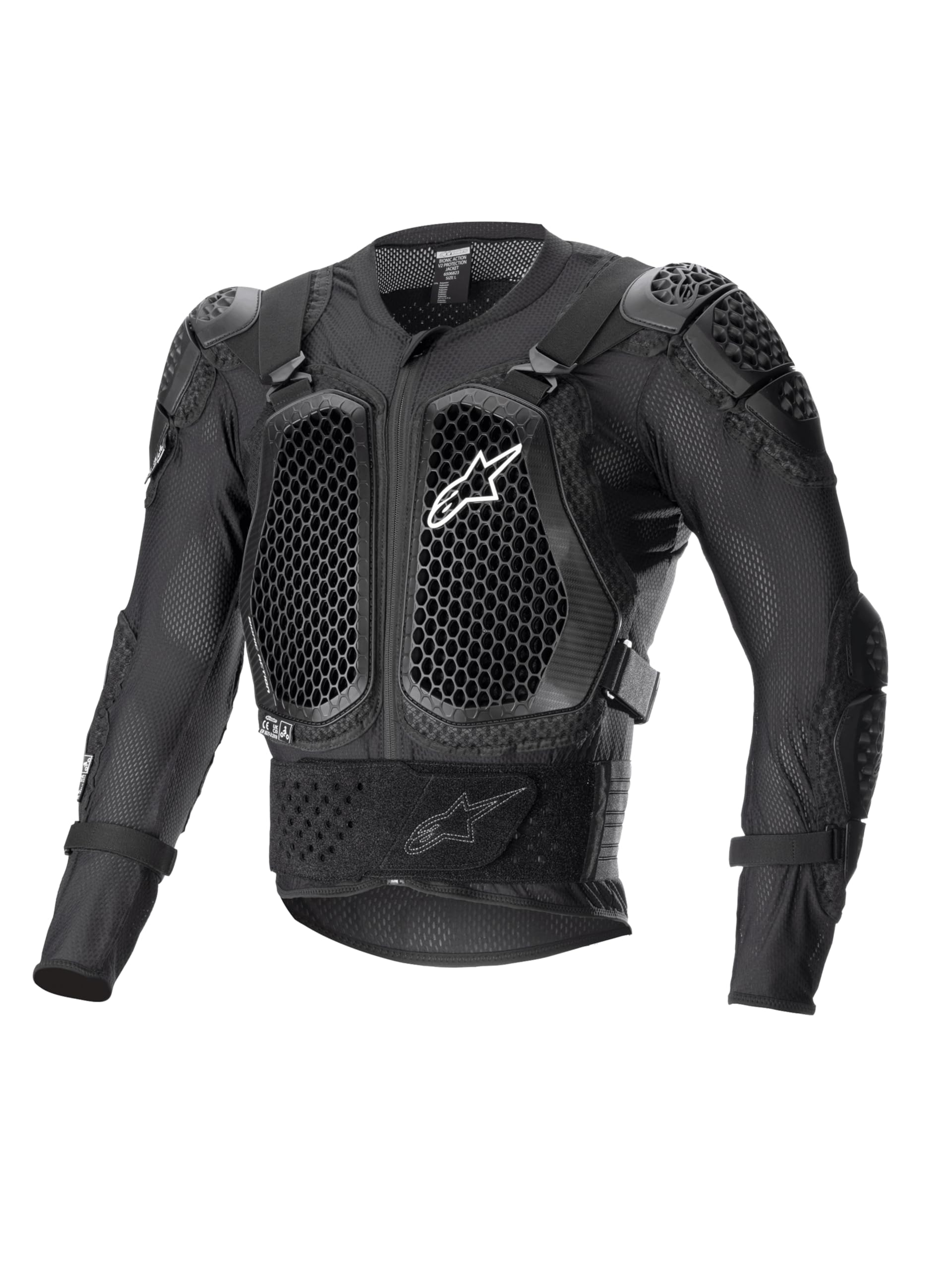
7. Alpinestars Bionic Action V2 Motocross Protection Jacket
The ultra-light CE-certified jacket that pairs Level 2 chest and back protection.
This is what happens when a brand packs its highest-impact protection into a package that weighs 10.58 ounces. The Bionic Action V2 is a CE and UKCA certified protection jacket with a Level 2 Cell Technology chest protector for ultralight weight and optimum ventilation, paired with a super-ventilated Level 2 Nucleon Cell & Flex Hybrid Technology back protector designed for an ergonomic, adaptive fit.
The fit is the most-praised aspect, with owners describing it as athletic-snug and comfortable without feeling bulky. Both the front and rear protectors are backed with foam padding for a secure, snug fit, and riders report it handles impacts and low-speed drops effectively. It’s genuinely effective protection that doesn’t feel like you’re wearing armor.
The one consistent theme in the feedback is sizing runs small, and there’s a mixed view on mobility with some riders finding it secure and others reporting it shifts. If you’re between sizes, the smart move is to size up. This is the premium pick for riders who want the highest certified impact rating in the lightest possible shell.
What you’re paying for
- Level 2 Cell Technology chest protector for ultralight weight
- Level 2 Nucleon back protector with adaptive fit
- CE and UKCA certified for high-impact resistance
The sizing catch
- Runs small, so size up from your usual
- Mobility opinions are split between secure and shifting
Best for: riders who want the highest certified Level 2 impact protection in a jacket light enough to forget.
Think twice if: you’re between sizes, because the small cut is the one real complaint across owners.
8. Body Protector 3DF AirFit Hybrid
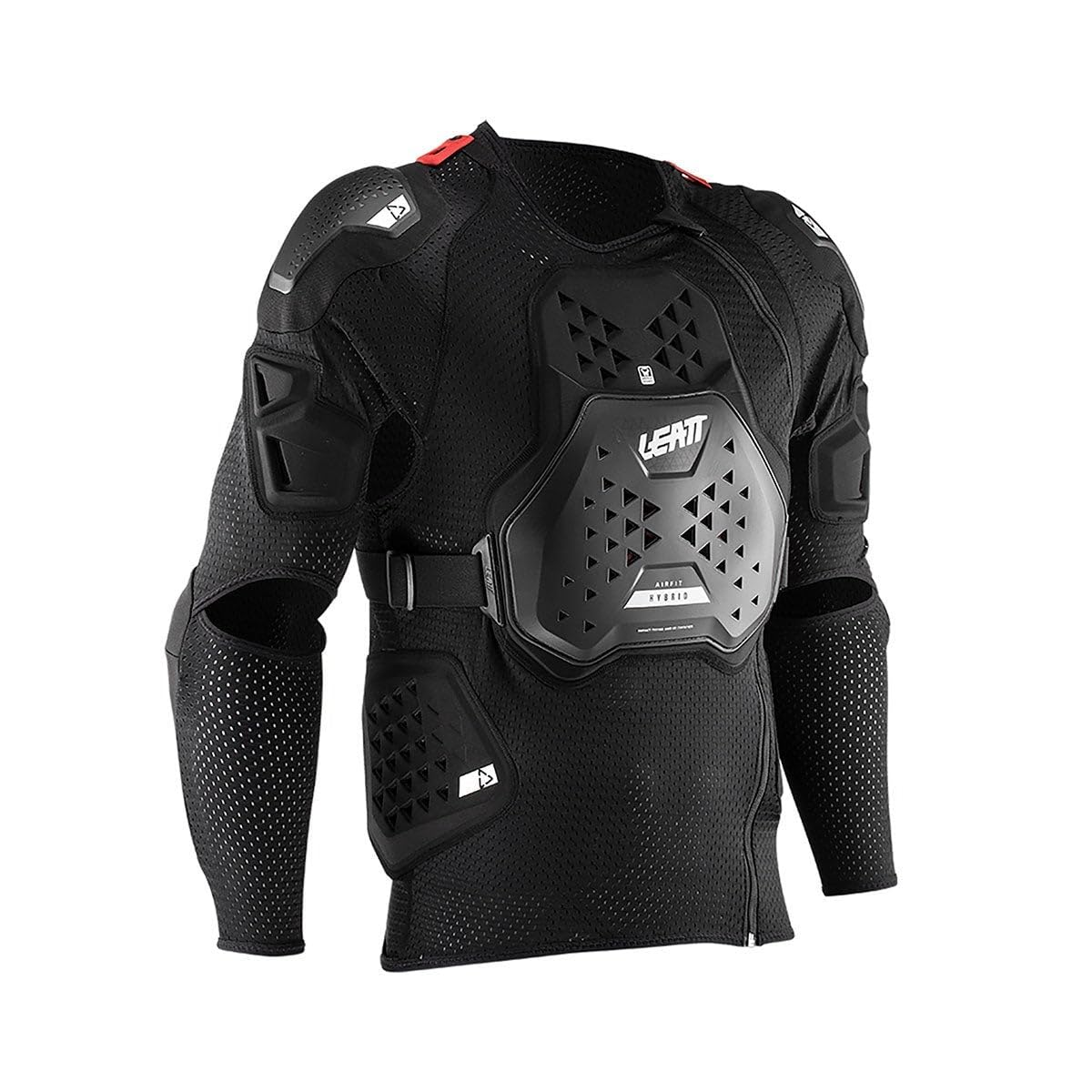
The zip-up full body protector that hard enduro riders swear by for rock-strewn descents.
The 3DF AirFit Hybrid combines ventilated soft impact foam with hard shell covers, adds flank protection, and includes an extra upper-chest impact layer for riders who don’t use a neck brace. The zip-up compression sock design boost evaporation, so you don’t bake inside it even on demanding rides.
This is the heaviest option on the list at 2.4 pounds, but that weight buys full-body coverage that hard enduro riders love. The back protection is rated as superior to lighter options, and the pads stay put through rough terrain. Riders report it fits well under a jersey, stays comfortable, and doesn’t trap heat. One rider’s first run was at Windrock, and the protector “Saved me from a huge crash in rocks.”
The honest trade-offs are worth knowing. The material is on the fragile side and needs careful hand washing, the armpits aren’t covered, and some riders note chest energy transfer is less direct than on a dedicated chest guard. The collar bone isn’t protected either. This is full-body armor for enduro and aggressive trail riders who want maximum coverage.
Built for hard enduro: riders call it the most comfortable full protector they own, with superior back protection that stays put through rough terrain.
Reach for this if: you ride hard enduro or rocky descents and want flank, back, and chest coverage in one zip-up piece.
Look elsewhere if: you need serious chest protection for track jumps, because the chest layer is softer than a dedicated guard.
Understanding the Specs
CE EN 14021 Stone Shield Rating
This is the certification that tells you a shell is actually tested to stop flying stones and roost kicked up by tires. It’s not an impact-absorption rating like a motorcycle chest protector — it means the hard shell resists penetration by small debris. If you ride behind other bikes or on loose, rocky trails, this rating is the difference between a sore chest and a clean ride.
Weight and Ventilation
A chest guard can weigh anywhere from 9.6 ounces to 2.4 pounds, and that range changes how the armor feels on a long climb. Lighter guards with stretch mesh construction stay cool and vanish under a jersey, while heavier hard shells with perforation zones and air channels offer more protection but trap more heat. Match the weight to how far you pedal, not just how fast you descend.
FAQ
What is the difference between a chest protector and a body protector?
Will mountain bike armor fit under my jersey?
Is a CE EN 14021 certified shield necessary for mountain biking?
How do I know what size armor to buy?
Can I wear a chest protector with a neck brace?
How much should mountain bike body armor weigh?
What is roost protection and why does it matter?
How do I clean and maintain my body armor?
Final Thoughts: The Verdict
For most riders, the mountain bike body armor winner is the Fox Racing R3 because it pairs CE EN 14021 certified stone protection with a proven record of saving ribs on real trail crashes. If you want the leanest hot-day option, the Fly Racing Barricade at 9.6 ounces disappears under a jersey. And for full-body enduro confidence, the Leatt 3DF AirFit Hybrid is the one to reach for when the rocks get serious.
How We Picked
We do not accept paid placement. Every pick is matched to a real buyer and a real use-case; we do not hands-on test units.
Sources & Methodology
Specifications: manufacturer listings and product documentation. Review insights: verified customer reviews, as of August 2026. Pricing: not shown on this page (it changes often); check the current price via the retailer link.
As an Amazon Associate, Trending Car earns from qualifying purchases. This does not affect which products we feature.