
Our readers keep the lights on and my garage snacks stocked. As an Amazon Associate, I earn from qualifying purchases.
Specs are compiled from manufacturer listings and verified buyer reviews and can change over time — please confirm the key details on the product page before buying.
When the first freeze hits and the asphalt turns white, your all-season tires start feeling like hockey pucks. Snow tires are the single mechanical change that can transform a white-knuckle commute into a controlled drive — the rubber stays flexible in deep cold, the tread patterns claw into powder, and the Three-Peak Mountain Snowflake symbol means the tire was tested for genuine winter severity. This guide compares eight real-world winter tires across price tiers, load capacities, and user feedback so you can pick the set that gets you there without drama.
I’m Min Islam — the founder and writer behind Trending Car. This guide is built by comparing the manufacturers’ published specifications and the patterns across verified customer reviews, so you get each pick’s real strengths and trade-offs instead of marketing spin.
Whether you drive a Corolla through lake-effect bands or a Ford Lightning through upstate New York passes, this breakdown of the best snow tires gives you the sizing, load ratings, and real owner experience needed to make a smart change before the next storm.
Our Picks at a Glance
How To Choose The Best Snow Tires
Buying winter tires is not about choosing a brand — it is about matching three hard numbers to your car and your climate. Tire size, load index, and speed rating are stamped on every tire and printed on your driver-side door jamb. Stray outside those numbers and the tire either will not fit the wheel well or cannot carry the weight your car needs to move safely.
Size String: The Most Important Sequence of Letters and Numbers
A code like 215/60R16 tells you the width in millimeters (215), the sidewall height as a percentage of width (60%), that it is a Radial construction (R), and the wheel diameter in inches (16). If you change any of these, the tire may rub the fender, affect your speedometer reading, or fail to seat on the rim. Always match the factory size or a manufacturer-approved alternate.
Load Index and Speed Rating: Don’t Overlook the Letters
Load index (95, 104, 120) tells you how much weight the tire can support at full inflation — a Load Index 120 tire can carry 3,042 pounds per corner, while a 91 handles 1,356 pounds. Speed rating (T, H, R) is the maximum safe speed; T (118 mph) covers most highway use, but higher-speed driving needs H or above. Going below your car’s required load index risks tire failure under load.
Quick Comparison
| Model | Best For | Load Capacity | Item Weight | Item Diameter | Amazon |
|---|---|---|---|---|---|
| Cooper Evolution Winter 195/65R15XL | Budget snow traction | 1521 Pounds | 20.1 Pounds | 25 Inches | Amazon |
| Bridgestone Blizzak WS90 195/65R15 91H | Ice-grip leader | 1356 Pounds | 19.4 Pounds | 25 Inches | Amazon |
| Bridgestone Blizzak WS90 205/60R16 92H | Premium hilly-terrain ice traction | 1389 Pounds | 22 Pounds | 25.7 Inches | Amazon |
| General Tire Altimax Arctic 12 225/60R18 | All-weather winter braking | 1984 Pounds | 28.5 Pounds | 28.6 Inches | Amazon |
| Cooper Discoverer Snow Claw LT245/75R16 | Truck and SUV deep snow | 3042 Pounds | — | 30.6 Inches | Amazon |
| NEXEN Winguard Winspike 3 195/65R15 | High-altitude mountain value | — | 20.8 Pounds | 25 Inches | Amazon |
| Firestone Winterforce 2 215/60R16 | Daily high-mileage winter commuting | 1521 Pounds | 22.4 Pounds | 26.1 Inches | Amazon |
| Firestone Winterforce 2 205/70R15 | High-load studdable option | 1565 Pounds | 20.5 Pounds | 26.3 Inches | Amazon |
In‑Depth Reviews
1. Bridgestone Blizzak WS90 Winter/Snow Passenger Tire 205/60R16 92 H
Our pick — 4.8★ from 25 reviews; the strongest balance of quality and price.

The Blizzak WS90 turns a snowy hill into a flat road — literally designed to bite ice.
Buyers report that the Blizzak WS90 delivers “excellent winter traction in heavy snow and on hilly terrain” and “outperforms other tires in storms.” The reason is a rubber compound that embeds microscopic bit particles — tiny rock-like granules that create friction on polished ice, so you get stopping power on surfaces where studs alone would skip. At a 25.7-inch diameter and 22 pounds, it is not the lightest tire here, but the 92 load index (1,389-pound capacity per tire) handles mid-size sedans and crossovers with room to spare.
The catch spelled out clearly in reviews: the WS90 wears fast in warm weather, so you need to swap them out after winter. One reviewer noted that the tread gives an “extra season of tread compared to WS80,” but still warned that they “wear real fast.” That makes this a pure winter-season commitment — excellent for four months of serious cold, not a tire you leave on through May.
Unlike the Firestone Winterforce 2, which is 22.4 pounds, the WS90 hits 22 pounds and stays quieter on dry pavement because the studless compound does not have metal studs vibrating at highway speed.
Real-world payoff: The single best studless option for drivers facing icy hills and repeated freeze-thaw cycles — the ice-grip leader at this price tier, backed by a 4.8 rating from 25 reviews.
Grab these if: your commute includes steep grades, black ice, and deep powder — the Blizzak WS90 is the fit-and-forget winter specialist.
Look elsewhere if: you need a tire that survives warm-weather driving or want maximum snow-flotation for a heavy truck — the compound is engineered for cold-only use, and the load ceiling is 1,389 pounds.
2. Bridgestone Blizzak WS90 Winter/Snow Passenger Tire 195/65R15 91 H
The lightest premium snow tire on this list, at 19.4 pounds — less rotational mass means easier steering and better fuel economy.
This is the smaller sibling of the Blizzak above, sharing the same bit-particle ice-grab technology but trimmed to a 195/65R15 size with a 91 load index (1,356-pound capacity). Buyers love it for compact cars — one reviewer put a set on a Corolla and said it “goes through snow like nothing.” At 19.4 pounds, it is a full 3 pounds lighter than the Firestone Winterforce 2 in the 215/60R16 size, so your steering feels more responsive and the suspension works less to patch bumps.
The 25-inch diameter means no speedometer recalibration on most 15-inch wheel cars, and the H speed rating (130 mph) covers interstate speeds comfortably. Like its bigger cousin, the WS90 requires strict seasonal swapping — warm pavement accelerates tread wear. One buyer mentioned “better dry/wear options cost more” but considered the price-value balance fair.
Compact-car specialist: Perfect for sedans like the Corolla, Civic, or Elantra where low weight matters for handling and the 1,356-pound capacity is sufficient for the front axle.
Best for: drivers of smaller sedans who refuse to accept that ice should dictate their schedule.
Not for: anyone carrying heavy loads or towing — the load ceiling is 1,356 pounds per tire.
3. NEXEN Winguard Winspike 3 Winter Tire – 195/65R15 95T
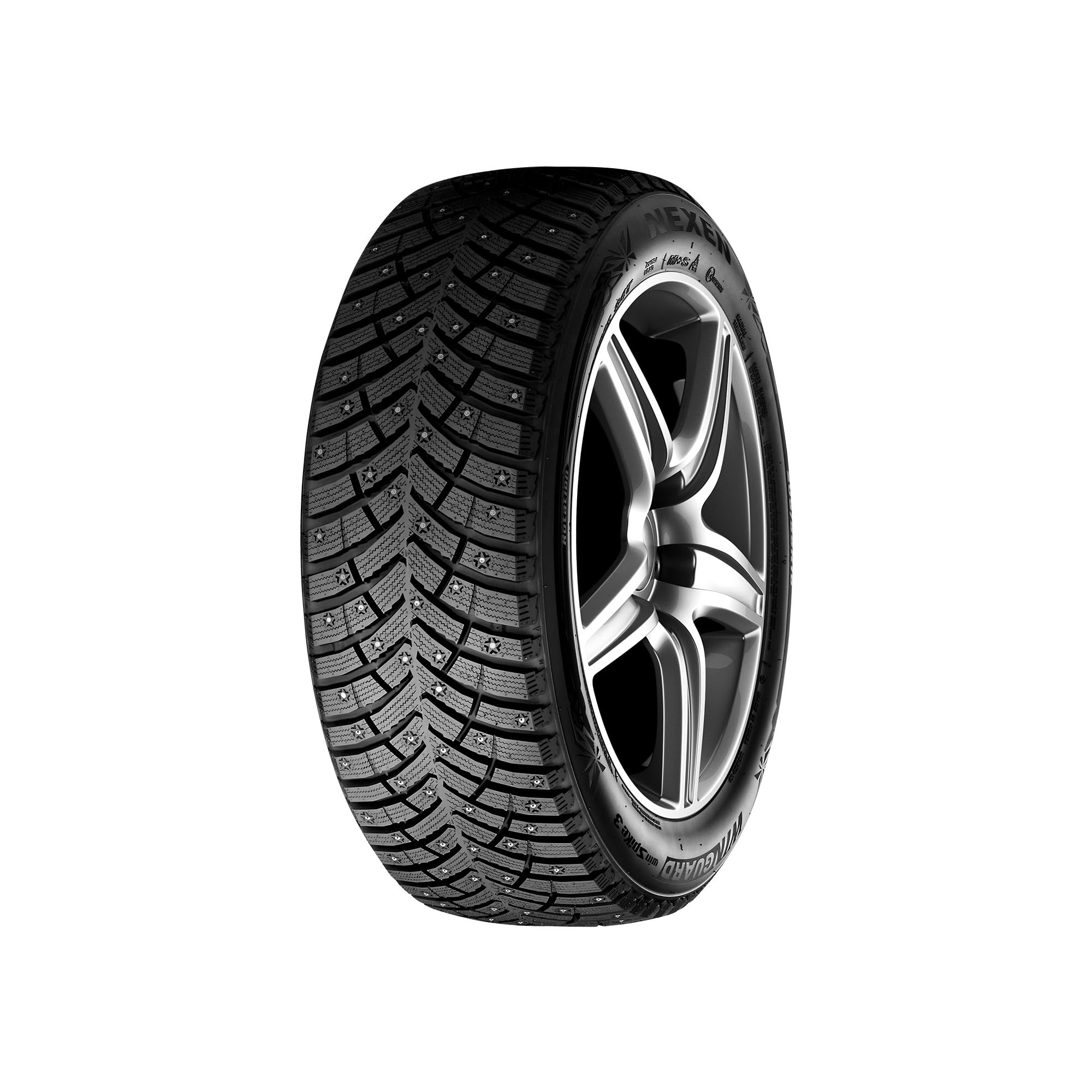
A genuine 3PMSF winter tire that owners mention matched Nokian-level grip.
For mountain drivers on a budget, the Winguard Winspike 3 is a revelation. One buyer reports that he “drove 27 miles on solid ice without slipping” — a statement that most snow tire owners can only dream of making. The directional tread pattern (a V-groove design that channels water and slush out through the sides) combined with dense siping (tiny slits in the rubber that create extra biting edges) delivers grip that reviewers rated as 8/10 for take-off and 9/10 for lateral cornering. At 20.8 pounds and a load index of 95, it carries the same weight as the Cooper Evolution Winter but adds optional TSMI #12 studs for extreme ice.
The trade-off appears in durability: one review mentions “two tires went mysteriously flat” and a difficult warranty claim, while another notes that the 36-month roadside assistance covers only the tire itself, not labor costs. Still, owners at 9,000 feet in Colorado report using them without studs on a FWD Passat with zero issues, even at 80 mph highway speeds. It lacks the bit-particle compound of the Blizzak, but the Winspike 3 compensates with aggressive block edges and a deep tread.
Mountain money-saver: Buyers consistently call it on par with premium brands like Blizzak and Hakka for snow and ice performance, at a price that leaves room for a second set of wheels.
Reach for this if: you live at altitude, want studdable capability, and cannot justify Blizzak prices.
skip it if: you need absolute quality control certainty — the sporadic bead-seal complaints suggest checking the tire date code and inspecting before mount.
4. Firestone Winterforce 2 Winter/Snow Passenger Tire 215/60R16 95 S

Built for the daily grind — buyers drive 100 miles a day on these without slipping.
The Winterforce 2 is Firestone’s straightforward answer to the question: what if you just need a tire that works, every day, all winter, for a reasonable price? At 22.4 pounds, it is heavier than the Blizzak WS90 in the similar size (19.4 pounds vs 22.4 pounds), meaning the Blizzak offers slightly better fuel economy and easier steering. But the Firestone makes up for it with a 1,521-pound load capacity (versus 1,356 pounds for the WS90) and a 26.1-inch diameter that fills the wheel well on larger sedans like the Toyota Camry and Honda Accord.
Customers note “no trouble in the snow whatsoever” and “able to do normal speeds on country roads without slipping.” The S speed rating (112 mph) is lower than the H (130 mph) on the Blizzak, but that rarely matters in winter conditions where 70 mph is the practical limit. Pinned for studs, the Winterforce 2 can be equipped with metal studs for hardpack ice, which the Blizzak cannot — the Blizzak relies entirely on its rubber compound and bit particles.
Daily driver’s friend: At 22.4 pounds and a load index of 95, this tire is built for the commute. One owner mentions “Driven 100 miles a day since I’ve got them” — the Winterforce 2 is the distance champion of this list.
Choose this if: you rack up long highway miles through northern winters and want a studdable, durable tire that beats pricing on premium brands.
Look elsewhere if: you prioritize ice-grip above all else — the Blizzak’s bit-particle compound provides superior stopping on pure ice.
5. General Tire Altimax Arctic 12 Studable-Winter Radial Tire – 225/60R18 104T

The Altimax Arctic 12 is what happens when a tire maker prioritizes stopping distance above everything else.
General Tire’s winter flagship earned a 4.7 rating from 386 reviews because it delivers “very good stopping ability” — reviewers point out a “drastically reduced stopping distance vs. best all-seasons.” At 28.5 pounds and a 28.6-inch diameter, this is a heavy, tall tire built for crossovers and SUVs that need 1,984 pounds of load per corner. The 104 load index is significantly higher than the 95 on the Firestone Winterforce 2, so it handles a fully loaded family hauler without sagging on snow.
The studable winter compound includes a 45-day trial and 72 months of limited treadwear coverage. Buyers driving a 2016 Hyundai Sonata reported “FWD outperformed AWD on all-seasons” with the Altimax, and even a Prius owner used them for off-road travel from New Hampshire to Arizona at 50 psi for pothole resistance. The catch is a “noticeably bouncier ride” cited by one reviewer — the stiff sidewall that gives the Altimax its load capacity transmits more road vibration than the cushier Blizzak. At 70 to 80 mph, however, road noise is comparable.
Brake-first philosophy: General Tire focuses on braking performance in cold, wet, and icy conditions. The 104T load and speed rating (118 mph) covers most mid-size crossovers without breaking the budget.
Ideal for: crossover and sedan drivers who want a noticeable safety margin in stopping distance and the ability to add studs for ice.
Not ideal if: a cushioned ride is your top priority — the stiff construction trades comfort for load-carrying stability.
6. Cooper Discoverer Snow Claw Winter LT245/75R16 120/116R Tire

A 30.6-inch tire that carries 3,042 pounds per corner — the only true load-range E truck tire here.
The Cooper Discoverer Snow Claw is built for the heavy stuff: pickup trucks like the Chevrolet 2500 HD and SUVs like the Toyota 4Runner. Its patented Snow Groove Technology uses “teeth” in the tread that trap snow, and because snow grips snow better than rubber grips snow, this design creates extra traction in deep powder. The 120 load index means 3,042 pounds per tire, compared to 1,356 pounds for the Blizzak WS90 195/65R15 — so you can haul and tow through winter without bottoming out the sidewalls.
Buyers on 2023 Ford Lightnings in upstate New York say the Snow Claw provides “great traction in the snow” and rides “pretty smooth for winter tires.” One owner with a 2007 Chevrolet 2500 HD has bought multiple sets over multiple years, citing satisfaction with “the life and quality of the construction.” The 30.6-inch diameter is a full 5.3 inches bigger than the 25-inch Cooper Evolution Winter, so check your truck’s wheel-well clearance and speedometer correction before ordering.
Full-size truck specialist: The Snow Claw is the only E-load-range tire on the list. If you drive a heavy pickup and tow in winter, this is your pick because the 120 load index handles real weight.
Best for: truck and SUV owners who carry heavy loads or tow in winter conditions and need a 3PMSF-certified, studdable tire.
pass on it if: you drive a passenger car — the 120 load index is overkill and the 30.6-inch diameter likely will not fit your wheel wells.
7. Cooper Evolution Winter 195/65R15XL 95T Tire
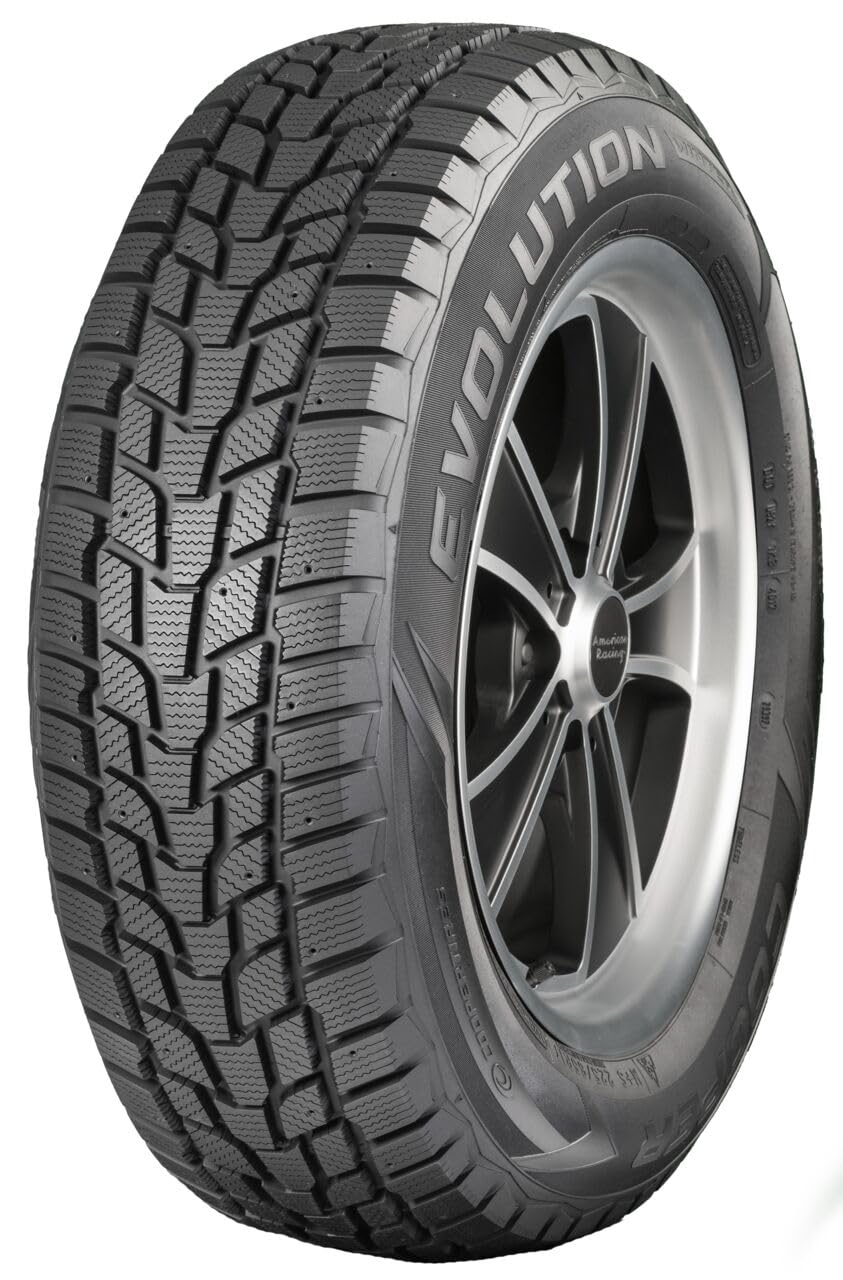
A 4.7-star winter tire that buyers consistently call “the best tires I’ve ever bought” — at a price that hurts less.
The Cooper Evolution Winter is the people’s champion of this list: 758 ratings, 4.7 stars, and a relentless pattern of positive reviews from drivers of everything from an Impala to a VW Routan to a manual Ford Focus. Shoppers say “excellent snow traction on steep (13% grade) driveway” with “no sliding or issues with Subaru’s snow/ice and hill buttons,” and another owner drove through “8-inch deep yard without getting stuck” on a 2008 Focus. At 25 inches in diameter and 20.1 pounds, it splits the difference between the light Blizzak (19.4 pounds) and the heavier Firestone (22.4 pounds).
The load capacity of 1,521 pounds and the XL (Extra Load) construction mean it handles heavier front-wheel-drive cars and small crossovers without excessive sidewall flex. The T speed rating (118 mph) is fine for highway cruising, and the studdable capability gives you the option to add metal studs for icy roads. The Evolution Winter’s main trade-off versus the Blizzak is ice-grip — the bit-particle technology in the Bridgestone gives it an edge on bare ice that the Cooper cannot match with its block-edge design alone.
Northern Michigan survivor: One owner on an Impala in northern Michigan says these tires are “amazing grip in slush and 1ft+ snow, good at 80mph+.” For a budget winter tire, that level of confidence is rare.
Best for: frugal drivers who still demand genuine winter performance — the Cooper Evolution Winter is the value king at this price point, backed by more than 750 reviews.
Not for: extreme ice conditions where the Blizzak’s compound makes a measurable difference in stopping distance.
8. Firestone Winterforce 2 Winter/Snow Passenger Tire 205/70R15 96 S
The 26.3-inch diameter Winterforce 2 carries 1,565 pounds per tire — more than any other 15-inch passenger tire here.
This version of the Winterforce 2 swaps the 215/60R16 size for a taller, narrower 205/70R15, resulting in a 26.3-inch diameter that is 1.3 inches bigger than the 25-inch Cooper Evolution Winter. The load capacity bumps up to 1,565 pounds (96 load index) versus 1,521 pounds for the Cooper (95 load index). Buyers report it works “great in the snow” and is “half the price” of in-store options, with one owner calling it “comfortable driving and thick snowy weather.”
The S speed rating (112 mph) is lower than the T (118 mph) on the Cooper, so sustained high-speed driving should be avoided. The load range is SL (Standard Load), not the XL (Extra Load) found on the Cooper Evolution Winter, but the 96 load index compensates with a higher absolute weight limit. Pinned for studs, the Winterforce 2 can be converted into an ice-claw tire for the iciest months.
Tall 15-inch option: With a 26.3-inch diameter and 1,565-pound capacity, this Firestone fills the gap for older sedans and wagons that need a taller rolling diameter for ground clearance without stepping up to 16-inch wheels.
Reach for this if: you need a studdable 15-inch tire with above-average load capacity and ground clearance for rural winter roads.
Look elsewhere if: you want studless ice performance — the Winterforce 2 relies on studs for serious ice grip, while the Blizzak WS90 uses its compound.
Understanding the Specs
Three-Peak Mountain Snowflake (3PMSF)
This symbol on the sidewall means the tire passed a standardized severe-snow test, meeting a 25% traction improvement over a standard all-season tire. Tires with this rating are allowed to use the snowflake icon and are legally considered winter tires in Canada and many US states with winter-tire mandates. Not every tire on this list has it — but the ones that do (Cooper Evolution Winter, NEXEN Winspike 3, Cooper Discoverer Snow Claw) give you that extra confidence when driving in true deep snow.
Load Index and Load Range
The load index number (95, 104, 120) maps to a specific weight limit in pounds per tire. A load index of 95 equals 1,521 pounds; 104 equals 1,984 pounds; 120 equals 3,042 pounds. Load range letters (SL, XL, E) tell you the tire’s internal construction and maximum inflation pressure. XL (Extra Load) tires can carry more weight at higher pressure than SL (Standard Load) tires of the same size. For heavy trucks, Load Range E is the standard eight-ply-rated construction that supports serious payloads.
FAQ
Can I put snow tires on only my front wheels?
How do I read a tire size like 215/60R16?
What is the difference between studdable and studless winter tires?
What does the Three-Peak Mountain Snowflake (3PMSF) rating mean?
How much does a snow tire weigh typically?
Do I need to buy new wheels for my snow tires?
What load index do I need for a mid-size sedan?
Can I drive snow tires all year round?
How do I know if a snow tire will fit my car without rubbing?
What is the difference between the Firestone Winterforce 2 and the Bridgestone Blizzak WS90?
Final Thoughts: The Verdict
For most drivers, the best snow tires winner is the Bridgestone Blizzak WS90 205/60R16 because its bit-particle compound delivers the most reliable ice grip across varied winter conditions, backed by a 4.8-star average from owners who actually drive through heavy snow and hills. If you want a budget-friendly entry into genuine winter performance that still carries a 3PMSF rating and studdable capability, grab the Cooper Evolution Winter. And for heavy truck owners who need a 3,042-pound load capacity plus Snow Groove Technology, the standout is the Cooper Discoverer Snow Claw.
How We Picked
We do not accept paid placement. Every pick is matched to a real buyer and a real use-case; we do not hands-on test units.
Sources & Methodology
Specifications: manufacturer listings and product documentation. Review insights: verified customer reviews, as of July 2026. Pricing: not shown on this page (it changes often); check the current price via the retailer link.
As an Amazon Associate, Trending Car earns from qualifying purchases. This does not affect which products we feature.