What PSI Should I Set My Tire Inflator To for Best Results

Set your tire inflator to the cold PSI listed on your vehicle’s door jamb placard or owner’s manual. Do not use the tire sidewall number as your target unless the manufacturer specifically tells you to.
If you’re asking what psi should i set my tire inflator to, the safest default is the tire pressure listed by your vehicle manufacturer, not the number molded into the tire sidewall. That recommended PSI is usually found on the driver-side door jamb placard and is the target you should use for everyday driving.
- Use the placard PSI: It is the correct target for your specific vehicle.
- Check tires cold: Heat can raise pressure and distort readings.
- Verify with a gauge: Inflator readings can be slightly off.
- Watch for damage: Repeated pressure loss needs inspection.
What PSI Should I Set My Tire Inflator To? Start With Your Vehicle’s Recommended Pressure
The best PSI setting for a tire inflator is the pressure specified for your exact vehicle, usually measured in pounds per square inch and listed as the cold tire pressure. “Cold” means the tires have not been driven on recently, so the reading is not artificially higher from heat buildup.
This matters because the correct setting depends on the vehicle’s weight, tire size, suspension tuning, and intended use. A compact sedan, midsize SUV, pickup truck, and trailer can all require different pressures even if they share similar-looking tires.
For most drivers, the answer is simple: set the inflator to the manufacturer’s recommended PSI and stop there. If you are unsure, confirm the number using the placard, the owner’s manual, or the manufacturer’s app before adding air.
How to Find the Correct PSI for Your Car, SUV, Truck, or Trailer
Not every tire should be filled to the same pressure, and not every tire on the same vehicle needs the same number. Front and rear recommendations can differ, especially on vehicles designed to carry passengers, cargo, or towing loads.
Check the driver-side door jamb placard
This is the first place to look. Most vehicles have a sticker on the driver-side door jamb that lists the recommended tire pressure for the front and rear tires, along with the original tire size.
If the placard shows two values, follow them exactly. That is the number the vehicle maker expects for normal road use, and it is usually the most reliable starting point for a tire inflator setting.
Use the owner’s manual or manufacturer app
If the placard is missing, faded, or unclear, the owner’s manual is the next best source. Many manufacturers also provide tire pressure information through a mobile app or digital owner portal.
This is especially useful for newer vehicles, trim-specific tire sizes, and models with different pressure recommendations depending on load or wheel package. If you drive an EV or a vehicle with advanced tire monitoring, the digital manual can be a helpful backup.
Why the tire sidewall PSI is not the target setting
The number on the tire sidewall is not the recommended operating pressure for your vehicle. It is typically the maximum pressure the tire can handle under certain conditions, not the pressure you should use every day.
Inflating to the sidewall number can make the ride harsher, reduce grip, and increase uneven wear. In some cases, it can also change braking feel and handling in ways that make the vehicle less predictable.
Do not treat the sidewall PSI as a universal target. Use the vehicle placard unless your owner’s manual specifically says otherwise for a special load or towing condition.
How Tire Inflators Work and Why the Right PSI Setting Matters
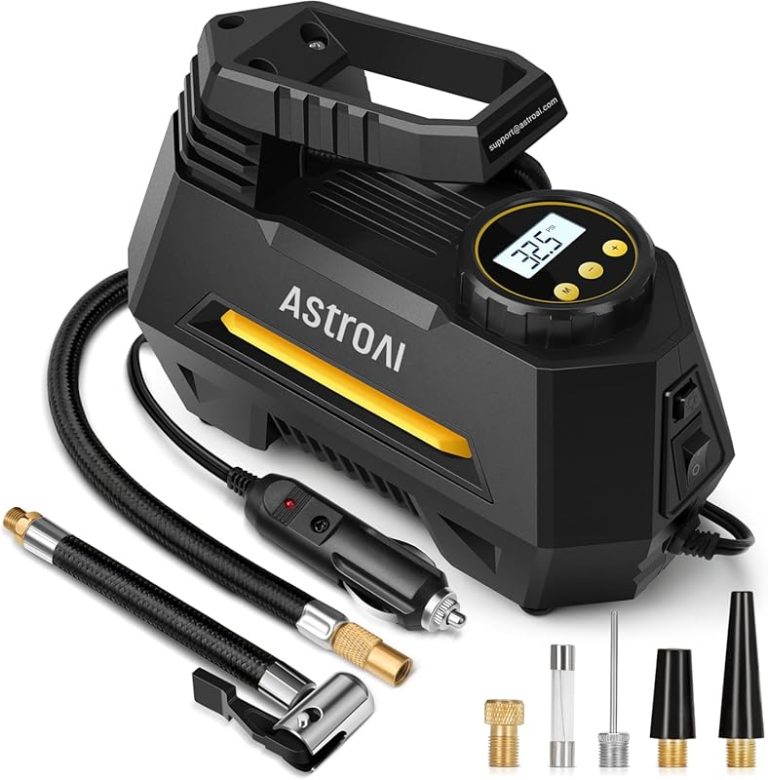
Tire inflators add air until a target pressure is reached, but the quality of that target depends on the tool and the reading you trust. Some inflators let you set a PSI and stop automatically, while others require you to watch a separate gauge and stop manually.
If you want a broader maintenance habit that supports safe driving, it helps to think of tire inflation the same way you think about other routine checks like engine oil intervals or battery health. Small checks done regularly prevent bigger problems later.
Preset inflators vs. manual gauges and compressors
Preset inflators are convenient because you can enter a target PSI and let the tool shut off when it reaches that number. They are popular for quick top-offs, emergency kits, and drivers who want less guesswork.
Manual gauges and compressors require more attention, but they can be just as useful if you verify pressure carefully. The main downside is that the final number depends on how accurately you read the gauge and how often you stop to check.
What happens when you overinflate or underinflate
Overinflation can reduce the tire’s contact patch, which may hurt traction and make the ride feel stiffer. It can also contribute to center tread wear if the pressure stays too high for long periods.
Underinflation is usually the bigger concern because it can raise heat, increase rolling resistance, and wear the outer edges of the tread faster. Severe underinflation can also stress the tire structure and reduce fuel efficiency.
A small difference of 1 to 3 PSI is common because gauges vary and temperature changes affect readings. The goal is to stay close to the manufacturer’s cold pressure, not to chase a perfect-looking number every time.
Best PSI Settings for Common Driving Situations in 2025
The “best” PSI is usually the factory recommendation for normal driving, but some situations call for extra attention. Load, weather, and trip length can all affect what you should set on the inflator.
Daily commuting and highway driving
For daily commuting, follow the placard PSI and check pressure when the tires are cold. Highway driving does not usually require a special PSI setting unless your manufacturer gives a different recommendation for heavy use or sustained high speeds.
If your vehicle feels sluggish, pulls slightly, or has a TPMS warning, verify pressure before assuming anything is wrong. A proper top-off can restore normal handling and help the tires wear more evenly.
Cold-weather driving and seasonal PSI adjustments
Cold air lowers tire pressure, so winter mornings often show a PSI drop even when there is no leak. That is why many drivers need to add air more often during colder months.
Do not guess based on how the tire looks. Measure the cold pressure and inflate to the placard number, or to the winter recommendation if your owner’s manual gives one for your specific vehicle.
Check tire pressure early in the day before driving, especially in cold weather. Warm tires can read higher than they really are, which can lead to underinflation once the tires cool down.
Heavy loads, towing, and long road trips
Some vehicles have a separate recommendation for loaded driving, towing, or long-distance travel. That number may be different from the normal daily PSI, so it is worth checking the manual before a trip.
If you are carrying passengers, cargo, or a trailer, the extra weight can change how the tires flex and heat up. In that case, the manufacturer’s load-specific guidance matters more than a general rule of thumb.
- Find the cold PSI on the door placard.
- Confirm front and rear numbers separately.
- Check pressure before driving or after the car has cooled.
- Use load or towing settings only if the manual calls for them.
Step-by-Step: Setting Your Tire Inflator to the Right PSI
Using a tire inflator correctly is mostly about measurement, patience, and verification. The process is straightforward, but skipping a step can leave you with a pressure reading that looks right and performs poorly.
How to measure current tire pressure before inflating
Start by checking the current pressure with a reliable tire gauge. Remove the valve cap, press the gauge firmly onto the valve stem, and note the reading before adding air.
If the tire is far below the recommended PSI, inspect it first for nails, cuts, bulges, or a damaged valve stem. A tire that repeatedly loses air may need repair instead of another top-off.
How to set the inflator, fill the tire, and recheck accurately
Set the inflator to the manufacturer’s cold PSI, then attach the chuck securely to the valve stem. Let the inflator run until it stops automatically, or pause periodically if you are using a manual compressor.
After filling, wait a moment and recheck the pressure with a separate gauge if possible. This second reading helps confirm the inflator is accurate and that the tire is truly at the target level.
Measure the tire before inflating so you know how much air it actually needs.
Use the placard value, not the sidewall maximum, unless the manual says otherwise.
Fill the tire, then confirm the reading with a second gauge for better accuracy.
When to inflate all four tires versus only one
If all four tires are low, inflate all of them to the correct PSI and then recheck each one individually. Even tires on the same axle can drift slightly apart over time.
If only one tire is low, it is fine to top off that tire alone, but inspect the others too. A single low tire may point to a slow leak, while the others may simply be due for a routine pressure check.
Common Mistakes Drivers Make When Using a Tire Inflator
Most tire inflation mistakes are easy to avoid once you know what to look for. The biggest problems usually come from using the wrong target, trusting one reading too much, or ignoring outside conditions.
Using the same PSI for every vehicle
One of the most common errors is assuming every car should be filled to the same number. That approach ignores differences in vehicle weight, tire size, and manufacturer tuning.
A PSI that works on a small sedan may be wrong for an SUV or pickup. Always check the specific vehicle, even if the tires look similar.
Ignoring temperature changes and gauge error
Temperature affects pressure, and gauges are not perfectly identical. A reading from one inflator may differ slightly from a handheld gauge, which is why small variation is normal.
For the most reliable result, compare readings when the tires are cold and use the same type of gauge consistently. This helps you spot real pressure loss instead of simple measurement noise.
Relying on the inflator without verifying with a separate gauge
Preset inflators are helpful, but they are not a substitute for verification. If the inflator’s sensor is off, the tire may end up underfilled or overfilled even though the machine stopped automatically.
A separate gauge gives you a second check and improves confidence in the final number. That extra minute is worth it, especially before a road trip or in winter conditions.
- Faster top-offs with less guesswork
- Better consistency when used with a gauge
- Helps prevent uneven wear and TPMS alerts
- Inflator gauges can be slightly inaccurate
- Temperature changes can mislead readings
- Wrong PSI settings can affect handling and wear
When to Stop and Get Expert Help Instead of Inflating at Home
Not every tire pressure problem is a simple top-off. If the tire keeps losing air or looks damaged, the safest move is to stop inflating and have it inspected.
Visible sidewall damage, slow leaks, or repeated pressure loss
Bulges, cracks, punctures near the sidewall, or obvious damage around the bead area are signs that the tire may need professional attention. Repeated pressure loss also suggests a leak that inflation alone will not fix.
In these cases, ask a tire shop to inspect the tire rather than continuing to add air. A damaged tire can fail suddenly, and that risk is not worth ignoring.
TPMS warnings that keep returning after inflation
If the tire pressure monitoring system keeps warning you after you have inflated to the correct PSI, there may be a leak, sensor issue, or calibration problem. The warning should not be dismissed just because the tire looks full.
Repeated alerts are a good reason to have the tire and sensor checked. A proper diagnosis can save time and prevent a small problem from turning into a roadside issue.
When a tire shop is safer than a DIY top-off
If you are unsure about the correct pressure, the tire condition, or whether the TPMS reading is accurate, a shop can verify everything with better equipment. That is especially useful for trailers, performance vehicles, or vehicles with unusual tire setups.
When safety is uncertain, professional help is the better choice. A quick inspection can be more valuable than trying to force a tire inflator to solve a problem it was never meant to fix.
Final Takeaway: The Best PSI Is the Manufacturer’s PSI, Not a Guess
The best answer to what psi should i set my tire inflator to is usually the cold tire pressure listed by your vehicle manufacturer. That number is designed for your specific vehicle and is far more reliable than the tire sidewall maximum or a generic rule of thumb.
Quick recap for accurate inflation and safer driving
Check the door jamb placard, confirm the correct front and rear PSI, and inflate only when the tires are cold. Then verify the final reading with a separate gauge and get expert help if a tire keeps losing pressure or shows visible damage.
For more vehicle upkeep context, it can also help to understand related maintenance habits like checking battery voltage and keeping up with routine interior care, since small checks often prevent larger repair costs later.
Frequently Asked Questions
Use the cold tire pressure listed on your vehicle’s door jamb placard. That is the manufacturer’s recommended setting for normal driving.
No, the sidewall PSI is usually the maximum pressure for the tire, not the recommended daily setting. Use the vehicle placard or owner’s manual instead.
Cold is best because driving heats the air inside the tire and can raise the reading. Check pressure before driving or after the car has sat for a while.
Not always. Some vehicles list different front and rear pressures, so check the placard carefully before inflating.
They are helpful, but they can still vary slightly from a separate gauge. Rechecking with another gauge is the safest way to confirm the final pressure.
Get expert help if the tire has sidewall damage, keeps losing pressure, or triggers repeated TPMS warnings. Those signs can point to a leak or a tire problem that inflation will not fix.