
Our readers keep the lights on and my garage snacks stocked. As an Amazon Associate, I earn from qualifying purchases.
Specs are compiled from manufacturer listings and verified buyer reviews and can change over time — please confirm the key details on the product page before buying.
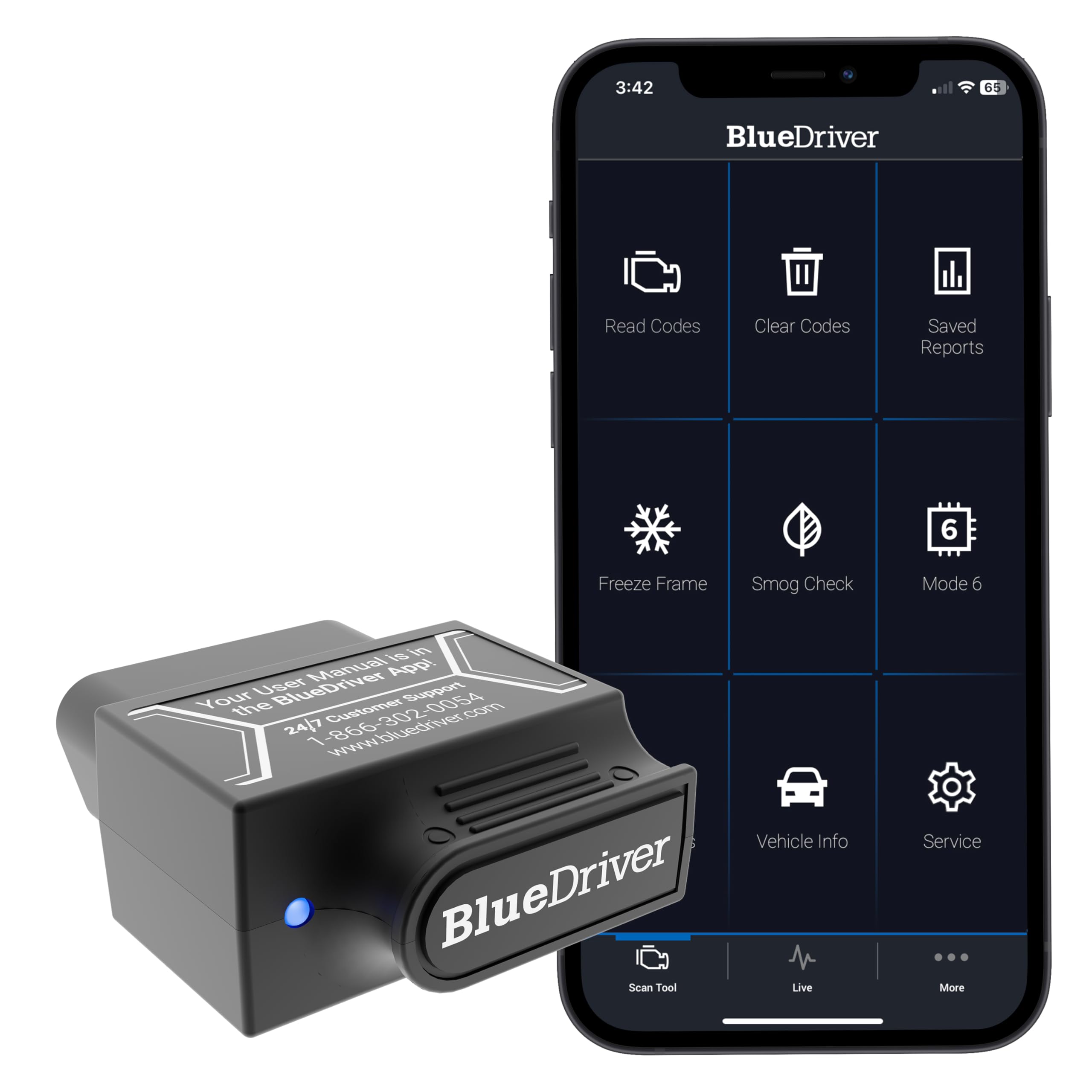
A code reader translates your car’s diagnostic codes into plain-language explanations, so you can fix issues yourself or walk into a garage with confidence. The crowd favorite here earns serious trust — the Bluetooth-based BlueDriver holds a 4.5-star score from tens of thousands of owners.
I’m Min Islam — the founder and writer behind Trending Car. This guide is built by comparing the manufacturers’ published specifications and the patterns across verified customer reviews, so you get each pick’s real strengths and trade-offs instead of marketing spin.
Pocket-size readers clear check-engine lights in seconds, while pro-grade tools reset brakes and oil life. This roundup of the best code reader for cars helps you match the right tool to your skill level and the vehicles you own.
Our Picks at a Glance

How To Choose The Best Code Reader for Cars
Ask yourself what you’ll actually do with the scanner before choosing one. If your only goal is to see why the check-engine light is on and then clear it, a simple budget reader is enough. If you want to diagnose your brakes, airbags, or transmission before a long trip, you need a scanner that covers those extra systems.
Engine-Only vs. Full-System Scanning
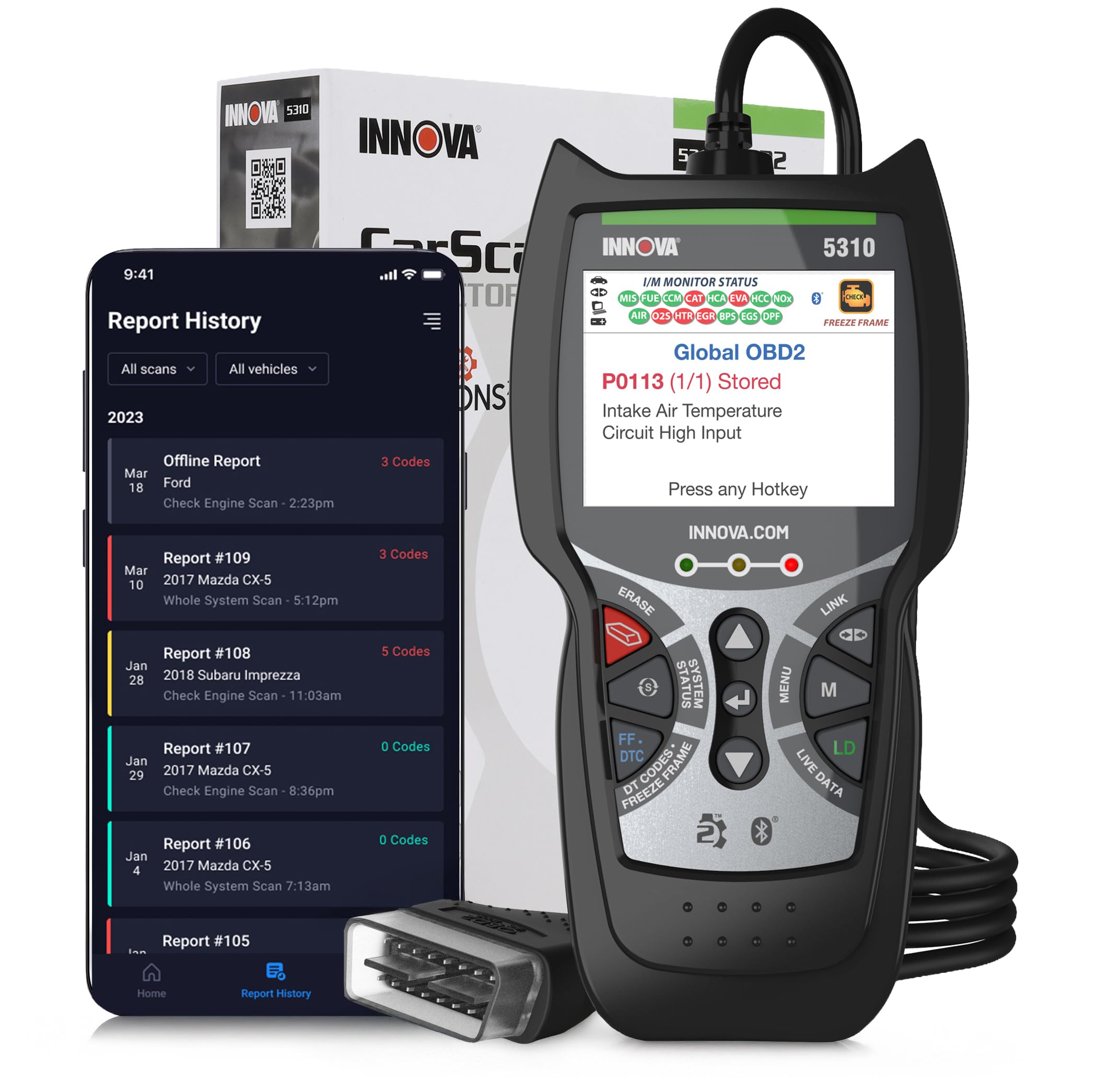
Basic readers talk to the engine computer only, which covers the check-engine light and emissions readiness. More capable scanners also read codes from your ABS (anti-lock braking system), SRS (airbags), and transmission modules. If you drive an older car with a stubborn airbag light, the Innova 5310 proved itself by reading SRS codes on a 2004 Jeep that other scanners missed.
Handheld Screen or Your Phone
A Bluetooth dongle that uses an app on your phone is small, usually cheaper, and shows big graphs and detailed fix reports on a screen you already own. A standalone handheld with its own display works without pairing and is often easier for people who want a simple plug-in-and-scan experience. Choose between a phone-connected dongle or a standalone handheld based on your display preference.
Quick Comparison
| Model | Best For | Systems Covered | Reset Functions | Connection | Amazon |
|---|---|---|---|---|---|
| OBDLink MX+★ Best Overall | App users & hybrid owners | Enhanced OEM | Via Apps | Bluetooth | Amazon |
| BlueDriverPro Diagnose Pick | DIYers & used-car checks | ABS / SRS / TPMS | None | Bluetooth | Amazon |
| INNOVA 5310Airbag Specialist | ABS & SRS diagnostics | ABS / SRS / Engine | Oil Reset | Bluetooth + Handheld | Amazon |
| Autel AL549 | Battery & alternator checks | Engine / ABS | None | Corded | Amazon |
| XTOOL AD20 Pro | Wireless full-system scans | ABS / SRS / TPMS / A/C | Oil Reset | Bluetooth 5.0 | Amazon |
| FOXWELL NT614 Elite | Brake & maintenance resets | Engine / ABS / SRS / Trans | Oil / EPB / SAS / Throttle | Corded | Amazon |
| TOPDON AD600S | All-in-one home workshop | Engine / ABS / SRS / Trans | 9 Resets | Battery Powered | Amazon |
| VDIAGTOOL VD30 Pro | Budget full-function value | Engine (All 10 Tests) | I/M Readiness | Corded | Amazon |
| A-Premium AD100 | First-time buyers | Engine | Smog Check | Corded | Amazon |
In‑Depth Reviews
1. OBDLink MX+ Bluetooth Scanner
Our pick — over 4.5★ from 15,000+ verified ratings; the strongest balance of quality and price.
A pocket-size dongle that turns your phone into a professional-grade diagnostic tool
At just 28 g, this dongle is so light you’ll forget it’s plugged in until a warning light appears. It turns your iPhone, Android, or Windows PC into a professional-grade scan tool, and it is the recommended adapter for serious apps like FORScan, Torque, BimmerCode, and AlfaOBD — which tells you how deep its data runs.
Over a thousand owners praise its functionality, noting it pulls more live parameters than typical scanners. It pulls more live parameters than typical scanners, including ABS, SRS, and TPMS data, and it reveals erased codes with timestamps so you can vet a used car before you buy. Buyers report it “saved me hundreds to diagnose and fix the issue with my car,” and a Toyota Aqua hybrid owner uses it to monitor battery block temps and resistance through hybrid-specialist apps.
The enhanced OEM support runs deep for Ford, GM, Mazda, Nissan/Infiniti, Toyota/Lexus/Scion, Honda, Hyundai, and Kia, plus over-voltage and battery drain protection means you can leave it plugged in without fear. The trade-off is that clearing codes and reinitializing often needs a paid app — and a few owners note Bluetooth drops during long drives and the dongle falling from the port on rough roads.
Why it leads: class-leading app compatibility and OEM-level depth for owners who want more than a basic code — from a 2.01″L x 0.91″W x 1.81″H footprint that disappears into the dash.
Reach for this if: you own a hybrid or a Ford/GM and want to monitor live systems through specialized apps like FORScan or Dr. Prius.
Look elsewhere if: you want a standalone screen and no phone pairing — this one lives entirely inside your phone’s app.
2. BlueDriver Bluetooth Pro Scanner
The Bluetooth sensor that hands you technician-verified fix reports on your phone
This is the scanner with the biggest audience in the category — a 4.5-star score shared by tens of thousands of owners, and the one featured in Forbes, Motor1, and Car and Driver. It plugs into your OBDII port and connects wirelessly to your phone, so there are no cables to wrestle with under the dash.
BlueDriver reads and clears more codes than a basic reader, covering Check Engine, ABS, SRS, Airbag, TPMS, and Transmission. what separates it is the unlimited technician-verified repair reports matched to your exact VIN, with definitions, causes, and confirmed fixes — plus live data, freeze frames, smog readiness, and Mode 6 analysis as you drive. Owners mention it diagnosed a Ford ABS left-front wheel-speed sensor that a dealer quoted at to fix, for a part instead.
There is no subscription ever, no accounts required, and free app updates for life. The catch is that it demands a compatible phone, and it cannot perform service resets like oil life or brake bleeding — it is purely a diagnostic and code-clearing tool. The 180-day money-back guarantee and 24/7 North American support from real technicians soften that limitation considerably.
What owners rave about
- Unlimited technician-verified fixes matched to your VIN
- Live data and freeze frames across all major systems
- No subscription, no account, free app updates
The honest trade-offs
- Needs a smartphone — no built-in screen
- No oil, brake, or battery reset functions
Best for the DIY crowd: anyone who wants professional-grade diagnostics plus repair guidance without paying dealer labor.
Who should pass: drivers who want a standalone handheld they can use without pulling out a phone.
3. INNOVA 5310 OBD2 Scanner
The USA-designed scanner that finally reads those stubborn airbag codes
When two other SRS-capable scanners failed to show airbag codes on a 2004 Jeep Wrangler TJ, the INNOVA 5310 stepped in and delivered — that is the story buyers keep telling, and it is why this unit earns its spot for safety-system diagnostics. It reads and clears ABS and SRS codes, plus engine and transmission codes, making it a genuine home-mechanic workhorse.
At 12.8 ounces with a bright 2.8-inch screen and a long cable, it feels substantial in hand. The free RepairSolutions2 app adds real-time solutions, verified fixes, exact part links, and maintenance schedules, and it even pulls a vehicle history report that undercuts Carfax. A 2007 car owner used it to diagnose a minor issue and skip a costly dealer visit entirely.
The quality is what owners praise most, and the user interface follows close behind. But be ready to work for it slightly — there is no paper manual, the online guide lives inside the Bluetooth app, and data acquisition can occasionally feel fussy on some vehicles. It supports English, Spanish, and French menus, and it is designed in the USA with domestic support.
Safety-first pick: if an airbag or ABS light is keeping you up at night, this is the reader that cracked codes other tools missed — a 5.99″L x 3″W x 1″H tool built for the stubborn cases.
Grab this for: older vehicles with airbag or brake-system lights, and owners who want both a handheld screen and a phone app.
skip it if: you need one-click simplicity — the setup and app pairing ask for a little patience.
4. Autel AL549 AutoLink Scanner
A three-in-one tool that checks your battery and alternator, not just engine codes
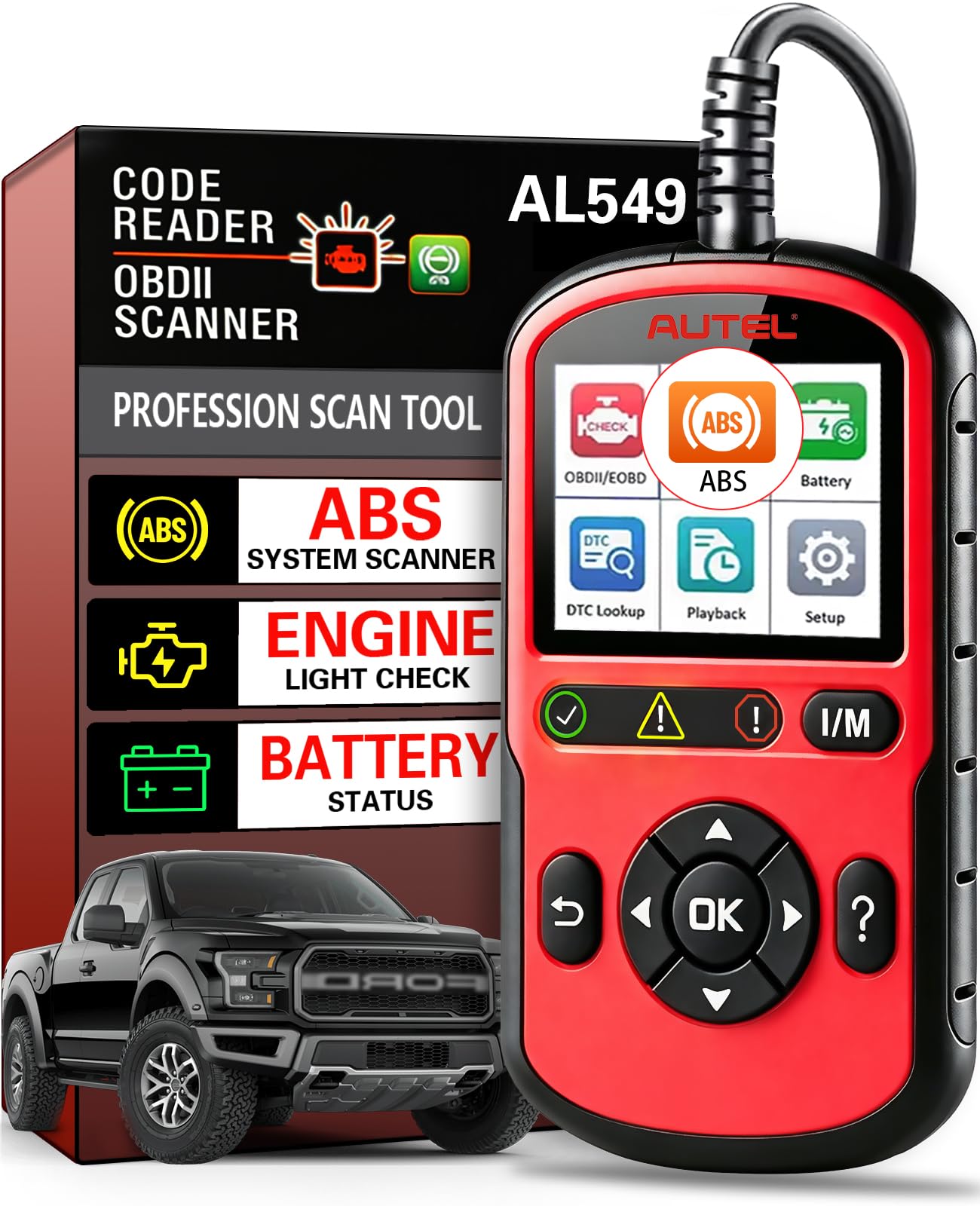
Most readers stop at the engine, but the Autel AL549 is a 3-in-1 solution: full OBD2 diagnostics, ABS code reading, and universal car starting and charging system testing. That battery and alternator test is the standout feature — it walks you through on-screen steps and gives you a clear result with possible fix tips, so you know if your no-start is a dead battery or a failing alternator.
It handles all 10 OBDII test modes, reads enhanced Powertrain codes for Ford, GM, and Chrysler, and offers one-click I/M readiness for smog checks. The 2.8-inch screen and tactile buttons draw praise for their bright display and intuitive layout, and first-time users report it “told me exactly what the problem was” and saved money on parts they did not need.
The catch is real and specific: ABS diagnosis works only on OBD2 vehicles made between 2000 and 2020, so newer cars are out for that function. Setup also asks for registration and a nerve-wracking firmware update, and the package does not include the Type-C cable you need for updates. Autel backs it with a 1-year warranty and lifetime free updates through the Maxi PC Suite.
What earns its keep
- Battery and alternator testing built in
- Enhanced Powertrain codes for Ford, GM, Chrysler
- Tactile buttons and bright 2.8-inch display
Before you buy
- ABS diagnosis limited to 2000-2020 vehicles
- Type-C cable for updates sold separately
Best value angle: the only pick in this lineup that also tests your charging system, for owners who chase electrical gremlins.
Think twice if: you drive a post-2020 car and want ABS coverage — this tool will not help there.
5. XTOOL AD20 Pro Scanner
A featherweight dongle that scans every system and thinks with AI
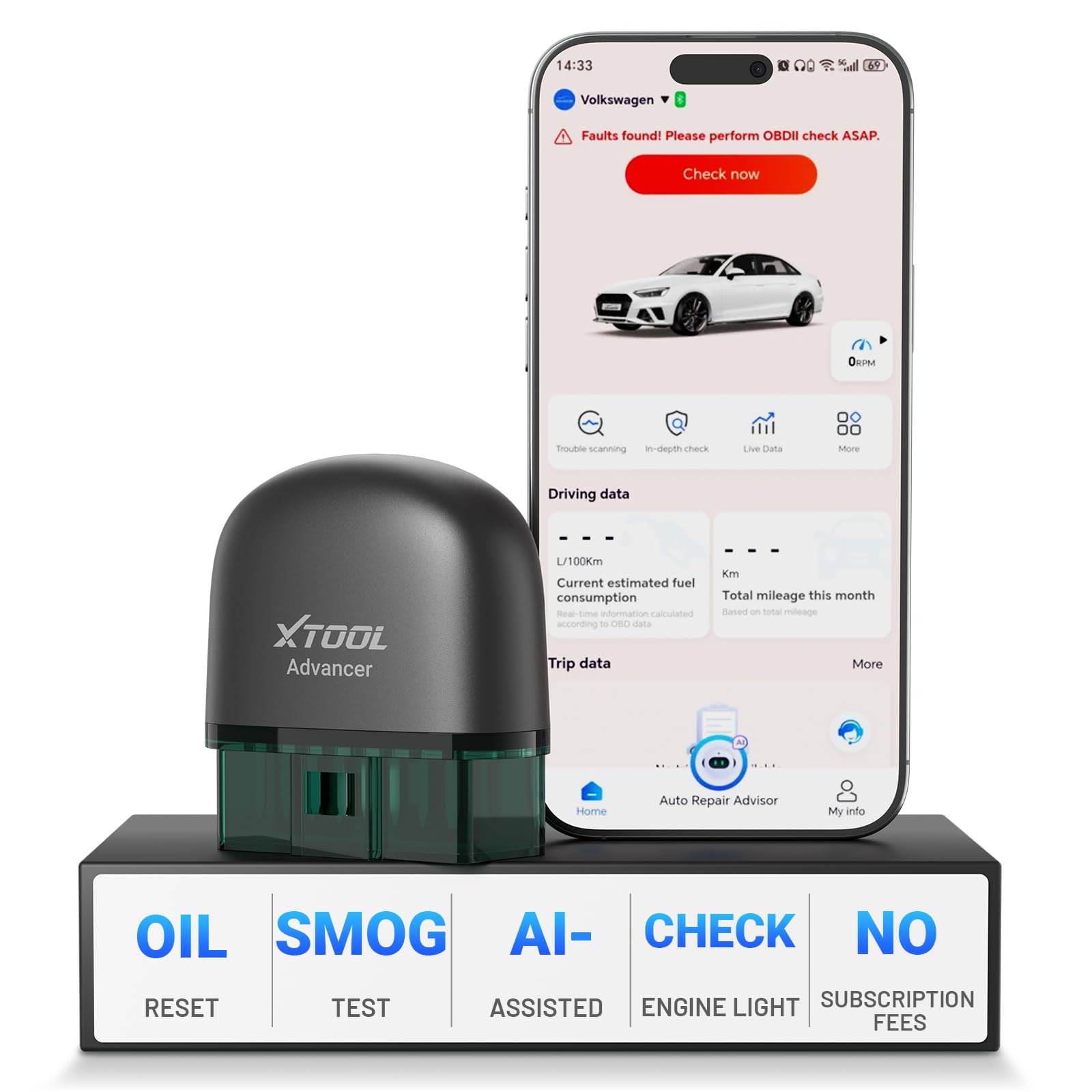
At just 1.13 ounces, this is the lightest full-system scanner in the group, yet it performs a deep dive across ABS, SRS, Transmission, TPMS, and A/C — not just the engine. Its built-in CAN FD hardware makes it one of the few budget-adjacent picks that can talk to newer 2020+ GM, GMC, and Chevrolet vehicles that standard scanners simply cannot communicate with.
The AI-powered diagnostic engine analyzes real-time sensor data and explains the root cause in plain English with suggested fixes, so you are not left googling a cryptic code. It supports 85+ global brands, scans unlimited vehicles with no subscription ever, and adds a Smart Dash that turns your phone into a live dashboard of RPM, coolant temperature, and fuel trims. Owners reported it found emission, ABS, SRS, TPMS, and even hidden A/C codes across six different vehicles in one test run.
Reliability is what owners praise most, followed by ease of use. The honest caveats: some owners hit Bluetooth drops and app crashes, and the Classic Dashboard can feel laggy or inaccurate. It also requires rescanning the activation code when switching vehicles, which is a small annoyance for multi-car households. The 2-year US warranty and free lifetime updates soften the risk.
The wireless wildcard: class-leading system coverage and AI guidance for the price, in a dongle small enough to leave plugged in 24/7 with its auto-sleep battery guard.
Pick this for: newer GM vehicles and drivers who want AI repair guidance plus full-system scans from their phone.
Pass if: you need rock-solid Bluetooth reliability — app behavior is the recurring complaint here.
6. FOXWELL NT614 Elite Scanner
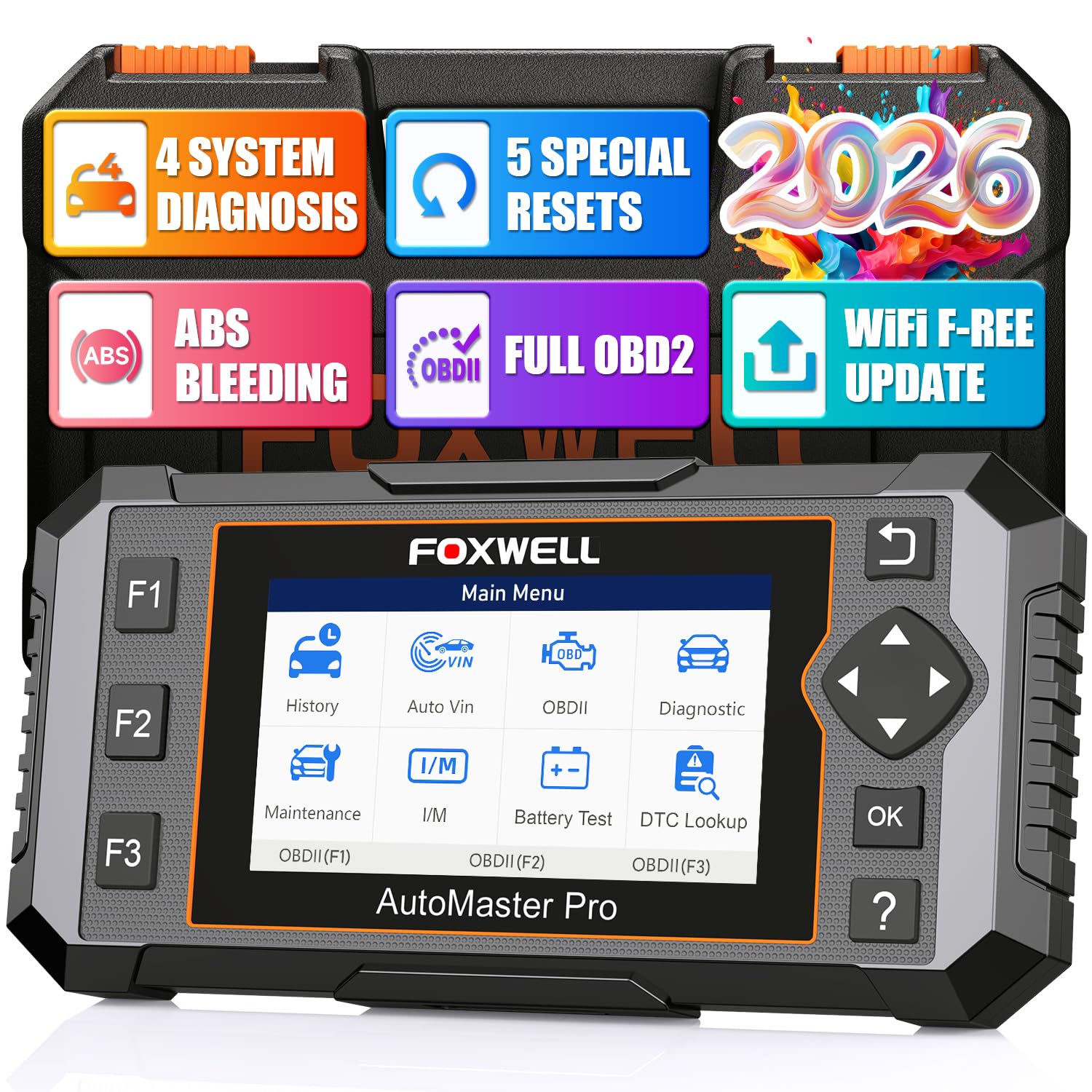
The corded workhorse that pays for itself with five everyday maintenance resets
This scanner does not just tell you what is wrong — it fixes the annoying stuff a shop charges you for. The NT614 Elite performs Oil Reset, EPB brake service, ABS bleeding, steering angle calibration (SAS), and throttle relearn, which are the exact maintenance resets that send DIYers to the dealer out of frustration. Customers note it cleared an airbag code and “service engine soon” light on a Mitsubishi in two minutes, saving a mechanic bill.
It runs full diagnostics across Engine, ABS, SRS Airbag, and Transmission systems, with live data shown in easy-to-read graphs so you can watch fuel trims, oxygen sensors, and transmission temperature in real time. The 4.3-inch screen with 480×272 resolution is the biggest of the corded handhelds here, and the AutoVIN feature instantly identifies your vehicle for faster setup. Lifetime free Wi-Fi updates arrive with no registration required.
Functionality is what owners praise most, with quality second. The fair warning: speed draws mixed feedback — some call it super fast while others find it very slow, and one owner could not get it to connect to a 2001 Dodge 3500 24V at all. Function availability also varies by vehicle make and model, so confirm compatibility before you buy. It ships in a protective case with a diagnostic cable and USB cable included.
Why DIYers love it
- Five resets: Oil, EPB, ABS Bleed, SAS, Throttle
- Big 4.3-inch screen with live data graphing
- Lifetime free Wi-Fi updates, no registration
Reality check
- Scan speed is mixed across vehicles
- Some older trucks fail to connect
Best for brake jobs: the only mid-priced pick with ABS bleeding and EPB service built in, for owners who swap their own pads.
Not for you if: you own a pre-2000 heavy-duty truck — compatibility gaps showed up there.
7. TOPDON AD600S Scanner

A standalone Android tablet that handles diagnostics and nine resets without a phone
This is the closest thing to a full shop tool you can hold in one hand, running Android 11.0 with a 5-inch 1280×720 high-definition display. It handles four professional systems — engine, transmission, ABS, and SRS — and backs them with nine one-click reset functions: Oil, BMS, ABS, SAS, EPB, DPF, TPMS, Throttle, and injector coding. A 2020 Honda CR-V owner used the brake maintenance mode to save versus a dealership’s -per-tire quote.
The upgraded 32G ROM gives it fast performance and plenty of storage, and AutoVIN automatically fetches your vehicle’s VIN to skip manual setup. It supports 67+ global brands and 10,000+ models, with lifetime free updates over Wi-Fi. Owners describe it as a professional and reliable tool that works on every car they have tried, and its reliability is the most-praised aspect by far.
The DTC Lookup function explains each fault code in plain language, and if you get stuck on a diagnostic challenge, you can send the report to TOPDON’s 24/7 tech team for guidance. The honest note: at 8.66″L x 3.35″W x 11.42″H it is the bulkiest unit here, so it lives in the garage rather than your glovebox. Connectivity drew some mixed feedback, and battery power means you should keep it charged.
The shop-in-a-box: a 5-inch Android scanner with nine resets and 32G ROM — the most complete standalone package in this lineup for serious home mechanics.
Choose this if: you maintain multiple vehicles and want resets plus diagnostics without ever touching a phone.
Reconsider if: portability matters — this big-screen unit is not a glovebox companion.
8. VDIAGTOOL VD30 Pro Reader
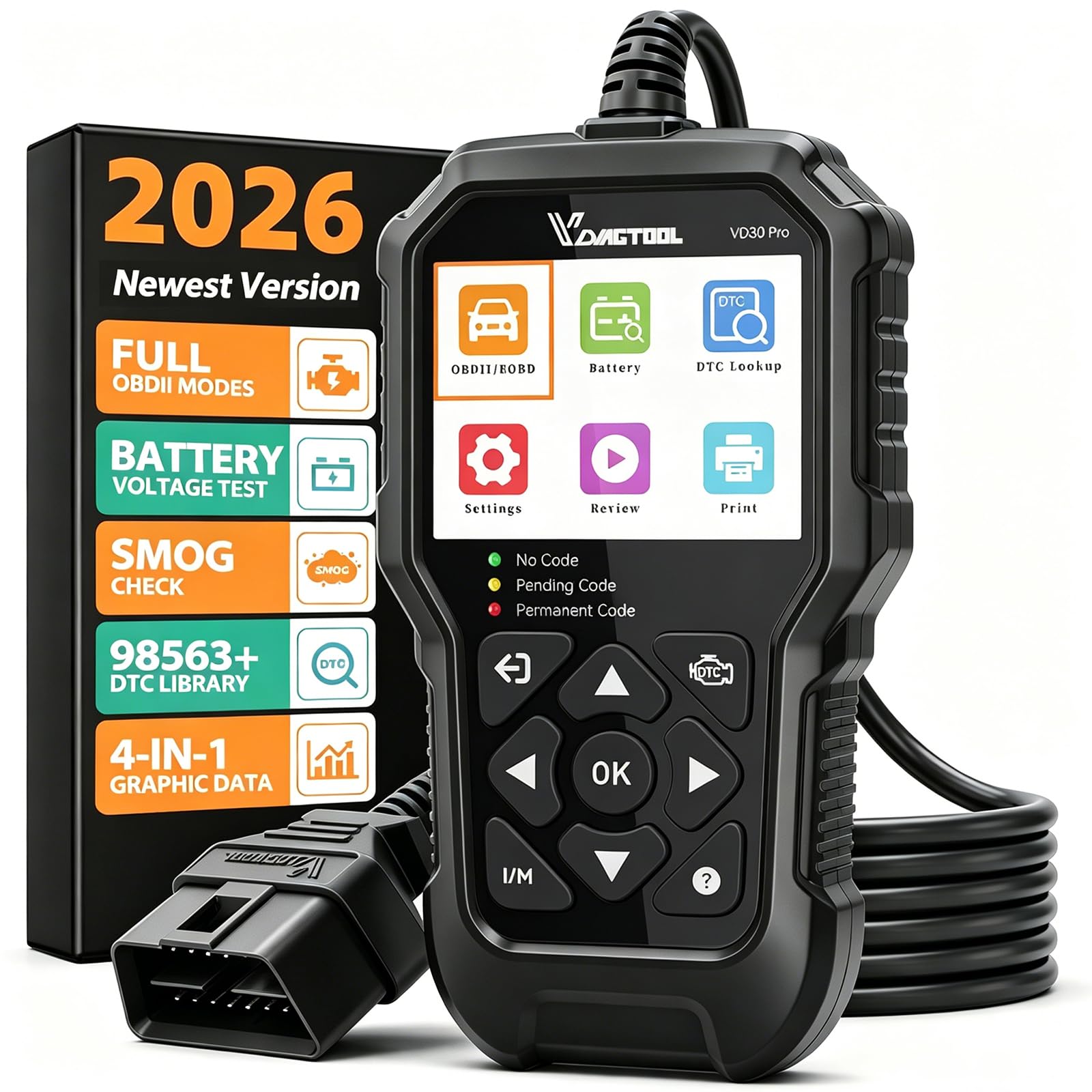
Packs all ten OBD2 tests and a 98,000-code library into a budget-friendly handheld
Do not let the approachable price fool you — the VD30 Pro performs all 10 essential OBD2 tests, which is the same full sweep as many pricier tools. It clears the check-engine light, reads and erases fault codes, and displays live data with 4-in-1 graphing, so you can watch four sensors at once on the 2.8-inch color screen. A one-click I/M readiness hotkey shows emission monitor status on a single screen for smog checks.
The built-in DTC library holds over 98,000 definitions that explain faults in plain English, plus a voltage test to catch no-start surprises and data review, playback, and printing to build service reports for your mechanic. The drop-resistant housing and upgraded processing chip are built for harsh garage conditions, and it ships ready — no firmware download required before first use. A Chevy Cruz owner cleared turbo, O2, MAP, MAF, and misfire codes with ease.
Functionality is the most-praised aspect, with ease of use close behind, and owners call the color GUI intuitive and the build sturdy. The fair caveats: it does not support TPMS reset, ABS, SRS, or airbag diagnostics — this is strictly engine and emissions territory. It comes with a 3-year warranty, lifetime free updates via USB on Windows, and 24/7 tech support, plus a 6-year warranty promise in the spec sheet.
The value argument
- All 10 OBD2 tests with 4-in-1 live graphing
- 98,000+ DTC library in plain English
- Ships ready with lifetime free USB updates
Where it stops
- No ABS, SRS, TPMS, or airbag coverage
- Engine and emissions only
Best budget angle: the most complete engine-and-emissions tool for the money, ideal for smog checks and DIY code clearing.
Pass if: you need airbag or brake-system diagnostics — this one will not see those modules.
9. A-Premium AD100 Code Reader

The compact first-timer reader that saves real money from the very first scan
If you have never owned a scanner, this is the gentle on-ramp. The AD100 is a straightforward check-engine code reader with a built-in DTC library of 100,000 entries, so it can tell you what a code means without you needing a second device. It reads fault codes, clears them, shows live data streams and real-time curves, and runs an O2 sensor test — all from a 2.8-inch color screen with a native resolution of 320×240.
It fits a wide range of vehicles, including 1996-2024 USA cars, 2000-2024 European cars, and 2008-2024 Asian cars, and it supports all major OBD protocols including KWP2000, 15765-4 CAN, ISO9141-2, and both J1850 variants. First-time reviewers point out “this little gem has already saved me hundreds of dollars” after one shudder and a persistent check-engine light, and another called it easy to use with clear manual instructions.
Functionality is the top-praised aspect, with ease of use second. The built-in I/M monitor readiness function lets you check MIL, fuel system, misfire, and catalyst data before a smog test, so you are not wasting trips to the station. The honest limits: it does not support full electric cars or 24V big trucks, and the one-year warranty covers only the cost of the item — not labor or towing. The manufacturer suggests repairing the fault before clearing the code, or the light will just come back.
Smart starter pick: a 100,000-code library and live data in a 2.75″L x 0.7″W x 5.31″H body that fits a door pocket, at an entry-level price.
Buy it for: your first code reader — simple, cheap, and genuinely useful for check-engine light anxiety.
Move up if: you own an EV, a 24V truck, or want ABS and airbag coverage down the road.
Understanding the Specs
OBD2 Protocol Coverage
Every car sold in North America since 1996 speaks the OBD2 language, but it uses several dialects — KWP2000, CAN, ISO9141-2, and J1850 among them. A reader that supports all of them, like the A-Premium AD100, will talk to almost any gasoline car you plug it into. If a scanner only handles CAN, older vehicles may not connect at all.
CAN FD Support
CAN FD (CAN with Flexible Data-rate) is the newer, faster communication standard found in many 2020+ vehicles. Standard scanners physically cannot talk to these cars, but the XTOOL AD20 Pro includes built-in CAN FD hardware, making it fully compatible with newer GM, GMC, and Chevrolet models. If you drive a recent domestic car, this spec matters more than any other.
FAQ
Will any of these scanners work on my 1996 or newer car?
What is the difference between reading engine codes and ABS or SRS codes?
Do Bluetooth scanners that use my phone work better than handheld ones?
Can these scanners reset my oil life or brake service light?
Do I need to pay a subscription for any of these code readers?
What does I/M Readiness mean and why should I care?
Will these scanners work on my truck or SUV?
Can these readers check a used car before I buy it?
What does CAN FD support actually mean for a 2020 or newer car?
Final Thoughts: The Verdict
For most buyers, the best code reader for cars is the OBDLink MX+ because its app compatibility and OEM-level depth cover far more than a basic code — plus it is the crowd favorite with a 4.6-star score shared by over 15,000 owners. If you want technician-verified fix reports and class-leading DIY guidance, grab the BlueDriver. And for brake resets and maintenance functions that pay for themselves, the FOXWELL NT614 Elite is the one to reach for.
How We Picked
We do not accept paid placement. Every pick is matched to a real buyer and a real use-case; we do not hands-on test units.
Sources & Methodology
Specifications: manufacturer listings and product documentation. Review insights: verified customer reviews, as of August 2026. Pricing: not shown on this page (it changes often); check the current price via the retailer link.
As an Amazon Associate, Trending Car earns from qualifying purchases. This does not affect which products we feature.