
Our readers keep the lights on and my garage snacks stocked. As an Amazon Associate, I earn from qualifying purchases.
Specs are compiled from manufacturer listings and verified buyer reviews and can change over time — please confirm the key details on the product page before buying.
That loose dashboard trim, the cracked bumper tab, the emblem that keeps peeling off — a car’s interior is a harsh place for glue. Heat, vibration, and grime break down weak adhesives fast, so the right pick depends on what you are bonding and how patient you are with curing times.
I’m Min Islam — the founder and writer behind Trending Car. This guide is built by comparing the manufacturers’ published specifications and the patterns across verified customer reviews, so you get each pick’s real strengths and trade-offs instead of marketing spin.
Choosing the right car plastic glue depends on how fast you need the repair done, how much strength the part must handle, and whether it will face heat or vibration. For a quick trim fix, a fast-curing glue saves you time; for a bumper repair, a high-strength epoxy holds up better under stress.
Our Picks at a Glance

How To Choose The Best Car Plastic Glue
Car interiors and exteriors demand more from an adhesive than a household glue can provide. You need a bond that survives temperature swings, road vibration, and exposure to automotive fluids without failing.
Think about cure vs. set time first
“Set time” is how long you must hold a part in place; “cure time” is when the bond reaches full strength. A glue that sets in 10 seconds may still need 24 hours to cure completely, so plan around the full cure, not just the quick grab.
Match the formula to the plastic
Thin liquid super glues flow into hairline cracks, while gel versions stay put on vertical parts like bumpers. For larger gaps or flexible plastics, a two-part epoxy or urethane adhesive is often the stronger choice because it can fill voids.
Check the strength number
Tensile strength, measured in PSI, tells you how much pull the bond can withstand before breaking. Higher PSI means a more durable repair for load-bearing parts like brackets or bumper mounts.
Quick Comparison
| Model | Best For | Set Time | Full Cure | Tensile Strength | Amazon |
|---|---|---|---|---|---|
| J-B Weld Light-Activated Superglue★ Best Overall | Instant UV repairs | 10 seconds | 24 hours | 2800 PSI | Amazon |
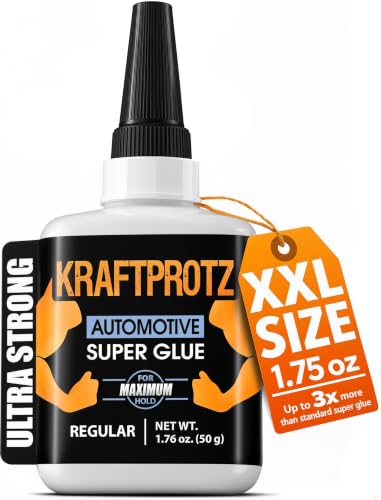
| Automotive Super Glue LiquidCrack Penetrator | Flowing into microcracks | Instant | 4 hours | — | Amazon |
| J-B Weld KwikWeld | Versatile quick epoxy | 6 minutes | 4 hours | 3127 PSI | Amazon |
| Automotive Super Glue Gel | Vertical no-drip repairs | Instant | — | — | Amazon |
| J-B Weld Plastic Bonder Black | Heavy plastic repairs | 15 minutes | 30 hours | 3770 PSI | Amazon |
| 3M Plastic Emblem & Trim Adhesive | Emblems and trim | 15 minutes | 24 hours | — | Amazon |
| Permatex 5 Minute Plastic Weld | Gap-filling repairs | 5 minutes | — | — | Amazon |
In-Depth Reviews
1. J-B Weld Light-Activated Superglue
Our pick — over 4.5★ from 600+ verified ratings; the strongest balance of quality and price.
The instant-bond specialist that cures in 10 seconds flat when you shine its light on the joint.
This is the rare glue that takes the waiting out of small repairs. Squeeze it on, aim the included UV light at the spot, and the bond sets in 10 seconds — handy when you are fixing a clip or trim piece and want to put the panel back immediately.
That speed comes with a catch: a full cure, meaning maximum strength, still takes the full 24 hours. The formula cures without the light too, setting in 1 minute and reaching that same 24-hour cure, so you are not locked into carrying the lamp. With a tensile strength of 2800 PSI and a precision tip applicator, it is built for tidy, controlled placement rather than oozing coverage.
Buyers report this glue is a favorite for 3D printing and model work, with one noting “Sets quick with the included UV light.” The recurring gripe is the cap — if you tip the bottle over it can leak and glue the cap shut, so keep it upright and clean the tip after every use. At 5g per tube in a 2-pack, it is a compact kit, not a workshop bulk supply.
What Wins People Over
- True 10-second set with the included UV light — the fastest grab in this lineup
- Strong 2800 PSI tensile rating for a super glue
- Bonds far beyond plastic: leather, glass, metal, rubber, wood, and more
Know Before You Buy
- Full cure takes 24 hours even though it sets instantly
- The cap can stick shut if glue dries in the tip
- Small 5g tubes go fast on bigger repairs
Reach for it if: you want the fastest possible set time and work on small, precise jobs like clips, trim, or electronics.
Look elsewhere if: your repair is a large cracked panel that needs gap-filling strength — a two-part epoxy suits that better.
2. Automotive Super Glue Liquid
A watery-thin formula engineered to seep into hairline cracks that gels simply cannot reach.
Where gel glues sit on the surface, this one uses capillary action to pull itself into tight gaps and microcracks in headlight housings, dashboards, and trim seams. It is a different tool for a different problem — invisible repairs in hard-to-reach spots.
It is rated for the punishment a car dishes out, holding up from -40°F to 230°F (-40°C to 110°C) and resisting oil exposure and vibration. The 1.75 oz bottle is roughly workshop-sized, and the precision dropper tip with an anti-clog cap keeps the flow controlled and the tube usable between projects.
Owners mention it works like magic for reattaching a visor and holding a separating front bumper on a Golf R — “not a body shop bill,” as one put it. The notes come with a caution: it has a strong chemical smell, and a thin glue means a missed grip may need a second pass.
Why it earns its spot: this is the pick for hairline cracks and invisible seams, offering a 4-hour full cure that beats the 24-hour rivals in this guide. You can finish a repair and use the part the same day, unlike the slower epoxies that need a full day to set.
Best for: repairing cracked housings, trim seams, and any gap where a gel physically cannot flow.
Think twice if: you are bonding vertical parts — a gel’s no-drip body holds position better there.
3. J-B Weld KwikWeld
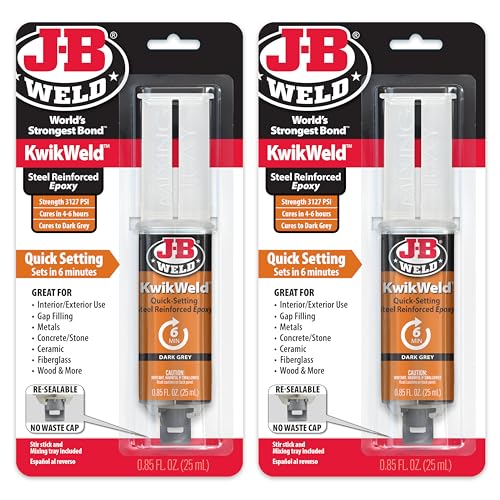
The fast-setting two-part epoxy that bonds like steel yet stays simple enough for a first-time DIYer.
When you need load-bearing strength rather than a quick grab, this epoxy delivers a tough 3127 PSI tensile rating — the strongest of the fast epoxies here and a clear step above the 2800 PSI of the UV glue above. The dual-syringe design pushes out a perfect 1:1 mix, so you skip the guesswork most epoxies punish you for. That means a reliable bond for parts that carry weight, like brackets or mounts.
It sets in 6 minutes and reaches full cure in 4 hours, and the dark grey finish sands and paints over cleanly. The syringe has a re-sealable cap that stops the remaining product from drying out between uses, and it bonds metal, plastic, PVC, wood, concrete, ceramic, and fiberglass.
The thing everyone raves about is the bonding performance, and owners have used it to reinforce plastic brackets and repair laptop hinges so the part holds “better than the original.” The honest note: it is a 2-pack, so open one syringe at a time — once opened, the unused portion can start to degrade. Plan your repairs so you use each syringe fully before opening the next.
The Strong Points
- 3127 PSI tensile strength for load-bearing fixes
- Simple 1:1 syringe mix with no measuring
- Only 4 hours to full cure — faster than most epoxies
The Trade-Offs
- 6-minute set time means you must hold parts
- Two-pack format; opened syringes dry out over time
- Dark grey color may show on light plastics
Choose it for: structural repairs on brackets, mounts, and housings where a super glue would simply snap.
Skip it for: tiny instant fixes where you want a bond in seconds, not minutes.
4. Automotive Super Glue Gel
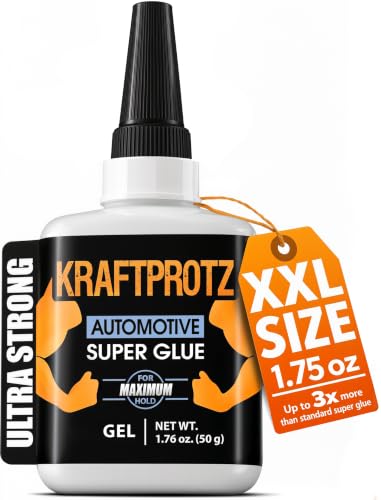
A thick, no-drip gel that stays exactly where you put it on bumpers and vertical trim.
Unlike the liquid pen-pusher above, this gel holds position on vertical car parts without running. That makes it the right call for dashboard panels, fender clips, mirror housings, and body trim that would drip with a thin super glue.
It is rated for the stress of the road — engine vibration, temperature cycles, and oil exposure are all accounted for, with heat resistance up to 230°F (110°C). The anti-clog tip keeps the gel flowing cleanly even after weeks between uses, and the 1.75 oz bottle holds roughly three times the glue of a typical automotive tube.
Customers note it held a Nissan Pathfinder bumper corner together for months in “beyond hot and 1000% humid” conditions, and fixed broken bumpers and door trim without fuss. The one quirk: the label may arrive in German, though the glue itself works exactly the same.
The verdict: the best high-value gel here for anyone bonding vertical parts, with a no-drip body and heat resistance that suits underhood use.
Grab this if: you are repairing bumpers, trim, or mirror housings that need a gel to stay put.
Pass if: you need to seep glue into a hairline crack — the thin liquid formula does that job.
5. J-B Weld Plastic Bonder Black
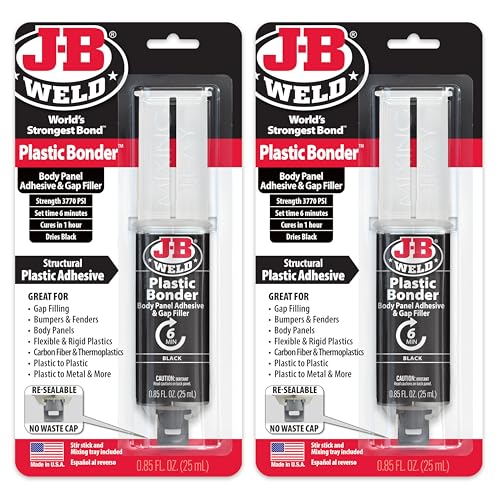
A two-part urethane that outguns every other bond here with a 3770 PSI tensile rating.
This is the heavy artillery of the lineup, purpose-built for plastics and packing the highest tensile strength in this guide — 3770 PSI versus 3127 PSI for the KwikWeld. It is a multipurpose gap-filling system that bonds thermoplastics, carbon fiber composites, coated metals, fiberglass, and aluminum, making it ideal for bumper repairs and filling dents. If your bumper has a crack or a dent, this glue fills the gap and holds strong where lighter glues would fail.
It sets in 15 minutes but takes the full 30 hours to cure, so it is not a same-day fix. That patience buys you a thick, controllable formula that does not drip, plus a black finish that sands easily and blends into dark trim. The dual-syringe delivers a perfect 1:1 ratio with no measuring, and the re-sealable cap protects the unused portion.
Owners describe the cured result as feeling like hard plastic that you keep finding uses for, and it has fixed cracked wiper covers and loose bumper brackets that then held under stress. The fair warning: it is not for PP or PE plastics, and the stiff bond can break under repeated flexing, so save it for rigid repairs.
Where It Excels
- Highest tensile strength here at 3770 PSI
- Sands and paints cleanly after curing
- Thick, no-drip body fills gaps and dents
Where It Slows You Down
- 30-hour full cure — a multi-day project
- Not compatible with PP or PE plastics
- Bond is stiff; can break under heavy flexing
Use it for: rigid plastic repairs like bumpers, brackets, and dents where maximum strength matters more than speed.
Avoid it for: flexible parts that bend repeatedly — the bond may not survive the movement.
6. 3M Plastic Emblem & Trim Adhesive

The clear, quick-drying adhesive trusted to keep emblems and trim attached through car washes.
This one is made for a specific job: reattaching plastic and metal emblems, logos, side trim, and interior panels. It goes on clear and dries clear, so you will not see the repair on visible parts or transparent materials like cracked light lenses.
It sets in about 15 minutes and fully cures in 24 hours, and the 1 fl oz tube applies directly with no mixing or extra tools. The formula is weather-resistant, standing up to water, heat, vibration, and automotive fluids — exactly what a badge on a bumper faces daily.
Reviewers point out an emblem held for 3 months through “numerous carwashes,” and the 3-pack ensures you have spare tubes for multiple projects. The practical note: it starts curing almost immediately, so you must work fast, and applying too much makes it ooze out of the joint.
The short take: a purpose-built, mess-free pick for emblems and trim, backed by the 3M brand and a pack-of-3 value.
Perfect for: reattaching emblems, logos, and trim that face weather and car washes.
Not for: structural or load-bearing repairs — that is the epoxies’ territory.
7. Permatex 5 Minute Plastic Weld

A fast, gap-filling plastic weld that you can drill, machine, and paint after it sets.
This two-part adhesive is the better choice than super glue when parts have larger gaps, because the thick gel fills voids rather than just coating a surface. It sets in about 5 minutes, making it one of the faster epoxies for a repair you want done before lunch.
Once cured, it can be drilled, machined, filed, and painted — so you can shape it like a replacement part, not just stick two pieces together. The 25 ml dual-syringe dispenses a clean 1:1 mix, and the bond resists most liquids including fuels and solvents, which is a serious plus for anything near an engine bay.
Shoppers say it held trim that other adhesives had failed on, and one even tried to break the joint afterward and could not — the bond ended up as strong as the original material. The smell when mixing the two parts is noticeable, though owners treat it as a minor trade-off for the strength.
Why it stands out: the only pick here that drills and machines like solid material, giving you the freedom to shape the repair.
Choose it if: you are filling gaps and want a repair you can drill and paint to match.
Reconsider if: you dislike strong chemical smells during mixing — the epoxy scent is hard to ignore.
Understanding the Specs
Set Time vs. Cure Time
Set time is how long you hold the part before the glue grabs. Cure time is how long until the bond reaches full strength. A 10-second set still needs a 24-hour full cure, so never stress a repair early.
Tensile Strength (PSI)
Tensile strength measures how much pull a bond survives before breaking. Higher PSI means a stronger repair for load-bearing parts like brackets and bumper mounts. For reference, the epoxies here range from 3127 to 3770 PSI.
FAQ
What is the difference between cyanoacrylate glue and epoxy for car plastic?
How long does car plastic glue take to fully cure?
Will car plastic glue hold up to heat and vibration in the summer?
Can I use super glue on a cracked plastic bumper?
What is a good glue for reattaching car emblems and trim?
Does the UV light glue really cure in 10 seconds?
Can these glues bond to all types of plastic?
What does tensile strength in PSI mean for my repair?
Is a gel or liquid super glue better for car interiors?
Final Thoughts: The Verdict
For most drivers, the standout car plastic glue is the J-B Weld Light-Activated Superglue because its 10-second UV set is genuinely transformative for small, fiddly jobs. If you are repairing a structural bracket or bumper mount, the J-B Weld KwikWeld brings a strong 3127 PSI bond with only a 6-minute set time. And for heavy plastic repairs where you want maximum strength, the J-B Weld Plastic Bonder leads the pack at 3770 PSI, though it asks for a 30-hour cure.
How We Picked
We do not accept paid placement. Every pick is matched to a real buyer and a real use-case; we do not hands-on test units.
Sources & Methodology
Specifications: manufacturer listings and product documentation. Review insights: verified customer reviews, as of August 2026. Pricing: not shown on this page (it changes often); check the current price via the retailer link.
As an Amazon Associate, Trending Car earns from qualifying purchases. This does not affect which products we feature.