
Our readers keep the lights on and my garage snacks stocked. As an Amazon Associate, I earn from qualifying purchases.
Specs are compiled from manufacturer listings and verified buyer reviews and can change over time — please confirm the key details on the product page before buying.
Night vision in a dash cam is about capturing readable license plates in low light, not just a grainy glow. Night vision in a dash cam is about capturing readable license plates in low light, not just a grainy glow. This guide compares specs and verified reviews to rank the best night vision car cameras for real-world driving.
I’m Min Islam — the founder and writer behind Trending Car. This guide is built by comparing the manufacturers’ published specifications and the patterns across verified customer reviews, so you get each pick’s real strengths and trade-offs instead of marketing spin.
You need a camera with a large aperture or a sensitive sensor to capture clear evidence after sunset, and the choices below rank the best night vision car camera options you can buy right now.
Our Picks at a Glance
How To Choose The Best Night Vision Car Camera
To see clearly at night, you need a lens that lets in plenty of light and a sensor that handles it well. Focus on three specs that matter most for night clarity: aperture, sensor, and HDR/WDR.
The Aperture: The Gateway for Light
The “F-number” on the lens is the single biggest clue. A lower number means a wider opening, which pulls in more light. Look for F1.8 or lower — F1.6 and F1.55 are excellent for dark roads, while F1.8 is solid for city driving with streetlights.
The Sensor: How the Image Is Processed
The sensor processes light into the image. Sony’s STARVIS and STARVIS 2 sensors are specifically designed for low-light recording, boosting detail while cutting down the grainy noise you usually see at night. If you drive on unlit rural roads, a STARVIS 2 sensor is worth the premium.
HDR vs WDR: Handling Glare and Contrast
These technologies balance bright and dark areas in the same frame. When headlights from oncoming traffic flood the lens, HDR (High Dynamic Range) or WDR (Wide Dynamic Range) keeps the rest of the scene visible instead of washing it out. If you face heavy traffic or tunnels, this matters as much as the aperture.
Quick Comparison
| Model | Best For | Night Sensor | Resolution | Max Storage | Amazon |
|---|---|---|---|---|---|
| TERUNSOUl 4K 3-Channel★ Best Overall | Total coverage & GPS | Starlight F1.6 | 4K Front | 512 GB | Amazon |
| REDTIGER F4 ProSleek Setup | Compact touchscreen | STARVIS 2 | 4K + 1080P | — | Amazon |
| ROVE R2-4K PRODual Pro | Dual STARVIS 2 clarity | STARVIS 2 x2 | 4K + 2K | 1 TB | Amazon |
| FAIMEE 4K Dual | Budget value | F1.8 | 4K + 2K | 256 GB | Amazon |
| Coolcrazy 4K Dual | Smooth 60fps motion | STARVIS F1.8 | 4K + 1080P | 256 GB | Amazon |
| 70mai A800SE | ADAS safety alerts | F1.55 + Dual HDR | 4K + 1080P | 512 GB | Amazon |
| 70mai T800E | Rideshare interior view | F1.55 + IR | 4K + 1080P x2 | 512 GB | Amazon |
| REDTIGER F17 Elite | Full-color night video | STARVIS 2 x2 | 4K + 2.5K + 1080P | 512 GB | Amazon |
| VIOFO A329S | Highest performance | STARVIS 2 x2 | 4K 60fps + 2K | 4 TB SSD | Amazon |
In‑Depth Reviews
1. TERUNSOUl 4K Dash Cam Front and Rear
Our pick — over 4.5★ from 400+ verified ratings; the strongest balance of quality and price.
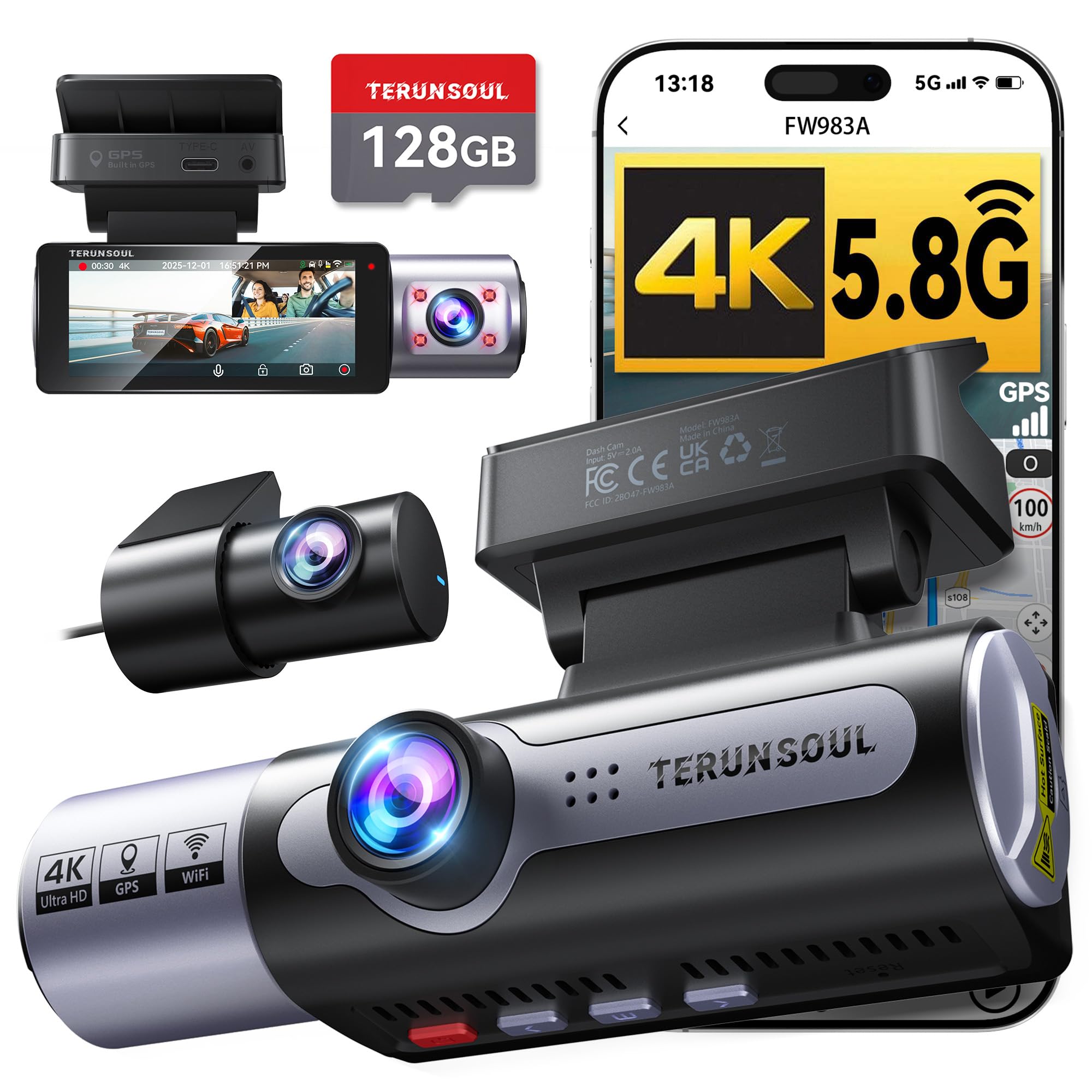
This dash cam uses three lenses to record the front, rear, and cabin, giving you near-360° coverage so you can see what happens around your car from every angle.
This is the rare dash cam that watches everything at once. The front camera uses a 170° ultra-wide angle, while the rear and cabin cameras each span 165°, so you get panoramic coverage that catches both the road and what happens inside the car. It records simultaneously in UHD 4K front, 1080P rear, and 1080P cabin — a safety net for family road trips, commercial drivers, or rideshare work.
What makes it the top pick is how it handles darkness. Its starlight-grade five-layer lens and ultra-large F1.6 aperture, boosted by HDR technology, pull in enough light to capture critical details on unlit streets. Owners consistently call the video quality “sharp day and night,” and the built-in high-precision GPS embeds routes, speed, and location directly into footage for solid accident evidence.
It includes a 128GB card and 5.8GHz WiFi for fast app previews. The collision sensor locks footage automatically during a severe impact, and loop recording overwrites the oldest files so you never run out of space. The one catch: a separate hardwire kit is needed for 24H parking mode, which is not included in the box.
What Wins People Over
- crisp 4K video that stays sharp in low light
- 3-channel coverage for front, rear, and interior
- 128GB card included with built-in GPS and fast WiFi
Before You Buy
- Parking mode requires a separate hardwire kit
- The rear camera cable runs short for larger vehicles
Reach for it if: you want one camera that watches every angle of your car with genuine night vision and GPS evidence built in.
Plan for this: budget extra time and a hardwire kit if you want around-the-clock parking surveillance.
2. REDTIGER F4 Pro 4K STARVIS 2 Dash Cam
A compact front-and-rear cam whose STARVIS 2 sensor excels in low light.
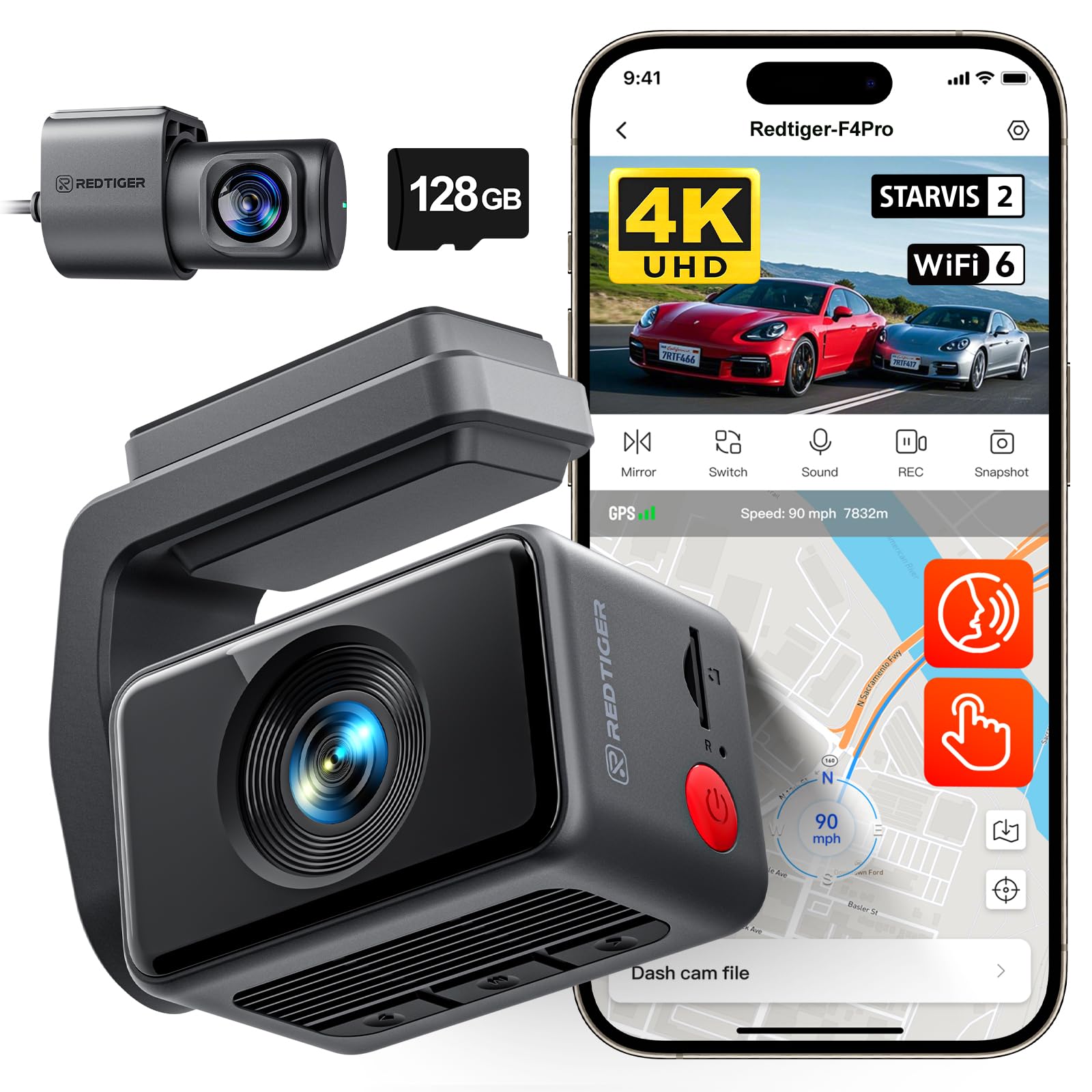
This one proves small can be seriously capable. The F4 Pro packs a STARVIS 2 sensor, a Sony imaging chip engineered for dark scenes, into a compact body with a removable slide cover that won’t block your view. It records crisp 4K front and 1080P rear footage day and night, with owners reporting clean, vivid detail in low light.
Operation is built around a 2.2-inch touch screen and hands-free voice control, so you can capture moments or adjust settings without taking your eyes off the road. The 5.8GHz WiFi 6 connection enables fast file transfers, and the built-in GPS logs your route and speed data into every clip. The included 128GB card gives you hours of 4K recording from the start.
Unlike many cams that only record black-and-white at night, the STARVIS 2 sensor here reveals vivid details in low light. Dual-mode parking monitoring uses a G-sensor to lock collision footage and a time-lapse mode to capture long periods while saving storage. The trade-off: a few owners find the lens field of view slightly narrower than expected, and the touch screen is small for reading text.
Compact clarity: STARVIS 2 night vision, voice control, and a responsive touch screen in a tidy package that hides behind the mirror.
Worth noting: the field of view runs a touch narrow, and the small screen makes menus a squint.
3. ROVE R2-4K Dual PRO Dash Cam
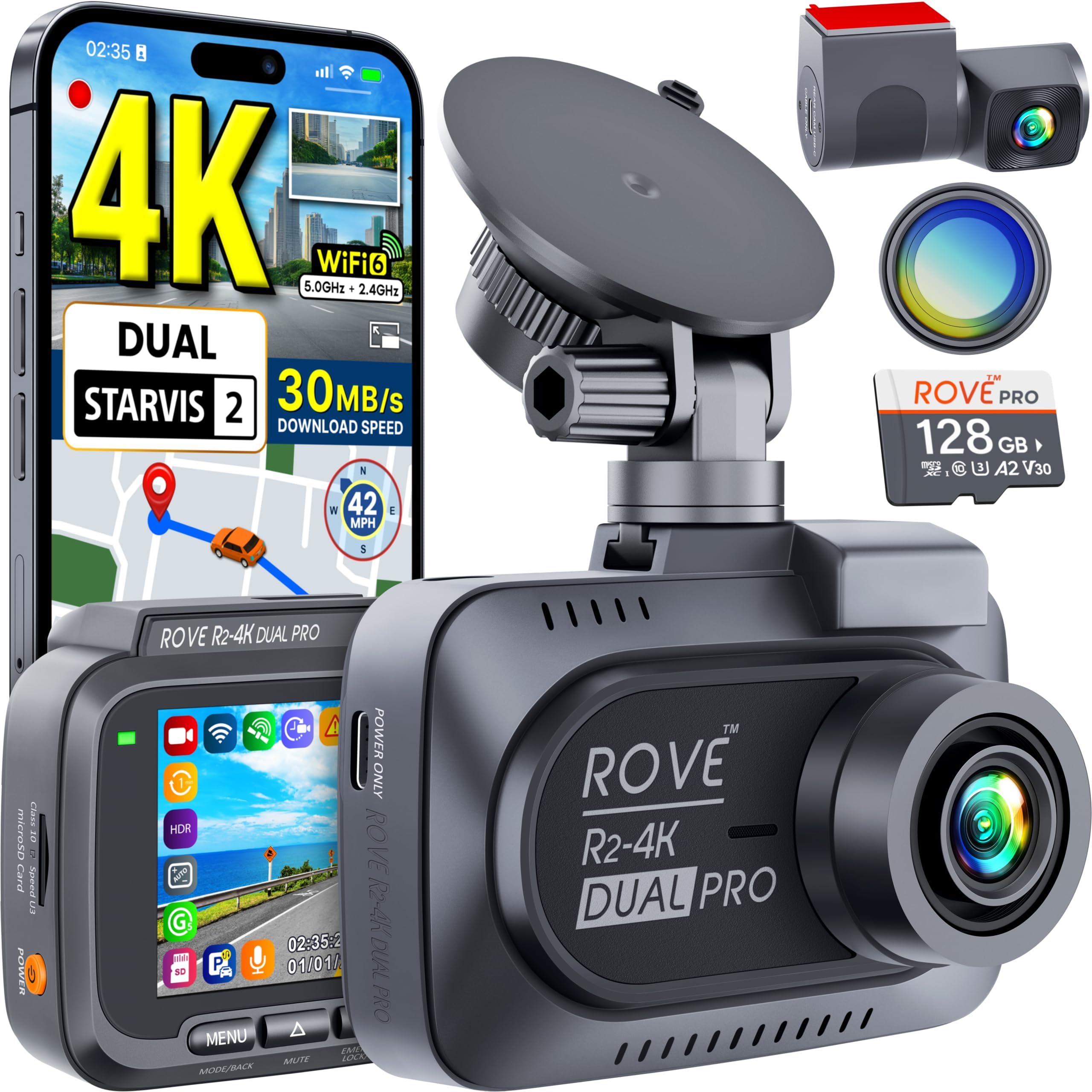
Both the front and rear lenses use the top-tier STARVIS 2 sensor (a Sony image sensor designed for low light), so you get clear night detail that helps read number plates in the dark.
Most dual cams only put the premium sensor up front, but the ROVE R2-4K Dual PRO runs Sony’s STARVIS 2 in both cameras. The front uses the 8MP IMX678 and the rear the 5MP IMX675, giving you 4K front and 2K rear recording with reduced noise and minimized motion blur. Owners specifically praise how readable license plates stay at night.
The lenses are built around a wide F1.7 front aperture and an even larger F1.55 rear aperture, with a 150° front and 140° rear field of view. That combination captures clear footage in tunnels, during rain, and through oncoming headlight glare. Footage transfers over dual-band WiFi 6 at speeds up to 30MB/s, so a full 4K clip moves to your phone fast.
It includes a 128GB card, CPL filter, and both suction and sticky mounts. Storage expands up to 1TB for long road trips. The built-in quad-mode GPS covers GPS, BEIDOU, GALILEO, and GLONASS for precise route tracking. The honest catch: the rear camera cable runs short for larger SUVs, and several owners needed to buy a longer one.
The night specialist: dual STARVIS 2 sensors give it a genuine edge over cams with a single premium sensor, especially for plate capture after dark.
Measure first: check your rear camera cable run — SUVs may outpace the included wire.
4. REDTIGER F17 Elite 4K Dash Cam 3 Channel
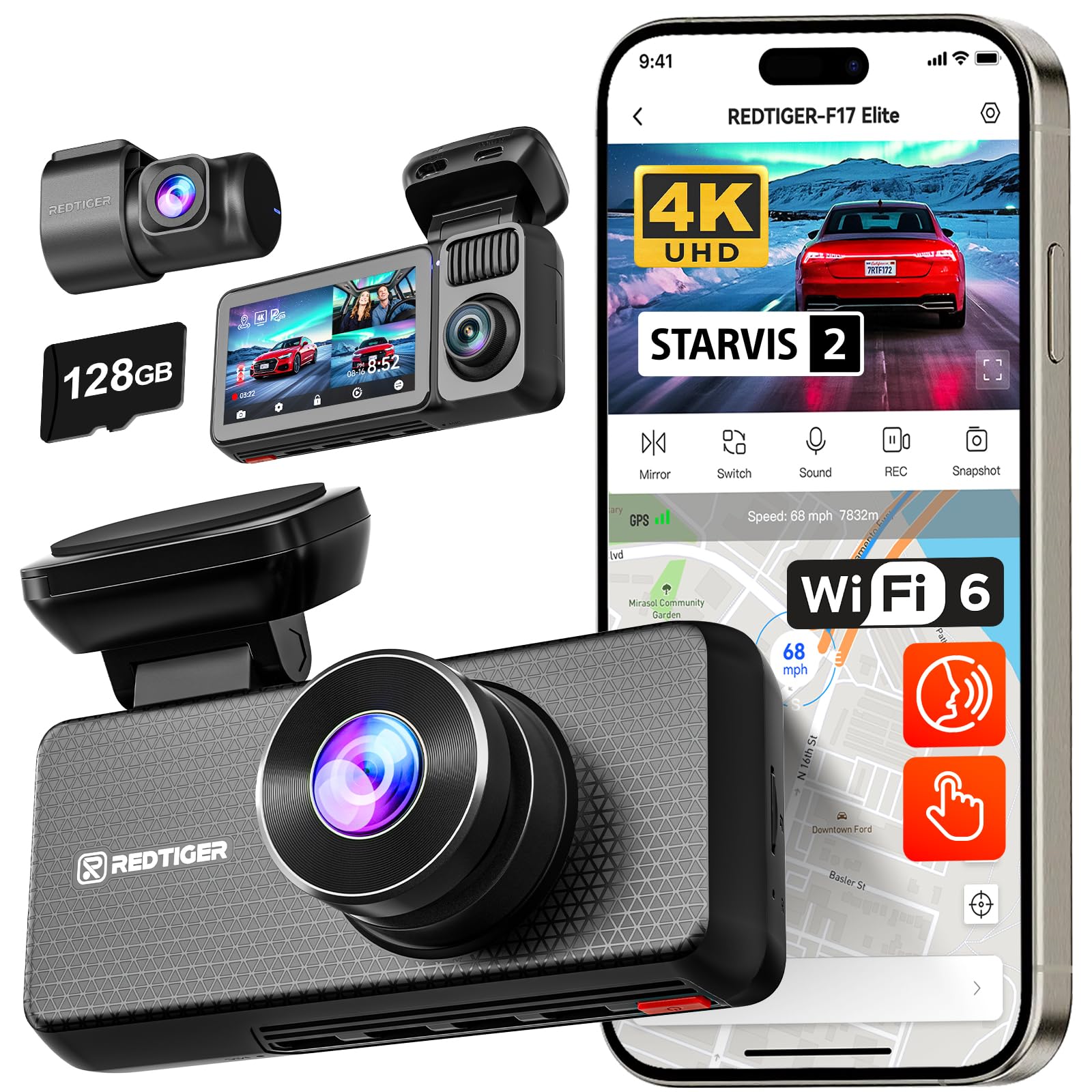
Full-color night vision that keeps faces and license plates in vivid detail, not grayscale.
Standard night vision turns everything black-and-white, but the F17 Elite breaks that pattern with full-color low-light recording on both the front and cabin cameras. Dual STARVIS 2 sensors — an 8MP IMX678 up front and 4MP IMX675 in the rear — deliver true 4K front, 2.5K rear, and 1080P cabin footage. That means you see plate numbers and even facial details in color when other cams show only silhouettes.
The 24/7 parking protection uses the same full-color tech, so a hit-and-run or theft attempt is captured with clear, identifiable detail instead of grainy shadows. Owners describe the front camera footage as crisp and sharp, with the STARVIS 2 and HDR combination handling night driving confidently. The 5.8GHz WiFi 6 connection downloads clips at up to 30MB/s.
Control is split between a touchscreen and voice commands, and a privacy toggle lets you switch the cabin camera off when you want. It ships with a 128GB card and supports up to 512GB. One honest note: a few buyers report the unit can shut down in extreme heat when parked, and the rear wire takes patience to route cleanly.
Color at night: the full-color parking and cabin view is a real advantage for identifying people and plates after dark.
Keep it cool: extreme summer heat may trigger shutdowns in parking mode — switch it off in brutal weather.
5. 70mai 4K Dash Cam T800E

A 3-channel system with a switchable infrared cabin cam built for rideshare drivers.
If you drive for Uber or Lyft, the cabin camera is the whole point — and the T800E does it properly. It records 4K front, 1080P interior, and 1080P rear simultaneously, with an interior camera that has switchable infrared recording. You can turn IR on for clear night footage inside the car, or off when you don’t need it, giving you a full picture of every passenger interaction.
Night performance comes from an F1.55 aperture, a 7-layer glass lens, and HDR imaging with 3D noise reduction. That combination keeps license plates readable and road details sharp after sunset. The front camera’s ultra-wide lens gives excellent visibility for city streets and highways alike. A built-in 5-mode GPS tracks location, speed, and routes with high accuracy.
Wi-Fi 6 makes file transfers reach speeds up to 10MB/s, and hands-free voice control lets you snap photos or lock footage without touching the camera. It ships with a 64GB SD card and supports up to 512GB. The super capacitor design handles extreme temperatures from 14°F to 140°F without the risks of a lithium battery. The honest trade-off: a few owners find the app connection occasionally drops, and recording on all three channels fills the 64GB card surprisingly fast.
Built for the cabin: the switchable IR interior cam and 3-channel coverage make it ideal for rideshare and family safety.
Watch storage: three simultaneous channels eat through the 64GB card quickly — a larger card is worth the upgrade.
6. 70mai 4K Dash Cam A800SE
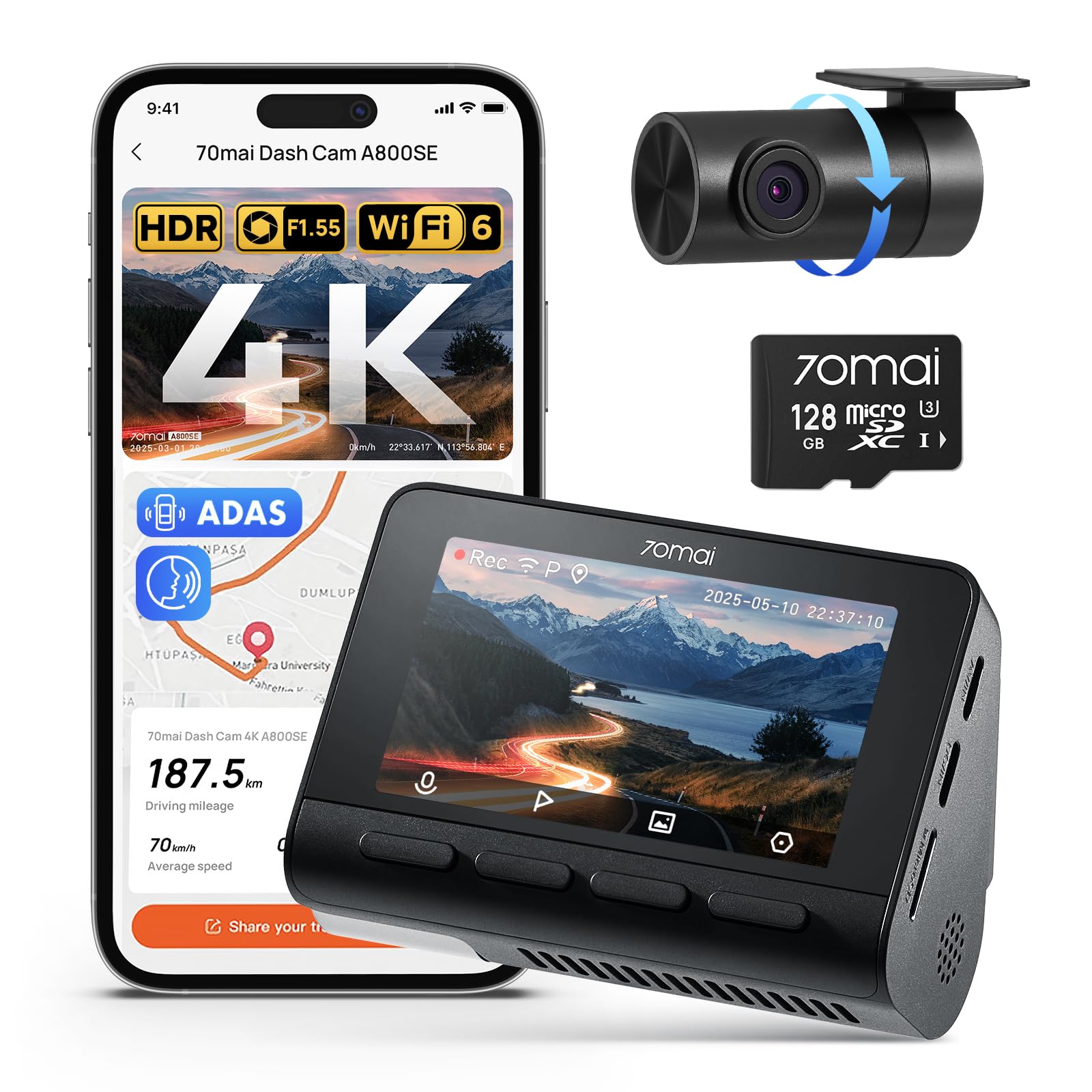
A 4K front cam with a huge F1.55 aperture and ADAS alerts that warn you of hazards.
The A800SE is the smart pick for drivers who want night vision plus active safety warnings. Its front camera uses a 7-layer glass lens with an F1.55 aperture — one of the widest openings in this list — combined with Dual HDR technology to brighten footage in tunnels, rain, and glare. The rear camera is 1080P with an adjustable lens that can record the cabin or behind the vehicle.
what separates it is ADAS (Advanced Driving-Assistance System), which alerts you with real-time voice warnings if you drift out of your lane or get too close to the car ahead — a layer of protection most dash cams don’t offer. Built-in Wi-Fi 6 (the latest wireless standard) enables fast data transfers, and OTA (over-the-air) updates keep the system tune without needing to plug it into a computer. The 3-inch IPS screen (a type of display with wide viewing angles) stays bright and easy to read even in sunlight.
It comes with a free 128GB microSD card and supports up to 512GB, with a built-in G-sensor that locks footage during impacts and optional 24-hour parking surveillance. Across the review data, quality and video quality are the two most-praised aspects by a wide margin. The fair caveat: a handful of owners mention the rear camera can stop working in some cases, and night quality is strong but not the absolute best in this lineup.
The Highlights
- F1.55 aperture and Dual HDR for bright, clear night video
- ADAS lane departure and collision alerts with voice warnings
- Free 128GB card and Wi-Fi 6 for fast transfers
The Trade-offs
- Occasional rear camera reliability issues reported
- Night footage is good but trails the STARVIS 2 models
7. FAIMEE 4K Dash Cam Front and Rear
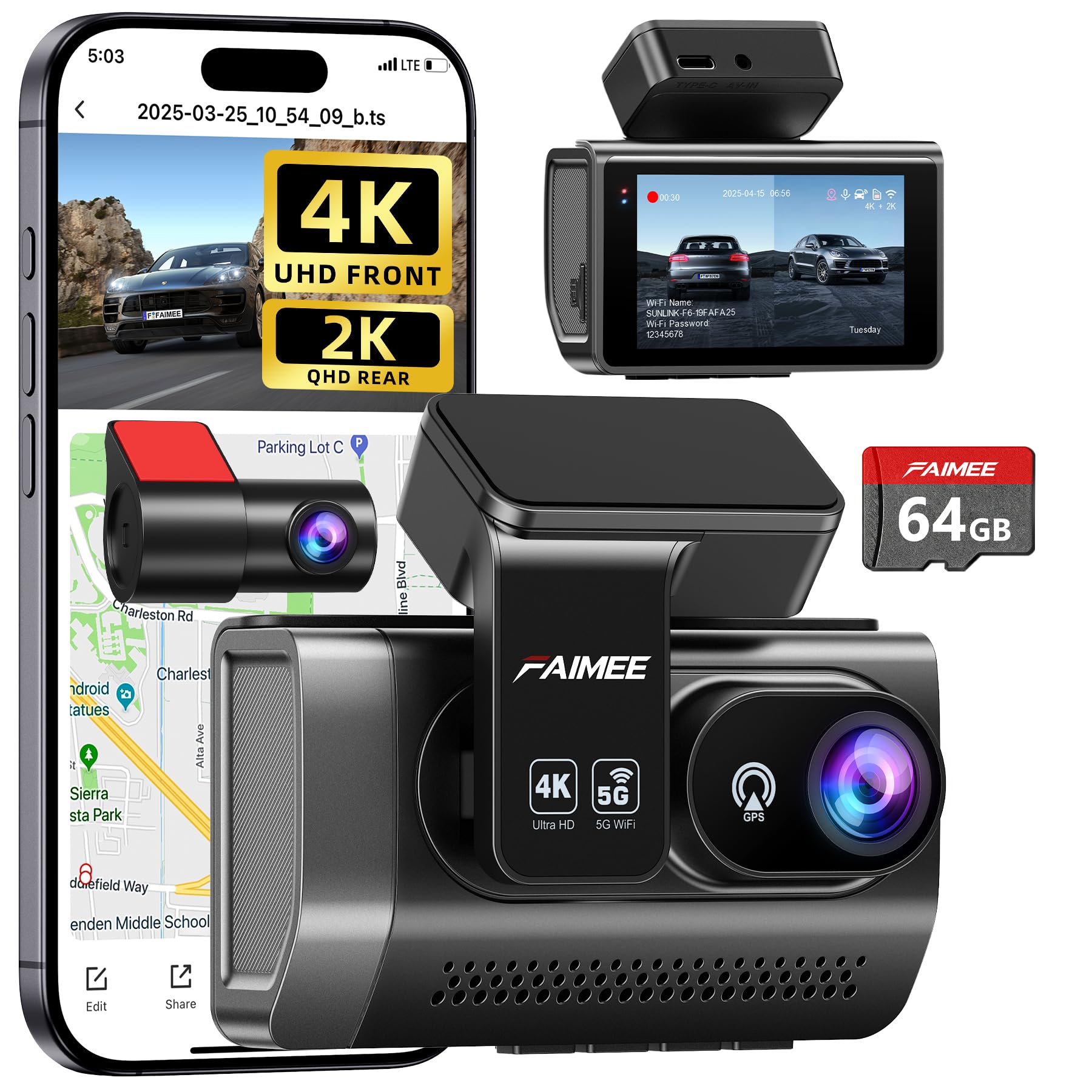
A budget-friendly 4K+2K dual cam that still delivers strong low-light footage.
The FAIMEE proves you don’t need to spend big for clean night video. It records 4K UHD (3840×2160P) up front and 2K (2304x1296P) in the rear, using an F1.8 ultra-large aperture with advanced optics. The 170° wide-angle lenses cover up to six lanes, and enhanced WDR plus night vision keeps footage balanced in low-light or high-contrast scenes. It’s a genuine value pick for daily commuters.
Setup is genuinely straightforward — owners describe the wiring as fairly easy to run through the vehicle, with good coverage area and very good video quality. The compact 3-inch IPS screen tucks discreetly behind the rearview mirror without obstructing your view. A 64GB high-endurance memory card is included, and storage expands up to 256GB.
The dual-band WiFi (5.8GHz/2.4GHz) connects to the FAIMEE app for live view and instant downloads, while the built-in GPS logs speed, route history, and location coordinates. Time-lapse recording provides 24/7 parking monitor coverage, though it requires a hardwiring kit that is not included. The honest trade-off: a few owners find the camera body a bit larger than rivals, and the manual is challenging to follow for advanced settings.
Best value night cam: 4K+2K resolution and a solid F1.8 aperture at a price that undercuts the premium field.
Expect to tinker: the units run slightly larger, and the manual won’t hold your hand through every setting.
8. Coolcrazy 4K Dash Cam Front and Rear
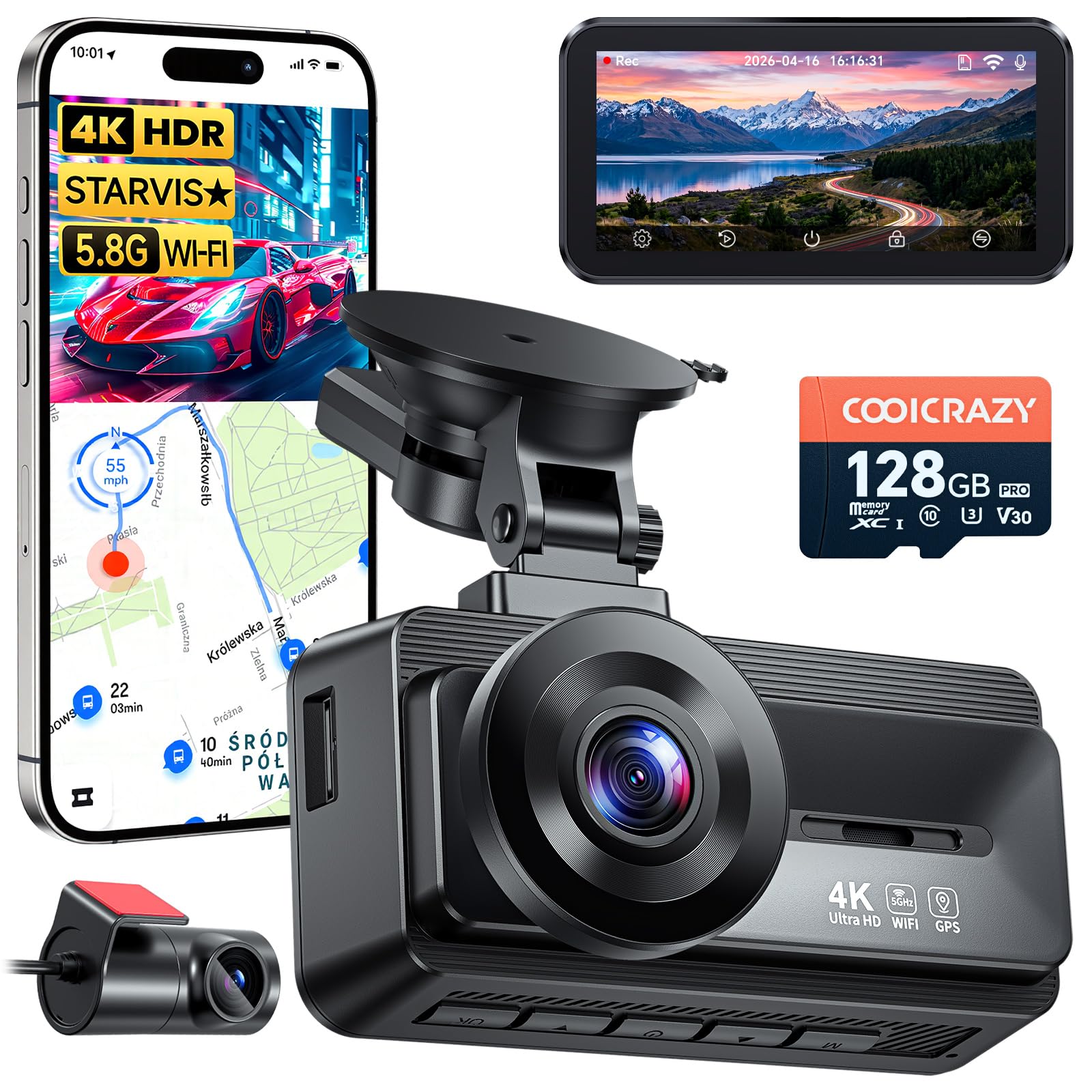
A 60fps 4K front cam with STARVIS night vision built for high-speed plate capture.
The Coolcrazy earns its place with a 60fps high frame rate on the 4K front camera — a spec that matters more than most buyers realize. At high speeds, a standard 30fps cam can blur passing plates, but 60fps keeps the motion smooth and sharp. The front lens spans a 170° angle while the rear covers 150°, giving you wide coverage of congested streets and highways.
Its STARVIS starlight night vision sensor and large-aperture WDR technology are specifically tuned for tricky light. That means it cuts glare from oncoming headlights and streetlights, boosts dark-area detail, and captures clear footage on rainy nights, in tunnels, underground garages, and unlit rural roads. Owners describe the build quality as excellent and the day-and-night video as clear.
The kit includes a 128GB memory card with loop recording that overwrites old footage automatically, and a G-sensor locks critical clips during collisions or emergency braking. Real-time GPS tracking syncs video with location, speed, and route, and the 5GHz WiFi supports fast 1-minute video downloads. The fair caveat: connectivity gets mixed feedback, with some owners reporting the app connects easily while others find it won’t connect at all.
The motion specialist: 60fps recording and STARVIS night vision make it a strong choice for highway drivers who need plate clarity at speed.
App roulette: phone connectivity is hit-or-miss for some owners, so be ready to troubleshoot the app.
9. VIOFO A329S 4K 60FPS Dash Cam
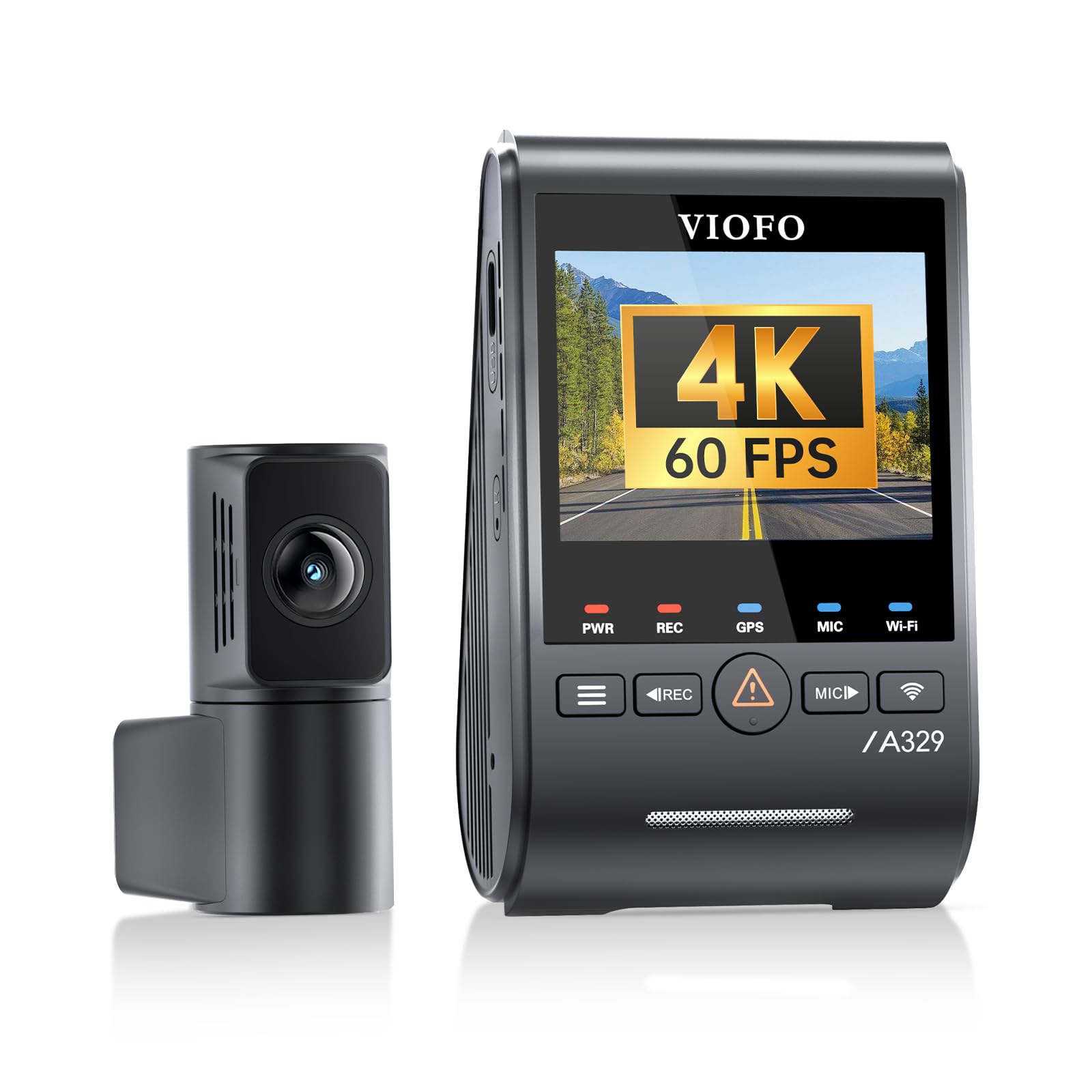
The flagship that records 4K at 60fps with dual STARVIS 2 sensors and 4TB SSD support.
The VIOFO A329S is the ceiling for consumer dash cams. It’s the one model here that records 4K at 60fps up front — double the standard frame rate — while the rear captures 2K. That combination delivers ultra-smooth footage where license plates and road signs stay readable even in fast-moving scenes. Both cameras run on Sony STARVIS 2 sensors, with the front using the IMX678 and the rear the IMX675.
Its 2-channel HDR balances extremely bright and dark areas, capturing accurate plates even when oncoming headlights flood the frame. Owners consistently rank its video resolution and contrast as superb, noting it performs well in low-light situations. The built-in GPS supports four satellite systems — GPS, BeiDou, Galileo, and GLONASS — for precise location and speed data on playback.
Storage is the headline feature: it supports external SSDs up to 4TB or microSD cards up to 512GB, allowing over 3 weeks of uninterrupted recording. Wi-Fi 6 supports transfer speeds up to 30MB/s in the 5GHz band, grabbing a 1-minute 4K video in under 10 seconds. The ultra-slim 2.8mm coaxial cable hides neatly and resists interference. Honest notes: the 4K 60fps mode disables when HDR is on, night footage depends on ambient lighting, and some owners find the rear cable dangerously short.
Flagship Strengths
- 4K at 60fps for ultra-smooth, plate-readable footage
- 4TB SSD support for weeks of continuous recording
- Dual STARVIS 2 sensors and 2-channel HDR for low-light clarity
Flagship Caveats
- 60fps and HDR cannot run at the same time
- Rear camera cable is short for larger vehicles
Understanding the Specs
Field of View
This number tells you how much of the road the lens sees. A 170° angle covers more lanes and catches cars approaching from the side, but it can make distant number plates look smaller. A 140° to 150° view is often the balance for balance — wide enough for safety, narrow enough to keep plates readable.
Frame Rate
Measured in fps (frames per second), this controls how smooth motion looks. Standard cams run at 30fps, which is fine for most driving. A 60fps camera captures twice the frames, so fast-moving objects like passing cars stay sharp — a real advantage for reading plates at highway speed.
FAQ
What makes a dash cam good at night vision?
Is a STARVIS 2 sensor worth the extra money?
What is the difference between HDR and WDR?
Does a higher resolution mean better night vision?
What does 24H parking mode actually require?
How much storage do I need for a 4K dash cam?
Will a dash cam drain my car battery?
Is a 3-channel dash cam better than a dual cam?
Can I view footage without removing the SD card?
Final Thoughts: The Verdict
For most drivers, the night vision car camera winner is the TERUNSOUl 4K 3-Channel because it combines starlight F1.6 night vision, 3-channel coverage, and built-in GPS in one ready-to-go kit with a 128GB card included. If you want the ultimate in dark-scene clarity with dual STARVIS 2 sensors, the ROVE R2-4K PRO is the one to reach for. And for smooth 60fps footage plus 4TB storage flexibility, the VIOFO A329S leads the premium field. The TERUNSOUl holds a 4.7-star rating from over 400 owners, confirming its triple-channel reliability.
How We Picked
We do not accept paid placement. Every pick is matched to a real buyer and a real use-case; we do not hands-on test units.
Sources & Methodology
Specifications: manufacturer listings and product documentation. Review insights: verified customer reviews, as of August 2026. Pricing: not shown on this page (it changes often); check the current price via the retailer link.
As an Amazon Associate, Trending Car earns from qualifying purchases. This does not affect which products we feature.