
Our readers keep the lights on and my garage snacks stocked. As an Amazon Associate, I earn from qualifying purchases.
Specs are compiled from manufacturer listings and verified buyer reviews and can change over time — please confirm the key details on the product page before buying.
A car breathalyzer removes the guesswork by giving you a precise BAC reading before you drive. The best models use the same fuel cell sensor technology that law enforcement relies on.
I’m Min Islam — the founder and writer behind Trending Car. This guide is built by comparing the manufacturers’ published specifications and the patterns across verified customer reviews, so you get each pick’s real strengths and trade-offs instead of marketing spin.
This guide compares top-rated models based on sensor type, certifications, and real-world accuracy. Here is the honest guide to picking the best car breathalyzer for your budget and habits.
Our Picks at a Glance

How To Choose The Best Car Breathalyzer
The right breathalyzer delivers a reading you can trust. A 0.031% difference can mean the difference between a safe drive and a DUI charge. Three factors separate a safety tool from a novelty gadget.
Sensor type is everything
The sensor determines accuracy. A fuel cell sensor measures alcohol with electrochemical precision and is the same technology used in professional and law-enforcement equipment. A semiconductor sensor is cheaper to make, but it can react to other compounds in your breath and give you inflated numbers. If accuracy is your priority, look for the words “fuel cell” on the spec sheet — it is the difference between a number you can trust and a number that is a guess.
Certifications are not marketing fluff
An FDA 510(k) clearance means the device has been reviewed by the FDA for personal use and met the standards for safety and effectiveness. DOT/NHTSA compliance means the device qualifies as a breath alcohol screening device. When a manufacturer lists both, you are looking at a device built to a standard, not just a novelty. These credentials signal a device built to a standard you can rely on.
Calibration keeps the truth in the reading
A breathalyzer is a precision instrument that drifts over time. Most devices on this list require periodic recalibration; the typical interval is every 12 months or 1,000 tests, though the ALCO9 TX6010L uses a 6-month/200-test schedule. Some units have a built-in reminder that tells you when service is due, so you are never relying on an unreliable reading. The best part is, recalibrating a quality unit often costs less than replacing a cheap one.
Quick Comparison
| Model | Best For | Sensor Type | Approvals | Memory | Amazon |
|---|---|---|---|---|---|
| BACtrack S80★ Best Overall | Maximum trusted accuracy | Xtend Fuel Cell | FDA & DOT/NHTSA | User-set BAC thresholds | Amazon |
| Breathalyzer KeychainBudget Champion | Wallet-sized budget pick | 6.0 Semiconductor | — | 20 test records | Amazon |
| BACtrack Keychain | Pocket & keyring portability | MicroCheck Sensor | — | — | Amazon |
| ALCO9 TX6010L | Workplace & personal use | Semiconductor | FDA & DOT/NHTSA | — | Amazon |
| iSOBER 30 | Trend tracking & portability | Fuel Cell | FDA & DOT/NHTSA | Last 10 results | Amazon |
| iSOBER 10 | App-connected accountability | Fuel Cell | FDA & DOT/NHTSA | App history | Amazon |
| iSOBER 70 | Police-grade home precision | Professional Fuel Cell | FDA & NHTSA Evidential | 100-test memory | Amazon |
In‑Depth Reviews
1. BACtrack S80 Breathalyzer
Our pick — over 4★ from 8,000+ verified ratings; the strongest balance of quality and price.
The police-grade heavyweight that turns a night out into a confident ride home.
The S80 is the closest you can get to the roadside unit without a badge. It runs on BACtrack’s largest platinum-based Xtend Fuel Cell Sensor — the same pro-grade technology trusted by hospitals, clinics, and law enforcement — and it carries FDA 510(k) clearance plus DOT/NHTSA approval. You press one button, blow for a few seconds, and get a number accurate enough that one owner tested it against eight beers and found the readings matched expectations, predicting his BAC within 0.005.
This is the crowd favorite for a reason: 4.4 stars across 8,400+ ratings makes it the most-tested unit in this lineup, and buyers consistently call accuracy the thing that wins them over — by a wide margin. It runs on two included AA batteries that last over a month of regular use, and the case holds a spare set plus six included mouthpieces. The one-button operation lets you change units of measurement and set your own BAC threshold, so you control the limit, not the device.
The honest trade-off is value — several owners note it costs more than they’d like, and the plastic build isn’t built to survive a drop. Durability gets genuinely mixed feedback, with some units reported breaking within six months. The smart routine is simple: wait 15 to 20 minutes after your last sip, blow, and trust the number. For a DUI-avoidance tool, accuracy is the whole game, and this is the one the review pages trust most.
Why It Wins
- Fuel cell sensor with police-grade accuracy
- One-button operation with user-set BAC thresholds
- Runs over a month on 2 AA batteries
- Backed by DOT/NHTSA and FDA 510(k) approvals
The Trade-Offs
- Pricey next to basic semiconductor models
- Plastic case demands careful handling
- Needs a 15–20 minute wait after drinking
Your best bet: if you want a number you can stake your license on, this is the unit to beat — it is the accuracy benchmark of this whole list.
Think twice if: you only need a rough “am I over or under” gauge and want to spend far less; a cheaper semiconductor model can cover that single question.
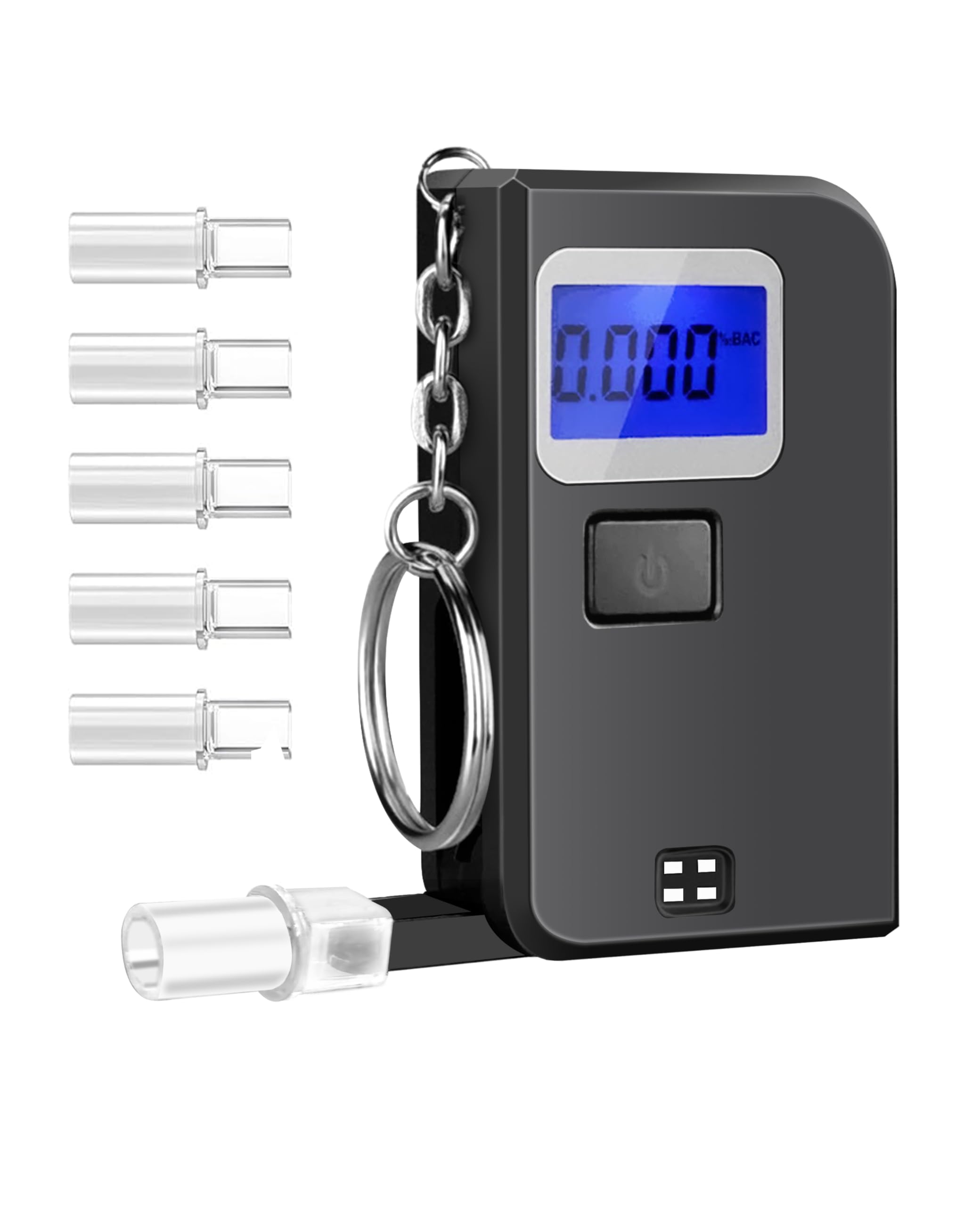
2. Breathalyzer Keychain
A 50g wallet-sized tester that slips anywhere and sounds the alarm at the legal line.
This little keychain unit is the answer to “I want something cheap I can keep on me.” At just 1.76 ounces . It’s powered by a 6.0 sensor, delivers results in about 5 seconds, and reads accurately to 3 decimal places, which is plenty of resolution for a personal device.
The standout feature is the built-in alarm: when your result climbs above 0.050% BAC, a “di di di” alert sounds and the display flashes red. That’s a genuinely useful safety net for anyone who wants a hard boundary they can’t ignore. It also logs up to 20 test records and auto-shuts down when idle, so the battery isn’t drained sitting in your glovebox.
This is where honesty matters: a number of buyers report readings that ran higher than a BACtrack unit, and the warm-up takes about 20 seconds. Some owners found the beeping annoying since it can’t be muted. The build quality gets solid praise for the money, but if you need a reading to act on, this budget pick is best treated as a rough gauge — not a courtroom-grade instrument.
Smart budget move: for the price, the quality and ease of use are the highlights, and the audible alarm at 0.050% gives you a concrete “stop” signal.
Reality check: the accuracy is the most-discussed issue here, so use it as a safety nudge, not as the final word before you drive.
3. BACtrack Keychain Breathalyzer
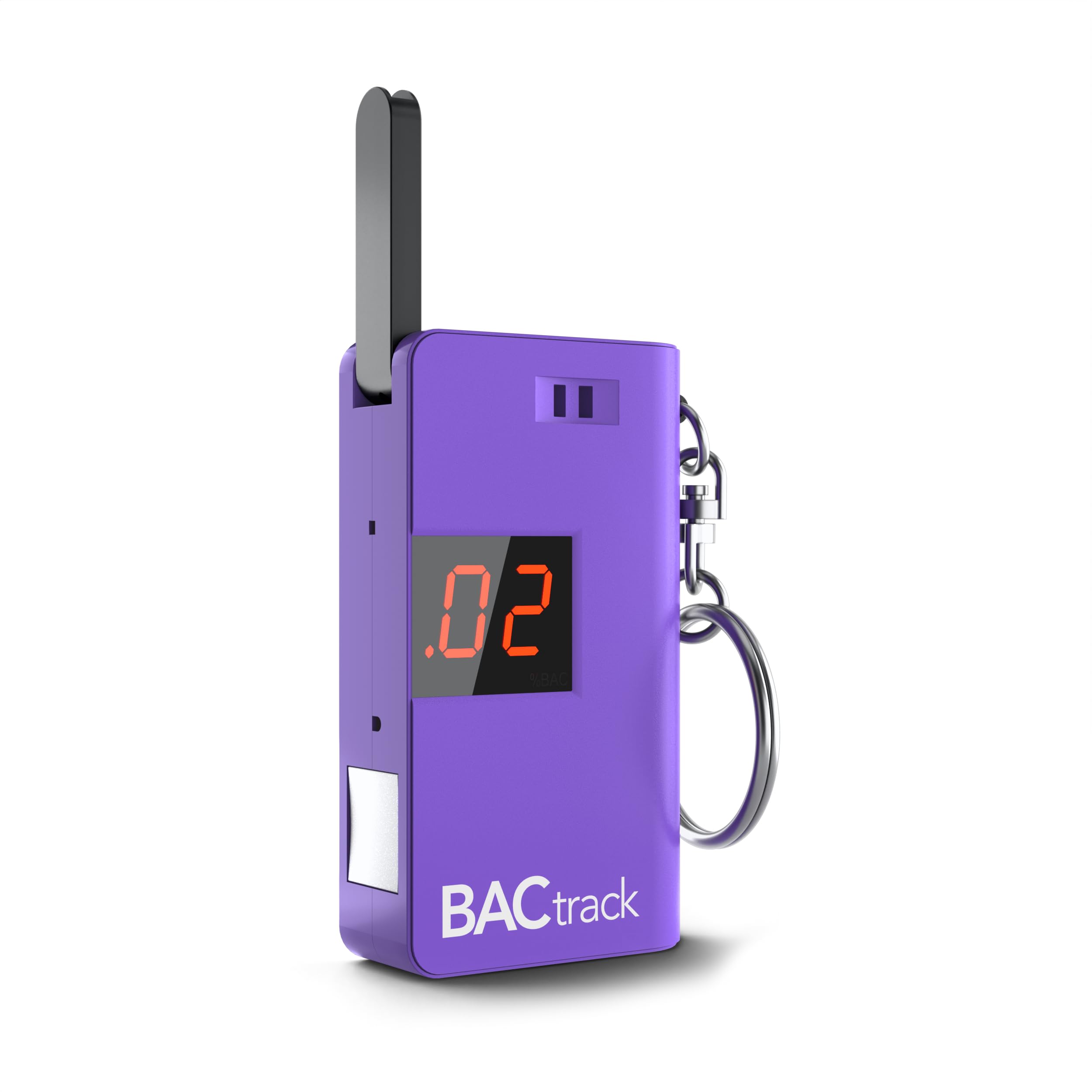
A keyring companion that doubles as a party icebreaker and a practical sobriety check.
This mini BACtrack measures just 1.45 x 0.55 x 2.44 inches, so it’s genuinely built to live on your keychain. It runs on a proprietary Advanced MicroCheck Sensor that delivers results in seconds, with a one-button operation so simple that a first-time user gets an accurate reading on the first try.
The clever design detail is the fold-out mouthpiece. It extends out from the device to make sure only your breath reaches the sensor, keeping airborne pollutants from skewing the result. Buyers love it as a teaching tool — one review page describes it as “great educational teaching” for showing young adults how food intake changes alcohol absorption, and how “feeling fine isn’t always fine.”
The catch is consistency. The same pages note that after just a sip, the reading won’t be accurate at all, and some units have failed to turn on after a few weeks. The 20-minute wait rule applies here more than anywhere — this sensor rewards patience. As owners put it: “you MUST WAIT at least 20 minutes after drinking.” For a compact, fun, and genuinely useful keychain tool, it earns its keep, but treat it as an estimation device, not a certified instrument.
Perfect match: for the drinker who wants a pocket-sized reality check and a conversation starter at parties, this is the one.
Who it isn’t for: anyone needing police-grade reliability — this sensor is a quick estimator, and inconsistent startup is a known complaint.
4. ALCO9 TX6010L Breathalyzer
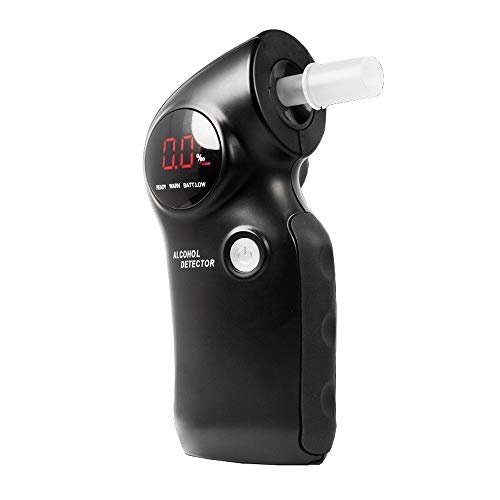
A certified mid-range unit with an audible alert that demands accountability at home and work.
Here’s a mid-range unit that carries the full certification package — FDA 510(k) cleared and DOT/NHTSA compliant — at a price well below the premium tier. It’s built for workplaces, hospitals, and clinics as much as personal daily use, and it weighs a modest 4.12 ounces so it travels easily. The one-button operation pairs with a bright LED display and an audible alarm that sounds when alcohol is detected.
The discipline feature here is the CAL reminder: it pings you every 6 months or 200 tests to get recalibrated, so your readings stay honest without you having to track the schedule yourself. Owners mention it works well as a “security blanket” — one account describes how it keeps everyone accountable, with the product recommended by a therapist for a husband in recovery before he returned home from treatment. That’s a real-life trust signal for a device in this price range.
The honest limitation: it uses a semiconductor sensor, not a fuel cell, so readings can swing if your breath contains other compounds. A couple of reviews report wildly inconsistent numbers after just a few drinks, and one couldn’t get it to register breath at all. It’s a capable certified gateway device — but for a decision this important, the fuel cell units above give more consistent ground truth.
Great for: first-time buyers who want certified accuracy and a maintenance reminder without the premium price tag.
Who should skip: anyone who needs rock-solid, repeatable numbers every single time — the semiconductor sensor is the weak link to know about.
5. iSOBER 30 Fuel Cell Breathalyzer

A pocket-sized fuel cell unit that tracks your BAC trend over time, not just in the moment.
This is where you step up to professional-grade accuracy in a package that weighs just 2.33 ounces. The iSOBER 30 runs on a certified fuel cell sensor, is FDA 510(k) cleared and DOT/NHTSA compliant, and is built by a manufacturer with 20+ years producing law enforcement breathalyzers. The headline feature is the built-in memory — it stores your last 10 results with date and time, so you can watch your BAC trend rise and fall across the evening.
That trend tracking makes it a genuine safety tool for designated drivers and workplace programs. Customers note it’s the easiest and fastest breathalyzer they’ve tried — shorter breath duration, quicker response — and the compact case pockets neatly. One account sums up the value: it “paid for itself after first use,” which is the strongest endorsement a safety device can get.
The trade-off is longevity. Some units began showing an error after roughly 50 uses in 8 months — well before the 12-month or 1,000-test calibration mark. The good news is US-based recalibration uses NHTSA-approved wet-gas equipment and no shipping overseas. It’s not a toy, and owners stress that. For the price, you get fuel cell accuracy and memory that cheaper units can’t touch.
The Standout Features
- Stores last 10 results with date and time
- Professional fuel cell for long-term stability
- Compact 2.33 oz design with case
- US-based recalibration, no overseas shipping
What to Watch
- Some units show error before 12-month calibration
- Accuracy gets mixed feedback from some owners
- Costs more than basic semiconductor models
Reach for this if: you want fuel cell accuracy plus the ability to track your BAC trend across a night out.
Look elsewhere if: you’re worried about a unit failing before its first calibration — the S80 above has a longer trust track record.
6. iSOBER 10 App-Connected Breathalyzer

The accountability machine that logs your location, time stamp, and photo with every blow.
This is the breathalyzer for people who want proof, not just a number. The iSOBER 10 pairs professional fuel cell accuracy with a free iOS and Android app that logs your location, time stamp, and a photo with every test — with no subscription fee. You can set a personal BAC warning level and share verified results by text or email, making it a genuinely powerful accountability tool at home, at work, or on the road.
The sensor health check is the hidden gem: it monitors the unit in real time and alerts you when it needs servicing, so you know the device is working before every test, not after you get an unreliable reading. It measures across a range of 0.00–0.40% BAC with a 10-second response time, and the compact design still fits in a palm. A buyer who tested it after one beer got a reading of 0.019–0.020 — precise enough to trust.
The app is where opinions split. Some owners find it works perfectly and love the shareable results; others report it doesn’t work at all. The recurring theme is that the hardware is solid while the software experience varies. If you want automation and accountability, this is the most feature-rich option here — just be ready to troubleshoot the app if it misbehaves on your phone.
Perfect for: anyone in a sobriety or designated-driver program who wants timestamped, photo-verified results they can share.
Not for: people who just want a quick standalone reading — the app is half the value here, and it’s the half that gets mixed reviews.
7. iSOBER 70 Premium Breathalyzer

The closest thing to a police evidential unit you can keep in your glovebox.
This is the top rung of the ladder. The iSOBER 70 meets NHTSA’s evidential model spec — the same standard used for evidentiary testing in law enforcement — and is FDA 510(k) cleared, giving you police-grade BAC accuracy at home. It stores a whopping 100 results with date and time, and the OLED display reads to 3 decimal places with ±5% accuracy at 0.050% BAC. Built by a manufacturer with 22+ years of police-grade breathalyzer production and engineered to perform from 23–104°F, it’s designed for clinics, hospitals, and demanding personal users.
For interlock users, this is a standout companion. One owner with a Smart Start interlock in their car uses the iSOBER 70 to make sure anyone driving their car is sober and won’t trigger a violation — describing it as “a good tool to have if you have to have an interlock device in your car.” That’s the exact scenario this premium unit was built for: preventing expensive, embarrassing interlock failures.
The caveats are real. Some reviewers point out the device is slightly harder to operate than cheaper high-quality models, and one account flagged a unit that arrived without new packaging and showed a calibration date from months earlier. The clear message: check the calibration date the moment it arrives. For its price, you’re paying for the evidential spec and the 100-test memory, and it delivers on both.
Why It’s Premium
- Meets NHTSA evidential model spec for police-grade accuracy
- 100-test memory with date and time stamps
- OLED display reads to 3 decimal places
- Built to perform from 23–104°F
The Fine Print
- Slightly harder to operate than some cheaper units
- Higher price point for the evidential spec
- Check calibration date on arrival
Who it’s built for: interlock drivers, workplace safety programs, and anyone who wants the closest thing to a law-enforcement-grade reading before they drive.
Who it isn’t for: casual users who just want a quick estimate — this unit’s power and price are wasted on a party gadget.
Understanding the Specs
Fuel Cell vs. Semiconductor Sensors
A fuel cell sensor measures alcohol electrochemically — it reacts specifically with alcohol molecules and produces a current proportional to your BAC. That’s why it’s the technology used in professional and law enforcement units. A semiconductor sensor measures the change in electrical resistance when alcohol hits it, which is cheaper but less specific. It can be fooled by other compounds in your breath, which is why semiconductor units sometimes give inflated numbers. If a device says “fuel cell,” you’re getting the technology that courts trust.
Calibration and Why It Matters
A breathalyzer is a precision instrument that drifts out of spec over time. The standard recommendation across quality units is recalibration every 12 months or 1,000 tests — whichever comes first. Some devices, like the ALCO9 and the iSOBER models, have built-in reminders so you never rely on an uncalibrated reading. Some manufacturers offer US-based service using NHTSA-approved wet-gas equipment, which keeps the process fast and the accuracy verified. A calibration fee is often less than replacing a cheap unit that’s drifted out of range.
FAQ
How long should I wait after drinking before I use a breathalyzer?
What is the difference between a fuel cell and a semiconductor breathalyzer?
How often does a personal breathalyzer need to be calibrated?
Can I use a personal breathalyzer to avoid issues with an interlock device?
Will foods or mouthwash affect my breathalyzer reading?
What does FDA 510(k) clearance actually mean for a breathalyzer?
Do I need to buy extra mouthpieces?
Can a breathalyzer stay in my car in hot or cold weather?
Final Thoughts: The Verdict
For the majority of shoppers, the car breathalyzer winner is the BACtrack S80 because it combines police-grade fuel cell accuracy with a massive base of 4.4-star trust from over 8,400 owners — the most tested unit in this lineup. If you want app-connected accountability with photo and location logging, grab the iSOBER 10. And for interlock drivers or anyone who wants the closest thing to a court-grade reading, the iSOBER 70 is the one to reach for. Whichever you choose, wait the 20 minutes, blow honestly, and let the number make the call.
How We Picked
We do not accept paid placement. Every pick is matched to a real buyer and a real use-case; we do not hands-on test units.
Sources & Methodology
Specifications: manufacturer listings and product documentation. Review insights: verified customer reviews, as of August 2026. Pricing: not shown on this page (it changes often); check the current price via the retailer link.
As an Amazon Associate, Trending Car earns from qualifying purchases. This does not affect which products we feature.