
Our readers keep the lights on and my garage snacks stocked. As an Amazon Associate, I earn from qualifying purchases.
Specs are compiled from manufacturer listings and verified buyer reviews and can change over time — please confirm the key details on the product page before buying.
Engine roar at a race track is a physical assault—peak levels near the barrier can exceed safe hearing limits in seconds.. This guide sorts through the ear protection that actually survives a full day at the track, whether you are a spectator, crew member, or driver. You will find the picks that cut the sharp, damaging frequencies while letting you still hear the announcements, your spotter, or the race itself.
I’m Min Islam — the founder and writer behind Trending Car. This guide is built by comparing the manufacturers’ published specifications and the patterns across verified customer reviews, so you get each pick’s real strengths and trade-offs instead of marketing spin.
Here is my honest breakdown of what actually works when you are trackside, from slim behind-the-head models to over-the-ear muffs and in-ear plugs for every budget and helmet setup. ear protection for auto racing starts with understanding the Noise Reduction Rating (NRR) and what the number means in real decibels.
Our Picks at a Glance


How To Choose The Best Ear Protection for Auto Racing
Your role at the track decides everything. A grandstand spectator wants maximum comfort and foldability; a pit-crew member needs clear radio communication; a driver needs something slim enough to sit inside a helmet. Start with your job, then match the Noise Reduction Rating (NRR) to the noise level you will face.
Match the NRR to Your Exposure
NRR tells you how many decibels the product is rated to reduce. Racing environments are loud enough that most experts suggest a 25 dB NRR or higher for spectators.. Lower-rated slim muffs are often picked for comfort or helmet clearance, and can be paired with foam earplugs underneath to close the gap — a common trick for drivers and crew.
Consider the Fit Challenge
Over-ear muffs are the strongest protectors, but a thick headband can clash with a helmet or block a rifle cheek weld. Behind-the-head designs free up the top of your head, while in-ear custom molds eliminate stock interference entirely. Think about what you wear on your head before you buy.
Quick Comparison
| Model | Best For | NRR Rating | Weight | Style | Amazon |
|---|---|---|---|---|---|
| ClearArmor Ear Muffs★ Best Overall | Max blocks for spectators | 31 dB | 9.5 oz | Over-ear | Amazon |
| Pro For Sho Ear MuffsTop Performer | Top-rated compact comfort | 34 dB | 7.2 oz | Over-ear folding | Amazon |
| Decibullz Custom MoldsCustom Fit | Helmet-friendly custom fit | 31 dB | 0.68 oz | In-ear molded | Amazon |
| Elgin Rumble Earbuds | Radio + music in-ear | 27 dB | Wired | In-ear buds | Amazon |
| Hocazor HO1006 | Budget-friendly double duty | 26 dB | One size | Over-ear folding | Amazon |
| Otis EarShield | Behind-head rifle fit | 26 dB | 2.4 oz | Behind-head | Amazon |
| Alpine Racing Pro F1 | F1 spectator style | 22 dB | 8.8 oz | Over-ear folding | Amazon |
| Rugged Radios H41 | Driver/crew radio headset | 24 dB | Behind-head | Comms headset | Amazon |
In‑Depth Reviews
1. ClearArmor Safety Ear Muffs
Our pick — over 4.5★ from 11,500+ verified ratings; the strongest balance of quality and price.
The crowd-pleaser that smothers the loudest engines while folding small enough to stash in a bag.
The ClearArmor is the top pick because it delivers the full-spectrum protection you want for a grandstand seat without demanding a premium budget. Its 31.5 dB SNR rating (a measurement of noise reduction in decibels) tackles the high-pitch shriek of race cars and the deep rumble of open exhausts. The crowd favorite — 4.6 stars across 11,000+ owners — keeps the seal uniform across the headband, which is what really determines whether the protection works in practice.
Comfort is the other half of the story. The super-soft ear ring foam and padded headband are built to be worn for hours, and the cups swivel to keep a snug fit as you turn your head to watch the action. It folds compactly for storage after the checkered flag drops.
Buyers report the seal does the hard work, with hands-on comparisons against other 34 dB muffs showing the ClearArmor wins on consistent noise blocking. The recurring gripe is that it becomes uncomfortable after about an hour, and owners say a bit of gentle stretching of the headband helps. It is a fair trade for maximum quiet at the track.
Why it leads
- Top-shelf 31.5 dB SNR silencing for the loudest events
- Folds down small for easy transport and storage
- Swivel cups and soft foam keep the seal over long stretches
Its limits
- The 9.5-ounce weight is heavier than some rivals here
- One hour in, some owners feel the pressure and stretch the band
Reach for this if: your main job is sitting in the stands and you want maximum decibel cut with a reliable, proven seal.
Look elsewhere if: you need to wear protection for a full work shift and want something featherlight on your head all day.
2. Pro For Sho 34dB NRR Ear Muffs
A featherlight 34 dB shield that folds to pocket size and vanishes on your head.
The Pro For Sho pulls off a rare trick: it carries the highest NRR (Noise Reduction Rating) in this lineup at 34 dB, yet it is the lightest over-ear option here at 7.2 ounces. Owners consistently describe the fit as so comfortable you forget you are wearing it, with no ear pressure and no pinching — a huge plus when you are trackside from morning practice to the final podium ceremony.
That 34 dB rating is a genuine achievement for a compact earmuff, since most muffs above 30 dB tend to be bulky and heavy. This one folds down to fit in a pocket, making it the obvious grab-and-go choice for a race bag. The padding and adjustable headband are tuned for long wear, and the brand backs it with a US-based replacement promise if the pair ever fails you.
Owners mention the 34 dB rating is effective at cutting loud, sharp sounds at the range and in noisy environments. For pure comfort with maximum-rated protection, it is the sweet in this list.
The comfort king
- Highest-rated 34 dB NRR of any pick in this guide
- Just 7.2 ounces with a pressure-free, secure fit
- Folds to pocket size for easy carry
Know before you go
- Needs a break-in period if the initial fit feels snug
- Lighter on low-frequency sound like conversation and bass
Best for: anyone who prioritizes all-day comfort and wants the highest NRR number on the shelf without the bulk.
Who should pass: drivers who need the slimmest possible profile inside a tight-fitting racing helmet.
3. Decibullz Custom Molded Ear Plugs
The in-ear mold that never falls out, stays locked in your ear canal, and plays nice with a helmet.
If your race day involves a helmet, over-ear muffs are a non-starter. Decibullz solves that with a 31 dB NRR custom mold you shape to the exact contour of your own ear. You heat the thermoplastic in boiling water, let it cool briefly, and press it into place — a quick, forgiving process that you can redo whenever you want a fresh fit.
The payoff is an earplug that never hurts, never falls out, and gives superior noise isolation because it is shaped to you, not to a generic average ear. For drivers, that means no interference with the helmet padding or a radio earpiece. The kit includes two molds, three sizes of triple-flange tips, and one set of foam tips, plus a carrying pouch.
Owners who wear them for hours report zero ear fatigue or soreness, with one describing 10+ hours a day for three straight days of heavy use. The catch is that the initial molding takes care and a bit of patience — and the fit is highly personal, so a small number of users find the seal insufficient for their ear shape. For most, a custom fit beats any one-size-fits-all plug at the track.
Why they stand out: A true custom mold at this price is rare, and the re-moldable design means you can perfect the fit over time.
The honest catch: The fit is subjective — some ear shapes simply will not seal, and the molding takes practice.
Pick these up if: you race with a helmet or shoot after the race and want protection that stays put inside your gear.
Think twice if: you want a grab-and-go solution with zero setup learning curve.
4. Elgin Rumble Wired Earplug Headphones
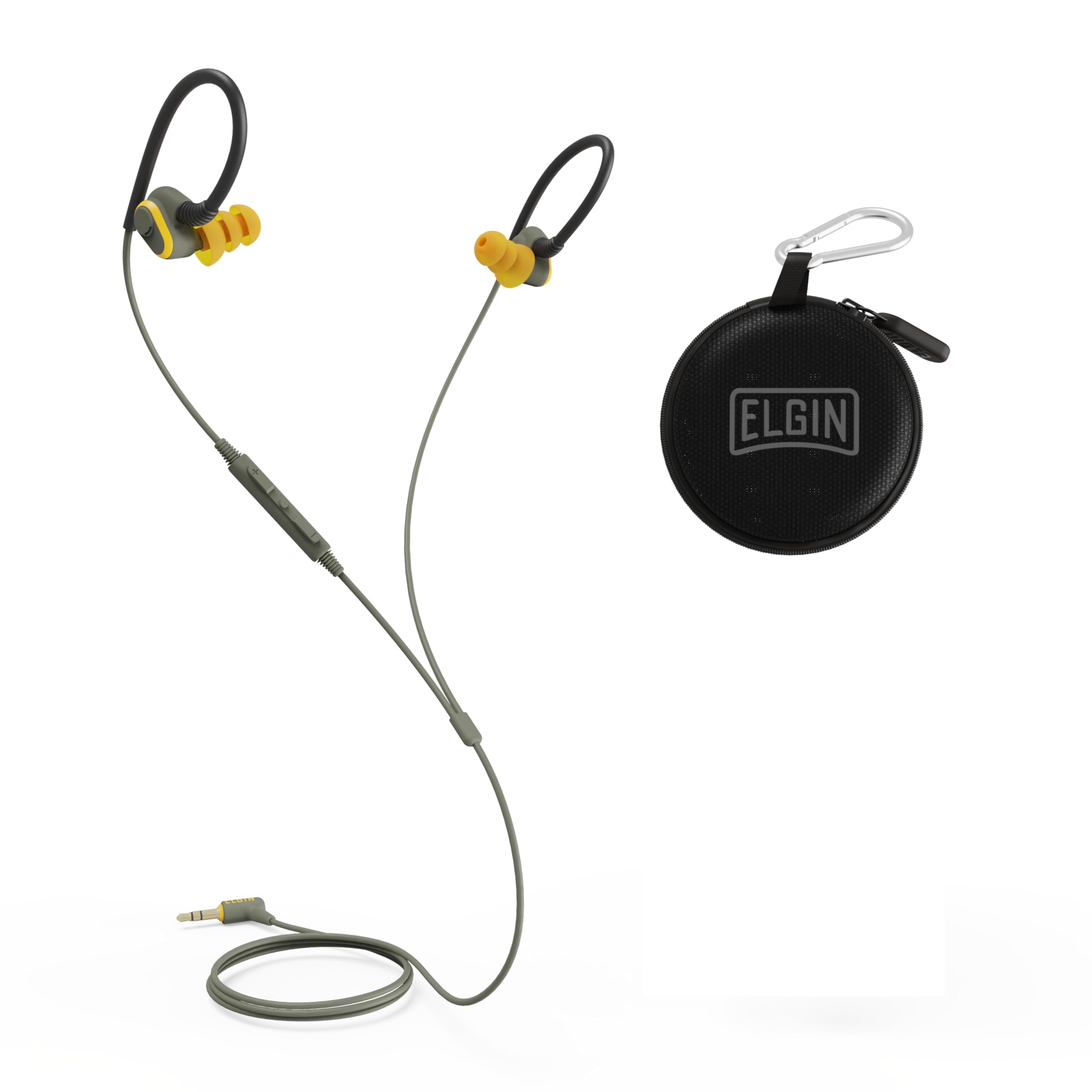
Racing ear protection that doubles as your music and comms earbuds with a 27 dB cut.
The Elgin Rumble is the clever hybrid: it is a 27 dB NRR hearing protector and a pair of wired earbuds in one, so you can tune into the race broadcast or your scanner while staying protected. It plugs into almost anything through a 3.5mm jack, with an in-line controller for volume and one-touch access to your phone’s voice assistant.
Durability is the headline here — the 48-inch cable is reinforced with 35% Kevlar fiber, and the buds carry an IP67 water and dust resistance rating, meaning they shrug off a dusty paddock or a sudden downpour. Customers note a pair surviving two years of machining work, constant yanking, and even a cat chewing on the cord. Noise reduction is solid enough for the track, though it sits below the big over-ear muffs.
At the racetrack, reviewers point out they work great — some even preferring them over expensive racing-catalog earbuds at several times the price. The main caveat is that the fit is split down the middle: some find them secure and pain-free, others report them sliding out of place. If you want one accessory to handle protection and audio, this is the value pick.
One device, two jobs
- 27 dB NRR protection plus clear audio from one 3.5mm earbud
- Kevlar-reinforced cable and IP67 rating survive tough use
- Handles race scanners, phones, and tablets
Before you commit
- Fit is hit-or-miss depending on your ear shape
- Reduction is lighter than over-ear muffs in this guide
Reach for this if: you like listening to race audio or taking crew calls and want protection without a second device.
Not for you if: maximum pure attenuation is your only goal and you will never plug them into anything.
5. Hocazor HO1006 Ear Muffs

A slim, low-profile muff that keeps your ears safe at drag races without squeezing your head.
The Hocazor HO1006 earns its place as the entry-level pick with a design philosophy focused on pressure relief. The slim, low-profile ear cups cut overall weight, and the thick padded headband uses what the maker calls pressure diffusion technology to avoid the headache that tight muffs cause over a long afternoon. The 26 dB NRR (Noise Reduction Rating) is a step below the top protectors here, but it is rated for racing and shooting.
It is one-size-fits-most thanks to 360-degree rotatable ear cups and a retractable steel wire in the headband. Owners find the fit works even on larger head sizes, and the foldable design with a carry bag makes it easy to throw in the trunk for race day. ANSI S3.19 and CE EN352-1 certifications back the protection claims.
The comfort story holds up in the reviews, which praise the padding and the absence of pinching, even for ears that are not perfectly even. Shoppers say it works great at the drag races and cuts the discharge volume of shooting. The main fit complaint is occasional snugness on some heads, and one owner had a defective cup that the company replaced quickly. A solid value for a first pair.
What wins people over: The slim cups and pressure-relieving headband make it an easy all-day wearer that still meets the 25 dB-plus bar for racing.
The trade-off: A 26 dB rating sits near the bottom of this lineup, so it is best for tracks that are loud but not deafening.
Buy this if: you are a casual spectator or first-time buyer wanting a cheap, comfortable muff that gets the job done.
skip it if: you are trackside every weekend and want the strongest protection money can buy.
6. Otis EarShield Hearing Protection

A 2.4-ounce behind-head shield that clears your crown and lets you hear the spotter.
You get a clear cheek weld against a rifle or a comfortable fit under a helmet because the Otis EarShield wraps behind your head instead of across the top. That design also keeps pressure off the sides of your skull. At just 2.4 ounces, it is noticeably lighter than any over-ear muff in this guide, so you barely feel it during a long race day.
The 26 dB rating is adequate for handgun work and moderate racing noise, though owners note it is not full-coverage, so some sound bleeds around the edges. Owners who shoot report it works well for handguns and allows a proper cheek-to-stock fit that over-ear muffs block. Its light weight also makes it easy to put on and off, and one delighted owner keeps it in the kitchen drawer just to dampen the coffee grinder.
The durability story is the honest weak spot — some buyers report the plastic snapping during size adjustment after a few weeks of use. The protection and comfort are solid, the build quality is the question. For the price and the behind-head design, it is a niche pick for shooters and drivers who need clearance.
The strength: A featherlight 2.4-ounce design and behind-head fit that over-ear rivals cannot match for helmet or rifle use.
The real downside: Durability is spotty, with a few owners snapping the plastic during adjustment, so handle it gently.
Choose this for: the driver or precision shooter who needs clearance over the crown of the head and minimal weight.
Pass on this if: you expect a rugged, drop-it-in-a-bag build that survives rough treatment.
7. Alpine Racing Pro Earmuff F1

A carbon-inspired, low-pressure muff designed specifically for the Formula 1 spectator.
If you are a race spectator, the Alpine Racing Pro is the only pick here built specifically for you. Alpine, a Dutch company with 25 years of hearing-protection research,, points to peak noise levels approaching 140 decibels at the loudest spots on an F1 circuit — a level where hearing damage can occur in seconds.. Its 22 dB attenuation rating is lower than others in this guide, but the design prioritizes all-day wearability, so you can keep them on from the first practice lap to the podium.
The premium materials are soft, comfortable, and easy to clean, and they are free of silicone, which the maker says means no allergic reactions. The low-pressure headband is the key feature: it delivers long-term wearing comfort without the clamping force that causes headaches in tighter muffs. The foldable design and included F1 travel bag make it easy to carry to the circuit.
Owners mention the noise cancellation works well for sound-sensitive children and for muffling machinery at monster truck events. A few note the fit can run large and the seal can shift if you turn your head or wear a hat. The honest caveat: at 22 dB, it banks on comfort over maximum noise reduction, so the hardcore protection seekers in this guide beat it on raw decibels.
Its defining edge: A premium, low-pressure fit built for a full day at the circuit, with sustainable, silicone-free materials.
Its honest limit: The 22 dB rating is the lowest here — it is comfort-first, not decibel-first.
Ideal for: the F1 fan who wants a stylish, comfortable muff for a long weekend and will pair it with plugs in extreme noise.
Not ideal for: budget buyers or anyone who wants the maximum NRR number on the spec sheet.
8. Rugged Radios H41 Racing Headset

The behind-the-head headset that connects your team radio and shields your ears from the pack.
The Rugged Radios H41 is the professional’s choice for crew chiefs, officials, and drivers who need live communication on top of hearing protection. It delivers 24 dB NRR (Noise Reduction Rating) through a dynamic noise-canceling microphone, so your voice cuts through the chaos on the other end of the radio. The behind-the-head design keeps the top of your head clear, which is essential for fitting under a helmet.
You get clear radio comms without taking off your protection: the built-in 3.5mm audio jack lets you plug in a phone, race receiver, or scanner, and the 5-pin universal port connects to a wide range of two-way radios, including Rugged Radios, Baofeng, Motorola, Kenwood, and HYT. Customers note the clear hear speakers and volume control work well for tuning into live race broadcasts and team channels simultaneously.
Durability is proven — reviewers point out three years of heavy racetrack use with no wear, and one speedway official calls it their go-to after years of service. The main caveat: audio levels can run low with some Baofeng handheld radios and may need a microphone swap or a Kenwood 2-pin adapter, depending on your setup. For the professional communicator, it is the total package.
Built for the pits
- 24 dB NRR with a clear, noise-canceling boom mic
- Fits under a helmet with a behind-the-head band
- Works with most major radio brands via 5-pin port
Setup notes
- May need an adapter or mic swap for some Baofeng handhelds
- Audio volume can be low with certain radios from the start
Who it is built for: the driver, spotter, or official who needs crisp radio comms and solid protection in one rugged headset.
Who can skip it: the pure spectator who just wants quiet and has no need for a radio port.
Understanding the Specs
Noise Reduction Rating (NRR) and SNR
NRR is the US standard for how many decibels a protector is rated to block, while SNR is the European equivalent. A higher number means more attenuation, but the real-world protection depends on getting a proper seal. Races are loud enough that experts suggest a 25 dB NRR or higher for spectators., and you can always layer foam plugs under muffs for extreme exposure.
Over-Ear vs. In-Ear vs. Behind-Head
Over-ear muffs generally offer the highest attenuation and are easiest to take on and off, but they can clash with helmets or hats. In-ear plugs or molds give the cleanest helmet fit and are nearly weightless. Behind-the-head designs clear the top of your skull, making them the middle ground for drivers and shooters who need clearance but want muff-style protection.
FAQ
What NRR rating do I need for auto racing?
Can I wear ear muffs under a racing helmet?
What is the difference between passive and electronic ear protection?
Can I listen to music or a race scanner while wearing protection?
How long do ear protection muffs stay comfortable?
Is it better to use earplugs or earmuffs for racing?
Can I combine earplugs with earmuffs for extra protection?
How do custom molded earplugs work?
What is the best protection for a speedway official or crew member?
Final Thoughts: The Verdict
Across the board, the crowd favorite for ear protection for auto racing is the ClearArmor Ear Muffs because it delivers top-tier 31.5 dB SNR silencing with a proven, comfortable seal at a price that undercuts the premium tier. If you want the highest spec-sheet rating and all-day comfort in a featherlight build, grab the Pro For Sho 34dB muffs. And for drivers who need helmet-friendly protection or live radio comms, the Decibullz custom molds and the Rugged Radios H41 are the ones to reach for.
How We Picked
We do not accept paid placement. Every pick is matched to a real buyer and a real use-case; we do not hands-on test units.
Sources & Methodology
Specifications: manufacturer listings and product documentation. Review insights: verified customer reviews, as of August 2026. Pricing: not shown on this page (it changes often); check the current price via the retailer link.
As an Amazon Associate, Trending Car earns from qualifying purchases. This does not affect which products we feature.