
Our readers keep the lights on and my garage snacks stocked. As an Amazon Associate, I earn from qualifying purchases.
Specs are compiled from manufacturer listings and verified buyer reviews and can change over time — please confirm the key details on the product page before buying.
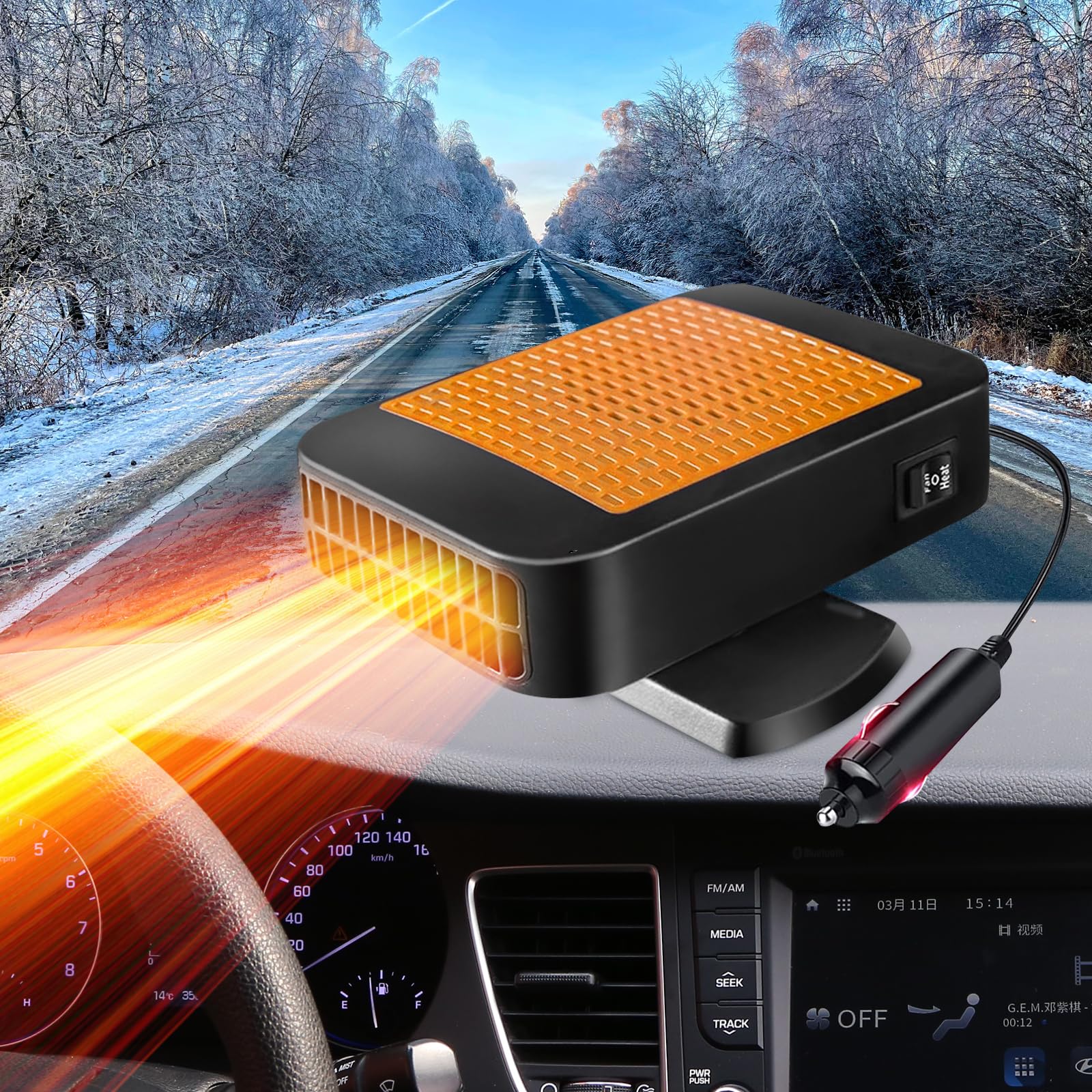
A 12-volt defroster that barely blows warm air is worse than none—you stand outside scraping ice while the cabin stays cold. The real challenge is that most of these plug-in heaters are weak, and a few are genuinely unsafe. This guide cuts through the noise to show you which models actually move enough air to clear a windshield and which ones you should leave on the shelf.
I’m Min Islam — the founder and writer behind Trending Car. This guide is built by comparing the manufacturers’ published specifications and the patterns across verified customer reviews, so you get each pick’s real strengths and trade-offs instead of marketing spin.
You’ll learn which wattage and safety features matter, and you’ll see exactly where the crowd was split. Here is the honest breakdown of the car defroster market and the picks that earn their spot.
Our Picks at a Glance

How To Choose The Best Car Defroster
Picking a defroster is about matching the heater’s power to your vehicle and your winter. A tiny 150W unit in a large SUV will do almost nothing, while a high-wattage heater in a small car might strain the electrical system. You want a heater that pushes enough air to actually move the fog off the glass, not just a warm coil that heats the air right next to it.
Look for airflow over raw wattage
The biggest complaint across all these products is “blows cold air” or “only warm within 3 inches.” That is an airflow problem, not a heating problem. A strong fan moving moderate heat clears a windshield faster than a weak fan blasting high heat that never reaches the glass. Check the review language for “airflow” praise—that tells you the fan actually works.
Check the power draw against your car
Most of these plug into a 12V cigarette lighter, and that circuit is usually fused for 10-15 amps. A 150W heater draws about 12.5 amps, which is right at the limit. A 200W unit is pushing it. Anything above that, like the 500W or 800W kits, cannot safely plug into a lighter socket—those need hardwiring to the battery with a real fuse, which is a much bigger installation job than most buyers expect.
Prioritize safety features
The most serious warnings in the reviews involve melting wires and blown fuses. Look for a built-in fuse, overheat protection, and materials rated “heat-resistant.” If a heater has no safety cut-off and you leave it running, you are risking your wiring. The safest designs use PTC ceramic heating elements, which self-regulate temperature and run cooler on the outside.
Quick Comparison
| Model | Best For | Wattage | Mount Type | Weight | Amazon |
|---|---|---|---|---|---|
| Baquler 150W 2-Pack★ Best Overall | Budget value | 150W | Adhesive + Headrest | 1.54 lbs | Amazon |
| KINOWJI 200WAlso Great | Powerful airflow | 200W | 360° Base | 12.6 oz | Amazon |
| Therwen 150W 3-Pack | Multi-zone coverage | 150W | 360° Bracket | 2 lbs | Amazon |
| SubZero 12650 | Handheld use | — | Removable Base | — | Amazon |
| LLWAN 12V | Quick defrost bursts | — | 180° Suction | 13.1 oz | Amazon |
| CYDZSW 800W | Hardwired installs | 800W | Hardwire Kit | 2.12 lbs | Amazon |
| DaisyInner 500W | Large cabins | 500W | 4-Port Hardwire | 3.3 lbs | Amazon |
In‑Depth Reviews
1. Baquler 150W 2-Pack Defroster
Two heaters for the price of one, but its reach is limited to a few inches of warm air.
The value pitch is hard to argue with: this 1.54-pound package gives you a pair of 150W defrosters, plus mounting clips, adhesive pads, and a fairing to install them between the headrest bars. You can point one at the windshield and rotate the other to blast warm air toward the rear seats, which is a nice upgrade over single-unit competitors.
The reality check is heat output. Owners note it warms a small car like a Civic quickly with minimal battery drain, and the “great gift” feedback shows the presentation lands well. But the recurring theme is that heat only travels about three inches from the unit—beyond that, you get a cool breeze. One owner summed it bluntly: the car was still not warm after two hours, and a heated windshield spot only appears if you keep the heater close.
It also demands a car with at least 8A of power to blow “stable and comfortable warm air,” which some older vehicles won’t provide. The built-in fuse protects the wiring, a plus that some pricier rivals skip. This is the budget-conscious buy for tiny cars or as a secondary booster, not a primary defroster for a big cabin.
Best for small cars: A two-for-one deal that shines in compact sedans where each unit can sit near the glass.
The limitation: Its heat barely reaches beyond three inches, so larger vehicles will see little effect.
2. KINOWJI 12V 200W Portable Heater
The little 12.6-ounce unit that actually moves air, with the strongest fan of this lineup.
The airflow here is the thing everyone raves about—owners with large SUVs found the back seats finally got circulation, and one Texan needed just a single unit to cool the kids in the back on a hot day. This is a dual-function heater that plugs into your 12V outlet, so you get both defrosting warmth in winter and a cooling fan in summer from the same device.
The adjustable 360° bracket lets you swing warm air toward the windshield, the side glass, or a passenger, and the ABS housing resists heat and deformation during long use.
The honest catch is reliability over time. The power and airflow earn strong praise, but some buyers report the fan working until it suddenly shorts out, and a few note the quality doesn’t match the initial performance. One review summed the risk nicely: it “works great, until it doesn’t”—so this is a stellar performer while it lasts, best for someone who wants real airflow now and is okay with a possible shorter lifespan.
Why it wins
- Airflow is the stand-out feature—owners single it out as “amazing” for moving air to the back seat
- Compact 12.6-ounce body fits easily on a dashboard
- Dual heat and fan modes make it useful year-round, not just winter
The trade-off
- Some units develop intermittent shorting issues after the return window closes
- Quality is rated as mixed by owners—great while it works, questionable long-term
The pick for airflow: If you need a compact defroster that genuinely pushes air across a large windshield or into the rear seats, this is the one.
Who might hesitate: Owners who expect several winters of hard service may find the reliability reports give them pause.
3. Therwen 150W 3-Pack Heater

A three-unit kit for covering every window, if the safety track record holds up.
Three heaters means you can cover the windshield, the driver’s window, and the rear simultaneously—a setup that makes sense for a family SUV on a frosty morning. Each compact unit measures about 5.12 x 4.33 x 2.76 inches and switches between heating and cooling modes, so the same devices pull double duty as summer cabin fans. The 360° rotating bracket gives you precise aiming across the cabin.
The deal-breaker risk here is safety. Owners who had a good experience say the heaters “defrost fast and keep the cabin warm and toasty.” But the negative reports are severe: units popping the vehicle’s fuse within seconds, wire insulation getting hot enough to be unsafe, and a claim that one unit had “no safety features at all.” The maker does note the heat-resistant polymer plastic and says to unplug immediately after use, but that caution signals the design lacks automatic shutdown.
This is a mid-range buy for buyers who want multi-zone coverage on a 12V circuit and accept a gamble on durability. The 2-pound total weight spreads across three mounting points, so it stays out of your line of sight. If you prioritize having a heater in every position over long-term reliability, this fits—but treat it as a supervised accessory, not a set-and-forget system.
Coverage king: Three units give you simultaneous windshield, side, and rear defogging for the price of one premium unit.
Safety note: The fuse and overheating reports are the loudest negative theme, so this one demands careful use.
4. SubZero 12650 Window Defroster

One of the few defrosters you can hold in your hand and aim like a hair dryer.
Every other pick mounts to a dashboard or headrest, but this SubZero folds into a handheld unit with a grab handle, letting you trace warm air directly across a stubborn patch of ice. It includes a removable rotating base, double-stick tape, or screws for mounting when you want it fixed in place, plus a dual-function switch for heat or plain fan mode on the same plug.
The universal fit claim covers cars, trucks, SUVs, and Jeeps, and the 90-day warranty from Hopkins Manufacturing gives you a short safety net. But the real-world reports are consistent: the heater “doesn’t have a whole lot of power.” An owner with a truck that had no working heater ran it for half an hour and saw only one small spot begin to defrost—a scene that tells you this is a spot-treat tool, not a cabin warmer.
The fan mode works, but one owner found it “doesn’t blow hot air on fan,” and another struggled to find a user-serviceable fuse after the unit stopped working. For the money, you’re buying versatility and a proven brand name, not raw output. Keep it for clearing a single view of the windshield or warming your hands while scraping, and you’ll get your money’s worth.
Reach for this if: You want a handheld tool to trace across a specific patch of ice or frost while you sit in the cabin.
Look elsewhere if: Your goal is to warm a whole windshield or defrost a large vehicle cabin—this one lacks the output.
5. LLWAN 12V Suction-Mount Heater
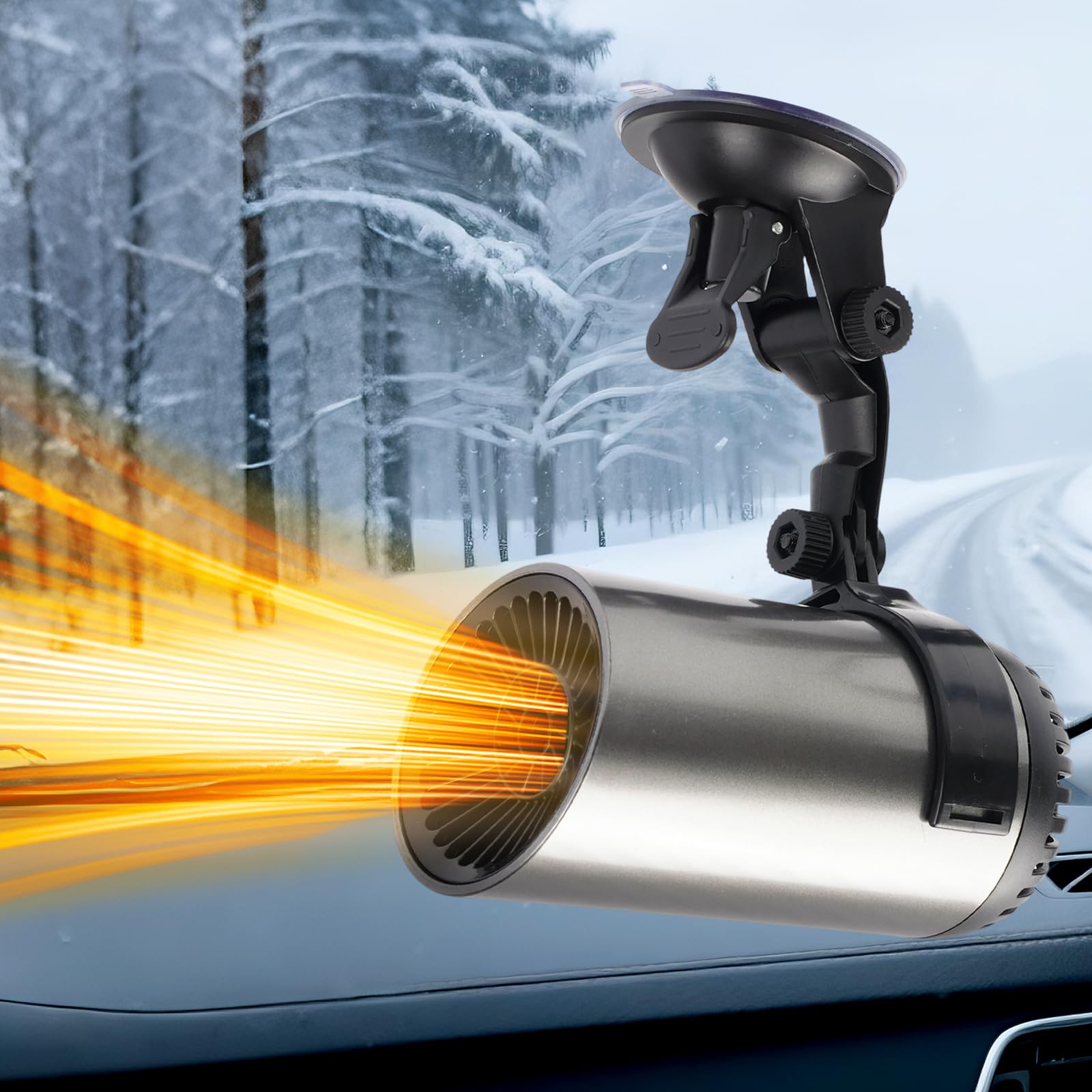
A 13.1-ounce heater with a suction mount and overheat protection that blows warmer air than most.
This LLWAN unit stands out for its safety hardware: it uses ABS and polymer heat-resistant plastic, includes overheat protection to keep the casing from burning your hands, and houses a built-in alloy heating wire for rapid warm-up. The 180° rotatable suction mount sticks the whole 13.1-ounce body anywhere on the windshield or dash, which is more flexible than the fixed brackets on most rivals.
The heat output is where opinions split. The crowd that loves it tells a rescue story—a driver with a dead heater core used this to defrost the window and get moving in the cold, calling it “work like a champ.” The skeptics say it “blows warm air but not much of it,” with one owner joking that exhaling produced more air pressure. A 10-minute run cleared a spot about the size of a small pizza on a side-by-side windshield, which gives you a realistic sense of its pace.
Durability is the gamble. At least one unit “burned out after 20 minutes” on first use, and there’s an unverified report of the power cable degrading over hours of use. For quick, supervised defrost bursts on a frosty morning, this is a capable and safer-feeling pick; for continuous cabin heating, the airflow just isn’t there.
Fast warm-up: Owners confirm it delivers noticeable warmth quickly, enough to clear a driving view in a pinch.
Low volume: The fan pressure is weak, so it spot-heats rather than cabin-heats, and a few units fail within 20 minutes.
6. CYDZSW 800W Hardwire Heater

The 800W hardwired unit that raised a forklift cabin 25-35°F above ambient temperature.
This is a different breed from the cigarette-lighter models. At 800W with a PTC ceramic heating element, it pushes real heat—owners measured a forklift cabin warming by 25-35°F above the outside air, and the easy install video gets most buyers set up in under 10 minutes. The ceramic core keeps the surface cool, runs without a flame, and self-regulates its temperature, which addresses the safety fears around cheaper coil heaters.
The critical install note: this does not plug into your cigarette lighter. It hardwires to the battery with red-to-positive and black-to-negative connections, and the 800W draw is too heavy for a typical lighter circuit. One owner warned the draw could strain an alternator and the car’s wiring if not fused properly, another found the included quick-connect plug melted after hours of use and fixed it by hardwiring directly.
For a golf cart, UTV, or a work vehicle where you can run a proper fused line to the battery, the 2.12-pound unit delivers heat that the 150W plugs simply can’t. The review mix is split between “works great” and durability worries about fuses and early breakage. This is the pick for buyers who want serious warmth and are comfortable with a wiring project.
Serious heat: The 800W ceramic core genuinely warms a cabin, unlike the 150W plugs that barely reach a few inches.
Needs wiring skills: It requires hardwiring with proper fusing—buyers expecting simple plug-and-play will be disappointed.
7. DaisyInner 500W 4-Port Heater
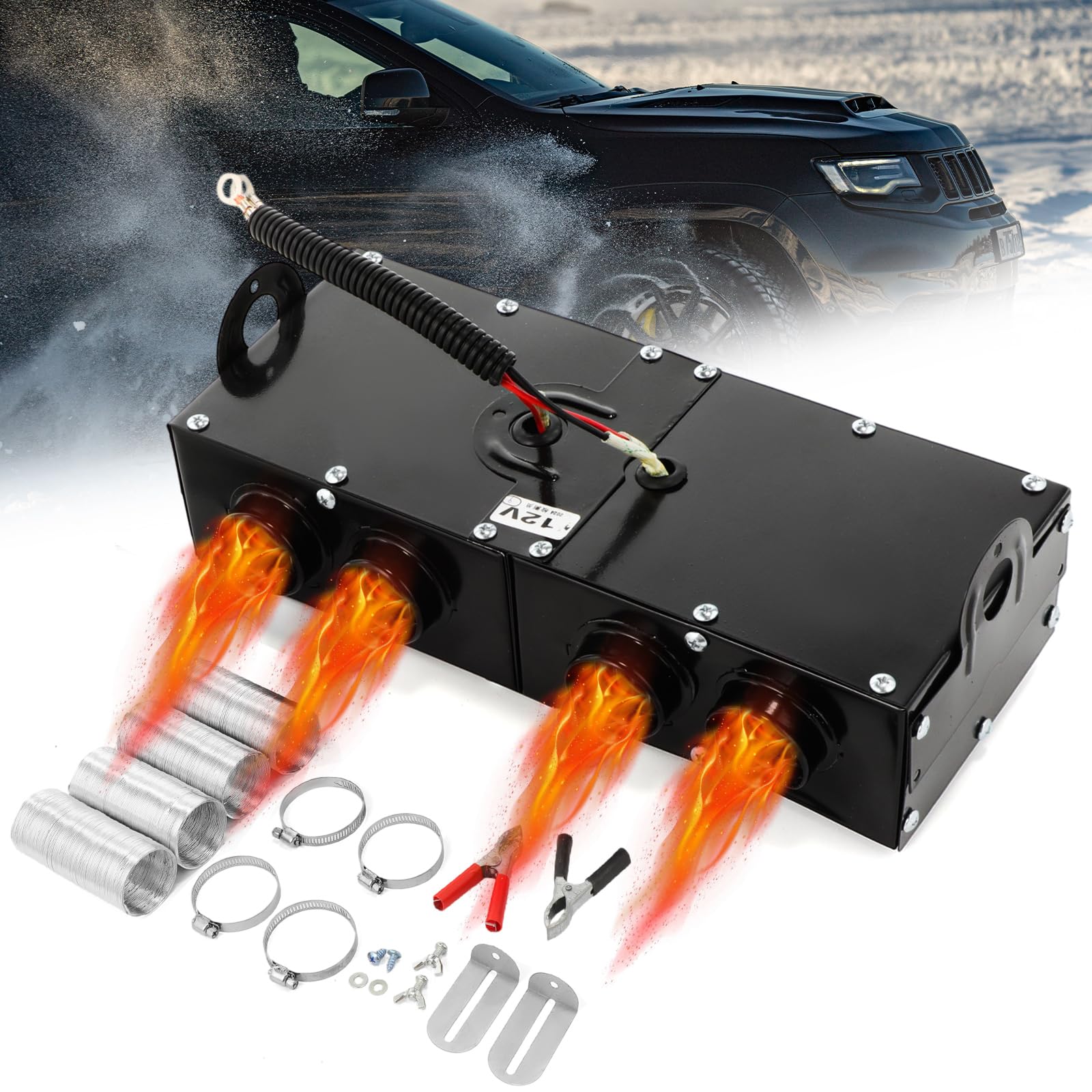
A 3.3-pound, 500W four-port heater that can warm a small tent or a hard-enclosed UTV.
This one breaks the small-heater mold with a 12.2 x 4.7 x 4.1-inch body and a 4-port design with dual switches on top, so you can run just one port or all four depending on how much warmth you need. At 500W it sits between the weak 150W plugs and the heavy 800W unit, making it a middle-ground option for larger cabins. Owners even use it to heat a small tent, which speaks to the airflow being enough for an enclosed space.
The reported experience in a Polaris RZR with a hard enclosure was “tolerable at 20°F once recirculating,” which tells you it holds its own in a small, sealed cabin. But a Ford Taurus owner said it “keeps you from freezing but does not keep you warm by any means,” and the heat output is the most-discussed mixed point. A severe safety warning stands out: one owner found the switch turned on by itself days after parking, draining the battery and risking a fire—so the dual-switch wiring demands attention.
The maker requires at least 4 square millimeters of pure copper wire, otherwise the feed can burn out, so this is another hardwired install rather than a lighter-plug device. For a camper, golf cart, or small utility vehicle where you can run clean power, it offers genuine warmth on a budget; for a daily driver, the self-activation risk is a serious caution.
Real cabin warmth: At 500W with four ports, it produces meaningful heat that smaller plugs cannot match in an enclosed space.
Supervise the switch: The reported self-activation and dead-battery incident makes this a device you must switch off and unplug when parked.
Understanding the Specs
Wattage and airflow
Wattage tells you how much electrical power the heater consumes, and more watts generally means more heat. But for clearing a windshield, airflow matters just as much—a strong fan spreads the warmth across the glass, while a weak fan leaves you with a warm coil and a cold window. The 150W units are the most common but often blow air only a few inches, which is why the 200W KINOWJI gets praised for “amazing” airflow that reaches the back seat.
Installation and power draw
Most 12V defrosters plug straight into your cigarette lighter, drawing roughly 12.5 amps at 150W—right at the limit of a typical car circuit. Higher-wattage units like the 500W and 800W models cannot safely use that socket; they must be hardwired to the battery with a proper fuse. Check your vehicle’s outlet rating before buying, and remember that a lighter-plug heater is limited to around 150-200W to avoid tripping your car’s fuse.
FAQ
Will a 150W defroster actually clear my windshield?
Can I plug a 500W or 800W car heater into my cigarette lighter?
Why does my plug-in car heater only blow cold air?
How long should a 12V defroster take to warm up?
Is it safe to leave a plug-in car defroster running unattended?
What is the difference between a defroster and a defogger?
Will a 12V defroster drain my car battery?
Which defroster works best for a large SUV or truck?
Final Thoughts: The Verdict
If you want one dependable pick, the car defroster winner is the KINOWJI 200W because it offers the strongest airflow of any lighter-plug model, which is the spec that actually clears a windshield. If you want the best budget value and drive a compact car, the Baquler 2-Pack gives you two heaters to position at different windows. And for a golf cart, UTV, or a serious truck cab, the CYDZSW 800W is the one to reach for—just be ready for a hardwired installation.
How We Picked
We do not accept paid placement. Every pick is matched to a real buyer and a real use-case; we do not hands-on test units.
Sources & Methodology
Specifications: manufacturer listings and product documentation. Review insights: verified customer reviews, as of July 2026. Pricing: not shown on this page (it changes often); check the current price via the retailer link.
As an Amazon Associate, Trending Car earns from qualifying purchases. This does not affect which products we feature.