
Our readers keep the lights on and my garage snacks stocked. As an Amazon Associate, I earn from qualifying purchases.
Specs are compiled from manufacturer listings and verified buyer reviews and can change over time — please confirm the key details on the product page before buying.
Regular earbuds seal off your ears, blocking traffic sounds and other riders you need to hear to stay safe. The right pair delivers music, podcasts, or calls while keeping your ears open to the world. This guide focuses on open-ear and bone conduction designs built for cycling, so you stay aware of your surroundings without sacrificing sound quality.
I’m Min Islam — the founder and writer behind Trending Car. This guide is built by comparing the manufacturers’ published specifications and the patterns across verified customer reviews, so you get each pick’s real strengths and trade-offs instead of marketing spin.
Whether you are a daily commuter, a weekend road cyclist, or a trail rider, you need a pair of headphones for bike riding that stay put in wind, resist sweat, and keep a channel open to the world around you.
Our Picks at a Glance


How To Choose The Best Headphones for Bike Riding
Bike headphones must never fully block your ears. You need to hear car horns, bells, sirens, and other cyclists. This is why open-ear and bone conduction designs dominate this category. Here is what to look for.
Open-Ear vs. Bone Conduction
Open-ear headphones sit just outside your ear canal, directing sound in without sealing it. Bone conduction headphones vibrate against your cheekbone, sending audio through your skull and leaving your ear canals completely free. Both let you hear ambient noise, but bone conduction is often preferred for long rides because there is zero ear fatigue and no sweat buildup inside your ears.
Battery Life and Bluetooth
Battery life is critical for rides that last hours. Bluetooth 5.3 offers the most stable connection and the lowest power draw, meaning fewer dropouts and longer runtimes. Some budget-friendly models use Bluetooth 5.1, which is still reliable but uses more energy. Look for at least 6 hours of playtime for a full day of cycling.
Water and Sweat Resistance
Bike rides expose headphones to sweat, rain, and road spray. An IPX4 rating handles sweat and light rain, while IPX6 or IPX8 is needed for heavy downpours or submersion. For most cyclists, an IPX5 or IPX6 rating survives a sudden shower without driving up the cost.
Quick Comparison
| Model | Best For | Battery Life | Bluetooth | Water Rating | Amazon |
|---|---|---|---|---|---|
| SHOKZ OpenMove★ Best Overall | Trusted Brand, Balanced Sound | 6 hours | 5.1 | Sweat-resistant | Amazon |
| LEVN Open EarAlso Great | All-Day Rides + Safety | 14 hours | 5.3 | Sweatproof & Water-Resistant | Amazon |
| RR SPORTS IP68 | Swimming & Extreme Wet | 7 hours | — | IP68 (2m submersion) | Amazon |
| CXK IPX8 | Underwater + Gym | 12 hours | 6.0 | IPX8 (2m deep) | Amazon |
| Sanag IPX8 | Pool Training & Ocean | 8 hours | 5.3 | IPX8 (2m submersion) | Amazon |
| CXK Bluetooth 6.0 | Lightweight Premium Sound | 10 hours | 6.0 | IPX6 | Amazon |
| Ogogrs ZP09 | Budget-Friendly Versatility | 10 hours | 5.3 | IP55 | Amazon |
In‑Depth Reviews
1. SHOKZ OpenMove Bone Conduction
Our pick — over 4★ from 23,500+ verified ratings; the strongest balance of quality and price.
The name everyone knows, now at a price that makes sense for riders.
SHOKZ (formerly AfterShokz) is the brand that made bone conduction mainstream, and the OpenMove is their most accessible model. The wraparound titanium frame is lightweight and secure, and the open-ear design keeps you aware of traffic. The 6-hour battery life is the shortest on this list, and the Bluetooth 5.1 is a generation behind the competition, but the sound quality is what owners praise most — balanced audio with rich bass delivered through your cheekbone.
The comfort and fit receive mixed feedback. Some owners find the OpenMove sits comfortably on the head even with glasses and a helmet, while others find it too large or a bit awkward. The sound quality for music and podcasts is excellent, and the microphone works well for calls. One owner summed it up as the “balance for quality and price” and noted the battery life is superb for the size. The USB-C charging is a modern touch that the budget competitors sometimes omit.
Compared to the LEVN, the OpenMove has a battery life of 6 hours versus the LEVN’s 14 hours, and older Bluetooth 5.1 versus 5.3. But SHOKZ has a decade of engineering in bone conduction, and the audio tuning is subtly more refined — voices sound more natural, and the bass has a slight edge. It is a classic choice for the rider who trusts a well-known brand and does not need all-day battery for multi-hour rides.
The thing everyone raves about: Sound quality leads the praise by a massive margin — over 1,300 owners single it out. The build is solid and the brand reputation is class-leading.
Buy it if: you want a proven, reliable bone conduction headphone from the category leader and your rides are 4 hours or less. The audio quality is genuinely very good for the form factor.
Consider the LEVN instead if: you ride for hours at a time and need the longer 14-hour battery, or you want the latest Bluetooth 5.3.
2. LEVN Open Ear Headphones
The endurance king that keeps you connected to traffic without ever touching your ears.
You get an impressive 14 hours of playtime from a single charge, meaning you can ride all week without hunting for a cable. The open-ear design wraps around your head with a soft silicone frame, so it stays put through bumps and turns without causing the pressure that in-ear buds create after an hour. Bluetooth 5.3 keeps the connection rock-solid even when your phone is zipped in a jersey pocket, and the multipoint pairing lets you switch between your bike computer and phone without fumbling.
The people who buy these routinely praise the clear sound quality and how long the battery lasts. The secure fit during running and cycling is a constant highlight, and the lightweight build — combined with sweatproof and water-resistant construction — means rain and hills are no problem. One owner noted he has been using them since September with minimal charging, about an hour and a half of daily use, and they are still going strong. The trade-off is modest bass and quieter listening in noisy traffic, but that openness keeps you safe.
Bone conduction headphones like this transmit sound through your cheekbone so your ear canals stay completely free. That means you hear a car approaching from behind while your music still plays clearly. These are the ones to reach for if you want maximum ride time between charges and a secure, pressure-free fit that works with glasses and helmet straps alike.
Why Riders Love Them
- 14-hour battery (compared to 6 hours for the SHOKZ OpenMove)
- Bluetooth 5.3 for stable, low-power connection
- Soft silicone frame stays comfortable under a helmet
A Fair Caveat
- Bass is modest — not for bass-heavy music fans
- Not ideal for extremely loud traffic zones; open design lets noise in
Reach for these if: you want the longest battery life of any open-ear headphone on this list, and you prioritize safety and all-day comfort during long road or gravel rides.
Think twice if: you need deep bass for your playlist or you ride exclusively in deafening city traffic where sealing out noise is your priority.
3. CXK Bone Conduction Bluetooth 6.0
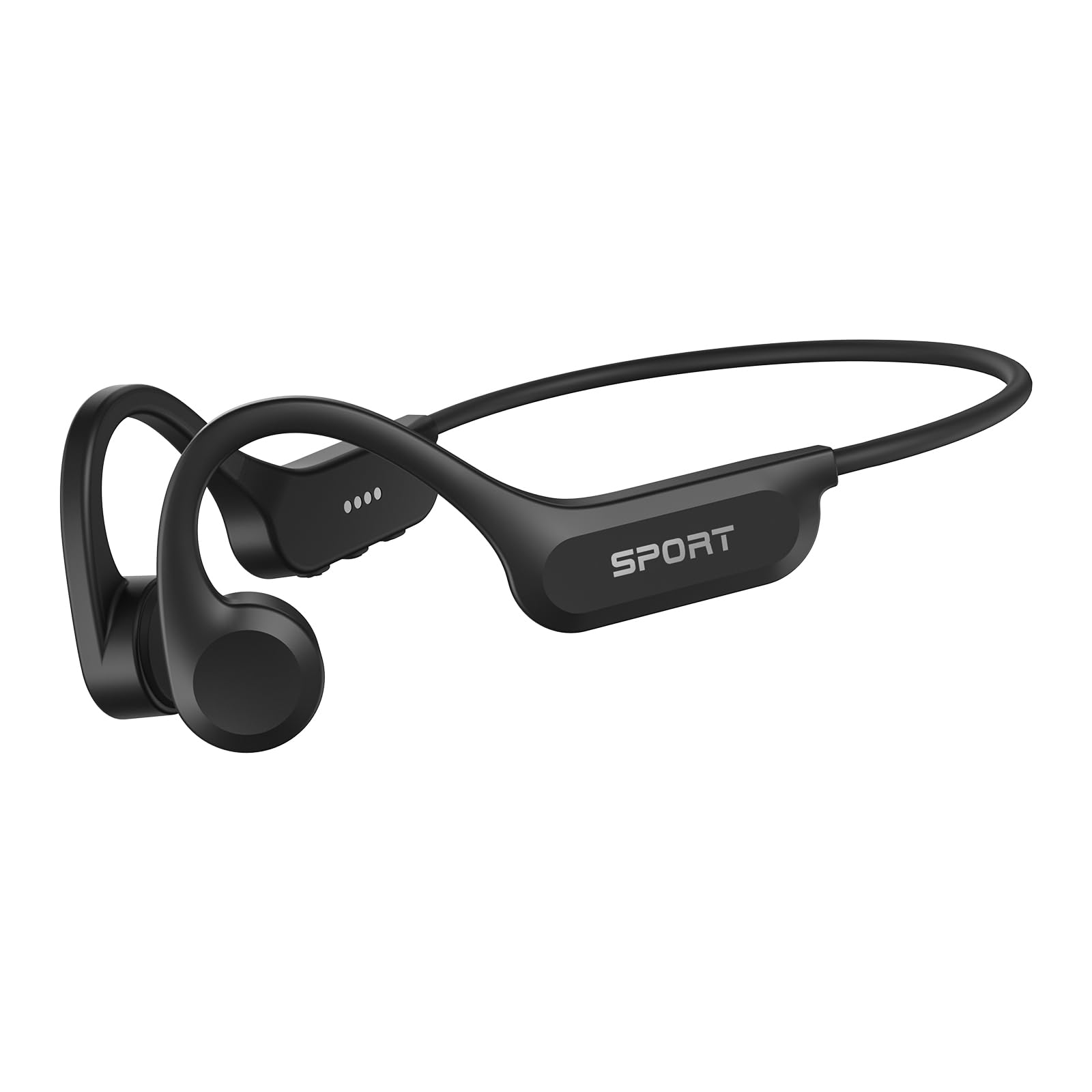
Brilliantly loud bone conduction in a featherlight 28-gram frame.
At just 28 grams, this is the lightest wraparound bone conduction headset here, and the flexible titanium frame bends to your head shape without loosening over time. Bluetooth 6.0 delivers the fastest pairing and lowest latency among these picks, so your music syncs instantly and never stutters when you turn your head. The IPX6 waterproof rating means a sudden downpour or a drenching sweat session will not faze it.
The sound quality stands out here — the 15mm bone conduction drivers produce noticeably louder and clearer audio than earlier bone conduction models, with enough volume to hear over wind noise. Owners consistently mention that the sound quality wins them over, that the earbuds fit securely without moving during exercise, and that the value for money is exceptional. One reviewer noted the charge holds for three to four days of regular gym use, and the fast 2-hour charge means you never wait long. The trade-off is that the IPX6 rating is not submersion-proof, so this is for sweating and rain, not pool swimming.
Unlike the LEVN, which is an open-ear speaker design, this CXK uses true bone conduction. That makes a real difference in wind — because nothing sits in or near your ear canal, there is no wind rumble. It is a premium pick for the rider who wants the loudest, clearest bone conduction audio and a nearly weightless feel.
Solid verdict: Best sound loudness and clarity in this list, at a weight you will forget you are wearing. The IPX6 covers every weather condition except full submersion, which is fine for 99% of cyclists.
Perfect for: riders who prioritize loud, clear audio and want the latest Bluetooth 6.0 with zero ear canal contact. Ideal for road cycling, commuting, and gym sessions.
Skip if: you need a fully waterproof headphone for swimming or open-water training.
4. Ogogrs Bone Conduction ZP09
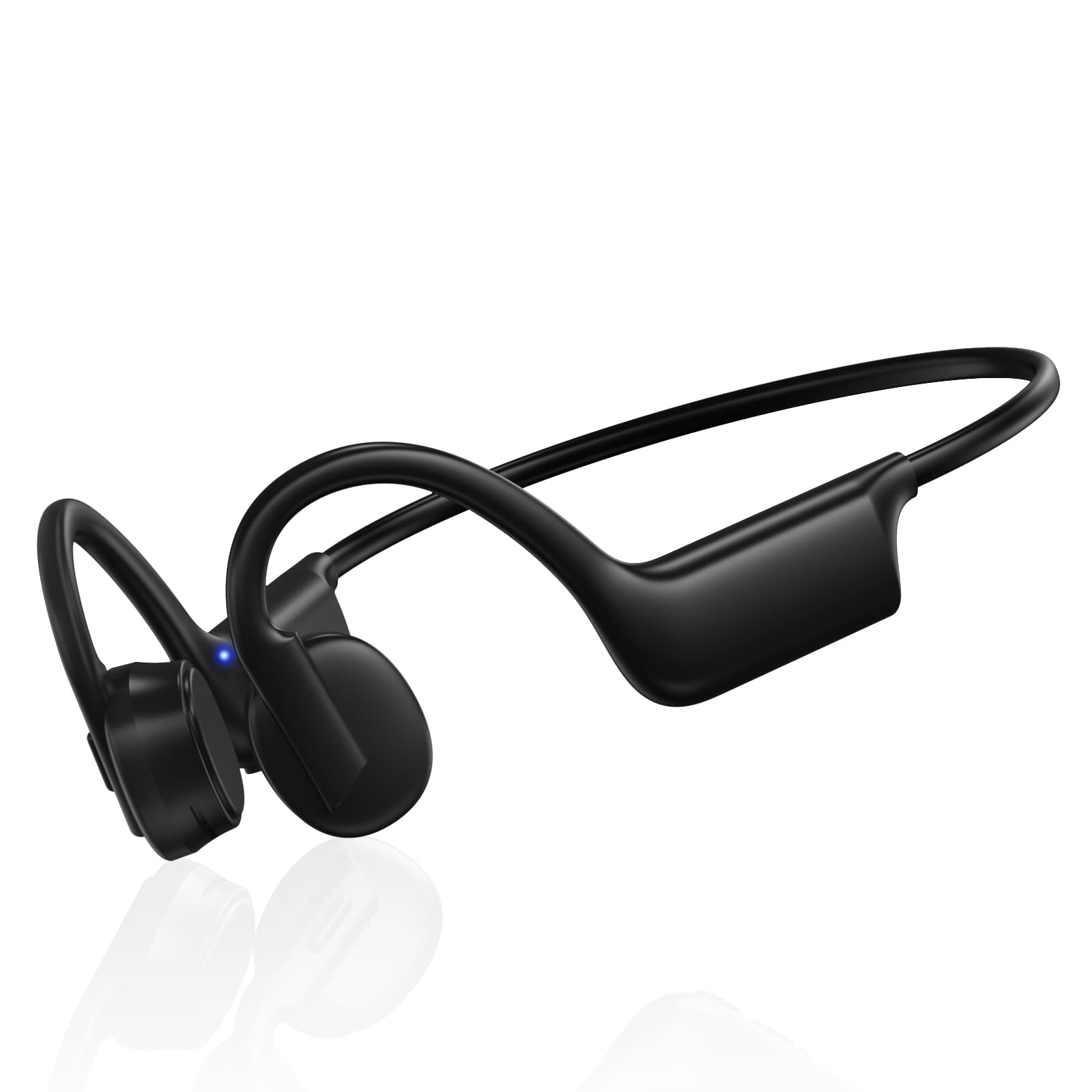
A crowd-pleaser that proves you do not need to spend big for solid bone conduction.
This Ogogrs model matches the 10-hour battery life of premium picks at a significantly lower cost, making it a favorite among budget-conscious cyclists who still want true bone conduction. The lightweight titanium frame bends freely without snapping and holds a secure fit even during bumpy trail rides. Bluetooth 5.3 provides a fast, stable connection, and the IP55 waterproof rating handles sweat and light rain — enough for most commutes and weekend rides.
What owners rave about is the clear, rich sound that does not sacrifice quality for the sake of an open-ear design. They call it “perfectly comfortable” for long walks and swims (it works in the water, though it is not fully submersible like an IPX8 unit), and they appreciate that you can wear them for hours without any ear fatigue. The built-in mic handles calls surprisingly well, which is rare at this tier. The honest limitation is that the IP55 rating means you cannot take this into a pool or heavy downpour without caution, and the volume tops out a little lower than the CXK Bluetooth 6.0.
This is the best entry-point into bone conduction for bike riding. It gives you the same situational awareness and comfortable fit as pricier models, and the 10-hour battery will cover even your longest century ride. The crowd around this headphone is overwhelmingly satisfied, making it a safe and smart first choice for anyone new to the category.
Bottom line: You get 90% of the premium experience for roughly two-thirds the price. The IP55 is the main place the corner was cut — but for a fair-weather rider, that is perfect.
Reach for this if: you want bone conduction at a friendly price with great battery life and solid sound. Ideal for commuting, gym, and casual trail riding.
Look elsewhere if: you ride through heavy rain regularly or need a submersible waterproof headphone.
5. CXK IPX8 Bone Conduction Headphones
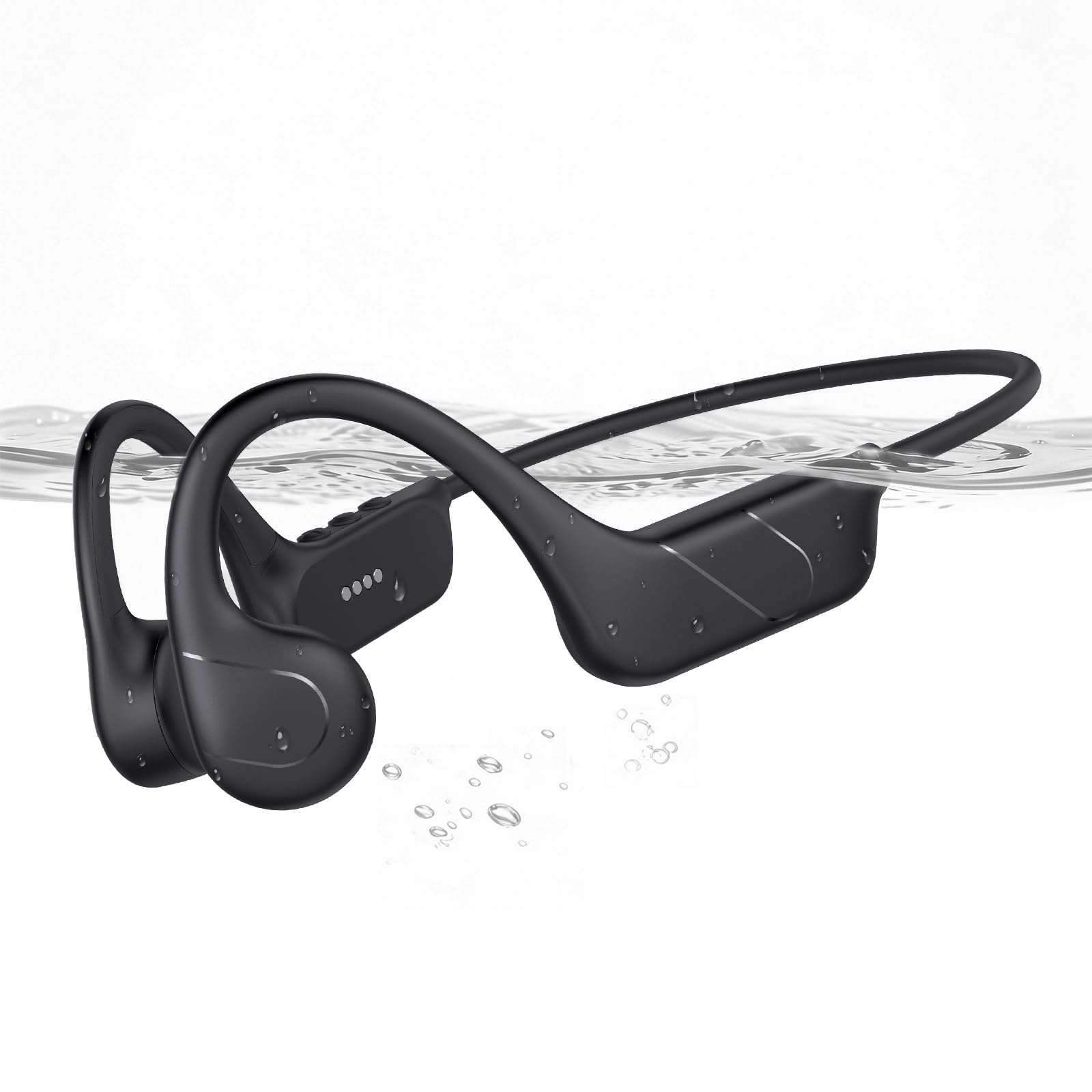
Goes from mountain bike trail to pool lane without missing a beat.
This CXK model is the most waterproof bone conduction headphone on the list, rated IPX8 for submersion up to 2 meters for two hours. That means it survives not just rain but full immersion — perfect for triathletes or cyclists who also swim. On top of that, it packs a built-in MP3 player with enough storage for up to 8,000 songs, so you can leave your phone behind and still have music. The 12-hour battery life is close to the LEVN’s 14 hours, and Bluetooth 6.0 gives you the fastest wireless connection here.
Owners are emphatic about the battery life, calling it the most-discussed aspect by a wide margin. The sound quality is praised as crisp and clear, and the build quality feels solid for the price. The soft silicone pads on the earcups make it comfortable for hours, and the ear hooks keep everything secure during high-impact activity. The caveat is that the Bluetooth range is a modest 33 feet, so your phone needs to stay close, and the MP3 mode only works with WMA, FLAC, WAV, and MP3 formats — no iTunes MP4s.
This is the do-everything headphone. It beats the LEVN on waterproofing and the RR SPORTS on battery life, and it adds phone-free MP3 playback. If you want one headphone for cycling, swimming, and the gym, this is the strongest all-rounder.
Best aspect: The battery life is the thing owners praise most — it outlasts your phone, so you never worry about dying mid-ride. Combined with IPX8 and MP3 storage, this is the ultimate crossover performer.
Perfect for: multi-sport athletes who cycle, swim, and run. The IPX8 and MP3 mode mean you can leave your phone in the locker and still have tunes.
Think twice if: you only cycle on roads and never go near water — you are paying for submersible waterproofing you will not use.
6. RR SPORTS IP68 Bone Conduction
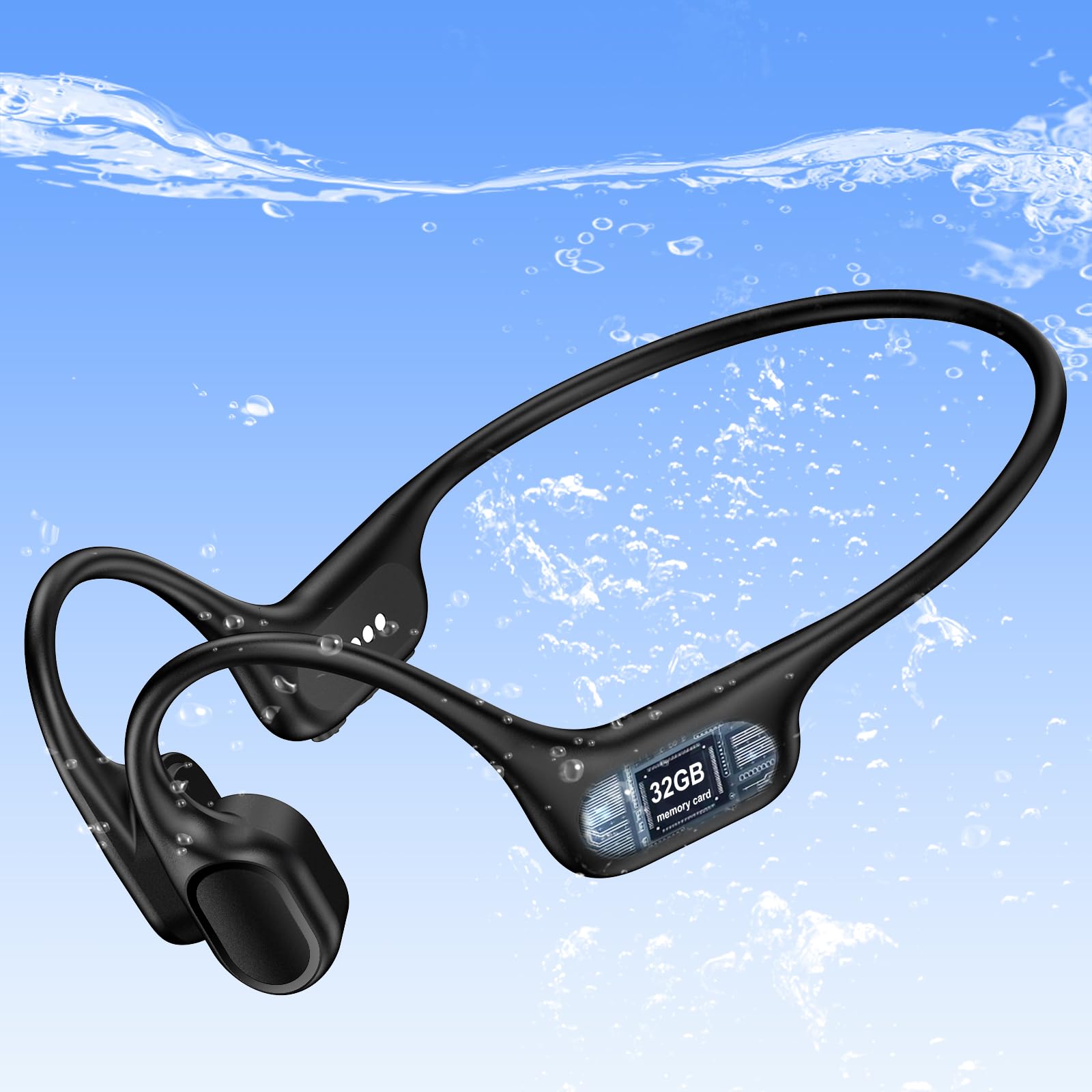
The swimmer’s secret weapon that also rocks a road ride.
With an IP68 rating that lets it survive submersion up to 2 meters, this is among the most water-resistant bone conduction headphones available. It also has a built-in 32GB MP3 player that stores up to 7,000 songs, so you can swim laps or ride trails without carrying a phone. The 7-hour battery life is lower than the CXK IPX8, but it is still enough for a full day of mixed activity, and the ultra-soft silicone construction makes it comfortable with swim caps and goggles.
The sound quality is a consistent highlight, and owners love that these headphones do not bother sensitive ears — a relief for anyone who has struggled with in-ear buds. The open-ear design ensures you hear your surroundings on the bike, and the secure fit means they do not budge during running or cycling. The magnetic charging cable is easy to use, though it is a proprietary connector rather than USB-C. One reviewer called them “perfect for kayaking,” noting the sound is great at this price point, but warned that the MP3 mode only plays MP3, WMA, WAV, and FLAC formats, not iTunes MP4s.
Compared to the CXK IPX8, the RR SPORTS has a slightly shorter battery (7 vs 12 hours) but matches the waterproof depth and adds a slightly larger song storage capacity (7,000 vs 8,000). It is a strong choice for the swimmer who also cycles, and the price makes it a compelling value.
What wins people over: The IP68 waterproofing is the real deal — owners confirm it survives pool sessions and ocean swims without issue. The sound is clear, and the comfort is excellent for sensitive ears.
Best for: swimmers who also ride and want a single headphone for both sports. The IP68 and 32GB storage let you leave your phone behind at the pool or on the trail.
Consider another if: you need longer than 7 hours of continuous playback or prefer a universal USB-C charger over the magnetic cable.
7. Sanag IPX8 Bone Conduction
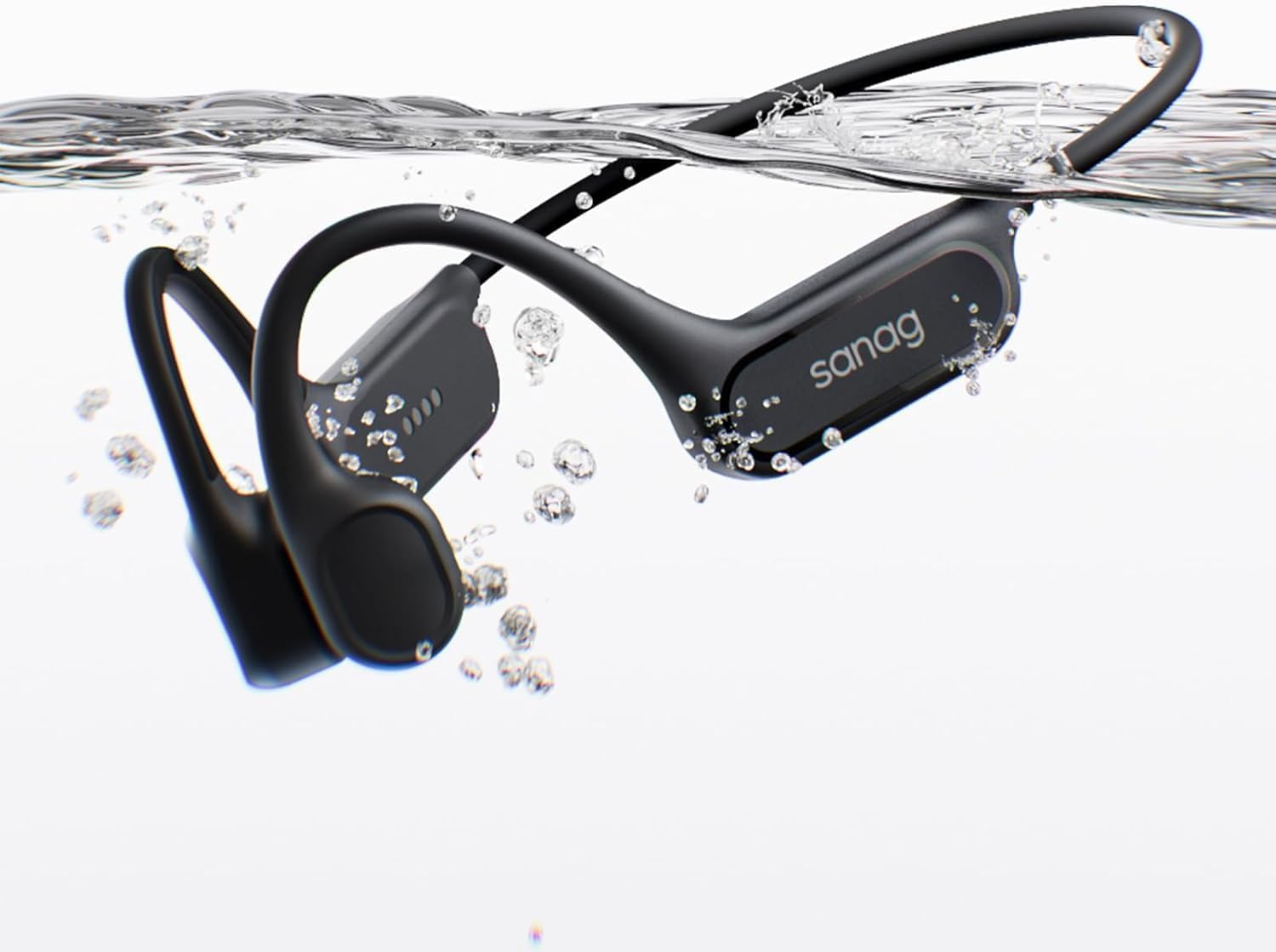
A waterproof specialist that keeps calls clear even at the pool.
Like the RR SPORTS, the Sanag carries an IPX8 rating for submersion up to 2 meters, making it a true swimming companion. It offers an 8-hour battery life, slightly longer than the RR SPORTS, and adds Environmental Noise Cancellation (ENC) on the mic, so your voice comes through clearly during calls even if you are in a windy bike lane or a noisy gym. The bone conduction drivers use a low-frequency vibration and magnetic drive oscillator to maintain sound detail underwater, which is a clever trick for open-water swimmers.
Owners explicitly confirm that these are “truly waterproof” and have swam “many miles” without any issues. The sound and comfort are consistently rated as on point, and the open-ear design is praised for being safe during outdoor activities. The special 3-pin charging cable (rather than USB-C) is the main inconvenience — if you forget it, you cannot borrow a friend’s cable. The sound quality is also not as punchy as in-ear headphones, which is expected from bone conduction.
This headphone leads on call quality among the waterproof models thanks to the ENC mic, making it a better choice for the cyclist who takes calls mid-ride or mid-swim. The 8-hour battery beats the RR SPORTS by an hour, and the Bluetooth 5.3 connection is snappier than older standards. It is a solid aqua companion for the price.
Strongest point: The IPX8 waterproofing is verified by owners who use it routinely in pools and open water. The ENC mic is a rare bonus in this category.
Ideal for: cyclists who also swim and want the best call quality in a waterproof headphone. Good for pool training and ocean swims.
Look elsewhere if: you hate proprietary chargers or need more than 8 hours of battery for all-day rides.
Understanding the Specs
Battery Life (Hours)
This is the single most practical spec for a bike headphone. A 6-hour battery covers a morning ride but needs charging after every outing. A 14-hour battery like the LEVN lets you ride multiple days without plugging in. If you do long weekend rides or forget to charge, aim for 10 hours or more. The numbers here range from 6 to 14 hours — that is a real-world difference of charging every day versus every three days.
Bluetooth Version (5.1 vs 5.3)
Bluetooth 5.3 is the current standard and offers lower power consumption, faster pairing, and a more stable connection at range. Bluetooth 5.1, like the SHOKZ OpenMove, still works fine but drains the battery slightly faster and may drop the signal if your phone is in a backpack rather than a jersey pocket. For cycling, the difference is noticeable in connection stability, not speed.
Waterproof Rating (IPX4 to IPX8)
The IPX rating tells you how much moisture the headphones can handle. IPX4 handles sweat and light drizzle. IPX6 (like the CXK Bluetooth 6.0) can take heavy rain and pressure washing. IPX8 (like the RR SPORTS and Sanag) means full submersion up to 2 meters — overkill for most cyclists but essential for swimmers. For bike riding, IPX5 or IPX6 is the practical balance.
Open-Ear vs Bone Conduction
Open-ear headphones (like the LEVN) use small speakers that sit just outside your ear canal. Bone conduction headphones (like the SHOKZ and CXK models) vibrate against your cheekbone. Both leave your ears free to hear traffic, but bone conduction has the advantage of zero wind noise in the ear canal and no sweat buildup. Open-ear designs tend to have slightly richer bass, while bone conduction offers louder overall volume and better call clarity outdoors.
FAQ
Can I wear bone conduction headphones with a bike helmet?
Will I still hear traffic with open-ear headphones?
How long does the battery last in real-world cycling use?
What is the difference between IPX6 and IPX8 waterproofing?
Can I take phone calls while riding with bone conduction headphones?
Do bone conduction headphones sound as good as regular earbuds?
Will these headphones fall off during bumpy trail rides?
Can I use them if I wear glasses?
How do I charge bone conduction headphones?
Are waterproof headphones worth it for bike riding?
Final Thoughts: The Verdict
For most buyers, the headphones for bike riding winner is the LEVN Open Ear Headphones because it combines the longest battery life (14 hours) with Bluetooth 5.3, a secure and comfortable fit, and a price that undercuts the competition. The huge battery means you never worry about charging mid-week, and the open-ear design keeps you safe in traffic. If you want the loudest, clearest bone conduction audio, grab the CXK Bluetooth 6.0 — it is featherlight at 28 grams and produces impressive volume for its size. And for the multi-sport athlete who swims and cycles, the CXK IPX8 is the one to reach for, offering full submersible waterproofing with a 12-hour battery and an integrated MP3 player.
How We Picked
We do not accept paid placement. Every pick is matched to a real buyer and a real use-case; we do not hands-on test units.
Sources & Methodology
Specifications: manufacturer listings and product documentation. Review insights: verified customer reviews, as of July 2026. Pricing: not shown on this page (it changes often); check the current price via the retailer link.
As an Amazon Associate, Trending Car earns from qualifying purchases. This does not affect which products we feature.