
Our readers keep the lights on and my garage snacks stocked. As an Amazon Associate, I earn from qualifying purchases.
Specs are compiled from manufacturer listings and verified buyer reviews and can change over time — please confirm the key details on the product page before buying.
Upgrading your car’s sound on a tight budget is tricky: a speaker with a high max-wattage rating often sounds harsh and distorted if your factory head unit can’t deliver that power cleanly. What you actually want is a speaker that makes every note — vocals, snare hits, bass lines — distinct and enjoyable at normal listening volumes, without needing a trunk full of amplifiers. The key spec to look for is sensitivity (how loud the speaker gets from one watt of power), not a huge wattage number.
I’m Min Islam — the founder and writer behind Trending Car. This guide is built by comparing the manufacturers’ published specifications and the patterns across verified customer reviews, so you get each pick’s real strengths and trade-offs instead of marketing spin.
You will find nine models here that focus on real-world performance, ease of installation, and honest value — no hype, just the speakers that actually deliver for your budget.
Our Picks at a Glance


How To Choose The Best Car Speakers on a Budget
Picking the right set isn’t about finding the cheapest option. It’s about matching the speaker’s strengths — sensitivity, power handling, and size — to your car’s stereo and your listening habits. Here’s what actually matters when your wallet is watching.
Understand Sensitivity and Power
Sensitivity, measured in decibels (dB), tells you how loud a speaker gets from just one watt of power. A speaker rated at 91 dB or higher will sound noticeably louder and clearer with a factory stereo than one rated at 87 dB. If you are not adding an amplifier, prioritize high sensitivity — it is the single most important spec for a budget build.
Match the Speaker Size to Your Vehicle
Measure your current speaker openings. Common sizes are 6.5-inch rounds and 6×9-inch ovals. A 6×9 speaker has a larger cone area, which naturally produces deeper and fuller bass without a subwoofer. A 6.5-inch speaker is easier to fit in most doors and sounds excellent with a small subwoofer added later. Always confirm the mounting depth, too — deeper speakers can hit the window mechanism in some doors.
Coaxial vs. Component
Coaxial speakers have the tweeter (high-frequency driver) built into the same frame as the woofer. They are simpler to install and are the best choice for a direct factory replacement. Component speaker systems separate the tweeter and woofer, allowing you to mount the tweeter higher up for a better soundstage. They cost more and require more work to install, but the clarity improvement is significant if you are willing to run wires.
Quick Comparison
| Model | Best For | Sensitivity | Power Handling (RMS) | Size | Amazon |
|---|---|---|---|---|---|
| DS18 PRO-GM6.4★ Best Overall | Loud Midrange & Vocals | — | 140W | 6.5″ | Amazon |
| PIONEER TS-F6935RDirect Fit Champion | Direct OEM Fit | 87 dB | 30W | 6″ x 9″ | Amazon |
| RECOIL MS65-4PBest Budget Mid-Bass | Clear, Loud Mid-Bass | — | — | 6.5″ | Amazon |
| BOSS Audio CH6930B | Budget Bass from 6×9 | 92 dB | — | 6″ x 9″ | Amazon |
| Hifonics ZS-693 | Spatial Soundstage | 88 dB | 120W | 6″ x 9″ | Amazon |
| Alpine SXE-6926S | Reliable Brand Upgrade | — | 45W | 6″ x 9″ | Amazon |
| Pioneer TS-A1671F | Best All-in-One Kit | 91 dB | 70W | 6.5″ | Amazon |
| Kenwood KFC-6966S | Loud & Wide Sound | — | 90W (pair) | 6″ x 9″ | Amazon |
| Rockford Fosgate R165-S | Best Soundstage Clarity | — | 40W | 6.5″ | Amazon |
In‑Depth Reviews
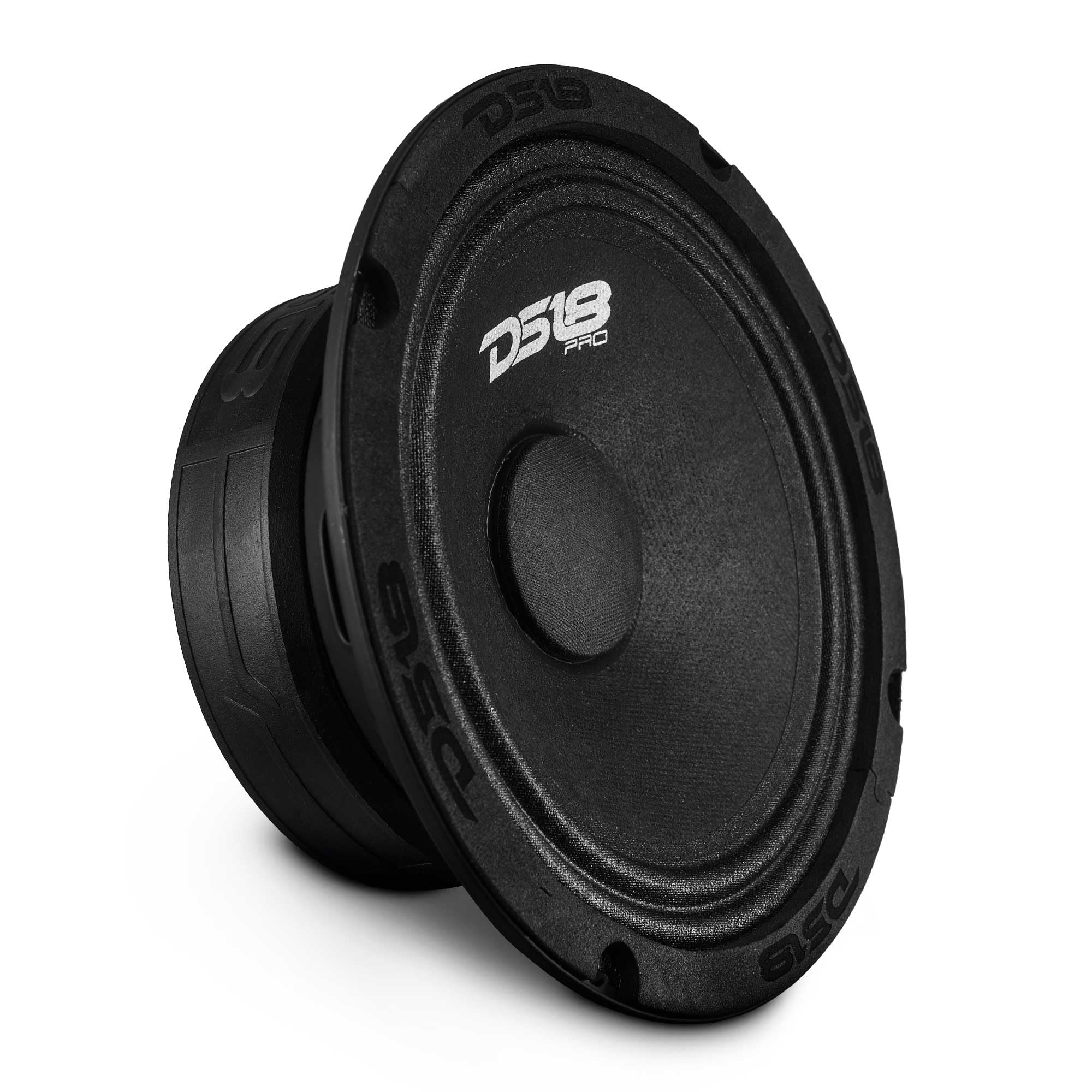
1. DS18 PRO-GM6.4 Loudspeaker
The midrange specialist that turns muddy vocals into crisp front-row clarity.
This is a pure 6.5-inch midrange driver, not a full-range coaxial — and that focus is its superpower. With a 480W max power handling and 140W RMS (continuous power you can rely on) at 4 ohms, it is built to take serious amplifier power without breaking a sweat. The 1.5-inch high-temperature Kapton voice coil (a heat-resistant coil winding material) keeps the speaker stable even during long listening sessions at high volume, which is the common failure point for cheaper drivers.
Owners consistently call the sound “clear and crisp” and note how it handles 125 watts per channel cleanly when paired with a proper crossover set around 80Hz. This means vocals and instruments stay distinct and present, even when layered over a subwoofer. The trade-off is that this is a dedicated midrange driver — you will need a separate tweeter and subwoofer to cover the full frequency spectrum. It also requires a bit more install work (baffling and sound deadening) to really shine. You will actually get sharper vocal clarity here than from the Pioneer TS-A1671F, but the Pioneer gives you a complete all-in-one kit right from the start.
What Wins People Over
- Handles 140W RMS with ease, far more durable than budget coaxials
- Vocal clarity is exceptional — owners call it “excellent value”
- Built with Kapton voice coil and ferrite magnet for longevity
The Install Reality
- Sold as a single speaker — you need two for a pair
- Requires a separate tweeter and subwoofer for full-range sound
- May need spacers to avoid window interference in some vehicles
Best for the amp-builder: If you are piecing together a system with a separate amplifier and want vocal presence that cuts through, this is the best budget backbone you can buy.
Not a drop-in replacement: Skip this if you want a single pair of speakers to replace factory units — you need a full system around it.
2. PIONEER F-Series TS-F6935R 3-Way Speakers
The factory replacement that requires zero guesswork — just bolt it in and enjoy.
These Pioneer 6×9-inch 3-way coaxials are engineered for the buyer who wants a clear, balanced sound upgrade without touching a wiring diagram. Rated at 230W max power with a 30W nominal rating at 4 ohms, they are designed to run efficiently on factory head unit power. The 87dB sensitivity is standard for this class, but the real story is how easily they integrate — buyers report a direct fit in vehicles ranging from a 1966 Impala to a 2004 Civic Coupe with zero modification.
The sound is described as “clear, strong bass, and excellent overall performance” by owners, with the separate woofer, midrange driver, and tweeter filling out the frequency range smoothly. The catch is that these are built for modest power. To get the most out of them, they pair best with a clean signal; at very low volumes some owners note a lack of clarity without an amplifier. If you want a simpler install than the DS18 PRO-GM6.4, which needs a full system around it, these Pioneers are your ticket.
The big plus: easy installation and a well-balanced three-way design make this the go-to for anyone swapping blown factory 6x9s for a noticeable, reliable upgrade. The 230W max rating handles daily driving with ease.
Grab these if: You want a simple, no-splice fit with trustworthy Pioneer quality for under.
Think twice if: You are planning a high-powered system — these are meant for stock power levels, not heavy amplification.
3. RECOIL MS65-4P 6.5-Inch Midrange Speakers
A pro-audio midrange that brings surprising warmth and volume for the price.
The RECOIL MS65-4P is a 6.5-inch midrange driver built with a 1.5-inch high-temperature Kapton voice coil and a high-strength ferrite magnet. It is designed to handle high output levels from a stock location, and owners confirm it delivers “clear, crisp, powerful sound” that lifts the soundstage off the floor. The pair handles up to 600 watts max, and while the RMS rating (continuous power rating) isn’t listed, the build quality suggests it can take real power from an external amplifier.
Where this speaker shines is mid-bass warmth and vocal presence — it is noticeably more articulate than typical budget coaxials like the Pioneer TS-F6935R. The catch for some buyers: it required a minor 1/8-inch cut for an Audi S6 fit, and owners note it lacks deep sub-bass compared to premium brands like Bose. It really needs an amplifier to show its full potential.
The verdict: For anyone building a system with an external amp and wanting loud, clean midrange without spending a fortune, these are a top contender. The build quality feels solid, and the value is tough to top for a pair under.
Reach for these if: You have an amp ready to go and prioritize clear, warm vocals and mid-bass.
Look elsewhere if: You want a simple swap on a factory stereo — these need power to perform.
4. BOSS Audio Systems CH6930B 6×9 Speakers

The 6×9 oval that delivers real bass without a subwoofer.
With a 92 dB sensitivity rating and a frequency response that dips down to 50 Hz, these BOSS 6×9 three-way speakers are among the most efficient picks here. That high sensitivity means they produce surprisingly loud, full sound from a factory radio. The poly injection cone and rubber surround are built to move air, and owners confirm that in a vehicle like a 1999 Jeep TJ, these speakers produce “actual bass” — enough that a dedicated subwoofer might feel unnecessary.
They handle 400 watts max per pair, and the 0.75-inch piezo tweeter (a type of tweeter that uses piezoelectric crystals) and 2-inch polyimide cone midrange handle the highs and mids cleanly. The catch is an honest size note: some owners found the 6×9 frame slightly smaller than standard, requiring minor modification to fit. The build is solid for the price, but these are not competition-grade speakers. They deliver more bass per dollar than the Kenwood KFC-6966S, but the Kenwood reaches lower to 35 Hz.
The nutshell: If you want maximum bass per dollar from a direct-fit speaker and you drive a vehicle that accepts 6x9s, this is the speaker that makes you forget you need a sub. The 92 dB sensitivity is a real asset for stock systems.
Best for: Truck and SUV owners who want a loud, bass-heavy upgrade without adding an amplifier or subwoofer.
Not for: Audiophiles seeking surgical precision — these are about fun, not finesse.
5. Hifonics ZS-693 Zeus 6×9 Speakers

Studio-monitor spatial imaging for your car, without the studio price tag.
The Hifonics ZS-693 is a 6×9 three-way coaxial that punches well above its price in soundstage and clarity. Rated at 800 watts max and 120 watts RMS with a 4-ohm impedance, it uses a pure copper voice coil (not copper-clad aluminum, a common cost-cutting measure) and a lightweight alpha-cellulose cone for rigid, deep bass. The frequency response reaches down to 46 Hz, and the 88 dB sensitivity is good for a speaker of this power class.
Owners rave about the “full-range sound with no frequency gaps” and the wide spatial imaging — one described it as having a “studio monitor-like” quality. The soft neo mylar dome tweeters (high-frequency drivers made with a lightweight polyester film) deliver excellent high-frequency detail. The honest trade-off is that reliability gets mixed feedback; some owners mention durability issues over time. This speaker gives you a wider, more open soundstage than the BOSS Audio CH6930B, making it better for critical listening.
What stands out: The clarity and breadth of the soundstage are genuinely impressive for the price, and the copper voice coil suggests the company didn’t cut corners where it counts. Pair these with a subwoofer for a near-complete system.
Ideal for: Listeners who value instrument separation and a wide, open sound — these make you hear details in songs you thought you knew.
Who should pass: Anyone needing bulletproof daily reliability — the long-term consistency is a slight question mark in owner feedback.
6. Alpine SXE-6926S 6×9 Coaxial Speakers

Alpine’s entry-level 6×9 that brings brand-name clarity to any daily driver.
The Alpine SXE-6926S is a 2-way coaxial speaker rated at 45 watts RMS and 280 watts max peak power, with a frequency response stretching from 40Hz to 20kHz. It uses a long fiber natural pulp woofer cone paired with a mylar foam tweeter. This combination delivers a balanced sound profile — owners note “clean bass, balanced mids, clear highs” — that is a solid step up from any factory paper cone speaker.
The installation feedback is overwhelmingly positive, with owners reporting a near-perfect fit in vehicles like the 2007 Accord and 2006 Pathfinder, often reusing factory screws. The catch is a recurring durability concern in the review data — some customers note that the speakers didn’t last as long as expected. For the price, they sound excellent, but they are not built for abusive volume levels. If you trust Alpine’s reputation over the less predictable long-term consistency of the Hifonics ZS-693, this is your pick.
The bottom line: If you trust Alpine’s reputation and want a straightforward, good-sounding replacement for your factory 6x9s, this is a safe bet. Treat them gently, and they will reward you with clean sound for years.
Best for: The daily commuter who wants a trusted brand and a clear, balanced sound while staying affordable.
Consider carefully if: You tend to listen at very high volumes for long periods — these are better suited to moderate listening.
7. Pioneer A-Series TS-A1671F 3-Way Speakers

The 6.5-inch coaxial that comes with everything you need for a smooth install.
The Pioneer TS-A1671F is a 3-way 6.5-inch coaxial speaker with a 320W max power handling, 70W RMS continuous power, and a standout 91 dB sensitivity rating. That high sensitivity is the key — it means even with a factory head unit, these speakers will play loud and clear. The frequency response stretches from 37 Hz to 31 kHz, covering sub-bass to ultra-high treble. The 3-way design separates the woofer, midrange, and tweeter for more accurate sound.
What sets this package apart is the inclusion of multi-fit installation adapters and mounting screws — owners installing them in Toyotas, Kias, and even a gen 1 Tacoma found they didn’t need to buy extra brackets. The sound is described as having “tight bass response” with clear mids and highs. The honest feedback is that a stock head unit can leave the bass feeling a bit underpowered; an amplifier open up this speaker’s full potential. As a complete kit, it is a much easier path to great sound than the RECOIL MS65-4P, which requires you to source your own mounting gear.
The smart buy: This is the most complete budget package on the list. High sensitivity, a included mounting kit, and clean 3-way sound make it the easiest path to a great-sounding system.
Get this if: You want a single box solution — speakers, adapters, and screws — that sounds excellent from day one.
Keep in mind: Adding a small amplifier later will dramatically improve the bass response.
8. Kenwood KFC-6966S 6×9 Speakers

A classic 6×9 three-way that has been a reliable choice for thousands of owners.
The Kenwood KFC-6966S is a 6×9-inch 3-way coaxial speaker with an 800W max power per pair and a 90W RMS rating. It uses a polypropylene mid-woofer cone with a foam/rubber surround for durability, and the frequency response reaches down to 35 Hz — the lowest bass extension of any speaker in this roundup. This means it produces noticeable low-end rumble even without a subwoofer, a trait that owners consistently praise.
With a top-mount depth of just 3 inches, these fit into many factory locations without interference. Reviewers point out they are “loud and well-performing” and a great upgrade for the money. The mixed-fit feedback is note — some buyers find them a perfect match, while others with vehicles like a 2001.5 Ram report compatibility issues. The connectors may also require splicing in some applications. Compared to the Alpine SXE-6926S, the Kenwood offers deeper bass (35 Hz vs 40 Hz) but with a less predictable fit.
The long view: With tens of thousands of happy owners, the KFC-6966S is a proven workhorse. The 35 Hz low-end extension gives it a bass advantage over most competitors at this price.
Choose this if: You want the deepest bass possible from a full-range 6×9 and appreciate a speaker with a massive owner community behind it.
Measure first if: You drive a less common vehicle — double-check the cutout dimensions before ordering.
9. Rockford Fosgate Prime R165-S Component System

The budget ticket to component-level soundstage — separate tweeters for real imaging.
The Rockford Fosgate Prime R165-S is a 6.5-inch 2-way component system, meaning it comes with separate woofers and tweeters. Rated at 40 watts RMS and 80 watts peak, it uses a mica-injected polypropylene cone woofer for extended frequency response and a 1-inch mylar balanced dome tweeter for crisp highs. The kit includes integrated crossovers, flush and surface mount options for the tweeters, and all mounting hardware.
Owners consistently describe the sound as “excellent quality” with clear mids and highs, and many note that it works surprisingly well with a factory head unit without needing an amplifier. The separate tweeter allows you to mount it higher on the door or dashboard for a much better soundstage than any coaxial can achieve. The honest trade-off is that bass is adequate but not deep — owners recommend pairing with a subwoofer if you want low-end impact. For sheer imaging quality, this beats every coaxial on this list, including the Hifonics ZS-693, because the separate tweeter placement creates a true stereo image.
Why It Stands Apart
- Component design gives vastly better imaging than comparable coaxial speakers
- Includes tweeter mounting hardware for flush, surface, or angle installation
- Rockford Fosgate build quality backed by a 1-year warranty
Realistic Expectations
- Bass is minimal — plan for a subwoofer if you want low-end
- Installation is more involved than coaxial speakers (running tweeter wires)
- Some shoppers say panel resonance at very high volumes on heavy bass tracks
The pick for soundstage seekers: If you want the best possible clarity and imaging on a tight budget and are willing to do a bit more install work, this Rockford system is a phenomenal value.
Skip if: You want a quick, simple swap — stick with a coaxial speaker for a 30-minute install.
Understanding the Specs
Sensitivity (dB)
Sensitivity tells you how loud a speaker will play from a given amount of power. It is measured in decibels (dB) at 1 watt of power measured from 1 meter away. A speaker with 91 dB sensitivity will sound significantly louder than an 87 dB speaker when both are connected to the same factory stereo. For anyone not planning to add an external amplifier, this is the single most important spec to check.
Power Handling (RMS vs Max)
RMS (Root Mean Square) is the continuous power a speaker can handle reliably — think of it as the speaker’s cruising speed. Max power is the brief peak it can survive, like a short burst of speed. A speaker with 70W RMS and 320W max will sound clean and controlled with a 70-watt amplifier, while a speaker with a bloated max rating but low RMS is a marketing trick. Always compare RMS when matching speakers to an amplifier.