
Our readers keep the lights on and my garage snacks stocked. As an Amazon Associate, I earn from qualifying purchases.
Specs are compiled from manufacturer listings and verified buyer reviews and can change over time — please confirm the key details on the product page before buying.
A full respray runs thousands and the factory clear coat chips if you look at it wrong. A wrap flips the script — you change the color, protect the original paint underneath, and can peel it off years later like nothing happened. The hard part is picking which roll to trust with a weekend of your life and a few hundred dollars.
I’m Min Islam — the founder and writer behind Trending Car. This guide is built by comparing the manufacturers’ published specifications and the patterns across verified customer reviews, so you get each pick’s real strengths and trade-offs instead of marketing spin.
The single most useful rule for a great wrap is the thickness — measured in mils — because it decides durability, stretchability, and how forgiving the material is during installation. This guide breaks down the best car wrap options by real-world performance, not marketing claims.
Our Picks at a Glance

How To Choose The Best Car Wrap
The resin-and-pigment chemistry inside a car wrap decides almost everything — how long it lasts, how hard it is to install, and whether the color fades after a single summer. You do not need a materials science degree, but you do need to understand the three specs that separate a wrap that looks good for years from one that peels before the season ends.
Thickness (Mils) — The Durability King
Thickness is measured in mils, where one mil equals one-thousandth of an inch (0.001 inch). A thicker film resists stone chips, scratching, and tearing during installation, but it is also stiffer and harder to mold around deep curves like side mirrors and bumper corners. Most standard vinyl wraps land between 3.0 and 4.0 mils. Paint protection films (PPF) start around 7.0 mils and often include self-healing layers that remove light scratches with gentle heat. For a first-time DIY wrap, 3.4 to 3.8 mils is the balance — forgiving enough to stretch without snapping, thick enough to survive a daily driver.
Air Release vs. Standard Adhesive
An air-release adhesive layer has microscopic channels that let trapped air escape sideways as you squeegee the film down. Without it, any bubble you miss turns into a permanent pockmark that catches dirt and grows over time. Almost every modern wrap includes some form of air release, but the pattern and density vary. VViViD’s Nano Air Release uses a micro-pattern fine enough that it does not dull the gloss, while standard air-release channels can leave a subtle texture visible in direct sunlight. For a show-car finish, the micro-pattern matters.
Vinyl vs. Polyurethane (PPF)
Standard car wraps use vinyl — PVC with plasticizers and pigments. They are affordable, come in hundreds of colors, and last two to five years outdoors depending on sun exposure. Polyurethane wraps, often labeled PPF (Paint Protection Film), are thicker, more elastic, and include a topcoat that self-heals from swirl marks and light scratches when you apply heat. PPF costs more per square foot but can last seven to ten years. If your goal is purely cosmetic (color change every few years), vinyl is the right call. If you want armor-grade paint protection with a color twist, PPF is the better investment.
Quick Comparison
| Model | Best For | Thickness | Size | Color | Amazon |
|---|---|---|---|---|---|
| VViViD+ Ultra Gloss Neptune Pearl Blue★ Best Overall | Show-quality gloss & color pop | 3.8 mils | 25ft x 5ft | Metallic Pearl Blue | Amazon |
| ColorFusion PPF Gloss Shadow GreenPremium Protection | Long-term paint protection + color | 7.5 mils | 6ft x 5ft | Gloss Shadow Green | Amazon |
| VViViD Black Natural Gloss | Entry-level full car wrap | 3.4 mils | 10ft x 5ft | Gloss Black | Amazon |
| RockRose Ultra Gloss Black | Budget gloss for small projects | — | 10ft x 5ft | Gloss Black | Amazon |
| XINXINVibe Carbon Fiber | Accents & textured finishes | — | 5ft x 5ft | Carbon Fiber Black | Amazon |
In‑Depth Reviews
1. VViViD+ Ultra Gloss Neptune Pearl Blue 25ft x 5ft
Our pick — over 4★ from 500+ verified ratings; the strongest balance of quality and price.
The one that stops people at parking lot distance asking if it is real paint.
At 3.8 mils, this film sits a hair thicker than the entry-level VViViD Black Natural Gloss (which is 3.4 mils) — a thickness gap that translates into noticeably better tear resistance when you stretch around a side mirror. The deep metallic blue comes with a glass-like gloss that owners consistently say looks “premium” and “virtually indistinguishable from a factory paint job.” That is down to the Nano Air Release (a micro-pattern of air channels): it is so fine that it hides behind the gloss, unlike conventional air-release channels that can leave a dull texture in bright sunlight.
The protective cap liner (a top film that shields the vinyl during install) stretches with the wrap, so you keep it on until the film is fully seated — a genuine time-saver on large panels. One owner wrapped an entire RSX using a 50ft plus this 25ft roll and reported a “professional look at DIY price.” Color is the single most praised aspect here, with deep blue shine that matches factory paint. The trade-off is durability — a mixed recurring note — with a few owners reporting peeling over time. Prep the surface with alcohol, a clay bar, and a Rapid Tac remover as recommended, and you get a finish that holds strong.
Owner Obsession
- Glass-like gloss that fools the eye as real paint
- Stretch-friendly at 3.8 mils — forgiving for first-time wrappers
- Nano Air Release leaves no visible channel texture
Honest Caveat
- Durability gets mixed marks — persistent peeling is the main complaint
- Requires thorough prep (clay bar, alcohol, Rapid Tac) for best adhesion
Who it fits best: owners who want a jaw-dropping metallic blue finish that outshines standard gloss wraps — this is the crowd favorite with 523 ratings.
Who should skip it: anyone parking outdoors in harsh sun full-time, where adhesive longevity is the top priority over appearance.
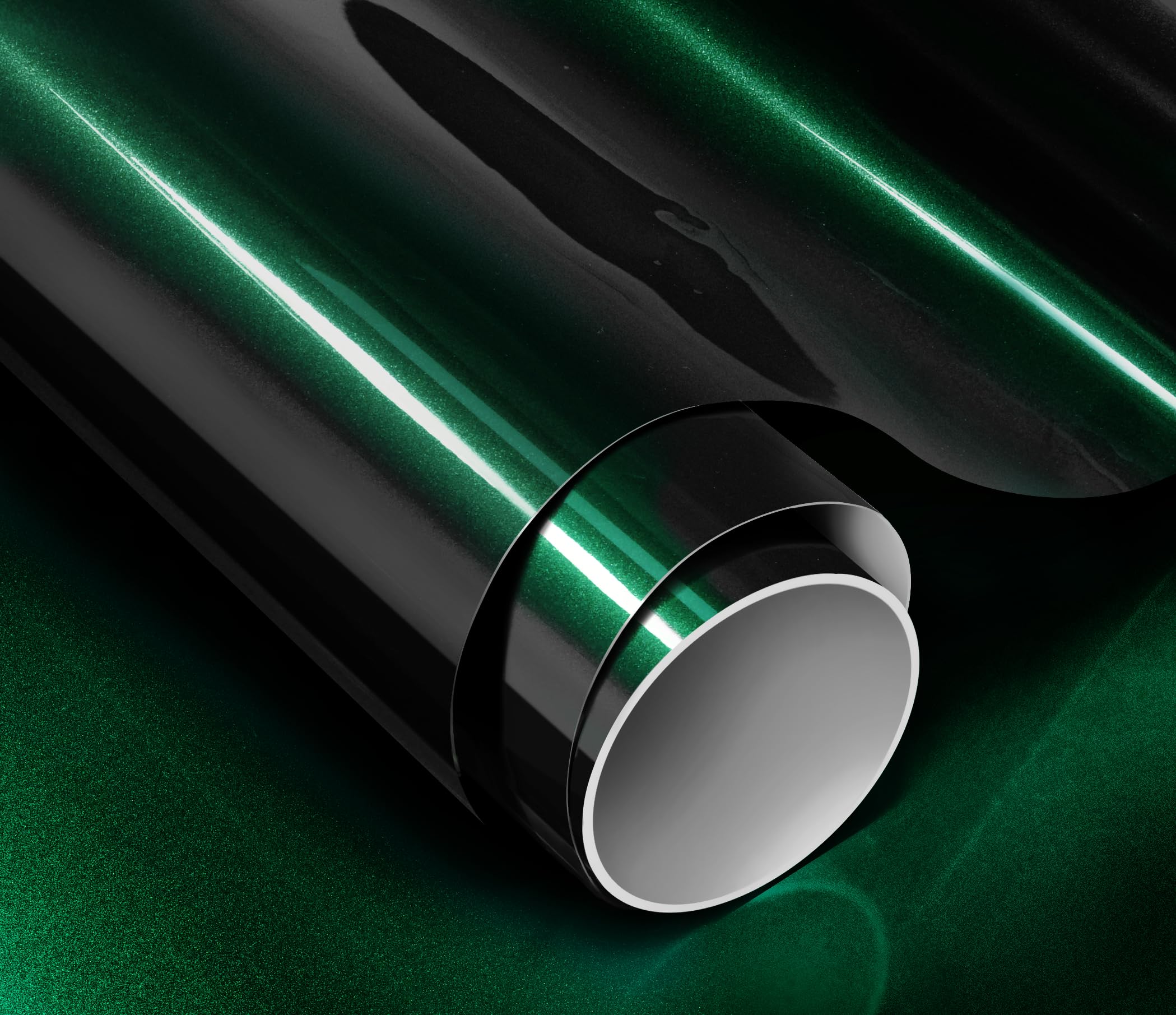
2. ColorFusion PPF by VViViD Gloss Shadow Green 6ft x 5ft
A paint protection film that also changes your color — the thickest guard on this list.
This is not your standard vinyl wrap. At 7.5 mils, ColorFusion PPF is thicker than the VViViD+ Ultra Gloss (3.8 mils) and built from polyurethane instead of PVC. That means it absorbs stone chips and light scratches, then heals them when you apply a heat gun — a self-healing ability that owners say “far in advance of any car wrap vinyl.” The color is embedded deep within the film, so it resists fading and discoloration longer than surface-printed wraps.
You can apply it dry or wet. Wet application (using soapy water to slide the film into place) is recommended for large flat surfaces like hoods and roofs because it limits bubbles, glue lines, and stretch marks. Color is what owners rave about most — 78 mention the metallic shade positively. The caveat is the learning curve. Ease of use scores mixed: owners say “you really have to know what you’re doing” and that the material is “very difficult on compound curves.” An edge sealer is recommended to prevent corner lifting. This is not a beginner film, but for the owner who wants paint protection plus a vibrant custom color, it is the most advanced wrap you can own.
What Won Owners Over
- Self-healing topcoat removes light scratches with heat
- 7.5 mil polyurethane is armor against chips vs 3.8 mil vinyl
- Vibrant color embedded deep — resists fading
The Hard Truth
- Install is demanding — wet apply on large panels is nearly mandatory
- Price per square foot is higher than standard vinyl wraps
Buy this if: you value stone-chip armor over ease of install — no other film here matches its 7.5 mil protective layer.
Choose the Neptune Blue instead if: you are new to wrapping and want a forgiving first project.
3. VViViD Black Natural Gloss Vinyl 3.4 mil with Air Release – 10ft x 5ft

The budget-friendly gloss black that owners say is comparable to 3M.
At 3.4 mils, this is the thinnest film on the list — thinner than the 3.8 mil Ultra Gloss films — which makes it more flexible but slightly less tear-resistant. Customers note that it is “comparable to 3M” in feel and look, with a nice gloss that stays durable and scratch-resistant. The advertised outdoor lifespan is 5 to 7 years, which is strong for the entry-level price point. It includes VViViD Air Release, Resist, and Heat Fuse technologies.
The most frequently discussed issue is adhesion. Some reviewers point out that it did not stick well initially, but VViViD’s customer support sent replacement material quickly — a positive signal for buyer confidence. The film works well with 3M 94 Primer and 3M Edge Sealer for enhanced edge hold, though those are optional. At this price, it is also popular for non-car projects: one owner used it to darken the back of a reef aquarium. If you are on a tight budget and want a gloss black that behaves like a premium film, this is the baseline that punches above its price.
The Upside
- Comparable feel and look to 3M at a lower price point
- 5-7 year outdoor lifespan is strong for this tier
- Responsive customer service — shoppers say quick replacements
The Trade-Off
- Adhesion issues reported by some — primer and edge sealer help
- Thinner at 3.4 mils means less tear resistance than the Ultra Gloss line
For the budget-conscious owner: you get a 3M-like gloss black at a lower price, and the responsive customer service reduces the risk of a bad roll.
If you plan to wrap complex curves like a full bumper, the extra tear resistance of the 3.8 mil Ultra Gloss line is worth the step up.
4. RockRose Ultra Gloss Black Vinyl Wrap 60 in x 10FT
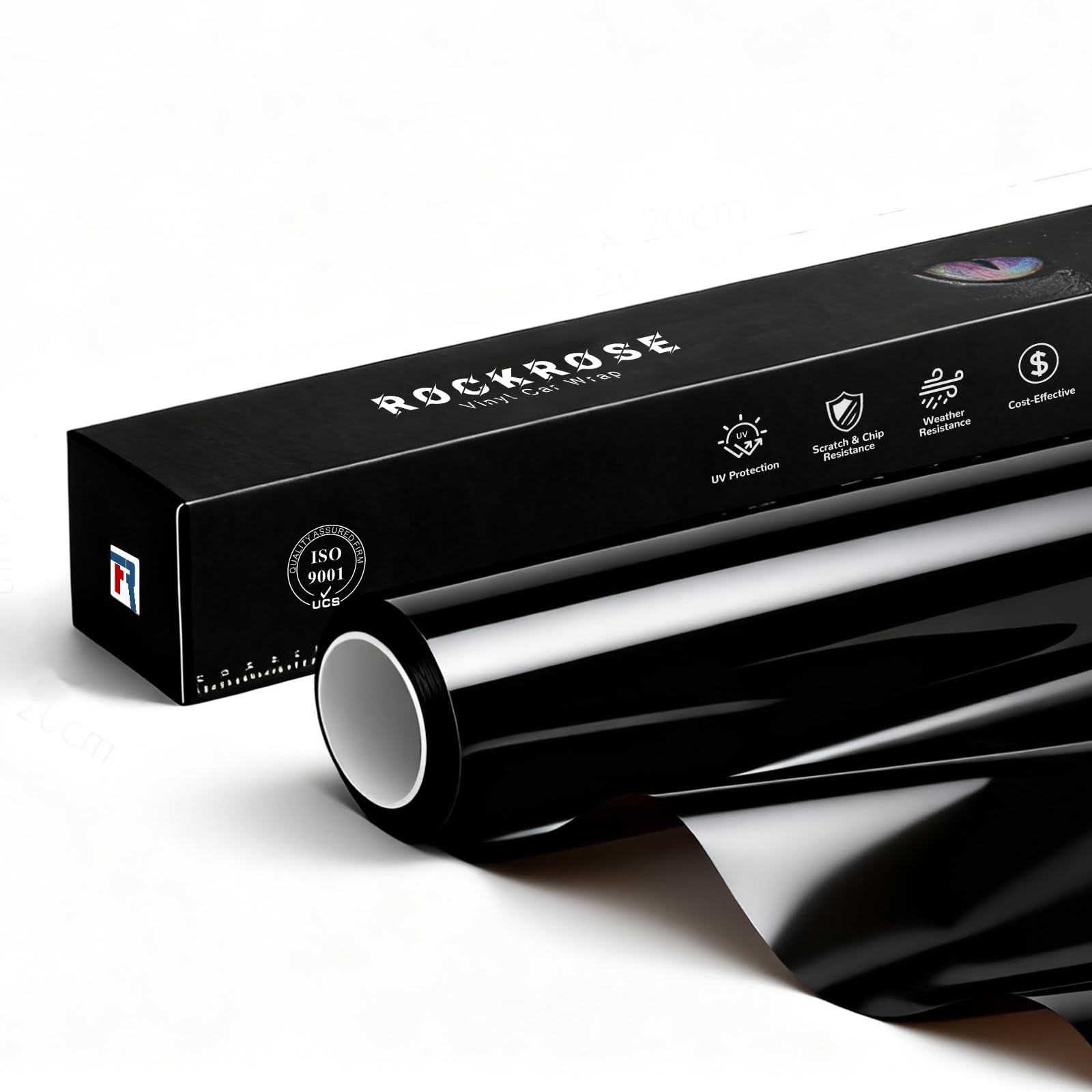
An easy-on gloss black that beginners can handle — but check the adhesion reports.
RockRose claims a hybrid plastisol coating that self-heals and resists UV fading for up to 7 years outdoors. Ease of use and quality are the top praised aspects, with several owners calling it an “excellent option for cars.” One first-time wrapper said they “never tried a project like this but it was relatively easy to work with” and was happy with the “beautiful black high gloss finish” on an SUV. The film includes Air Release and Heat Fuse technology for bubble-free results.
The catch is that a small but notable number of buyers report immediate adhesion failure. The most direct buyer quote: “Started peeling off the next day.” Quality of the adhesive seems inconsistent across batches. For a simple accent project or a weekend experiment where peeling is not catastrophic, the risk is manageable. For a full-car wrap you plan to keep for years, the adhesive track record gives pause.
What Works
- Easy to work with — first-time DIYers praise the forgiving application
- High gloss black finish that looks premium on camera
- Self-healing coating and 7-year outdoor claim
The Adhesion Risk
- Several reports of peeling the next day — batch inconsistency suspected
- Better suited for small accents than long-term full wraps
Perfect for: a low-stakes weekend accent project like a hood or roof on a beater car — if it peels, the loss is small.
Pick the VViViD Black Natural Gloss instead for any wrap you plan to keep on the car longer than a season.
5. XINXINVibe Carbon Fiber Vinyl Wrap 5ft x 5ft
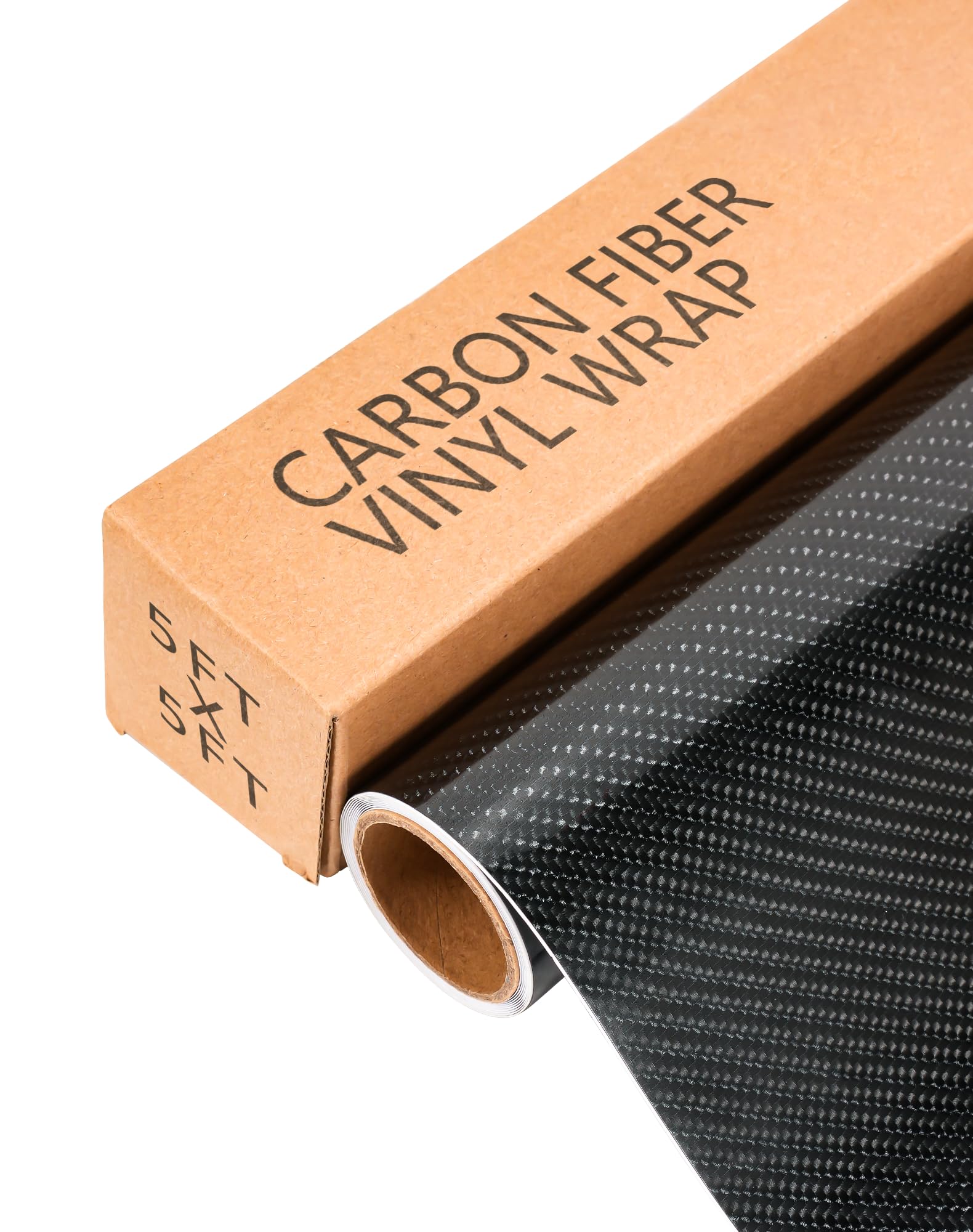
A carbon-fiber texture for accents — best for small parts, not full panels.
This is a niche pick: a 3D carbon fiber texture in black PVC for interior trim, mirror caps, spoilers, or small exterior accents. Adhesion and appearance are the top praised aspects — owners say it delivers a “clean and professional” finish on bike reflectors and fridge doors. The air-release backing works well, according to buyers, and the material stretches enough to fit most contours.
Quality is the most-discussed aspect (15 mentions), but Amazon flags it as MIXED — some owners find the material “professional,” others call it “cheap.” A few report that it “doesn’t stick well even after cleaning and using heat gun.” One owner summed it up: “For a cheap vinyl it isn’t bad, wouldn’t wrap a whole car in it but it worked great to wrap reflectors.” Treat this as a accent film for small projects, not a full-vehicle wrap, and you will be happy.
Where It Excels
- Great for small projects — reflectors, trim, interior accents
- Air release works well for bubble-free application
- 3D carbon fiber texture looks aggressive on small parts
The Limits
- Quality is mixed — some units feel cheap and lack adhesion
- Not designed for full-vehicle wrapping
Grab it for: adding a carbon-fiber look to trim, mirror caps, or a spoiler without spending much — the texture is convincing on small areas.
Skip it for anything larger than a fender; the mixed quality makes it a gamble on big panels.
Understanding the Specs
Mils — The Wrap Thickness Scale
One mil equals 0.001 inches. Standard car wraps range from 3.0 to 4.0 mils. Thicker films (3.8 mils and up) resist stone chips, scratches, and tearing during installation — but they are stiffer and harder to form around deep curves like bumper corners. Thinner films (3.4 mils) are more flexible and forgiving for beginners, but they tear more easily under tension. Paint protection films (PPF) start at 7.0 mils and include multiple layers for impact absorption and self-healing. For a first full-car wrap, 3.4 to 3.8 mils is the balance.
Air Release Technology
Air-release adhesive contains microscopic channels that let trapped air escape sideways when you squeegee. Without it, every bubble you miss becomes a permanent pockmark that collects dirt. Nano Air Release uses a pattern so fine that it does not disturb the gloss finish — important for show-car applications. Standard air-release channels work well but can leave a subtle texture visible in direct sunlight. If you are after a mirror-like gloss, look for a micro-pattern air release.
FAQ
Can I install a car wrap myself or do I need a professional?
How long does a car wrap last outdoors?
What is the difference between a vinyl wrap and paint protection film?
Will a car wrap damage my factory paint when I remove it?
How much vinyl wrap do I need for a full car?
What tools do I need for a DIY car wrap installation?
Gloss vs matte — which finish is easier to maintain?
Can I wrap just the roof, hood, or mirrors without wrapping the whole car?
Will a car wrap fade in the sun over time?
Final Thoughts: The Verdict
For most buyers, the best car wrap winner is the VViViD+ Ultra Gloss Neptune Pearl Blue because it delivers a glass-like, paint-mimicking gloss (3.8 mils with Nano Air Release) that owners consistently rank as the best-looking wrap in the segment — 523 ratings make it the crowd favorite. If you want armor-grade paint protection with self-healing and a custom color, grab the ColorFusion PPF Gloss Shadow Green. And for a full-vehicle matte finish on a budget with enough material to cover a whole car, the VViViD XPO Charcoal Matte is the one to reach for.
How We Picked
We do not accept paid placement. Every pick is matched to a real buyer and a real use-case; we do not hands-on test units.
Sources & Methodology
Specifications: manufacturer listings and product documentation. Review insights: verified customer reviews, as of July 2026. Pricing: not shown on this page (it changes often); check the current price via the retailer link.
As an Amazon Associate, Trending Car earns from qualifying purchases. This does not affect which products we feature.