
Our readers keep the lights on and my garage snacks stocked. As an Amazon Associate, I earn from qualifying purchases.
Specs are compiled from manufacturer listings and verified buyer reviews and can change over time — please confirm the key details on the product page before buying.
A garage floor takes a daily beating — oil drips, tire weight, dropped tools, and temperature swings. The right surface turns a stained concrete slab into something you actually want to walk on and work from. The problem is choosing between rolls, tiles, and foam mats that each promise durability but deliver very different real-world results.
I’m Min Islam — the founder and writer behind Trending Car. This guide is built by comparing the manufacturers’ published specifications and the patterns across verified customer reviews, so you get each pick’s real strengths and trade-offs instead of marketing spin.
if you need heavy-duty protection for a daily driver, cushioned support for a home gym, or a quick cosmetic upgrade for a workshop, these seven options represent the best balance of material, thickness, and owner satisfaction for garage flooring in 2025.
Our Picks at a Glance

How To Choose The Best Garage Flooring
Start with what happens on that floor every day. If you park a car, you need load-bearing tiles or a thick rubber roll that can handle thousands of pounds without crushing. If you lift weights or do yoga, foam with high-density EVA (ethylene vinyl acetate) protects your joints and your subfloor. If you just want a clean look over cracked concrete, a thin roll mat covers it fast with zero assembly. Match the material to the abuse.
Thickness and Load Capacity
Thickness is the single most important number for durability. A 0.5-inch tile or mat distributes vehicle weight well enough for most passenger cars. A 1-inch foam tile gives you serious joint protection for gym work, while a 0.12-inch roll is only suitable for light-duty floor protection. For parking full-size trucks or SUVs, look for a stated load capacity around 5,500 to 40,000 pounds — that tells you the tile or mat was engineered to resist permanent deformation under weight.
Material and Surface Texture
The material defines everything else. Polypropylene (hard plastic) tiles resist oil, grease, and chemicals but can feel hollow underfoot. Rubber (SBR or recycled rubber) rolls grip tires and tools but often arrive with a strong manufacturing odor that needs days or weeks of airing out. EVA foam is soft, warm, and quiet — perfect for a home gym — but it tears under sharp tool drops and may flatten under heavy static loads. A diamond-plate or coin-pattern texture on the top surface adds slip resistance, especially important when the floor gets wet from melting snow off tires or gym sweat.
Installation Method
Roll mats are the fastest upgrade — unroll, let it flatten for a day, trim with a utility knife. Interlocking tiles take a few hours for a single-car bay but let you replace a single damaged square later without tearing up the whole floor. Foam puzzle mats click together by hand in minutes and can be cut with ordinary scissors. Some interconnect systems require a rubber mallet to seat the loops firmly; others lock with body weight alone.
Quick Comparison
| Model | Best For | Thickness | Coverage | Material | Amazon |
|---|---|---|---|---|---|
| Art3d EVA Foam Tiles★ Best Overall | Light garage gym | 0.5 inch | 96 sq ft | EVA foam | Amazon |
| BalanceFrom 1-Inch MatAlso Great | Heavy home gym use | 1 inch | 72 sq ft | High-density EVA foam | Amazon |
| VEVOR Garage TilesHeavy-Duty Tile Pick | Vehicle parking + workshop | 0.53 inch | 50 Pack | Polypropylene | Amazon |
| Modular PlasticTile | UV-exposed garages | 0.5 inch | 48 Pack | Polypropylene | Amazon |
| VEVOR Rubber Roll | Full-floor car protection | 0.12 inch | 4 x 15 ft | SBR rubber | Amazon |
| TUFFIOM PVC Mat | Large SUVs and trucks | 0.08 inch | 7.5 x 20 ft | Thickened PVC | Amazon |
| SUPERJARE Rubber Top Tiles | Cushioned gym + light equipment | 0.79 inch | 48 sq ft | EPDM rubber / EVA foam | Amazon |
| AIRHOP Rubber Top Tiles | Premium home gym floor | 0.79 inch | 48 sq ft | Recycled rubber / EVA foam | Amazon |
| Big Floors GarageDeck | Showroom-quality tile floor | 0.5 inch | 48 sq ft | Copolymer | Amazon |
In‑Depth Reviews
1. Art3d 96 Sq.Ft Eva Puzzle Exercise Mats
Our pick — over 4.5★ from 800+ verified ratings; the strongest balance of quality and price.
The largest single-pack coverage at a budget-friendly price point.
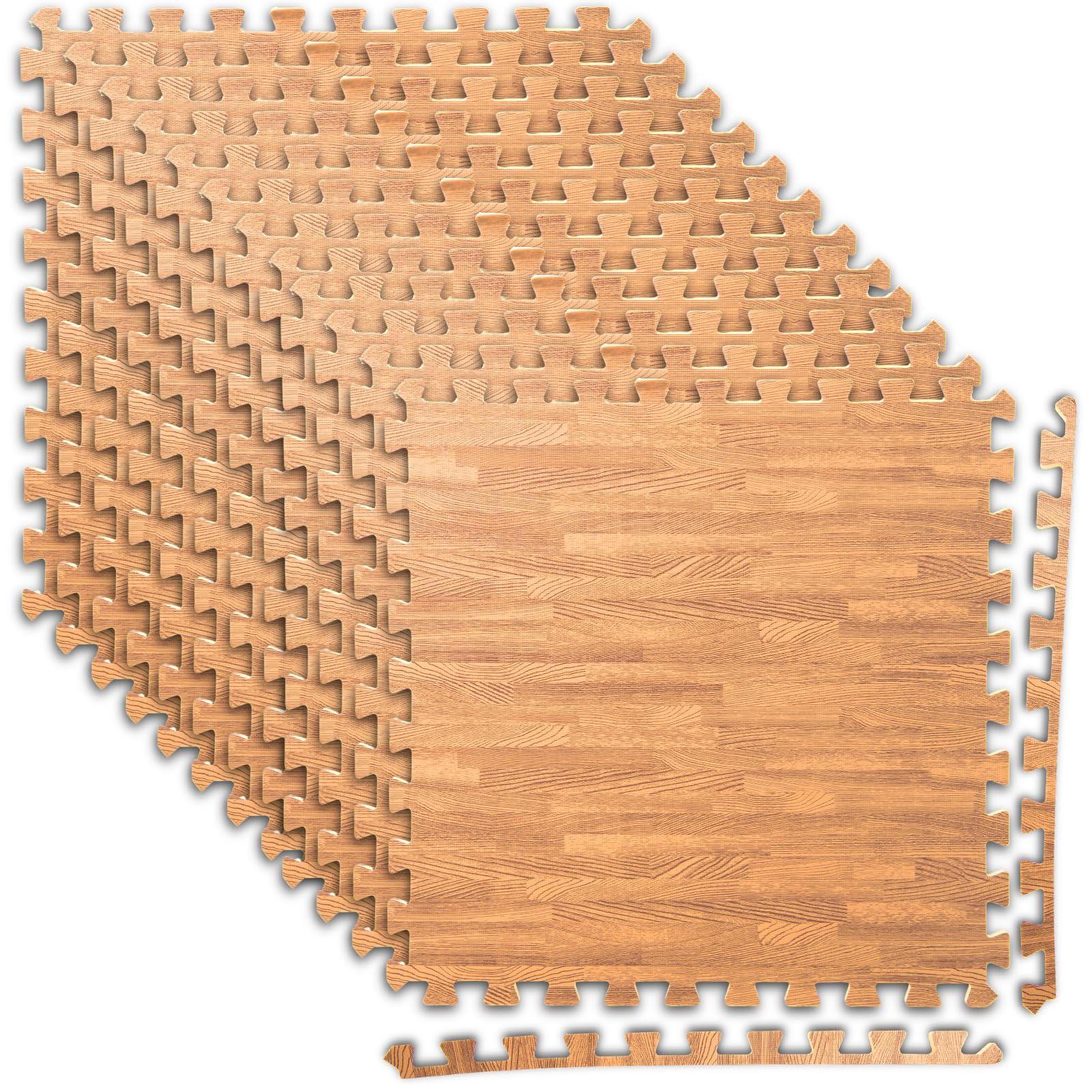
At 96 square feet across 24 tiles, this teak-colored set covers a two-car garage gym section or a generous basement workout zone with fewer gaps than smaller packs. The 0.5-inch EVA foam provides reliable cushion for bodyweight training, yoga, and light free-weight work — and the slip-resistant surface keeps you stable during lunges and planks. Owners mention the low odor is a welcome surprise compared to other foam mats that arrive with a strong chemical smell.
Durability is the headline here: buyers report these tiles holding up well past the two-year mark in active home gyms, and the BPA-free (Bisphenol-A free) construction makes them a safer choice for households with pets or kids. The teak surface pattern adds a warmer look than basic black — less “garage floor,” more “finished home studio.” On the downside, the 0.5-inch thickness means less shock absorption than the thicker BalanceFrom mat; heavy deadlifts or Olympic lifts will still transmit some thud to the concrete.
Generous coverage: At 96 square feet, you get 96 square feet versus the BalanceFrom’s 72 square feet — ideal for covering a larger room without buying a second pack.
Fit considerations: The interlocking tabs are slightly different from some other brands, so mixing with existing tiles from another manufacturer leaves visible gaps at connection points.
Best for: covering a medium to large garage gym on a budget where 0.5-inch foam meets your cushion needs.
Look elsewhere if: you drop heavy barbells repeatedly — the thinner foam wears faster under concentrated impact.
2. BalanceFrom Puzzle Exercise Mat 1-Inch Thick
The thickest foam tile in this roundup, built for joints under heavy iron.
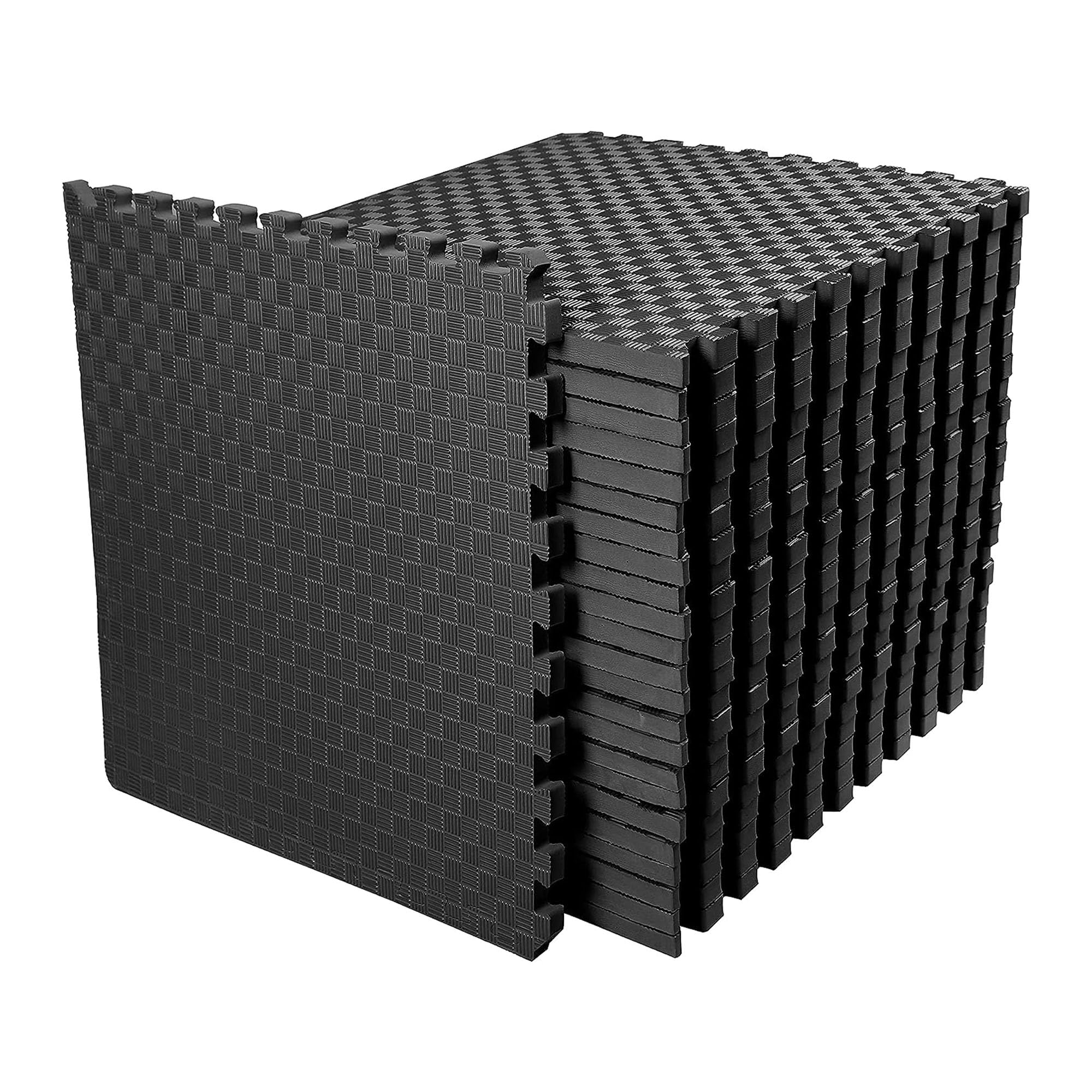
At a full 1-inch of high-density EVA foam, this mat gives you the most substantial cushion of any option here — your spine, hips, and knees will feel the difference on deadlift days. The 72-square-foot set (18 tiles plus 36 border pieces) covers a standard home gym footprint, and the double-sided non-slip surfaces keep the whole assembly planted on concrete even during dynamic movement.
Assembly is genuinely tool-free — the interlocking edges click together in under an hour, and the border pieces let you create a clean rectangular shape flush against walls. Owners consistently cite the cushioning as the standout feature: it absorbs impact from dropped 50-pound dumbbells without visible marks, and the moisture-resistant surface wipes down easily after sweaty sessions. The initial foam odor fades within a day, and the lightweight construction (23.7 pounds total) makes repositioning straightforward if you reconfigure your gym layout.
The deepest vote of confidence? Over sixty thousand owners have pushed this mat through years of workouts. The crowd favorite across 60,000+ ratings gives the BalanceFrom the highest review volume in the category — a proven track record that the premium pick can’t match.
Joint-saving depth: The 1-inch thickness delivers noticeably more shock absorption than the 0.5-inch Art3d tiles — your knees feel the difference on burpees and jump squats.
Border completeness: Unlike some puzzle mats that ship too few edge pieces, this set includes 36 end borders, so the perimeter looks finished and stays put.
Reach for it if: your garage doubles as a serious home gym and you want floor padding that protects joints AND your subfloor.
Think twice if: you plan to park a car on this surface — the 1-inch foam compresses under vehicle weight and won’t handle rolling jacks.
3. VEVOR Garage Floor Tiles 50 Pack
Rigid polypropylene tiles that support an SUV without flexing.
These are not rubber or foam — they are hard polypropylene plastic with a stated 5,500-pound load capacity per tile, so a full-size SUV, truck, or even a large van can sit on them without permanent deformation. The 0.53-inch thickness is noticeably stouter than the 0.12-inch VEVOR rubber roll, and the 2024 upgraded interlocking system uses six loops per tile instead of four, creating a tighter snap fit that stays engaged under rolling tool cabinets and floor jacks.
Installation is tool-free in theory — owners mention that a rubber mallet helps seat the joints fully, and a saw (circular or table) is required to cut edge tiles. The double-sided texture gives you two surface options: 3D diamond on one side, rhombic grid on the other. Once assembled, the 50-pack covers a substantial area, though buyers should leave a 1/4-inch gap at room edges for thermal expansion. The recurring caution from the review pages: these tiles can become brittle in cold temperatures or buckle under direct sunlight heat, so they work best in climates or garages with stable, moderate temperatures.
Real weight capacity: The 5,500-pound rating is a concrete spec you can verify — it means the tile supports a parked three-quarter-ton truck without cracking.
Temperature sensitivity: The main trade-off is thermal expansion; direct sunlight can cause lifting, and sub-freezing temps have led to cracking in some installations.
Your pick if: you need a tile floor that can actually hold a vehicle daily and you want to avoid the cost of epoxy.
Not ideal if: your garage gets intense afternoon sun or unheated winter temperatures below freezing.
4. Modular PlasticTile 48 Pack

The tile with UV coating — engineered to fix the buckling issue other hard tiles face.
What sets this 48-pack apart from other polypropylene garage tiles is the UV coating, a chemical treatment designed to prevent the buckling and warping that unprotected tiles suffer under direct sunlight. Combined with six interlocking loops per tile (the same upgrade VEVOR uses), the system stays flatter in garages with windows or doors that let in sun. The 0.5-inch thickness is standard for this category, but the brick-pattern top surface provides noticeably aggressive slip resistance — especially helpful when car tires or shoes are wet.
Installation, as owners describe it, is genuinely fast — an 11-by-19-foot garage can be covered in under an hour with no tools beyond a rubber mallet. The non-toxic impact-resistant polypropylene shrugs off oil and grease stains, cleaning up with a mop or shop vac. Landscape fabric placed underneath reduces the hollow clacking sound that hard plastic tiles can make when walked on — a simple workaround mentioned by several owners. The main caution: the connectors can snap if you use too much force during assembly, so a gentle tap with a mallet is better than a full swing.
Sun-ready design: The UV coating directly addresses the buckling issue that the VEVOR tiles can show in sunlight — ideal for garages with skylights or open doors.
Hollow sound: Like most hard plastic tiles, foot traffic feels and sounds hollow; owners recommend landscape fabric underneath to dampen the noise by about 75%.
Choose this for: a garage that gets direct sunlight and you want hard tile protection without the sun-induced buckling.
skip it if: you prefer a solid, quiet floor underfoot — hard plastic tiles always have some acoustic hollowness.
5. VEVOR Rubber Flooring Roll
An affordable rubber roll that stops oil and brake fluid from soaking your concrete.
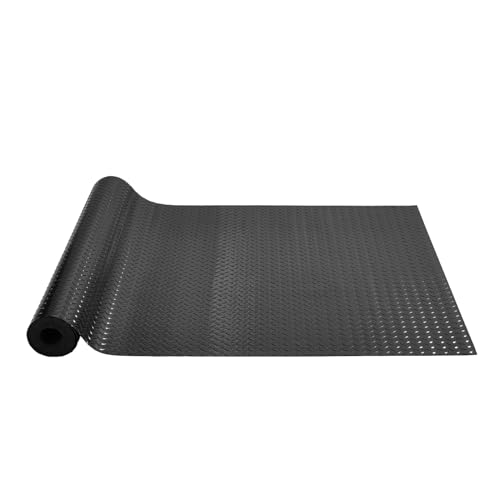
At 60 square feet (4 feet by 15 feet), this SBR (styrene-butadiene rubber) roll covers the parking footprint of a standard sedan or small SUV. The 0.12-inch thickness is the thinnest profile in this lineup — at 0.12 inches compared to the VEVOR garage tiles at 0.53 inches — so it is best described as a protective skin rather than a structural floor. What it does well is block liquids: the TPE (thermoplastic elastomer) anti-permeable backing prevents oils, brake fluids, and antifreeze from seeping through to your concrete, keeping the slab clean and stain-free.
The diamond-plate texture adds grip underfoot and under tires, and the roll can be trimmed with a utility knife for a custom fit. Installation is truly one-person — unroll, let it rest, and place. The most-discussed downside across reviews is the strong rubber odor. As buyers put it: “Strong initial smell; outgas outdoors for 2 weeks before indoor use.” The ends also have a tendency to curl, especially in cooler temps, so heavy items or tape at the perimeter helps keep them flat.
Liquid barrier: The TPE backing is a real problem-solver for garages where cars drip oil or coolant — it prevents permanent concrete staining.
Thin profile: At 0.12 inches, the mat is flexible enough to cut and shape but it does tear more easily than thicker rolls or tiles.
Best for: a quick, affordable floor protector that stops liquids from ruining your concrete — ideal for parking daily drivers.
Not for: heavy workshop use or areas where you need a thick, permanent flooring solution that stays perfectly flat.
6. TUFFIOM 7.5 x 20 FT Garage Floor Mat

The widest roll in the lineup, sized for large SUVs, pickups, and vans.
At 7.5 feet wide by 20 feet long, this PVC (polyvinyl chloride) mat is specifically designed for large vehicles — think Ford Expedition, Ram 2500, or a commercial cargo van. The diamond-pattern top surface provides solid traction, and the thickened PVC construction resists deformation from prolonged vehicle weight. Unlike rubber mats, PVC doesn’t have the strong outgassing odor that SBR mats emit, so it’s more livable in attached garages.
Customers note that the mat takes about a week to fully relax and lay flat after being unrolled — leaving it in the sun speeds up the process. The oversized dimensions mean you can cover the full parking bay of a large vehicle without piecing together multiple mats. The weight (80.8 pounds) makes repositioning a two-person job, but the material stays put once laid. The main caveat from owners: the surface can show permanent white crease marks under heavy pressure if the concrete underneath isn’t perfectly smooth, and some find the PVC scratches more easily than rubber.
Full-size coverage: The 7.5-foot width is wider than the VEVOR roll (4 feet) — enough to cover a full-size truck’s tire track width without a seam.
Flattening patience: The roll arrives tightly coiled; owners consistently note that it needs a warm week to lose its curl, so install it when you don’t need the garage immediately.
Your move if: you drive a large SUV or pickup and want a single-piece floor protector that covers the whole parking footprint.
Pass if: you need a surface that withstands heavy tool drops or workshop abuse — the PVC surface is more prone to scratching than rubber or hard plastic tiles.
7. SUPERJARE 0.79-Inch Exercise Equipment Mats
A dual-layer tile that pairs a rubber work surface with deep EVA foam cushion underneath.
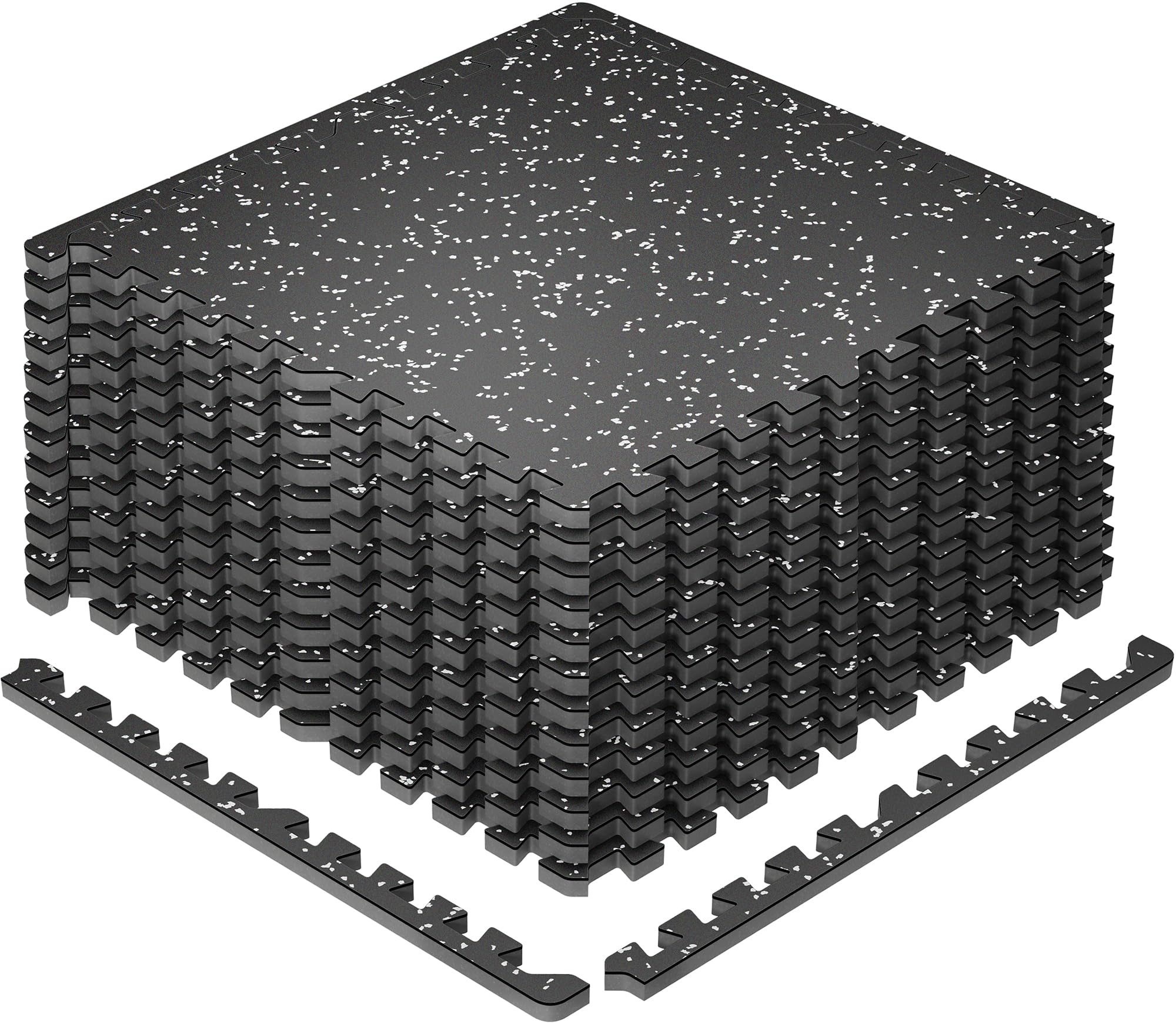
This is a hybrid: a 0.79-inch tile with a sturdy EPDM (ethylene propylene diene monomer) rubber top layer bonded to a high-density EVA foam base. The rubber top gives you the durability and grip of a commercial gym floor — it won’t tear under dropped plates or scratch from cleats — while the foam layer underneath absorbs shock and reduces noise transmission to the room below. Each of the 12 tiles covers 48 square feet total, and the interlocking edges include two detachable borders per tile for a clean perimeter.
Assembly takes roughly 30 minutes for the full set, and the tiles lock together securely enough that one owner placed them on epoxy-coated concrete with no shifting. The cushioning is noticeably plusher than the 0.5-inch VEVOR tiles, making this a strong choice for yoga, stretching, and bodyweight circuits alongside heavier lifting. The catch, as noted consistently across reviews: a strong initial rubber smell that requires airing out for a week or more. Some owners also note the tiles are too cushy for spin bikes or stationary trainers, causing a wobble under high-intensity pedaling.
Quiet training: The dual-layer construction significantly muffles the sound of a rowing machine or dropped barbell — better than any single-material tile in this list.
Rubber outgassing: Unlike the PVC-based AIRHOP tiles, this EPDM top layer has a distinct rubber odor that needs several days of ventilation before the space is comfortable.
Reach for it if: you want a real rubber gym floor feel with deep shock absorption — perfect for mixed training spaces with both weights and floor work.
Look elsewhere if: you plan to use a smart bike or trainer on it — the deep cushion creates a slight wobble during hard efforts.
8. AIRHOP 0.79-Inch Thick Exercise Equipment Mats

A recycled rubber top that gives you commercial gym durability at home.
The AIRHOP tiles share the same 0.79-inch thickness as the SUPERJARE set, but the top layer is made from premium recycled rubber instead of EPDM — giving it a denser, more traditional gym-floor feel underfoot. The high-density EVA foam bottom layer provides the same shock absorption, and the upgraded interlocking locks on each tile are visibly larger than the tabs on cheaper puzzle mats, creating a fit that doesn’t separate during dynamic workouts. The 12-tile set covers 48 square feet, and the black-and-white color scheme gives the floor a clean, professional look.
Owners are emphatic about the quality — the rubber top resists scratches from heavy dumbbells, and the non-slip surface keeps kettlebells and medicine balls from sliding. Assembly is straightforward with no tools required, and the material is PVC-free, lead-free, and BPA-free. The most common note: a mild odor that dissipates in a few days — reviewers point out it’s less intense than the SUPERJARE mat’s smell. A small point repeated in reviews: the tiles can collect a fine black dust from the rubber surface during initial use, requiring a wipe-down or two before the floor stays clean.
Secure fit: The oversized interlocking locks are the tightest in the foam tile category — owners say the mat doesn’t separate even during heavy bag work or intense jumping.
Cleaner initial setup: The black dust from the rubber top is a minor short-term nuisance that resolves after a couple of wet wipes.
Best for: a home gym owner who wants the most durable, premium-feel rubber floor available in a tile format — the strongest build quality in this price tier.
Decide against if: you need maximum coverage — 48 square feet is smaller than the BalanceFrom’s 72 sq ft, so plan your layout carefully.
9. Big Floors GarageDeck 48 Pack
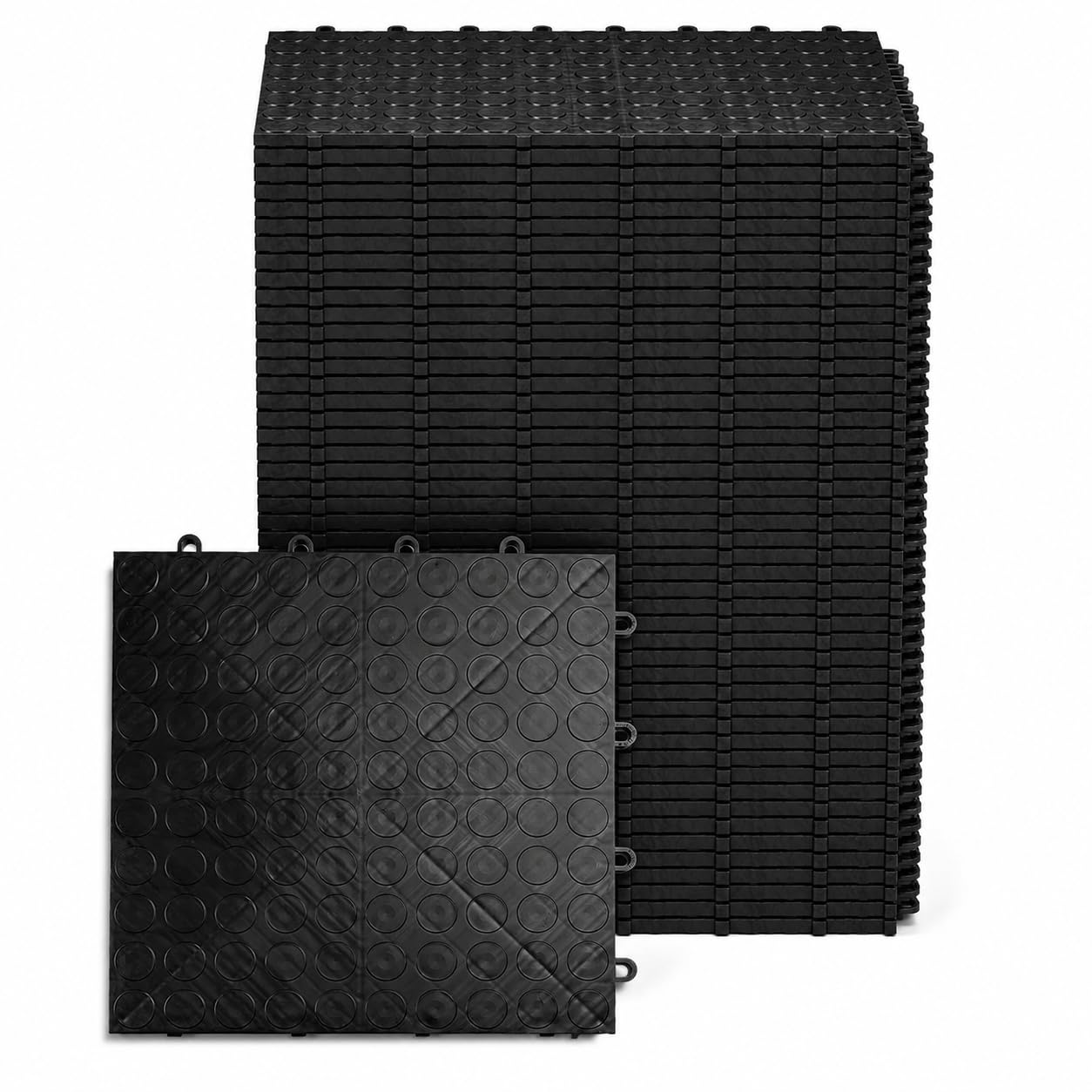
The showroom tile that turns a stained slab into a display floor.
Made from non-toxic high-impact copolymer and manufactured in the USA, GarageDeck tiles are the most premium hard-surface option in this roundup. The coin-pattern top provides excellent traction while resisting oil, grease, antifreeze, and most household chemicals — so a spill from a leaky car can be mopped up without a stain. The 0.5-inch, 12-by-12-inch tiles snap together using the patented PowerLock system, which owners describe as a permanent lock — once engaged, a tile requires a paint can opener or pliers to separate, meaning no creeping gaps over time.
Installation is where this set shines: a solo owner at age 75 covered a one-car bay in a few days, and others report that the modular design allows easy replacement of a single damaged tile without disturbing the rest of the floor. The appearance gets the most praise — owners consistently say it makes their garage look like a showroom. The biggest practical consideration: each pack covers 48 square feet, so a two-car garage typically needs 3-4 packs to fully cover both bays. The material also produces a noticeable plastic-like sound when walked on, similar to the Modular PlasticTile set above.
Permanent lock: The PowerLock system creates a more secure connection than the VEVOR or PlasticTile interlocking tabs — tiles don’t separate even after years of parking and workshop use.
Multi-pack needed: At 48 sq ft per box, covering a full two-car garage requires buying multiple packs, which adds to the upfront investment.
Your pick if: you want a garage floor that looks polished enough for a car show and you value the ability to replace individual tiles later.
Reconsider if: you are on a tight budget for a large space — the per-square-foot cost is higher than roll mats, so full coverage adds up fast.
Understanding the Specs
Thickness (Inches)
The single number that defines what a floor can do. Thickness directly determines load capacity, impact absorption, and insulation from cold concrete. A 0.5-inch tile or mat is the minimum for reliable vehicle support. A 1-inch foam tile is the gold standard for gym cushioning. A 0.12-inch roll offers basic floor protection but no meaningful structural support. Always match the thickness to the heaviest load you will place on it.
Material and Chemical Resistance
The material decides how your floor handles garage life. Polypropylene and copolymer tiles shrug off oil, grease, and antifreeze — wipe them up with no stain. Rubber rolls and tiles resist abrasion but can emit a strong odor for the first two weeks. EVA foam is comfortable and quiet but absorbs oil and tears under sharp impacts. PVC rolls are waterproof and low-odor but more prone to scratching than rubber.
FAQ
Will garage floor tiles hold up under a parked car?
How long does the rubber smell last on a new roll mat?
Can I install interlocking tiles directly over cracked concrete?
Which garage flooring is easiest to clean?
Will UV light damage garage floor tiles?
Can I install roll mat flooring by myself?
Is foam mat flooring durable enough for weightlifting?
Can I cut garage floor tiles to fit irregular room shapes?
Final Thoughts: The Verdict
If you want one dependable pick, the garage flooring winner is the BalanceFrom Puzzle Exercise Mat because it delivers the thickest cushion (1 inch) for a gym-focused space at a price that makes covering a full room affordable — proven by the largest owner community in this comparison. If you need hard tiles that can hold a car, the VEVOR Garage Floor Tiles offer a 5,500-pound load capacity with easy click-lock installation. And for a premium showroom finish that still allows individual tile replacement, the Big Floors GarageDeck is the one to reach for.
How We Picked
We do not accept paid placement. Every pick is matched to a real buyer and a real use-case; we do not hands-on test units.
Sources & Methodology
Specifications: manufacturer listings and product documentation. Review insights: verified customer reviews, as of July 2026. Pricing: not shown on this page (it changes often); check the current price via the retailer link.
As an Amazon Associate, Trending Car earns from qualifying purchases. This does not affect which products we feature.