
Our readers keep the lights on and my garage snacks stocked. As an Amazon Associate, I earn from qualifying purchases.
Specs are compiled from manufacturer listings and verified buyer reviews and can change over time — please confirm the key details on the product page before buying.
Your high-performance engine is a precision machine that runs hotter, revs harder, and stresses its oil far beyond what a daily commuter ever demands. The wrong motor oil can mean lost power, unwanted engine noise, or worse — and picking the right one from a wall of bottles feels like decoding a secret language.
I’m Min Islam — the founder and writer behind Trending Car. This guide is built by comparing the manufacturers’ published specifications and the patterns across verified customer reviews, so you get each pick’s real strengths and trade-offs instead of marketing spin.
Here is everything you need to know to choose the best motor oil for high performance engines that keeps your build running smooth, cool, and strong for the long haul.
Our Picks at a Glance

How To Choose The Best Motor Oil for High Performance Engines
Your tuned, turbocharged, or high-revving engine needs oil that protects against heat and friction. The wrong pick can rob you of horsepower or leave critical parts unprotected.
Viscosity: The Oil’s “Thickness” Matters Most
Viscosity is the oil’s resistance to flow, shown by numbers like 5W-30 or 10W-60. The first number (with a W for winter) tells you how well it flows in cold starts. The second number is its thickness at engine operating temperature. High-performance engines that run very hot often need a higher second number, like a 10W-60, so the oil film does not get too thin and lose its ability to protect metal parts under extreme loads.
Full Synthetic vs. Synthetic Blend
Full synthetic oils are chemically engineered to provide better protection at high temperatures, resist breakdown longer, and flow more easily in the cold. Synthetic blends mix conventional oil with some synthetic base stocks for a middle-ground option. For a high-performance engine, full synthetic is almost always the right choice — it handles the extra heat and stress without breaking down as quickly.
Certifications and Approvals
Look for stamps like API SP or dexos1 Gen3 on the bottle. These mean the oil has been tested to meet modern standards, including protection against low-speed pre-ignition (LSPI) — a destructive condition in turbocharged engines. If your car is European, check for approvals like BMW LL-04 or VW 504.00, which are specific to the engineering of those engines.
Quick Comparison
| Model | Best For | Viscosity | Volume | Type | Amazon |
|---|---|---|---|---|---|
| Motul 8100 ECO-lite★ Best Overall | Fuel Efficiency | 0W-20 | 5 Liters | Full Synthetic | Amazon |
| Valvoline European VehicleEuro Specialist | European Cars | 5W-30 | 5 Quarts | Full Synthetic | Amazon |
| Royal Purple 51130Wear Champion | Wear Protection | 10W-30 | 5 Quarts | Full Synthetic | Amazon |
| Mobil 1 Extended Performance | Extended Oil Changes | 5W-30 | 1 Quart (6-Pack) | Full Synthetic | Amazon |
| Motorex Cross Power 4T | Dirt Bikes | 10W-50 | 4 Liters | Full Synthetic | Amazon |
| Royal Purple (06030-6PK) | Classic Cars | SAE 30 | 1 Quart (6-Pack) | Full Synthetic | Amazon |
| LIQUI MOLY Synthoil Race Tech GT1 | Track & High-Rev | 10W-60 | 5 Liters | Full Synthetic | Amazon |
| MOTUL 300V 10W40 | Track Motorcycles | 10W-40 | 4 Liters | Full Synthetic | Amazon |
| PENN GRADE 1 20W-50 | Classic & Race Engines | 20W-50 | 1 Quart (12-Pack) | Synthetic Blend | Amazon |
In‑Depth Reviews
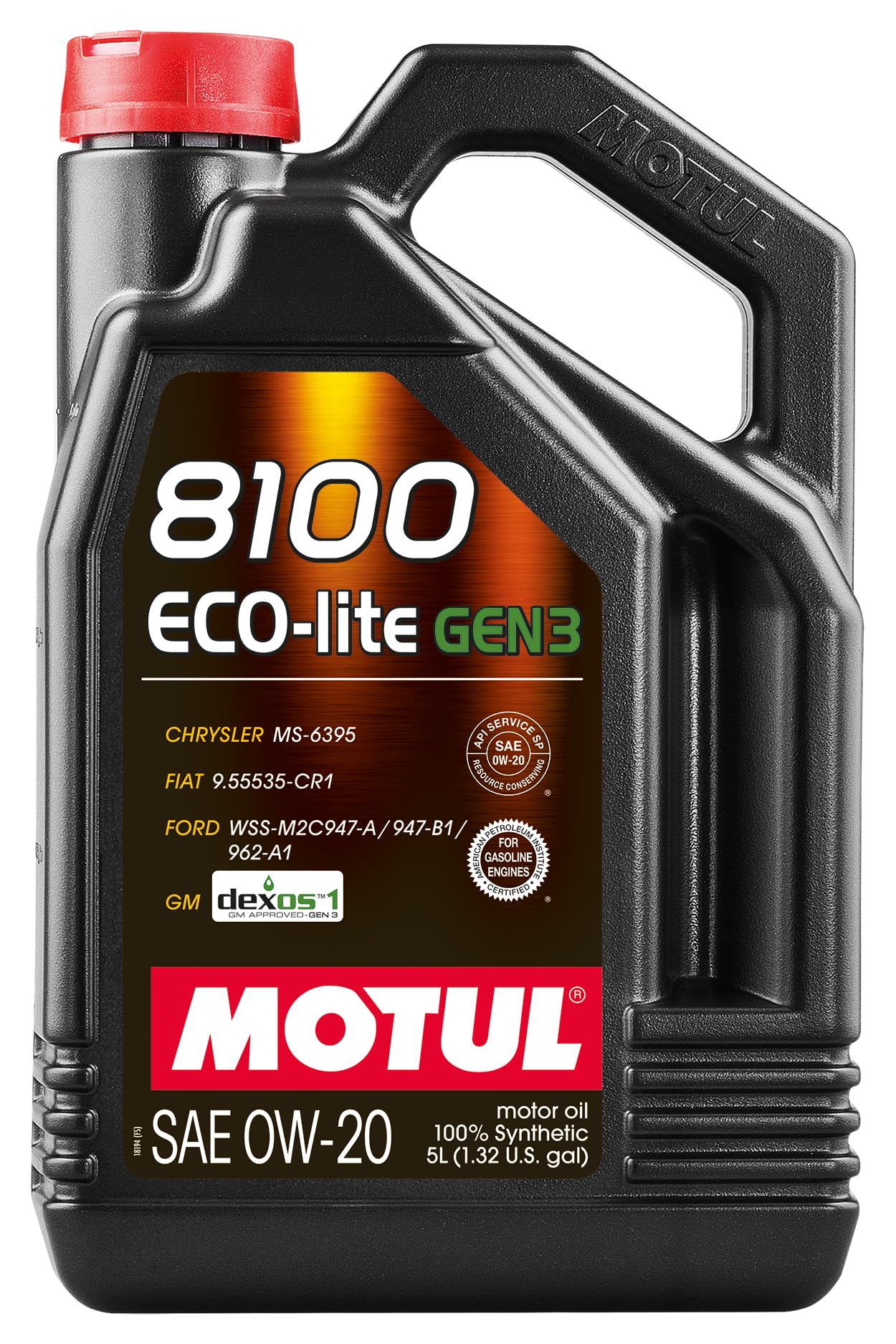
1. Motul 8100 ECO-lite 0W-20 Full Synthetic Motor Oil
Our pick — over 4.5★ from 700+ verified ratings; the strongest balance of quality and price.
The ultra-low friction formula that adds real MPGs back to your commute.
Getting better gas mileage while protecting a modern high-performance engine is the promise here, and owners confirm it delivers. This is a 100% synthetic 0W-20 oil engineered to reduce internal friction, meaning your engine spends less energy pushing oil around and more energy moving you. It is approved to the latest API SP standard and GM dexos1 Gen3, which means it guards against low-speed pre-ignition (a destructive force in turbo engines) and timing chain wear.
Its wide OEM compatibility — covering Ford, Chrysler, GM, and FIAT specifications — makes it a safe pick for a broad range of modern cars. The praise is loudest for what the oil does to a car’s behavior: owners of Subarus, Hondas, and FL5 Civics report a noticeable drop in engine noise and a gain in smoothness. One common observation is that after a 6,000-mile drain, the oil comes out looking amber instead of jet black, which suggests the detergents are working harder to keep the engine clean. The viscosity here is thin by design, so if your build calls for a thicker oil, you will want to look lower on this list.
Fuel Economy Boost: This is where the Motul stands out. Buyers report picking up an extra 3 MPG in city driving after switching from other synthetic brands, all while keeping the engine quieter at startup.
Mileage Tradeoff: This is a thin 0W-20 oil. It is designed for modern engines that specify that weight — if your high-performance build requires a 10W-40 or 20W-50 for bearing clearance, this is not the one.
Eco Drivers: you drive a modern turbocharged or direct-injection car that calls for 0W-20 and you want the best fuel economy and cleanliness without sacrificing protection.
Performance Seekers: your engine is a classic build, a high-mileage older block, or a race motor that needs a thicker viscosity grade to maintain oil pressure at extreme temperatures.
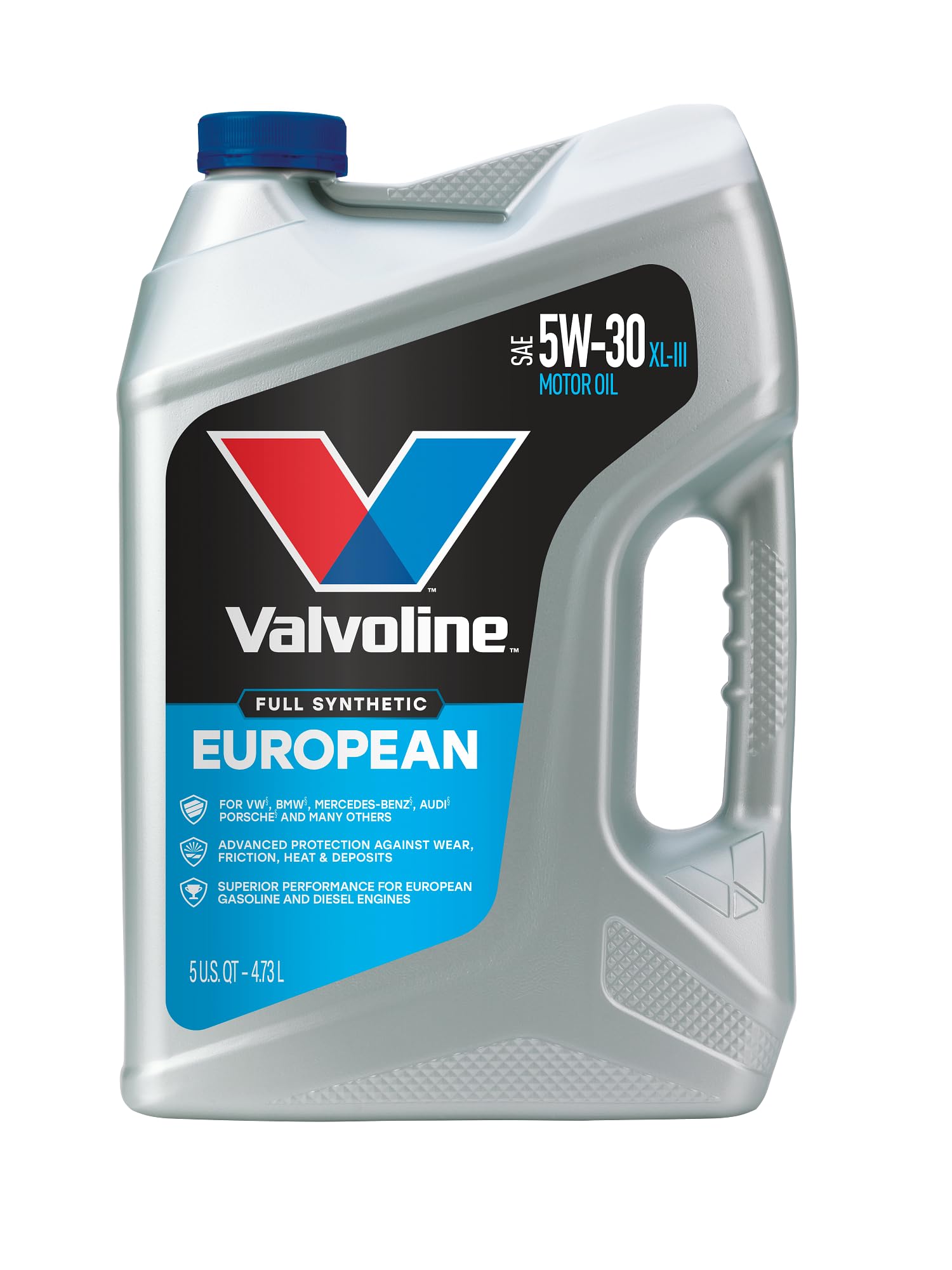
2. Valvoline European Vehicle Full Synthetic 5W-30 XL-III Motor Oil
The German-engineering expert that quiets a fussy European engine on startup.
European engines, especially from BMW, Mercedes, and VW, have specific demands that generic oil cannot meet. This Valvoline formula is built for exactly that purpose. It is a full synthetic 5W-30 with a low-SAPS formulation (that means it has reduced levels of sulfated ash, phosphorus, and sulfur) to protect sensitive emissions systems like diesel particulate filters. It carries approvals for VW 504.00/507.00, BMW LL-04, and multiple Mercedes-Benz standards.
Owners of BMW 335d diesels and Mini Coopers report the same result: the engine turns over quieter at startup, and the oil holds up well over long intervals — one owner notes a 10,000-mile change cycle without issues. The anti-wear additives here exceed what most OEM standards require. The recurring note from the community is that it adds a sense of smoothness and reliability to cars that can be expensive to fix. The five-quart jug is a practical size for a single oil change on most European sedans.
Quiet Starts: As owners put it: “My Mini seemed quieter at start up using this oil. It’s my preferred oil now.” That is a direct reflection of the advanced anti-wear additives doing their job before the oil fully warms up.
Viscosity Limits: A few owners note it does not comply with the 507.00 standard in every context, so double-check your VW or Audi owner’s manual if that is your application.
European Cars: you drive a European gasoline or diesel car that needs a 5W-30 with a BMW, Mercedes, VW, or Porsche approval.
Older Engines: your engine is a non-European domestic or Asian performance build that does not specifically require a low-SAPS, European-spec oil.
3. Royal Purple 51130 SAE 10W-30 High Performance Synthetic Motor Oil
The purple performance oil that has been keeping high-mileage Jeeps and lawnmowers running strong for years.
Royal Purple has built a reputation on its proprietary additive package, and this 10W-30 full synthetic is a fan favorite for a reason. The oil is designed to deliver better wear protection and increased fuel efficiency through superior corrosion protection and improved compatibility with ethanol-blended fuels. It is an API-licensed oil, meaning it meets the latest industry benchmarks for performance.
The owner community is remarkably vocal about this oil across two very different use cases. On one side, Jeep Wrangler owners with high mileage use it year after year and report that the engine runs smoother and accelerates with less hesitation. On the other, a buyer sums up a completely different application perfectly: “Royal Purple 10W-30 improves Cub Cadet lawnmower performance: smoother operation, reduced noise, better protection, cooler running.” The five-quart jug is convenient for most car oil changes. The oil earns high marks for reducing engine noise and its characteristic purple color makes it easy to spot on the garage shelf.
Owner Favorite
- Noticeable reduction in engine noise and vibration
- Works brilliantly in both vehicles and small engines like lawnmowers
- High-quality synthetic that protects against wear in high-mileage engines
Pricey Option
- The price is higher than generic synthetics, though better value than local auto parts stores
- Not ideal for engines requiring a thinner viscosity like 0W-20
Performance Fans: you have a high-mileage car, truck, or even a small engine that benefits from a sturdy 10W-30 with proven wear protection.
Budget Buyers: your engine requires a very specific European or modern low-viscosity approval (0W-20 or 5W-30 with a dexos spec).
4. Mobil 1 Extended Performance Full Synthetic 5W-30

The gold-standard synthetic that is engineered to outlast your driving schedule by thousands of miles.
Mobil 1 is the name most people recognize, and this Extended Performance version lives up to the reputation by promising protection for up to 20,000 miles between oil changes. It uses a Triple Action+ Formula to deliver performance, protection, and cleanliness. It also meets the modern ILSAC GF-6 standard, which specifically protects against low-speed pre-ignition and timing chain wear — both critical in turbocharged high-performance engines.
Owners mention that this oil makes a noticeable difference in engine smoothness and quietness, with several noting the oil still looks clean after 7,000 miles of use. The heat protection is also impressive, with Mobil 1 claiming protection up to 500 degrees Fahrenheit and down to -40 degrees Fahrenheit. It is a six-pack of one-quart bottles, which gives you flexibility to top off or mix exactly the amount you need for your specific engine capacity.
Long Drain Intervals: This oil controls oxidation (chemical breakdown from heat) so well that it can safely go 20,000 miles between changes — though many owners still change every 5,000 to 7,000 miles for confidence. The oil comes out looking clean even after long intervals.
Filter Requirements: This is the six-pack of individual quarts rather than a single five-quart jug, which some buyers find less convenient for a single oil change if their engine takes exactly 5 or 6 quarts.
Extended Use: you want a proven, reliable full synthetic that handles extreme heat and cold, and you like the flexibility of buying individual quarts.
Short Trips: your engine requires a specific European approval or a different viscosity grade like 0W-20 or 10W-40.
5. Motorex Cross Power 4T Oil 10W-50

The KTM factory oil that keeps your dirt bike alive through the most punishing race conditions.
This is a fully synthetic, high-performance oil purpose-built for motocross and supercross 4-stroke motorcycles. The 10W-50 viscosity is a medium-to-high grade that excels under extreme temperature conditions, where other oils might shear down and lose their protective film. Motorex has been the factory fill for KTM four-stroke motorcycles, which tells you the engineering standards it meets right out of the gate.
Owners of KTM 350 EXCs and other high-performance dirt bikes trust this oil explicitly. The most common refrain is reliability — riders report never having had a motor failure while using Motorex. The oil is formulated to prevent wet clutch slippage, which is a critical requirement for any motorcycle that shares engine oil with the transmission. It is a 4-liter jug, which is a practical size for most single-cylinder dirt bike oil changes.
Race Reliability: As one long-term KTM owner states: “I always use motorex on all my KTM products and haven’t ever had a motor go bad!” That is the exact trust you want in a race-ready oil.
High Cost: This is a premium-priced oil compared to multi-grade car oils, but it is formulated for the extreme demands of off-road racing, not street commuting.
Track Days: you own a high-performance 4-stroke dirt bike, especially a KTM, and you want the oil that the factory itself trusts for racing.
Daily Commutes: you need an oil for a street motorcycle or a car — this is designed for off-road racing conditions and wet clutch compatibility.
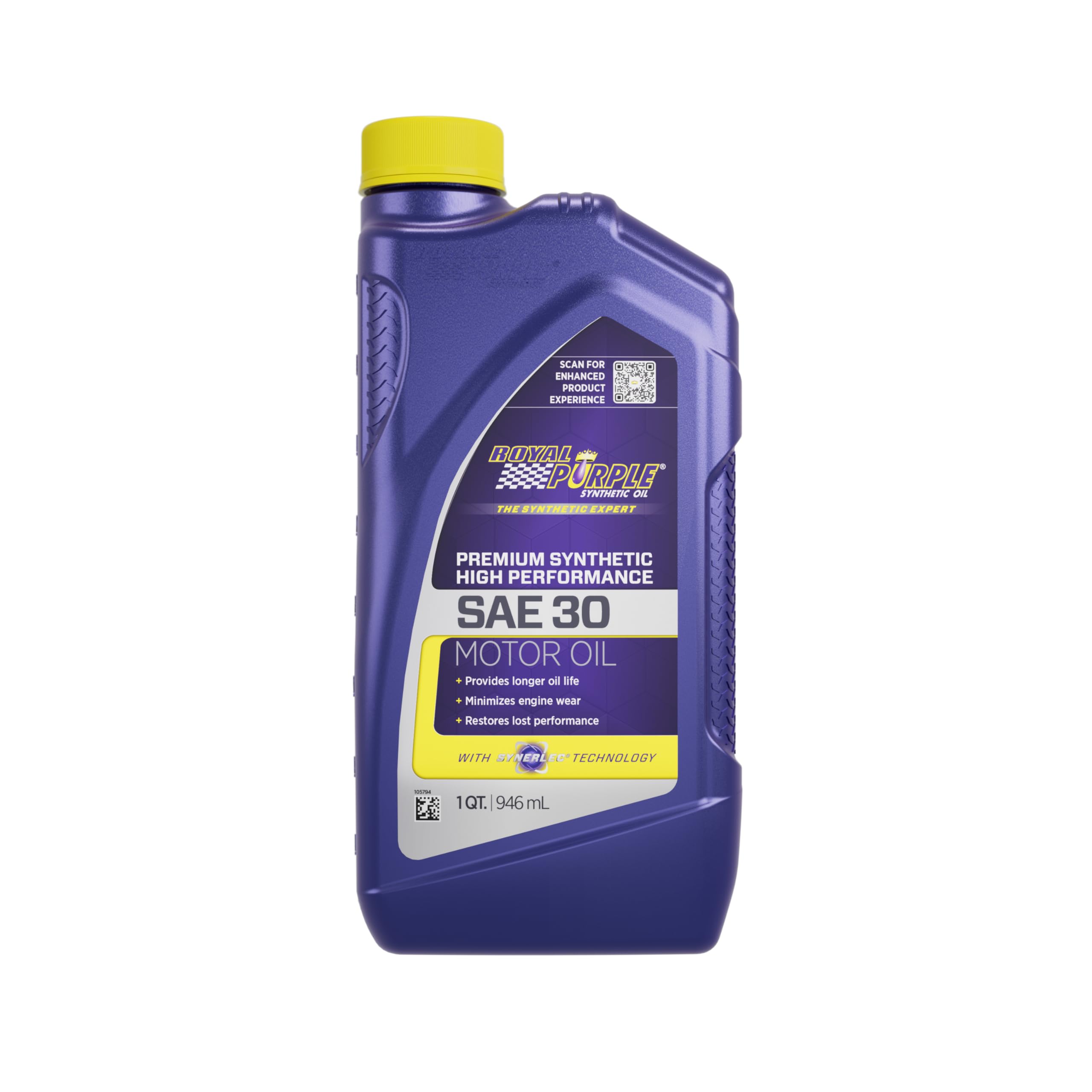
6. Royal Purple SAE 30 Heavy Duty High Performance Synthetic Motor Oil (6-Pack)
The straight-grade synthetic that brings classic iron and small engines back to life with modern protection.
Not every high-performance engine benefits from multi-viscosity modern oils. Classic cars, air-cooled engines, and small power equipment often run best on a straight SAE 30 weight (a single-grade oil that stays thick at high temperatures). This Royal Purple formulation delivers 6 times greater wear protection and 2 times greater oxidation resistance than the most stringent manufacturer specifications require, according to the brand. It uses sturdy detergents to clean out deposits built up over years of conventional oil use.
Owners use this oil across a surprisingly wide range: classic vehicles, lawn mowers, generators, and other air-cooled engines. The six-pack of one-quart bottles is practical for small engines that need just a quart or two per change. The oil is widely praised for making older equipment run quieter and smoother, with one owner saying it “made the lawn mower run like new.” The synthetic base stocks provide excellent cold flow, which means even in cooler weather, the oil reaches critical parts faster at startup.
Heavy Duty Protection
- Exceptional at quieting down older engines and small equipment
- Straight SAE 30 weight is ideal for classic vehicles that do not need multi-viscosity oil
- High-quality synthetic composition provides 6X the wear protection of standard requirements
Limited Availability
- SAE 30 is not suitable for most modern cars that require multi-viscosity grades like 5W-30
- The six-pack format means you buy more than a single oil change for most cars
Work Trucks: you own a classic car, generator, lawn mower, or any small engine that calls for SAE 30 oil and you want the best synthetic protection available.
Light Cars: you need a multi-viscosity oil for a modern daily driver or a high-performance engine that requires a thinner cold-weight like 0W-20 or 5W-30.
7. LIQUI MOLY Synthoil Race Tech GT1 10W-60

The thick German synthetic that high-revving BMW M engines and Harleys swear by for extreme heat protection.
When your engine spends its life near the redline, you need an oil that does not thin out into uselessness. The LIQUI MOLY Race Tech GT1 is a 10W-60 fully synthetic oil — the high “60” hot-weight means it keeps a thick protective film even under the extreme heat generated by track driving. It is the go-to choice for BMW M series owners, especially the E92 M3 with its high-revving V8.
Owners of high-performance BMWs report that this oil runs noticeably cooler and quieter than alternatives. One owner reports that after Blackstone Labs testing, the oil analysis confirmed excellent engine protection. Another runs it in both a Twin Cam and M8 Harley-Davidson and notes it runs quieter and cooler in hot weather. The five-liter jug offers good value compared to buying individual quarts. The consensus across the board is that this oil is the standard for engines that demand a thick, sturdy film at high temperatures.
Heat Management: Multiple customers note that this oil significantly reduces operating temperatures in high-stress engines. One notes it delivers better results in his E92 M3.
Thick Oil Only: A 10W-60 is a thick oil. It is perfect for track cars and high-revving engines that call for it, but it is absolutely the wrong choice for a daily driver that needs a standard 5W-30 or 0W-20.
Hot Climates: you own a BMW M car, a high-performance motorcycle that recommends thick oil, or any engine that needs a 10W-60 for extreme heat operation.
Cold Starts: you drive a standard modern car that requires a low-viscosity oil for proper fuel economy and cold-start protection.
8. MOTUL 300V 10W40 Synestre 4L

The double-ester racing oil that makes a sportbike transmission feel like it was machined from butter.
Motul’s 300V line is the gold standard in motorcycle racing, and this 10W-40 formulation is its most versatile offering. It uses double ester technology — two types of esters that provide excellent lubricity, meaning the oil clings to metal surfaces better under extreme loads. This translates directly to smoother gear shifts and maximum engine RPM for track and road racing bikes.
The 300V passes the JASO T904 wet clutch compatibility test, so you can safely run it in any bike that shares engine oil with the transmission. Owners of liter bikes like the Kawasaki ZX-10R report that shifting becomes noticeably smoother and the engine runs cooler. The oil is a distinctive greenish color, which owners say makes it easy to see on the dipstick. The standard recommendation among track riders is to change it every 1,000 to 1,800 miles for the best protection since it lacks detergents found in street oils.
Smooth Shifting: The smoothest shifter is the praise that comes up most often. The double ester formula reduces friction so effectively that riders report feeling a difference in gear engagement immediately after switching.
Frequent Changes: Because this is a true racing oil designed for maximum performance, it does not contain the detergents of street oils and should be changed more frequently — every 1,000 to 2,000 miles. This is not a “low-maintenance” oil.
Motorcycle Gears: you ride a high-performance sportbike at the track or the street, and you want the best possible protection and shift feel from a racing oil.
Automatic Trans: you need an oil for a car, a daily commuter motorcycle that you want to go 5,000+ miles between changes, or you are not comfortable with a shorter change interval.
9. PENN GRADE 1 Synthetic Blend High Performance Oil SAE 20W-50

The high-zinc classic that keeps flat-tappet race engines and air-cooled Porsches alive.
Older engine designs — specifically flat-tappet engines found in classic British cars, air-cooled Porsches, and dedicated race builds — need a specific additive called ZDDP (a zinc and phosphorus compound) that modern low-emission oils often lack. This Penn Grade 1 is a synthetic blend 20W-50 that delivers excellent shock load protection and high-temperature stability, with high ZDDP content that protects camshafts and lifters from catastrophic wear.
The owner community for this oil is niche but passionate. It is the preferred choice in shops that service air-cooled Porsches, with one professional noting that buying through Amazon offers the best price. Owners of classic British cars with hand-built engines report that the semi-synthetic formulation leaks less than full synthetics, which is a practical benefit for older engines with looser seals. The twelve-pack of quart bottles is ideal for shops or enthusiasts who own multiple classic vehicles.
Owner Trusted
- High ZDDP content protects flat-tappet camshafts where modern oils fall short
- Semi-synthetic formulation leaks less in old, hand-built engines compared to full synthetics
- Proven for over a decade in race engines with zero failures
Blend Compromise
- This is a synthetic blend, not a full synthetic, so it does not offer the same extreme-temperature performance as full synthetics
- The 20W-50 thickness is not suitable for modern engines that require lighter oils for proper flow
Classic Engines: you own a classic car with a flat-tappet engine, an air-cooled Porsche, or a dedicated race engine that needs the anti-wear protection of high ZDDP.
Modern Turbos: you drive a modern performance car with a turbocharger, a roller cam, or an engine that requires a full synthetic with modern certifications like API SP.
Understanding the Specs
Viscosity Grade (SAE)
The Society of Automotive Engineers (SAE) rating tells you how thick the oil is. A lower “W” number (the winter rating), like 0W or 5W, means the oil stays fluid in extreme cold for easier starting. The second number, like 30 or 60, is the oil’s thickness at engine operating temperature. A high-performance engine that runs very hot often needs a higher second number (like 10W-60) to maintain a protective film between metal parts. Always follow your engine manufacturer’s recommendation — the wrong viscosity can reduce oil pressure and lead to wear.
API SP & dexos1 Gen3
The American Petroleum Institute (API) SP is the current highest standard for gasoline engines. It tests for protection against low-speed pre-ignition (LSPI), timing chain wear, and deposit formation — all critical for turbocharged and direct-injection high-performance engines. The dexos1 Gen3 is General Motors’ stricter standard that builds on API SP. If your engine is modern and boosted, look for these certifications on the bottle to ensure the oil has passed the toughest current tests.
FAQ
Can I use a thicker oil than my manual recommends for my high-performance engine?
What does low-SAPS mean in motor oil?
Is full synthetic always better than synthetic blend for performance engines?
How often should I change oil in a high-performance engine?
What is LSPI and why should I care about it?
Can I use motorcycle oil in my car?
What does “racing oil” mean versus standard synthetic motor oil?
How does ZDDP protect flat-tappet engines?
Will a 10W-60 oil hurt my modern engine?
Can I mix different brands or weights of synthetic oil?
Final Thoughts: The Verdict
Across the board, the motor oil for high performance engines winner is the Motul 8100 ECO-lite because it delivers the best balance of fuel economy, engine quietness, and modern protection certifications for a huge range of late-model performance cars. If you drive a European car that needs a low-SAPS formulation (low ash to protect emissions systems), grab the Valvoline European Vehicle. And for a track-ready motorcycle or a high-revving BMW M car, the LIQUI MOLY Race Tech GT1 is the one to reach for.
How We Picked
We do not accept paid placement. Every pick is matched to a real buyer and a real use-case; we do not hands-on test units.
Sources & Methodology
Specifications: manufacturer listings and product documentation. Review insights: verified customer reviews, as of July 2026. Pricing: not shown on this page (it changes often); check the current price via the retailer link.
As an Amazon Associate, Trending Car earns from qualifying purchases. This does not affect which products we feature.