
Our readers keep the lights on and my garage snacks stocked. As an Amazon Associate, I earn from qualifying purchases.
Specs are compiled from manufacturer listings and verified buyer reviews and can change over time — please confirm the key details on the product page before buying.
Night driving with the wrong window tint is a genuine safety hazard — headlights bloom into blinding coronas, lane markings blur, and every oncoming SUV feels like it’s flashing its brights. The fix is a specific VLT (Visible Light Transmission) range — generally between 35% and 50% — that chops glare without dropping your visibility to zero after sunset. This guide breaks down the nine best car tints for night driving, each chosen for how well it balances daytime privacy with usable nighttime clarity.
I’m Min Islam — the founder and writer behind Trending Car. This guide is built by comparing the manufacturers’ published specifications and the patterns across verified customer reviews, so you get each pick’s real strengths and trade-offs instead of marketing spin.
You want a car tint for night driving that keeps you safe after dark without sacrificing privacy. The best balance comes from a film with a VLT (visible light transmission — the percentage of light that passes through the film) between 35% and 50%. That range cuts oncoming glare but still lets you read a road sign at 60 mph.
Our Picks at a Glance


How To Choose The Best Car Tint for Night Driving
Picking the wrong VLT is the fastest way to ruin your night vision. Here are the three specs that determine whether a tint helps or hurts you after dark.
Pick the Right VLT (Visible Light Transmission)
VLT (visible light transmission) is the percentage of light that passes through the film. For night driving, 35% to 50% VLT is the balance — it cuts oncoming glare but leaves enough light for you to see pedestrians, animals, and curbs. A 5% or 20% VLT (often called “limo tint”) looks great in the daytime but can turn a dimly lit street into a guessing game.
Choose a Film Type That Stays Clear at Night
Not all films see the same after sunset. Dyed polyester (1Ply) is the most affordable, but it can develop a hazy appearance over time and scatters light more. Carbon and nano-ceramic films offer better optical clarity — ceramic in particular rejects infrared heat without using metal, so you get less glare and no cell-signal interference.
Prioritize Glare Reduction Specs
Glare is your enemy at night, so look for a film that explicitly advertises glare control. Many premium films combine UV and IR blocking with a matte or non-reflective finish that stops dashboard reflections from bouncing back at you. Pairing that with a good rearview-mirror anti-glare setting makes a bigger difference than most drivers expect.
Quick Comparison
| Model | Best For | VLT Options | IR Rejection | Install Type | Amazon |
|---|---|---|---|---|---|
| United 15% Carbon★ Best Overall | Pro-grade bulk roll | 15% | High (carbon) | Wet/Dry Heat Shrink | Amazon |
| MkbrotherBest Value | Budget value | 5%, 20%, 35%, 50% | Peel & Stick | Amazon | |
| KORKIE 70% VLT Nano CeramicWindshield Choice | Light windshield film | 70% | > 85% | Peel & Stick | Amazon |
| Rvinyl Precut Kit | Custom vehicle fit | 5%, 20%, 35%, 50% | Precut Sheet | Amazon | |
| Autotek DIY Kit | Full-side precut kit | 5%, 10%, 20%, 35%, 50%, 70% | Precut Peel & Stick | Amazon | |
| MotoShield Pro 25% | High heat rejection | 25% | Up to 99% | Peel & Stick | Amazon |
| TRUE LINE Automotive | Precut with film options | 5%, 20%, 35%, 50% | Up to 80% (ceramic) | Precut Peel & Stick | Amazon |
| G Greenfilm Static Cling | Renter-friendly/no glue | 50% | Blocks UV | Static Cling | Amazon |
| United 50% 1Ply Dyed | Large commercial roll | 50% | 99% UV | Wet/Dry Heat Shrink | Amazon |
In‑Depth Reviews
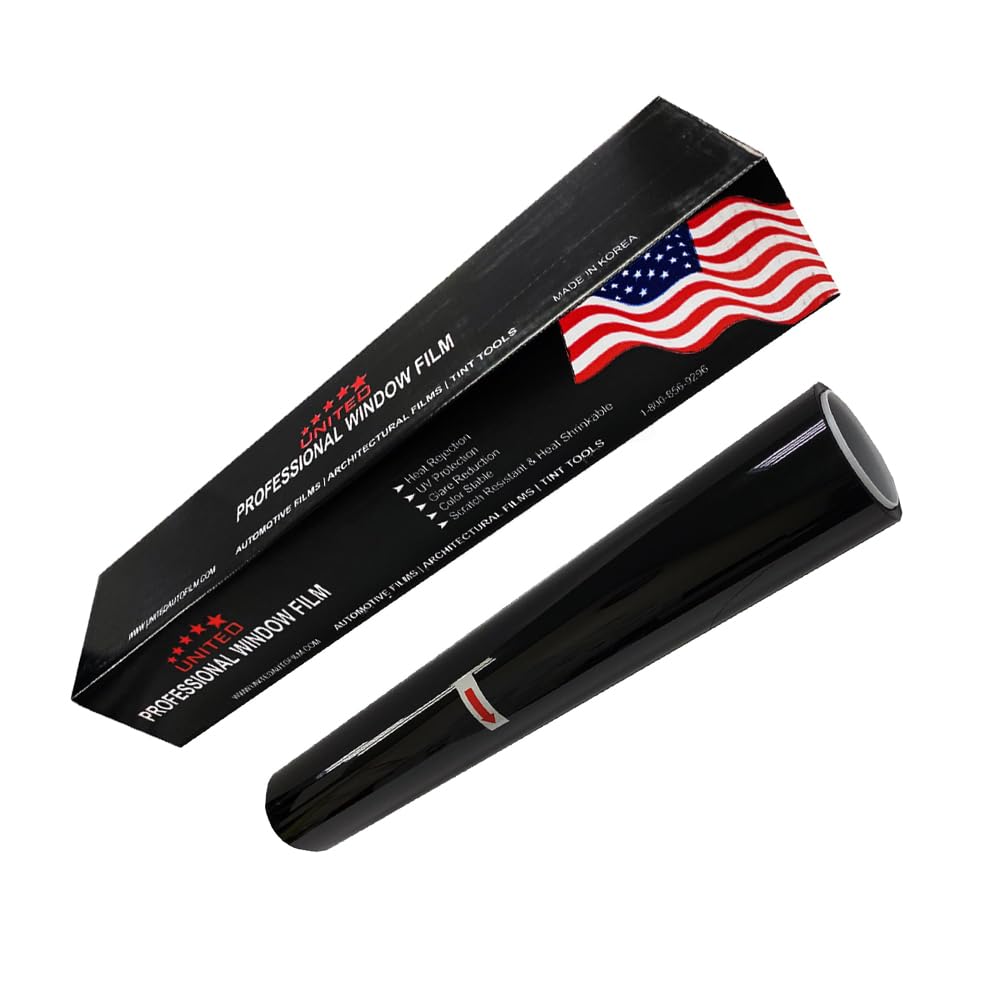
1. United 15% VLT Carbon Window Tint Film
Our pick — over 4★ from 70+ verified ratings; the strongest balance of quality and price.
The 100-foot bulk roll that professional installers and serious DIYers call back for.
This is a 2Ply carbon film with nano-technology engineering that delivers excellent optical clarity — you see the road, not a reflection of your dashboard. It knocks out 99% of UV rays and significantly cuts infrared heat, so your car’s interior stays cooler and the tints themselves won’t purple or peel. Buyers report that the quality holds up well, with one describing it as “very good tint” that has never had problems with coming loose at the edges over two years.
At 15% VLT, this is on the darker end of the night-driving spectrum. While the low reflectivity helps reduce oncoming headlight glare, you’ll want to be cautious on completely unlit country roads — the 15% rating is noticeably darker than the 35-50% range. The generous 100-foot length means you can do multiple vehicles or home projects from a single purchase.
The Edge
- Professional 2Ply carbon construction provides long-lasting clarity
- 99% UV block preserves your interior from fading and cracking
- Massive 100-foot roll offers exceptional value for multiple applications
Know Before You Buy
- 15% VLT is darker than the ideal night-driving balance — best for well-lit urban night use
- Requires careful heat shrinking for curved rear windows
Stick with this for: experienced DIYers who want one roll to tint a whole fleet plus the house, and who already know their way around a heat gun.
Think twice if: you regularly drive on dark rural roads — the 15% VLT will feel like sunglasses after sunset.
2. Mkbrother Car Window Tint Film
The budget-friendly roll with a 3.5x VLT gap from the limo-tint territory above.
Mkbrother offers a wide VLT spread — 5%, 20%, 35%, and 50% — so you can pick the 35% or 50% option for safe night driving or go darker on rear passenger windows. This is a Korean-manufactured vinyl that blocks 99% of UV rays and claims scratch resistance for daily wear. Owners mention that it handles heat shrinking well and that the 20% VLT option provides a near-blackout effect except at sunrise, which is a good sign of its glare-cutting ability.
The big caveat here is consistency. The crowd is split on quality — some rolls go on like a dream, while a minority report the film is too thin or that the adhesive is aggressive and tricky to manage. If your budget is tight, the 35% VLT variant delivers the night-driving balance you need, but approach the installation with patience.
Why It Stands Out
- Multiple VLT choices (35% or 50%) let you dial in safe night visibility
- Korean manufacturing is noted for reliable durability by consistent buyers
- Scratch-resistant coating helps the film survive daily window operation
Watch Out For
- Quality control varies — some owners find the film too thin for easy handling
- Adhesive can be overly sticky, making repositioning difficult for beginners
Grab this if: you want to experiment with different VLT levels on different windows while staying affordable.
Pass on it if: you want a predictable, fuss-free install — batch variation makes this a gamble for first-timers.
3. KORKIE 70% VLT Nano Ceramic Window Tint
The near-clear ceramic film that is perfect for windshields where safety is non-negotiable.
At 70% VLT, this tint is virtually clear — you will barely notice it is there, and that is the point. It blocks 99% of UV and rejects more than 85% of infrared heat, which means your cabin stays cooler without reducing your night vision by even a single percentage point. The nano-ceramic construction is completely metal-free, so it will not interfere with your GPS, phone signal, or toll-pass sensor. One buyer described it as “the perfect tint if you don’t like really dark.”
The trade-off: 70% VLT offers minimal daytime privacy. People can still see into your car from a few feet away. Also, the tint quality reviews are mixed — some rolls measure as true ceramic with excellent IRR specs, while others appear to be a lower-grade carbon film. Stick with a single roll purchase to confirm what you are getting.
The Upside
- 70% VLT is the safest choice for night driving — near-zero visibility loss
- >85% IR rejection keeps the car much cooler than standard dyed film
- Metal-free design means zero interference with vehicle electronics
The Catch
- Film quality can be inconsistent between different VLT rolls — some may underperform
- Privacy is minimal; it is not the choice for anyone wanting a dark look
Best suited for: drivers who prioritize absolute night safety and want heat rejection without any visibility compromise.
Not for: anyone who wants a sleek dark appearance or one-way privacy during the day.
4. Rvinyl Automotive Precut Tinting Kit
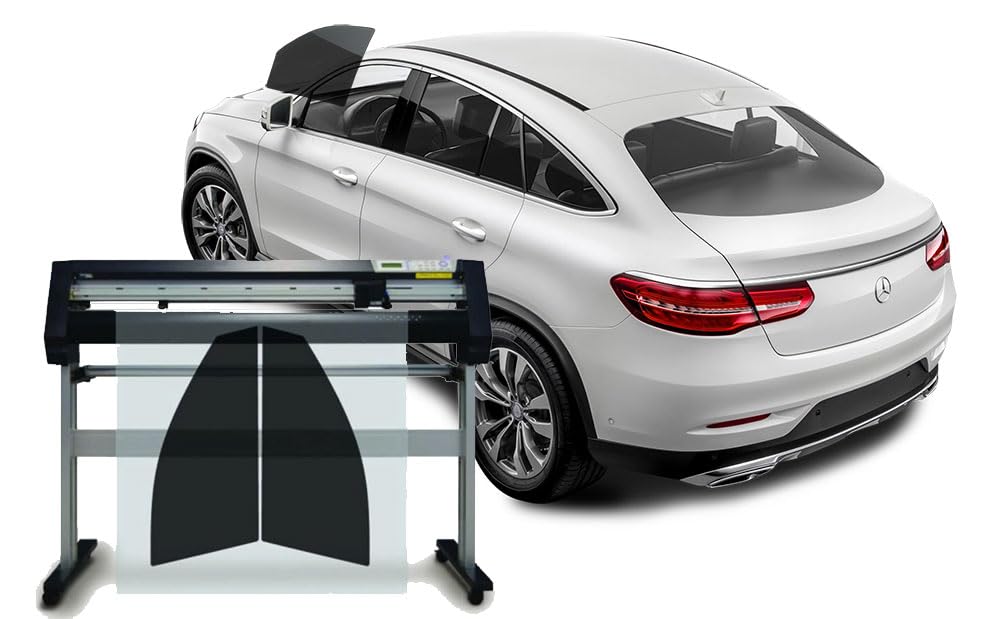
The no-cut, no-guess precut that slides onto your windows exactly as shaped.
Rvinyl sends you computer-cut tint pieces made for your specific vehicle year, make, and model. You pick from 5% to 50% VLT and from two film tiers: a budget 1Ply Pro Grade or a premium 2Ply Avery Dennison NR Nano Ceramic IR film. Both are metal-free and block up to 99% of UV rays. The 50% VLT option in the ceramic film is a strong night-driving choice because it preserves optical clarity while still cutting glare.
However, the installation is finicky — the thin film kinks very easily if you breathe on it wrong, and some customers note the edges roll up during shipping, making it tough to separate the layers. The custom fit is the biggest selling point, but if you lack experience with tint, the ultra-thin material can frustrate. Consider this if you value a perfect match over a forgiving install.
What Works
- Computer-precut to your exact vehicle windows — zero trimming
- Offers both a budget dyed film and premium nano-ceramic option with lifetime warranty
The Hard Part
- Film kinks and creases very easily during handling, ruining the piece
- Shipping can cause rolled edges that make release-liner removal a challenge
Reach for this if: you want a showroom-perfect fit without measuring or cutting bulk film.
skip it if: you are a first-time installer — the material’s delicacy can turn a simple tint job into a stressful one.
5. Autotek DIY Car Window Tinting Kit

A complete window kit that includes every side and rear piece — windshield and sunroof excluded.
Autotek custom-cuts a set for all your side and back windows, with shade options from 5% up to 70% VLT. The film blocks UV rays to prevent interior aging and has a shatterproof safety layer that holds broken glass together in a collision. For night driving, the 35%, 50%, or 70% options are your safest bets. The company has swapped out defective pieces free of charge for repeat buyers, which suggests decent customer support.
Quality is a coin flip here. The crowds are evenly divided — about half of owners say it fits perfectly and installs easily, while the other half report adhesion failure, bubbles that never clear, and precut shapes that are off by several inches. The adhesive seems particularly hit-or-miss; some rolls stick like they should, others peel away after a few days in the sun. This is a gamble that pays off for some and frustrates others.
Why People Like It
- Precut for every window (excluding windshield) saves hours of measuring
- Shatterproof film adds a layer of safety in a collision
Where It Fails
- Inconsistent cut accuracy and adhesive quality lead to poor results
- Film can lose adhesion in hot air, causing persistent bubbles
Try it if: you have used precut kits before and are comfortable troubleshooting adhesive issues.
Avoid it if: you need a guarantee that the tint will stick the first time — the quality variance is too high.
6. MotoShield Pro 25% VLT Nano Ceramic

A ceramic roll that rejects up to 99% of infrared heat — the coolest choice for hot climates.
MotoShield Pro’s 25% VLT nano-ceramic film claims up to 99% IRR (infrared rejection — the amount of heat blocked from the sun) rejection, which is an exceptionally high number for any tint. It is engineered with heat-resistant nanoparticles and comes with a 3-year warranty against manufacturing defects. One owner in Arizona reported it prevents electronics from overheating and is much easier to apply than Northern Tint. The 25% VLT is darker than the ideal night-driving balance, but owners say it provides good nighttime visibility.
The 2-mil thickness makes it relatively easy to handle, but heat shrinking curved rear windows is moderately difficult and requires patience. Some buyers received rolls with creases and damage from shipping, and the film can appear hazy under low-level light after installation. It takes up to three days of hot sun to fully clear water spots. If you live in a place where summer sun is brutal, the heat rejection might be worth the extra installation effort.
Biggest Strengths
- Up to 99% infrared heat rejection dramatically reduces cabin temperature
- 3-year manufacturer warranty provides confidence against defects
Potential Issues
- 25% VLT is dark — night driving is best on well-lit streets, not dark backroads
- Film can arrive creased or develop haziness until fully cured in the sun
Best for: drivers in hot climates who are willing to trade some nighttime brightness for class-leading heat rejection.
Not for: anyone who primarily drives on unlit rural roads after dark — go with a 35% or 50% film instead.
7. TRUE LINE Automotive DIY Precut Kit
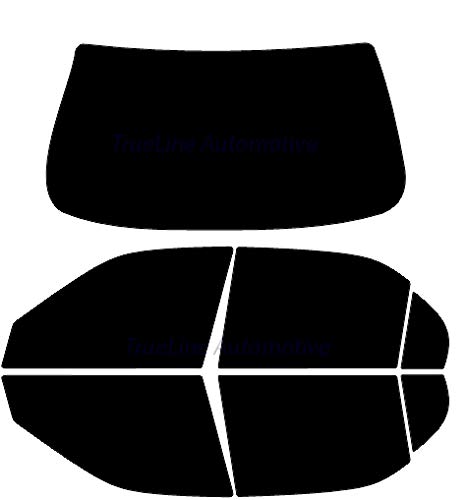
The precut kit that lets you pick your film tier — dyed, carbon IRR30, or ceramic IRR80.
TRUE LINE gives you three film types in one purchase: a basic single-ply dyed film, a carbon film that rejects 30% of infrared heat, and a nano-ceramic film that rejects 80% of IR heat. Precut pieces are completely cut through so there is no excess to trim — just peel the release liner and stick. Reviewers point out the non-ceramic film is much easier to manipulate than the ceramic variant, which is thinner and trickier for beginners.
A glance at the owner consensus shows that quality and installation are the most-praised aspects. The fit is generally accurate, but the cut quality can be off — some pieces are oversized, and the ceramic film has been reported to peel after just a few days. The value depends heavily on which tier you pick and how clean your install is. The 35% or 50% VLT in the carbon tier is the safest bet for good night vision while staying affordable.
The Good
- Three film types to choose from (dyed, carbon, ceramic) at different price levels
- Precut eliminates trimming — release taps help separate the film layers
The Bad
- Ceramic film is thin and can peel — a local shop confirmed it lacks proper adhesive
- Cut quality is inconsistent; some pieces are too big and cause installation creasing
Go for this if: you want to try a carbon film without paying ceramic prices and need a precut fit.
Hesitate if: you are set on ceramic — the thin film and adhesion issues make it a risky choice for long-term durability.
8. G Greenfilm 50% Static Cling Tint

Zero glue, zero residue, zero commitment — static cling that peels off years later.
This is a water-activated static-cling film that requires no adhesive. You wet the glass, apply the film, and squeegee the water out. When you want it gone, you peel it off without leaving any sticky residue. The 50% VLT blocks half of visible light, which is right in the safe zone for night driving — it reduces headlight glare while leaving you enough light to navigate. Owners who applied it to house windows say it blocks heat effectively and stays put for years.
The catch: this film can develop permanent streaks and ripples that blur the view. Multiple shoppers say that the 50% variant arrives with a cloudy, wavy appearance that does not clear. The static cling also means it is not as optically perfect as an adhesive film. If you need a temporary solution — rental car, apartment — this is a solid choice, but for a permanent daily driver, an adhesive ceramic film will give you a clearer, streak-free view at night.
Why It’s Unique
- Completely removable and reusable with no adhesive damage to glass
- 50% VLT is ideal for night driving — good glare reduction without loss of visibility
The Trade-Off
- Streaks and cloudiness are common — visual clarity is inferior to adhesive films
- Not recommended for car windows by several owners due to distortion
Right for: renters who cannot modify their property or anyone who wants a temporary film they can reverse instantly.
Wrong for: anyone who needs crisp night vision — the potential for haze makes it a risk.
9. United 50% VLT 1Ply Dyed PET Tint
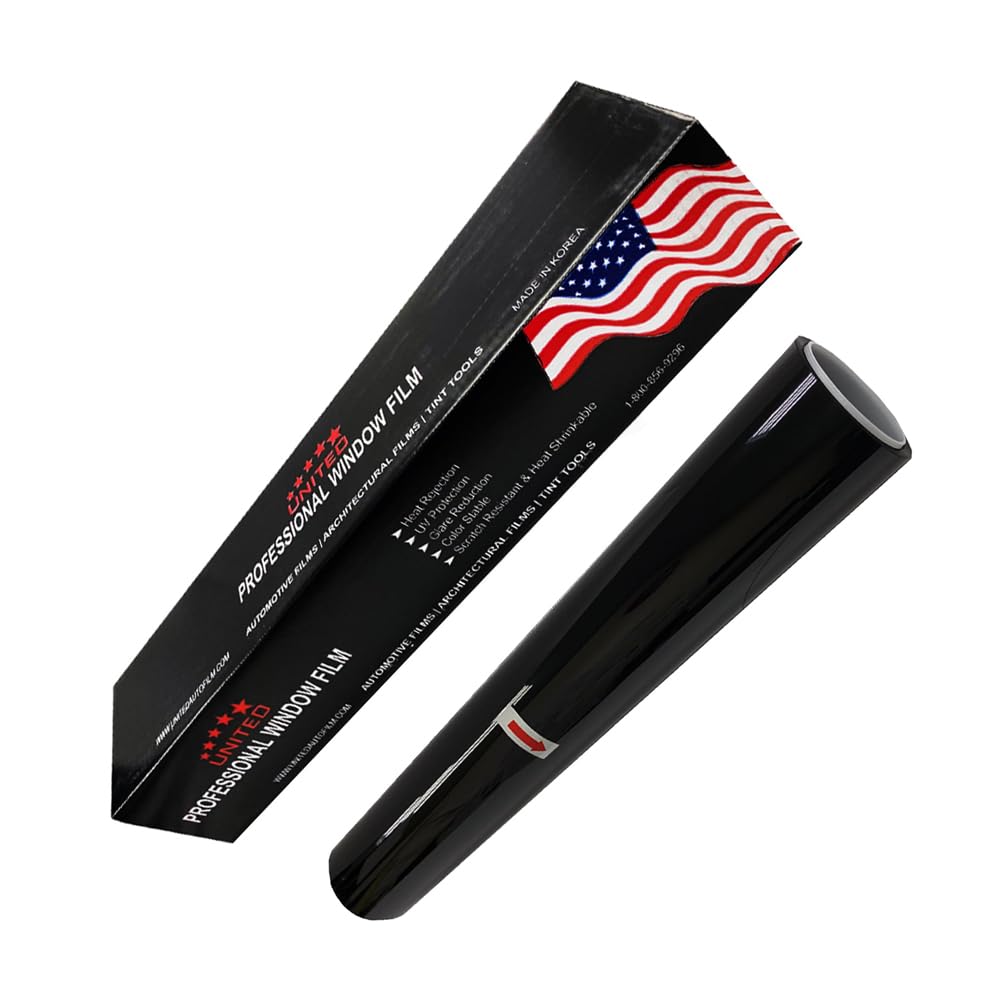
A massive 100-foot roll at 40 inches wide — enough to wrap an entire house and a car.
This 50% VLT film is a 1Ply dyed PET material — the most budget-friendly construction in the tint world. It blocks 99% of UV rays and cuts glare, but it lacks the heat-rejection nanoparticles of carbon or ceramic films. The 50% VLT is the perfect night-driving compromise: it darkens the windows just enough for daytime privacy while letting in enough light to see clearly after dark. One owner applied it to every window in their home and praised how it prevented people from easily seeing indoors during the day.
The film does not come with installation instructions, but buyers report it is easy enough to figure out — just peel the clear plastic covering the adhesive and use plenty of soapy water. The last five or six feet of the roll can wrinkle, so budget for some waste. Dyed PET can also fade or purple over time under intense sun, so expect a shorter lifespan than a carbon or ceramic film.
Why It Works
- 50% VLT is the safest night-driving VLT on this list — minimal vision compromise
- 100-foot length covers large residential or commercial jobs in one purchase
Downsides
- 1Ply dyed film is less durable than carbon or ceramic — may fade or bubble over years
- No included instructions; first-timers must research proper wet-install technique
Choose this for: a budget-conscious whole-house project where 50% VLT gives you safe night visibility.
Skip it for: a daily-driver car you plan to keep for years — invest in carbon or ceramic for longevity.
Understanding the Specs
VLT (Visible Light Transmission)
VLT (visible light transmission) is the percentage of light that passes through the film. A 5% VLT lets in almost no light (limo tint), while a 70% VLT looks nearly clear. For night driving, 35% to 50% is the balance — you get enough glare reduction to fight oncoming headlights without losing the ability to spot pedestrians, animals, or road signs in dim conditions. Anything below 20% VLT is risky for after-dark safety.
IRR (Infrared Rejection)
IRR measures how much infrared heat the film blocks. A high IRR percentage (80% to 99%) keeps the cabin significantly cooler, which means you run the AC less and the dashboard doesn’t cook. Nano-ceramic films typically deliver the highest IRR without adding reflectivity, which is why they are the premium choice for hot climates and daytime comfort.
FAQ
What VLT percentage is best for night driving?
Is 20% tint safe enough to drive at night?
Does nano-ceramic film help with night visibility?
Can I use a 70% VLT tint on my windshield?
What is the difference between carbon and dyed film for night vision?
How long does car window tint last before needing replacement?
Does car tint affect GPS or cell phone reception?
Is static cling tint as clear as adhesive tint?
Final Thoughts: The Verdict
If you want one dependable pick, the car tint for night driving winner is the United 15% VLT Carbon Film because its 2Ply nano-carbon construction delivers superb optical clarity and durability, and the 100-foot bulk roll makes it the best value for serious DIYers. If you want a perfect precut fit to eliminate measuring, grab the Rvinyl Precut Kit in 50% VLT. And for pure night-driving safety with maximum heat rejection, the KORKIE 70% VLT Nano Ceramic is the one to reach for.
How We Picked
We do not accept paid placement. Every pick is matched to a real buyer and a real use-case; we do not hands-on test units.
Sources & Methodology
Specifications: manufacturer listings and product documentation. Review insights: verified customer reviews, as of July 2026. Pricing: not shown on this page (it changes often); check the current price via the retailer link.
As an Amazon Associate, Trending Car earns from qualifying purchases. This does not affect which products we feature.