
Our readers keep the lights on and my garage snacks stocked. As an Amazon Associate, I earn from qualifying purchases.
Specs are compiled from manufacturer listings and verified buyer reviews and can change over time — please confirm the key details on the product page before buying.
Finding a 1 1/2-inch fuel filler hose that actually fits your truck or boat without buying a 10-foot roll can feel like a scavenger hunt. You need something that handles gas, diesel, or ethanol blends, seals tight, and doesn’t cost a fortune. This guide cuts through the options—from a 48-inch marine-grade length to short, pre-bent sections—so you match the right hose to your project the first time.
I’m Min Islam — the founder and writer behind Trending Car. This guide is built by comparing the manufacturers’ published specifications and the patterns across verified customer reviews, so you get each pick’s real strengths and trade-offs instead of marketing spin.
The goal is simple: find the best 1 1/2 fuel filler hose for your specific repair or restoration, not just the cheapest or most popular one.
Our Picks at a Glance


How To Choose The Best 1 1/2 Fuel Filler Hose
Your first and most important check is the inner diameter. A 1.5-inch ID is the standard for most automotive and marine filler necks, but a few older vehicles or specific brands use a slightly different size. Measure your old hose or the filler neck opening with a caliper before ordering — a hose that is too big leaks fuel vapors, and one that is too small blocks the nozzle.
Length and Pre-Bends Save You Work
Fuel filler hoses come in straight lengths (from 7.8 inches to 48 inches) or pre-molded with a 45-degree bend. A straight hose is easy to cut, but you often need a gentle curve to connect the filler cap to the tank without a sharp kink. If your factory hose had a bend — common on Ford F-150s, Ram 2500s, and many classic trucks — a pre-bent 15 7/8-inch hose saves you from fighting a straight tube into a tight corner.
Material and Reinforcement Matter
The rubber compound and inner reinforcement define how the hose handles fuel and holds up under pressure. Nitrile rubber resists gasoline, diesel, and oil without swelling, while a nylon-cord reinforcement adds strength so the hose doesn’t collapse under suction. Marine hoses add a wire helix (a spiral wire embedded in the rubber) to prevent kinking when the hose bends in tight bilge spaces. Check the hose’s temperature range — most quality options handle -40°F to +212°F, which covers anything from a winter cold start to a hot running engine.
Quick Comparison
| Model | Best For | Length | Pre-Bent Angle | Reinforcement | Amazon |
|---|---|---|---|---|---|
| Continental 58524★ Best Overall | Marine & Heavy-Duty | 48 in | Straight | Helix wire | Amazon |
| Gates 24710Also Great | Versatile Automotive Fit | 15 7/8 in | 45° | Nylon cord | Amazon |
| JZGRDN 24710 | Diesel & Classic Trucks | 15 7/8 in | 45° | Nylon cord | Amazon |
| TKKEUEP Reinforced | Classic Pickup Replacement | 15 7/8 in | Straight | Nylon cord | Amazon |
| NexaNova 7.8″ | Quick Gas Tank Patch | 7.8 in | Straight | Nylon cord | Amazon |
| (2 set) 45° with 8 Clamps | Multi-Project / Swap | 15 7/8 in (each) | 45° | Triple-layer nylon | Amazon |
| MPI USCG 350-1120 | Marine Fuel Fill Per-Foot | Sold by foot | Straight | Helix wire | Amazon |
In‑Depth Reviews
1. Continental 58524 Fuel Fill/Marine Exhaust Hose, 1.5″ ID, 48″ Length
Our pick — over 4.5★ from 500+ verified ratings; the strongest balance of quality and price.
Four feet of commercial-grade marine hose that outlasts the boat itself.
The Continental 58524 is not messing around. This is a 2-ply synthetic hose with a steel helix wire embedded in it — the kind of construction that shrugs off bilge corners, tight routing, and the constant fuel and vapor exposure inside a boat. It is designed specifically for marine fuel filler necks, fuel tank vents, and exhaust hose, handling gasoline, methanol, ethanol, and diesel.
You get 48 inches of hose — while the NexaNova hose is 7.8 inches and the MPI is sold by the foot. Buyers report that the auto parts store quoted them over for 4 feet; the Continental feels heavier. One owner summed it up: “I got 4 foot of line and this stuff is heavy duty.” The hose is stiff (normal for quality fuel fill hose), but it makes tight turns without pinching off fuel flow. Quality is the most-praised aspect — 45 owners single it out — and the PVC material resists both weather and fuel degradation.
A couple of owners note the length is listed as 48 inches, so measure your run carefully before cutting. The hose handles -25°F to +212°F, meaning it stays flexible enough in cold weather to work with. If you are replacing a rotted marine hose or building a diesel fuel system that needs a long, uninterrupted run, this is the one.
Built for the bilge: helix-wire reinforcement stops the hose from kinking even when you force it around tight corners below deck.
Know your run length: 48 inches is plenty for most fuel fill setups, but measure first — you cannot stretch it, and cutting it is permanent.
Grab this for: marine fuel fill, tank vent, or exhaust hose where you need USCG-grade construction and a long continuous length.
Skip it for: a short 7-inch patch on an old gas tank — you will waste most of the hose.
2. Gates 24710 Molded Gasoline Fuel Filler Neck Hose
The 45-degree bend that drops right into your F-150 or classic truck without a fight.
The Gates 24710 is the crowd favorite for a reason — it simply fits the job most truck owners actually have. At 15 7/8 inches long with a 1.5-inch ID and a molded 45-degree angle, it matches the factory shape on millions of Ford F-150s, F-250s, E-Series vans, and other trucks. The nitrile tube handles gasoline, diesel, ethanol blends, and biodiesel up to B20.
Owners consistently call it a perfect fit for the 2001 F-150 XLT and 2003 F-150 XLT, noting it replaces the crumbling original hose without needing a whole filler neck assembly. The nylon-cord reinforcement inside keeps the rubber sturdy enough to survive a fuel pump swap without collapsing. Buyers regularly mention cutting 3 to 4 inches off the straight end with a razor and lubing it to slip right onto the tank neck — the hose is easy to trim yet tough in daily use.
One recurring point of honesty: this hose is not recommended for marine gasoline applications (it is not USCG-approved), so keep it on dry land. It meets SAE 30R6 standards, handles -40°F to +212°F, and comes from Gates, a brand with decades in automotive hose. For a universal fit that works, this is the one.
What Owners Swear By
- Pre-molded 45-degree bend matches the OEM curve on F-150s, Rams, and vans — no kinking
- Nitrile tube resists gasoline, diesel, and ethanol blends without degradation
- Easy to cut with a knife; buyers shorten it by 3-4 inches and it slips right on
- Strong nylon-cord reinforcement stops the hose from collapsing under fuel suction
One Honest Catch
- Not rated for marine applications — skip it if you need a USCG-approved hose
- The 45-degree bend is fixed; you cannot use it in a straight-line-only route
Reach for this if: you drive a Ford, Ram, or Chevy pickup from the 1990s through 2010s and need a drop-in replacement for a rotted filler neck hose.
Look elsewhere if: your project is on a boat or requires a straight, unbent hose section.
3. JZGRDN New Fuel Filler Neck Hose 24710 15-7/8″ x 1-1/2″

A year-long relationship with a diesel Ram 2500 — no drips, no fuss.
The JZGRDN 24710 is essentially the same dimensions as the Gates (15 7/8 inches, 1.5-inch ID, 45-degree bend) but has earned its own following among diesel truck owners.
At 0.42 kg, compared to the TKKEUEP hose at 0.46 kg, a minor weight difference. The rubber is flexible enough to cut with a utility knife but thick enough that it does not collapse when you tighten the clamp. The package includes just the hose (no clamps), so you will need to supply your own stainless steel worm-gear clamps. Several review pages note that the hose works as a direct fit for the classic Ford, Chevy, and Ram filler neck positions, matching the OEM part number 24710.
One honest owner note: if your measurement is off, verify the outside diameter of the filler neck before cutting. The 1.5-inch ID is a tight slip-fit on most factory necks, which is exactly what you want to avoid vapor leaks. This hose has been around long enough that dozens of owners have confirmed it fits the 1990s and 2000s gasoline and diesel trucks without modification.
Proven fit: owners on Ram 2500 diesels, Toyota Tercels, and classic shop trucks all confirm a direct, leak-free fit.
Bring your own clamps: the hose ships alone — you need two stainless clamps sized for 1.5 – 2.0 inch.
Choose this if: you want the 45-degree pre-bent fit with a track record on diesel trucks and classic cars.
Pass if: you need a marine-rated hose or one with clamps included in the box.
4. TKKEUEP Gasoline Fuel Filler Neck Hose with 4 Hose Clamps,1 1/2 inches Inside Diameter
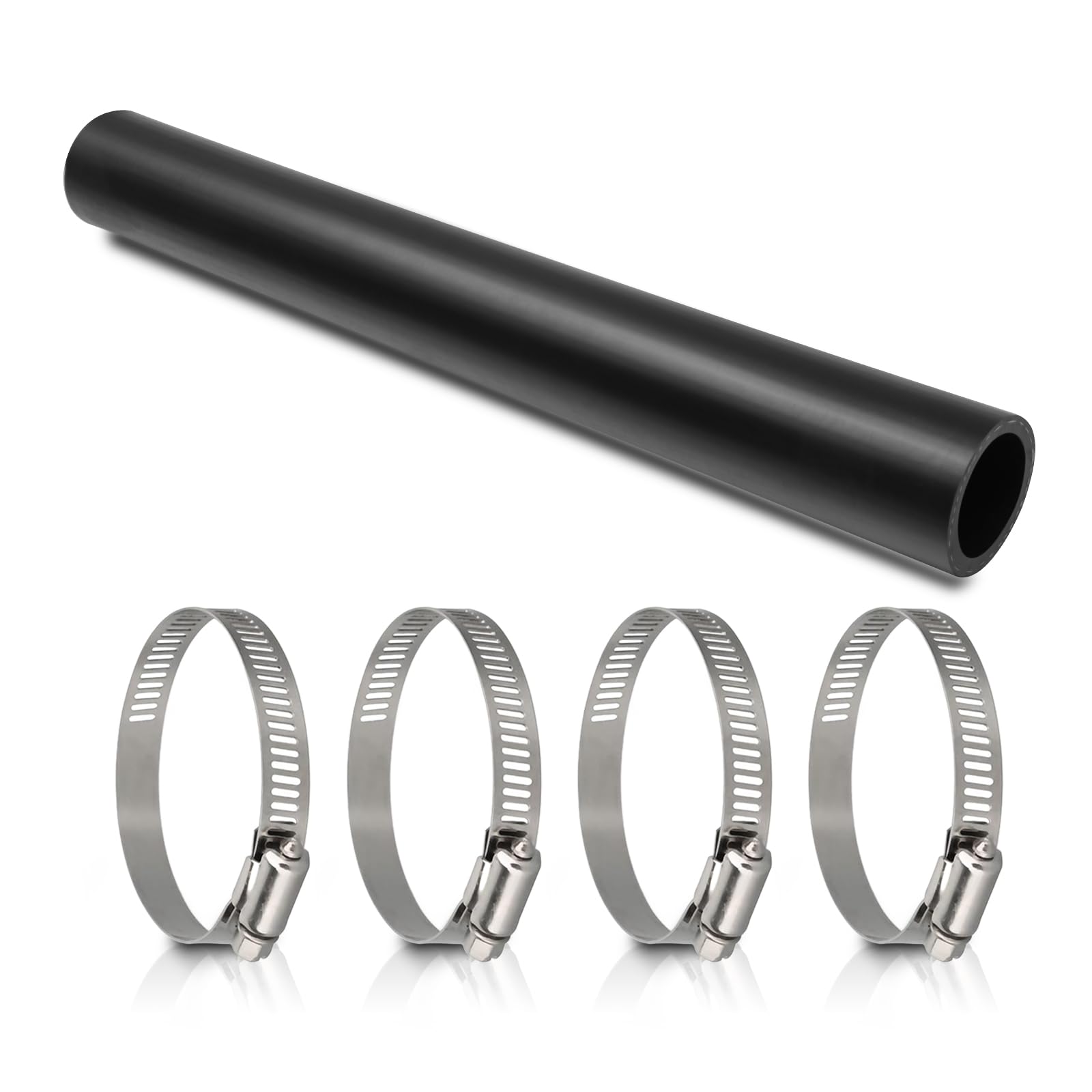
Soft enough to bend into tight engine bays, tough enough to survive a fuel fire.
The TKKEUEP hose is the most reviewed straight-section option here, and the owner stories are remarkable. One buyer accidentally ignited gasoline while using a drill driver on the clamp, and the hose survived the fire with no damage to the vehicle. Another installed it on a 1976 F-150 rear tank and reported a perfect fit with a K5 fill system.
The hose measures 15 7/8 inches long with a straight (no bend) 1.5-inch ID, built from nitrile rubber with nylon-cord reinforcement. At 0.46 kg, it is the heaviest of the 15 7/8-inch options — that extra weight comes from a thicker wall that resists collapse. Over 29 owners call out the quality and 22 praise the fit. The flex rating is rated mixed rather than positive by the review data, and several owners note the included clamps are on the small side: “supplied clamps are small; recommend upgrading to fuel-grade clamps” appears in multiple reviews. The temperature range covers -40°F to +212°F, which covers everything from winter starts to hot engine compartments.
If you need a flexible straight hose for a classic pickup or a shop repair, this one works. Just plan to replace the clamps with quality stainless ones for a long-term seal. The hose itself holds up — multiple owners confirm it fits 1976 F-150s, 1996 F-250s, 1988 Mitsubishi Starions, and 1978 International Scout IIs.
Why Shops Buy It
- Flexible enough to route around sharp corners without kinking — owners call it “soft variety”
- Survived a gasoline fire in one incident; the hose itself was undamaged
- Includes 4 hose clamps, though owners recommend swapping them for better ones
The Shortcomings
- Included clamps are undersized — plan on buying separate fuel-grade stainless clamps
- Straight section only; you will need to create your own bend for angled filler necks
Best for: a straight-line fuel filler replacement on a 70s-90s pickup where flexibility matters.
Think twice if: you are routing around a pre-existing tight angle — get the Gates or JZGRDN pre-bent hose instead.
5. 1 1/2″ ID Gasoline Fuel Filler Neck Hose with 2 Clamps, Reinforced Gas tank Filler Hose
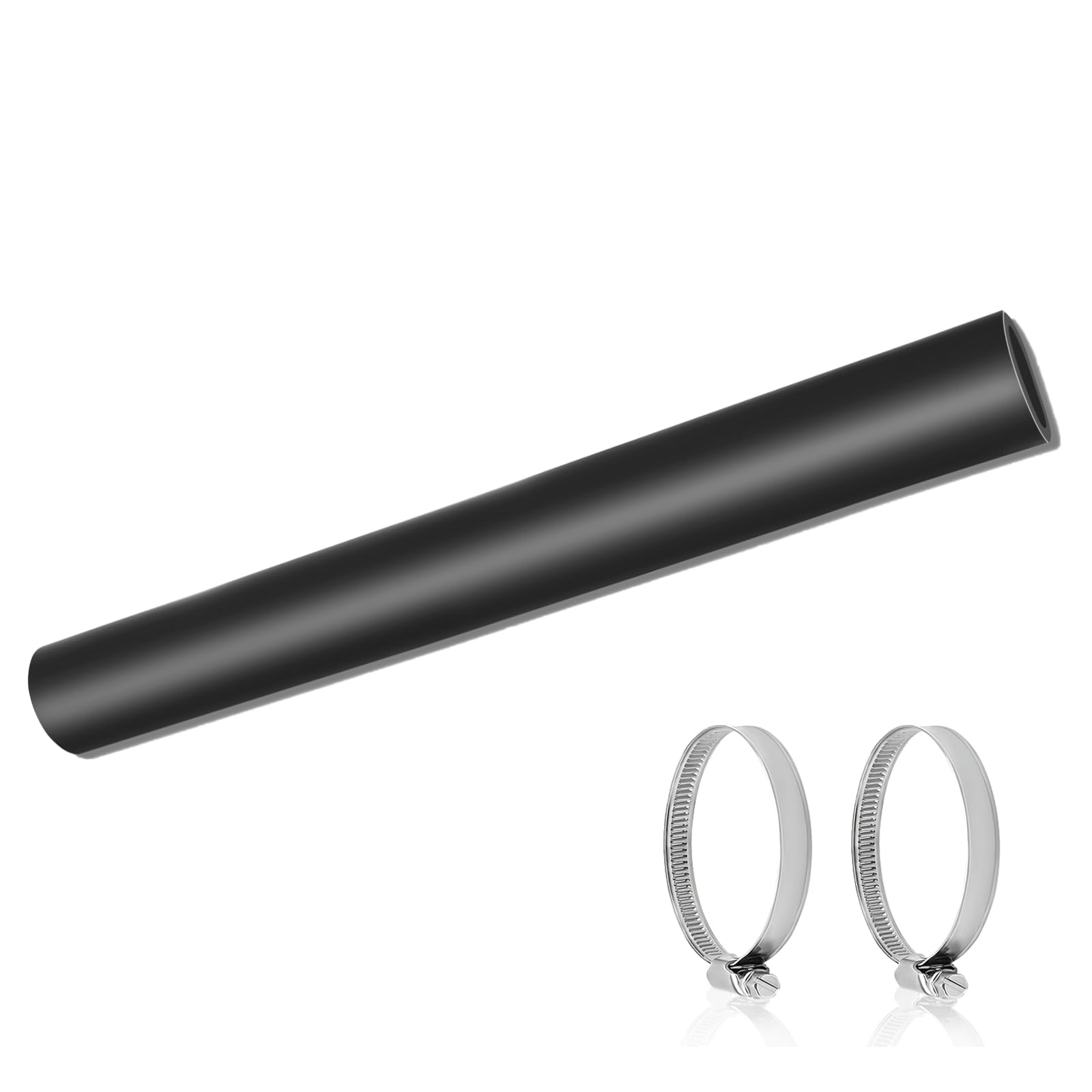
A short, sturdy section that patches a rotted filler neck for under twenty bucks.
The NexaNova is the shortest hose in this lineup at 7.8 inches, and that is exactly its superpower. If your filler neck has a 6-to-8-inch section of rotted rubber between the gas cap and the tank, you do not need 4 feet of hose — you need this. It comes with two stainless steel clamps pre-included, so the total package is ready to install in about 15 minutes.
The hose is made of nitrile rubber with nylon-cord reinforcement (a woven fabric of nylon strands embedded in the rubber wall that adds tensile strength so the hose does not stretch or collapse under fuel flow). It is rated to SAE 30R6 (a standard for low-pressure fuel hose) and handles a temperature range of -40°F to +212°F. The straight design and flexible rubber make it easy to cut down with a box knife if you need a shorter section — one owner trimmed it and slipped it onto a 2002 Chevy Blazer with a “perfect” fit. Quality gets the most praise — 6 buyers single it out — and the fit earns 5 mentions as exact. That said, the rubber is not very flexible; owners note it is sturdy and durable, but you will not bend it into a sharp curve without the wire reinforcement found in marine hoses.
The 1-year manufacturer warranty gives a bit of extra confidence. For a short patch on a 90s gas tank filler neck — especially Chevys, Fords, and GMCs — this is the simplest, cheapest option that does not feel cheap.
Patch job hero: two clamps and a pre-cut hose mean no trips to the hardware store for extras.
Not for long runs: measuring at 7.8 inches, this is strictly a section replacement, not a full filler neck line.
Get this for: a short rotted section on a 2002 Blazer, 1999 F-150, or similar 90s-00s truck where 8 inches is exactly what you need.
Look elsewhere for: any filler neck that needs more than 12 inches or has a 45-degree bend.
6. (2 set) 1 1/2 inch Gasoline Fuel Filler Neck Hose 45 Degree with 8 Clamps
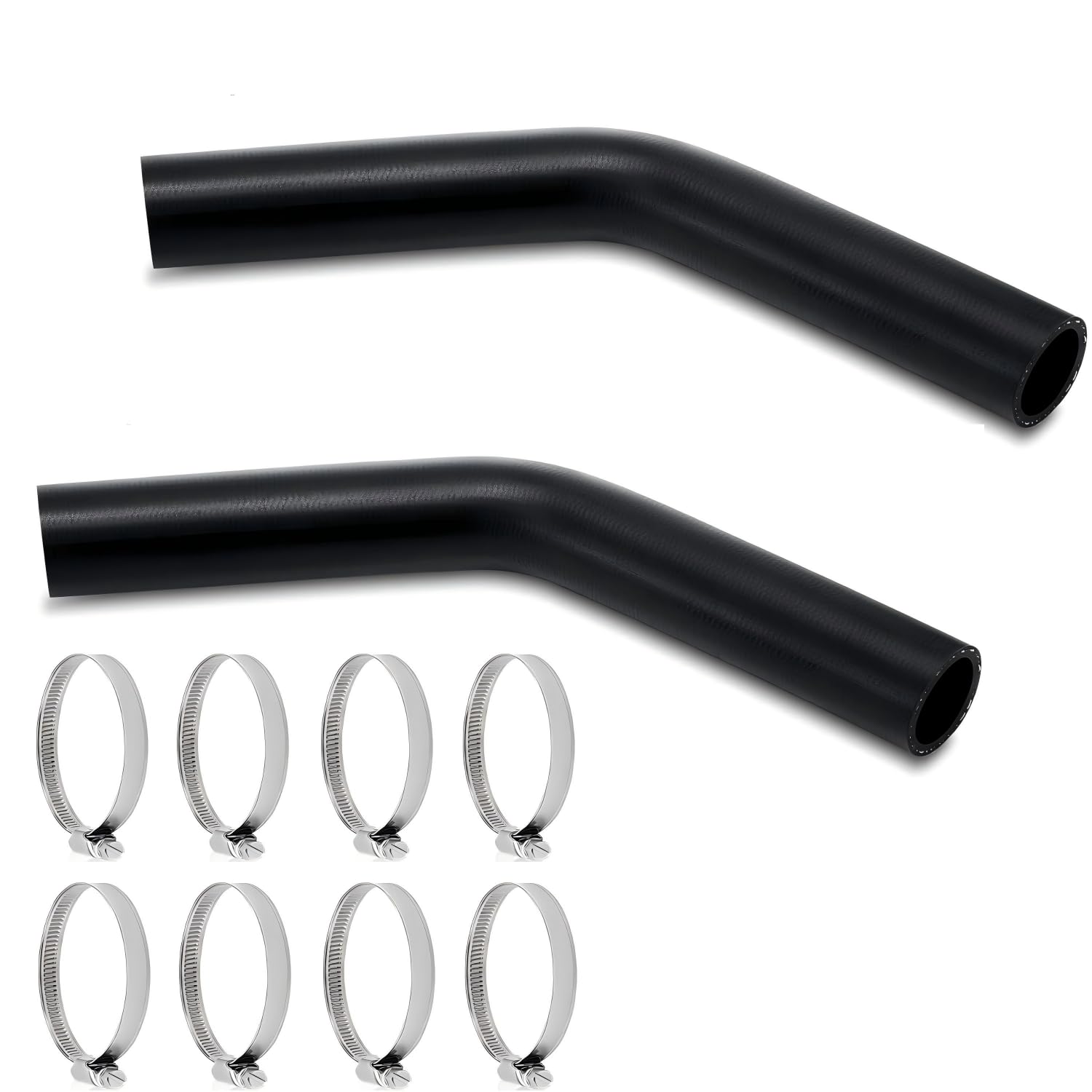
Two hoses and all the clamps you need to finish a full fuel system swap.
This kit solves a specific problem: you have two filler necks to replace, or a front and rear tank on a classic truck. It includes two 15 7/8-inch hoses and eight stainless steel clamps — one set for each side of both hoses. The 45-degree pre-bent angle matches the OEM shape on most 1960s-70s Fords and Chevys. One owner used it to relocate a fuel tank on a 1970 F-100 Coyote swap and called it “just what I needed.”
The hose is built from a triple-layer reinforcement with a nylon-reinforced lining and premium nitrile rubber compound. The 1.5-inch ID is slightly oversized on some installations, but the supplied clamps tighten it down without issue. The temperature range matches the industry standard: -40°F to +212°F. One review notes the value over restoration catalogs.
The 1.5-inch ID is slightly oversized on some installations, but the supplied clamps tighten it down without issue. If you are building a custom fuel system, swapping tanks on a project truck, or need a backup hose for a long-term build, this two-pack saves you from ordering a second unit later.
Project truck essential: two identical hoses let you tackle a dual-tank setup or a full filler neck replacement in one order.
Slightly oversize fit: the ID measures a touch loose on some filler necks, but the included clamps seal it fine.
Buy this for: a dual-tank classic truck, a full replacement on two vehicles, or a swap build where you want spare hose on hand.
Skip if: you only need one hose — the twin pack is overkill for a single repair.
7. MPI 1.5″ USCG Approved Fuel Fill Hose Sold By The Foot 350-1120
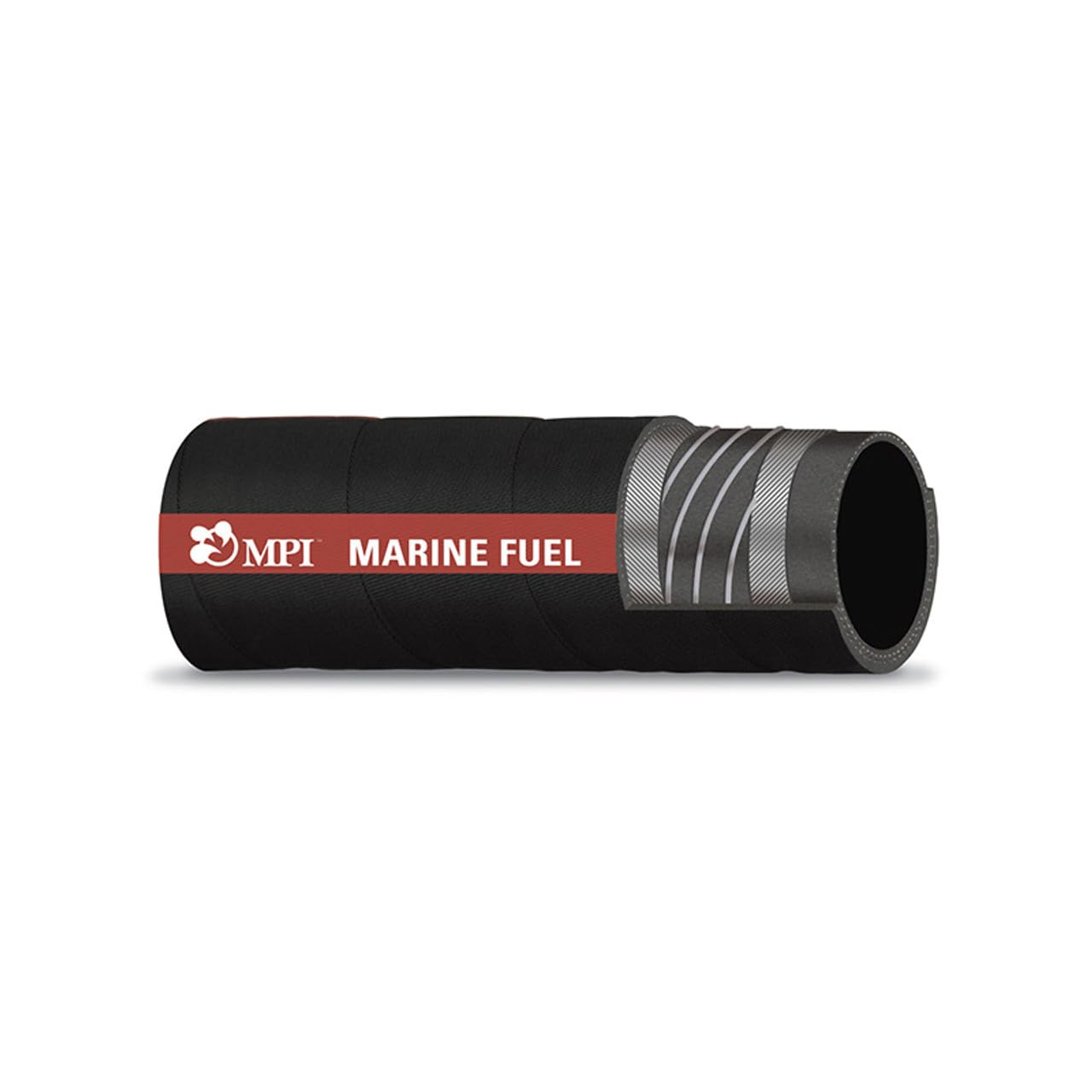
U.S. Coast Guard approval on a smooth-bore hose that bends without kinking.
The MPI hose is the only USCG-approved option in this lineup that is sold per foot, giving you the flexibility to order exactly the length you need — no wasted 4-foot roll. The Type 2 1.5-inch fuel fill hose has a helical wire (a spiral wire running through the rubber) that keeps the hose open even when you force it into a tight bilge route. Owners mention the hose is “fairly flexible for a hose this large” and that the inner bore is smooth, which means no fuel flow restriction.
The nominal wall thickness is 0.125 inches — thin enough to cut with a sharp utility knife but thick enough to resist the constant pressure and fuel vapors in a marine fuel system. It ships as a single 1-foot section, so order multiple feet if your run is longer. One owner installed it as a replacement fuel fill line on a boat and confirmed it “fit well and seems to be good quality.” The seller (Marine Products International) earns praise for fast shipping and clear communication.
If you are a marine DIYer who hates paying for 4 feet when you only need 3, this is your hose. The one catch is you need to buy multiple units for a longer run, and the per-foot price is slightly higher than the bulk Continental hose on a unit basis.
Buy exactly what you need: sold per foot, so you order 2 feet, 3 feet, or 6 feet — no guessing.
Marine-approved: this is USCG Type 2 fuel fill hose, which is the standard for in-board fuel systems.
Best for: a boat fuel fill replacement where you need Coast Guard approval and a specific short length.
Not for: automotive use — the wire-reinforced rubber is heavier than you need for a truck filler neck.
Understanding the Specs
Reinforcement Type
Fuel filler hoses use one of two internal reinforcements. Nylon cording is a woven fabric of nylon strands embedded in the rubber wall. It adds tensile strength so the hose does not stretch or collapse under fuel flow. Wire helix is a spiral metal wire wound into the rubber, common in marine hoses, that prevents kinking when the hose bends around tight corners — it helps the hose hold its shape even when forced into awkward bilge paths.
Temperature Range
Almost every quality fuel filler hose lists a temperature range like -40°F to +212°F. The low end matters if you live in a cold climate — the hose needs to stay flexible enough to seal at the filler neck when the fuel is near freezing. The high end (212°F / 100°C) stops the rubber from softening or swelling near a hot engine block, exhaust manifold, or fuel tank in summer heat. A hose without a listed temperature range is a gamble.
Fuel Compatibility
Not every 1.5-inch hose handles every fuel. Standard nitrile-rubber hoses are fine for gasoline, diesel, and engine oil. Some specifically exclude high-ethanol blends like E10, E85, or methanol, because ethanol swells certain rubber compounds. Marine hoses often add methanol and ethanol tolerance since boat fuel systems see higher vapor exposure. If you regularly use E85 or biodiesel, confirm the hose’s compatibility stamp — look for “meets SAE 30R6” as a baseline for standard gasoline and diesel use.
Pre-Bent vs Straight
A straight hose (a simple tube) is the universal choice — you cut it to length and run it however you need. But factory filler necks on trucks and many cars use a gentle 45-degree curve to connect the fuel door opening to the tank inlet. A pre-bent hose at 45 degrees saves you from fighting the rubber into that curve, which can cause kinks that block fuel flow or create a vapor leak. If you are replacing a hose that had a clear bend, measure the angle before buying straight.
FAQ
Will a 1.5-inch ID fuel filler hose fit my 1999 F-150?
How do I cut a fuel filler hose without damaging it?
What does SAE 30R6 mean on a fuel hose?
Can I use a marine fuel hose on my truck?
What is the difference between a straight hose and a 45-degree pre-bent hose?
Why do my included hose clamps feel too small?
How long does a fuel filler hose last before it rots?
Can I use a fuel filler hose for a diesel exhaust system?
Is the 1.5-inch ID the same as 1 1/2 inches?
Does a fuel filler hose need to be USCG approved for a boat?
Final Thoughts: The Verdict
For most people, the best 1 1/2 fuel filler hose winner is the Gates 24710 because its 45-degree pre-bend matches the factory curve on the most common trucks and vans, saving you the hassle of fighting a straight hose into an angled filler neck. If you need a long marine-grade run for a boat or diesel fuel system, the Continental 58524 gives you 48 inches of wire-reinforced hose that handles bilge corners without kinking. And for a short, budget-friendly patch on a 90s Chevy or Ford gas tank, the NexaNova 7.8-inch section with clamps included is the simplest fix under twenty dollars.
How We Picked
We do not accept paid placement. Every pick is matched to a real buyer and a real use-case; we do not hands-on test units.
Sources & Methodology
Specifications: manufacturer listings and product documentation. Review insights: verified customer reviews, as of July 2026. Pricing: not shown on this page (it changes often); check the current price via the retailer link.
As an Amazon Associate, Trending Car earns from qualifying purchases. This does not affect which products we feature.