
Our readers keep the lights on and my garage snacks stocked. As an Amazon Associate, I earn from qualifying purchases.
Specs are compiled from manufacturer listings and verified buyer reviews and can change over time — please confirm the key details on the product page before buying.
That glowing orange check-engine light is a direct hit to your wallet if you head straight to a mechanic. Most of the time, the fix is simple — a loose gas cap, a worn sensor, an oxygen monitor that needs resetting — but the labor charge makes you pay as if the engine fell out. A solid OBD2 scanner hands you the diagnosis in plain language on your screen so you know whether to tighten a cap yourself or head in for real work.
I’m Min Islam — the founder and writer behind Trending Car. This guide is built by comparing the manufacturers’ published specifications and the patterns across verified customer reviews, so you get each pick’s real strengths and trade-offs instead of marketing spin.
You want a car scanner that fits your skill level and doesn’t force you to pay for features you will never touch. A basic model can clear a check-engine light, while a more advanced tool reads ABS (anti-lock brake system), SRS (airbag system), and transmission faults — so you can diagnose problems beyond the engine.
Our Picks at a Glance

How To Choose The Best Car Scanner
Not every code reader is built the same. A cheap dongle that only reads engine codes leaves you blind to problems in your brakes, airbags, or transmission. Before you click buy, match the scanner’s abilities to the cars you own and the kind of work you plan to do.
System Coverage: Engine-Only vs. Full-System
Basic units read and clear powertrain (engine and transmission) codes — enough for a check-engine light. More capable models scan ABS (anti-lock brakes), SRS (airbags), TCM (transmission control), BCM (body control), and even the AC system. If you drive an older car, engine-only may be plenty. If you have a modern vehicle with complex electronics, a multi-system scanner pays for itself the first time an airbag light appears.
Live Data and Graphing
A code tells you what failed. Live data shows you how the sensor is behaving right now — RPM, coolant temperature, oxygen sensor voltage, fuel trims. Graphing that data over time lets you spot an intermittent glitch (a wavering O2 signal) that a static code read would never catch. For serious DIY diagnostics, this feature separates a useful tool from a toy.
Reset Services and Special Functions
Many scanners now include maintenance resets — Oil Light, EPB (electronic parking brake), SAS (steering angle sensor), ABS Bleeding, and Battery Registration. A single brake-pad change can cost over at a shop. If you do your own work, a scanner that handles ABS Bleeding or EPB retraction will pay for itself in one afternoon.
Screen Size and Interface
A tiny 1.77-inch display feels cramped when you are reading live data curves. A 2.4-inch or 2.8-inch color screen is comfortable for code reading. For serious graphing and multi-system navigation, a 4.3-inch or 5-inch touchscreen makes a big difference in how quickly you move through menus.
Quick Comparison
| Model | Best For | Screen Size | Systems Scanned | Reset Services | Amazon |
|---|---|---|---|---|---|
| TOPDON AL400★ Best Overall | Quick Code Erasing | 2.4 inches | Engine (OBD2) | None | Amazon |
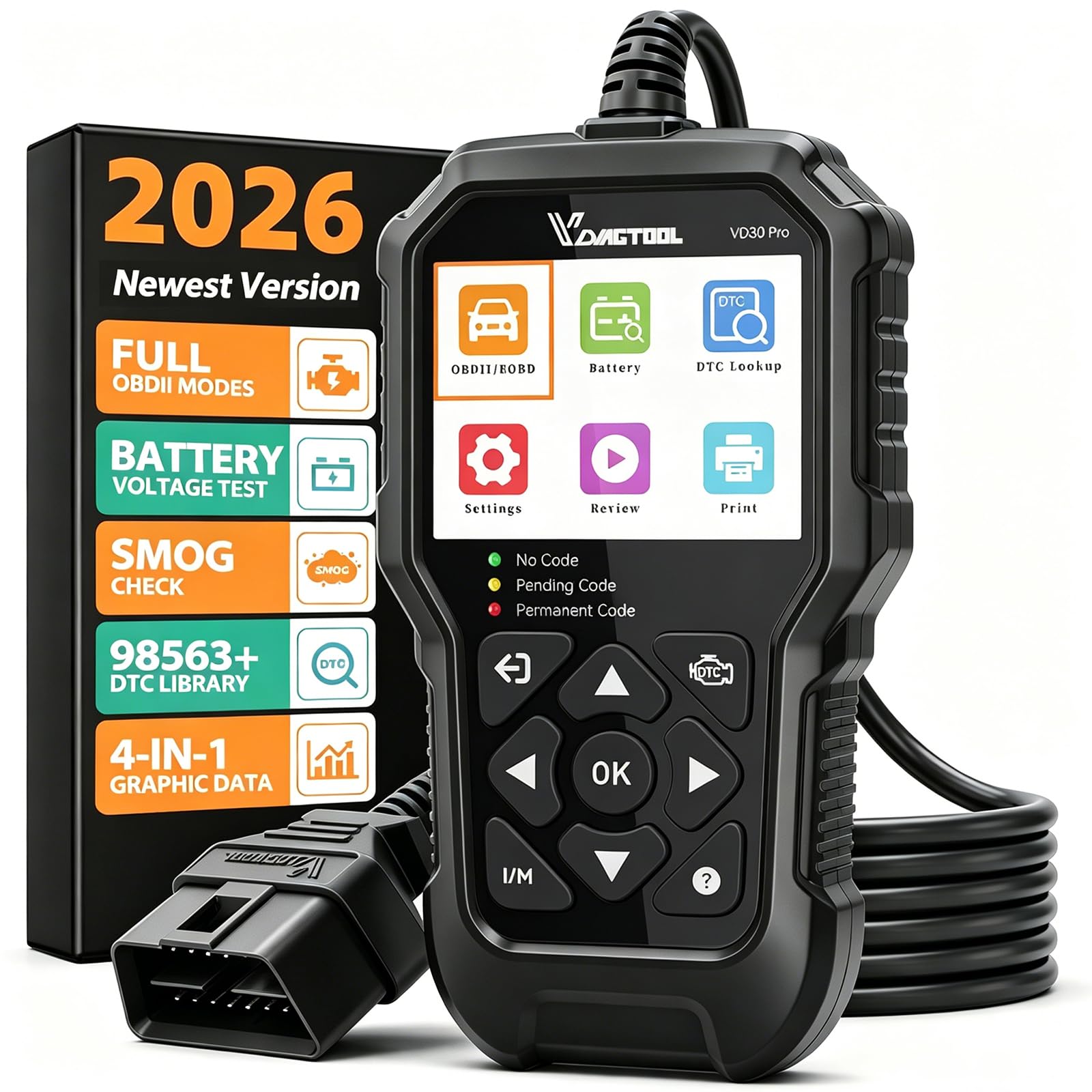
| VDIAGTOOL VD30 ProBest Value | DIY Live Data Graphing | 2.8 inches | Engine (OBD2) | None | Amazon |
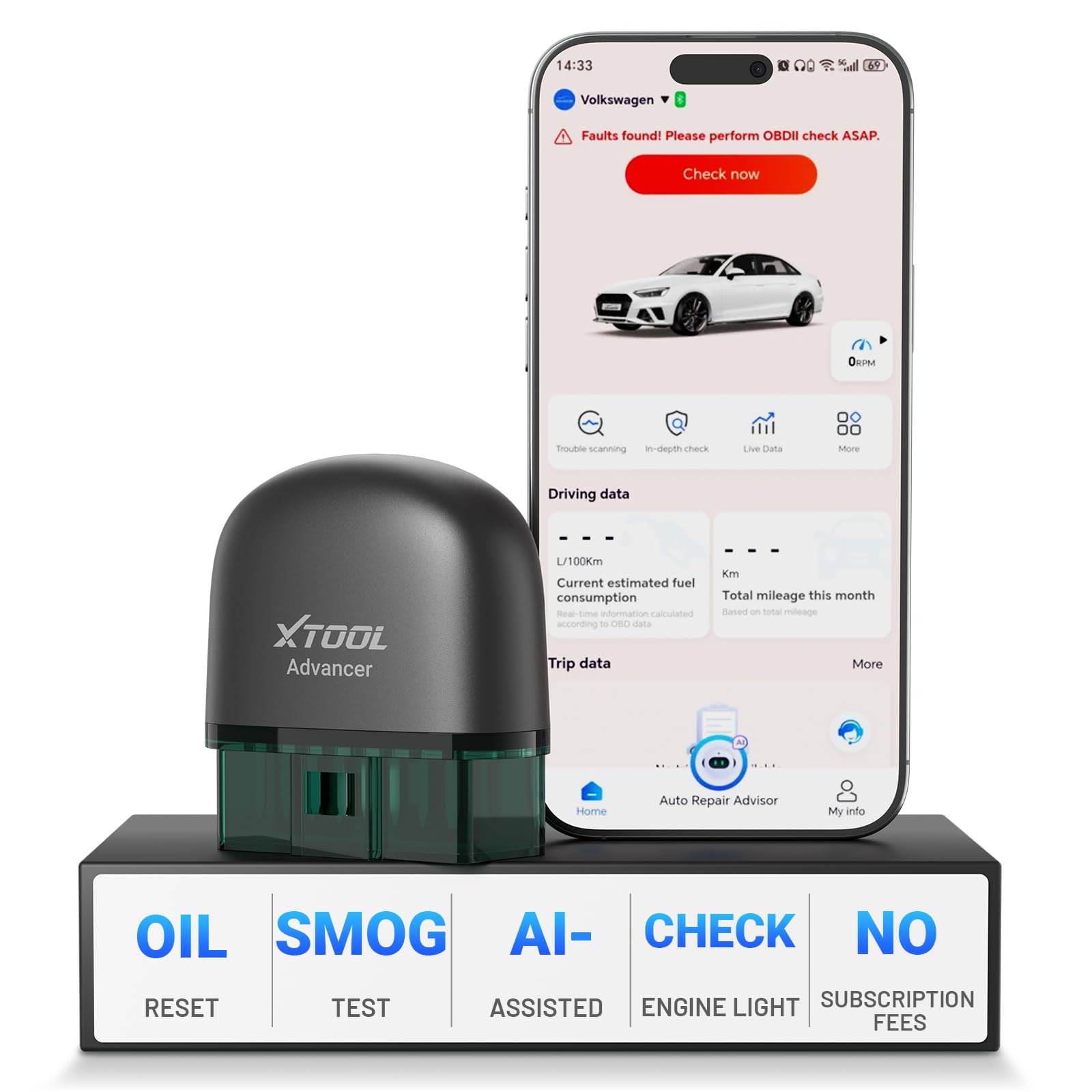
| XTOOL AD20 ProTop Performer | Wireless Multi-System Scanning | App-Based (Phone) | Engine, ABS, SRS, Transmission, TPMS, AC | Oil Reset | Amazon |
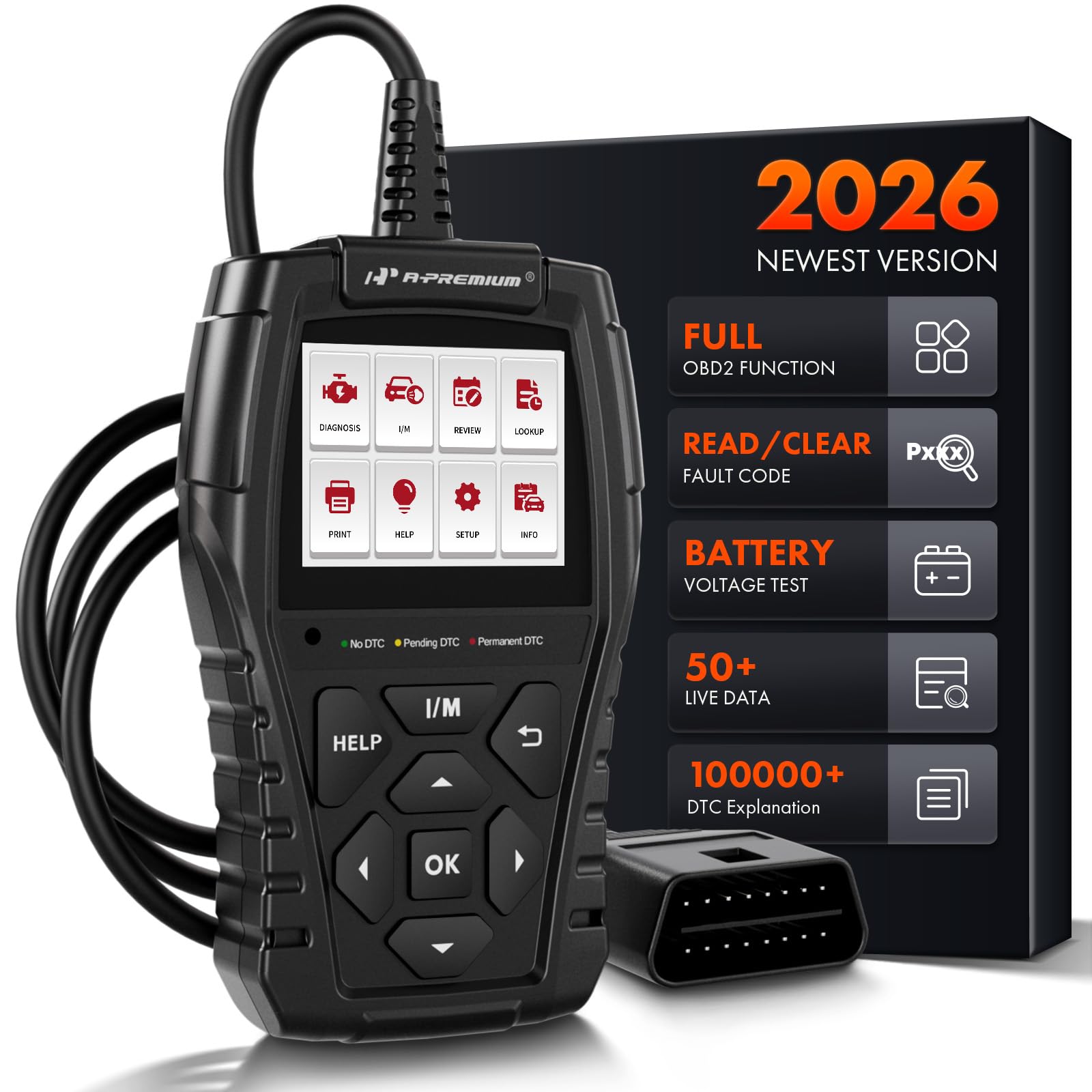
| A-Premium AD200 | Budget Code Reader with Data Stream | 1.77 inches | Engine (OBD2) | None | Amazon |
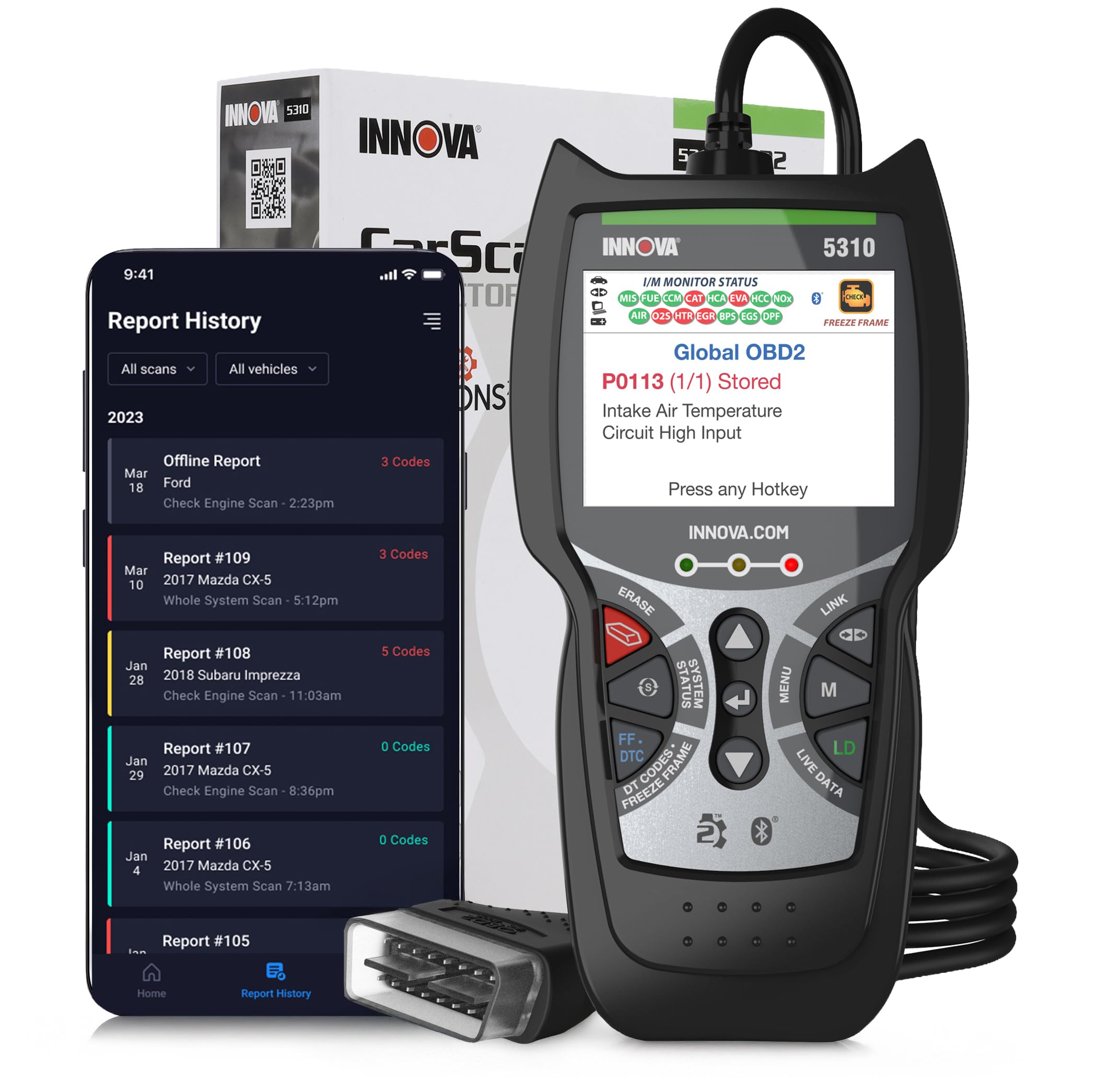
| INNOVA 5310 | ABS & SRS Diagnostics + App | 2.8 inches | Engine, ABS, SRS | Oil Reset, Battery Test | Amazon |
| THINKCAR ThinkScan Plus S7 | Pro-Level Multi-System + 5 Resets | 5 inches | Engine, ABS, SRS, TCM, BCM, AC, IC | Choose 5 from 28 | Amazon |
| FOXWELL NT614 Elite | 4-System Scanner with 5 Resets | 4.3 inches | Engine, ABS, SRS, Transmission | ABS Bleeding, EPB, Oil, SAS, Throttle | Amazon |
| BLCKTEC 460T | 12+ Resets + RepairSolutions2 App | 4.3 inches | Engine, ABS, SRS, Transmission, All-System | 12+ (Oil, ABS Bleeding, EPB, SAS, DPF, TPMS, etc.) | Amazon |
| TOPDON AD600S | High-End Android Tablet Scanner | 5 inches (1280×720) | Engine, ABS, SRS, Transmission | 9 (Oil, BMS, ABS, SAS, EPB, DPF, TPMS, Throttle, Injector) | Amazon |
In‑Depth Reviews
1. TOPDON AL400 OBD2 Scanner
Our pick — over 4.5★ from 850+ verified ratings; the strongest balance of quality and price.
The crowd-favorite code eraser that pays for itself in one repair visit.
This is the most straightforward path to understanding what that check-engine light actually means. The AL400 covers all five OBD2 protocols (KWP2000, ISO9141, J1850 VPW, J1850 PWM, and CAN), so it works on virtually any 1996 or newer gas vehicle you will encounter. Its 2.4-inch color screen is bright enough to read in direct sun or in a dark garage, and the built-in DTC library gives you the code definition right on the device — no phone or internet search needed.
Buyers report this scanner reads and clears codes in seconds. One reviewer sums it up: “Works wonders has saved me a lot of money on unnecessary repairs.” The three-color LED system (green for healthy, yellow for pending, red for permanent codes) gives you an instant health snapshot before you even open any menus.
What Wins People Over
- Extremely simple plug-and-play operation — no app, no pairing
- Free lifetime updates via USB keep the DTC library current
- Multilingual support (7 languages) for broader home use
Limitation to Know
- Engine codes only — no ABS, SRS, or transmission diagnostics
- Connection and screen refresh can feel slow compared to newer models
Grab it if: you own one or two cars and mostly need to read and clear engine codes without learning a complex interface.
Think twice if: you need to diagnose ABS or airbag faults — this scanner stays at the engine level.
2. VDIAGTOOL VD30 Pro
The graphing powerhouse that turns raw sensor data into understandable curves.
Where many budget readers just spit out a code number, the VD30 Pro shows you what the sensor is doing right now. Its 2.8-inch color screen — a noticeable step up from the TOPDON AL400’s 2.4 inches — can graph four live data streams simultaneously. You can watch RPM climb, watch the O2 sensor voltage flutter, and see fuel trim adjustments in real time. That graphing ability is what separates guessing from knowing.
The device ships with a built-in library of over 98,000 DTC definitions, so you never need to reach for your phone. Owners routinely call it a “life-saver for DIY diagnostics,” and one reviewer noted it “cleared codes on a Chevy Cruz turbo” without any drama. The 3-year warranty and lifetime free updates via USB add long-term confidence.
Strengths
- 4-in-1 live data graphing for catching intermittent sensor issues
- Fast Auto-VIN detection and one-click I/M readiness check
- Voltage test mode helps prevent no-start surprises
Downside
- Engine and OBD2 only — no ABS, SRS, or transmission system access
- Some owners mention slower connection on very old vehicles
Best for: the DIYer who wants more than a code number and actually wants to see what the sensors are doing in real time.
Not for: anyone chasing airbag or ABS codes — this tool does not reach those systems.
3. XTOOL AD20 Pro
A wireless dongle that scans every system your car has — without a subscription.
The AD20 Pro breaks from the pack by being a wireless Bluetooth 5.0 dongle that communicates with a smartphone app, so there is no screen or keypad attached to the tool itself. Weighing just 1.13 ounces, you can leave it plugged into the OBD2 port permanently. The Low-Power Sleep Mode prevents battery drain when the engine is off, and it wakes instantly when you start the car.
This scanner goes well beyond engine codes. It reads ABS, SRS, Transmission, TPMS, and AC systems — something that most sub- tools simply cannot do. It also supports CAN FD hardware, making it compatible with newer 2020+ GM, GMC, and Chevrolet vehicles that older scanners cannot talk to. The AI diagnostic engine analyzes real-time sensor data and suggests repair guidance in plain English, skipping the “parts cannon” approach.
What Stands Out
- Full multi-system coverage (Engine, ABS, SRS, Transmission, TPMS, AC)
- CAN FD support for next-generation vehicles
- Oil Reset function and Smart Dash performance display
Consideration
- Relies entirely on your phone — no standalone screen
- Bluetooth connectivity can be finicky on some Android models
Reach for this if: you want a compact, always-plugged-in tool that can scan every module in a modern car.
Pass it by if: you prefer a standalone screen over a phone app for diagnostics.
4. A-Premium AD200
An ultra-budget reader that still manages to graph live data and support printing.
At this price point, most scanners give you a code number and nothing else. The AD200 goes further by reading up to 50 individual data parameters — battery voltage, coolant temperature, engine RPM, air flow rate, fuel rail pressure, and transmission gear status — and displaying them as a real-time visual curve. That curve shows you abnormal fluctuations, so you can confirm a failing sensor rather than swapping parts blindly.
The 1.77-inch screen is small, but the three warning LEDs (green, yellow, red) give a quick health verdict before you even look at the data. Owners save hundreds on dealer diagnostics — one buyer mentioned using it on a Prius to read a code, add HEET to the gas tank, and clear the light without a shop visit. The 3.9-foot cable gives enough reach to route the tool into the cabin comfortably.
Pros
- 50-parameter data stream with real-time graphing
- Built-in VIN retrieval and diagnostic report printing
- One-year unlimited mileage warranty included
Con
- 1.77-inch screen is cramped for detailed data curve viewing
- Engine-only diagnostics — no ABS or SRS
Ideal for: the first-time buyer who wants a simple code reader with graphing ability and does not need multi-system access.
skip it if: you want a larger display or plan to diagnose brake and airbag faults.
5. INNOVA 5310 OBD2 Scanner
The scanner that pairs with a repair app to show you the fix, not just the fault code.
Where most readers stop at displaying a code like “P0420,” the Innova 5310 connects via Bluetooth to the free RepairSolutions2 app. The app pulls from a database of verified fixes built by master technicians, so you get the actual repair steps plus links to the exact parts you need. It also checks for open recalls, warranty status, and maintenance schedules — a layer of information no standalone screen can match.
This unit goes beyond engine codes by reading ABS and SRS systems, so you can diagnose a traction-control light or an airbag fault without a dealer visit. The 2.8-inch screen handles live data for RPM, speed, and oil temperature. Designed and supported in the USA, the 5310 covers OBD2 vehicles from 1996 onward, including hybrids. Owners consistently note it “saved me an expensive trip to the dealer.”
Highlights
- ABS and SRS diagnostics in addition to engine codes
- RepairSolutions2 app gives verified fixes, part numbers, and recall info
- Battery and alternator test functions included
Trade-off
- App connectivity can be glitchy — some customers note pairing delays
- Device build quality feels lighter than dedicated scan tools
Who it fits: the home mechanic who wants guided repair instructions, not just a code to Google.
Who should pass: anyone who wants a rugged standalone tool without relying on a phone app.
6. THINKCAR ThinkScan Plus S7

A full Android tablet disguised as a code reader — 7 systems, 5 resets, and 94 car brands.
The ThinkScan Plus S7 runs on Android 6.0 with a 5-inch touchscreen, which puts it in a different league from the handheld code readers above. The large screen makes navigating live data streams — up to 120 at once — genuinely usable. You can pull up engine, ABS, SRS, transmission, body control, AC, and instrument cluster diagnostics from a single device. That is the kind of coverage a professional shop tool offers.
You get to choose 5 special services from a menu of 28 options, including throttle relearn, injector coding, ABS bleeding, TPMS reset, and gearbox learning. That flexibility means the tool grows with you. Owners praise the “crisp and detailed live data readout.” and note that the AutoVIN scanner automatically identifies your vehicle before you start. The 32GB of internal storage (expandable to 256GB) holds diagnostic reports, diagrams, and software for all 94 car brands.
Strengths
- 7-system diagnostics cover every major electronic module
- 5-inch Android touchscreen makes live data truly scannable
- Pick-your-5 resets from 28 special service options
Weakness
- Initial software setup and Wi-Fi update can take 30-45 minutes
- FCA AutoAuth requires separate registration — not pre-installed
Perfect for: the advanced DIYer or small shop owner who wants a dedicated Android scan tool with broad coverage.
Overkill for: the casual owner who just needs to clear a check-engine light once a year.
7. FOXWELL NT614 Elite
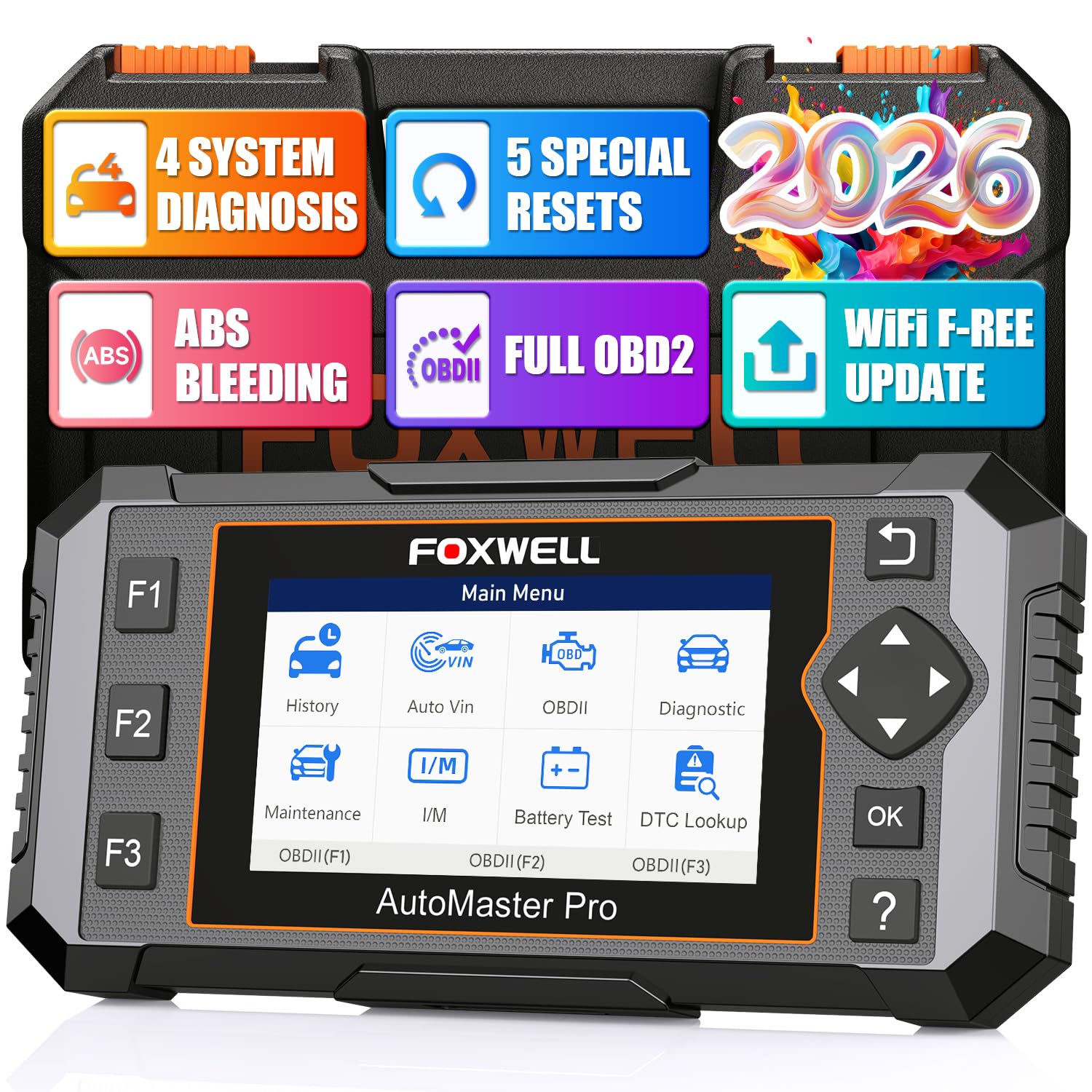
The 4-system scanner that performs five common shop resets — including ABS bleeding.
Many 4-system scanners (engine, ABS, SRS, transmission) can read codes but cannot do anything about them. The NT614 Elite goes a critical step further by executing five real-world service resets: ABS Bleeding, EPB Reset, Oil Reset, SAS Calibration, and Throttle Relearn. A single brake service can cost over at a shop, making this tool’s -ish price tag recoverable in one afternoon.
The 4.3-inch color screen displays live data in easy-to-read graphs — RPM, speed, O2 sensors, transmission temp — and the built-in DTC library explains fault codes without needing to pull out your phone. Owners say it “does everything that you need to repair your car.” and report that the Wi-Fi update process is straightforward and fast. The hard-shell case keeps the scanner, cable, and guide organized in your trunk.
Advantages
- 5 essential reset services (ABS Bleeding, EPB, Oil, SAS, Throttle)
- 4-system coverage: Engine, ABS, SRS, Transmission
- Lifetime free Wi-Fi updates — no SD card needed
Limitation
- Reset functions are vehicle-dependent; check compatibility first
- Some reviewers point out speed lag on 2001 and older vehicles
Ideal for: the DIYer who does their own brake pads, oil changes, and throttle body cleaning and wants to reset the corresponding systems.
Not for: pure engine-code work — you are paying for resets you might not use.
8. BLCKTEC 460T

The reset king — 12 dealer-level service functions plus an app that shows you the exact fix.
The BLCKTEC 460T packs more reset services than any other scanner in this list at its price point. We are talking Oil Reset, ABS Bleeding, EPB Reset, SAS Recalibration, DPF Reset, Throttle Body Relearn, Battery Registration, TPMS Relearn, Transmission Reset, and more — all accessible through a 4.3-inch color screen. That is professional-grade capability without the professional price tag.
Paired with the free RepairSolutions2 app, the 460T gives you access to a Verified Fix Database built by master technicians. The tool also features AutoVIN (automatic vehicle identification), AutoScan (automatic system scan), and AutoReLink (automatic reconnection) — the moment you plug it in, it identifies the vehicle and scans all ECUs (electronic control units) automatically. Owners describe it as “a standout for DIY car maintenance.” and note it successfully performed ABS bleeding, throttle relearn, and battery registration on multiple vehicles. Designed and supported in Southern California.
what separates it
- 12+ reset services — more than any competitor in this range
- AutoScan scans all modules with no button presses
- Free lifetime updates and 2-year US warranty
Heads Up
- Not all resets work on every vehicle — use the compatibility checker first
- App and device are USA/Canada only
Best for: the home mechanic who performs a wide range of maintenance tasks and wants dealer-level resets without dealer-level cost.
Less ideal for: owners of non-OBD2 vehicles or anyone outside North America (functionality locked to USA/Canada).
9. TOPDON AD600S

An Android-powered diagnostic tablet that reads four critical systems and performs nine resets.
Running Android 11.0 with a 5-inch 1280×720 display, the AD600S is essentially a dedicated diagnostic tablet. The high-definition screen makes live data graphing and navigation feel responsive and clear — a genuine step up from the lower-resolution screens on most handheld scanners. The 32GB of internal storage (upgraded ROM) means you can install multiple vehicle-brand software packages without worrying about space.
It covers 67+ global brands and 10,000+ models, reading and clearing codes for Engine, ABS, SRS, and Transmission. The 9 reset functions include Oil Reset, BMS (battery management), ABS Bleeding, SAS Calibration, EPB Reset, DPF Reset, TPMS Relearn, Throttle Relearn, and Injector Coding. Owners call it “an amazing high-end scanner on a budget.” and note that the lifetime free Wi-Fi updates keep the software current without any subscription fees.
High-End Features
- 5-inch 1280×720 display — sharpest screen in this list
- Android 11.0 OS with 32GB storage for fast performance
- 9 reset services including injector coding
Minor Gripes
- Auto-VIN can be slow or fail on some vehicles
- Storage is non-expandable — 32GB is fixed
Who it suits: the tech-savvy DIYer who wants a modern Android-based tool with a crisp screen and broad reset capabilities.
Who might prefer something else: anyone who wants a rugged, cable-connected unit without relying on a bright touchscreen.
Understanding the Specs
OBD2 Protocols and CAN FD
Your car’s computer talks through one or more standard languages — the protocols. All scanners in this list cover the five legacy protocols (KWP2000, ISO9141, J1850 VPW, J1850 PWM, and CAN). Newer cars, especially 2020+ GM and Chevrolet models, use the faster CAN FD protocol. If you drive an older vehicle, any scanner here will work. If you own a recent American model, look for a scanner like the XTOOL AD20 Pro that explicitly lists CAN FD support.
I/M Readiness and Smog Checks
I/M Readiness (Inspection/Maintenance Readiness) checks whether your car’s emission monitors have completed their self-tests. If a monitor says “Not Ready,” your car will likely fail a smog inspection. A scanner with one-click I/M Readiness — like the VDIAGTOOL VD30 Pro or the TOPDON AL400 — lets you verify readiness in your driveway before you waste time and money at the test station. This is among the most practical features for anyone in a state with emissions testing.
FAQ
Will any OBD2 scanner work on my 1997 Toyota Camry?
Can a car scanner drain my battery if left plugged in overnight?
What is the difference between a code reader and a diagnostic scan tool?
How do I know if a scanner supports ABS and SRS on my specific car?
Do I need a scanner that graphs live data?
What is the difference between CAN and CAN FD?
How often do I need to update the scanner’s software?
Will a Bluetooth scanner work with my iPhone?
What is the point of the three-color LED on code readers?
Can I use a car scanner on a diesel truck?
Final Thoughts: The Verdict
For most people, the car scanner winner is the TOPDON AL400 because it combines a 4.6-star approval rating across 850+ owners with a dead-simple interface that reads and clears engine codes in seconds. If you want live data graphing on a larger 2.8-inch screen, grab the VDIAGTOOL VD30 Pro. And for multi-system diagnostics with no subscription and wireless convenience, the XTOOL AD20 Pro is the one to reach for.
How We Picked
We do not accept paid placement. Every pick is matched to a real buyer and a real use-case; we do not hands-on test units.
Sources & Methodology
Specifications: manufacturer listings and product documentation. Review insights: verified customer reviews, as of July 2026. Pricing: not shown on this page (it changes often); check the current price via the retailer link.
As an Amazon Associate, Trending Car earns from qualifying purchases. This does not affect which products we feature.