
Our readers keep the lights on and my garage snacks stocked. As an Amazon Associate, I earn from qualifying purchases.
Specs are compiled from manufacturer listings and verified buyer reviews and can change over time — please confirm the key details on the product page before buying.
Plugging in your electric vehicle every night shouldn’t feel like a chore, yet picking the right home charger often does. You need a Level 2 (240-volt) unit that actually fits your car’s port, your garage’s outlet (or lack of one), and your budget — without turning into a confusing spec-sheet battle. This guide cuts through the noise to show you exactly which electric car charger earns its spot on your wall.
I’m Min Islam — the founder and writer behind Trending Car. This guide is built by comparing the manufacturers’ published specifications and the patterns across verified customer reviews, so you get each pick’s real strengths and trade-offs instead of marketing spin.
Whether you drive a Tesla, a Ford Mustang Mach-E, or a Chevy Bolt, finding the best electric car charger means matching your car’s connector type, your home’s amperage capacity, and your desire for smart features — all without overpaying for things you don’t need.
Our Picks at a Glance

How To Choose The Best Electric Car Charger
Picking the right Level 2 charger for your home depends on a few fixed decisions: your car’s charge port, your garage’s electrical panel, and how much control you want from a smartphone app. Get these three things straight, and the choice narrows fast.
Connector Type: J1772 or NACS
All non-Tesla EVs in North America use the J1772 standard connector. Tesla vehicles use a NACS port. Many chargers sold today include a J1772 plug and ship with a NACS adapter, or come NACS-native. If you pick a J1772 charger, you will need an adapter to charge a Tesla — check whether the unit includes one so you’re not caught short on delivery day.
Amperage and Circuit Requirements
Amperage is the spec that controls charging speed. A 40-amp (9.6kW) charger needs a 50-amp breaker and adds about 30-38 miles of range per hour. A 48-amp (11.5kW) charger needs a 60-amp breaker and pushes that to roughly 46 miles per hour. The trade-off is that 48-amp units must be hardwired by an electrician, while many 40-amp models simply plug into a NEMA 14-50 outlet you may already have.
Installation Type: Plug-in vs Hardwired
A plug-in charger connects to an existing NEMA 14-50 RV or dryer outlet — you or an electrician can install it in about five minutes. A hardwired charger replaces the outlet entirely, connecting directly into the breaker panel. Hardwiring is cleaner and required for 48-amp charging, but it always demands a licensed electrician. Think about whether you rent or plan to move; a plug-in unit can come with you easily.
Quick Comparison
| Model | Best For | Amperage | Connector Type | Cable Length | Amazon |
|---|---|---|---|---|---|
| EVIQO NACS★ Best Overall | Native Tesla charging | 48 A | NACS | 25 ft | Amazon |
| VEIPHLOX 40ABest Value | Budget value, plug-in | 40 A | J1772 | 25 ft | Amazon |
| NexCyber 48ASmart Screen Pick | Smart screen, no app needed | 48 A | J1772 | 25 ft | Amazon |
| Lectron 40A | Portable, simple travel unit | 40 A | J1772 | 16 ft | Amazon |
| WOLFBOX E40 | Feature-rich app and display | 40 A | J1772 | 25 ft | Amazon |
| MACH 1 | Universal EV + Tesla out of box | 40 A | Dual J1772/NACS | 30 ft | Amazon |
| Autel 40A | Trusted brand, smart control | 40 A | J1772 | 25 ft | Amazon |
| EMPORIA 48A | Solar & energy management | 48 A | J1772 | 25 ft | Amazon |
| Grizzl-E 48A | Durability, metal enclosure | 48 A | J1772 | 25 ft | Amazon |
| ChargePoint HomeFlex | NACS Tesla network integration | 50 A | NACS (Tesla) | 25 ft | Amazon |
| Autel 50A | Highest speed, cold-weather flex | 50 A | J1772 | 25 ft | Amazon |
In‑Depth Reviews
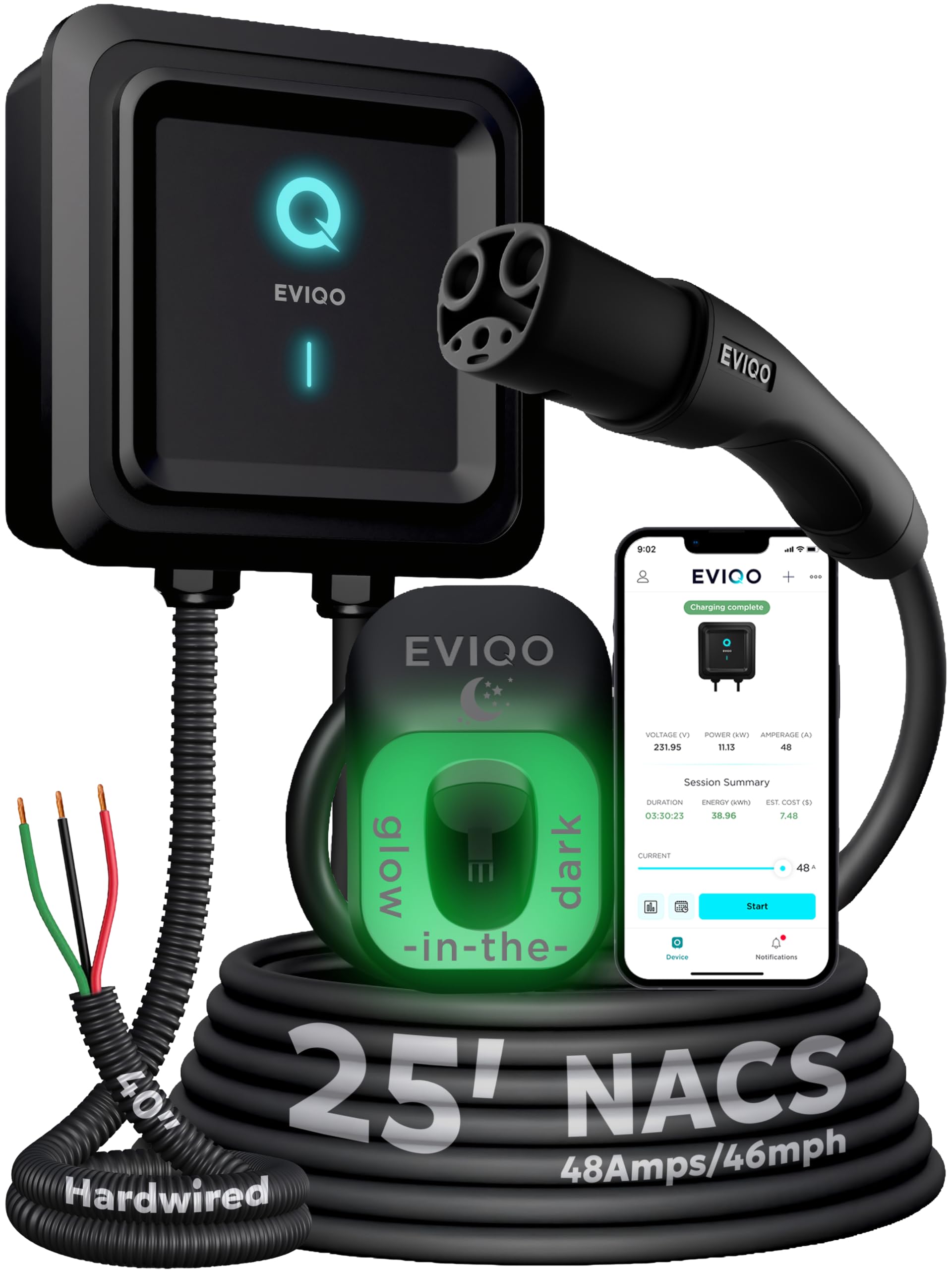
1. EVIQO NACS Charger for Tesla 48 Amp
Our pick — over 4.5★ from 300+ verified ratings; the strongest balance of quality and price.
The crowd favorite that fills a VW ID4 from empty in a single evening.
This is the pick that quietly dominates the conversation — 4.8 stars across hundreds of owners, with “functionality” and “quality” as the two most-praised traits by a wide margin. The EVIQO delivers a full 48 amps on a dedicated 60-amp/240-volt circuit, which means you plug in at night and wake up to a full battery. Buyers report it charges a VW ID4 in 5-7 hours, and the 25-foot cable reaches both sides of a standard garage without stretching.
It is a native NACS unit, so it connects to Tesla Models S, 3, X, and Y without any adapter. You can also use it with non-Tesla EVs by adding a NACS-to-J1772 adapter (not included). The smart app tracks cost and consumption over 2.4 GHz WiFi, and the housing carries both IP66 and NEMA-4 weatherproof ratings — rain, snow, and dust are no concern. One honest caveat: at 18.86 pounds, it is notably heavier than the 40-amp VEIPHLOX unit (15 pounds), and the soft plastic on the connector scratches easily if you are rough with it. Hardwired installation requires a licensed electrician, so factor that into your total cost.
Why It Wins
- Full 48-amp output — the highest speed most single-car households need.
- NACS-native for Tesla owners, with a fluorescent holster that glows in low light after 10 minutes of charge.
- App shows cost per charge and supports adjustable current from 6A to 48A.
The Trade-Offs
- Hardwired only — no plug-in option; you must hire an electrician.
- Heavier than comparable 40-amp chargers (18.86 lb vs 15 lb), which matters if you plan to move it.
- Soft plastic connector shows wear quickly if dragged on concrete.
Your best bet if: you drive a Tesla or own a NACS-port EV and want the highest-rated, fastest overnight charging without messing with adapters.
Think twice if: you rent and expect to bring the charger with you — a plug-in unit is much easier to uninstall and carry.
2. VEIPHLOX Level 2 EV Charger 40 Amp
Simple, fast, and wallet-friendly — no app, no fuss, just a solid 40-amp charge.
If you want to skip the smartphone pairing and just charge your car, this VEIPHLOX unit is the straightforward answer. It is a pure plug-and-play J1772 charger: mount it to the wall, connect the NEMA 14-50 plug, and it delivers 9.6kW (40 amps) without a single configuration screen. The review pages sum it up: “extremely reliable and fast charging.” Owners consistently say the Nema 14-50 outlet stays cool even after three hours of continuous Level 2 charging, and the flexible 25-foot cable is long enough to snake around a two-car garage.
The trade-off is deliberate simplicity. There is no display — just color-coded lights (blue for ready, flashing green for charging, solid green for done). You don’t get app scheduling, cost tracking, or WiFi. But at 15 pounds, it is lighter than the EVIQO and installs in five minutes if you already have a 50-amp outlet. The internal cord-holding design means cables store inside the unit, keeping your garage tidy.
No-app simplicity: This is the pick for anyone who just wants to plug in and walk away. The build quality feels premium, and 40 amps adds 30-38 miles per hour of charge — enough to refill any EV overnight.
Reach for this if: you already have a NEMA 14-50 outlet and hate fiddling with phone apps for every charge session.
Pass it up if: you need time-of-use scheduling or want to track charging costs in an app.
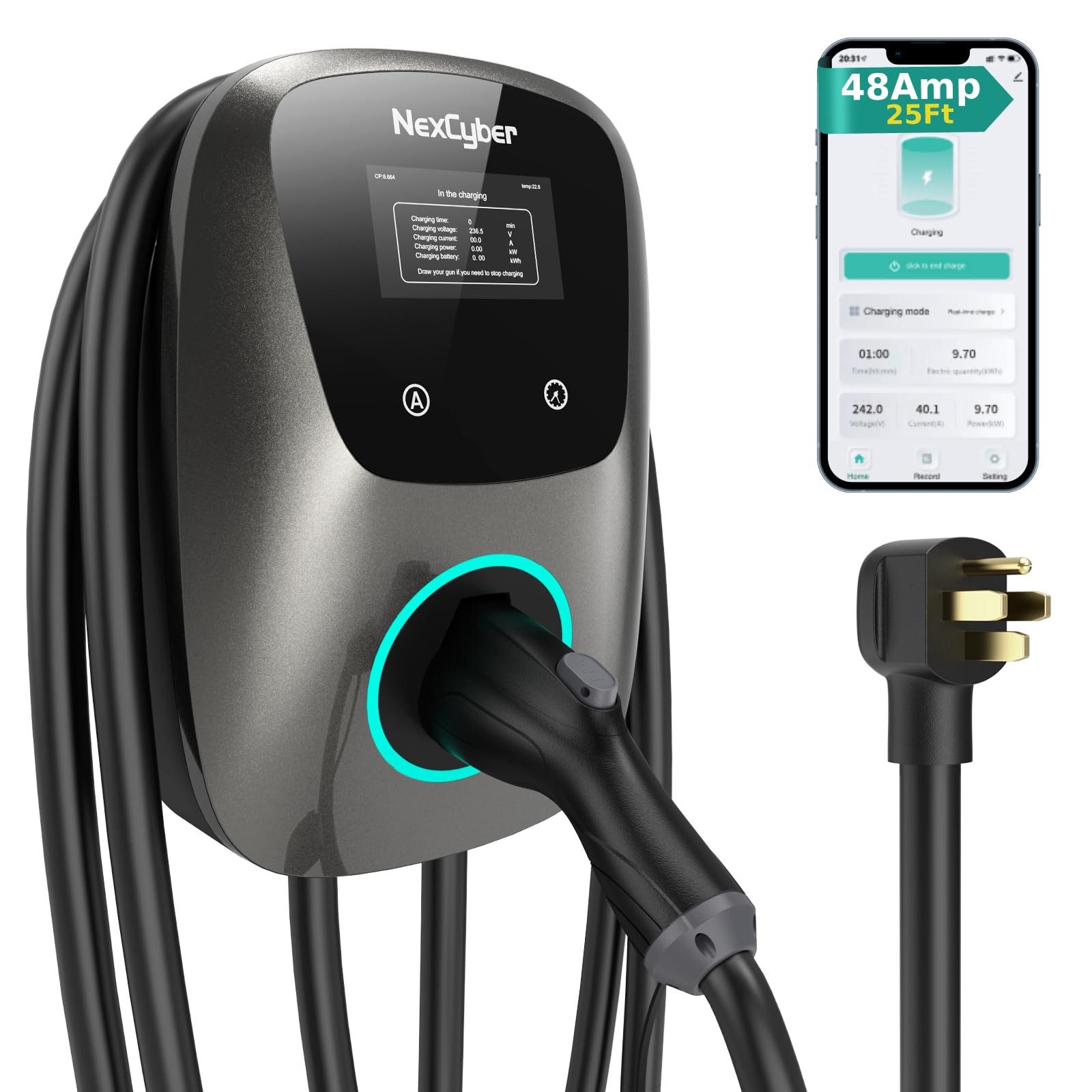
3. NexCyber Level 2 EV Charger 48 Amp
A built-in touch screen that lets you skip the smartphone entirely.
The NexCyber stands out because the display shows charging amperage, speed, input voltage, and delay time right on the unit — no app needed for everyday use. It pushes up to 40 amps via a NEMA 14-50 plug in its default plug-and-play mode, or you can hardwire it for the full 48 amps. Owners praise its “ease of use” and “reliability” above all else, with the top positive aspects by a clear margin. The ETL and FCC certifications back up the safety claims, and the 25-foot cable is military-grade, rated for over 10,000 insertions.
The catch is that the WiFi app, while functional for scheduling and tracking off-peak charging, has a clunky interface that owners describe as “mediocre.” The cable length also gets mixed feedback — some wish it were longer, while others find it perfectly adequate for a standard garage. Adjusting the amperage from 16A to 48A is done either through the touch buttons or the app, but the instruction manual could be clearer, so budget for an electrician if you are not comfortable with electrical work.
Screen-first design: The real advantage here is the visual feedback at the charger itself — you see your charging rate without pulling out your phone. It is a smart middle ground between a dumb charger and a full-smart unit.
Best for: someone who wants the speed of 48-amp charging but dislikes relying entirely on a phone app for controls.
Not ideal if: you expect a polished, modern app experience — the WiFi side still needs refinement.
4. Lectron Level 2 EV Charger 40 Amp

Throw it in the trunk and charge anywhere there’s a 14-50 outlet.
Lectron built this charger for the road. It is a portable 40-amp, 9.6kW unit with a 16-foot cable (shorter than the 25-foot norm, but fine for travel). Owners highlight “reliability” and “build quality” most often — one even reported running over the cord without damage. The simple LED interface means there is no app to download, and the FCC and ETL certifications (UL2594 standard) give confidence in the overvoltage and short-circuit protections.
The durability feedback is mixed, however. A few owners noted that the prongs can oxidize if the unit sits unused for months, and there is no integrated holster to store the connector when not in use. It also does not natively support Tesla — you will need an adapter. For someone who wants a go-anywhere Level 2 backup charger, though, this is the lightest, simplest option on the list.
Why It Travels
- Compact and lightweight for tossing in a trunk or RV compartment.
- Thick, durable cord that survives being driven over, per owner reports.
- No app or display — just plug in and charge.
What’s Missing
- 16-foot cable is shorter than most home units; tight for a large garage.
- No built-in storage holster for the connector end.
- Some units show prong oxidation after extended storage.
Take it if: you need a travel charger for road trips, camp sites, or vacation homes with a NEMA 14-50 outlet.
Skip it for: a permanent daily driver — the shorter cable and lack of holster make it less convenient as a wall-mounted primary charger.
5. WOLFBOX Level 2 EV Charger 40 Amp

An LCD screen, RFID security, and voice control packed into a CSA-certified box.
WOLFBOX loaded this 40-amp unit with features usually reserved for higher-priced models. The 4.3-inch LCD screen displays charging rate, time, voltage, and energy delivered — all visible at a glance. An RFID card lets you start and stop charging without the app, which owners find handy for guests or shared driveways. The app integrates with Alexa and Google Assistant, and you can log in with your Google account for easy device sharing among family members.
The catch is that the advanced features have rough edges. The time-of-use scheduling has a quirk — you must plug in before the off-peak window starts, or the schedule resets to the next day. The RFID system also stays active until you swipe the card off, meaning someone could unplug your car if you forget. That said, owners consistently call it a “great basic EV charger at a great price,” and the NEMA 4X waterproof housing (CSA certified to UL2594 standard) stands up to outdoor installation without flinching.
Feature-dense for the price: You get a screen, RFID, voice control, and app scheduling for less than many simpler units. Just be ready to work around the time-of-use scheduling limitation if off-peak savings are your priority.
Grab this if: you want a feature-packed charger with physical RFID control and a bright LCD screen, all at a mid-range price.
Look elsewhere if: flawless time-of-use scheduling is non-negotiable — the current implementation requires manual attention.
6. MACH 1 by ApexCharger 40 Amp
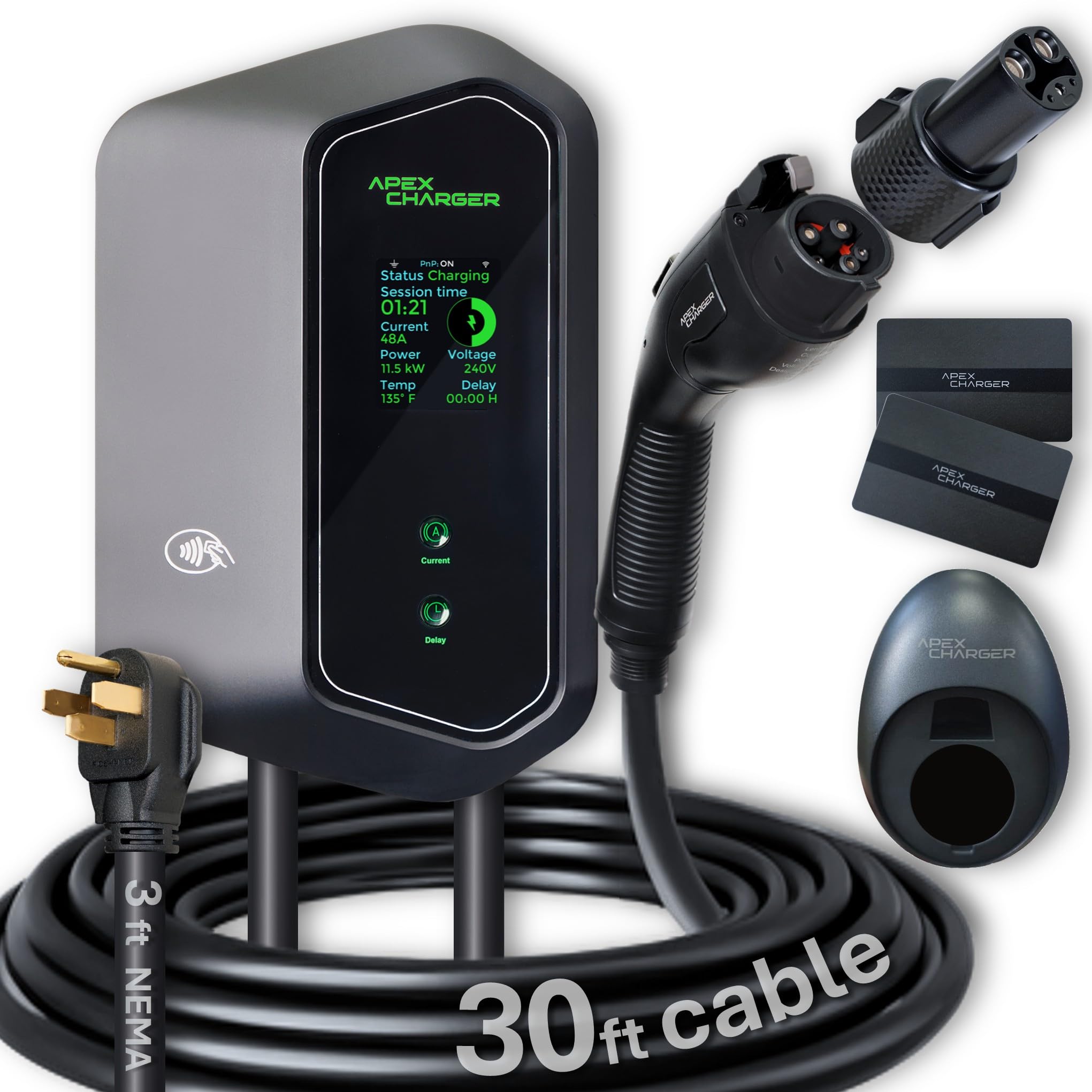
The rare charger that works with Tesla and non-Tesla EVs straight from the start.
ApexCharger’s MACH 1 ships with both a J1772 connector and a PRO 1 NACS adapter, making it a true “charge any American EV” solution. Owners consistently note the fast, reliable performance — it charges an Ioniq 5 at up to 11 kW, and the 30-foot cable is the longest on this list, giving you real flexibility in a large garage or shared driveway. The 2.4-inch LED display and RFID cards add polish, though the charger ships in NEMA 14-50 plug configuration for 40 amps; you need to hardwire it with the included kit to reach the full 48 amps.
Customer support gets standout praise in the reviews. One owner reported an “overheating” error after an electrical storm and had it resolved within an hour on a Sunday evening. The main drawback is the time-of-day scheduling, which some owners found buggy until a firmware update in October 2024 — now it works, but you still cannot select individual days for different schedules.
One-box solution: If your household has both a Tesla and a J1772 EV, this is the simplest way to charge both without juggling adapters. The 30-foot cable is a meaningful upgrade over the standard 25 feet.
Pick this for: a multi-EV home where one car uses NACS and the other J1772 — the included adapter saves you a separate purchase.
Pass if: you need granular per-day scheduling in the app; the current system uses a single schedule for the whole week.
7. Autel Level 2 EV Charger 40 Amp
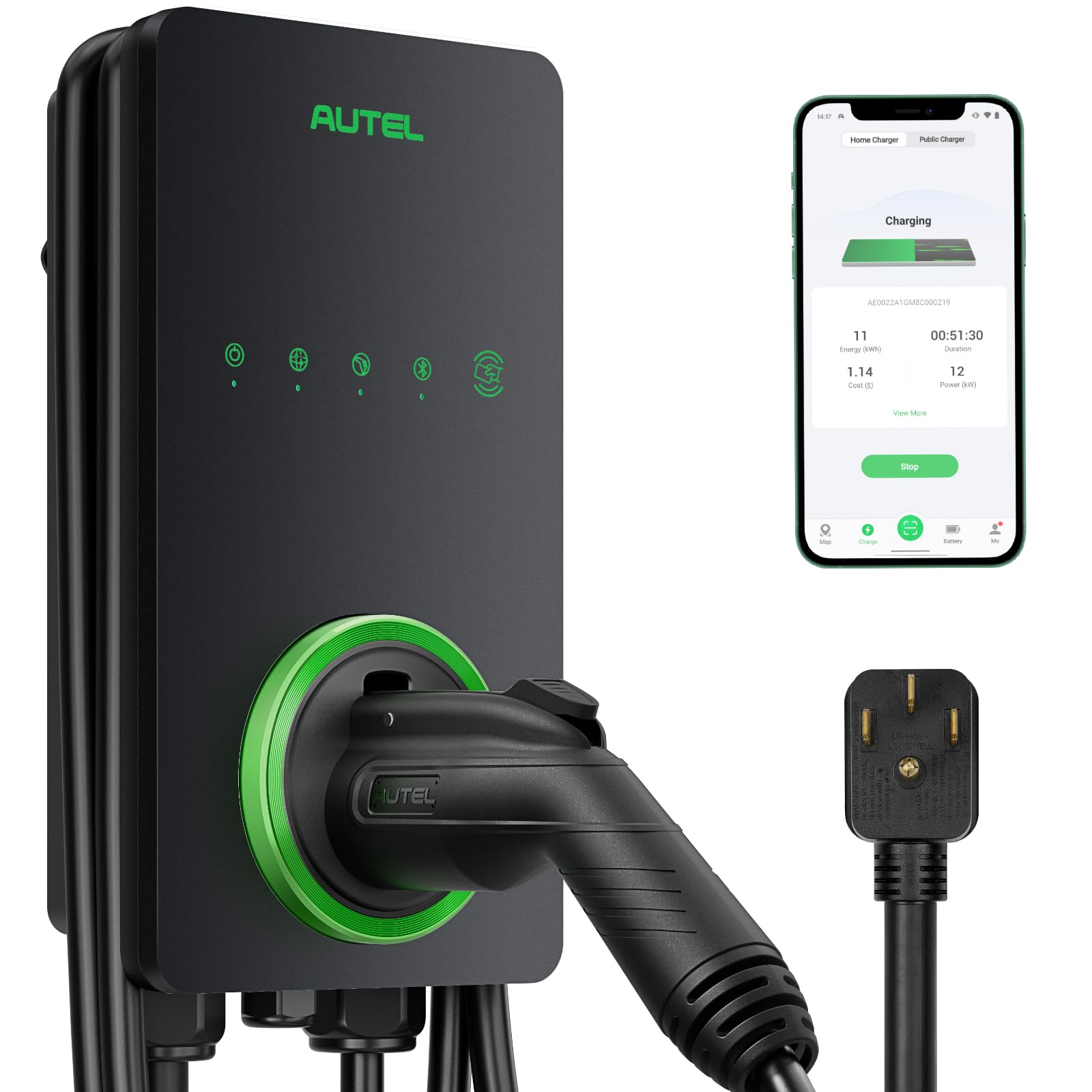
A premium brand that makes the 5-minute plug-in install actually feel premium.
Autel has been in the automotive diagnostic space since 2004, and that engineering background shows in the MaxiCharger AC Home. The housing carries a NEMA 4X rating — meaning it is dust-tight, water-tight, and ice-resistant — and the in-body holster keeps the garage clean. The Autel Charge app allows 1-amp increments from 6A to 40A, which lets you fine-tune charging to match a solar surplus or a lower-capacity circuit.
The main complaint is the physical design of the amperage adjustment panel — you have to remove multiple covers to change the internal dip switches, which is annoying if you need to reconfigure regularly. Owners also note that scheduled charging via the app can conflict with the vehicle’s own charging schedule. Still, the 3-year warranty, automatic OTA updates, and 24/7 customer support add confidence that most cheaper chargers skip.
Build quality stand-out: Autel’s charger feels more substantial than most plastic-bodied units. The 1-amp granularity in the app is a genuine advantage for solar homes or limited-breaker setups.
Choose this for: a polished, long-term investment with strong weather protection and app granularity that other brands don’t match.
Not for: someone who frequently moves the charger between locations — the dip-switch access is not road-trip-friendly.
8. EMPORIA Level 2 EV Charger 48 Amp
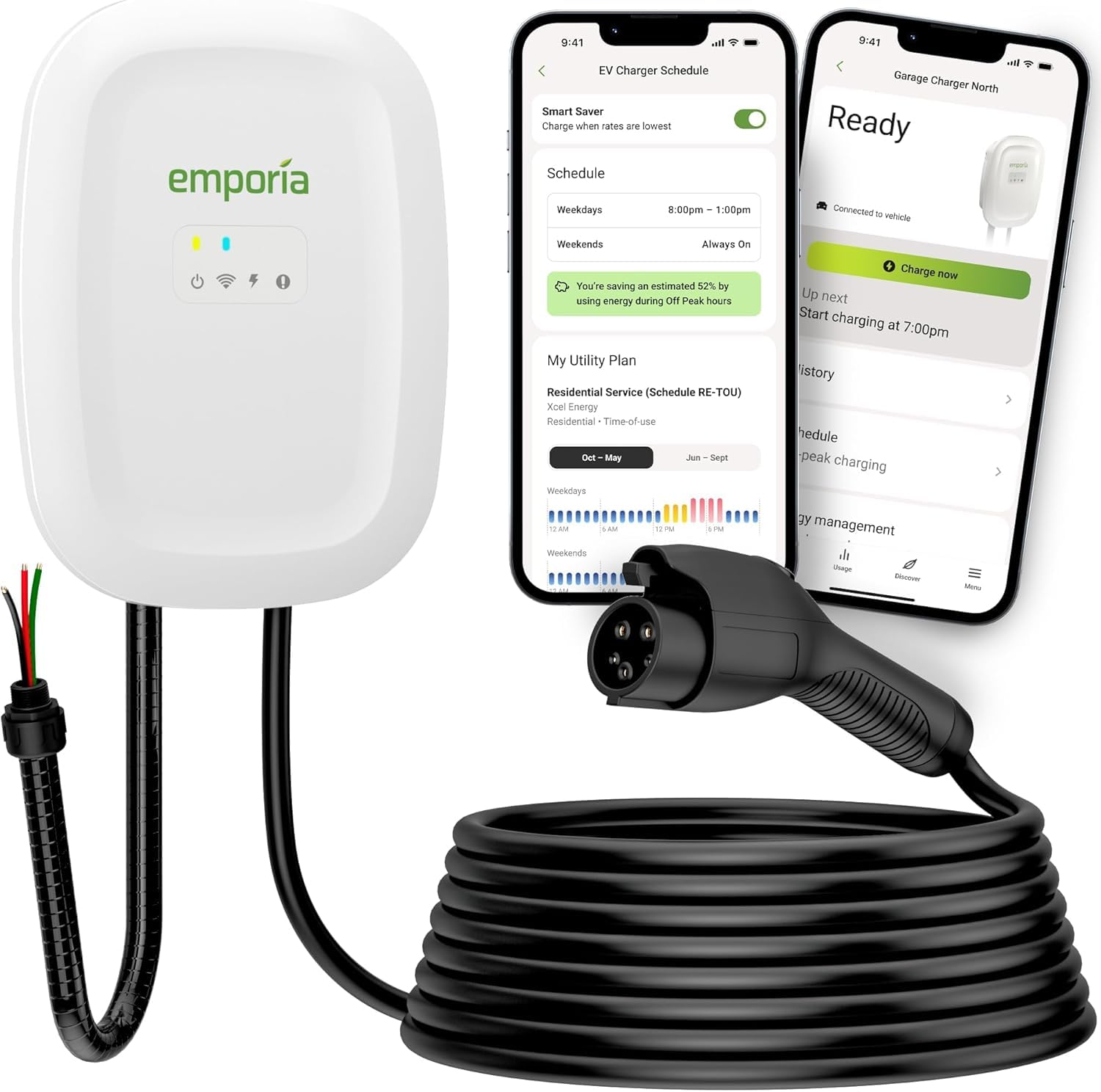
The hardwired 48-amp champ that also tracks your home energy usage.
Emporia’s charger is a crowd favorite for a reason — 4.7 stars across hundreds of owners and the strongest smart-home integration in this lineup. It delivers 48 amps (11.5kW) for a hardwired install, adding up to 46 miles of range per hour. Owners rave about the app: it calculates cost per charge and per month, integrates with the Emporia Vue energy monitor for solar-only charging and whole-home load management, and even helped one business save in demand fees over three years.
It is UL listed and ENERGY STAR certified, with compliance to SAE J1772 and UL 2594. The only consistent gripe is the included mounting screws, which owners call “junk” — you will likely need to buy better hardware from a local store. And because it is hardwired, installation requires a licensed electrician. But if you want the fastest J1772 home charging available with the best energy-tracking app in the category, this is the unit.
Why It Leads
- 11kW hardwired charging — the fastest J1772 speed on this list (48A).
- App tracks kWh and dollar cost per charge with full history.
- Integrates with Emporia Vue for solar, load management, and demand limiting.
The Minor Nuisances
- Included mounting screws are low quality; plan to replace them.
- Hardwired only — cannot unplug and move without an electrician.
- No native NACS support; you need a separate Emporia Tesla charger for a Tesla.
Best pick for: owners who want hardwired 48-amp speed plus deep energy analytics — especially if you have solar panels or a whole-home energy monitor.
Skip this if: you have a Tesla and want a native NACS plug without an adapter.
9. Grizzl-E Ultimate 48A Level 2 EV Charger
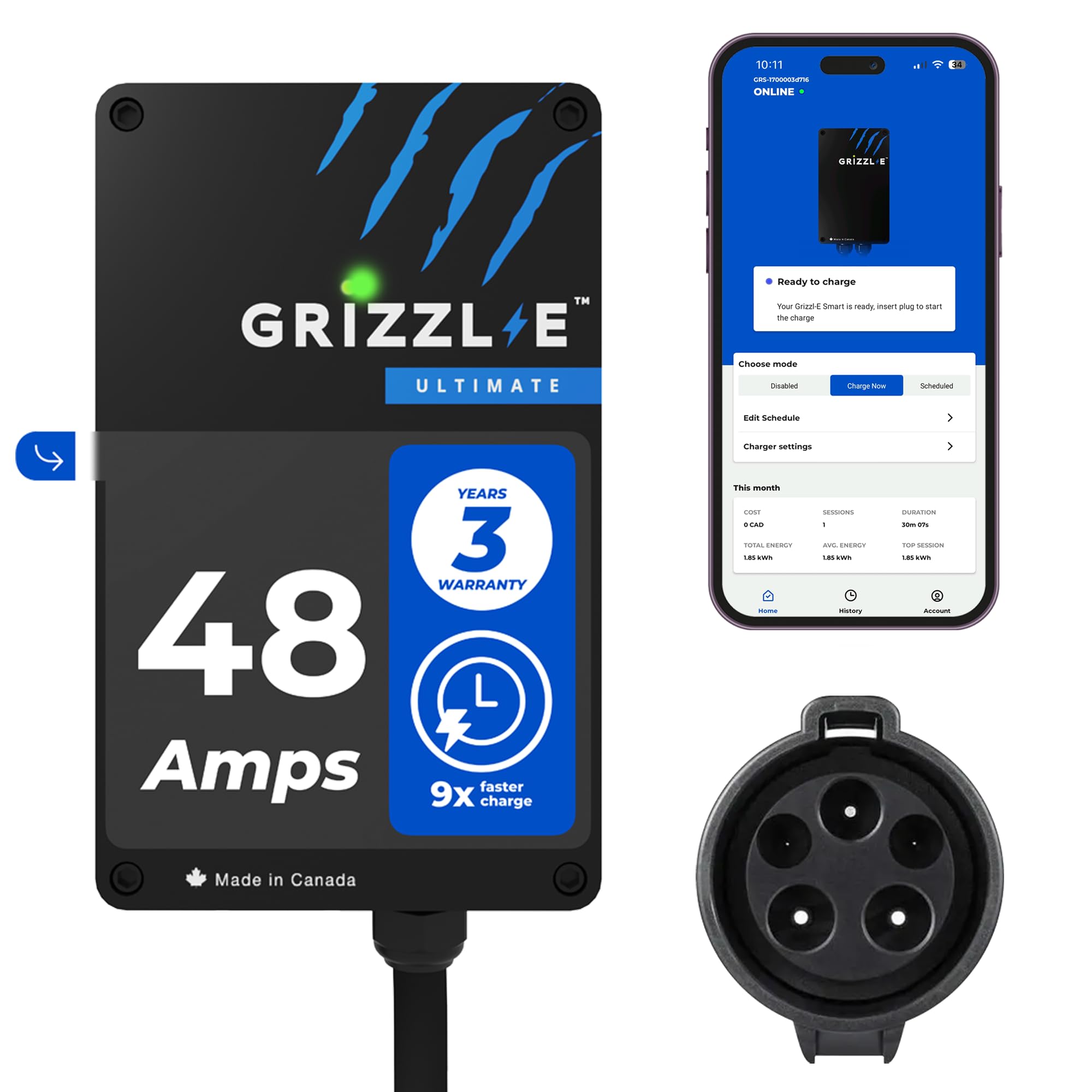
A metal box built in Canada that shrugs off weather and runs at 48 amps.
The Grizzl-E Ultimate is the brute-force option: a UL Type 4 rated cast aluminum enclosure that is about as tough as residential chargers get. It delivers 48 amps (11.5kW) hardwired and ships with the mounting bracket and hardwire kit in the box. Owners trust it for reliability first — 60% charge takes about 6 hours — and praise the simple “just a box” design that works with or without the app.
The Wi-Fi connectivity gets mixed feedback, though. The Grizzl-E Connect app and external antenna help, but some owners mention difficulty connecting initially. The plastic cable holder also draws complaints for feeling cheap compared to the rugged charger body. And while most owners are satisfied, there are occasional reports of defective units and frustrating customer service experiences around warranty claims.
Durability-first design: If you need a charger that lives outdoors in harsh winter conditions and you value simplicity, the Grizzl-E is tough to top. The aluminium shell is genuinely overbuilt compared to every plastic-bodied unit here.
Reach for this if: your charger will be mounted outside in snow, rain, or direct sun, and you prefer a durable box over a feature-packed one.
Look elsewhere if: smooth Wi-Fi setup and a refined app experience are important to you — the connectivity here can be fiddly.
10. ChargePoint HomeFlex Level 2 EV Charger

The big-name network charger that now plugs directly into a Tesla without an adapter.
ChargePoint is the most recognized name in public EV charging, and the HomeFlex brings that network to your garage with a native NACS connector. It is a hardwired unit rated for 50 amps on a 60-amp breaker, and owners find the installation straightforward and the charging fast. The ChargePoint mobile app lets you manage reminders, find public stations across 274,000+ North American locations, and monitor home energy use.
The biggest red flag here is Wi-Fi reliability. Multiple customers note the unit disconnecting from Wi-Fi after a few days, requiring a replacement unit or factory reset. One review mentions about a 3% failure rate on older stock, with newer Rev 5 units fixing the issue. If you get a good unit, it works beautifully — but the Wi-Fi lottery makes it a riskier choice than more consistent alternatives.
Network advantage: The real value of ChargePoint is the public station integration — you get roaming access to over 565,000 stations through the same app you use at home. For frequent road-trippers, that cohesion matters.
Choose this for: Tesla owners who want a smooth home + public charging app experience and are willing to gamble on a unit that might need a mid-WiFi-life replacement.
Avoid if: you cannot tolerate the risk of Wi-Fi dropouts — the EMPORIA or EVIQO are safer bets for reliable connectivity.
11. Autel Level 2 EV Charger up to 50 Amp
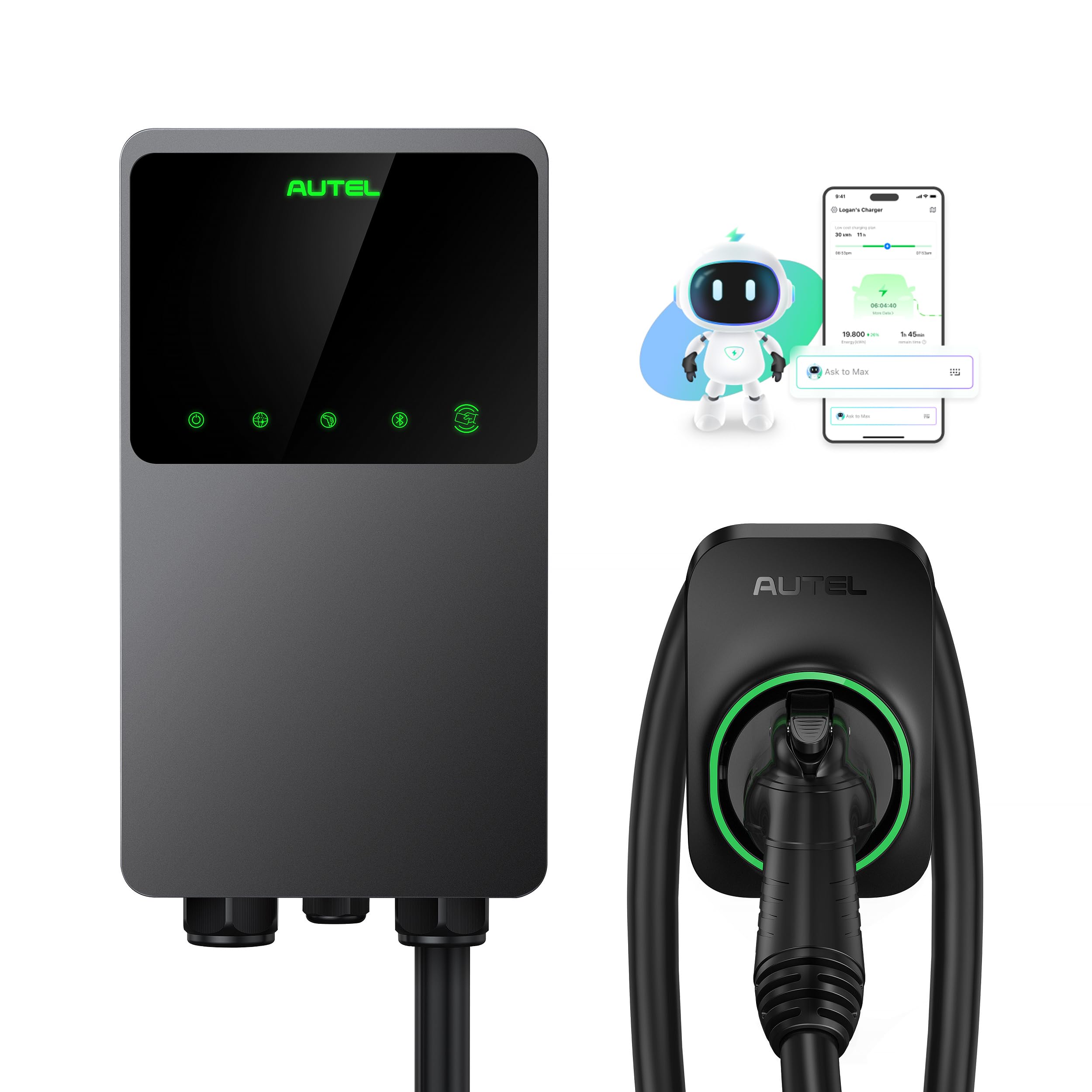
12kW of charging power with a cable that stays flexible in -40°F cold.
Autel’s MaxiCharger AC Elite is the most powerful home unit here, rated for 50 amps (12kW) and adding 37 miles per hour of charge. The cable is rated to -40°F, meaning it coils and uncoils easily even in a freezing garage — a genuine advantage if you live in a northern climate. Owners praise the “excellent build quality” and “thick cables,” and the CSA certification makes it eligible for federal rebate programs.
The 3-year warranty and automatic OTA updates are reassuring, and the Autel Charge app supports scheduling, cost analysis, and remote control. The main nuance is that amperage adjustment requires both a physical dial on the board and a setting in the app — not a single-step process. And at this price point, it is competing directly with the EMPORIA 48A, which offers similar speeds and stronger energy management software at a lower cost.
The Speed Edge
- 50-amp / 12kW output — the highest amperage any residential hardwired charger here delivers.
- Cold-rated cable (-40°F) stays flexible so you are not fighting a frozen cord in winter.
- 3-year warranty with responsive US-based customer service.
Before You Buy
- Dual amperage controls (physical dial + app) add unnecessary complexity.
- Premium price does not include energy-monitor integration like the EMPORIA.
- Hardwired only, so installation is a permanent fixture.
Best for: cold-climate owners who want the absolute fastest home charging speed possible, with a cable that won’t stiffen up in winter.
Consider carefully if: you are price-sensitive or want detailed home energy tracking — the EMPORIA gives you similar speed with better software for less money.
Understanding the Specs
Amperage (40A vs 48A vs 50A)
This number tells you how much electrical current the charger can push into your car. A 40-amp charger on a 50-amp breaker adds roughly 30-38 miles of range per hour and can plug into a standard NEMA 14-50 outlet. A 48-amp charger needs a 60-amp breaker and must be hardwired — it adds about 46 miles per hour. The Autel 50-amp unit goes even higher, but requires a 60-amp breaker and a dedicated installation. Higher amperage means faster charging, but it also means a more expensive electrical setup.
NEMA 14-50 vs Hardwired
A NEMA 14-50 plug is the same outlet your RV or electric dryer uses. You can install a plug-in charger yourself in about five minutes. Hardwiring means the charger connects directly to your breaker panel without an outlet — it is cleaner, safer for continuous high-amperage use, and required for 48-amp charging, but it always requires a licensed electrician. If you rent, a plug-in unit can move with you; a hardwired one stays with the house.
J1772 vs NACS Connector
J1772 is the standard charge port for every non-Tesla EV in North America. NACS (North American Charging Standard) is the connector used by Tesla vehicles. Some chargers (like the MACH 1) include both connectors or ship with an adapter. If you pick a J1772 charger for a Tesla, you need a NACS-to-J1772 adapter. If you pick a NACS charger for a non-Tesla EV, you need a J1772-to-NACS adapter. Know your car’s port before you order.
Smart Features (App, Scheduling, Energy Tracking)
Most modern chargers connect to a smartphone app over 2.4 GHz Wi-Fi. The app lets you start/stop charging, adjust amperage, set a charging schedule to take advantage of lower off-peak electricity rates, and track how many kilowatt-hours (kWh) and dollars you have spent. Units like the EMPORIA and EVIQO also show cost per charge. If you never want to touch an app, chargers like the VEIPHLOX or Lectron skip the software entirely and just charge when you plug in.
FAQ
Do I need an electrician to install a Level 2 EV charger?
What size breaker do I need for a 40-amp vs 48-amp charger?
Can I use a J1772 charger on a Tesla?
How long does it take to fully charge an EV with a Level 2 charger?
Is it safe to use an EV charger outdoors in the rain?
What is the difference between a smart charger and a dumb charger?
Do I need a dedicated circuit for a Level 2 charger?
Which charger is best for a Chevy Bolt or VW ID4?
Final Thoughts: The Verdict
Across the board, the best electric car charger winner is the EVIQO NACS 48A because it combines the highest speed with native Tesla compatibility and the strongest owner satisfaction — 4.8 stars across hundreds of buyers who praise its functionality and build quality above everything else. If you want a simple plug-in unit that just works without an app, grab the VEIPHLOX 40A. And for hardwired 48-amp charging with the best energy-tracking app in the category, the EMPORIA 48A is the one to reach for.
How We Picked
We do not accept paid placement. Every pick is matched to a real buyer and a real use-case; we do not hands-on test units.
Sources & Methodology
Specifications: manufacturer listings and product documentation. Review insights: verified customer reviews, as of July 2026. Pricing: not shown on this page (it changes often); check the current price via the retailer link.
As an Amazon Associate, Trending Car earns from qualifying purchases. This does not affect which products we feature.